
Endless Summer Fun: Engaging Games for Kids
 By Speech Blubs Team•Jan 19, 2026•19 min.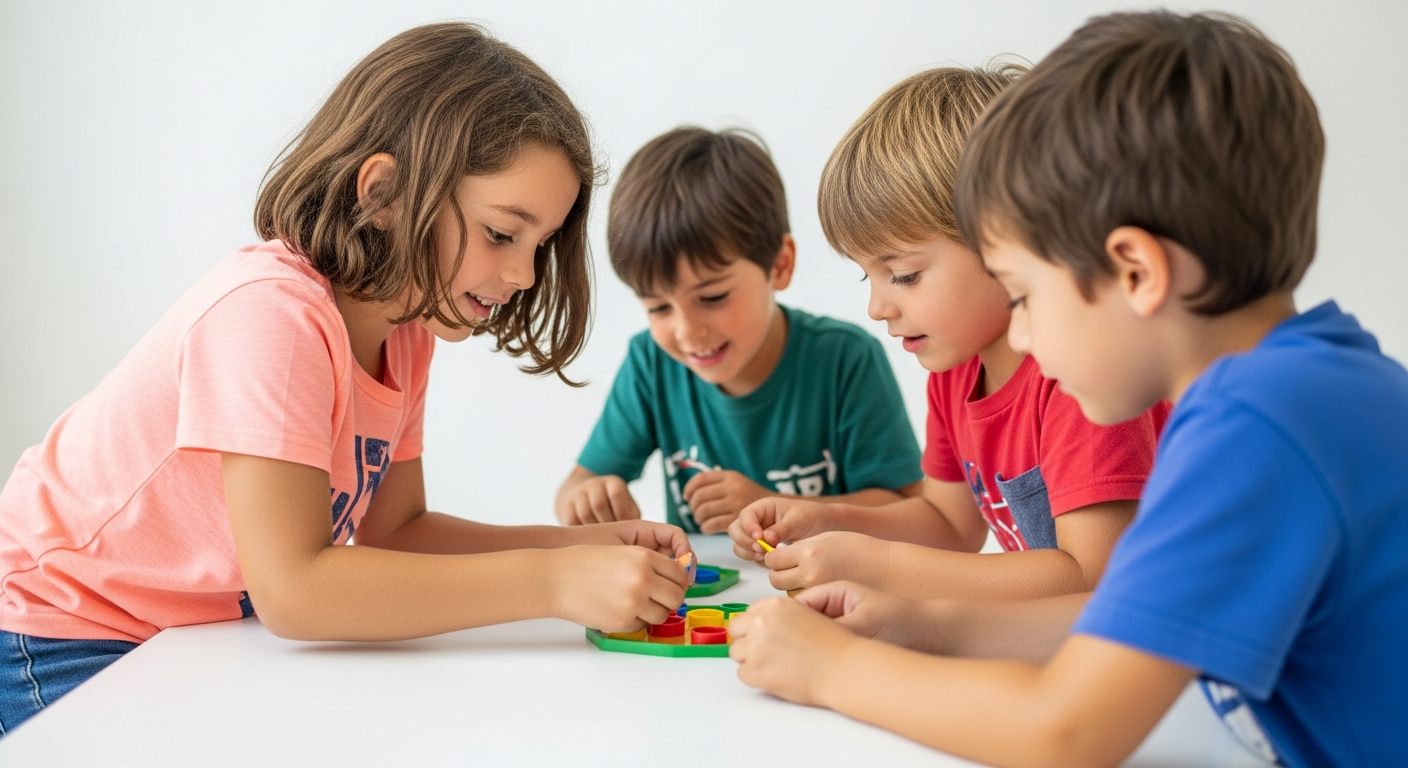
Table of Contents
- Introduction
- The Power of Play: Why Summer Games Matter
- Classic Outdoor Games: Timeless Fun for All Ages
- Creative & Imaginative Play: Sparking Language and Thought
- Water-Based Wonders: Splashing into Communication
- Quiet Time & Brain-Boosting Fun
- Creating Lasting Memories: Speech Blubs' Role in Your Summer
- Ready to Speak Their Hearts? Get Started with Speech Blubs
- Conclusion
- FAQ
As the long-awaited days of summer finally arrive, they bring with them a unique blend of excitement and a familiar question for many parents: "How do we keep the children engaged, happy, and learning when school is out?" While the sun beckons with promises of adventure, the challenge lies in finding activities that are not only fun but also contribute meaningfully to a child's development, especially their communication skills.
This post is your ultimate guide to a summer filled with dynamic games and activities that go far beyond simple entertainment. We will explore a diverse array of classic and creative games, highlighting how they can transform ordinary summer days into enriching learning experiences. From boisterous backyard romps to quiet imaginative play, each activity offers a unique opportunity to foster physical, cognitive, and, crucially, social-emotional growth. Our aim is to show you how these games can naturally encourage talking, listening, following instructions, and expressing ideas, making summer a time of joyful discovery and confident communication for your little ones.

Introduction
Summer's arrival often feels like a gentle sigh of relief mixed with a burst of joyous energy. Yet, for parents, this season can also bring the delightful challenge of keeping curious minds and energetic bodies engaged. While the allure of endless screen time might seem like an easy fix, we know that true growth and lasting memories are forged through active, interactive play. Imagine a summer where every laugh, every chase, and every shared discovery also builds foundational communication skills. This is not just a dream, but an achievable reality when you integrate thoughtful play into your daily routine.
This comprehensive guide is designed to equip you with a treasure trove of fun summer games and activities that do more than just entertain; they actively support your child's speech and language development. We'll dive into a rich collection of games, from timeless classics to imaginative adventures, revealing how each one offers unique opportunities for verbal expression, active listening, and social interaction. Our focus is on transforming summer days into enriching learning experiences, made even more impactful when complemented by innovative tools like Speech Blubs. Get ready to turn summer boredom into endless possibilities for growth, connection, and confident communication.
The Power of Play: Why Summer Games Matter
Beyond the giggles and boundless energy, play is the cornerstone of robust child development. It’s where children explore the world, test boundaries, and begin to understand themselves and others. For speech and language development, play is especially vital. It provides a natural, low-pressure environment for children to practice new sounds, expand their vocabulary, construct sentences, and engage in conversations.
When children play, they are constantly interacting with their environment and the people around them. They explain rules, negotiate roles, describe actions, express emotions, and ask questions. These interactions are critical for developing a love for communication, building confidence in their ability to express themselves, and reducing frustration that can sometimes accompany communication challenges. Through play, children develop key foundational skills such as turn-taking, active listening, understanding non-verbal cues, and storytelling – all essential components of effective communication.

Consider a game where a child explains the rules to a friend, or one where they narrate an imaginative adventure. These moments are invaluable for language acquisition and application. Moreover, physical play enhances breath support, motor planning, and coordination, which are all indirectly linked to speech production. By engaging in diverse summer games, you're not just filling time; you're investing in your child's holistic development, fostering curious minds and articulate voices.
Classic Outdoor Games: Timeless Fun for All Ages
Some games never go out of style, and for good reason! These classics are not only universally loved but also packed with developmental benefits, especially for communication.
Hide and Seek
This beloved game is a fantastic way to encourage early counting, spatial awareness, and memory. The "seeker" practices counting aloud, reinforcing number recognition, while the hiders listen intently for cues. The thrilling "Ready or not, here I come!" is a perfect phrase for imitation and anticipation. When found, children often describe their hiding spot, using prepositions like "behind the tree" or "under the slide."
Red Light, Green Light
This game is a fantastic exercise in impulse control and active listening. The "traffic light" calls out "Red Light!" and "Green Light!", demanding quick comprehension and physical response. For children practicing early sound imitation or sentence formation, playing "Red Light, Green Light" with exaggerated "STOP!" and "GO!" sounds, or describing their movements ("I am running," "I am walking") can be incredibly beneficial. It teaches them to follow multi-step instructions and respond verbally or physically to commands.
Hopscotch
Drawing the numbered squares and hopping through them builds gross motor skills and number recognition. Younger children can recite the numbers as they hop, while older ones can make it more challenging by hopping backward or spinning. This game also encourages verbalizing the sequence of numbers and explaining their moves. "I landed on three!" or "Now I jump to five!" reinforces language in a fun, active way.
Hot Potato
This fast-paced game is excellent for developing quick reactions and active listening. Children sit in a circle, passing an object (the "potato") while music plays. When the music stops, whoever holds the potato is out. The anticipation and quick verbal exchanges ("Pass it!", "I got it!") enhance responsiveness and social interaction. If you drop the potato, you’re out, prompting children to verbalize their actions and feelings.
Duck, Duck, Goose
A simple circle game that is fantastic for social interaction and language repetition. The repeated "Duck, duck, duck" builds familiarity with words, and the sudden "GOOSE!" sparks excitement and a burst of physical activity. It encourages turn-taking and understanding simple rules, while the chase and tag element fosters enthusiastic vocalizations and laughter.
Freeze Dance
All you need is music and some space! When the music plays, everyone dances freely. When it stops, everyone freezes in place. Those who keep moving are out. This game is perfect for developing listening skills, body awareness, and creative movement. Children can describe their frozen poses ("I'm a robot!"), or vocalize their excitement when the music starts again. To make it harder, pause the music for longer, challenging children’s patience and stillness.
Spud
Requiring just a ball and a group of kids, Spud involves one player throwing a ball in the air and yelling another player's name (or number). Everyone else scatters. The named player catches the ball and yells "Spud!", freezing everyone else. They then take four steps towards the nearest player and try to hit them with the ball. This game encourages calling names, spelling out "S-P-U-D" as letters are accumulated, and strategic thinking. It’s a wonderful way to practice names, counting, and simple commands.
Tic-Tac-Toe (Giant Version)
Using sidewalk chalk to draw a huge Tic-Tac-Toe board transforms this classic into an engaging outdoor activity. Two players take turns placing "X"s and "O"s (using beanbags, frisbees, or even themselves!). This game is excellent for teaching turn-taking, strategic thinking, and verbalizing moves. Children can announce "My X goes here!" or explain their strategy to win, fostering clear and concise communication.
Capture the Flag
This team-based game is perfect for larger groups and encourages teamwork, strategy, and negotiation. Divided into teams, children hide their "flag" and try to capture the opposing team's flag. This involves a lot of planning, shouting instructions, and communicating within the team. "Guard the flag!", "I see someone!", and "Run!" are common phrases that build command and expressive language skills. It also teaches problem-solving and collaboration.
Horse (Basketball)
For this game, you'll need a basketball and a hoop. One player shoots, and if they make it, the next player must duplicate the shot from the same spot. If they miss, they get a letter in H-O-R-S-E. This game is fantastic for sequence following, imitation of actions, and verbalizing letters as players accumulate them. It also promotes good sportsmanship and encourages children to describe their shots or cheer on their teammates.
Corn Hole or Bags
A popular backyard game that involves tossing beanbags into a raised platform with a hole. Players count their scores and engage in friendly competition. This game is excellent for hand-eye coordination, counting skills, and verbalizing scores and turns. "My turn!", "Three points!", and "Good shot!" are common phrases that facilitate social interaction and mathematical language.
Creative & Imaginative Play: Sparking Language and Thought
Summer is the perfect time to let imaginations run wild with games that encourage creativity and storytelling. These activities naturally prompt detailed descriptions and collaborative communication.
Obstacle Courses
Transform your backyard into an adventurous obstacle course using blankets, pillows, pool noodles, and whatever else you can find! Children follow multi-step directions ("crawl under the blanket, then jump over the rope"), use spatial prepositions ("over," "under," "through"), and engage in problem-solving. They can also narrate their journey ("I'm a brave adventurer going through the jungle!") fostering imaginative storytelling. This is a great opportunity to introduce new action words and descriptive adjectives.
Scavenger Hunts (Nature-themed)
A nature scavenger hunt gets kids interacting with the world around them, encouraging them to look for and pay attention to little details. Create a list of items for them to find (e.g., "something smooth," "a red leaf," "a buzzing insect"). This is perfect for describing objects, colors, textures, and using adjectives, questions, and answers. Encourage them to use all five senses: "What does the flower smell like?" or "How does that rock feel?" This deepens their connection to language and the environment. Remember to "leave no trace" and focus on finding and observing, rather than collecting.
Fort Building
Whether indoors with blankets and chairs or outdoors with branches and tarps, fort building is a highly collaborative activity. It encourages planning, sharing ideas, and using descriptive language. "We need a big blanket for the roof," "This is our secret hideout!" are common phrases that foster teamwork and spatial reasoning. Children learn to negotiate, compromise, and articulate their vision for the perfect fort.
Backyard Concerts or Plays
Encourage your children to write a simple script, create costumes from old clothes, and perform for the family. This activity promotes storytelling, dialogue, character voice, and public speaking in a low-pressure, supportive environment. Even impromptu performances where children make up a story as they go along can boost their confidence and expressive language skills.
Creating a Parade
Decorate bikes, wagons, and strollers with ribbons and streamers, then parade around the block. Children can describe their decorations, announce their roles ("I'm the parade leader!"), and practice the sequence of events. This activity builds confidence and provides a fun context for expressive language and social interaction.
Make a Lemonade/Flower/Fruit Stand
This classic summer activity is a fantastic way to introduce role-playing, practicing social greetings ("Welcome to our lemonade stand!"), counting money, describing products, and asking questions. Children learn about customer service, basic economics, and how to engage in polite social conversation. "Would you like a glass of refreshing lemonade?" encourages polite inquiries and descriptive language.
Water-Based Wonders: Splashing into Communication
On hot summer days, water games are a surefire way to cool off and ramp up the fun. These activities also provide excellent opportunities for language development through exciting, sensory experiences.
Water Balloon Fights/Toss
The sheer joy of a water balloon fight naturally elicits vocalizations. Children verbalize "splash!", "catch!", "throw!", and express their excitement with shouts and laughter. A water balloon toss, where players step back after each successful throw, adds an element of suspense and strategy. The moment a balloon breaks provides a natural cue for words like "pop!" and "wet!"
Slip 'n Slide
A simple plastic tarp and a garden hose can create hours of sliding fun. As children race down the slippery surface, they can describe the sensation ("slippery," "fast," "cold") and actions ("sliding," "splashing," "gliding"). Encouraging them to narrate their ride or describe how it feels enhances their descriptive vocabulary and expressive language.
Washing the Car/Bikes
Turn a chore into a game by letting kids help wash the car or their own bikes. This activity involves following instructions ("Get the sponge," "Rinse the tire"), naming tools ("hose," "soap," "bucket"), and describing actions ("I'm scrubbing the wheel," "it's shiny now!"). The sensory experience of water, suds, and scrubbing provides a rich context for new vocabulary.
Water Play Station (for toddlers)
Set up a basin or small pool with various containers, toys, and sponges. Toddlers can engage in free play, naming objects, actions ("pour," "splash," "float," "sink"), and experimenting with cause and effect ("The cup is empty!"). This provides a relaxed environment for early language acquisition and sensory exploration.
These highly engaging, active games are perfect for encouraging natural language use. For children working on imitating sounds or expanding vocabulary, incorporating a "smart screen time" session with Speech Blubs after active play can reinforce learning. Our app uses a unique "video modeling" method where children learn by watching and imitating their peers, making learning new words and sounds feel like another fun game. For example, after washing the car, a child can engage with the app's "Vehicle" section, practicing words like "car," "truck," and "wash."
Quiet Time & Brain-Boosting Fun
Summer isn't just about high-energy games; it's also a wonderful time for quieter activities that stimulate cognitive development and language skills.
Reading Books Outside
Find a cozy spot under a tree or in a hammock and dive into a good book. Reading together enhances vocabulary, comprehension, and narrative skills. Encourage older children to keep a reading log or join a summer reading club. For younger kids, story time outdoors adds a new dimension to their reading experience. For a parent whose 3-year-old "late talker" loves animals, reading an animal-themed book and then using the "Animal Kingdom" section of Speech Blubs to practice "moo" and "baa" sounds creates a seamless and motivating learning experience.
Journaling/Story Writing
Encourage older children to keep a summer journal or write their own short stories or comic books. This activity fosters self-expression, sequential thought, detailed description, and creative narrative development. Younger children can dictate stories for you to write down, or draw pictures and verbally describe what's happening.
Puzzles & Board Games
Rainy days or quiet afternoons are perfect for puzzles and board games. These activities teach turn-taking, problem-solving, and strategic thinking. They also provide opportunities for descriptive language ("It's a blue piece," "I need a corner piece"), negotiating, and expressing disappointment or triumph. Classic card games like "Go Fish" or "Crazy Eights" require children to ask questions and identify numbers/suits.
DIY Arts and Crafts
From painting rocks to making sock puppets or creating playdough, arts and crafts encourage creativity and fine motor skills. These activities also involve following instructions, naming colors, shapes, and materials, and describing the creative process. "I'm painting a big red flower!" or "My puppet can talk!" fosters expressive language.
Learning a New Skill (Origami, Juggling)
Summer offers ample time to pick up a new skill. Whether it's origami, simple juggling, or learning a few chords on a ukulele, these activities involve following multi-step directions, explaining processes, and asking questions. They build perseverance and the satisfaction of mastering something new, providing rich opportunities for communication as children describe their progress and challenges.
For rainy days or when a quieter activity is needed, our app provides a fantastic "screen-free alternative to passive viewing" for developing communication skills. It’s a powerful tool for family connection, too. Parents can sit with their child, engage with the fun activities, and prompt conversation. This approach turns screen time into "smart screen time" – a concept we champion at Speech Blubs. Our method is backed by science, placing us in the top tier of speech apps worldwide for our effectiveness and engagement.
Creating Lasting Memories: Speech Blubs' Role in Your Summer
At Speech Blubs, our mission is to empower children to "speak their minds and hearts." We understand the unique journey of each child because our company was born from the personal experiences of our founders, who all grew up with speech problems and created the tool they wished they had. We are committed to providing an immediate, effective, and joyful solution for the 1 in 4 children who need speech support, blending scientific principles with play into one-of-a-kind "smart screen time" experiences.
Our app is designed to seamlessly complement all these wonderful summer activities, offering targeted practice in a playful and engaging way. For instance, after a nature scavenger hunt, a child can use the app to practice saying animal names or action words they encountered. If they enjoyed a backyard concert, they might explore the app's sections on emotions or storytelling.
The benefits of incorporating Speech Blubs into your summer routine are manifold: fostering a love for communication, building confidence, reducing frustration, developing key foundational skills, and creating joyful family learning moments. We help transform potential communication challenges into opportunities for growth, all while making learning feel like play.
It’s important to set realistic expectations: while Speech Blubs is a powerful tool, it's a valuable supplement to your child's overall development plan and, when applicable, professional therapy. Consistency and active adult co-play and support are key to maximizing its benefits. We encourage parents to engage alongside their children, turning every interaction into a moment for connection and learning.
Ready to Speak Their Hearts? Get Started with Speech Blubs
This summer, empower your child with the gift of confident communication. With so many fun games and activities available, adding a targeted, playful approach to speech development can make all the difference.
Getting started with Speech Blubs is easy and opens up a world of engaging, interactive learning. You can download Speech Blubs today on the App Store or the Google Play Store to begin your family's journey toward clearer, more joyful communication.
We offer flexible plans to suit your family’s needs:
- Monthly Plan: $14.99 per month.
- Yearly Plan: $59.99 per year, which breaks down to just $4.99 per month.
The Yearly Plan offers superior value, allowing you to Save 66% compared to the monthly option, and it includes exclusive, high-value features. When you choose the Yearly plan, you'll unlock:
- A generous 7-day free trial to experience the full benefits.
- The extra Reading Blubs app, further enhancing your child's literacy journey.
- Early access to new updates and a prioritized 24-hour support response time.
The Monthly plan does not include these fantastic benefits. To get the most value and unlock the full suite of features, we strongly encourage you to choose the Yearly plan and start your 7-day free trial today.
Unsure if your child could benefit from Speech Blubs? Take our quick 3-minute preliminary screener to receive a simple assessment and a personalized next-steps plan. And don't just take our word for it—see what other parents are saying about their child's success with Speech Blubs.
Conclusion
This summer, let's redefine screen time and embrace the incredible potential of play. From the exhilarating shouts of "Red Light, Green Light" to the imaginative whispers in a backyard fort, every game is an opportunity for connection, learning, and, most importantly, communication. We've explored how classic outdoor games, creative adventures, and quiet brain-boosting activities all contribute to a child's holistic development.
Remember, you are your child's first and most important teacher. By engaging with them in these fun summer games, you're not just creating unforgettable memories; you're actively fostering a love for communication, building their confidence, and equipping them with essential life skills. Speech Blubs is here to be your partner on this journey, offering a playful, scientifically backed tool that complements every giggle, every word, and every breakthrough. This summer, give your child the joy of finding their voice and speaking their heart.
FAQ
Q1: How can I make summer games more educational for my child?
A1: To maximize the educational value of summer games, focus on incorporating language-rich interactions. Narrate actions, ask open-ended questions ("What do you think will happen next?"), encourage descriptive language, and practice following multi-step directions. For example, during a scavenger hunt, describe items using adjectives and prepositions (e.g., "Find a small, bumpy, brown rock under the bush"). Games that involve counting, turn-taking, and simple problem-solving are also excellent.
Q2: What if my child is shy or struggles with communication during group games?
A2: For shy children or those with communication challenges, start with one-on-one play to build confidence. Model phrases and actions, give positive reinforcement, and choose games with clear, simple rules. Integrate visual aids or use gestures alongside verbal instructions. Speech Blubs can be a great bridge, offering a safe, engaging environment for practice before transitioning to larger group settings. Our video modeling feature allows children to imitate peers in a low-pressure setting, building their expressive skills.
Q3: How does Speech Blubs fit into our summer plans?
A3: Speech Blubs seamlessly integrates into your summer by providing a flexible, engaging tool for speech and language practice. It's perfect for structured "smart screen time" sessions, complementing outdoor play by reinforcing vocabulary, sounds, and communication skills learned during activities. For instance, after a trip to the park, your child can practice related words and sounds in the app. It's also an excellent resource for quiet time, rainy days, or when you need a focused learning activity that feels like play, ensuring continuous development throughout the summer.
Q4: What's the best way to get started with Speech Blubs for summer learning?
A4: The best way to start with Speech Blubs for summer learning is by choosing our Yearly Plan. Not only does it offer significant savings at just $59.99 per year ($4.99/month), but it also includes a 7-day free trial, the bonus Reading Blubs app, early access to new updates, and 24-hour support response. This comprehensive package ensures your child has access to the full suite of features for an entire year of consistent practice and growth. Simply download the app from your preferred app store and select the Yearly plan to unlock all these benefits and begin your free trial.
About the author