
Engaging After-Christmas Activities for Kids
 By Speech Blubs Team•Dec 19, 2025•21 min.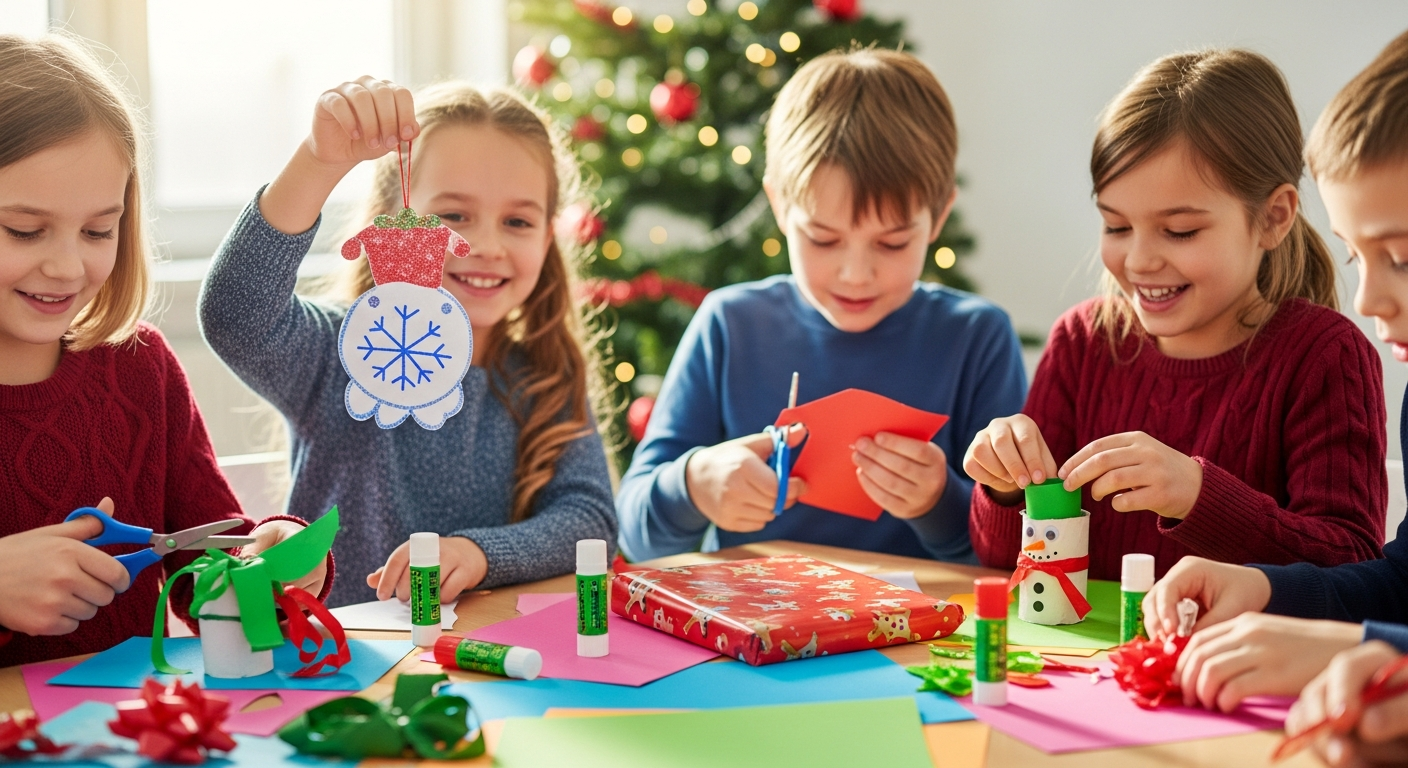
Table of Contents
- Introduction
- Why the Post-Holiday Season Matters for Kids' Development
- Creative & Crafty Endeavors: Turning Holiday Memories into Masterpieces
- Engaging with New Toys: Beyond Just Playing
- Educational Adventures: Learning Through Play
- Outdoor Explorations (Weather Permitting)
- The Speech Blubs Advantage: Smart Screen Time for Language Growth
- Getting Started with Speech Blubs: Your Family's Communication Journey
- Conclusion
- Frequently Asked Questions (FAQ)
Introduction
The tinsel is down, the last of the holiday cookies are gone, and a new pile of shiny toys sits expectantly in the corner. For many families, the period right after Christmas, leading up to the New Year and beyond, can feel like a sudden drop from peak excitement into a quiet lull. How do we keep the magic alive, combat boredom, and channel that newfound energy into something meaningful and developmental for our children? This transitional time isn't just a gap to fill; it's a golden opportunity for continued learning, family bonding, and crucial skill development.
As the festive flurry settles, children can often experience a mix of overstimulation and the quiet that follows. It's the perfect moment to pivot from passive consumption to active engagement, encouraging creativity, exploration, and, most importantly, communication. We're here to guide you through a treasure trove of practical, engaging, and speech-boosting activities designed to transform the post-holiday period into a season of joyful discovery. These activities are crafted to foster a love for communication, build confidence, reduce frustration, and develop key foundational skills, offering rich opportunities for family connection and continued learning. And for those moments when you need a little extra support and structure, tools like Speech Blubs are ready to join your family's communication journey. Download Speech Blubs today to explore how smart screen time can complement these hands-on adventures.

Why the Post-Holiday Season Matters for Kids' Development
The period immediately following Christmas is more than just downtime; it’s a crucial phase in a child’s developmental calendar. After weeks of anticipation, celebrations, and often a deviation from regular routines, children benefit immensely from activities that help them transition, process experiences, and re-engage with structured play and learning. This is a prime time for consolidating new vocabulary from gifts, practicing social etiquette learned during gatherings, and reinforcing crucial developmental milestones through play.
Without engaging activities, children can experience a "holiday hangover" – a mix of boredom, restlessness, and perhaps even some regression in learned behaviors due to the break in routine. Thoughtful post-Christmas activities help to:
- Regulate emotions: Providing outlets for energy and creativity can help balance post-excitement lows.
- Maintain routine: Even informal activities can offer structure, easing the return to school or daily schedules.
- Boost language skills: New toys and experiences offer fresh vocabulary and conversation starters.
- Enhance fine and gross motor skills: Crafts, building, and outdoor play are excellent for physical development.
- Foster social-emotional growth: Collaborative activities teach sharing, turn-taking, and empathy.
This season is not about endless entertainment but about intentional engagement that supports your child's holistic growth. If you ever wonder if your child could benefit from a little extra support in their communication journey, why not take our quick 3-minute preliminary screener? It provides a simple assessment and a next-steps plan to empower your family.
Creative & Crafty Endeavors: Turning Holiday Memories into Masterpieces
After the gifts are opened, you’re often left with a treasure trove of materials perfect for creative reuse. These activities are not only eco-friendly but also fantastic for fine motor skills, descriptive language, and imaginative storytelling.

Upcycling Christmas Cards & Gift Wrap
Instead of tossing them, transform discarded Christmas cards, gift bags, and wrapping paper into new artistic creations.
- Activity Description: Gather all the colorful paper scraps, ribbons, and leftover cards. Provide child-safe scissors, glue sticks, and plain paper or cardboard. Encourage your child to cut out favorite images, patterns, or even words from the cards and wrapping paper to create collages, new ornaments, or decorative placemats. They can also use ribbons to add texture or create "stained glass" effects by gluing translucent paper onto a window.
- Speech & Language Benefits: This activity is a goldmine for vocabulary expansion. As children cut and paste, encourage them to describe what they see ("shiny red paper," "sparkling snowflake," "big green tree"). Ask questions: "What are you cutting now?" "Where will you put the star?" This helps them practice spatial concepts and descriptive adjectives. It also supports sequencing ("first, we cut; then, we glue") and following multi-step directions.
- Practical Scenario: For a parent whose child is working on expanding their vocabulary beyond basic nouns, creating a "Christmas memories" collage from old cards can be incredibly motivating. As they choose an image of a reindeer, you can prompt, "Look, it's a brown reindeer! What is the reindeer doing?" helping them practice colors and action verbs. This visual and tactile experience makes learning new words more concrete and engaging.
DIY Thank You Notes
This activity blends creativity with gratitude, teaching children important social skills.
- Activity Description: Provide plain cards or paper, crayons, markers, stickers, and perhaps some of those leftover glitter and ribbon scraps. Guide your child to draw pictures for loved ones who gave them gifts, or to decorate pre-printed "thank you" messages. Even very young children can add scribbles or stickers, while older children can practice writing their names or simple sentences.
- Speech & Language Benefits: Crafting thank you notes reinforces the concept of gratitude and strengthens social communication. Children can identify the gift giver and the specific gift, practicing naming objects and people. It's a gentle way to introduce polite phrases ("thank you," "I love it") and to discuss the joy of giving and receiving. Dictating a message for you to write down helps develop narrative skills and understand the purpose of written language.
- Practical Scenario: If your 4-year-old struggles with initiating conversations or expressing appreciation, sitting down together to make a thank you card for Grandma is ideal. You can guide them, "Grandma gave you the dinosaur, right? What do you want to draw for Grandma? Maybe a big, green dinosaur?" This provides a low-pressure environment to practice saying the gift-giver's name and describing the gift, fostering both social and descriptive language skills.
Story Stone or Puppet Making
Unleash imagination and storytelling with simple handmade props.
- Activity Description: Gather smooth stones (washed clean) or old socks, along with markers, googly eyes, yarn, and fabric scraps. Children can draw characters, animals, or objects on the stones or decorate socks to become puppets. Once made, these props become tools for spontaneous storytelling.
- Speech & Language Benefits: This activity is a powerful catalyst for narrative development, imagination, and expressive language. Children can create characters, develop plots, use different voices for each puppet/stone, and practice sequencing events. It also encourages turn-taking in shared storytelling, where one person might start a story and the other continues it. Using prepositions (e.g., "the frog jumped over the log") and action verbs becomes natural within the story context.
- Practical Scenario: For a child who tends to give one-word answers or struggles with stringing sentences together, making story puppets offers a safe space to experiment with language. If they create a lion puppet, you can ask, "What does the lion say? Where does the lion live? What happens next in the lion's day?" This helps build conversational turns and expands their ability to create simple narratives, moving from single words to short phrases and sentences.
Engaging with New Toys: Beyond Just Playing
New toys often spark immediate joy, but the real developmental magic happens when children are encouraged to engage with them thoughtfully. These activities transform passive play into active learning opportunities.
"Unboxing" & Describing New Gifts
Turn the initial excitement of new toys into a language-rich experience.
- Activity Description: Instead of letting your child rip through all the wrapping paper at once, suggest opening one or two items at a time. As each new toy is revealed, take a moment to "unbox" it slowly. Talk about the packaging, what’s inside, and its features.
- Speech & Language Benefits: This focuses on naming objects, describing attributes (color, size, shape, texture), and action verbs related to the toy. For example, with a new car, you can talk about its "wheels" that "spin," its "shiny red paint," and how it "rolls fast." Asking "What is it?" and "What does it do?" helps children identify and articulate their observations, building a stronger vocabulary foundation.
- Practical Scenario: A parent whose child is a "late talker" and has just received a new set of animal figures can use this activity to target specific animal sounds and names. As they unwrap the cow, you can say, "It's a cow! Moo! The cow says moo!" Then, for the horse, "It's a horse! Neigh! The horse says neigh!" This repetitive, focused labeling within an exciting context can significantly boost early word acquisition and sound imitation.
Toy Sorting & Organization
Integrating tidying with learning makes cleanup more engaging and less of a chore.
- Activity Description: With a fresh influx of toys, the post-Christmas period is ideal for organizing. Create categories together: "all the blocks," "all the cars," "all the animals." Use labeled bins or baskets. You can even make it a race against a timer, or a "treasure hunt" to find all the red toys.
- Speech & Language Benefits: This activity naturally promotes categorization skills ("This goes with that"), color and shape recognition, counting, and the use of prepositions ("put it in the box," "the car is under the table"). Children learn to follow multi-step instructions ("First, put the bears away, then the blocks") and practice comparative language ("This bear is bigger than that one").
- Practical Scenario: For a child learning to follow simple instructions, sorting new toys by color or type can be very effective. "Can you find all the blue cars?" or "Let's put all the soft animals here." This direct instruction coupled with physical action strengthens their ability to understand and respond to verbal cues, while also reinforcing basic concepts.
Collaborative Play Scenarios
Encourage social interaction and imaginative play with new toys.
- Activity Description: Instead of just letting children play independently, set up scenarios that require collaboration. Build a giant fort with blankets and new building blocks, then pretend it's a spaceship. Or set up a make-believe grocery store using new play food and a toy cash register.
- Speech & Language Benefits: Collaborative play is excellent for developing pragmatic language skills: negotiation, turn-taking, problem-solving through dialogue, and role-playing different characters. Children practice asking for what they need ("Can I have the big block?"), offering help ("I'll hold this for you"), and expressing ideas ("What if the alien lands here?").
- Practical Scenario: If your child is struggling with expressive language in social situations, setting up a pretend "animal hospital" with their new stuffed animals can be transformative. You can take on the role of a vet and have your child be the nurse. "Nurse, the lion has a sore paw. What do we need to do?" This prompts them to use action verbs like "bandage," "check," and descriptive words like "sore," while engaging in back-and-forth dialogue.
Educational Adventures: Learning Through Play
Learning doesn't stop when school is out. These activities seamlessly integrate educational concepts into fun, engaging play, often utilizing resources you already have at home.
"Holiday Huddle" Reading Time
Embrace the cozy post-holiday atmosphere for literacy and bonding.
- Activity Description: Curate a special reading nook with blankets, pillows, and perhaps some twinkle lights. Bring out new books received as gifts, or rediscover old favorites. Make it a daily ritual to snuggle up and read together. Don't just read aloud; point to words, ask questions about the pictures, and encourage your child to retell parts of the story.
- Speech & Language Benefits: Reading together is paramount for vocabulary expansion, comprehension, and phonological awareness (the sounds of language). It exposes children to complex sentence structures and narrative forms. Asking open-ended questions like "What do you think happens next?" or "Why do you think the character felt that way?" promotes critical thinking and expressive language skills.
- Practical Scenario: For a child working on comprehension, after reading a short story, you can use picture cards or even the child's own drawings to sequence the events. "What happened first? Then what happened?" This helps them build a mental map of the story and practice describing the sequence, reinforcing language structure.
Kitchen Science Experiments
Turn your kitchen into a lab for exciting and edible (or at least sensory) science.
- Activity Description: Simple experiments like making baking soda volcanoes, growing rock candy crystals, or experimenting with different liquids (oil, water, syrup) in jars can be captivating. These activities use everyday ingredients and offer tangible results.
- Speech & Language Benefits: Kitchen science provides a rich environment for descriptive language ("bubbly," "sticky," "clear"), action verbs ("pour," "mix," "fizz"), and understanding cause and effect ("If we add vinegar, it erupts"). Children learn to follow multi-step instructions and articulate their observations and predictions. Asking "What do you see happening?" or "What do you think will happen next?" encourages scientific inquiry and expressive communication.
- Practical Scenario: When making "oobleck" (cornstarch and water), a child can describe the texture: "It's hard when I squeeze it, but it's liquid when I let go!" This provides a real-world context for using contrasting adjectives and understanding abstract concepts through sensory input.
Sensory Bins: A Tactile Language Boost
Sensory bins offer a contained world for exploration and language development.
- Activity Description: Fill a large bin with a base material like rice, dry pasta, water beads, or even snow. Add small toys, scoops, cups, and natural elements like pinecones or leaves. Theme your bins (e.g., a "winter wonderland" bin with cotton balls, glitter, and plastic animals).
- Speech & Language Benefits: Sensory bins are incredible for stimulating language. As children explore, they naturally use descriptive words for textures ("bumpy," "smooth," "gritty"), sounds ("crinkle," "swish"), and actions ("scoop," "pour," "hide," "find"). They also encourage imaginative play and storytelling with the small objects they discover. Asking "What did you find?" or "How does that feel?" elicits rich responses.
- Practical Scenario: For a child who enjoys tactile play but struggles with producing a variety of sounds, a sensory bin filled with dried beans and small hidden objects can be used for sound play. As they discover a toy car, you can make the "vroom" sound, encouraging imitation. Or for a toy duck, "Quack, quack!" This multisensory approach can make sound production more engaging and less intimidating.
Outdoor Explorations (Weather Permitting)
Don't let cooler weather deter you from outdoor fun. Fresh air and natural environments provide unique opportunities for movement and language.
Winter Nature Scavenger Hunt
Turn a simple walk into an exciting quest for discovery.
- Activity Description: Create a list of natural items for your child to find in your backyard or a local park: "something brown," "a smooth stone," "a feather," "three pinecones," "a red leaf" (if any are left). Provide a small bag for collecting treasures.
- Speech & Language Benefits: This activity promotes observation skills, color and shape identification, counting, and following directions. Children practice naming objects and describing their attributes. It also encourages asking questions ("Is this a smooth stone?") and confirming findings, building conversational skills.
- Practical Scenario: If your child is working on numerical concepts or prepositions, a scavenger hunt is perfect. "Can you find two shiny leaves under the bush?" This integrates multiple language targets into one fun activity, making learning feel like an adventure.
Building & Imagining in the Snow
If you're lucky enough to have snow, embrace its magical potential.
- Activity Description: Beyond traditional snowmen, encourage building snow forts, making snow angels, or even creating "snow creatures" using sticks, stones, and berries for features. Provide small shovels and buckets.
- Speech & Language Benefits: Snow play is fantastic for gross motor development and a rich source of language. Children use action verbs ("roll," "stack," "pack," "dig"), spatial concepts ("tall," "short," "on top," "underneath"), and descriptive adjectives ("cold," "fluffy," "sticky"). Collaborative building encourages negotiation and shared storytelling about their snow creations.
- Practical Scenario: For a child who benefits from visual and kinesthetic learning, building a snow fort together is ideal for practicing action words. "Let's pack the snow! Now, lift the big snowball! Push it over here!" The physical effort reinforces the meaning of the verbs, helping them integrate these words into their vocabulary.
The Speech Blubs Advantage: Smart Screen Time for Language Growth
While hands-on activities are incredibly valuable, we understand that modern parenting often involves screen time. At Speech Blubs, we believe that screen time can be "smart screen time"—an immediate, effective, and joyful solution for the 1 in 4 children who need speech support. Our mission is to empower children to "speak their minds and hearts." This commitment was born from the personal experiences of our founders, who all grew up with speech problems and created the very tool they wished they had when they were kids.
We blend scientific principles with play, transforming what could be passive viewing (like cartoons) into an active, engaging, and powerful tool for family connection. Our unique approach is rooted in the "video modeling" methodology, where children learn by watching and imitating their peers. This technique leverages the power of mirror neurons in the brain, making speech and language acquisition feel natural and fun.
How Speech Blubs complements your after-Christmas activities:
- Reinforce Vocabulary: After an outdoor scavenger hunt, use Speech Blubs' "Animal Kingdom" or "Things That Go" sections to reinforce the names of objects or sounds you encountered.
- Expand Descriptive Language: If you made crafts, transition to the app to practice describing colors, shapes, and textures through interactive games.
- Practice Articulation: If your child struggled with specific sounds during storytelling, Speech Blubs provides targeted activities for sound production in a playful context.
- Build Confidence: The app's encouraging interface and peer-to-peer modeling create a supportive environment for children to experiment with new sounds and words without pressure.
- Provide Structure: On days when you need a more structured activity, Speech Blubs offers engaging, guided exercises that feel like play but are deeply rooted in speech development principles.
For a parent whose 3-year-old "late talker" loves animals, for example, the "Animal Kingdom" section offers a fun, motivating way to practice "moo" and "baa" sounds by watching other children make them. This focused, engaging repetition is incredibly effective. Our method is backed by science, placing us in the top tier of speech apps worldwide, as you can learn more about our scientific methodology here. Many parents have seen remarkable progress, and you can see what other parents are saying about their child's success with Speech Blubs.
We provide a screen-free alternative to passive viewing (like cartoons) and a powerful tool for family connection, where children learn not in isolation, but by watching and imitating their peers. This active engagement with the screen, guided by an adult, turns tablet time into a meaningful learning experience.
Getting Started with Speech Blubs: Your Family's Communication Journey
At Speech Blubs, we are dedicated to fostering a love for communication, building confidence, and reducing the frustration often associated with speech and language delays. Our app is a powerful supplement to your child's overall development plan and, when applicable, professional therapy, always with the implicit understanding of adult co-play and support.
We believe in transparency and providing exceptional value. Here’s how you can join the Speech Blubs family:
- Monthly Plan: For just $14.99 per month, you get access to our core features.
- Yearly Plan: Best Value! Our Yearly plan is priced at $59.99 per year, which breaks down to an incredible $4.99 per month. This means you save 66% compared to the monthly subscription!
The Yearly plan isn't just cheaper; it also includes exclusive, high-value features designed to give your child the most comprehensive support:
- 7-Day Free Trial: Try out the full Speech Blubs experience before committing.
- The extra Reading Blubs app: Enhance your child's literacy journey alongside their speech development.
- Early access to new updates: Be the first to enjoy new features and content.
- 24-hour support response time: Get prompt assistance whenever you need it.
The Monthly plan does not include these fantastic benefits, so the Yearly plan truly is the best choice for both value and comprehensive support.
Ready to unlock your child's full communication potential and create joyful family learning moments? Start your 7-day free trial today by choosing our Yearly plan. It's the simplest way to get the free trial and the full suite of features that will empower your child to speak their minds and hearts.
Conclusion
The post-Christmas period doesn't have to be a dull transition. By embracing creative, engaging, and educational activities, you can transform this time into a valuable opportunity for your child's development and family bonding. From upcycling holiday crafts and engaging mindfully with new toys to exploring the wonders of kitchen science or a winter nature walk, each activity offers a unique chance to boost language skills, build confidence, and deepen connection.
Remember, every conversation, every shared laugh, and every new discovery contributes to your child's growth. And when you're looking for an innovative, research-backed partner to support their communication journey, Speech Blubs is here. Our unique video modeling methodology and commitment to "smart screen time" ensure that learning to speak is always an engaging and joyful experience. We are dedicated to providing an immediate, effective, and joyful solution for children, blending scientific principles with play.
Don't let the post-holiday lull set in. Empower your child with communication skills that will last a lifetime. Download Speech Blubs on the App Store or get it on the Google Play Store, or sign up on our website to start your 7-day free trial. We highly recommend selecting the Yearly plan to unlock the free trial and gain access to the full suite of features, including the Reading Blubs app and priority support, ensuring the best value and most comprehensive support for your child's development. Let's make this after-Christmas season a launchpad for lasting communication success!
Frequently Asked Questions (FAQ)
1. How long should we spend on these activities each day?
There’s no magic number, as every child and family is different. The key is quality over quantity. Aim for short, focused bursts of activity – perhaps 15-30 minutes for younger children, or longer for older kids engaged in a project. The goal is engagement, not exhaustion. Listen to your child's cues; if they're losing interest, it's a good time to transition to something else or take a break. Consistency with even short, daily activities can be more beneficial than sporadic, long sessions.
2. Are these activities suitable for all ages?
Many of these activities can be adapted for a wide range of ages. For toddlers, focus on simple labeling, sensory exploration, and gross motor skills. Preschoolers can engage in more complex descriptive language, simple narratives, and following multi-step instructions. Older children can dive deeper into creative writing, problem-solving in science experiments, or leading collaborative play scenarios. The magic lies in tailoring the complexity and your involvement to your child’s developmental stage.
3. How does Speech Blubs fit into our child's daily routine?
Speech Blubs is designed to be a flexible tool that complements your family's routine. You can integrate it as a short, focused "smart screen time" session after a hands-on activity to reinforce new vocabulary, or as a calming, engaging activity when your child needs a moment of focused learning. Many families find success using it for 10-15 minutes a day, perhaps during a transition time or as part of their dedicated learning play. It's a powerful supplement, not a replacement for, active family interaction and play.
4. What if my child resists participating in these activities?
Resistance is normal! Try to offer choices ("Do you want to make thank you notes or build a fort first?"). Sometimes, introducing an activity as a game or making it a "special project" with your child as the leader can increase enthusiasm. Keep it low-pressure, short, and fun. If one activity isn't a hit, don't force it; there are many other ideas to try. Remember, your calm and encouraging presence is the most important factor, even if the activity itself isn't perfectly executed. Focus on the connection and the communication opportunities, not just the outcome.
About the author