
Engaging Animal Crafts: Easy Ideas for Kids
 By Speech Blubs Team•Jan 13, 2026•21 min.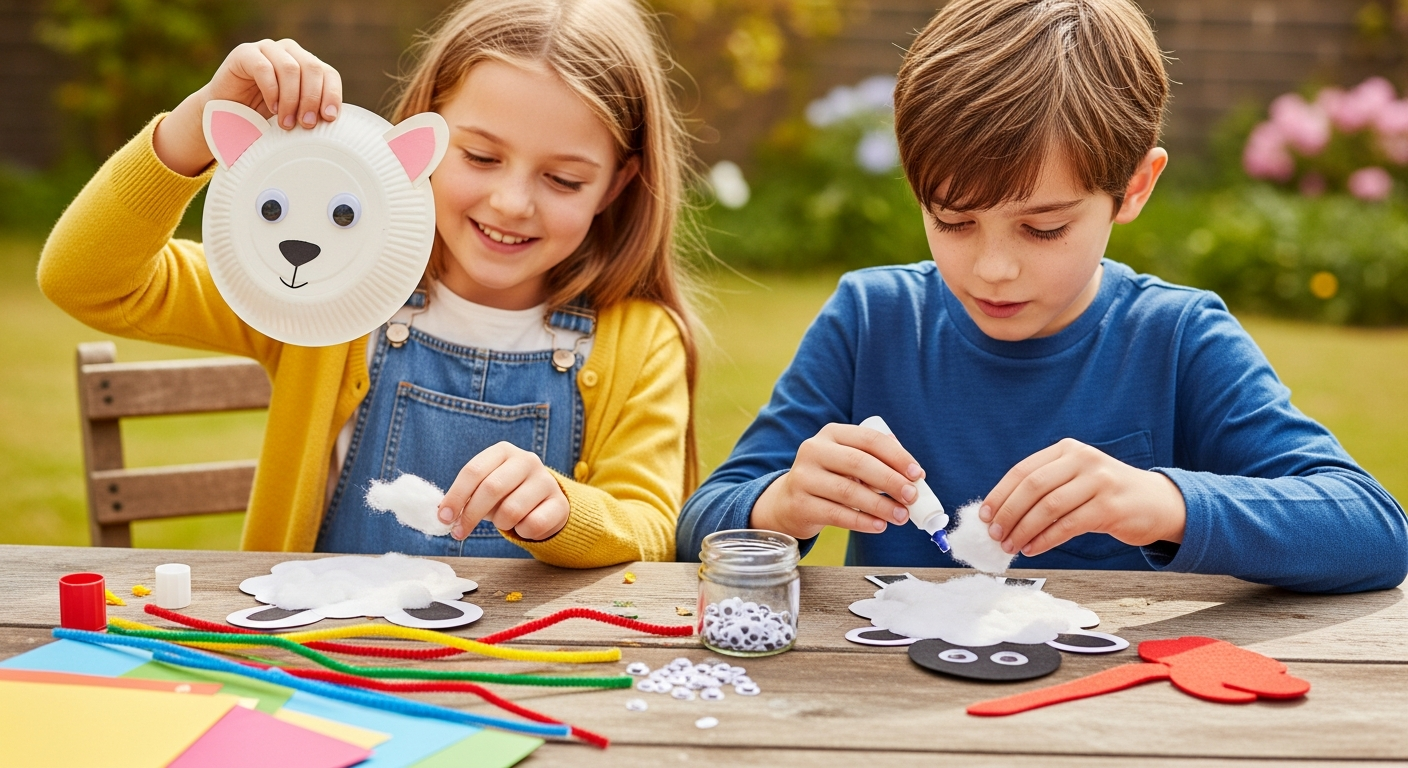
Table of Contents
- Why Animal Crafts Spark Creativity and Learning
- Getting Started: Essential Supplies for Your Craft Den
- Diving into the Animal Kingdom: Crafts by Habitat
- Making it a Learning Experience: Integrating Speech Blubs
- Tips for a Successful Animal Craft Session
- Beyond the Craft: Extending the Learning
- Conclusion
- FAQ Section
Picture this: A rainy afternoon, the kids are buzzing with energy, and the allure of screen time is stronger than ever. What if you could whisk them away on an adventure, not to a far-off land, but right there at your kitchen table? Animals, with their diverse shapes, vibrant colors, and fascinating behaviors, hold an undeniable charm for children of all ages. This innate connection provides a wonderful gateway to creativity, hands-on learning, and unforgettable family moments.
At Speech Blubs, we believe that the best learning happens when it’s fun, tangible, and deeply engaging. Our mission is to empower children to "speak their minds and hearts," providing an immediate, effective, and joyful solution for the 1 in 4 children who need speech support. Just as our app transforms screen time into "smart screen time" experiences, easy animal crafts for kids offer a screen-free alternative that nurtures crucial developmental skills. This comprehensive guide will explore a menagerie of simple, engaging animal crafts designed to bring smiles, foster fine motor skills, encourage imaginative play, and subtly introduce foundational concepts. From the depths of the ocean to the heights of the sky, we’ll uncover how these charming projects can become powerful tools for education and connection, showing you how to embark on creative journeys that echo our unique approach to playful, integrated learning.

Why Animal Crafts Spark Creativity and Learning
The simple act of crafting an animal goes far beyond just making something pretty. It's a multi-faceted activity that taps into various developmental domains, making it a powerhouse for childhood growth. Children naturally gravitate towards animals, forming emotional connections that make learning about them inherently engaging. This intrinsic interest is what we strive to leverage at Speech Blubs, where we believe that when a child is genuinely excited about a topic, the learning becomes effortless and profound.
Think about the sheer joy on a child’s face when they transform a plain paper plate into a vibrant fish or a humble egg carton into a wobbly caterpillar. This sense of accomplishment builds immense confidence, encouraging them to try new things and embrace challenges.
Developmental Benefits Galore
Easy animal crafts for kids are fantastic for honing a wide array of skills:
- Fine Motor Skills: The intricate actions of cutting, gluing small pieces, peeling stickers, drawing lines, and painting within boundaries are excellent workouts for tiny hands and fingers. These activities strengthen hand-eye coordination and prepare children for writing and other detailed tasks. For a parent whose 3-year-old "late talker" loves animals, cutting out paper animal shapes can be a low-pressure way to strengthen those crucial muscles, much like how Speech Blubs’ "Animal Kingdom" section uses video modeling to encourage specific mouth movements, strengthening oral motor skills.
- Cognitive Skills: Following instructions, understanding sequences ("first we cut, then we glue"), problem-solving (what if the glue isn't sticking?), and planning (what colors should I use?) are all deeply engaged. Children learn to think critically and adapt.
- Creativity and Imagination: With a blank canvas and a pile of materials, children can let their imaginations soar. What color is their magical unicorn? Does their lion have a rainbow mane? They explore color theory, design principles, and personal expression without even realizing it.
- Language Development: Crafting sessions are perfect opportunities for conversation. Discussing the animal they're making, its habitat, sounds, and characteristics expands vocabulary and encourages storytelling. "My elephant lives in the jungle, and he loves to splash!" This conversational engagement directly supports the foundational skills targeted by our app.
- Sensory Exploration: The feel of different textures—smooth paper, bumpy pipe cleaners, fluffy cotton balls, sticky glue, cool paint—provides rich sensory input, crucial for younger children's development.
Seamless Foundational Learning Integration
Beyond traditional art skills, animal crafts offer fantastic opportunities to subtly weave in scientific and mathematical concepts. This aligns perfectly with Speech Blubs' commitment to blending scientific principles with play. Our own methodologies, backed by extensive research, emphasize the power of play-based learning for significant developmental gains.

- Science (Biology): As children create a frog, discuss its life cycle (eggs, tadpole, froglet, frog). Making a bird can lead to conversations about migration, nests, and different species. Crafting a fish prompts discussions about aquatic habitats, gills, and camouflage.
- Engineering (Design & Structure): How do you make the giraffe's neck stand tall? What shape will best represent a whale's tail? Children engage in basic engineering principles as they design, construct, and problem-solve structural challenges. They learn about balance, stability, and spatial reasoning.
- Mathematics (Counting & Patterns): Counting out googly eyes, measuring pipe cleaners, recognizing geometric shapes (circles for eyes, triangles for ears), and creating patterns with colors or materials naturally integrates math into the fun.
By engaging in these activities, children aren't just making pretty things; they're actively exploring the world around them, developing critical thinking, and building a foundation for future learning. This hands-on, multi-sensory approach is exactly what we champion at Speech Blubs, where our interactive, video-modeling activities bring complex subjects to life through tangible, joyful learning experiences. Ready to foster your child's communication skills with engaging activities? Download Speech Blubs on the App Store or Google Play to begin!
Getting Started: Essential Supplies for Your Craft Den
Before embarking on your crafting safari, setting up your "craft den" with a few basic supplies will make the process smoother and more enjoyable. The beauty of easy animal crafts for kids is that they often utilize materials you already have around the house, promoting sustainability and upcycling—a concept that resonates with our values of resourcefulness and creativity. Remember, adult supervision is always key, especially when using scissors or other tools.
Here’s a list of versatile, inexpensive materials that will form the backbone of your animal craft collection:
Paper Products
- Construction Paper: A rainbow of colors is essential. It's sturdy enough for cutting and gluing, yet flexible for folding and shaping.
- Paper Plates: The ultimate upcycling hero! They transform into animal faces, bodies, and even habitat backdrops.
- Paper Bags: Perfect for making simple, interactive puppets.
- Toilet Paper/Paper Towel Rolls: Cylindrical wonders for creating animal bodies, binoculars for safaris, or even little animal houses.
- Newspaper/Magazines: Great for paper mache, collage, or simply protecting your crafting surface.
Cutting & Sticking Essentials
- Safety Scissors: Age-appropriate scissors are a must. Blunt-tip for younger children, gradually introducing sharper ones as dexterity improves.
- Glue Sticks: Clean and easy for paper projects.
- Liquid School Glue: Stronger hold for heavier materials or 3D constructions.
- Kid-Friendly Tape: Sometimes easier for little hands than glue.
Coloring & Decorating Fun
- Washable Markers: Bright colors and easy cleanup.
- Crayons/Colored Pencils: Different textures and finer detail options.
- Washable Paints (Temperas or Watercolors): Poster paints are great for bold colors, watercolors for softer effects.
- Googly Eyes: The quickest way to bring any animal to life!
- Pipe Cleaners: Flexible, fuzzy, and fantastic for legs, antennae, tails, or structural elements.
- Cotton Balls: Fluffy texture for sheep, clouds, or snow.
- Yarn/String: For manes, tails, or hanging crafts.
- Felt Scraps: Wonderful for adding soft textures, durable features, or making finger puppets.
- Recycled Odds & Ends: Bottle caps, fabric scraps, buttons, pasta, natural elements like leaves and small twigs. The possibilities are endless when you look at "trash" as "treasure."
Setting the Scene for Success
- Protect Your Work Surface: Lay down old newspapers, a plastic tablecloth, or a dedicated craft mat.
- Organize Supplies: Keep materials in accessible containers. Clearly label them to encourage independent selection and tidying up.
- Embrace the Mess (Within Reason!): Crafting is inherently messy, and that's part of the fun! Focus on the joy of creation rather than pristine cleanliness during the activity. Cleanup can be a team effort.
By having these materials on hand, you're well-equipped to dive into a world of creativity and transform everyday items into a vibrant animal kingdom. For those moments when you're seeking a complete, themed adventure for communication development, remember that the Speech Blubs app offers a similar level of convenience, delivering structured, play-based learning right to your fingertips for powerful speech and language growth.
Diving into the Animal Kingdom: Crafts by Habitat
Exploring animals through their habitats adds another layer of educational richness to your crafting adventures. It allows children to learn about biodiversity, ecosystems, and the fascinating ways animals adapt to their environments, all while developing their communication skills.
Ocean Animals: Dive Deep into Creativity
The mysterious and vibrant world under the sea offers endless inspiration.
- Paper Plate Fish: Cut a paper plate into a spiral. Decorate with bright colors, glitter, or sequins. Add googly eyes and a cut-out tail. As you craft, talk about the fish's "fins" and "gills," and the sounds fish don't make!
- Egg Carton Octopus: Cut out a section of an egg carton (2-3 cups joined together). Paint it a vibrant ocean color. Add eight pipe cleaner "tentacles" and googly eyes. Discuss how octopuses move and change color.
- Handprint Crabs: Paint your child's hand (fingers together, thumb out) red or orange. Stamp it twice, overlapping the palms slightly to form the body, with thumbs forming the claws. Add googly eyes. Talk about how crabs scuttle sideways.
Farm Animals: Life on the Farm
These familiar creatures are perfect for practicing animal sounds and simple vocabulary.
- Cotton Ball Sheep: Draw a sheep outline on paper. Glue cotton balls onto the body for a fluffy texture. Add a cut-out head, legs, and googly eyes. Practice "Baa, baa, black sheep!"
- Paper Bag Puppets (Cow/Pig): Use a small brown paper bag. Glue construction paper shapes for ears, snouts, eyes, and spots. Encourage your child to make the "Moo!" or "Oink!" sounds as they play with their puppet.
- Paper Plate Rooster: Cut a paper plate in half for the body. Use a second plate to cut out a comb, wattle, tail feathers, and wings. Paint vibrant colors. Discuss how roosters "cock-a-doodle-doo!"
Forest & Jungle Animals: Wild Adventures
From the quiet forest floor to the bustling jungle canopy, these animals spark imagination.
- Paper Mosaic Owl: Cut an oval shape for the owl's body and glue it onto another sheet of paper. Cut circles for eyes and a triangle for the beak. Then, use paper scraps cut into small, varied shapes and colors to create a mosaic "feather" pattern on the owl's body. This is excellent for fine motor precision and color recognition.
- Paper Plate Bear/Fox: Paint a paper plate brown or orange. Cut out ears from construction paper and glue them to the top. Add a nose and mouth. For a fox, add a fluffy yarn tail.
- Pinecone Animals: Gather pinecones from outdoors. Use felt, googly eyes, and small pom-poms to transform them into owls, hedgehogs, or squirrels. This connects nature with creativity.
Desert & Exotic Animals: Unique Creations
Explore animals from less common, but equally fascinating, habitats.
- Paper Chain Snake: Cut strips of construction paper in a variety of colors (encourage children to create a color pattern). Form them into a long paper chain, linking each strip. Add a flat, oval-shaped cut-out for the head with black marker for scales and eyes, and a small strip of paper for a tongue. For an extra touch, write a gratitude on the inside of each chain link before assembling, promoting positive reflection.
- Fork Painted Hedgehog: On construction paper, draw or paint the shape of a hedgehog’s round body, with legs and a face. Using a plastic fork and some tempera or acrylic paint, use the fork to "stamp" the hedgehog’s spikes onto its back! This unique texture technique is engaging and tactile.
- Toilet Paper Roll Chameleon: Paint a toilet paper roll green. Add cut-out legs, a curly tail, and googly eyes. Talk about how chameleons change color and stick out their long tongues!
Pets & Backyard Critters: Close to Home
These everyday animals provide familiar and comforting crafting subjects.
- Felt Finger Puppets: Cut out finger-shaped pieces of felt (two for each finger) for the body. Decorate with googly eyes, small felt shapes for ears, beaks, or spots. Hot glue or sew the edges together to create cute little critters perfect for puppet shows.
- Egg Carton Caterpillar: Upcycle by cutting out sections of an egg carton, turning them upside down, and painting them. Create a chain of about 5 or 6 pockets. Add googly eyes and cut out 1-inch pipe cleaners for antennae.
- Blow Painted Peacock: On fresh paper, draw just the body of a peacock (no feathers yet) in a corner, leaving plenty of space. Using liquid watercolor (or watered-down food coloring), drop some paint onto the paper and use a straw to blow the colors together and in all directions, creating beautiful blue, green, and purple feathers. This technique is fantastic for oral motor practice, which directly supports speech development!
- Animal Sponge Print Tracks: Using old sponges, cut out a variety of organic shapes. Research what different animal tracks look like (bear, dog, raccoon). Glue these sponge shapes onto cardstock to create stamps. Press the stamps into a palette of paint to make animal tracks on paper, fostering curiosity about wildlife.
For a parent whose child is fascinated by "Farm Animals" and struggling with specific sound blends like "cl" in "chicken" or "sh" in "sheep," incorporating these crafts while using Speech Blubs' "Farm Animals" section can reinforce learning. Our video modeling methodology helps children imitate real kids making these sounds, making the connection between the craft and vocalization even stronger and more motivating.
Making it a Learning Experience: Integrating Speech Blubs
While hands-on crafts are invaluable for development, integrating them with purposeful digital tools can create a powerful, holistic learning experience. At Speech Blubs, we are committed to providing a screen-free alternative to passive viewing and a powerful tool for family connection, leveraging "smart screen time" to enhance complex communication skills.
How Crafts Support Speech and Language Development
Crafting sessions are rich environments for fostering speech and language:
- Vocabulary Expansion: As you create an animal, introduce new words related to its body parts (mane, hoof, trunk, antennae), habitat (jungle, ocean, desert), sounds (roar, chirp, splash), and actions (fly, swim, pounce).
- Following Directions: Simple multi-step instructions during crafting help children develop receptive language skills. "First, glue the eyes, then add the tail."
- Storytelling and Narrative: Once the craft is complete, encourage your child to tell a story about their animal. Where does it live? What does it eat? Who are its friends? This builds narrative skills and encourages imaginative expression.
- Sound Practice: Imitating animal sounds during crafting is a fun, low-pressure way to practice articulation. For a child working on bilabial sounds, making a monkey craft can be a perfect opportunity to practice "Mmm" for monkey or "Buh" for banana.
Speech Blubs: Your Partner in Communication Growth
This is where Speech Blubs seamlessly integrates with your crafting adventures. Our app was born from the personal experiences of our founders, who all grew up with speech problems and created the tool they wished they had. We understand the challenges and are dedicated to making speech support accessible and joyful.
After crafting a magnificent lion, jump into Speech Blubs' "Wild Animals" section. Here, your child can practice the "roar" sound and relevant vocabulary by watching and imitating their peers using our unique video modeling method. This powerful technique, backed by science, engages mirror neurons, making learning sounds and words fun and highly effective.
- Connect the Dots: If you've just made a cow puppet, find the "Farm Animals" section in Speech Blubs to reinforce the "moo" sound and associated words. If you created a blow-painted peacock, explore "Birds" for new vocabulary and sounds.
- Beyond Animal Sounds: Speech Blubs offers a vast library of activities covering first words, early sounds, verbs, adjectives, and complex sentence structures. So, if your child is ready for more, the app is ready too.
- "Smart Screen Time": We provide a true alternative to passive viewing. Instead of simply watching cartoons, children actively engage with our app, mimicking real children, making sounds, and repeating words. This active participation turns screen time into a powerful learning opportunity that complements the hands-on fun of crafting.
Integrating these easy animal crafts for kids with Speech Blubs provides a holistic approach to language and cognitive development, fostering a love for communication, building confidence, and creating joyful family learning moments. We’re here to support every child's journey to speak their minds and hearts. Unsure if your child could benefit? Take our quick 3-minute preliminary screener to get a simple assessment and a free 7-day trial!
Tips for a Successful Animal Craft Session
Crafting with kids should be a joyous, low-stress experience. Here are some tips to help you make the most of your easy animal crafts for kids sessions:
- Preparation is Key: Before you begin, gather all your materials. Lay out newspaper or a plastic tablecloth to protect your surface. This reduces interruptions and allows you to focus on engaging with your child.
- Let Children Lead: Offer choices of animals or materials, but let your child take the reins on how they want their creation to look. There’s no right or wrong way to make a paper plate lion! Their unique vision is part of the creative process.
- Focus on the Process, Not Perfection: The goal isn't a museum-worthy piece of art, but the experience of creating, exploring, and learning. Celebrate effort and imagination over flawless execution.
- Embrace Mistakes: If something doesn't work out as planned, frame it as an opportunity to problem-solve. "Oh, the glue didn't stick the ear down. What else could we try?" This teaches resilience and critical thinking.
- Talk, Talk, Talk!: Use crafting as a prime opportunity for conversation. Ask open-ended questions: "What color should we use for the chameleon?" "Where do you think a tiger lives?" Describe actions: "You're cutting so carefully!" Narrate the process: "Now we're gluing the googly eyes on our frog." This constant verbal interaction is a cornerstone of language development.
- Clean Up Together: Involve your child in the cleanup process. This teaches responsibility and reinforces the idea that activities have a beginning, middle, and end. Make it fun by singing a cleanup song!
- Display Their Art: Find a special place to display your child's creations. This validates their effort, builds their confidence, and shows them you value their creativity. Seeing their art prominently featured can be a huge motivator.
Beyond the Craft: Extending the Learning
The learning doesn't have to stop when the glue dries. Easy animal crafts for kids can be a springboard for further exploration and communication practice.
- Storytelling with Puppets: If you've made paper bag or felt finger puppets, encourage your child to put on a puppet show. Prompt them with questions: "What adventure will your lion and monkey have today?" "What will they say to each other?" This is fantastic for developing narrative skills and practicing dialogue.
- Creating Habitats: Take your crafted animals a step further by creating a miniature habitat for them. Use a shoebox or a corner of the room to build a jungle out of green paper, an ocean with blue fabric, or a farm with toy blocks.
- Reading Books About Animals: Pair your crafts with relevant children's books. If you made a paper plate fish, read a book about ocean life. This reinforces vocabulary and introduces new concepts in an engaging way.
- Animal Sound Games: Play a game where you make animal sounds, and your child has to guess the animal or make the craft that matches. This is excellent for auditory processing and sound imitation.
- Animal Charades: Act out animal movements and sounds, and have your child guess. Then, switch roles!
By extending the learning, you're not just creating crafts; you're building a rich, interactive environment that nurtures curiosity, creativity, and crucial communication skills. After creating an animal, use our Speech Blubs app to reinforce animal sounds, names, and actions. This seamless integration provides a holistic approach to language and cognitive development, ensuring "smart screen time" that complements hands-on play and helps children gain the confidence to express themselves. We love hearing about your family's successes; read testimonials from other parents who have empowered their children with Speech Blubs.
Conclusion
Easy animal crafts for kids are so much more than just a way to pass the time; they are powerful tools for fostering creativity, honing fine motor skills, sparking imagination, and significantly boosting language development. From the simple joy of transforming a paper plate into a vibrant fish to the focused concentration of creating a mosaic owl, each project offers a unique opportunity for growth and connection. By embracing these hands-on activities, you're not just creating art; you're creating cherished memories and building foundational skills that will serve your child for a lifetime.
At Speech Blubs, we are deeply passionate about empowering children to "speak their minds and hearts." We know firsthand the challenges some children face with communication, as our founders experienced them themselves. That's why we’ve blended scientific principles with play to create an immediate, effective, and joyful solution for the 1 in 4 children who need speech support. Our app offers a unique "smart screen time" experience that perfectly complements the hands-on learning from crafts, providing video modeling from peers to make learning new sounds and words fun and natural.
Ready to combine the magic of crafting with engaging, scientifically-backed speech practice? Start your journey today! Create your account and begin your 7-day free trial with Speech Blubs. For the absolute best value and full access to all features, we highly recommend choosing our Yearly plan for just $59.99 per year (which breaks down to an incredible $4.99/month!). You'll save 66% compared to the Monthly plan ($14.99/month), and the Yearly plan includes exclusive benefits like the extra Reading Blubs app, early access to new updates, and a 24-hour support response time. The Monthly plan does not include these valuable features or a free trial. Give your child the gift of communication and creativity – download Speech Blubs now and choose the Yearly plan to unlock their full potential!
FAQ Section
Q1: What age group are these easy animal crafts suitable for?
Many easy animal crafts for kids are highly adaptable for a wide range of ages. Toddlers can enjoy simple painting, gluing large pieces, and tearing paper (with supervision), focusing on sensory exploration and fine motor development. Preschoolers can engage in more intricate cutting, detailed decorating, and following multi-step instructions. Older children can tackle more complex designs, incorporate advanced techniques, and use crafting as a springboard for independent storytelling and research about animals. Always tailor the complexity of the craft and the level of supervision to your child's individual abilities and interests.
Q2: How can crafts specifically help my child's speech and language development?
Crafts naturally create a rich environment for language learning. As you work together, you can introduce new vocabulary (animal names, body parts, colors, actions, adjectives), practice following and giving instructions, ask and answer questions, and encourage storytelling about the created animal. The tactile nature of crafting can also provide a sensory boost that makes language concepts more memorable. For children working on articulation, imitating animal sounds (e.g., "moo" for a cow, "roar" for a lion) is a fun and low-pressure way to practice target sounds.
Q3: What if my child isn't interested in crafting?
It's common for interests to vary! If your child isn't initially keen on traditional crafting, try to find a hook. Perhaps they love a specific animal – focus on that. Or, integrate elements they do enjoy: if they love playing with playdough, use it to sculpt animals; if they enjoy building, use recycled materials to engineer an animal's habitat. Keep sessions short, focus on the process rather than the outcome, and remember that collaboration can be key. Sometimes, just sitting alongside you and observing, or helping with one small step like picking colors, can spark their interest. The goal is positive engagement, not forced participation.
Q4: How does Speech Blubs fit with these craft activities?
Speech Blubs perfectly complements hands-on animal crafts by reinforcing the vocabulary, sounds, and communication skills introduced during playtime. After making a specific animal craft, you can open the Speech Blubs app and find related activities in sections like "Animal Kingdom" or "Wild Animals." Our unique video modeling methodology allows your child to watch and imitate their peers making sounds and words, turning screen time into "smart screen time" that actively builds their language skills. This creates a holistic learning experience where the physical and digital worlds work together to empower your child to speak their minds and hearts with confidence.
About the author