
Engaging Christmas Crafts for Autistic Kids
 By Speech Blubs Team•Dec 22, 2025•22 min.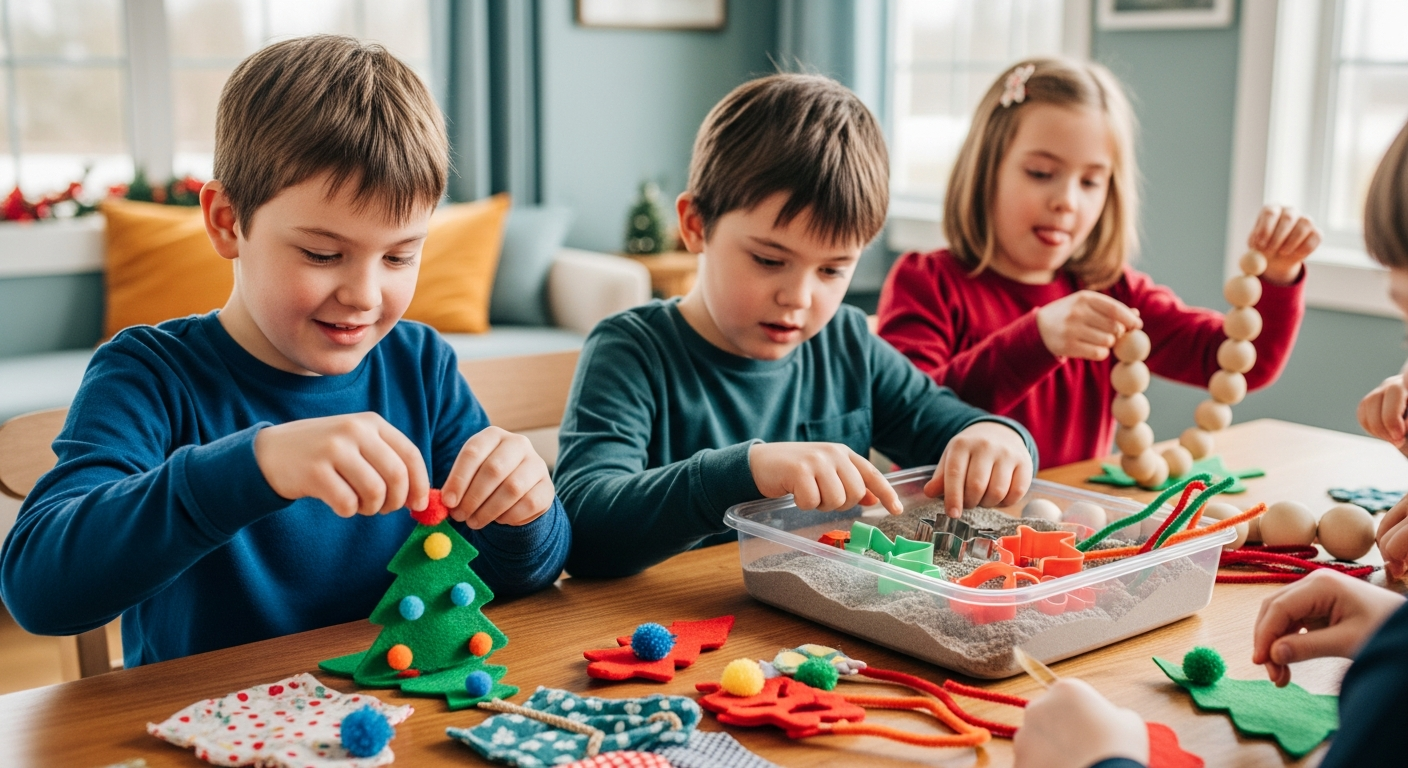
Table of Contents
- Why Christmas Crafts Are Special for Autistic Kids
- Key Considerations for Crafting with Autistic Children
- Our Favorite Sensory-Friendly Christmas Craft Ideas
- Integrating Communication & Language into Christmas Crafting
- How Speech Blubs Can Enhance Your Crafting Journey
- Tips for a Smooth & Joyful Crafting Experience
- Beyond the Craft: Creating Lasting Memories
- Ready to Empower Your Child's Communication Journey?
- Conclusion
- Frequently Asked Questions (FAQ)
As the festive season twinkles into view, many families eagerly anticipate the magic of Christmas. For children on the autism spectrum, however, this time of year, with its changes in routine, new sensory experiences, and heightened social expectations, can sometimes feel overwhelming. Yet, the heart of the holidays often lies in shared activities, and few traditions are as universally cherished as crafting. But how can we ensure that Christmas crafts are not just fun but also supportive, inclusive, and genuinely engaging for autistic children?
This blog post is designed to guide parents and caregivers through creating joyful, sensory-friendly, and communication-rich Christmas crafting experiences. We'll explore why thoughtful craft selection is so beneficial, delve into key considerations for adapting activities, and share a treasure trove of delightful craft ideas. Crucially, we'll also reveal how tools like Speech Blubs can seamlessly integrate into and amplify these creative moments, transforming simple crafts into powerful opportunities for connection, skill-building, and self-expression. Our goal is to empower families to embrace the magic of making, fostering communication and confidence one craft at a time, ensuring every child can speak their minds and hearts during this special season.

Why Christmas Crafts Are Special for Autistic Kids
Crafting during the holiday season offers far more than just pretty decorations; for autistic children, it presents a unique blend of developmental benefits, all wrapped up in festive fun. When approached with intention and understanding, Christmas crafts can become invaluable tools for growth and connection.
Sensory Exploration in a Controlled Environment
Many autistic children have unique sensory processing needs, which can sometimes make unexpected sensory input challenging. Crafting, however, offers a fantastic opportunity for controlled sensory exploration. Children can engage with various textures (soft felt, bumpy pipe cleaners, smooth paper), sights (bright colors, glitter – used mindfully!), and even smells (cinnamon playdough). The beauty of crafts is that you can introduce these elements one by one, allowing your child to explore at their own pace and comfort level, avoiding overstimulation while still offering enriching experiences.
Fine Motor Skill Development
From grasping a paintbrush to snipping with scissors, manipulating glue sticks, or threading beads, almost every craft activity is a powerhouse for developing fine motor skills. These small, precise movements of the hands and fingers are essential for tasks like writing, dressing, and eating. Christmas crafts naturally encourage hand-eye coordination, dexterity, and strength in a playful, motivating context. For a child who might find structured fine motor exercises tedious, creating a sparkly snowflake or decorating a gingerbread cookie can make skill development feel like a joyful game.
Opportunities for Communication and Language
Crafting provides a natural, low-pressure environment for practicing and expanding communication skills. Children can describe what they are doing, request materials, comment on their creations, or follow multi-step instructions. This real-world application of language is incredibly valuable. Imagine a child asking for "more glue," describing their "red star," or proudly exclaiming "I made it!" These interactions foster both expressive and receptive language development. Tools like Speech Blubs, which we'll discuss further, can brilliantly complement these moments by reinforcing holiday-specific vocabulary and encouraging imitation.

Emotional Regulation and Self-Expression
The creative process itself can be deeply therapeutic. Crafting offers a non-verbal outlet for emotions and a means of self-expression. For children who may struggle to articulate their feelings, transforming an idea into a tangible object can be incredibly empowering. The focus and calm required for crafting can also be wonderfully regulating, helping children manage anxiety or overstimulation. The satisfaction of completing a project, no matter how simple, builds self-esteem and confidence.
Family Bonding and Connection
Sharing a creative activity is a beautiful way to strengthen family bonds. Crafting together provides shared focus, encouraging parallel play or joint engagement. It creates opportunities for positive interactions, shared laughter, and mutual accomplishment. These moments are about more than just the craft; they are about building memories and reinforcing a sense of belonging, fostering a family connection that transcends words. At Speech Blubs, we understand the importance of these family moments, which is why our app provides a powerful tool for joyful family learning.
Predictability and Structure
While the holidays can be chaotic, a well-planned craft activity offers a comforting sense of predictability. Having a clear beginning, middle, and end, with visual steps and a defined goal, can be very reassuring for autistic children who thrive on structure. This makes crafting an ideal anchor during a time that might otherwise feel overwhelming, offering a consistent and calming activity amidst holiday hustle and bustle.
Key Considerations for Crafting with Autistic Children
To ensure that Christmas crafting is a positive and enriching experience, it’s vital to approach it with an understanding of your child's individual needs. What works wonderfully for one child might be challenging for another. Here are some key areas to consider:
Sensory Sensitivities
This is often the most critical aspect to address.
- Textures: Does your child dislike sticky feelings? Opt for glue sticks over liquid glue, or provide gloves. If glitter is overwhelming, choose large sequins, pompoms, or textured paper instead. Some children love soft, tactile materials like cotton balls or felt, while others prefer smooth, dry items.
- Smells: The scent of certain craft materials (some paints, markers, glues) can be strong. Choose low-odor options or craft in a well-ventilated area. Consider incorporating pleasant, familiar scents like cinnamon or vanilla into playdough for a positive sensory experience.
- Sounds: Does crumpling paper or snapping pipe cleaners cause distress? Be mindful of noise levels and choose quieter activities or provide noise-canceling headphones if needed.
- Visuals: Bright, flashing lights or cluttered workspaces can be overwhelming. Keep the crafting area organized and use calming colors. Introduce new materials one at a time.
Motor Skills Adaptation
Fine motor skills vary widely.
- Grasping and Manipulation: If your child struggles with small items, use larger beads, chunky crayons, or pre-cut shapes. Instead of intricate cutting, tearing paper can be a great alternative that builds hand strength.
- Cutting: Use adaptive scissors or pre-cut pieces. Encourage tearing paper for collages, which also builds hand strength and coordination.
- Pasting: Glue sticks are often easier to control and less messy than liquid glue. For children who enjoy a more tactile experience, finger paints can be an option if mess is managed.
- Practical Scenario: For a parent whose 4-year-old struggles with the intricate movements of cutting small shapes, but loves assembling things, a great adaptation would be to use pre-cut felt shapes for a Santa or reindeer ornament. The child can focus on the sensory experience of the soft felt and the task of gluing, building confidence without the frustration of difficult cutting. This can also be a springboard for practicing simple commands like "put the nose here" or "find the red hat," which can be reinforced by the "Following Instructions" section of Speech Blubs after the craft.
Attention Spans and Frustration Tolerance
Keep activities short, simple, and achievable.
- Break Down Steps: Present instructions one or two steps at a time, rather than giving a long list. Visual schedules with pictures for each step can be incredibly helpful.
- Clear End Goal: Have a clear, manageable goal for the activity so your child knows what to expect and can feel the satisfaction of completion.
- Flexibility: It's okay if the craft doesn't look exactly like the example. The process is more important than the product. Allow for "happy accidents" and unique interpretations.
- Practical Scenario: Imagine a child who enjoys crafting but quickly loses focus or gets frustrated if a step is too hard. Instead of a complex paper chain, try simple pre-cut strips that only require a single loop and staple. This allows for quick wins and a tangible product, building enthusiasm. The parent can engage them by asking "What color next?" or "How many links do we have?" promoting communication in short bursts.
Communication Styles
Adapt how you communicate instructions and encourage interaction.
- Visual Aids: Use pictures, diagrams, or demonstrate each step.
- Simple Language: Use short, clear sentences. Avoid abstract concepts or jargon.
- Offer Choices: Instead of asking "What do you want?", offer "Do you want blue or red?" This empowers the child and reduces communication pressure.
- Allow for Different Communication: Be open to verbal speech, gestures, pointing, or using communication devices.
Interest-Based Motivation
Leverage your child's fascinations.
- If they love trains, can you make a train ornament? If they adore animals, perhaps an animal-themed Christmas garland. Tying crafts to their special interests can significantly increase engagement and motivation.
Creating a Safe and Predictable Environment
- Designated Space: Having a consistent spot for crafting helps set expectations.
- Visual Schedule: A picture schedule showing "Craft time -> Clean up -> Snack time" can reduce anxiety about transitions.
- Pre-preparation: Gather all materials before starting to avoid interruptions and maintain focus.
Our Favorite Sensory-Friendly Christmas Craft Ideas
Here are some Christmas craft ideas designed with neurodiverse children in mind, focusing on varied sensory experiences and adaptability.
Soft & Textured Ornaments
- Pompom Garlands/Ornaments: Use large, colorful pompoms. Children can string them onto yarn with a large-eye needle or simply glue them onto pre-cut cardboard shapes (like stars or trees). This is wonderful for tactile input and fine motor practice.
- Felt Shapes: Pre-cut felt shapes (stars, trees, stockings) can be decorated with fabric glue, other felt pieces, or large buttons. Felt is soft, easy to handle, and less messy than glitter.
- Yarn Wrapping: Cut cardboard shapes (e.g., a star, a tree) and let children wrap colorful yarn around them. This is excellent for fine motor skills and offers a soothing, repetitive motion.
Scented Playdough Creations
- Holiday Playdough: Make homemade playdough and add scents like cinnamon, nutmeg, peppermint, or vanilla extract. Children can use Christmas cookie cutters to make ornaments or figures. The scent provides a calming sensory experience, and shaping dough is excellent for hand strength. You can even bake salt-dough creations after shaping for lasting ornaments.
Window Clings (Low Mess)
- Static Cling Art: Use static cling sheets or contact paper with pre-cut shapes. Children can arrange and re-arrange felt, tissue paper, or other lightweight items onto the sticky surface. This offers visual stimulation and fine motor practice with minimal mess.
Nature-Inspired Decorations
- Pinecone Painting: Collect pinecones and paint them with child-safe paints. They can be left natural or decorated with simple elements like small bells or ribbons. This brings nature indoors and offers an interesting texture.
- Leaf/Twig Collages: If you have autumn leaves saved, or collect small twigs, these can be glued onto paper or cardboard to create natural Christmas scenes. This encourages creativity and connection with the outdoors.
Cardboard Tube Characters
- Reindeer, Santa, Elves: Gather empty toilet paper or paper towel rolls. Children can paint them and then add googly eyes, cotton ball beards, pipe cleaner antlers, or felt hats. These are easy to manipulate and provide clear steps for assembly.
Edible Crafts
- Cookie Decorating: Bake or buy plain sugar cookies or gingerbread shapes. Focus on simple decorating with frosting, large sprinkles, or candies. This is highly motivating, engages multiple senses (taste, smell, touch), and provides opportunities for requesting and describing.
- Fruit Skewers: Use red and green grapes, strawberries, and melon chunks on a skewer to create festive "Christmas trees." This promotes fine motor skills, healthy eating, and provides a delicious reward.
Light-Up Crafts
- Jar Lanterns: Decorate clean glass jars with tissue paper, paint, or natural elements. Place a battery-operated tea light inside for a soft, glowing lantern. This offers a calming visual sensory experience.
- Paper Bag Luminaries: Decorate small paper bags and place a battery-operated tea light inside. Arrange them along a pathway or windowsill for a gentle holiday glow.
Integrating Communication & Language into Christmas Crafting
Christmas crafts are not just about making things; they are vibrant opportunities for communication. Here's how to intentionally weave language learning into your festive activities, further supported by the science-backed approach of Speech Blubs.
Descriptive Language
Encourage your child to describe what they are seeing, touching, and creating.
- "What color is that paint?" ("Red!")
- "How does the felt feel?" ("Soft!")
- "Can you tell me about your Christmas tree ornament?" ("It's sparkly and has a big star.") This expands vocabulary related to colors, textures, shapes, and holiday themes.
Following Instructions
Crafts naturally involve following steps, making them perfect for practicing receptive language.
- "First, glue the eyes. Then, add the nose."
- "Put the red pompom on the tree."
- "Pick up the scissors." Use clear, concise instructions and visual cues. Break down complex tasks into smaller, manageable steps.
Requesting and Expressing Needs
This is a fundamental communication skill that crafts make highly motivating.
- "More glue, please."
- "Help!" (When a step is difficult).
- "My turn." (When sharing materials).
- "I like this!" or "I don't like sticky." These simple phrases are powerful as they empower your child to interact with their environment and express their preferences.
Commenting and Sharing Ideas
Encourage commenting on the process and product, fostering social communication.
- "Wow, that's a cool reindeer!"
- "What a beautiful snowflake!"
- "Tell me what you're making next." This promotes back-and-forth interaction and shared attention.
Social Reciprocity
If crafting with multiple children or an adult, opportunities for turn-taking, sharing, and collaborating naturally arise.
- "My turn to pick a color, then your turn."
- "Can you share the glitter with your sibling?"
- "Let's work together to make this garland." These interactions lay the groundwork for more complex social communication.
Practical Scenario: Leveraging Crafting for Two-Word Requests
For a child who is just beginning to form two-word requests, decorating gingerbread cookies offers immediate, high-motivation opportunities. As they reach for a bowl of sprinkles, you can prompt, "Sprinkles, please." When they want to use the icing, "Green frosting." Or, if they finish with one item, "All done!" These simple, repeated phrases, tied to a desirable activity, build confidence and communication skills.
How Speech Blubs Can Enhance Your Crafting Journey
At Speech Blubs, we believe in empowering children to "speak their minds and hearts." Our company was born from the personal experiences of our founders, who all grew up with speech problems and created the tool they wished they had. We are committed to providing an immediate, effective, and joyful solution for the 1 in 4 children who need speech support, blending scientific principles with play into one-of-a-kind "smart screen time" experiences. We provide a screen-free alternative to passive viewing (like cartoons) and a powerful tool for family connection. This mission aligns perfectly with the communicative potential of Christmas crafts.
Video Modeling for Imitation Skills
Our unique "video modeling" methodology is at the heart of Speech Blubs. Children learn by watching and imitating their peers on screen. This is incredibly powerful for developing imitation skills, which are foundational for both speech development and following the steps in a craft.
- During Crafting: If your child is struggling to imitate an action like "cut" or "glue," you can practice similar imitative movements within the Speech Blubs app beforehand. This prepares them for the physical actions involved in the craft.
- Pre-Crafting: Before making a "star" ornament, use Speech Blubs to introduce and practice the word "star" by watching children say it and imitating them. This builds familiarity and reduces cognitive load during the craft itself. Our scientific methodology is backed by extensive research, placing us in the top tier of speech apps worldwide, ensuring that our approach is effective and engaging. You can learn more about our scientific methodology here.
Targeted Vocabulary and Language Reinforcement
Speech Blubs offers themed sections that can perfectly complement Christmas crafting.
- "Holiday Fun" Section: Explore and practice words related to Christmas – "Santa," "tree," "present," "star," "bell." This enriches the vocabulary your child can use while describing their crafts.
- "First Words" or "Animal Kingdom" (for animal-themed crafts): Reinforce basic vocabulary relevant to the craft materials or themes. For a child making a reindeer ornament, practicing "reindeer" or "brown" in the app can be a fun warm-up.
- Practical Scenario: For a parent whose 3-year-old "late talker" loves animals and is making reindeer crafts, the "Animal Kingdom" section of Speech Blubs offers a fun, motivating way to practice "reindeer" or sounds like "ho ho ho" or related actions. By seeing other children perform these sounds and actions, it provides a clear, imitable model. This "smart screen time" is active and engaging, unlike passive viewing, making it a powerful tool for family connection.
Developing Pre-Speech Skills
Beyond specific words, Speech Blubs also helps develop crucial pre-speech skills that benefit crafting:
- Joint Attention: Watching the same screen together, focusing on a shared activity, translates to shared attention during crafting.
- Turn-Taking: Many app activities involve turn-taking, mirroring the social dynamics of sharing craft materials.
- Engagement and Motivation: The app's playful nature keeps children engaged, building a positive association with learning and communication that can carry over into crafting.
By using Speech Blubs, parents aren't just giving their child a screen; they're providing a structured, engaging, and highly effective tool that works in harmony with real-world interactions like Christmas crafting. It's about empowering children to communicate their unique ideas and feelings, fostering a love for communication, building confidence, and creating joyful family learning moments. We are proud to provide a powerful supplement to a child's overall development plan and, when applicable, professional therapy. Learn more about Speech Blubs and our mission to support children's speech development.
Tips for a Smooth & Joyful Crafting Experience
To maximize the fun and minimize frustration, consider these practical tips for setting up your Christmas craft sessions.
Preparation is Key
Gather all materials before inviting your child to the crafting table. This includes pre-cutting shapes, having glue open (if safe), and setting out only the necessary items. A clear, organized workspace prevents distractions and reduces the likelihood of "oops" moments that can lead to frustration.
Utilize Visual Supports
Create a simple visual schedule using pictures or drawings for each step of the craft. For example: 1. Get paper. 2. Glue eyes. 3. Add nose. 4. Finish. This helps children understand the sequence of tasks and what to expect, making the process more predictable and less anxiety-provoking.
Offer Meaningful Choices
Empower your child by giving them choices whenever possible. "Do you want red paint or green paint?" "Do you want a star or a tree ornament?" Offering two clear options can prevent overwhelm while still giving them a sense of control and ownership over their creation.
Focus on the Process, Not the Product
Resist the urge for perfection. The goal is engagement, exploration, and communication, not a museum-worthy masterpiece. Celebrate your child's effort and creativity, no matter how the final product looks. An "imperfect" craft made with joy is far more valuable than a perfect one made with tears.
Be Flexible and Adapt
If a step is too difficult, simplify it. If your child is more interested in tearing paper than cutting, let them! If they want to combine unexpected colors, encourage their unique artistic vision. Sometimes the most successful crafts are the ones that diverge from the original plan.
Celebrate Efforts and Provide Positive Reinforcement
Specific praise is very powerful. Instead of "Good job," try "I love how carefully you glued those pompoms!" or "You worked so hard on that!" Acknowledging their effort and specific actions builds confidence and encourages continued engagement.
Keep it Short and Sweet
Pay attention to your child's cues. If they start to show signs of frustration, losing interest, or becoming overwhelmed, it's okay to end the activity. A positive, short experience is better than a long, drawn-out one that ends in tears. You can always come back to it later!
Beyond the Craft: Creating Lasting Memories
Once the glue dries and the glitter settles, the magic of Christmas crafting doesn't end. The true value extends into how we celebrate and cherish these creations and the moments they represent.
Displaying your child's artwork prominently sends a powerful message: "Your creativity and effort are valued here." Whether it's hanging a wonky painted pinecone on the tree or proudly taping a handmade card to the fridge, these simple acts reinforce their sense of accomplishment and belonging. Gifting handmade crafts to family members adds another layer of joy, teaching children about generosity and the special connection a personal gift can convey.
These moments also provide continued opportunities to reinforce the communication skills you've been working on. "Can you tell Grandma about your sparkly star?" "Remember how we mixed the red and green paint for this?" By revisiting the crafts, you re-engage those language pathways and solidify learning in a meaningful context.
Ultimately, Christmas crafting with autistic children is about much more than just a finished item. It’s about building confidence, fostering a love for communication, reducing frustration, developing key foundational skills, and most importantly, creating joyful, lasting family memories. It’s about ensuring that every child has the opportunity to experience the warmth and wonder of the holiday season, supported and celebrated for exactly who they are.
Ready to Empower Your Child's Communication Journey?
We hope these ideas inspire you to create wonderful, communication-rich Christmas crafting memories with your child. And as you embark on this journey, remember that Speech Blubs is here to support you every step of the way, making learning joyful and effective.
We offer two convenient subscription plans to access our full suite of features and help your child speak their mind and hearts:
- Monthly Plan: $14.99 per month.
- Yearly Plan: Just $59.99 per year, which breaks down to an incredible value of only $4.99 per month! This means you save 66% compared to the monthly option.
The Yearly Plan is truly the best choice for your family, offering the most value and exclusive benefits that are not available with the Monthly Plan. With the Yearly Plan, you'll receive:
- A 7-day free trial to explore all our amazing activities.
- The extra Reading Blubs app, designed to boost early literacy skills.
- Early access to new updates and features, so you're always at the forefront of our latest innovations.
- 24-hour support response time, ensuring you get quick assistance whenever you need it.
The Monthly Plan, while flexible, does not include these invaluable benefits. We highly encourage you to choose the Yearly Plan to get the most out of your Speech Blubs experience, including your free trial and the full suite of features designed to empower your child's communication.
Don't let another day pass without giving your child the gift of confident communication. Take our quick 3-minute preliminary screener to get a simple assessment and a free 7-day trial.
Ready to get started? Create your account and begin your 7-day free trial today by choosing the Yearly Plan. You can also download Speech Blubs on the App Store or get Speech Blubs on Google Play to unlock a world of communication and joy for your child. Hear what other parents are saying about their child's success with Speech Blubs by checking out our testimonials here.
Conclusion
Christmas crafting for autistic children is a truly special endeavor, offering rich opportunities for sensory exploration, fine motor skill development, emotional regulation, and invaluable family bonding. By thoughtfully adapting activities to respect individual sensory needs, motor abilities, and communication styles, we transform simple crafts into powerful pathways for growth and connection.
Integrating these festive activities with supportive tools like Speech Blubs further enhances their impact. Our "video modeling" method and targeted vocabulary sections empower children to build foundational communication skills, making every craft a "smart screen time" experience that fosters active engagement and joyful learning. The magic isn't just in the making, but in the shared moments, the growing confidence, and the blossoming ability to express thoughts and feelings.
This holiday season, let's embrace the unique gifts of every child and create a space where creativity flourishes and communication thrives. Give your child the gift of empowered communication and joyful learning. Start your free 7-day trial today by opting for the Yearly Plan – the best value for your family, offering exclusive features and continuous support. Download Speech Blubs on the Apple App Store or Google Play Store and begin your journey toward a more communicative and connected holiday season.
Frequently Asked Questions (FAQ)
Q1: How can I make sure the craft isn't overwhelming for my child?
A1: Start with thorough preparation: gather all materials beforehand and set up a calm, organized space. Use visual schedules to break down steps, offer limited choices, and keep the activity brief, ending before your child shows signs of frustration. Focus on the process of creating rather than achieving a perfect final product.
Q2: What if my child doesn't want to participate in a craft activity?
A2: Respect their preferences. Instead of forcing participation, you might try inviting them to watch, offering a small, low-pressure task, or linking the craft to a strong special interest. Sometimes, simply having the materials available for independent exploration can spark curiosity without the pressure of a directed activity.
Q3: How does Speech Blubs specifically help with skills used in crafting?
A3: Speech Blubs' video modeling helps children practice imitation skills crucial for following craft steps. Its themed sections, like "Holiday Fun," build vocabulary relevant to Christmas crafts, while encouraging requesting and descriptive language. It provides "smart screen time" that prepares children for real-world interactions and builds foundational communication skills in a fun, engaging way.
Q4: What's the best way to introduce new craft materials to a child with sensory sensitivities?
A4: Introduce new materials slowly, one at a time, allowing your child to observe and touch them at their own pace. Offer tools like gloves or brushes if direct contact is avoided. Describe the texture, color, and smell beforehand, and always have familiar, preferred materials nearby for comfort or as an alternative.
About the author