
Engaging Fun Nutrition Activities for Kids
 By Speech Blubs Team•Jan 13, 2026•18 min.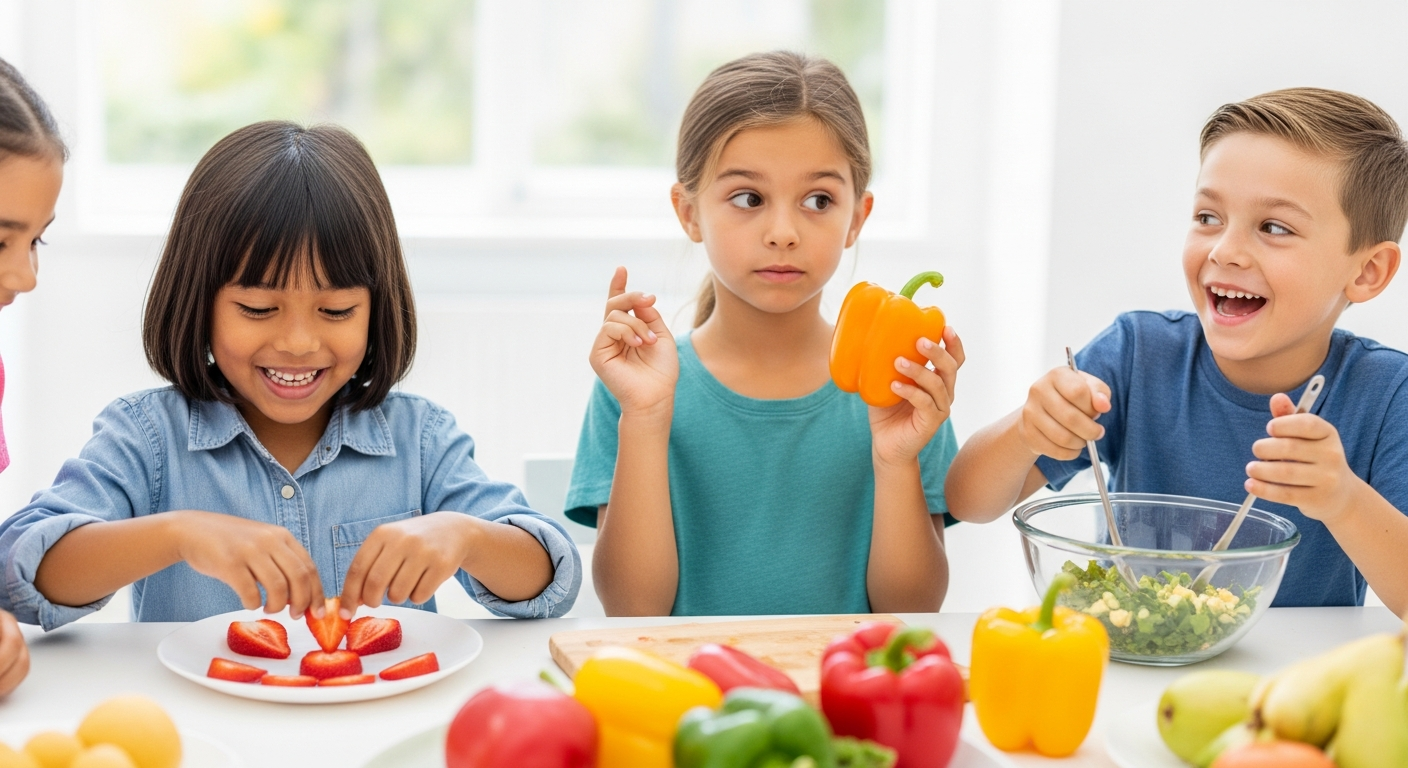
Table of Contents
- Introduction
- Understanding Childhood Nutrition: More Than Just Food
- The Building Blocks: Essential Concepts for Young Eaters
- Hands-On Fun: Engaging Nutrition Activities
- The Power of Communication: How Speech Blubs Can Help
- Getting Started with Speech Blubs: Your Partner in Communication & Learning
- Conclusion
- FAQ
Imagine a dinner table where your child excitedly tells you about the "rainbow salad" they helped prepare, proudly naming each colorful vegetable. Or perhaps a moment when they confidently identify an obscure fruit at the grocery store, eager to tell you where it grows. These aren't just dreams; they are achievable realities when we transform learning about food into an adventure, a game, a joyful discovery. Many parents know the struggle of encouraging healthy eating, often feeling like battles are waged over broccoli or pleas are made for just "one more bite." But what if learning about nutrition could be as captivating as their favorite storybook or as thrilling as a treasure hunt?
This blog post aims to unlock a world of creative, interactive, and truly fun nutrition activities for kids that will make healthy eating an engaging and natural part of their lives. We'll explore a smorgasbord of hands-on kitchen adventures, sensory explorations, garden escapades, and even how smart screen time can enhance communication around food. Our goal is to provide you with practical, valuable advice that blends play with purpose, empowering your children to build a positive, lifelong relationship with food, developing not just healthy bodies but also strong communication skills.

Introduction
In a world filled with processed snacks and tempting treats, guiding children toward healthy eating habits can feel like an uphill battle. Yet, the foundation for a lifetime of well-being is laid in these crucial early years. It's not enough to simply tell children what to eat; we need to show them, involve them, and most importantly, make it exciting! Childhood nutrition is about more than just avoiding "bad" foods; it's about fostering an understanding of how food fuels our bodies, makes us strong, helps us think, and even aids us in expressing ourselves.
This comprehensive guide is designed to empower parents, caregivers, and educators with a treasure trove of engaging strategies. We will delve into why early nutrition education is so vital, introduce foundational concepts, and then dive deep into over a dozen specific, actionable activities – from culinary creations and garden explorations to vibrant sensory play and active games. Crucially, we’ll also explore how fostering robust communication skills, often through supportive tools like Speech Blubs, can profoundly enrich your child's nutrition learning journey, making them more confident in expressing their preferences and understanding new concepts. By the end, you'll be equipped to transform mealtimes and snack times into opportunities for discovery, curiosity, and joyful growth.
Understanding Childhood Nutrition: More Than Just Food
Nutrition is a vast and vital topic, but for children, it needs to be broken down into digestible, engaging pieces. It’s not just about what they put into their bodies; it’s about the learning process, the social interactions, and the language development that surrounds food.
Why Early Nutrition Education Matters
- Foundational Health: Childhood is a critical window for growth and development. Proper nutrition provides the building blocks for strong bones, healthy organs, and a robust immune system. Establishing healthy habits early on significantly reduces the risk of chronic diseases later in life.
- Cognitive Development: The brain is a hungry organ, and its development relies heavily on a consistent supply of essential nutrients. A well-nourished child often exhibits better concentration, improved memory, and enhanced problem-solving skills, all crucial for academic success and daily learning.
- Emotional Well-being: The relationship with food can profoundly impact a child's emotional state. Positive food experiences, free from pressure and judgment, contribute to a healthy body image and reduce anxiety around eating. Engaging in fun activities helps children develop a positive self-concept and feel good about their choices.
- Developing Communication Around Food: Learning about nutrition is inherently tied to language. Children need to articulate their hunger, express their preferences, ask questions about new foods, and describe tastes and textures. This rich vocabulary and the ability to engage in food-related conversations are crucial life skills. Activities that encourage this communication, such as discussing what they like or dislike about a new vegetable, help build these verbal muscles. For instance, a child learning to say "apple" or "carrot" in a playful setting will feel more confident participating in a group activity about fruits and vegetables.
The Role of Play in Learning
Children are natural learners, and their primary mode of discovery is play. When we infuse nutrition education with play, we tap into their innate curiosity and make learning irresistible.

- Engagement and Retention: Hands-on, playful activities make learning memorable. Children are more likely to retain information when they are actively involved, using multiple senses, and having fun. A child who plants a seed and watches it grow understands the origin of a vegetable far better than one who simply sees it on a plate.
- Reducing Pressure and Fussy Eating: For many children, especially picky eaters, mealtimes can be a source of stress. Introducing foods in a playful, low-pressure environment, away from the expectation of eating, can significantly change their relationship with food. It allows them to explore, touch, smell, and even taste on their own terms, fostering curiosity rather than resistance. This exposure is key, even if they don't eat the food immediately.
The Building Blocks: Essential Concepts for Young Eaters
Before diving into activities, it’s helpful to understand the core nutrition concepts we aim to teach. These aren't rigid rules but rather guiding principles to help children make informed choices.
What Are Food Groups? (MyPlate as a Guide)
Understanding food groups helps children grasp the variety needed for a balanced diet. We can simplify this with tools like the USDA’s MyPlate, which categorizes foods into:
- Fruits: Often sweet and colorful, providing vitamins and fiber.
- Vegetables: Packed with nutrients, coming in many forms, textures, and colors.
- Grains: Whole grains are best, providing energy.
- Protein: For building muscles and strength.
- Dairy: Important for strong bones and teeth.
The Rainbow of Nutrients: Eating a Variety of Colors
Encouraging children to "eat the rainbow" is a simple, visual, and effective way to ensure they get a wide range of vitamins and minerals. Each color often signifies different health benefits.
Understanding "Sometimes" Foods vs. "Anytime" Foods
Rather than labeling foods as "good" or "bad," which can lead to guilt or unhealthy relationships with food, we can teach children about "everyday" or "anytime" foods that provide essential nutrients, and "sometimes" foods that are treats to be enjoyed in moderation. This promotes balance and moderation without judgment.
From Farm to Table: Where Does Our Food Come From?
Connecting food to its source helps children appreciate what they eat and understand natural processes. Whether it’s visiting a farm, planting a small garden, or simply discussing where milk comes from, this knowledge fosters respect for food and the effort involved in producing it.
Hands-On Fun: Engaging Nutrition Activities
Now, let's get to the good stuff! Here are a variety of fun nutrition activities designed to engage children across different age groups and learning styles.
Kitchen Adventures: Cooking & Preparing Together
Involving children in the kitchen is one of the most powerful ways to teach nutrition. It's tactile, sensory, and highly rewarding.
- Healthy Recipe Creations: Let children take the lead (with supervision) in creating simple, healthy snacks and meals. Ideas include yogurt parfaits layered with fruit and granola, fruit salads, or even mini whole-wheat pizzas where they can choose their veggie toppings. This activity isn't just about cooking; it’s a fantastic opportunity for communication. Children practice following multi-step instructions, using descriptive words for ingredients (e.g., "crunchy granola," "sweet berries," "smooth yogurt"), and engaging in turn-taking during preparation. For a child who might be a "late talker," practicing action verbs like "mix," "pour," or "chop" (with a child-safe knife) in this real-world context can reinforce vocabulary learned through interactive apps like Speech Blubs. Our app, through its engaging video modeling, allows children to watch and imitate peers using these very words, building confidence that they can then apply directly in the kitchen.
- Smoothie Station: Set up a "smoothie bar" with various fruits (fresh or frozen), yogurt, milk or milk alternatives, and a blender. Let children choose their ingredients and help measure. They'll love pressing the buttons and seeing their creation come to life. This encourages experimentation with flavors and textures.
- Food Prep Helpers: Even very young children can participate in age-appropriate tasks like washing fruits and vegetables, tearing lettuce for a salad, stirring ingredients, or setting the table. These simple tasks build fine motor skills, foster a sense of responsibility, and introduce them to different foods in a low-pressure way. Here, children are actively applying and expanding their vocabulary, saying words like "wash," "stir," or "pour" as they perform the actions, echoing the practical vocabulary skills we emphasize at Speech Blubs.
- Label Reading Detectives: For older children, turn food labels into a thrilling scavenger hunt. Provide a list of key nutrients (e.g., fiber, protein, sugar) and challenge them to find which food item has the most or least of each. This teaches critical thinking and empowers them to make informed choices.
Sensory & Creative Play: Exploring Food Beyond the Plate
Sometimes, the best way to learn about food is not by eating it, but by playing with it! These activities focus on touch, sight, smell, and imaginative engagement.
- Fruit and Veggie Rainbow: Gather a variety of colorful fruits and vegetables (e.g., red apples, orange carrots, yellow bell peppers, green grapes, blue blueberries, purple cabbage). Have children arrange them into a vibrant rainbow. As they create, discuss the colors, shapes, and textures of each item. This activity naturally encourages children to practice naming colors and food items. Just as children learn by watching and imitating their peers in Speech Blubs, they can associate the visual cues of these colorful foods with their spoken names, solidifying their vocabulary.
- Create a Fruit and Vegetable Person/Face: Provide a plate and a selection of cut-up fruits and vegetables (e.g., cucumber slices for eyes, carrot sticks for arms, a strawberry for a nose). Challenge children to create a "food person" or face. This fosters creativity and allows them to interact with foods in a playful, non-eating context. This game boosts imaginative play and encourages descriptive language, as children might say, "The carrot is his nose!" or "These green grapes are his eyes." Such expressive communication builds upon the vocabulary and sentence structures children explore within our app.
- Food Group Sorting Games:
- MyPlate Relay Race: Label five buckets or bins with the MyPlate food groups (Grains, Fruits, Vegetables, Dairy, Meat/Meat Alternate). Provide pictures or play food items. Children race to sort the foods into the correct buckets. This gets them moving and thinking!
- Food Group Bingo: Create bingo cards with pictures of different foods. As you call out food groups or specific foods, children mark their cards. These games are fantastic for reinforcing food group recognition. For a child who might struggle with auditory processing or vocabulary, the consistent visual and auditory input from Speech Blubs, where they might learn the names of common fruits and vegetables, can build confidence in identifying and naming these items before applying them to a fast-paced game.
- The Fruit and Veggie Guessing Bag: Place a variety of fruits and vegetables (real or toy) into an opaque bag. Children reach in, feel an item, and guess what it is without looking. Encourage them to describe what they feel. This enhances sensory vocabulary (e.g., "It's smooth," "It's bumpy," "It's soft") and object naming, crucial for descriptive communication.
- Food Cupboard Play: Set up a pretend kitchen area with toy foods, empty food boxes (from healthy choices), and cooking utensils. Children can engage in imaginary cooking, grocery shopping, and serving meals. This encourages role-playing, social interaction, and reinforces food names and mealtime routines.
Garden & Nature Exploration: Where Food Begins
Connecting children to where their food comes from fosters a deeper appreciation and understanding.
- Planting a Herb or Veggie Garden: Even a small pot on a windowsill can become a garden! Plant easy-to-grow herbs (like basil or mint) or vegetables (like cherry tomatoes or lettuce). Children can help with planting, watering, and harvesting. This teaches them about growth cycles, patience, and the effort involved in producing food. Discussions about "seed," "grow," "water," and "sun" expand vocabulary and understanding of processes, mirroring the sequential learning and descriptive language encouraged in Speech Blubs' story-based activities.
- Farmers Market Field Trip: Visit a local farmers market. Let children choose a new fruit or vegetable to try. Talk to the farmers about how they grow their produce. This exposes them to fresh, local foods and the people who grow them. It's also an excellent opportunity for practicing asking questions ("What is this?"), making choices ("I want the red apple!"), and describing observations, fostering communicative independence.
Integrating Movement & Music: Active Nutrition Learning
Combining physical activity with nutrition education makes learning dynamic and fun.
- Musical Fruits and Vegetables: Arrange pictures of fruits and vegetables in a circle on the floor. Play music and have children dance around the circle. When the music stops, they freeze on a picture. Pull a slip of paper with a fun fact about one of the foods. The child on that picture wins a piece of that food to taste! This simple game incorporates music and movement, and the tasting component makes it a multi-sensory experience.
- Eating Healthy Dance Party: Find or create songs about healthy eating (e.g., songs about fruits, veggies, whole grains). Encourage children to create their own dance moves for each food. Websites like Songs for Teaching or USDA ChooseMyPlate offer great resources. Both musical activities use rhythm, repetition, and actions to reinforce learning, much like how Speech Blubs uses engaging video models for speech sound practice. The act of imitation—whether dancing to a song or echoing words—is core to building new skills and confidence.
The Power of Communication: How Speech Blubs Can Help
As a child development expert, I’ve seen firsthand how intertwined communication skills are with every aspect of a child’s development, including their relationship with food and nutrition. At Speech Blubs, our mission is to empower children to "speak their minds and hearts," giving them the tools to confidently navigate their world, including the dinner table!
Our company was born from the personal experiences of our founders, who all grew up with speech problems and created the tool they wished they had. We are committed to providing an immediate, effective, and joyful solution for the 1 in 4 children who need speech support, blending scientific principles with play into one-of-a-kind "smart screen time" experiences. We provide a screen-free alternative to passive viewing (like cartoons) and a powerful tool for family connection.
Our unique approach of teaching complex communication skills through "video modeling" methodology means children learn by watching and imitating their peers. This social learning aspect is incredibly powerful. Imagine a child who is just starting to identify objects and sounds: the "Yummy Time" section in Speech Blubs, where they might learn the names of fruits like "apple" or "banana" by watching other children say them, directly translates into a fun nutrition activity like a "fruit and veggie guessing bag." They can then confidently name these items after hearing their peers articulate them clearly.
For a child struggling with articulation, saying "smoothie" or "vegetable" can be a source of frustration. Speech Blubs offers a safe, encouraging environment for them to practice these challenging words, building their confidence so they can actively participate in kitchen adventures without feeling self-conscious. This reduces frustration and fosters a love for communication. For example, if a child is a "late talker," participating in a "food group sorting" game can be frustrating if they can't confidently name the items. Speech Blubs helps them build that foundational vocabulary and confidence, making these activities positive learning experiences rather than sources of stress.
Our app is a powerful supplement to a child's overall development plan and, when applicable, professional therapy. We focus on fostering a love for communication, building confidence, reducing frustration, and developing key foundational skills, all while creating joyful family learning moments. We are proud that our method is backed by science, placing us in the top tier of speech apps worldwide with a high MARS scale rating.
Getting Started with Speech Blubs: Your Partner in Communication & Learning
The journey to developing strong communication skills and healthy eating habits is an exciting one, and we are here to support you every step of the way. If you’re unsure whether your child could benefit from speech support, take our quick 3-minute preliminary screener. It’s composed of 9 simple questions and provides an assessment and a next-steps plan, which can include access to a free 7-day trial.
Don't just take our word for it; see what other parents are saying about their child's success with Speech Blubs. We believe in transparency and value, which is why we offer clear pricing options designed to fit your family's needs:
- Monthly Plan: For $14.99 per month.
- Yearly Plan: Our most popular and highly recommended option at $59.99 per year. This breaks down to just $4.99 per month, offering an incredible 66% savings compared to the monthly plan. The Yearly plan isn’t just cheaper; it provides significantly more value, including:
- A 7-day free trial to experience the full benefits.
- The exclusive Reading Blubs app, further enhancing your child’s literacy journey.
- Early access to new updates and features.
- Dedicated 24-hour support response time for any questions you might have.
The Monthly plan does not include these invaluable benefits.
To unlock the full suite of features and embark on this enriching journey with your child, we highly recommend choosing the Yearly plan to get your free trial and all the exclusive benefits. Ready to get started? Create your account and begin your 7-day free trial today or download Speech Blubs directly from the Apple App Store or Google Play Store.
Conclusion
Teaching children about nutrition through engaging, fun activities is one of the most meaningful investments we can make in their future. These playful experiences not only educate them about healthy eating but also nurture their curiosity, creativity, and confidence. When combined with strong communication skills, children are better equipped to articulate their needs, express their preferences, and participate actively in their own health journey.
At Speech Blubs, we are honored to be a part of this foundational learning. By enhancing your child’s ability to communicate, we empower them to fully engage with and enjoy these vital nutrition activities. Through our "smart screen time" that encourages imitation and interaction, we help build the vocabulary and confidence needed to explore the wonderful world of food.
Ready to embark on this enriching journey, fostering both strong communication and healthy eating habits? Take the first step today! We encourage you to start your 7-day free trial by selecting our Yearly plan when you create your account on our website. This will give you access to all the premium features, including the Reading Blubs app and priority support, ensuring your child gets the most comprehensive support available. Alternatively, you can download Speech Blubs on the App Store or Google Play and choose the Yearly subscription for the best value and full access to all our amazing resources.
FAQ
Q1: How old should children be to start nutrition activities? A1: Nutrition education can begin as early as infancy through sensory exploration (touching, smelling safe foods). Toddlers can help with simple tasks like washing fruits, while preschoolers and school-aged children can engage in more complex activities like cooking, gardening, and sorting games. The key is to adapt activities to their developmental stage and make them fun and interactive.
Q2: What if my child is a picky eater? A2: For picky eaters, the focus should be on repeated, low-pressure exposure to new foods in playful, non-mealtime settings. Avoid forcing them to eat. Activities like creating food art, gardening, or guessing games allow them to interact with foods through sight, smell, and touch without the pressure to consume them. Over time, this positive exposure can increase their willingness to try new foods. Pairing these activities with communication practice in apps like Speech Blubs can also help reduce mealtime frustration by enabling them to better express their preferences.
Q3: How can I make nutrition activities educational without being preachy? A3: The secret is play! Instead of lecturing, integrate learning naturally through games, stories, and hands-on experiences. Ask open-ended questions like, "What colors do you see in our salad?" or "Where do you think these carrots grew?" Focus on discovery and curiosity. Emphasize how different foods help their bodies grow strong, run fast, or think clearly, rather than labeling foods as "good" or "bad."
Q4: How does Speech Blubs fit into teaching nutrition? A4: Speech Blubs supports nutrition education by enhancing the foundational communication skills children need to engage with food topics. Our app helps children build a rich vocabulary related to food items, action verbs (e.g., wash, stir), and descriptive adjectives (e.g., sweet, crunchy). By fostering clear articulation and confident expression through video modeling, Speech Blubs reduces frustration, enabling children to participate more actively in nutrition activities, ask questions, and express their preferences without hesitation. It's about empowering them to "speak their minds and hearts" about what they eat.
About the author