
Engaging Toddler Activity at Home for Speech Growth
 By Speech Blubs Team•Feb 23, 2026•13 min.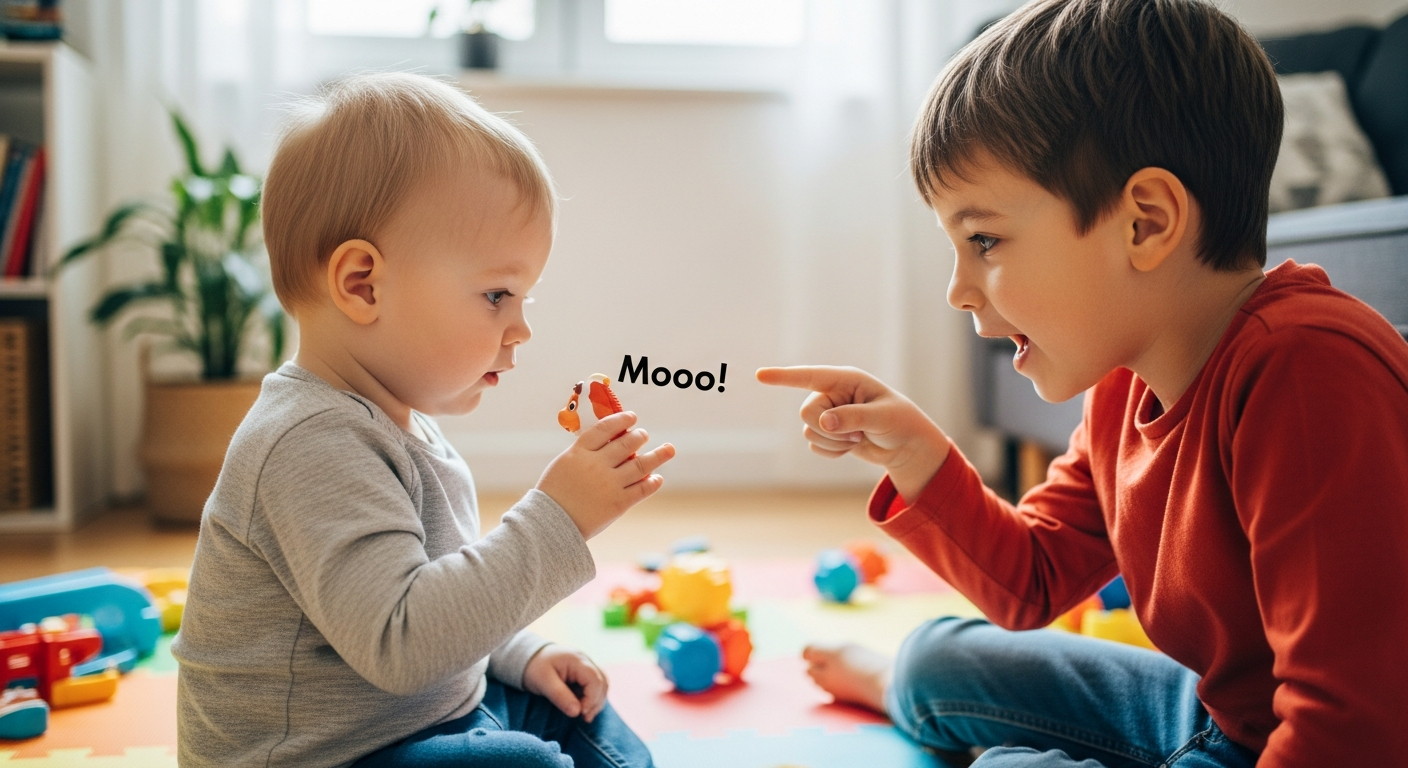
Table of Contents
- Introduction
- The Power of Play in Your Child’s Development
- Sensory Play: Exploring the World with Five Senses
- Fine Motor Fun: Building Strong Little Hands
- Gross Motor Energy Burners: Moving and Grooving
- Quick and Low-Prep Ideas for Busy Afternoons
- Integrating Technology: The Speech Blubs Approach
- Transparency in Our Value and Pricing
- Frequently Asked Questions
- Conclusion
Introduction
Do you ever look at your toddler and wonder how such a tiny human can possess more energy than a double-shot espresso? We’ve all been there—standing in the middle of a living room that looks like a toy cyclone hit it, wondering how to channel that boundless curiosity into something meaningful. It is a universal truth of parenting: toddlers don’t just play; they explore, they test, and they learn at a rate that is frankly dizzying. But what if we told you that every simple toddler activity at home is actually a building block for their future communication?
At Speech Blubs, we believe that play is the "work" of childhood. Our mission is to empower children to speak their minds and hearts, and we know that the most profound learning happens when a child is having fun. This post is designed to be your go-to resource for engaging, low-prep activities that you can do right in your living room or kitchen. We will cover sensory play, fine motor exercises, gross motor games, and creative arts—all while showing you how to weave language development into every moment.

By the end of this article, you’ll have a toolkit of ideas to keep your little one busy, reduce your own stress, and foster a love for communication. Whether you are dealing with a "late talker" or simply want to boost your child's confidence, the key is joyful, shared experiences. Let's dive into how you can turn your home into a playful learning environment.
The Power of Play in Your Child’s Development
Before we jump into the specific activities, it’s important to understand the "why" behind them. Why is a bin of dried noodles more than just a potential mess on your floor? At Speech Blubs, our unique approach is rooted in the belief that children learn best through imitation and play. Our company was born from the personal experiences of our founders, who all grew up with speech problems themselves. They created the tool they wished they had—one that blends scientific principles with the pure joy of play.
Research shows that approximately 1 in 4 children will face some form of speech or language delay. This can be a stressful realization for parents, but we are here to provide an immediate, effective, and joyful solution. We view our app as "smart screen time"—a powerful tool for family connection that provides a screen-free alternative to passive viewing like cartoons. Instead of just watching a character on a screen, your child is invited to participate, imitate, and interact.
The core of our methodology is "video modeling." This is a scientifically proven technique where children learn by watching and imitating their peers. When your child sees another child making a specific sound or saying a new word in the app, their mirror neurons fire, making them much more likely to try it themselves. When you pair this "smart screen time" with a hands-on toddler activity at home, you create a holistic learning environment that builds foundational skills.
Sensory Play: Exploring the World with Five Senses
Sensory play is a toddler’s best friend. It involves any activity that stimulates your child’s senses: touch, sight, hearing, smell, and taste. This type of play is crucial because it helps build nerve connections in the brain’s pathways, which leads to a child’s ability to complete more complex learning tasks.

1. The Noodle Sensory Bin
This is a classic for a reason. Grab a plastic tub and fill it with different shapes of dry pasta—penne, rotini, and bowties work great. Toss in some scoops, measuring cups, or even small toy animals.
- The Language Connection: As your child scoops and pours, use descriptive words. "The noodles are crunchy." "Can you find the big scoop?"
- Speech Blubs Integration: For a parent whose toddler is fascinated by animals, our "Animal Kingdom" section in the app is a great companion. While they play with the noodles, you can encourage them to make the "moo" or "baa" sounds of the toy animals they find hidden in the bin.
2. Fizzy Drips (Baking Soda and Vinegar)
This activity feels like a magic trick to a two-year-old. Put a layer of baking soda on a rimmed baking sheet. Give your child a small cup of vinegar (add food coloring for extra fun) and a dropper or a small spoon. When the vinegar hits the baking soda, it fizzes and bubbles!
- The Language Connection: Focus on "action" words. "Look at it fizz!" "It’s bubbling!" "Do you want more?"
- The Benefit: This activity is excellent for building curiosity and cause-and-effect understanding.
3. The "Cereal" Snacking Bin
When you need ten minutes to catch your breath or finish a cup of coffee, the cereal bin is a lifesaver. Fill a bin with O-shaped cereal and add some spoons and bowls. Your child can practice scooping and pouring while having a little snack.
- The Language Connection: Focus on "in" and "out." "Put the cereal in the bowl." "Now take it out."
If you are ever unsure about where your child stands in their development, we recommend taking our quick 3-minute preliminary screener. It involves 9 simple questions and provides you with a personalized assessment and next-steps plan. It’s a great way to gain peace of mind and see how you can best support your child's journey.
Fine Motor Fun: Building Strong Little Hands
Fine motor skills involve the use of the small muscles in the fingers and hands. These skills are essential for later tasks like writing, buttoning clothes, and using utensils.
4. The Card Slot Drop
Find an old oatmeal container or a shoebox and cut a thin slit in the lid. Give your child a deck of playing cards and show them how to drop the cards into the slot.
- Why it works: It requires focus and hand-eye coordination.
- The Language Connection: Practice the word "go." "One, two, three... GO!" as they drop the card.
5. Pipe Cleaner Colander Push
Turn a kitchen colander upside down and give your child a handful of colorful pipe cleaners. Show them how to poke the pipe cleaners through the holes.
- The Language Connection: Focus on color names. "Here is a red one." "Can you find the blue one?"
- Pro Tip: This is a fantastic "quiet time" activity that keeps little hands very busy.
6. Sticker Walls
Take a large roll of paper and tape it to the wall at your child’s eye level. Give them a sheet of stickers and let them go to town. Peeling stickers is one of the best ways to strengthen those tiny finger muscles.
- The Language Connection: Talk about where the stickers go. "Put the star up high." "Put the circle down low."
Building these skills doesn't have to be a chore. In fact, our scientific research shows that when children are engaged in playful, peer-led modeling, they are significantly more likely to reach developmental milestones with joy rather than frustration.
Gross Motor Energy Burners: Moving and Grooving
Sometimes, the best toddler activity at home is one that lets them burn off that "zoomie" energy. Gross motor skills involve the larger muscles used for walking, jumping, and throwing.
7. Painter's Tape Car Track
Use blue painter's tape to create a "road" across your living room floor. Include straight lines, zig-zags, and circles. Give your child their favorite toy cars and let them follow the track.
- The Language Connection: Practice directional words like "stop," "go," "fast," and "slow."
- Speech Blubs Integration: If your child loves things that go, they will adore our "Beep Beep" section. You can use the app to learn the sounds of sirens and engines, and then mimic those sounds while racing on your tape track.
8. Bubble Wrap Pop
If you have leftover bubble wrap from a package, tape it down to the floor. Let your toddler jump, stomp, or crawl across it to hear the "pop!"
- The Language Connection: The word "pop" is a great "Power Word" for early talkers because it uses simple lip sounds (bilabials).
- The Benefit: It provides excellent proprioceptive input, helping children understand their body’s position in space.
9. Laundry Basket Basketball
Gather some soft balls (or even balled-up socks) and a laundry basket. Show your child how to toss the balls into the "hoop."
- The Language Connection: Practice counting! "One... two... three!" You can also use the word "boom" when the ball hits the basket.
Quick and Low-Prep Ideas for Busy Afternoons
We know that some days, you just don't have the "brain power" to set up an elaborate activity. These ideas require almost zero prep and use items you already have.
- Pantry Stack: Let your child stack cans of soup or vegetables from the pantry. It’s like giant blocks! Talk about "tall" and "short."
- Animal Washing Station: Put a little bit of soapy water in a shallow bin. Give your child a toothbrush and their plastic animals. "Wash the elephant's tummy!" "Wash the lion's feet!"
- The "Cardboard Box" Fort: Never underestimate the power of a large delivery box. It can be a house, a cave, or a spaceship. Climbing in and out is great for physical development, and "peek-a-boo" is a fantastic social game.
To see how these simple moments can lead to big breakthroughs, we invite you to read some of our parent success stories. Many parents started right where you are—looking for a simple toddler activity at home— and found that combining play with Speech Blubs changed everything.
Integrating Technology: The Speech Blubs Approach
While we love hands-on play, we also recognize that technology is a part of modern life. Our goal is to make that technology work for you. Unlike passive cartoons that can lead to "zoning out," Speech Blubs is designed for co-play. We want you to sit with your child, watch the videos together, and mimic the sounds and faces you see.
How Our App Works
Our app uses video modeling where kids teach other kids. This peer-to-peer interaction is highly motivating. When your child sees a kid their own age wearing a fun "digital hat" (our fun filters) and making a "b" sound, they don't feel like they are being "taught"—they feel like they are playing with a friend.
"Our mission is to help every child speak their mind and heart. We provide a bridge between screen time and real-world communication, ensuring that every minute spent on a device is a minute spent growing." — The Speech Blubs Team
We encourage you to download Speech Blubs on the App Store or find us on the Google Play Store to see the difference for yourself.
Transparency in Our Value and Pricing
We want to be your long-term partner in your child's development. To build a foundation of trust, we are transparent about our pricing and the value we provide. We offer two main plans designed to fit different family needs.
Monthly Plan: $14.99 per month
This is a great option if you want to test the waters and see how your child responds to the app on a short-term basis.
Yearly Plan: $59.99 per year (Best Value!)
The Yearly plan is our most popular choice because it offers the most comprehensive support for your child's journey. At just $59.99 a year, it breaks down to only $4.99 per month—a 66% savings compared to the monthly rate.
Why the Yearly Plan is the Superior Choice:
- 7-Day Free Trial: You can try all the features risk-free for a full week.
- Reading Blubs Included: You get full access to our second app, Reading Blubs, which focuses on early literacy and phonics.
- 24-Hour Support: Our team is dedicated to your success, offering a 24-hour response time for any questions you have.
- Early Access: Be the first to try new updates and sections before they are released to the general public.
The Monthly plan does not include the free trial, the Reading Blubs app, or early access features. We highly recommend choosing the Yearly plan to ensure your child has all the tools they need to thrive. Ready to start? Create your account and begin your 7-day free trial today.
Frequently Asked Questions
1. What if my toddler doesn't want to participate in the activity?
That is perfectly normal! Toddlers have short attention spans and very strong opinions. Never force an activity. If they aren't interested in the noodle bin today, try the bubble wrap tomorrow. The goal is to keep play joyful and stress-free. If you find they are more engaged with digital content, try using Speech Blubs for 5-10 minutes and then transitioning back to a physical toy.
2. How can I encourage more talking during a toddler activity at home?
The best strategy is to "narrate" what you are doing. Act like a sports commentator for your child's life. "You are pushing the red car. Vroom, vroom! Oh, the car stopped. Stop!" By providing a constant (but not overwhelming) stream of language, you are bathing their brain in the sounds and structures of words.
3. Is the Speech Blubs app a replacement for speech therapy?
No. Speech Blubs is a powerful supplement to a child’s overall development and can be a wonderful tool to use alongside professional therapy. We always recommend consulting with a licensed Speech-Language Pathologist (SLP) if you have serious concerns about your child's development. Our app is designed to provide extra practice and "smart screen time" at home.
4. How long should we spend on these activities each day?
Consistency is more important than duration. Even 15 to 20 minutes of focused, one-on-one play can make a huge difference. You can break this up throughout the day—ten minutes of a sensory bin in the morning and ten minutes of Speech Blubs in the afternoon is a fantastic routine.
Conclusion
Finding the right toddler activity at home doesn't require a degree in early childhood education or a house full of expensive toys. It simply requires a little bit of imagination and a lot of heart. From the "fizz" of a baking soda experiment to the "pop" of bubble wrap, every moment is an opportunity for your child to discover the power of their own voice.
At Speech Blubs, we are honored to be a part of your parenting journey. We know that the road to communication can sometimes feel long, but it is paved with small, joyful victories. By combining hands-on play with our scientifically-backed video modeling, you are giving your child a head start in "speaking their mind and heart."
We invite you to join our community of over 5 million parents who have discovered the joy of smart screen time. Start your journey today by downloading the app on the App Store or Google Play Store.
For the best experience and the most features—including a 7-day free trial and the Reading Blubs app—be sure to select the Yearly plan. It is the most cost-effective way to provide your child with daily, high-quality speech support. Let’s make communication fun, one "vroom," "pop," and "moo" at a time! For more information, you can always visit our Speech Blubs homepage to learn more about our story and our mission.
About the author