
Engaging Toddler Activity Games for Playful Learning
 By Speech Blubs Team•Feb 23, 2026•13 min.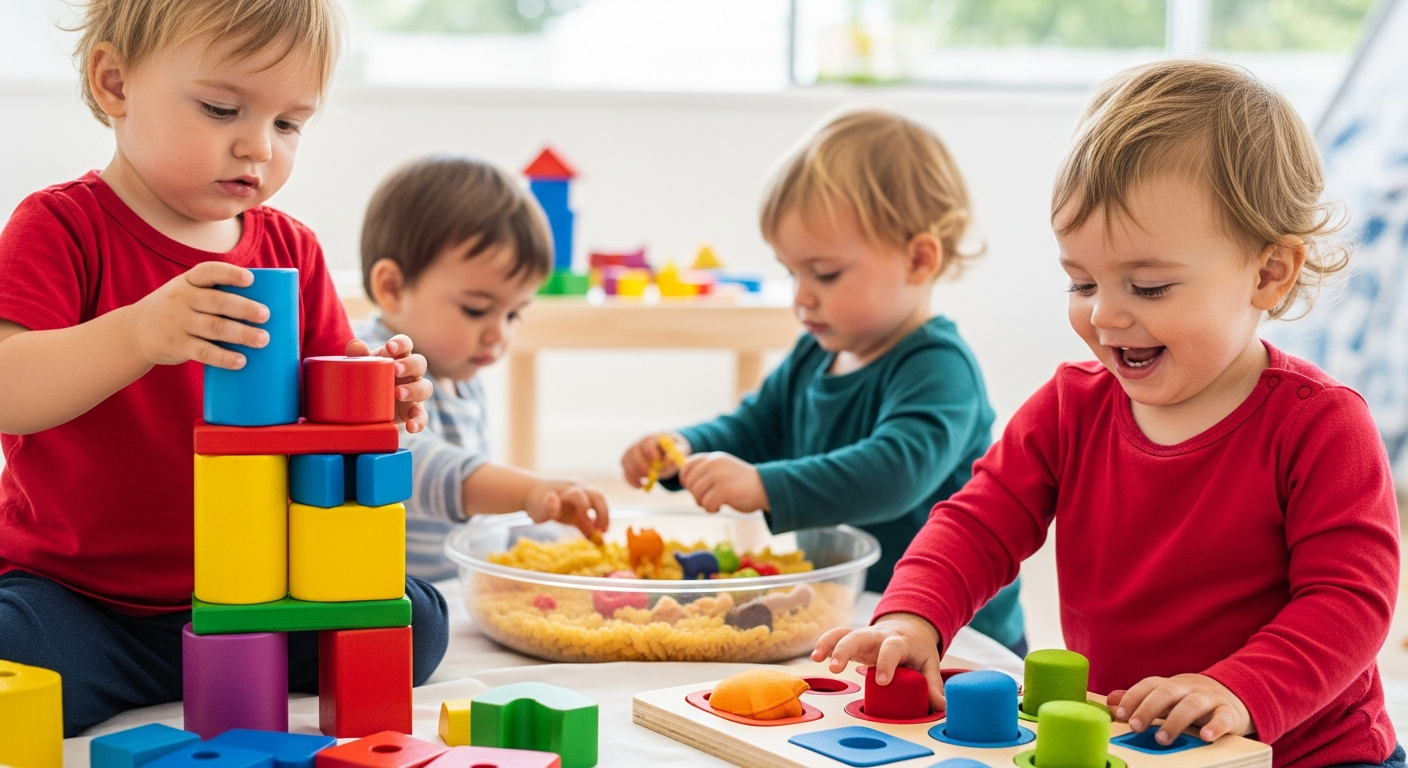
Table of Contents
- Introduction
- Why Play is Essential for Toddler Development
- The 5-Minute Rule: Quality Over Quantity
- Creative Indoor Toddler Activity Games
- Active and Gross Motor Games
- Integrating "Smart Screen Time" into Play
- Setting Realistic Expectations
- The Importance of Routine
- Why the Yearly Plan is Your Best Option
- Conclusion
- FAQ
Introduction
Have you ever found yourself standing in a kitchen that looks like a cereal box exploded, while your toddler tugs at your leg, demanding to play "one more time" before you’ve even had your first sip of coffee? It is a scene familiar to almost every parent. The boundless energy of a two-year-old can be both a joy and a logistical challenge, especially when you are trying to balance household chores, work, and the desire to be a present, engaged caregiver. We often feel the pressure to be a 24/7 cruise director for our children, but the truth is that meaningful connection doesn't require hours of elaborate setup.
The purpose of this post is to provide you with a toolkit of simple, effective, and science-backed toddler activity games that foster development without leading to parental burnout. We will explore why play is the "work" of childhood, how to balance guided activities with independent play, and how to use modern tools to supplement your child's growth. From sensory bins to gross motor challenges, these ideas are designed to be integrated into your daily routine seamlessly.

At Speech Blubs, our mission is to empower children to speak their minds and hearts. We believe that play is the most powerful vehicle for this mission. By the end of this article, you will see that engaging your toddler doesn't have to be a chore—it can be a joyful, shared experience that builds the foundation for a lifetime of confident communication.
Why Play is Essential for Toddler Development
When your toddler is stacking plastic cups or chasing a ball across the hallway, they aren't just "playing" in the sense of passing time. They are engaged in a complex series of neurological and physical developmental processes. Play is how children learn to navigate the world, understand cause and effect, and, most importantly, develop the language skills they need to express themselves.
The Connection Between Movement and Speech
There is a fascinating link between a child’s motor skills and their ability to produce speech. When a child engages in gross motor activities—like jumping, climbing, or running—they are building the core strength and breath control necessary for vocalization. Fine motor games, such as sorting small objects or peeling stickers, help develop the dexterity that will eventually be used for complex tasks like writing and even the intricate movements of the tongue and lips.
For a parent whose 3-year-old "late talker" loves animals, the "Animal Kingdom" section in our app offers a fun, motivating way to practice "moo" and "baa" sounds. By watching other children make these sounds through our unique video modeling technology, your child is encouraged to imitate and explore their own vocal capabilities in a low-pressure, playful environment.
The Role of Social Interaction
Toddlers are social beings. They learn by observing the people they love most. This is why "Follow the Leader" or simple turn-taking games are so vital. These games teach the "back-and-forth" nature of conversation long before a child is speaking in full sentences. When you engage in toddler activity games, you are modeling the social cues, facial expressions, and tonal shifts that form the basis of human connection.

Our methodology is rooted in the science of mirror neurons—the brain cells that fire both when we perform an action and when we observe someone else performing it. You can learn more about the research behind our approach and how it helps 1 in 4 children who need extra speech support.
The 5-Minute Rule: Quality Over Quantity
One of the biggest misconceptions in modern parenting is that we must play with our children all day long. In reality, attempting to do so can lead to parental burnout and can actually hinder a child’s development of independence. If a child never experiences a moment of "boredom," they never have the opportunity to tap into their own creativity.
Setting the Stage for Independent Play
A highly effective strategy is to start your morning with just five to ten minutes of dedicated, high-quality play. By filling your child's "attention tank" early, you satisfy their need for connection. Once that need is met, they are much more likely to transition into independent play while you tackle the breakfast dishes or catch up on emails.
This "bridge" play models how to use toys or materials. For instance, if you sit on the floor and help them "wash" their plastic dolls in a small basin of water for five minutes, they will often continue that activity on their own for another twenty minutes. You’ve given them the spark; they provide the imagination.
Avoiding Codependency
It is vital to foster self-reliance. If we are always the "leader" of the game, the child becomes a passive participant. By stepping back and letting them take the lead—even if it means the game doesn't make logical sense to an adult—you are building their confidence. If you're unsure where your child stands in their development, you can take our quick 3-minute preliminary screener to get a simple assessment and a personalized next-steps plan.
Creative Indoor Toddler Activity Games
When the weather doesn't cooperate or you're stuck inside, you don't need expensive toys to keep a toddler engaged. Often, the most mundane household items make for the best toddler activity games.
1. The Great Cutlery Sort
This is a classic "life skill" game that toddlers find surprisingly rewarding. Empty your (clean!) cutlery tray onto a blanket on the floor. Show your child how to put the big spoons in one pile, the small spoons in another, and the forks in a third.
- Why it works: It builds categorization skills and fine motor control.
- Speech tip: Use descriptive words like "shiny," "smooth," "big," and "tiny" as you sort together.
2. Indoor "Postie"
Cut a slot into a cardboard box and give your child some old envelopes or junk mail. Set up "delivery stations" (cushions or chairs) around the living room and ask them to deliver the mail to different "houses."
- Why it works: It encourages gross motor movement and follows a sequence of steps.
- Speech tip: Use "first, then" language. "First, put the mail in the box. Then, take it to the sofa!"
3. The Sound Detective
Gather five items that make distinct noises—a bunch of keys, a crinkly bag, a bell, a drum, and a whistle. Have your child close their eyes, make one sound, and ask them to guess what it was.
- Why it works: It develops auditory processing and listening skills, which are foundational for phonics.
- Speech tip: If they struggle to name the object, ask them to describe the sound. "Is it loud or quiet? Is it a jingle or a bang?"
4. Birthday Candle Counting
If you have playdough or even leftover pastry dough, grab a muffin tin and some old birthday candles. Ask your child to make "cupcakes" and put a specific number of candles in each one.
- Why it works: It introduces early math concepts and fine motor precision.
- Speech tip: Sing "Happy Birthday" to their favorite stuffed animals to make it a social, language-rich event.
Active and Gross Motor Games
Sometimes, a toddler just needs to move. When the "zoomies" hit, these toddler activity games can help channel that energy into something productive.
5. Sofa Cushion Rugby
This is a favorite for high-energy toddlers. Place a large sofa cushion on the floor or lean it against the sofa. Have your child run from across the room and "tackle" the cushion (or you, if you're feeling brave!).
- Why it works: It provides "heavy work" or proprioceptive input, which can be very calming for many children.
- Speech tip: Use "Ready... Steady... GO!" to practice anticipation and waiting for a verbal cue.
6. The Laundry Line
Tie a piece of string between two chairs at your child’s height. Give them a basket of socks or small washcloths and some clothespins. Ask them to "hang out the wash."
- Why it works: Using clothespins is one of the best ways to build the "pincer grasp" needed for holding a pencil later in life.
- Speech tip: Talk about colors. "Can you find the blue sock? Where is the yellow towel?"
7. Balloon Volley
Blow up a balloon and try to keep it from touching the floor.
- Why it works: Because balloons move slowly, they are perfect for toddlers who are still developing their hand-eye coordination.
- Speech tip: Use action verbs like "hit," "kick," "up," and "down."
Integrating "Smart Screen Time" into Play
We know that many parents feel guilty about screen time. However, not all screen time is created equal. Watching passive cartoons is very different from engaging with an interactive tool designed by experts. At Speech Blubs, we’ve created "smart screen time" that acts as a bridge to real-world play.
Our app uses video modeling, a technique backed by science where children watch their peers perform actions or say words. This is far more effective than watching an adult or a cartoon character because toddlers are naturally drawn to other children. When your child sees a peer on the screen making a "fish face" or saying "apple," their mirror neurons fire, making them much more likely to try it themselves.
For example, if you have a toddler who is obsessed with vehicles, the "Transportation" section of the app can be a great way to start. After watching the videos and practicing the sounds, you can transition to a "real world" game with their toy cars. This turns the digital experience into a functional, physical activity. You can download Speech Blubs on the App Store or find us on the Google Play Store to see this in action.
Setting Realistic Expectations
It is important to remember that every child develops at their own pace. While toddler activity games are a wonderful way to support growth, they are not a "magic fix" that will result in a child giving public speeches in a month. Development is a journey of small, joyful milestones.
Our goal is to foster a love for communication and to reduce the frustration that often comes when a child cannot make their needs known. By creating joyful family learning moments, you are building your child’s confidence. If you’re curious about how other families have navigated this journey, you can read testimonials from parents who have used our tools to support their children’s progress.
Remember, you don't have to be perfect. You don't need a Pinterest-worthy playroom. You just need a few minutes of presence and a willingness to be a little bit silly.
The Importance of Routine
Toddlers thrive on predictability. Integrating these games into a daily routine can help manage transitions and reduce tantrums. For instance, having a "special game" that you play only during the post-nap slump can give your child something to look forward to.
Morning Connection
Start with 5 minutes of "The Sound Detective" or "Color Matching." This sets a positive tone for the day and makes them feel seen and heard before you start your own tasks.
Mid-Day Movement
When energy levels are high before lunch, try "Sofa Cushion Rugby" or a "Balloon Volley." This helps burn off steam so they are more likely to sit still for a meal.
Evening Wind-Down
Focus on quieter activities like "Birthday Candle Counting" or looking through a photo album together. This signals to the brain that it’s time to start slowing down.
Why the Yearly Plan is Your Best Option
We want to be transparent about how you can best access our resources to support your child's journey. While we offer a monthly subscription, the Yearly Plan is designed to provide the most comprehensive support for families committed to seeing progress over time.
Our pricing is straightforward:
- Monthly Plan: $14.99 per month.
- Yearly Plan: $59.99 per year (which breaks down to only $4.99 per month).
By choosing the Yearly Plan, you save 66% compared to the monthly rate. But the value goes beyond just the price tag. The Yearly Plan includes:
- A 7-day free trial: You can explore the entire app with your child before committing.
- Reading Blubs: You get full access to our second app, Reading Blubs, which focuses on early literacy and phonics—a perfect companion to speech development.
- Priority Support: You receive 24-hour support response times and early access to all new updates and content.
The Monthly Plan does not include the free trial, the Reading Blubs app, or priority support. To give your child the full suite of "smart screen time" tools, we highly recommend the Yearly option. You can create your account and start your trial today.
Conclusion
Finding the right toddler activity games doesn't have to be a source of stress. Whether you are sorting spoons on the kitchen floor, tackling cushions in the living room, or using Speech Blubs to practice new sounds, the most important element is the connection you are building with your child. Play is the language of childhood, and by engaging in it, you are helping your little one find their own voice.
At Speech Blubs, we are here to support you every step of the way. Our company was born from the personal experiences of our founders, who grew up with speech challenges themselves. They created the tool they wished they had—a joyful, effective, and scientifically grounded way to help children "speak their minds and hearts."
We provide a screen-free alternative to passive viewing and a powerful tool for family connection. By blending scientific principles with play, we offer a "smart screen time" experience that truly makes a difference.
Ready to see the difference for yourself? Download Speech Blubs on the App Store or Google Play to begin. Remember to select the Yearly Plan to take advantage of the 7-day free trial, the Reading Blubs app, and the best overall value for your family’s journey.
FAQ
1. How much time should I spend playing these games with my toddler? Research suggests that even 5 to 10 minutes of dedicated, high-quality play can have a significant impact on a child's development and emotional well-being. The key is quality over quantity—turn off your phone and give them your full attention during this time.
2. Can screen time really help my child learn to talk? Yes, if it is "smart screen time." Unlike passive cartoons, Speech Blubs uses video modeling, where children learn by watching and imitating their peers. This active participation encourages vocalization and social engagement, making it a powerful supplement to physical play and professional therapy.
3. What if my child isn't interested in the games I suggest? That's perfectly normal! Toddlers have strong preferences. The best approach is to follow their lead. If they'd rather play with the box the toy came in than the toy itself, go with it! The goal is engagement and interaction, not following a specific set of rules.
4. Which Speech Blubs plan offers the most features? The Yearly Plan is our best value. For $59.99 a year ($4.99/month), you get a 7-day free trial, the Reading Blubs app, early access to updates, and 24-hour support. The Monthly Plan ($14.99) does not include these additional features or the free trial.
About the author