
Engaging Toddler Activity Pages for Early Learning
 By Speech Blubs Team•Mar 18, 2026•14 min.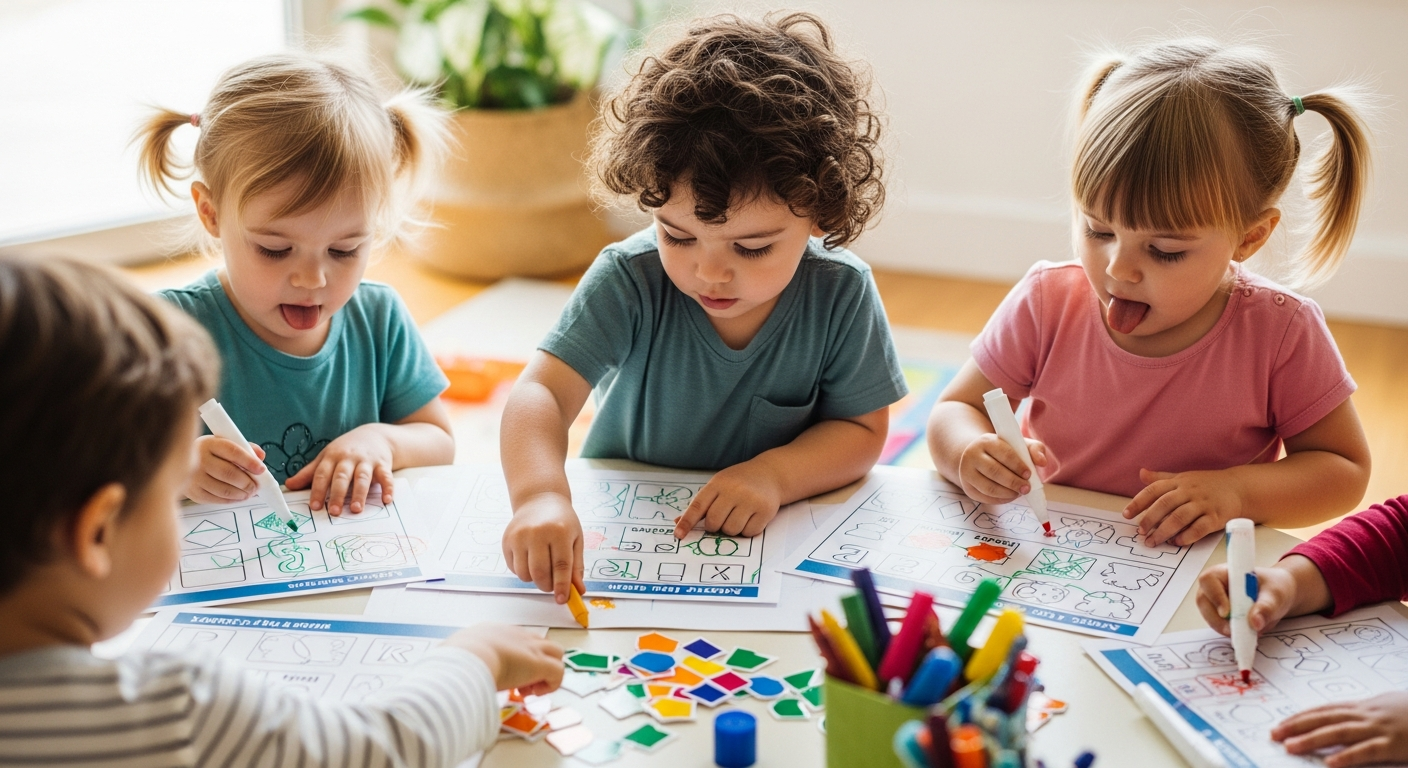
Table of Contents
- Introduction
- The Power of Hands-On Learning
- Developing Fine Motor Skills
- Cognitive Growth and Logic
- Language Development Through Activity Pages
- Literacy and Math Foundations
- The Speech Blubs Methodology: Smart Screen Time
- Making Activity Pages Last: Tips for Parents
- Setting Realistic Expectations
- Choosing the Best Plan for Your Family
- The Role of Themed Learning
- Why Peer Modeling Works
- Creating a Routine That Works
- Summary of Key Takeaways
- FAQ
- Conclusion
Introduction
Did you know that between the ages of one and three, a child’s brain is forming about one million new neural connections every single second? This window of rapid development is a golden opportunity for parents to provide the right environment for growth. One of the most effective and accessible ways to do this is through toddler activity pages. These simple tools are far more than just "busy work"; they are foundational building blocks for fine motor skills, cognitive logic, and language development.
In this article, we will explore the different types of activity pages available, how they benefit your child's specific developmental milestones, and how to create a balanced routine that combines physical play with "smart screen time." At Speech Blubs, we believe in empowering children to speak their minds and hearts, and we know that a multi-sensory approach—using both paper activities and interactive peer-led modeling—is the best way to foster a lifelong love for communication. By the end of this guide, you will have a clear roadmap for using activity pages to build your toddler's confidence and skills.

The Power of Hands-On Learning
Toddlers are natural explorers. They learn best when they can touch, move, and manipulate objects. Activity pages offer a tactile experience that digital-only content sometimes lacks. When a child holds a crayon to color a circle or uses their finger to trace a line, they are developing "proprioception"—an awareness of their body in space.
However, the modern parent often feels caught between traditional toys and the convenience of technology. We advocate for a hybrid approach. Using toddler activity pages alongside high-quality digital tools like Speech Blubs creates a comprehensive learning environment. Our mission is to provide an immediate, effective, and joyful solution for the 1 in 4 children who need speech support. By blending scientific principles with play, we help bridge the gap between physical activity and cognitive language practice.
Developing Fine Motor Skills
One of the primary benefits of toddler activity pages is the development of fine motor skills. These are the small movements of the hands and fingers that eventually allow a child to write, button their shirt, and use a fork.
Tracing and Pre-Writing
Before a child can write letters, they need to master the art of the "line." Activity pages that feature dashed lines—straight, curved, or zig-zag—encourage children to follow a path. This builds hand-eye coordination and the "pincer grasp" (using the thumb and index finger).
For a parent whose toddler is just starting to experiment with markers, a "follow the path" page featuring a bee flying to a flower is incredibly motivating. You can reinforce this skill by downloading Speech Blubs on the App Store or Google Play and using our tracing activities, where children mimic the mouth movements of their peers while simultaneously engaging their visual-motor skills.
Scissors and Cutting Skills
While it might seem scary to hand a two-year-old a pair of scissors, "scissor skills" pages are designed to be safe and progressive. Starting with simple snips and moving toward cutting along straight lines helps develop the intrinsic muscles of the hand. Always ensure you are using child-safe safety scissors and providing close supervision during these activities.

Cognitive Growth and Logic
Toddler activity pages are excellent tools for teaching basic logic, such as sorting, matching, and identifying patterns. These skills are the precursors to mathematical thinking and problem-solving.
Sorting by Color and Size
Sorting activities require a child to observe an object, identify its characteristics, and place it in the correct category. For example, a page might ask a child to match blue blocks with a blue basket. This teaches "categorization," a vital cognitive skill.
If your child is working on color recognition, you can supplement their paper activity pages with our "Color This" section in the app. There, they can hear the names of colors spoken by other children, reinforcing the vocabulary they are using while they color their physical pages. If you are unsure which developmental areas to focus on first, take our quick 3-minute preliminary screener to get a simple assessment and a personalized next-steps plan.
Shadow Matching and Puzzles
Shadow matching involves looking at a colored image and finding its black-and-white silhouette. This requires a high level of visual discrimination. It forces the brain to look at the "shape" of an object rather than just its color. Many parents find that these activities keep toddlers engaged for long periods because they feel like a detective solving a mystery.
Language Development Through Activity Pages
At Speech Blubs, language is at the heart of everything we do. We believe every child deserves the tools to express themselves. Activity pages can be a powerful catalyst for speech when used correctly.
Labeling and Vocabulary Building
As your child works on a page featuring farm animals, use it as an opportunity for "labeling." Point to the cow and say, "Cow! The cow says moo." Encourage your child to repeat the sound.
Practical Scenario: For a parent whose 3-year-old "late talker" loves animals, a farm-themed activity page offers a fun, motivating way to practice "moo" and "baa" sounds. After coloring the cow, you can open the "Animal Kingdom" section in Speech Blubs. Your child will see a video of another child making the "moo" sound. This "video modeling" is based on the science of mirror neurons—when a child sees a peer performing an action, their brain is more likely to mimic it. You can see how this works by exploring our scientific methodology.
Storytelling and Narrative Skills
Even simple activity pages can tell a story. A page showing a boy waking up, eating breakfast, and going to the park allows you to discuss "sequencing" (first, next, last). Ask your child, "What is the boy doing now?" This encourages the transition from single words to short phrases.
Literacy and Math Foundations
It is never too early to introduce the concept of letters and numbers, provided it is done through play rather than rote memorization.
Alphabet Recognition
Toddler activity pages often feature large letters that a child can color or decorate with stickers. This builds "letter shape awareness." Instead of focusing on the name of the letter, focus on the sound it makes. For example, "A is for /a/ /a/ apple."
Introduction to Counting
Math for toddlers isn't about addition; it's about "one-to-one correspondence." This means understanding that the number "one" corresponds to one physical object. Activity pages that ask a child to place one sticker on each circle are perfect for this. It builds the foundation for all future math skills.
The Speech Blubs Methodology: Smart Screen Time
We understand that parents are often wary of screen time. However, not all screen time is created equal. Watching passive cartoons is very different from engaging with a tool designed by experts to promote active participation.
Our company was born from the personal experiences of our founders, who all grew up with speech problems and created the tool they wished they had. We provide a screen-free alternative to passive viewing and a powerful tool for family connection. By using Speech Blubs, your child isn't just looking at a screen; they are interacting with a "digital playmate."
When you use toddler activity pages in tandem with our app, you are creating a "blended learning" environment. The physical page provides the tactile input, while the app provides the social-emotional and auditory modeling. Ready to see the difference? Create your account and begin your 7-day free trial today.
Making Activity Pages Last: Tips for Parents
To get the most out of your toddler activity pages, consider these practical tips for longevity and engagement:
- Laminate for Reusability: If you find a page your child loves, laminate it! Use dry-erase markers so they can do the activity over and over again.
- Use Velcro Dots: For matching activities, use Velcro dots on the cut-out pieces. The "rip" sound of the Velcro provides extra sensory input that toddlers find incredibly satisfying.
- Create an "Activity Binder": Keep all your printed pages in a three-ring binder. This makes it easy to take on the go, whether you’re at a restaurant or a doctor’s office.
- Co-Play is Key: While it’s tempting to use these pages to get five minutes of peace, the greatest developmental gains happen when you play together. Talk about the colors, the shapes, and the sounds you see.
Setting Realistic Expectations
Every child develops at their own pace. It is important to remember that these activities are meant to be joyful, not stressful. We do not suggest guaranteed outcomes where your child will be reading or speaking in full sentences in a month. Instead, the focus is on fostering a love for communication, building confidence, and reducing the frustration that often comes with speech delays.
Activity pages and the Speech Blubs app are powerful supplements to your child’s overall development plan and professional therapy. If your child isn't interested in a specific page today, that's okay! Put it away and try again next week. The goal is to create joyful family learning moments that build foundational skills over time. Read more about how we’ve helped families in our parent success stories.
Choosing the Best Plan for Your Family
We are committed to being transparent about our pricing to build trust with our community. We offer two main paths for families looking to integrate "smart screen time" into their daily routine.
The Monthly Plan
Our Monthly plan is $14.99 per month. This is a great option if you want to test the waters and see how your child responds to the video modeling sessions.
The Yearly Plan (Best Value)
The Yearly plan is $59.99 per year, which breaks down to just $4.99 per month. This is the clear best choice for families committed to their child's long-term progress. When you choose the Yearly plan, you receive:
- A 7-day free trial to explore everything we have to offer.
- The extra Reading Blubs app, which focuses on early literacy and phonics.
- Early access to new updates and features.
- Priority 24-hour support response time.
The Monthly plan does not include these exclusive, high-value features. We highly encourage users to choose the Yearly plan to get the full suite of tools designed to help their children "speak their minds and hearts." You can start your journey by downloading the app on the App Store or Google Play.
The Role of Themed Learning
Themes make learning "sticky." When a child is immersed in a specific topic, they are more likely to retain the vocabulary and concepts associated with it. Toddler activity pages are often grouped into themes like:
- Transportation: Cars, planes, and trains.
- Seasons: Winter snowmen, spring flowers, and autumn leaves.
- Daily Routines: Brushing teeth, getting dressed, and bedtime.
- Animals: Pets, farm animals, and zoo creatures.
By sticking to a theme for a week, you provide multiple touchpoints for learning. You can read a book about trucks, do a truck-themed activity page, and then watch the "Beep Beep" section in Speech Blubs. This repetition is how toddlers master new skills.
Why Peer Modeling Works
You might wonder why Speech Blubs uses videos of other children instead of cartoons or adults. This is a deliberate, scientifically-backed choice. Children are naturally more interested in other children. When they see a peer successfully making a sound or performing an action, it builds their confidence. "If that kid can do it, I can do it too!"
This is the core of our "video modeling" methodology. It transforms screen time into an active, social experience. It mimics the natural way children learn in a playground or a classroom setting. When paired with physical toddler activity pages, you are addressing both the digital and physical needs of a developing mind.
Creating a Routine That Works
Consistency is the secret ingredient to developmental progress. You don't need to spend hours each day on "lessons." In fact, 15 to 20 minutes of focused play is often more effective than an hour of forced activity.
Try creating a simple daily routine:
- Morning: 10 minutes of Speech Blubs to "wake up" the speech muscles.
- Mid-Day: One or two toddler activity pages related to the theme of the day.
- Evening: Reading a story together that reinforces the vocabulary used earlier.
This rhythm creates a sense of security for your child and makes learning a natural part of their day.
Summary of Key Takeaways
Toddler activity pages are more than just paper; they are a gateway to essential life skills. By incorporating them into your daily life, you are:
- Strengthening fine motor skills for future writing and independence.
- Building cognitive logic through matching and sorting.
- Expanding vocabulary and language skills through labeling and storytelling.
- Creating a balanced learning environment that values both physical and "smart" digital play.
Remember, the goal is to foster a love for learning and communication. Whether you are tracing lines on a page or mimicking sounds in the Speech Blubs app, every moment you spend engaged with your child is a step toward helping them find their voice.
FAQ
1. At what age can my child start using toddler activity pages? Most children can start with simple coloring or sticker-based activity pages around 18 months. As their fine motor skills improve, you can introduce more complex tasks like tracing (around age 2) and simple cutting (around age 3).
2. How do I keep my toddler from getting frustrated with difficult pages? Always start with something easier than you think they can handle to build their confidence. If they struggle, offer "hand-over-hand" assistance, where you gently guide their hand with yours. Keep the sessions short and end on a "win" to keep them excited for next time.
3. Can Speech Blubs replace physical activity pages? We believe the best results come from a combination of both! Physical pages provide tactile, fine-motor practice, while Speech Blubs provides peer-led video modeling and auditory reinforcement. Using them together creates a multi-sensory learning experience that is much more powerful than either tool alone.
4. Why should I choose the Yearly plan over the Monthly plan? The Yearly plan offers the best value at just $4.99/month (billed annually at $59.99). It includes a 7-day free trial, the Reading Blubs app for literacy, early access to new content, and faster customer support. The Monthly plan at $14.99 does not include these additional features or the free trial.
Conclusion
Empowering your child to "speak their minds and hearts" starts with small, intentional steps. Toddler activity pages provide a wonderful, low-pressure way to build the motor and cognitive skills your child needs to succeed. By pairing these traditional tools with the innovative, peer-led video modeling found in Speech Blubs, you are giving your child the very best of both worlds.
We invite you to join our community of parents who are transforming screen time into a joyful, educational experience. Don’t wait to start building your child’s confidence and communication skills.
Ready to get started? Sign up on our website to begin your 7-day free trial, or download Speech Blubs directly from the App Store or Google Play. Remember to choose the Yearly plan to unlock our full suite of features, including Reading Blubs and priority support, all while saving 66% compared to the monthly option. Let's start this journey of discovery and speech together!
About the author