
Engaging Valentine Toddler Crafts for Early Learning
 By Speech Blubs Team•Feb 23, 2026•15 min.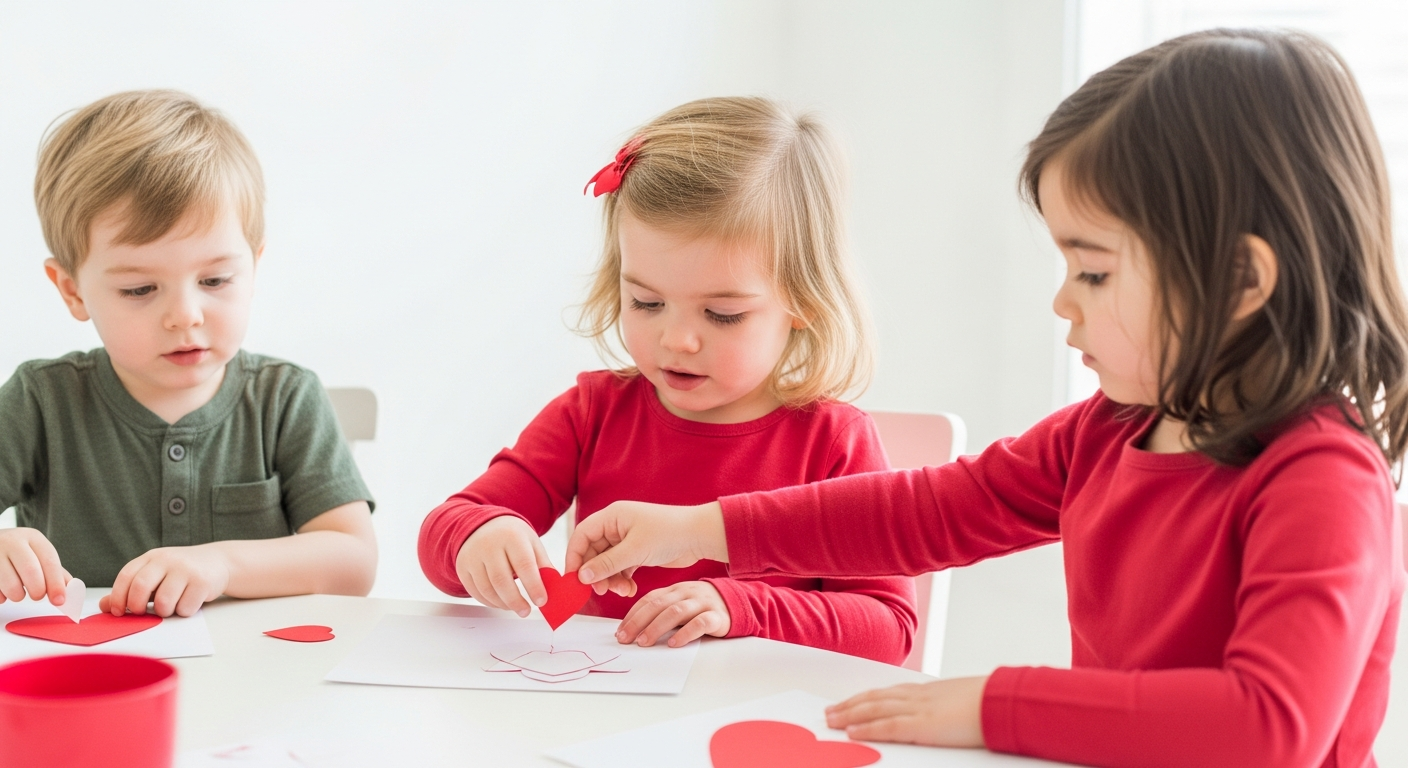
Table of Contents
- Introduction
- The Developmental Benefits of Valentine Toddler Crafts
- Heart Crafts Made with Yarn and Fiber
- Paper and Collage Valentine Toddler Crafts
- Messy Play and Process Art
- DIY Heart Suncatchers for the Windows
- Fine Motor Strengthening with Beads and Nature
- Integrating "Smart Screen Time" into Your Crafting Day
- Practical Tips for Stress-Free Crafting
- Choosing the Right Materials for Safety and Success
- Valentine Toddler Crafts FAQ
- Conclusion
Introduction
Did you know that the simple act of tearing a piece of red construction paper can actually be a major milestone in your child’s development? It is officially February, and while the world outside might be chilly and gray, our homes can be filled with the vibrant pinks, reds, and purples of the season of love. Many parents look at Valentine’s Day as just another holiday on the calendar, but for those of us focused on early childhood development, it is a golden opportunity. Crafting isn't just about making something pretty to hang on the refrigerator; it is a multisensory gateway to language, fine motor control, and emotional bonding.
In this post, we are going to dive deep into a treasure trove of Valentine toddler crafts that are specifically designed to be accessible, engaging, and educationally rich. We will explore everything from yarn-wrapped hearts to sensory collages and nature-inspired "love bugs." Beyond the "how-to," we will discuss how to narrate these activities to boost your child’s vocabulary and how to bridge the gap between digital learning and tactile play. At Speech Blubs, our mission is to empower children to "speak their minds and hearts," and there is no better time to start than with a holiday dedicated to expressing love.

By the end of this guide, you will have a full itinerary of activities that foster a love for communication and build foundational skills. We believe that the best learning happens through joy and play, and these crafts are designed to create those precious "lightbulb" moments for your little one.
The Developmental Benefits of Valentine Toddler Crafts
Before we break out the glue sticks and doilies, it is important to understand why we prioritize these activities. When a toddler engages in crafting, they aren’t just "playing." They are working on several key areas:
- Fine Motor Strength: Squeezing glue bottles, using child-safe scissors, and picking up small beads strengthen the tiny muscles in the hands. These are the same muscles your child will eventually use to hold a pencil or button their coat.
- Language Expansion: Crafting is a "verb-heavy" activity. As you work together, you are naturally using words like stick, cut, pour, press, smooth, and fold. This rich linguistic environment helps children associate actions with words in real-time.
- Sensory Integration: Feeling the roughness of glitter, the softness of yarn, and the stickiness of tape helps toddlers process different tactile inputs.
- Confidence and Self-Expression: Completing a project—no matter how messy it looks to an adult—gives a toddler a sense of agency. They made something exist that wasn't there before!
At Speech Blubs, we advocate for "smart screen time" that complements these physical activities. While our app uses unique video modeling to help children learn by watching their peers, these crafts provide the physical "workshop" where those new communication skills can be practiced. If you are ever unsure where your child stands in their development, you can take our quick 3-minute preliminary screener, which involves just 9 simple questions and provides an assessment and next-steps plan.
Heart Crafts Made with Yarn and Fiber
Yarn is a fantastic medium for toddlers because it is forgiving, tactile, and visually striking. These crafts are excellent for developing hand-eye coordination.

Yarn-Wrapped Cardboard Hearts
This is a classic for a reason. Cut out a heart shape from a sturdy cardboard box (recycled shipping boxes work great). Cut small notches around the edges to help the yarn stay in place. Give your toddler a length of red or pink yarn and show them how to hook it into a notch and wrap it across.
- Speech Tip: Focus on the word "around." As they move the yarn, say, "Around and around we go!" This repetition helps solidify the concept of spatial relationships.
- The Scenario: For a parent whose 3-year-old "late talker" loves repetitive motions, this craft is a winner. The rhythmic nature of wrapping provides a calm environment where the child might feel more comfortable imitating simple sounds like "oo" for "loop" or "p-p-p" for "pink."
Textured Yarn Collages
Instead of wrapping, try cutting yarn into small segments. Let your child "paint" a piece of paper with a glue stick and then press the yarn bits onto the glue. This creates a fuzzy, 3D texture that is much more interesting to touch than a flat drawing.
Love Catchers
Inspired by dream catchers, these use a paper plate with the center cut out (leaving a ring). Punch holes around the inner rim and let your child thread yarn back and forth across the center to create a "web." You can hang small paper hearts from the bottom using more yarn. This is a higher-level fine motor task that is perfect for older toddlers.
Paper and Collage Valentine Toddler Crafts
Paper is the most accessible crafting material, and its versatility is unmatched. Collages, in particular, are great because there is no "wrong" way to do them.
The Valentine Name Puzzle
Recognition of one’s own name is a huge developmental milestone. Cut a large heart out of pink construction paper and write your child’s name in large, clear letters. Then, cut the heart into vertical strips (one letter per strip). Help your child put the heart back together like a puzzle.
- Learning Moment: As you place each piece, say the letter name and the sound it makes. This bridges the gap between speech and early literacy. If you want to dive deeper into literacy, our Yearly plan includes the extra Reading Blubs app, specifically designed to support these early reading skills.
Heart Animals
Who says hearts are just for Valentines? You can turn hearts into almost any animal. A large heart upside down can be a face; two small hearts can be ears.
- A "Love Bug": Use a large heart for the body and two smaller hearts for wings.
- A Heart Elephant: A large heart for the face and two medium hearts for ears.
- Speech Integration: If your child loves animals, our "Animal Kingdom" section in the app is a great companion. You can watch peers make animal sounds and then try to make those same sounds while building your heart animals. Download Speech Blubs on the App Store to see these peer-led videos in action.
Ribbon Heart Cards
If you have a stash of leftover ribbons from birthdays or previous holidays, this is the time to use them. Help your child glue strips of ribbon across a cardstock heart. The different widths and textures of the ribbons provide a rich sensory experience.
Messy Play and Process Art
"Process art" focuses on the experience of creating rather than the final product. For toddlers, the "mess" is often where the most learning happens.
Celery Heart Stamping
Did you know that the base of a bunch of celery, when cut, looks exactly like a rose or a heart? It’s nature’s perfect stamp!
- Cut the base off a head of celery.
- Dip the cut end into red or pink tempera paint.
- Let your child stamp away on a large sheet of paper.
- Practical Tip: Use this to practice the "p" sound for "push" and "paint." Every time they stamp, you can say "Push!" together.
Symmetry "Smoosh" Painting
This is a toddler favorite because it feels like a magic trick. Fold a piece of paper in half and open it back up. Have your child drop small dollops of paint on only one side of the fold. Fold the paper back over and have them rub and "smoosh" the paper with their hands. When they open it up, they’ll see a beautiful, symmetrical heart-like shape.
- Communication Goal: This is a perfect time to work on the word "open." Wait for your child to gesture or attempt the word before you reveal the hidden painting. Encouraging these small communicative attempts builds the confidence they need to speak their minds and hearts.
Finger Painted Heart Trees
Draw a simple brown trunk and branches on a piece of paper. Then, let your child use their fingertips to add red and pink "leaves" (dots) all over the branches. This builds "isolated finger movement," which is a sophisticated fine motor skill.
DIY Heart Suncatchers for the Windows
February can be dark, so catching whatever light is available is a great way to brighten the mood. Suncatchers are a beautiful way to decorate the home while teaching children about light and transparency.
Contact Paper Suncatchers
This is the "mess-free" version of a suncatcher.
- Tape a piece of clear contact paper (sticky side up) to the table.
- Give your child small squares of red, pink, and white tissue paper.
- Let them press the tissue paper onto the sticky surface.
- Once they are done, place another sheet of contact paper on top to seal it.
- Cut it into a heart shape and tape it to a sunny window.
Tissue Paper Stained Glass
Similar to the contact paper method, you can use a watered-down glue mixture and a paintbrush to layer tissue paper onto a piece of wax paper. This version allows children to practice their "painting" stroke without the permanence of heavy acrylics.
Fine Motor Strengthening with Beads and Nature
If your toddler is ready for a challenge, activities that involve "stringing" or "threading" are excellent for developing the pincer grasp.
Beaded Pipe Cleaner Hearts
Give your child a pipe cleaner and a bowl of large plastic beads. As they thread the beads onto the pipe cleaner, you can talk about the colors. Once it’s full, bend the pipe cleaner into a heart shape and twist the ends together. These make great ornaments!
Cheerio Bird Feeders
Valentine’s Day is about loving all creatures, including our backyard birds. Have your child string Cheerios onto a pipe cleaner and then bend it into a heart. This is a double-win: it feeds the birds and provides a great fine motor workout.
- Speech Connection: As your child works, use the app to look at the "Early Sounds" section. The focus and calm required for threading often make it a great time for children to practice low-pressure vocalizations. You can see how other families have used these moments to support their children’s progress on our testimonials page.
Integrating "Smart Screen Time" into Your Crafting Day
We know that modern parenting is a balancing act. We want our kids off screens, but we also need tools that actually help them grow. This is why we created Speech Blubs. Our founders grew up with speech problems themselves and created the tool they wished they had. We don't offer passive cartoons; we offer an interactive experience that invites your child to be a participant, not just a viewer.
When you are taking a break from the glue and glitter, you can use the app to reinforce the concepts you’ve been crafting. For example, if you just finished making "Heart Animals," you can open the app and find those same animals. Your child will see a "peer model" (a real child, not a cartoon) making the animal sound or saying the name. This triggers "mirror neurons" in your child’s brain, making them much more likely to imitate what they see.
To get the most out of this experience, we highly recommend our Yearly Plan. While we offer a monthly subscription for $14.99, the Yearly plan is the clear best choice for families committed to seeing progress.
Why the Yearly Plan Wins:
- Superior Value: At $59.99 per year, it breaks down to just $4.99/month, saving you 66% compared to the monthly rate.
- 7-Day Free Trial: You can explore everything we have to offer risk-free.
- Reading Blubs Included: You get full access to our second app, which focuses on the transition from speaking to reading.
- Priority Support: Yearly members get a 24-hour support response time and early access to all new content updates.
The Monthly plan does not include the free trial, the extra app, or the priority support. We want to provide an immediate, effective, and joyful solution for the 1 in 4 children who need speech support, and the Yearly plan is designed to be that comprehensive partner in your child’s journey. Ready to get started? Create your account and begin your 7-day free trial today.
Practical Tips for Stress-Free Crafting
As a parent, the idea of "toddler crafts" can sometimes feel like an invitation for a giant mess. Here is how we recommend keeping the joy in the process:
- Lower Your Expectations: The "heart" they make might look like a blob. That’s okay! In fact, it’s great. The goal is the process, not the product. We want to foster a love for creation, not a fear of making a mistake.
- Prepare the Space: Use an old shower curtain liner or a plastic tablecloth as a "splash zone" under the craft table.
- Narrate Everything: Use self-talk. "I am picking up the red paper. Now I am putting glue on the heart. Sticky, sticky, sticky!" This constant stream of modeled language is how toddlers learn to map their world.
- Co-Play is Key: These activities aren't meant to be "sit-and-ignore" tasks. They are opportunities for family connection. Your presence and encouragement are the most important "supplies" in the craft box.
If you’re worried that your child isn’t hitting their milestones despite these efforts, remember that you are not alone. Our community is full of parents who have been exactly where you are. You can learn more about the science behind our approach and how we rank in the top tier of speech apps globally by visiting our research page.
Choosing the Right Materials for Safety and Success
When selecting supplies for your Valentine toddler crafts, safety is the priority. Always choose:
- Washable Tempera Paint: It comes off skin and clothes much easier than acrylics.
- Non-toxic Glue Sticks: Easier for little hands to control than liquid glue.
- Blunt-Tip Scissors: For toddlers just learning to cut, look for the plastic-bladed "training" scissors that only cut paper, not skin or hair.
- Large Beads: To avoid choking hazards, ensure all beads are significantly larger than a grape.
By providing the right tools, you reduce frustration for both you and your child. This reduction in frustration is a key part of our methodology. When a child feels successful in a task—whether it’s sticking a piece of paper or saying a new word—their confidence soars. This confidence is the engine that drives further development.
Valentine Toddler Crafts FAQ
1. What if my toddler has no interest in sitting down to craft?
This is completely normal! Toddlers have short attention spans. Instead of forcing a 20-minute craft session, try "micro-crafting." Leave the supplies out in a safe area and let them come and go. Five minutes of engaged play is more valuable than 20 minutes of forced participation. You can also use the Speech Blubs app for a few minutes to get them excited about the theme of the day!
2. My child still puts everything in their mouth. Are these crafts safe?
For "mouthers," we recommend edible-safe alternatives. Use whipped cream with a drop of red food coloring instead of paint, or use large pieces of felt instead of small paper scraps. Always supervise crafting closely to ensure safety.
3. How can I use these crafts to help my "late talker"?
Focus on "choice-making." Hold up a red piece of paper and a pink piece of paper and ask, "Which one do you want?" Wait for them to point, reach, or attempt a sound before giving it to them. This creates a functional "need" for communication within the fun activity.
4. Are these activities enough, or does my child need professional therapy?
Crafts and "smart screen time" apps like Speech Blubs are powerful supplements, but they do not replace the expertise of a licensed Speech-Language Pathologist (SLP) if a child has a significant delay. Our tool is designed to support and accelerate the work done in therapy, or to provide a robust head-start for children who just need a little extra push.
Conclusion
Valentine’s Day is a beautiful reminder to celebrate the connections we have with our children. Through these Valentine toddler crafts, you aren't just filling an afternoon; you are building the foundations of language, strengthening motor skills, and creating joyful memories that last a lifetime. Whether you are wrapping yarn, stamping celery, or building "love bugs," every moment is a chance for your child to find their voice.
At Speech Blubs, we are honored to be a part of your journey. We believe that every child deserves the chance to express their thoughts and feelings clearly. Our blend of scientific principles and peer-led play offers a unique, joyful alternative to passive screen time, acting as a powerful tool for family connection.
We encourage you to take the next step in supporting your child’s development. Choose the Yearly plan today to unlock our full suite of features, including the 7-day free trial, the Reading Blubs app, and early access to all our latest updates. It is the best value for your family and the most comprehensive way to ensure your child has the tools they need to succeed.
Download Speech Blubs on the App Store or Google Play to begin your journey, or sign up on our website to start your 7-day free trial. Let’s make this Valentine’s Day a season of growth, laughter, and lots of new words!
About the author