
Engaging Voting Activities for Kids: Teach Civics & Communication
 By Speech Blubs Team•Jan 13, 2026•23 min.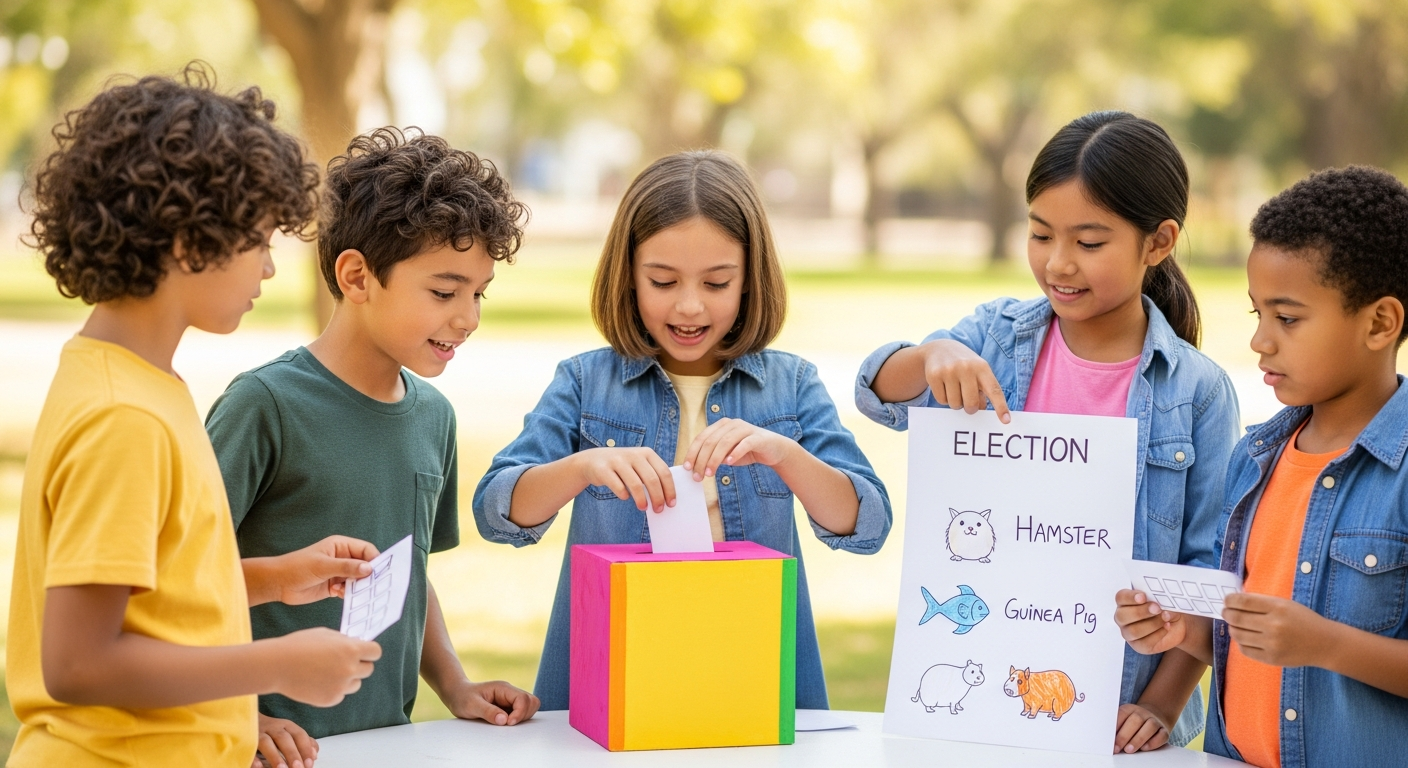
Table of Contents
- Introduction
- Why Teach Kids About Voting? More Than Just Ballots
- The Foundation of Fair Play: Understanding "One Person, One Vote"
- Beyond the Ballot Box: Fun Voting Activities for All Ages
- Fostering Respect & Critical Thinking: Living with the Outcome
- How Speech Blubs Empowers Young Voices
- Ready to Empower Your Child's Voice?
- Conclusion
- FAQ
Have you ever tried to explain something as complex as a national election to a curious 5-year-old? The blank stares or a simple, "But why can't I vote for the cookie?" are common reactions. Voting, at its core, is about expressing a choice, having a voice, and understanding that collective decisions shape our world. While the intricacies of democratic processes might be a few years away for our little ones, the foundational concepts of choice, voice, and community can be introduced in wonderfully fun and engaging ways right now.
Teaching children about voting isn't just about preparing them for future civic duties; it's about nurturing critical thinking, fostering respect for diverse opinions, and empowering them to "speak their minds and hearts"—a mission we deeply believe in at Speech Blubs. This post will dive into why these lessons are so important, offer a treasury of hands-on voting activities suitable for various ages, and explore how these experiences naturally bolster essential communication skills. By the end, you'll have a toolkit to transform abstract concepts into tangible, joyful learning moments, helping your child become a confident communicator and an engaged member of their community.

Introduction
Imagine a world where every child feels confident enough to express their opinions, understand the perspectives of others, and participate meaningfully in decisions that affect them. This isn't just a dream; it's a foundational skill set we can start building today through the seemingly simple act of voting. For many children, the idea of "voting" might seem distant or confusing, especially when political campaigns fill the airwaves. Yet, the principles behind voting—making choices, having a say, and respecting outcomes—are incredibly relevant to their daily lives, from picking a bedtime story to deciding on a family outing.
At Speech Blubs, our mission is rooted in empowering children to communicate effectively, and we understand firsthand the challenges many families face. Our company was born from the personal experiences of our founders, who all grew up with speech problems and created the tool they wished they had. We are committed to providing an immediate, effective, and joyful solution for the 1 in 4 children who need speech support, blending scientific principles with play into one-of-a-kind "smart screen time" experiences. We provide a screen-free alternative to passive viewing (like cartoons) and a powerful tool for family connection. This belief extends to how we approach broader educational topics, like civic engagement. We know that fostering an environment where children can practice expressing their ideas—and learning that their voice matters—is crucial for their overall development. This guide will provide you with a wealth of fun, hands-on voting activities designed to simplify complex ideas, spark curiosity, and build the communication confidence every child deserves.
Why Teach Kids About Voting? More Than Just Ballots
Teaching children about the voting process goes far beyond just understanding how an election works. It’s an invaluable opportunity to instill a suite of essential life skills and democratic principles that will serve them throughout their lives. When we engage children in voting activities, we're not just explaining a process; we're cultivating future citizens who are informed, critical thinkers, and empathetic individuals.

Understanding Democratic Principles
The very foundation of a fair society rests on democratic principles. By engaging children in simple voting scenarios, we help them grasp that power comes from the people, and that collective decisions can shape their environment. They learn that leaders are chosen through a fair process, reinforcing the idea of shared governance from an early age. This foundational understanding can plant the seeds for future active participation in their communities and beyond.
Appreciating Their Voice and Opinions
One of the most powerful lessons children can learn is that their voice matters. In a world where they often feel decisions are made for them, voting activities provide a direct channel for them to express their preferences and see the impact of their choices. This empowers them, building self-esteem and encouraging them to articulate their thoughts. For a child who struggles with expressing themselves, even a simple vote for their favorite color or snack can be a monumental step towards developing confidence. At Speech Blubs, we believe deeply in nurturing this confidence, helping children find the words to express what’s on their minds and in their hearts. If you're looking for tools to help your child articulate their choices, consider exploring our app by downloading Speech Blubs on the Apple App Store or Google Play Store today!
Encouraging Critical Thinking Skills
Voting is not just about picking a winner; it’s about making an informed choice. Engaging in mock elections encourages children to think critically. They learn to consider different options, weigh pros and cons (even for something as simple as choosing a class pet), and evaluate why one choice might be "better" for a particular situation. This skill translates into analyzing situations, questioning information, and forming their own well-reasoned opinions, rather than simply accepting what they're told.
Fostering Civic Responsibility
Learning about voting instills a sense of civic responsibility. Children begin to understand that they are part of a larger community and have a role to play in shaping its future. This realization can spark an interest in how policies are made and how they can contribute to positive change, even in small ways. It teaches them that being a good citizen involves active participation and a commitment to the well-being of the group.
Cultivating a Sense of Community and Respect
Finally, voting activities cultivate a sense of community and unity. Children learn that despite differences in opinions or backgrounds, everyone has an equal opportunity to participate. They experience firsthand that the majority vote guides collective decisions, and importantly, they learn to respect outcomes that may not align with their personal preference. This fosters empathy, encourages dialogue, and promotes respect for diverse viewpoints, crucial skills for harmonious living.
The Foundation of Fair Play: Understanding "One Person, One Vote"
Introducing the concept of voting effectively requires a scaffolded approach, gradually increasing complexity as children develop. Starting with the basics ensures that young learners grasp the core idea before moving on to more nuanced aspects.
Level 1: Different People, Different Ideas – Making Votes Count
The very first step is to establish the fundamental principle: "one person, one vote." For young children, who may not yet have one-to-one correspondence down pat, simply raising hands multiple times can be confusing. To make it concrete and visual:
- Use physical tokens: Instead of hands, give each child one identical token (like a block, button, or counting chip). They place their token in a designated spot for their chosen option. This clearly shows that each person gets one vote and allows for easy, visual counting.
- Simple choices: Start with low-stakes decisions like "Which fruit should we have for snack: apples or bananas?" or "Which color balloon should we get?"
- Count aloud: Count the tokens for each option together, reinforcing the quantity for each choice.
For a child who is just beginning to understand numbers and quantities, activities like this can also be integrated with Speech Blubs' "Numbers" or "Colors" sections, where they can practice naming and identifying their choices before casting their vote. This dual learning approach strengthens both civic and linguistic skills.
Level 2: Learning to Accept the Outcome – Respecting the Majority
Once the "one person, one vote" concept is solid, the next challenge is learning to accept that their preferred choice might not always win. This is where respect for others' choices and the majority vote comes into play.
- Private voting: Create a simple "voting booth" from a cardboard box or a blanket draped over chairs. This provides a private space for children to cast their vote, helping them feel secure in their choice and avoiding potential peer pressure or feelings of judgment if their vote is for the "less popular" option.
- Ballot box: Use a decorated box as a "ballot box" where they deposit their tokens or simple drawings representing their vote. This adds to the formality and fun.
- Discussing "most" and "least": When tallying, clearly point out which option has "the most" votes and which has "the least." Emphasize that all choices were good, but the one with the most votes is what the group will do. Avoid terms like "winner" or "loser" for choices to keep it positive.
Relatable Scenario: For a parent whose 4-year-old struggles with emotional regulation when things don't go their way, a simple mock vote on which book to read can be a gentle introduction to respecting group decisions. The Speech Blubs app's "Emotions" section, where children learn to identify and express feelings through peer video modeling, can be a great companion tool to help them articulate their feelings (e.g., "I feel a little sad that my book didn't win") in a healthy way, preparing them for such social dynamics.
Beyond the Ballot Box: Fun Voting Activities for All Ages
The beauty of teaching voting is that it can be incredibly hands-on and imaginative. Here are various activities, building on the foundational levels, that you can adapt for different age groups and learning styles.
Mock Elections: From Snacks to Class Pets
Mock elections are perhaps the most classic and effective way to introduce voting. They allow children to experience the entire process in a safe, relatable context.
Favorite Snack Election (Ages 3-6)
- The Candidates: Offer two simple snack options (e.g., Goldfish crackers vs. apple slices, or chocolate chip vs. Oreo cookies).
- Campaigning (simple): Let children briefly "advocate" for their favorite, perhaps by saying "I like Goldfish because they're crunchy!"
- Voting: Use a simple token system or picture ballots.
- Result: Count votes and enjoy the chosen snack!
- Speech Blubs Connection: In the Speech Blubs app, the "My Favorites" category or the "Food" section can help children articulate why they prefer certain items, using descriptive words and forming simple sentences. This direct practice makes them more confident in expressing their preferences during a real mock election.
Class Pet Election (Ages 5-8)
- The Candidates: Present 2-3 hypothetical class pets (e.g., a turtle, a fish, a rabbit). Show pictures and discuss their needs (food, habitat, care).
- Campaign Posters: Have children draw posters for their preferred pet, listing reasons why it would be a good choice.
- Ballots & Booth: Create simple paper ballots with pictures and names, and a makeshift voting booth.
- Result & Discussion: Tally votes, announce the "winner," and discuss why that pet might be the best choice for the classroom.
- Speech Blubs Connection: For children working on articulation or descriptive language, the "Animal Kingdom" section within Speech Blubs is perfect. They can practice animal sounds, names, and even describe their characteristics, preparing them to "campaign" for their chosen pet with clearer speech and more detailed explanations.
Favorite Book Election (Ages 6-10)
- The Candidates: Select 3-4 popular books. Read them aloud over a few days.
- Debate (simple): After reading, have children discuss what they liked about each book, characters, and plot.
- Voting: Use paper ballots, tally, and declare the "class favorite."
- Speech Blubs Connection: The "Stories" or "People" categories in Speech Blubs can help children practice narrating events, describing characters, and expressing opinions about what they've heard. This builds narrative skills and the ability to articulate their book preference.
Campaign Creations: Posters, Slogans, Jingles
These activities tap into creativity while reinforcing election concepts.
Design a Campaign Poster (All Ages)
- Challenge: Ask kids to design a campaign poster for a fictional character (like a superhero for class president) or a real issue they care about (e.g., "More Recess!").
- Supplies: Provide art supplies like construction paper, markers, crayons, and stickers.
- Message: Encourage them to think about a clear message or slogan.
- Speech Blubs Connection: Creating a slogan requires concise language and strong vocabulary. In Speech Blubs, activities that focus on "Words" and "Descriptions" can help children brainstorm impactful language and practice saying their slogans clearly.
Write and Perform Campaign Jingles (Ages 7+)
- Task: Have children create short, catchy jingles for their fictional candidates or causes.
- Performance: Encourage them to perform their jingles for family or friends. This boosts confidence and public speaking skills.
- Speech Blubs Connection: This activity is excellent for prosody (the rhythm and intonation of speech) and practicing clear articulation. Speech Blubs’ video modeling helps children imitate speech patterns, which can be adapted to learning rhythm and emphasis needed for a jingle.
Role-Playing & Debates: Candidate Speeches, Mock Press Conferences
These activities foster expressive language, critical thinking, and social interaction.
Candidate Speeches (Ages 6+)
- Scenario: Have children pretend to be candidates running for a specific "office" (e.g., "Family Fun Coordinator").
- Preparation: Guide them to think about what they would do if elected and present their "platform" in a short speech.
- Speech Blubs Connection: Practicing speech requires clear articulation and confident delivery. The "People" section in Speech Blubs, where children learn to make eye contact and imitate facial expressions of their peers, can significantly boost their confidence in speaking in front of others. Activities focusing on "Sentence Building" are also invaluable for crafting their speeches.
Mock Press Conference (Ages 8+)
- Roles: Assign roles: "politician," "reporters," "audience."
- Activity: "Reporters" ask questions about the "politician's" platform or "issues," and the "politician" responds.
- Focus: Emphasize respectful questioning and answering.
- Speech Blubs Connection: This complex role-play activity requires strong question-asking skills and the ability to formulate coherent answers. The app's various categories encourage question formation and expressive responses, which can be directly applied here.
Creative Crafts & Games: "I Voted" Stickers, Patriotic Snacks
These activities are lighter but still reinforce the theme.
"I Voted" Sticker Crafts (All Ages)
- Activity: Use construction paper, markers, and stickers to create personalized "I Voted" stickers.
- Discussion: Discuss the importance of voting while crafting. You can even print official-looking "I Voted!" stickers using label sheets.
Election Day Bingo/Word Search (Ages 6+)
- Game: Create bingo cards or word searches with election-related terms (e.g., voter, ballot, campaign, choice).
- Learning: Play the game while discussing the meaning of each term, expanding vocabulary.
- Speech Blubs Connection: Vocabulary acquisition is a key component of language development. The "Words" and "Alphabet" sections in Speech Blubs can help children recognize and understand new terms encountered in election-themed games.
Learning History & Engaging Community: Researching Figures, Writing Letters
For older children, these activities can deepen their understanding of civic engagement.
Research Famous Political Figures (Ages 8+)
- Task: Assign each child a famous political figure (e.g., Abraham Lincoln, Susan B. Anthony) to research.
- Presentation: Have them present their findings, focusing on the figure's impact on voting rights or democratic principles.
- Speech Blubs Connection: Research and presentation require strong comprehension and expressive language skills. The app’s varied activities can support sentence complexity and storytelling, helping children structure and deliver their presentations effectively.
Write Letters to Elected Officials (Ages 9+)
- Activity: Guide children in writing letters to local or national officials, expressing their opinions on an issue they care about.
- Purpose: Teach them that their voice can reach decision-makers.
- Speech Blubs Connection: Writing letters helps children organize their thoughts and formulate persuasive arguments. While Speech Blubs focuses on spoken language, the underlying cognitive skills for structuring arguments and expressing opinions are developed through expressive language practice in the app.
Fostering Respect & Critical Thinking: Living with the Outcome
Beyond the initial vote, truly understanding civic engagement involves navigating the aftermath, especially when one's preferred choice doesn't win. This is a crucial area for social-emotional growth.
Level 3: Deliberation – Making Informed Choices
Before casting a vote, children need to understand that choices should be informed. This moves beyond simple preference to considering value and impact.
- Connect to curriculum: If voting on the best building block shape, let them experiment with different shapes first to see which makes the sturdiest tower.
- Gather information: Teach them to ask questions like "Why do you think that's the best?" or "What would happen if we chose this option?"
- Speech Blubs Connection: The "Question Words" section in Speech Blubs is incredibly useful here, helping children formulate "what," "why," and "how" questions to gather information before making a decision. This builds critical inquiry skills vital for informed voting.
Level 4: Using Persuasion to Influence Voting – Respectful Advocacy
Once children understand informed choices, they can learn to respectfully persuade others. This is where they move from objective, test-based choices to more subjective, belief-based declarations.
- Practice polite persuasion: After presenting options, allow time for children to "campaign" for their choice, emphasizing "use your words," "tell, not yell," and basic civility.
- Starter phrases: Provide phrases like, "Here is why you should vote for ______" or "I think ______ is best because ______."
- Speech Blubs Connection: Activities focused on "Social Skills" within Speech Blubs, such as practicing turn-taking, active listening, and expressing agreement or disagreement politely, directly support this level. Our unique "video modeling" methodology, where children learn by watching and imitating their peers, is particularly effective for mastering these complex communication skills in a supportive, engaging way.
Level 5: Living with the Outcome, But Working for Change – Resilience and Action
The highest level involves accepting the majority decision while understanding that change is still possible. This fosters resilience and proactive problem-solving.
- Relatable consequences: Make the vote clearly impactful on their lives. If they voted for a specific playground equipment and it didn't win, help them brainstorm ways to raise money for that item next time.
- Continuous participation: Emphasize that even if their choice wasn't selected, they are still part of the community and can continue to advocate for their ideas in the future.
This journey through the levels of voting participation helps children understand their role as active citizens, fostering meaningful civic engagement from the earliest grades. It empowers them not just to vote, but to understand why they vote, and how to participate in a constructive, respectful manner.
How Speech Blubs Empowers Young Voices
At Speech Blubs, we are dedicated to helping every child find and use their voice confidently. Our app provides a unique, science-backed approach that complements and enhances the communication skills vital for active civic participation, making learning both effective and incredibly fun.
Building Communication Confidence
For many children, speaking up, whether in a mock election or a family discussion, can be daunting. Our founders experienced this firsthand, which is why Speech Blubs was designed to be a joyful, low-pressure environment. By empowering children to "speak their minds and hearts," we help them overcome communication barriers. The app offers a supportive space to practice sounds, words, and sentences, gradually building the confidence needed to express preferences, articulate reasons, and engage in discussions about choices and outcomes.
Practicing Expressive Language
The core of voting activities lies in expressive language – articulating choices, giving reasons, and participating in debates. Speech Blubs’ innovative "video modeling" methodology, where children learn by watching and imitating their peers, is profoundly effective for this. Children learn new words, sentence structures, and speech sounds in context, mirroring the natural way children acquire language.
Relatable Scenario: Consider a 5-year-old who is a "late talker" but loves animals. Engaging in a mock "favorite animal" election can be a rich learning opportunity. While using Speech Blubs' "Animal Kingdom" section, this child can practice sounds like "moo" and "baa," or words like "dog" and "cat," by imitating their peers. This direct practice makes them more comfortable saying their preferred animal's name when it's time to vote, building crucial confidence in expressing their choice.
Developing Social-Emotional Skills
Beyond just speaking, voting involves a host of social-emotional skills: understanding different opinions, turn-taking, active listening, and respectfully disagreeing. Our app integrates activities that encourage these skills indirectly by fostering clear communication. When a child can clearly express their feelings or thoughts, they are better equipped to navigate social interactions like those found in a debate or a group decision. We provide a screen-free alternative to passive viewing (like cartoons) and a powerful tool for family connection, encouraging these crucial interactions.
Engaging "Smart Screen Time"
We understand parents are concerned about screen time. That's why Speech Blubs offers "smart screen time"—an interactive, educational, and engaging experience that stands in stark contrast to passive viewing. Our activities are designed for active participation, promoting speech and language development while making learning fun. This approach is backed by research, placing us in the top tier of speech apps worldwide. You can learn more about our scientific methodology and its impact by visiting our research page.
Ready to Empower Your Child's Voice?
The journey of teaching children about voting and civic responsibility is also a journey of empowering their communication skills. From the simplest choice to the most complex debate, having a clear voice and the confidence to use it is paramount. At Speech Blubs, we're here to support you every step of the way.
We are committed to providing an immediate, effective, and joyful solution for the 1 in 4 children who need speech support. Our app, built on scientific principles and designed by experts, helps children develop crucial language and communication skills through fun, interactive activities and our unique video modeling approach.
Take the Next Step Today!
Unsure if your child could benefit from speech support? Take our quick 3-minute preliminary screener to get a simple assessment and a personalized next-steps plan. It's a great way to understand your child's needs and leads directly to a free 7-day trial. Take our quick 3-minute preliminary screener today!
Join thousands of families who have seen incredible progress with Speech Blubs. See what other parents are saying about their child's success with Speech Blubs by visiting our testimonials page.
We offer flexible plans to fit your family's needs:
- Monthly Plan: Get started for just $14.99 per month.
- Yearly Plan: Our best value, at only $59.99 per year. This breaks down to just $4.99 per month, allowing you to Save 66% compared to the monthly option!
Why choose the Yearly Plan? It's not just about saving money; it's about unlocking the full Speech Blubs experience. With the Yearly Plan, you'll receive:
- A 7-day free trial to explore all the app has to offer.
- Access to the extra Reading Blubs app for even more learning.
- Early access to new updates and features.
- 24-hour support response time for any questions you may have.
The Monthly Plan, while a good starting point, does not include these exclusive benefits. For the most comprehensive support and the best value, the Yearly Plan is the clear choice.
Ready to see the amazing impact of Speech Blubs?
Download Speech Blubs on the App Store!
Get Speech Blubs on Google Play!
Or, create your account and begin your 7-day free trial today by selecting the Yearly plan to get the best value and access to all features! Start Your Free Trial Here!
Conclusion
Teaching children about voting and civic engagement is a foundational gift, laying the groundwork for informed citizenship and confident communication. From the simple act of choosing a snack to understanding the nuances of respectful debate, these "fun voting activities for kids" are more than just games; they are powerful lessons in expressing opinions, respecting differences, and understanding the collective power of community. We've explored how a scaffolded approach can introduce complex ideas in an age-appropriate way, from the concrete "one person, one vote" principle to the resilience required to live with outcomes and advocate for future change.
At Speech Blubs, we wholeheartedly believe that every child deserves the opportunity to speak their minds and hearts. Our app provides the scientifically-backed, joyful, and engaging "smart screen time" that complements these real-world learning experiences, helping children build the expressive language, critical thinking, and social-emotional skills necessary to truly participate in their world. By nurturing their ability to communicate effectively, we empower them to become not just future voters, but confident, compassionate individuals ready to shape their communities.
Don't wait to empower your child's voice and civic understanding. Start their journey today.
Download Speech Blubs on the App Store or Google Play to begin your 7-day free trial with the Yearly plan, unlocking the full suite of features and the best value for your family!
FAQ
Q1: Why is it important to teach young children about voting?
Teaching young children about voting is crucial because it introduces them to fundamental democratic principles like choice, voice, and community decision-making. It empowers them to understand that their opinions matter, fosters critical thinking as they weigh options, and encourages respect for diverse perspectives and majority decisions. These early lessons lay the groundwork for becoming engaged, responsible, and empathetic citizens who are confident in expressing themselves.
Q2: How can I make voting activities engaging for different age groups?
The key is to tailor activities to their developmental stage. For preschoolers, start with very simple choices using concrete objects or picture ballots, like voting for a snack or a color. For elementary-aged children, introduce mock elections for class pets or books, allowing for simple campaigning and ballot-box voting. For older children, you can incorporate more complex activities like designing campaign posters, writing speeches, or even mock debates on issues relevant to them, always emphasizing respectful discussion and informed choices.
Q3: What if my child gets upset if their choice doesn't win in a mock election?
It's completely normal for children to feel disappointed when their preference isn't chosen. This is a valuable opportunity to teach emotional regulation and resilience. Acknowledge their feelings ("It's okay to feel sad that your book didn't win"). Emphasize that all choices were good, and the group chose the one with the most votes. You can also discuss how to continue advocating for their idea in the future, fostering a sense of agency even after a vote doesn't go their way. Speech Blubs’ "Emotions" section can help children identify and express these feelings constructively.
Q4: How does Speech Blubs support learning about civic engagement?
While Speech Blubs doesn't directly teach civics, it fundamentally empowers children with the communication skills essential for civic engagement. Our app, through video modeling and interactive activities, helps children build expressive language, articulate their thoughts and choices, develop critical thinking skills (e.g., asking questions, describing preferences), and foster social-emotional regulation. By strengthening their ability to "speak their minds and hearts," Speech Blubs gives children the confidence and tools to participate meaningfully in discussions, express opinions, and ultimately engage in voting activities with greater clarity and self-assurance.
About the author