
Epic Fun Activities for Kids' Parties
 By Speech Blubs Team•Jan 13, 2026•18 min.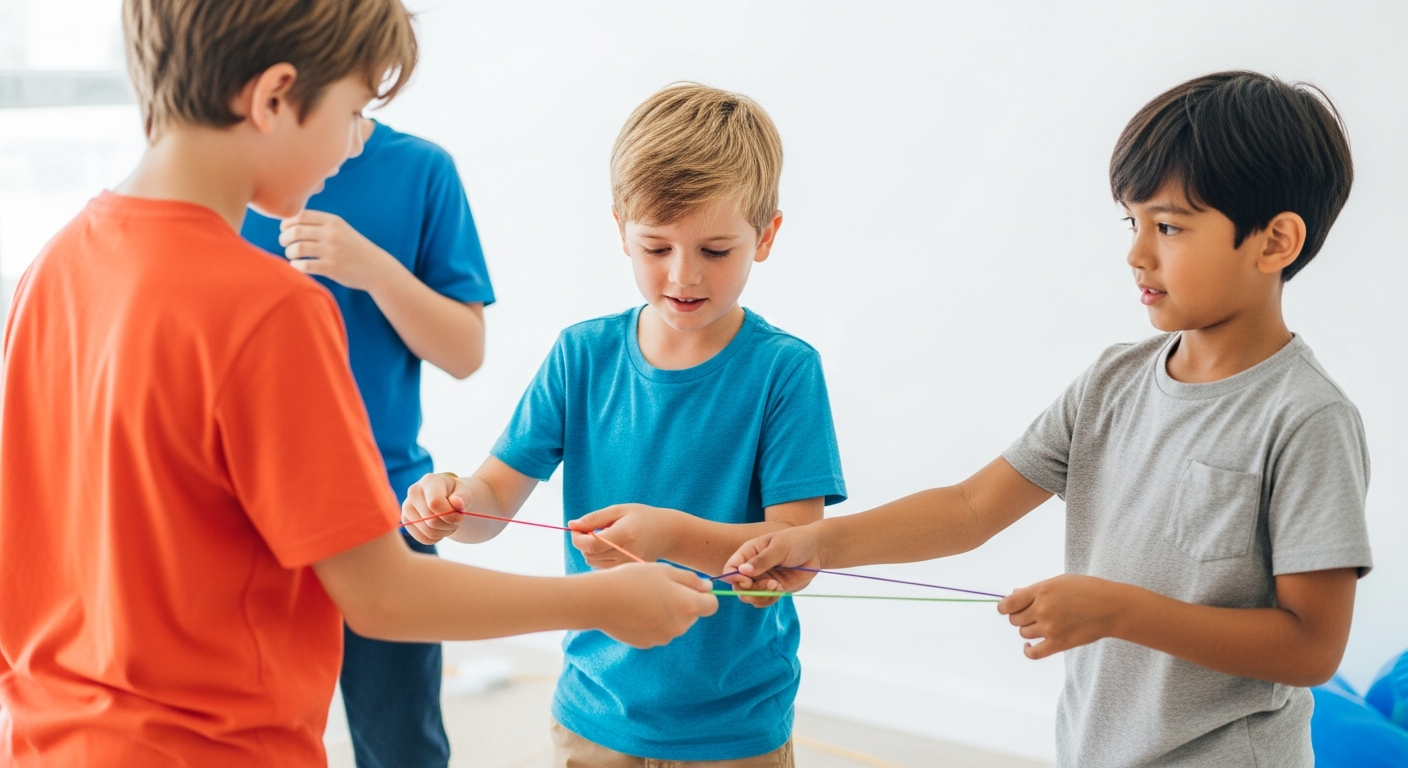
Table of Contents
- Introduction
- Creative & Imaginative Play: Sparking Self-Expression
- Active & Outdoor Adventures: Movement, Instructions & Social Cues
- Cooperative & Social Games: Building Connections Through Conversation
- Elevating the Party Experience with Speech Blubs: Smart Screen Time & Family Connection
- Conclusion
- FAQ
Introduction
Remember the sheer joy of a childhood birthday party? The anticipation, the laughter, the boundless energy, and the magical feeling that everything was designed just for you. As parents, we want to create that same unforgettable magic for our children, filled with delightful memories and endless fun. But what if we told you that these vibrant celebrations could be more than just good times? What if every game, every craft, every shared moment also offered a powerful opportunity for growth, connection, and the blossoming of communication skills?
Planning a kids' party can feel like a balancing act: finding activities that are engaging for various ages, easy to set up, and won't leave your house in utter disarray. Yet, with a thoughtful approach, a child’s party becomes a rich environment for developing essential life skills, especially in language and social interaction. Far from being merely a distraction, well-chosen party activities can subtly encourage children to listen, follow instructions, express ideas, take turns, and interact confidently with their peers. At Speech Blubs, we believe in empowering children to "speak their minds and hearts," and a lively party provides the perfect stage for this empowerment.

This post isn't just a list of games; it's a guide to transforming your child's next party into a celebration of fun and developmental progress. We'll dive into a treasure trove of creative, active, and cooperative activities that captivate young minds and hearts, all while fostering crucial communication skills. You'll discover how to harness the inherent joy of play to build confidence, reduce frustration, and create lasting, meaningful connections. Get ready to plan a party that isn't just fun, but truly epic for every child involved!
Creative & Imaginative Play: Sparking Self-Expression
One of the most powerful avenues for fostering communication is through creative and imaginative play. When children engage their hands and minds in making something, they naturally find a voice to describe their process, their choices, and their finished creations. These activities aren't just about the end product; they're about the conversations, the planning, and the storytelling that happen along the way.
DIY Party Hats & Masks: Personalization and Description
Imagine a table laden with colorful paper hats, googly eyes, pipe cleaners, pom-poms, stickers, and glitter glue. A DIY party hat station or a mask-making station turns party guests into artists, allowing them to craft a personalized memento to take home. This activity is fantastic for encouraging descriptive language.
- Communication Benefits: As children select their materials, prompt them with questions: "What color do you want for your hat? Is that pom-pom soft or bumpy? What kind of character will your mask be?" This practice in describing colors, textures, and imaginary roles builds vocabulary and encourages expressive language. For a child who might be a "late talker," the visual and tactile nature of crafting provides concrete anchors for new words. They can point to the "red" sticker or the "sparkly" glitter, gradually associating the word with the object. This hands-on process directly mirrors our own methodology at Speech Blubs, where children learn by engaging with vivid, real-world examples.
Tote Bag Painting & Art Gallery: Expressing Individuality
Provide plain tote bags, fabric paints, brushes, and stencils for a tote bag painting station. Children can design their own unique bags, expressing their individuality through art. Similarly, a temporary art gallery wall can be set up to display all the masterpieces created during the party, including drawings from a coloring station.

- Communication Benefits: These activities prompt rich conversations about choices, techniques, and artistic vision. "Tell me about your design! Why did you choose those colors?" Presenting their finished artwork on a gallery wall gives children a sense of pride and an opportunity to talk about their work, strengthening their narrative skills. For parents whose children might struggle with sharing their thoughts, activities like these offer a low-pressure outlet for self-expression, fostering confidence in their ability to communicate.
Puppet Craft & Storytelling: Bringing Characters to Life
Set up a puppet craft station with socks, paper bags, googly eyes, yarn, and fabric scraps. Once the puppets are made, encourage children to put on impromptu performances. A small stage area with a whimsical backdrop can amplify the magic.
- Communication Benefits: Puppet play is a goldmine for language development. Children can use their puppets to create dialogue, tell stories, and even express emotions or explore scenarios they might find challenging in real life. This practice in character voices, sequencing events, and improvisational speech is invaluable. For a child working on social pragmatics, using a puppet can be a safe way to practice conversational turn-taking and understanding different perspectives. Our mission at Speech Blubs is to provide solutions that empower children to communicate effectively, and imaginative play like this is a powerful complement to our app’s focused exercises.
Bead Jewelry & Friendship Bracelets: Fine Motor and Social Ties
A bead jewelry crafting station or a friendship bracelet station offers a quieter, more focused activity perfect for smaller groups or as a cool-down option. Provide a variety of colorful beads, strings, and clasps, along with embroidery threads for bracelets.
- Communication Benefits: Beyond developing fine motor skills, these crafts encourage negotiation and sharing ("Can I borrow that purple bead?"). Children often discuss who they are making the jewelry for, which prompts conversations about friends and family, and the act of giving. They can describe the patterns they are creating or ask for help with tricky clasps, practicing polite requests and problem-solving language.
Fairy Crafting & Cape Design: World-Building and Role-Playing
From creating tiny fairy gardens to designing superhero capes, these activities allow children to build their own worlds and step into different roles. A fairy crafting station with miniature plants and figurines, or a cape design station with colorful fabrics and emblems, sparks boundless imagination.
- Communication Benefits: Role-playing and world-building are critical for developing narrative skills, understanding cause and effect, and exploring different perspectives. Children invent stories, assign roles, and use rich vocabulary to describe their fantastical creations and adventures. This is where language truly comes alive through play, helping children to articulate complex ideas and feelings. Just as our app encourages children to imitate and then create their own sounds and words, these activities invite them to imitate stories and then craft their own.
Active & Outdoor Adventures: Movement, Instructions & Social Cues
Moving our bodies is intrinsically linked to developing our brains, and active games are perfect for stimulating language in a dynamic environment. These activities naturally encourage listening, following multi-step directions, and using expressive language to describe actions, emotions, and strategies.
Balancing Act & Limbo: Following Directions and Self-Correction
Simple activities like a balancing act with lightweight boxes on heads or a classic game of limbo require careful listening and physical coordination.
- Communication Benefits: These games are excellent for practicing receptive language skills, as children must accurately follow instructions like "walk slowly," "lower," or "stop." When a box falls or they can't go low enough, it provides a natural opportunity to use words like "oops," "try again," or "I can do it!" Encouraging them to narrate their movements ("I'm bending my knees!") builds expressive vocabulary for action verbs and spatial concepts.
Inspector Party Game & Scavenger Hunts: Problem-Solving & Questioning
Turn the party into a thrilling mystery with an inspector party game or a full-fledged scavenger hunt. Provide magnifying glasses and clues that lead to the next riddle or hidden treasure.
- Communication Benefits: These activities are phenomenal for fostering problem-solving discussions, asking clarifying questions, and working cooperatively. Children learn to formulate questions ("Where should we look next?"), share observations ("I found something red!"), and negotiate ("Let's go this way!"). For a child who might be quiet in group settings, the shared goal of a scavenger hunt can provide a gentle nudge to speak up and contribute. If you're wondering if your child could benefit from targeted speech support, consider taking our quick 3-minute preliminary screener to get a simple assessment and a free 7-day trial.
Simon Says & Opposites: Listening & Cognitive Flexibility
These classic games, Simon Says and Opposites, are simple yet incredibly effective for targeting listening comprehension and cognitive flexibility.
- Communication Benefits: In Simon Says, children practice auditory discrimination and following specific verbal commands. In Opposites, they engage in more complex cognitive processing, translating a command into its antonym. These games are fantastic for children who need to work on understanding multi-step directions or abstract concepts. Parents can model clear, concise language and emphasize listening closely, reinforcing foundational skills crucial for effective communication.
Charades & Follow the Leader: Non-Verbal & Verbal Expression
Charades offers a unique blend of non-verbal expression and verbal guessing, while Follow the Leader emphasizes imitation and sequencing.
- Communication Benefits: Charades helps children learn to convey meaning without words, sharpening their understanding of body language and expressions. When guessing, they practice asking questions and forming hypotheses. Follow the Leader is ideal for practicing imitation skills, which are fundamental to speech development. Children mimic actions, sounds, and even silly gestures, reinforcing the idea of mirroring behavior—a key principle in our video modeling methodology at Speech Blubs where children learn by watching and imitating their peers.
Obstacle Course & Relay Races: Action Verbs & Teamwork
Setting up an obstacle course or a cone relay race encourages dynamic movement and teamwork.
- Communication Benefits: As children navigate obstacles, parents can prompt them to use action verbs: "You're crawling! Now you're jumping over the pillow!" Relay races foster communication around strategy, encouragement, and turn-taking within a team. These active scenarios provide natural, motivating contexts for children to practice expressive language related to movement, spatial awareness, and social interaction.
Cooperative & Social Games: Building Connections Through Conversation
Some of the most valuable communication lessons happen when children play together, learning to share, negotiate, and understand each other's perspectives. These games foster not just verbal skills, but also crucial social-emotional intelligence.
Capture the Flag & Tug-of-War: Strategy and Collaboration
Team-based games like Capture the Flag and Tug-of-War are fantastic for developing cooperative play and strategic thinking.
- Communication Benefits: These activities demand communication: planning strategies ("You go left, I'll go right!"), negotiating roles, and encouraging teammates ("Pull harder! We can do it!"). Children learn to articulate their ideas within a group, listen to others, and compromise. For a child who might struggle with social reciprocity, these games provide a structured way to practice interacting within a shared goal, building a sense of belonging and confidence.
Water Balloon Toss & Sprinkler Tag: Shared Laughter and Rules
On a warm day, water balloon toss or sprinkler tag are fantastic for lighthearted fun and practicing social interaction.
- Communication Benefits: The shared experience of getting wet and laughing together creates a positive environment for communication. Children naturally comment on the splashes, the coolness of the water, and cheer each other on. They also practice understanding and following simple rules, and expressing excitement or surprise. These joyful moments reduce pressure and make communication feel effortless and natural.
Hide and Seek & Sardines: Asking Questions and Observation
Classic games like Hide and Seek and its fun twist, Sardines, are excellent for encouraging observation skills and social interaction.
- Communication Benefits: In Hide and Seek, children practice counting, waiting, and calling out "Ready or not, here I come!" When searching, they might ask questions ("Where could they be?") or make predictions. Sardines, where everyone eventually squeezes into one hiding spot, leads to lots of giggles and close-quarter conversations, encouraging hushed whispers and cooperative silence. These games foster a sense of shared adventure and reinforce social cues.
I Spy & Duck Pond Matching: Vocabulary and Visual Discrimination
For younger children, I Spy is a wonderfully simple game for building vocabulary and observation. A duck pond matching game with plastic ducks and shapes/numbers offers a similar benefit.
- Communication Benefits: I Spy targets descriptive language ("I spy with my little eye something green and round!"). It helps children learn adjectives and categories. The duck pond game reinforces matching, counting, and naming shapes or numbers. Both games are excellent for receptive vocabulary development and for encouraging children to articulate their observations clearly.
Elevating the Party Experience with Speech Blubs: Smart Screen Time & Family Connection
While parties are vibrant, active environments, there are always moments for winding down, for individual exploration, or for targeted learning that complements the social fun. This is where Speech Blubs comes in as a powerful tool that transforms screen time into "smart screen time." Our app is designed to be an immediate, effective, and joyful solution for the 1 in 4 children who need speech support, blending scientific principles with engaging play.
Our company was born from the personal experiences of our founders, all of whom grew up with speech problems and created the tool they wished they had. This deep personal connection drives our commitment to providing a screen-free alternative to passive viewing (like cartoons) and a powerful tool for family connection.
The Science of Play and Imitation
At the heart of Speech Blubs is our unique video modeling methodology, where children learn by watching and imitating their peers. This approach taps into mirror neurons in the brain, making learning natural and highly effective. During a party, you can see these principles in action: children naturally imitate each other, learning new games, sounds, and social behaviors. Speech Blubs extends this natural learning into a structured, fun environment.
- Relatable Scenario: For a parent whose 3-year-old "late talker" loves animals, the "Animal Kingdom" section within Speech Blubs offers a fun, motivating way to practice "moo" and "baa" sounds. Seeing other children make these sounds encourages imitation and verbalization in a way that just listening to an adult might not. Later, during a party game like "I Spy" with animal toys, the child might confidently say "cow" or "sheep," building on the sounds learned with the app. Download Speech Blubs on the App Store or Get Speech Blubs on Google Play to explore our engaging categories.
Fostering Confidence Beyond the Party
The confidence a child gains from successfully participating in party activities—whether it’s making a mask or scoring a point in cornhole—is immense. This confidence extends to their communication. Speech Blubs helps reinforce this by providing a safe, supportive space for daily practice, fostering a love for communication and building foundational skills at home. We don't promise your child will be giving public speeches in a month, but we do promise a journey of growth, reduced frustration, and joyful learning moments.
Make Every Day a Learning Adventure: Choose the Right Plan
Just as you thoughtfully plan party activities, choosing the right support for your child's communication journey is essential. Speech Blubs offers flexible plans to fit your family's needs, but for the most comprehensive and value-packed experience, the Yearly plan is simply the best choice.
- Monthly Plan: For $14.99 per month, you get access to our core speech therapy exercises and activities.
- Yearly Plan: This is our most popular and recommended option, priced at just $59.99 per year. This breaks down to an incredible value of only $4.99 per month! By choosing the Yearly plan, you save a massive 66% compared to the monthly subscription.
Exclusive Yearly Plan Benefits:
Choosing the Yearly plan isn't just about saving money; it's about unlocking the full potential of Speech Blubs and gaining access to premium features designed to enhance your child's learning journey:
- 7-Day Free Trial: Only the Yearly plan comes with a generous 7-day free trial, allowing you and your child to explore all the amazing features and see the magic of Speech Blubs firsthand before committing.
- The Extra Reading Blubs App: Get access to our supplementary Reading Blubs app, a fantastic tool to further develop literacy skills alongside speech and language.
- Early Access to New Updates: Be among the first to experience new features, activities, and content as soon as they're released.
- 24-Hour Support Response Time: Enjoy prioritized customer support with a guaranteed response within 24 hours, ensuring you always get the help you need, when you need it.
The Monthly plan, while an option, does not include these valuable benefits, missing out on the free trial, Reading Blubs, early access, and expedited support.
Ready to provide your child with immediate, effective, and joyful speech support? Start your 7-day free trial today by selecting the Yearly plan. It's the best way to get the full suite of features and the greatest value. See what other parents are saying about their child's success on our testimonials page!
Conclusion
Planning a memorable birthday party for kids doesn't have to be a daunting task. By choosing activities that are not only fun but also thoughtfully designed to encourage communication and social interaction, you can create an environment where every child feels empowered to "speak their minds and hearts." From the imaginative chatter around a craft table to the clear instructions during an active game, every moment is an opportunity for growth. These parties aren't just about celebration; they're about building confidence, fostering social skills, and laying the groundwork for a lifelong love of communication.
At Speech Blubs, we are committed to being your partner in this journey, providing tools and resources that seamlessly blend scientific principles with joyful play. Our smart screen time, featuring video modeling with real peers, complements these hands-on party activities beautifully, offering consistent reinforcement of crucial speech and language skills. We believe that every child deserves the chance to connect, express themselves, and thrive.
So, as you plan your next celebration, remember that the most epic fun activities for kids' parties are those that spark laughter, encourage connection, and open the doors to confident communication. Take the first step towards empowering your child's voice today. Start your 7-day free trial with Speech Blubs and choose the Yearly plan to unlock all our exclusive features and provide your child with the best possible start on their communication journey. Let the fun—and the learning—begin!
FAQ
Q1: How do I choose the best party activities for children of different ages?
When planning activities for a mixed-age group, it's best to offer a variety that caters to different developmental stages. Simple games like "Simon Says" or "I Spy" can engage younger children, while older kids might enjoy the complexity of a "Scavenger Hunt" or "Charades." Crafts like "DIY Party Hats" allow children to participate at their own skill level. Always prioritize activities that encourage participation, rather than just competition, and consider having adult helpers guide younger children. Our focus at Speech Blubs is on age-appropriate engagement, ensuring that activities are fun and beneficial for all developmental stages.
Q2: How can these party activities help with a child's speech development?
Party activities naturally foster speech development by creating engaging scenarios for communication. Games that require following instructions ("Red Light, Green Light") build receptive language. Crafts that involve describing creations ("Tote Bag Painting") enhance expressive vocabulary. Cooperative games ("Tug-of-War") encourage social interaction, turn-taking, and problem-solving through dialogue. These hands-on experiences provide real-world contexts for children to practice and reinforce the communication skills they are developing, mirroring the interactive, peer-led learning environment found in Speech Blubs.
Q3: Is using a screen-based app like Speech Blubs genuinely beneficial for speech development, especially compared to hands-on play?
Absolutely! Speech Blubs offers "smart screen time" that is highly beneficial for speech development, acting as a powerful complement to hands-on play. Unlike passive screen time, our app actively engages children through a unique video modeling methodology where they watch and imitate real peers. This interactive approach leverages mirror neurons to make learning natural and effective, particularly for children who benefit from visual cues. It's a structured, joyful way to build foundational communication skills that can then be applied and reinforced during real-life interactions and imaginative play scenarios, creating a holistic approach to language development.
Q4: What's the best way to get started with Speech Blubs and access all its features?
The best way to get started and unlock the full potential of Speech Blubs is by choosing our Yearly plan. For just $59.99 per year (or $4.99/month), you save 66% compared to the monthly option. This plan includes a 7-day free trial, giving you full access to explore everything Speech Blubs offers. Additionally, the Yearly plan provides the extra Reading Blubs app, early access to new updates, and 24-hour support response time. We invite you to sign up for your free trial here and select the Yearly plan to begin your child's journey to confident communication today.
About the author