
Epic Halloween Party Games for Kids: Spooky Fun Awaits!
 By Speech Blubs Team•Jan 28, 2026•20 min.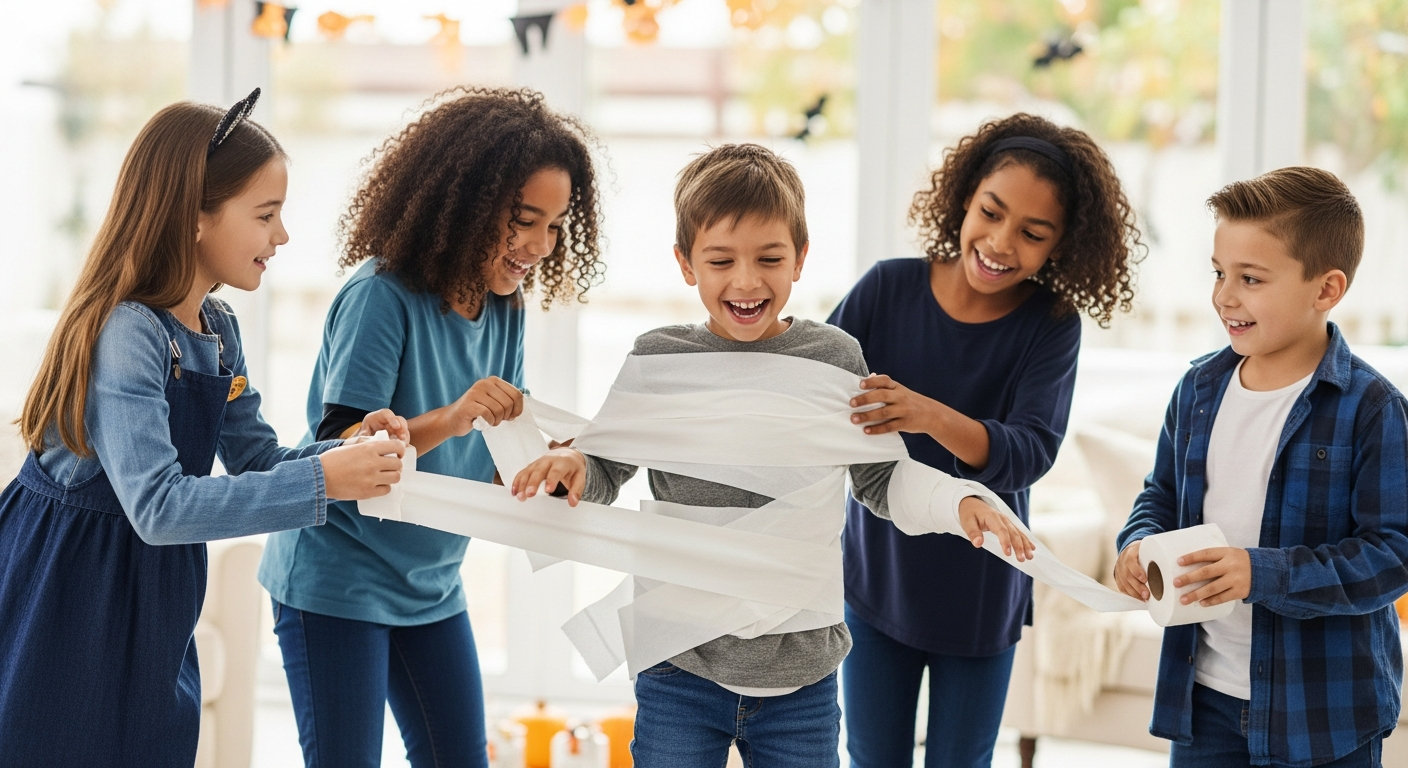
Table of Contents
- Introduction
- Why Halloween Party Games Are More Than Just Fun
- Planning the Perfect Spooktacular Soiree
- Active & Energetic Halloween Games for Kids
- Creative & Imaginative Halloween Games
- Mind-Bending & Social Halloween Games
- How Speech Blubs Supports Communication Beyond the Party
- Getting Started with Speech Blubs: Choose Your Plan!
- Conclusion
- Frequently Asked Questions (FAQ)
Introduction
As autumn leaves turn fiery hues and a crisp chill fills the air, a special kind of magic awakens – the magic of Halloween! For children, it's a season of enchanting costumes, mysterious decorations, and, of course, the thrilling promise of candy. But beyond the treats and costumes, Halloween offers a golden opportunity for something even more valuable: unforgettable parties packed with engaging games that foster not just fun, but also crucial developmental skills.
Planning a kid-friendly Halloween bash can sometimes feel like a daunting task, especially when trying to balance excitement with activities that genuinely captivate and challenge young minds. Our mission with this guide is to transform your spooky celebration into a dynamic playground where every game is an adventure in communication, creativity, and social growth. We believe that joyful learning can be woven into every aspect of a child's day, and a Halloween party is no exception. This post will unveil a treasure trove of engaging Halloween party games for kids of all ages, offering practical tips for planning, and showcasing how these playful moments can be powerful springboards for development. We’ll also explore how innovative tools like Speech Blubs can seamlessly support your child’s journey to articulate their thoughts and feelings, empowering them to truly speak their minds and hearts.

Why Halloween Party Games Are More Than Just Fun
Halloween party games are far from mere time-fillers; they are rich, interactive experiences that contribute significantly to a child's holistic development. When children engage in structured play, they're not just having a good time – they're building foundational skills that will serve them throughout their lives.
Building Communication Skills
Imagine a group of children excitedly describing their costumes, yelling out guesses during charades, or patiently waiting for their turn in a relay race. Each of these moments is a mini-lesson in communication. Games naturally encourage:
- Turn-taking: A fundamental social and communication skill, essential for conversations and group interactions.
- Following instructions: Listening carefully to game rules, understanding sequences, and executing steps.
- Asking and answering questions: Clarifying rules, expressing needs, engaging with peers.
- Vocabulary expansion: Learning new words related to the game, characters, or actions.
- Narrative skills: Describing actions, retelling events, or contributing to a spooky story.
At Speech Blubs, our very mission is to empower children to "speak their minds and hearts." We understand the profound impact that clear and confident communication has on a child’s life. Our company was born from the personal experiences of our founders, who all grew up with speech challenges and created the very tool they wished they had. This personal connection drives our commitment to providing immediate, effective, and joyful solutions for the 1 in 4 children who need speech support. Through play-based, scientifically-backed methods, we help children unlock their voices.
Fostering Social-Emotional Development
Party games are a fantastic incubator for social-emotional growth. Children learn:
- Cooperation and teamwork: Working together towards a common goal, like in a mummy wrap race.
- Empathy and sportsmanship: Cheering for friends, handling wins and losses gracefully.
- Managing excitement and frustration: Learning self-regulation in a lively environment.
- Building confidence: Participating, trying new things, and being celebrated for their efforts.
Enhancing Motor Skills & Coordination
Many Halloween games are dynamic and active, providing excellent opportunities for physical development:

- Gross motor skills: Running, jumping, balancing, throwing, and dancing.
- Fine motor skills: Decorating pumpkins, picking up small game pieces, intricate crafting.
- Hand-eye coordination: Aiming beanbags, tossing rings, navigating obstacles.
Sparking Creativity & Imagination
Halloween itself is a holiday steeped in imagination, and its games amplify this.
- Costume contests: Encourage self-expression and creative thinking.
- DIY crafts: Foster artistic skills and personalized creations.
- Storytelling: Unleash narrative abilities and fantastical thinking.
- Role-playing: Stepping into characters and scenarios.
Planning the Perfect Spooktacular Soiree
A successful Halloween party for kids hinges on thoughtful planning. Here are some key considerations:
Consider Your Guests' Ages
The age range of your partygoers will largely dictate the types of games and activities you choose.
- Toddlers & Preschoolers (Ages 1-4): Focus on simple, non-competitive games with clear instructions. Sensory bins, musical activities, and very short, simple races are ideal. Avoid anything too scary or requiring complex rules.
- Early Elementary (Ages 5-8): These kids thrive on active games, simple competitions, and creative projects. They can follow multi-step instructions and enjoy cooperative play.
- Older Kids (Ages 9+): They appreciate more challenging games, team-based competitions, mystery-solving, and games that allow for more strategy or creative input.
Party Flow & Duration
Pacing is crucial. A good party blends different types of activities to keep energy levels balanced:
- Start with a "warm-up" activity: Something low-key like a craft station or a guessing game as guests arrive.
- Integrate active games: Space these out to allow for bursts of energy.
- Include quiet or creative breaks: Pumpkin decorating or a storytelling session can offer a chance to recharge.
- Manage duration: Keep individual games concise. Younger children have shorter attention spans, so a quick rotation of activities works best.
Prizes & Treats
While candy is a Halloween staple, consider non-candy prizes or simple recognition for participation:
- Small toys: Stickers, glow sticks, mini erasers, temporary tattoos.
- Craft supplies: Spooky-themed pencils, small notebooks.
- Books: Age-appropriate Halloween stories.
- Certificates: "Most Creative Costume," "Best Teamwork," "Spookiest Dancer."
- "Bragging rights": Sometimes, the thrill of winning is prize enough!
Active & Energetic Halloween Games for Kids
Active games are fantastic for burning off that excited Halloween energy and developing gross motor skills.
Mummy Wrap Race
This hilarious classic is always a crowd-pleaser and wonderfully simple to set up!
- How to Play: Divide children into teams of 2-3. Each team chooses one "mummy" and the others are "wrappers." Provide each team with several rolls of toilet paper or streamers. On "Go!", the wrappers race to cover their mummy from head to toe (leaving face clear for safety) as quickly as possible. The first team to use up all their toilet paper or completely wrap their mummy wins.
- Why We Love It (Developmental Benefits): This game fosters teamwork and cooperation as children strategize how to wrap most efficiently. It also develops fine motor skills (unrolling and wrapping paper) and gross motor skills (moving around the mummy). The laughter and excitement provide excellent emotional release and reinforce positive social interaction.
Ghost in the Graveyard
A thrilling outdoor game that combines hide-and-seek with a spooky twist!
- How to Play: Designate one child as the "ghost" and a "home base" (a tree, porch, or even a fake tombstone if you have outdoor decorations). The other players stand at home base, close their eyes, and count (e.g., "One o'clock, two o'clock..." up to "Midnight!"). While they count, the ghost hides. At "Midnight!", players scatter to find the ghost. The first person to spot the ghost yells, "Ghost in the graveyard!" and everyone races back to home base while the ghost tries to tag them. The first person tagged (or the last one to reach home base) becomes the next ghost.
- Why We Love It (Developmental Benefits): This game is a fantastic workout for gross motor skills (running, hiding) and spatial awareness. Children practice listening skills (counting, hearing the call), turn-taking, and developing a healthy sense of thrill and excitement in a safe environment.
Monster Mash Freeze Dance
Get those little monsters moving and grooving with this energetic musical game!
- How to Play: Play a Halloween-themed playlist (think "Monster Mash" or spooky instrumental music). Children dance freely. When the music suddenly stops, everyone must "freeze" in position like a statue. Anyone who moves, wobbles, or giggles is out (or performs a silly "spooky" challenge like 10 jumping jacks). The last one freezing wins.
- Why We Love It (Developmental Benefits): This game is excellent for gross motor coordination, rhythm, and listening skills. Critically, it helps children develop self-regulation and impulse control as they learn to stop their bodies on command. It’s also a wonderful way for children to express themselves through movement.
Halloween Obstacle Course / Pumpkin Sweep
Transform your yard or a large room into a spooky challenge!
- How to Play: Set up a simple obstacle course using household items or outdoor decorations. Examples: crawl under a "spider web" (rope), jump over "tombstones" (cardboard boxes), weave through "ghosts" (sheets on stakes), and then, for a grand finale, use a broom to "sweep" a mini pumpkin from a start line to a finish line. Time each child or team to see who completes it fastest.
- Why We Love It (Developmental Benefits): Obstacle courses are incredible for developing a wide range of gross motor skills, balance, and coordination. They also challenge problem-solving and sequential thinking as children navigate the course. For a child who might find multi-step instructions challenging, breaking down the course into smaller, clear commands mirrors how Speech Blubs uses video modeling to simplify complex speech patterns into manageable, imitable steps. Our app helps children build confidence by watching and imitating their peers, much like they might learn from watching others complete an obstacle course.
Spooky Sack Races / Three-Legged Races
Classic field day games get a Halloween makeover!
- How to Play (Sack Race): Provide each child with a sturdy pillowcase (decorate them as ghosts or monsters for extra fun). Children step into the pillowcase, holding it up, and race by jumping from a start line to a finish line.
- How to Play (Three-Legged Race): Divide children into pairs. Tie one child's left ankle to their partner's right ankle with a scarf or strip of fabric. Pairs must then race to the finish line, coordinating their steps.
- Why We Love It (Developmental Benefits): Both races are fantastic for gross motor skills, balance, and coordination. The three-legged race specifically promotes intense teamwork and communication as partners must learn to move in sync, often verbally cueing each other. It’s a great way to build encouragement and shared achievement.
Creative & Imaginative Halloween Games
These activities offer a chance for children to express their artistic side and unleash their imaginations.
Pumpkin Decorating Station
A mess-free alternative to carving that allows for boundless creativity.
- How to Play: Set up a table with mini pumpkins or gourds, acrylic paints, paintbrushes, googly eyes, glitter, stickers, pipe cleaners, and glue. Let children choose their pumpkin and decorate it however they wish. Provide smocks to protect clothes!
- Why We Love It (Developmental Benefits): This activity is a powerhouse for fine motor skills, as children grasp brushes, peel stickers, and apply glue. It enhances color recognition and encourages descriptive language as they talk about their creations. It’s also a wonderful way for children to practice self-expression and create a tangible keepsake from the party.
DIY Halloween Treat Bag Decoration
Turn party favors into a creative activity before the candy rush!
- How to Play: Provide plain paper bags (brown or white), Halloween-themed stickers, markers, crayons, and maybe some spooky stamps. Encourage children to decorate their own treat bags, which they can then use to collect candy during the party or for trick-or-treating later.
- Why We Love It (Developmental Benefits): Similar to pumpkin decorating, this activity hones fine motor skills and promotes creativity. It’s a practical activity that also gives children a sense of ownership over their party experience and encourages their artistic self-expression.
Halloween-Themed Storytelling
Gather everyone for a captivating, collaborative spooky tale.
- How to Play: Dim the lights, light some non-flame candles, and pass around a flashlight. Start a spooky story with one sentence. Each child then adds a sentence or two to continue the narrative before passing the flashlight to the next person. The goal is to create a collective, imaginative Halloween tale.
- Why We Love It (Developmental Benefits): This game is a fantastic exercise in narrative skills, vocabulary expansion, and imagination. Children practice active listening as they build on previous sentences and develop sequential thinking. For a child hesitant to contribute to a group story, finding a safe space to practice imaginative language is key. Similarly, our app encourages children to explore sounds and words through engaging video modeling, watching their peers and building confidence in a non-judgmental environment. This methodology, backed by scientific research, consistently places our approach in the top tier of speech apps worldwide, demonstrating its effectiveness in fostering confident communication.
Costume Competition & Parade
The quintessential Halloween activity that celebrates every child's transformation.
- How to Play: Encourage every child to show off their costume. You can organize a simple parade where each child walks across a designated "stage" (a rug, hallway) while music plays. Have categories for informal awards: "Funniest Costume," "Spookiest Costume," "Most Original," "Best DIY," etc.
- Why We Love It (Developmental Benefits): This builds immense self-confidence and self-expression. Children often practice their costumes for days, and the parade gives them a moment to shine. It also encourages descriptive language as they might explain their character or costume details, and provides opportunities for social praise and appreciation among peers.
Mind-Bending & Social Halloween Games
These games are perfect for smaller groups, quieter moments, or for children who enjoy more structured, cognitive play.
Halloween Bingo
A classic game of chance and recognition, easily adaptable for all ages.
- How to Play: Print out Halloween-themed Bingo cards (featuring ghosts, pumpkins, witches, bats, candy corn, etc.). Give each child markers (candy corn, small erasers, or pennies). Call out the Halloween items one by one. The first child to get five in a row (horizontally, vertically, or diagonally) shouts "Bingo!"
- Why We Love It (Developmental Benefits): Bingo is great for visual recognition, matching skills, and vocabulary development (learning and identifying Halloween words). It also practices turn-taking, patience, and listening skills. It's a low-pressure way for children to engage in a group activity.
Halloween Charades / Pictionary
These guessing games are fantastic for non-verbal and expressive communication.
- How to Play: Prepare a list of Halloween-themed words or phrases (e.g., "ghost," "trick-or-treat," "carve a pumpkin," "crawling spider," "witch flying on a broom"). Divide children into teams. For Charades, one player acts out a word without speaking while their team guesses. For Pictionary, one player draws the word. Set a timer for each round.
- Why We Love It (Developmental Benefits): Charades enhances non-verbal communication, body language interpretation, and creative problem-solving. Pictionary improves drawing skills and the ability to convey concepts visually. Both games boost vocabulary and expressive language, as children stretch to communicate and guess. For children developing their expressive language, charades offers a playful way to associate actions with words. This aligns with our approach at Speech Blubs, where children learn by watching and imitating peers in a supportive environment, fostering confidence in their communication abilities. Our app focuses on developing key foundational skills and building confidence, just as successful participation in these games does.
Candy Corn Guessing Game
A simple yet engaging game that taps into estimation skills.
- How to Play: Fill a clear jar with a large, countable amount of candy corn (or other small Halloween candies). Have children write their name and their guess for the number of candies on a slip of paper. The child whose guess is closest without going over wins the jar (or a separate prize).
- Why We Love It (Developmental Benefits): This game introduces basic estimation skills and number sense in a fun context. It also encourages patience and fine motor skills (writing down their guess), and practices following simple instructions.
Feed the Monster Toss
A fun target practice game with a friendly (or not-so-friendly!) monster.
- How to Play: Decorate a large cardboard box to look like a monster with a wide-open mouth (or a ghost or pumpkin). Children take turns tossing beanbags or soft balls into the monster's mouth from a designated line. Award points for successful tosses.
- Why We Love It (Developmental Benefits): This game is excellent for developing hand-eye coordination, aiming skills, and gross motor control. It also practices counting (scores), turn-taking, and patience as children wait for their turn.
How Speech Blubs Supports Communication Beyond the Party
While these Halloween party games provide wonderful sporadic opportunities for growth, consistent engagement is key for communication development. This is where Speech Blubs comes in, offering a daily, joyful solution for continued learning and progress. We believe that empowering children to "speak their minds and hearts" isn't just about specific sounds, but about fostering overall confidence and connection.
Our company’s very foundation is built on personal experience. Our founders, having faced speech challenges themselves, created the tool they wished had existed during their childhoods. This deep-seated empathy drives our commitment to providing an immediate, effective, and joyful solution for the 1 in 4 children who need speech support. We blend scientific principles with play, transforming screen time from a passive experience into a one-of-a-kind "smart screen time" opportunity.
Unlike passive viewing, where children simply consume content, Speech Blubs utilizes a unique "video modeling" methodology. Children learn complex communication skills by watching and imitating their peers – real children demonstrating sounds, words, and phrases. This approach harnesses the power of mirror neurons, making learning intuitive, engaging, and highly effective. It’s not just about improving articulation; it’s about fostering a love for communication, building confidence, reducing frustration, developing key foundational skills, and creating joyful family learning moments. Parents consistently share success stories, so we invite you to see what other parents are saying about their child's progress with Speech Blubs. Our method is backed by science, placing us in the top tier of speech apps worldwide, as detailed on our research page.
Speech Blubs is designed to be a powerful supplement to a child's overall development plan and, when applicable, professional therapy. It’s a tool that actively involves parents and caregivers, encouraging co-play and support, turning screen time into a valuable opportunity for family connection and growth. We believe every child deserves the chance to express themselves fully, and we're here to provide the tools to help them on that journey.
Getting Started with Speech Blubs: Choose Your Plan!
We’re committed to making our effective and joyful learning accessible to every family. Transparency in our pricing helps build trust and ensures you can make the best decision for your child’s development.
We offer two main plans for Speech Blubs:
- Monthly Plan: Priced at $14.99 per month. This plan offers flexibility for short-term use.
- Yearly Plan: Our most popular and best-value option, priced at $59.99 per year. This breaks down to just $4.99 per month, representing an incredible saving of 66% compared to the monthly plan!
Why the Yearly Plan is the Best Choice for Your Family:
The Yearly plan isn't just cheaper; it comes packed with exclusive, high-value features designed to maximize your child's progress and your family's learning experience:
- 7-Day Free Trial: Try out the full range of Speech Blubs features for a whole week before committing. This trial is only available with the Yearly plan.
- Extra Reading Blubs App: Gain access to our award-winning Reading Blubs app, designed to foster early literacy skills, complementing your child's speech and language development.
- Early Access to New Updates: Be among the first to experience new games, activities, and features as soon as they're released.
- 24-Hour Support Response Time: Get priority assistance from our dedicated customer support team whenever you need it.
Important Note: The Monthly plan does not include the 7-day free trial, the Reading Blubs app, early access to updates, or the enhanced 24-hour support response time.
Ready to unlock your child’s full communication potential? Choose the Yearly plan to get the free trial and the complete suite of features.
Unsure if Speech Blubs is right for your family? Take our quick 3-minute preliminary screener to get a simple assessment and begin your free 7-day trial!
Ready to empower your child's voice? Download Speech Blubs on the Apple App Store or Google Play Store today! For the best experience and exclusive features, choose our Yearly plan and unlock a world of joyful learning. You can also create your account on our website to start your 7-day free trial with the Yearly plan!
Conclusion
Halloween parties are more than just a reason to indulge in candy and dress up; they are vibrant arenas for growth, laughter, and unforgettable memories. By incorporating engaging games, you're not just throwing a party; you're creating a rich developmental experience for every child. From active races that hone gross motor skills to creative crafts that spark imagination and mind-bending challenges that boost communication, each activity contributes to a child's journey towards confident self-expression.
These games, combined with consistent and supportive learning environments—like the one offered by Speech Blubs—create a holistic approach to child development. We are passionate about helping children find their voices and express their unique selves, and we believe that every interaction, whether at a spooky party or through smart screen time, is an opportunity for growth.
So, as you plan your next Halloween gathering, embrace the spirit of play and purpose. Choose a few of these fantastic games, gather your little ghouls and goblins, and watch as they not only have the time of their lives but also build essential skills along the way. To continue fostering your child's communication skills every day, we invite you to explore Speech Blubs. Download our app and select the Yearly plan to begin your 7-day free trial, unlock the full suite of features including Reading Blubs, and join thousands of families celebrating their children's voices. Visit our homepage to learn more about our mission and how we empower children to speak their minds and hearts.
Frequently Asked Questions (FAQ)
1. What age group are these Halloween party games best suited for?
Many of the games listed, like Mummy Wrap Race, Monster Mash Freeze Dance, and Pumpkin Decorating, are suitable for a wide range of ages, generally from preschoolers (3-4 years old) through early elementary (up to 8-10 years old). For toddlers, focus on very simple, non-competitive versions or sensory-based activities. Older children (9+) might enjoy more complex team challenges, scavenger hunts, or adding strategic elements to classic games like charades.
2. How can I make these games less scary for very young children?
To keep things fun and not frightening for little ones, focus on "silly spooky" rather than genuinely scary themes. Use friendly monsters, cute ghosts, and bright colors instead of dark, creepy imagery. Avoid sudden loud noises or jump scares. For games like "Ghost in the Graveyard," you can call the "ghost" a "friendly phantom" and ensure the game is played in a well-lit area. Emphasize the fun and playful aspects, and always allow children to opt out if they feel uncomfortable.
3. Are there any non-candy prize ideas for these games?
Absolutely! While candy is a Halloween staple, non-candy prizes can be a welcome alternative. Consider small toys like glow sticks, Halloween-themed stickers, mini notebooks, spooky pencils, erasers, temporary tattoos, or small bubbles. Craft supplies, mini play-doh containers, or even small age-appropriate books can also be excellent rewards. Sometimes, the thrill of winning and a simple "winner's certificate" or verbal praise is motivation enough!
4. How does Speech Blubs integrate with these types of party games?
Speech Blubs complements these party games by providing a structured, engaging, and consistent environment for speech and language development beyond the party setting. While games offer real-time social practice, Speech Blubs uses "smart screen time" with video modeling to help children practice specific sounds, words, and communication skills through imitation. Activities like "Halloween Charades" build expressive language in a group, and Speech Blubs reinforces this by offering targeted exercises to expand vocabulary and articulation. It helps build the foundational confidence and skills that enable children to participate more fully and joyfully in social games and interactions.
About the author