
Epic Outdoor Party Games for Kids
 By Speech Blubs Team•Jan 28, 2026•19 min.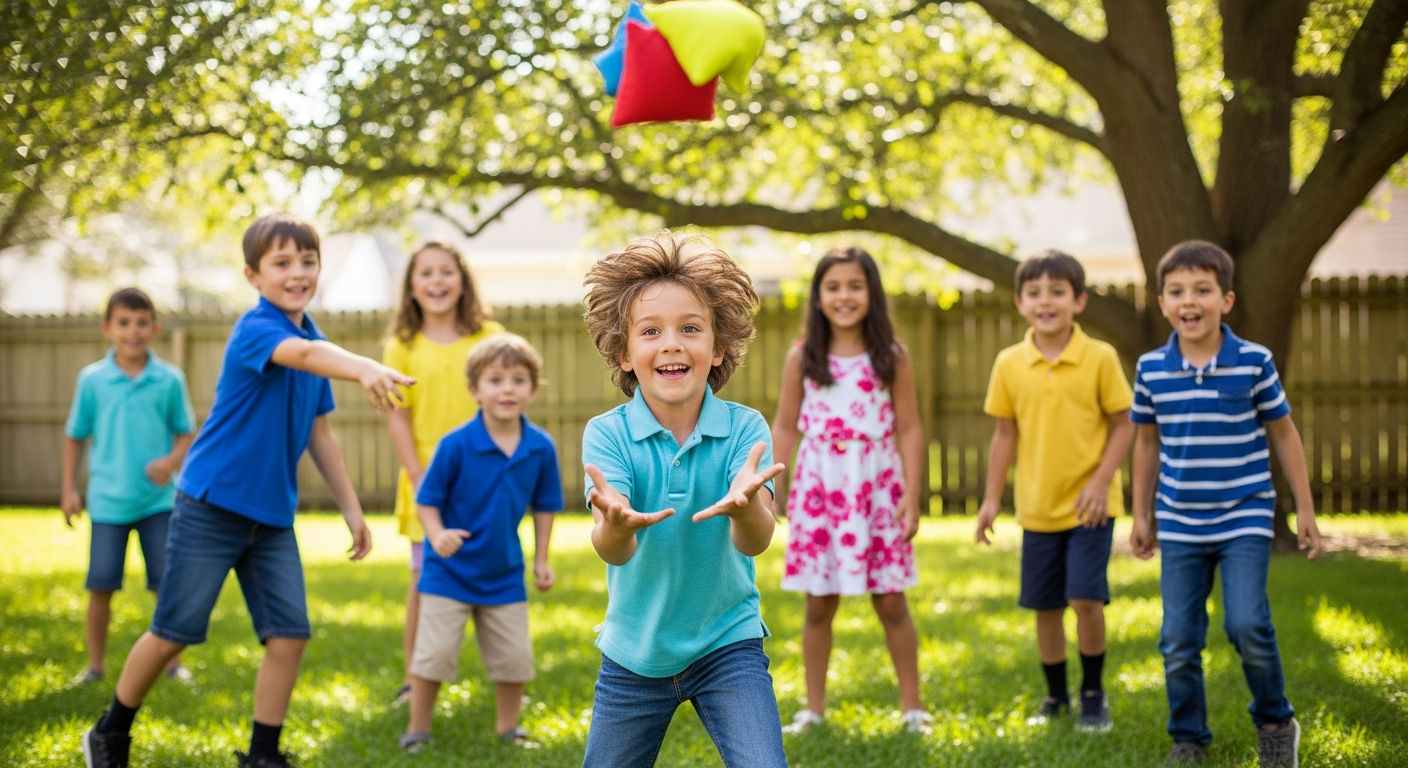
Table of Contents
- Introduction
- The Undeniable Benefits of Outdoor Play at Parties
- Classic Outdoor Games That Never Go Out of Style
- Team-Based and Collaborative Games for Group Fun
- DIY & Giant Versions of Popular Games for Extra Excitement
- Water Games & Warm Weather Wonders
- Seamlessly Integrating Speech & Language Development
- Planning the Perfect Outdoor Kids' Party: Tips for Success
- Speech Blubs: Your Partner in Joyful Communication Development
- Conclusion
- FAQs
Introduction
Picture this: the sun is shining, laughter echoes across the yard, and a group of children are fully immersed in play, their faces lit up with joy and excitement. This isn't just a scene from a dream; it's the vibrant reality that outdoor games can bring to any kids' party. In an age where screens often dominate playtime, harnessing the power of the great outdoors offers an unparalleled opportunity for children to connect, explore, and grow. These aren't just games; they are gateways to developing crucial physical skills, fostering social-emotional intelligence, and, perhaps most importantly, encouraging expressive communication.
At Speech Blubs, we believe every child deserves to find their voice, and active, engaged play is a powerful catalyst for this journey. Outdoor parties transform simple gatherings into dynamic learning environments where children naturally practice listening, turn-taking, problem-solving, and verbalizing their thoughts and feelings. This post will delve into a treasure trove of fun and engaging outdoor games perfect for any kids' party, offering practical tips to ensure success and highlighting how these activities inherently support a child's holistic development, including their speech and language skills. Get ready to turn your next celebration into an unforgettable adventure, where every child is empowered to speak their minds and hearts.

The Undeniable Benefits of Outdoor Play at Parties
Beyond the obvious fun factor, outdoor games offer a rich tapestry of developmental advantages for children. They are a crucial component of healthy growth, impacting everything from physical health to cognitive function and social skills. When children step outside, they enter a world of endless possibilities for exploration and engagement, often far removed from passive screen viewing.
Physical Development and Energy Release
Outdoor games are a fantastic way for children to burn off energy, improve their coordination, balance, and gross motor skills. Running, jumping, throwing, and catching are integral parts of many backyard games, strengthening muscles and promoting cardiovascular health. This active engagement is vital for healthy physical development and provides a much-needed outlet for children's boundless energy, leading to better focus and calmer moods afterward.
Fostering Social-Emotional Growth
A party setting, especially with organized games, is a prime opportunity for children to practice crucial social skills. They learn about cooperation, negotiation, sharing, and compromise. Games often have rules, teaching children about fair play, sportsmanship, and how to handle winning and losing gracefully. These interactions build empathy, resilience, and a sense of belonging, which are cornerstones of healthy emotional development. For a child who might be naturally shy, the structure of a game can provide a safe framework for engagement, helping them build confidence in social settings.
Igniting Cognitive Abilities and Problem-Solving
Many outdoor games, from strategizing in "Capture the Flag" to remembering patterns in "Hopscotch," stimulate cognitive functions. Children learn to think critically, plan ahead, and adapt to changing circumstances. They practice following multi-step directions, memory recall, and understanding cause and effect. These challenges are often presented in such an enjoyable way that children don't even realize how much they are learning.

A Catalyst for Communication and Language
Perhaps most pertinent to our mission at Speech Blubs is how outdoor games naturally encourage communication. Children talk to each other while playing, negotiating roles, explaining rules, celebrating victories, and commiserating over losses. They use descriptive language to talk about their actions, ask questions, and follow instructions. This organic, play-based communication is incredibly effective for language development, providing real-world contexts for new vocabulary and sentence structures. We believe that joyful communication is at the heart of childhood, and these types of interactions are invaluable. If you're wondering about your child's communication progress, consider taking our quick 3-minute preliminary screener for an assessment and next-steps plan.
Classic Outdoor Games That Never Go Out of Style
Some games are timeless for a reason. They are simple to understand, require minimal equipment, and reliably bring out giggles and engagement from children of all ages.
Hide and Seek
A perennial favorite, "Hide and Seek" is wonderful for promoting spatial awareness and strategic thinking. One child counts while others find clever hiding spots. This game is fantastic for encouraging quiet communication ("whisper where you are!") and verbalizing discoveries ("Found you!"). For a younger child just starting to explore sounds, describing where they are hiding ("I'm behind the big tree!") offers a chance to practice adjectives.
Red Light, Green Light
This game is brilliant for developing impulse control, listening skills, and gross motor coordination. One player calls "Red Light!" while facing away, and others freeze; on "Green Light!", they run towards the caller. It's a fantastic way to practice understanding commands and the concepts of "stop" and "go." For a child learning early action words, parents can enthusiastically narrate: "Run! Stop! So fast!" This type of active engagement mirrors the video modeling methodology we use at Speech Blubs, where children learn by watching and imitating.
Hot Potato
All you need is a soft ball or even an actual potato! Players sit in a circle, passing the "potato" while music plays. When the music stops, whoever holds the potato is out. This game hones quick reactions and turn-taking, and it's a great opportunity to introduce descriptive words like "hot," "fast," and "pass." For a child working on requesting, they might say "my turn" or "pass it here."
Duck, Duck, Goose
Perfect for younger children, "Duck, Duck, Goose" is excellent for social interaction, recognition, and gross motor skills. Children sit in a circle as one walks around, tapping heads and saying "duck," until they choose "goose," prompting a chase. It teaches anticipation and following simple rules, and the rhythmic repetition of "duck, duck, goose" can be a fun way to practice speech sounds.
Freeze Dance
All you need is a portable speaker and some energetic tunes! When the music plays, everyone dances. When it stops, everyone freezes in place. This game is fantastic for listening skills, body awareness, and creative expression. Narrating the dance moves ("Spin around! Wiggle your toes! Jump up high!") provides ample opportunities for language input and encouraging imitation of actions and sounds. It's an easy way to get every child involved, regardless of their developmental stage.
Team-Based and Collaborative Games for Group Fun
When you have a larger group, team games are an excellent way to foster cooperation, strategy, and collective excitement.
Capture the Flag
This is a classic for a reason, perfect for larger groups and bigger yards. Teams hide their "flag" (a bandana or piece of fabric) in their territory and try to capture the other team's flag while protecting their own. "Capture the Flag" promotes strategy, teamwork, running, and complex problem-solving. It's also a fantastic setting for children to verbally strategize, assign roles, and use directional language ("Go left! He's behind the bush!"). This kind of complex communication is exactly what we aim to foster at Speech Blubs, empowering children to articulate their plans and feelings effectively.
Spud
A ball and a group of kids are all you need. One child throws the ball in the air, yelling another player's name. That player catches it while everyone else scatters. Once caught, they yell "Spud!" and everyone freezes. The catcher then takes four steps towards the closest player, spells out S-P-U-D, and tries to hit them below the waist. This game teaches counting, aiming, quick thinking, and can involve a lot of laughter. It’s a great way to practice names and counting out loud.
Musical Chairs
A beloved party game that requires chairs, music, and quick reflexes. Arrange chairs in a circle, one less than the number of players. As music plays, children walk around the chairs; when it stops, everyone scrambles for a seat. The child left standing is out, and a chair is removed. This continues until only one winner remains. It's excellent for social skills, quick reactions, and gracefully accepting turns. For a child working on social cues, observing peers and reacting quickly is a great skill builder.
Relay Races
From three-legged races to egg-and-spoon dashes, relay races are endlessly customizable and fantastic for teamwork and coordination. Divide children into teams and create a series of simple challenges. These games encourage cheering for teammates, coordinating movements, and celebrating collective effort. Verbal encouragement and instruction are key, providing a dynamic environment for communication practice.
DIY & Giant Versions of Popular Games for Extra Excitement
Elevate your party with oversized versions of classic games or easy DIY creations. These add a fantastic visual element and make familiar games feel fresh and exciting.
Giant Tic-Tac-Toe
Instead of a small board, draw a massive Tic-Tac-Toe grid on the lawn with washable paint or sidewalk chalk. Use beanbags, frisbees, or colored plates as X's and O's. This is great for strategic thinking on a grand scale and encourages children to verbalize their moves and explain their strategies. "I'm putting my X here to block you!" is a perfect example of problem-solving speech.
DIY Cornhole or Bags
While you can buy sets, creating your own cornhole boards from cardboard or plywood can be a fun pre-party activity. Children toss beanbags at a raised board with a hole, earning points for landing on the board or in the hole. This game sharpens aiming skills, introduces basic math for scoring, and fosters friendly competition. It’s also a wonderful way for parents to model patience and encourage their child's efforts, regardless of score.
Giant Jenga, Dominoes, or Yahtzee
These beloved tabletop games take on a whole new dimension when supersized.
- Giant Jenga: Made from wooden blocks, this requires careful hand-eye coordination and strategic removal of pieces. Children will naturally communicate their intentions and react to others' moves.
- Giant Dominoes: Large, painted wooden dominoes can be used for traditional games or for creating long, elaborate toppling chains. This encourages pattern recognition, counting, and collaborative building.
- Giant Yahtzee: Large wooden dice (even 4x4 posts cut and painted) make this game of chance and number recognition physically engaging. Counting and verbalizing outcomes ("I rolled three fives!") provides excellent practice.
These DIY games are not only incredibly fun but also teach patience, precision, and strategy. For a child learning to describe actions, narrating "I'm pulling the block slowly" or "I need to put this domino next to that one" is highly beneficial.
Pin the Tail on the Donkey (or Any Animal!)
A party classic that's easily adaptable for outdoor play. Draw a large animal on a poster board or chalk on a fence. Blindfold players, spin them gently, and have them try to "pin" the tail in the right spot. This game enhances spatial awareness, imagination, and following simple instructions while blindfolded, often leading to hilarious results and lots of laughter.
Water Games & Warm Weather Wonders
When the sun is beaming, incorporating water into your outdoor party games is a surefire way to cool down and amp up the fun.
Water Balloon Toss
A simple yet exciting game for a hot day. Pair up children and have them stand opposite each other, tossing water balloons back and forth, taking a step back after each successful catch. The last pair to have an unbroken balloon wins. This game improves throwing and catching skills, and encourages careful handling and teamwork. Verbal cues like "ready," "catch," and "oops!" are a natural part of the play.
Sprinkler Limbo
Turn on the sprinkler and set up a limbo stick (a pool noodle or jump rope works perfectly). Children try to limbo under the spraying water without getting too wet or touching the stick. It's fantastic for flexibility, balance, and pure, unadulterated silliness.
Sponge Relay
Divide children into teams. Each team has a bucket of water at one end and an empty bucket at the other. Players soak a sponge in the full bucket, run to the empty bucket, and squeeze the water out before running back for the next player. The team that fills their bucket first wins. This promotes teamwork, speed, and gross motor skills, along with plenty of splashing and laughter.
Seamlessly Integrating Speech & Language Development
At Speech Blubs, we know that communication isn't just about uttering words; it's about connecting, understanding, and expressing. Outdoor games are a natural extension of our mission to empower children to "speak their minds and hearts."
Our founders experienced speech challenges themselves, and they created Speech Blubs to be the immediate, effective, and joyful solution they wished they had. We are committed to helping the 1 in 4 children who need speech support, blending scientific principles with play. This is why our app offers a screen-free alternative to passive viewing and a powerful tool for family connection, using our unique "video modeling" methodology where children learn by watching and imitating their peers. This active engagement is paramount, whether it's through our app or through vibrant outdoor play.
Here’s how you can subtly and effectively boost communication during outdoor games:
- Narrate and Describe: As children play, describe their actions, the objects, and the emotions involved. "You're running so fast!" "The red ball is bouncing." "You look excited!"
- Ask Open-Ended Questions: Instead of "Did you have fun?", try "What was your favorite part of the game?" or "How did you feel when you won/lost?" This encourages more than a yes/no answer.
- Encourage Turn-Taking in Conversation: Just as games have turns, so does conversation. Model waiting for a pause before speaking, and encourage children to listen to others.
- Build Vocabulary: Introduce new words related to the game, like "strategy," "collaboration," "sprint," or "aim." Use them in context to help understanding.
- Practice Following Directions: Games naturally require following rules. Break down complex instructions into simpler steps if needed. For a child working on verbalizing requests or needs, a game like "Hot Potato" can be a gentle way to encourage asking for "more" or saying "my turn."
- Model Clear Articulation: Speak clearly and at a moderate pace, providing a good example for children to imitate. For parents of a late talker fascinated by movement, describing the actions in "Freeze Dance" – 'spin fast!', 'jump high!', 'stop!' – can offer engaging opportunities for word imitation, much like the video modeling methodology at Speech Blubs.
Remember, the goal is to make communication a natural, joyful part of the play, not a test. These moments of shared play and conversation lay crucial groundwork for more complex communication skills.
Planning the Perfect Outdoor Kids' Party: Tips for Success
Hosting an outdoor party filled with games can be incredibly rewarding. Here are some tips to make it a smashing success:
Age-Appropriateness is Key
Consider the age range of the children attending. Younger kids thrive on simpler games like "Duck, Duck, Goose" and "Red Light, Green Light," while older children will enjoy more complex, strategic games like "Capture the Flag" or team-based relays. Having a mix of options can cater to diverse age groups.
Safety First
- Space: Ensure there's ample, clear space for running and playing, free of hazards like rocks, roots, or garden tools.
- Supervision: Always have enough adult supervision to ensure fair play and safety during games.
- Sun Protection: Provide shade, encourage hats, and apply sunscreen, especially during peak sun hours.
- Hydration: Keep plenty of water readily available. Active play can quickly lead to dehydration.
Inclusivity for All Abilities
Adapt games to include children with varying physical or developmental abilities. For example, in "Red Light, Green Light," a child in a wheelchair can still participate by moving their arms or a joystick. Simplify rules or team up children strategically to ensure everyone feels included and can contribute. The most important thing is participation and fun, not just winning.
Prizes and Participation
Small, non-food prizes like stickers, bubbles, or mini notebooks can add an extra layer of excitement. Alternatively, simply celebrating effort and participation with cheers and high-fives is often enough. Emphasize good sportsmanship over winning.
The Host as Facilitator
As the party host, your role is to facilitate the fun! Be enthusiastic, explain rules clearly, and encourage engagement. Sometimes, a game might not click, and that's okay. Be flexible and have a few backup ideas ready. Your energy will be contagious!
Speech Blubs: Your Partner in Joyful Communication Development
We understand that every child's journey to confident communication is unique. While outdoor games provide invaluable natural opportunities, sometimes a child needs a little extra boost. That's where Speech Blubs comes in. We offer a "smart screen time" solution that is active, not passive, designed to complement your child's overall development plan and, when applicable, professional therapy. Our app uses a unique video modeling approach where children learn by observing and imitating their peers, tapping into the power of mirror neurons to stimulate speech and language development. Our mission is to provide an immediate, effective, and joyful solution for children, turning screen time into a powerful tool for learning and connection.
We're transparent about our pricing because we want to build trust and make our tool accessible to as many families as possible. You have two main options:
- Monthly Plan: For $14.99 per month.
- Yearly Plan: For just $59.99 per year, which breaks down to an incredible value of only $4.99 per month! This means you save 66% with the Yearly plan compared to monthly payments.
The Yearly Plan isn't just about savings; it unlocks a suite of exclusive, high-value features designed to provide the most comprehensive experience:
- A 7-day free trial: Experience the full power of Speech Blubs before committing.
- The extra Reading Blubs app: Extend your child's learning journey with our supplementary reading app.
- Early access to new updates: Be the first to enjoy new features and improvements.
- 24-hour support response time: Get prompt assistance whenever you need it.
The Monthly plan does not include these fantastic benefits. We highly encourage you to choose the Yearly plan to get the free trial and the full suite of features, ensuring your child gets the best possible support for their communication journey. It’s a powerful supplement that can foster a love for communication, build confidence, reduce frustration, and develop key foundational skills, all while creating joyful family learning moments. Download Speech Blubs on the App Store or Google Play to explore how we can support your child's bright future. You can also visit our main homepage to learn more about our values and approach.
Conclusion
Outdoor games for kids' parties are far more than just time fillers; they are powerful engines for growth, laughter, and connection. From the classic thrill of "Hide and Seek" to the strategic fun of "Capture the Flag," these activities provide invaluable opportunities for physical exercise, social-emotional development, cognitive stimulation, and, crucially, vibrant communication. By creating an environment where children can actively play, interact, and express themselves, we lay foundational skills that support their holistic development.
Remember, every shout of joy, every negotiated turn, and every shared laugh is a moment of communication, building confidence and fostering a love for connecting with others. And for those times when your child needs a little extra support to find their voice, Speech Blubs is here. We are dedicated to providing engaging, scientifically-backed tools that empower children to speak their minds and hearts.
Ready to transform your child's communication journey? Download Speech Blubs today from the Apple App Store or Google Play Store and start your 7-day free trial. Be sure to select the Yearly plan to unlock all exclusive features, including the extra Reading Blubs app and priority support, for the best value and comprehensive support for your child.
FAQs
Q1: How do I choose the right outdoor games for different age groups at a kids' party?
A1: When planning, consider the average age of the children. For younger kids (under 5), focus on simple, rule-light games like "Duck, Duck, Goose," "Red Light, Green Light," or "Hot Potato." These games emphasize basic motor skills and quick engagement. For mixed-age groups or older children (5+), introduce games with more complex rules and strategy, such as "Capture the Flag," "Spud," or DIY giant versions of games like Jenga or Tic-Tac-Toe. Always have a few adaptable options ready, and be prepared to simplify rules or pair up children to ensure everyone can participate and have fun.
Q2: What if my child is shy and doesn't want to participate in group outdoor games?
A2: It's common for some children to feel shy. Encourage participation gently without forcing it. Start by involving them in non-pressured roles, like helping set up a game, being the "music stopper" for "Freeze Dance," or being an enthusiastic cheerleader. You can also suggest they observe first, or try a game with just one or two trusted friends before joining a larger group. Remember that observation is a form of learning. Our approach at Speech Blubs, using video modeling where children imitate peers, works on a similar principle, allowing children to learn at their own pace in a supportive environment.
Q3: How can outdoor games specifically help with speech and language development?
A3: Outdoor games are fantastic for speech and language because they create natural, highly motivating contexts for communication. Children use language to negotiate rules, describe actions ("I'm running fast!"), ask questions ("Whose turn is it?"), give instructions ("Go over there!"), and express emotions ("I won!" or "That was tricky!"). They practice listening to directions, understanding new vocabulary related to movement and space, and engaging in turn-taking conversations. The physical activity itself can also help release energy, making it easier for children to focus on verbal interactions. For children needing extra support, this real-world practice complements tools like Speech Blubs, which provide targeted, engaging exercises.
Q4: Are there ways to adapt these outdoor games for smaller spaces or fewer kids?
A4: Absolutely! Many outdoor games can be easily adapted. For smaller spaces, focus on games that don't require extensive running, like "Hot Potato," "Freeze Dance," "Musical Chairs," or "Giant Tic-Tac-Toe." For fewer kids, team-based games can be adjusted to individual challenges or smaller teams. For example, "Capture the Flag" can be a simpler "hide the item" game, or "Spud" can be played with just three players. The key is creativity and flexibility, allowing the core fun and developmental benefits of the game to shine through, regardless of the setting or group size.
About the author