
Exciting Games for Kids' Birthday Parties
 By Speech Blubs Team•Jan 28, 2026•18 min.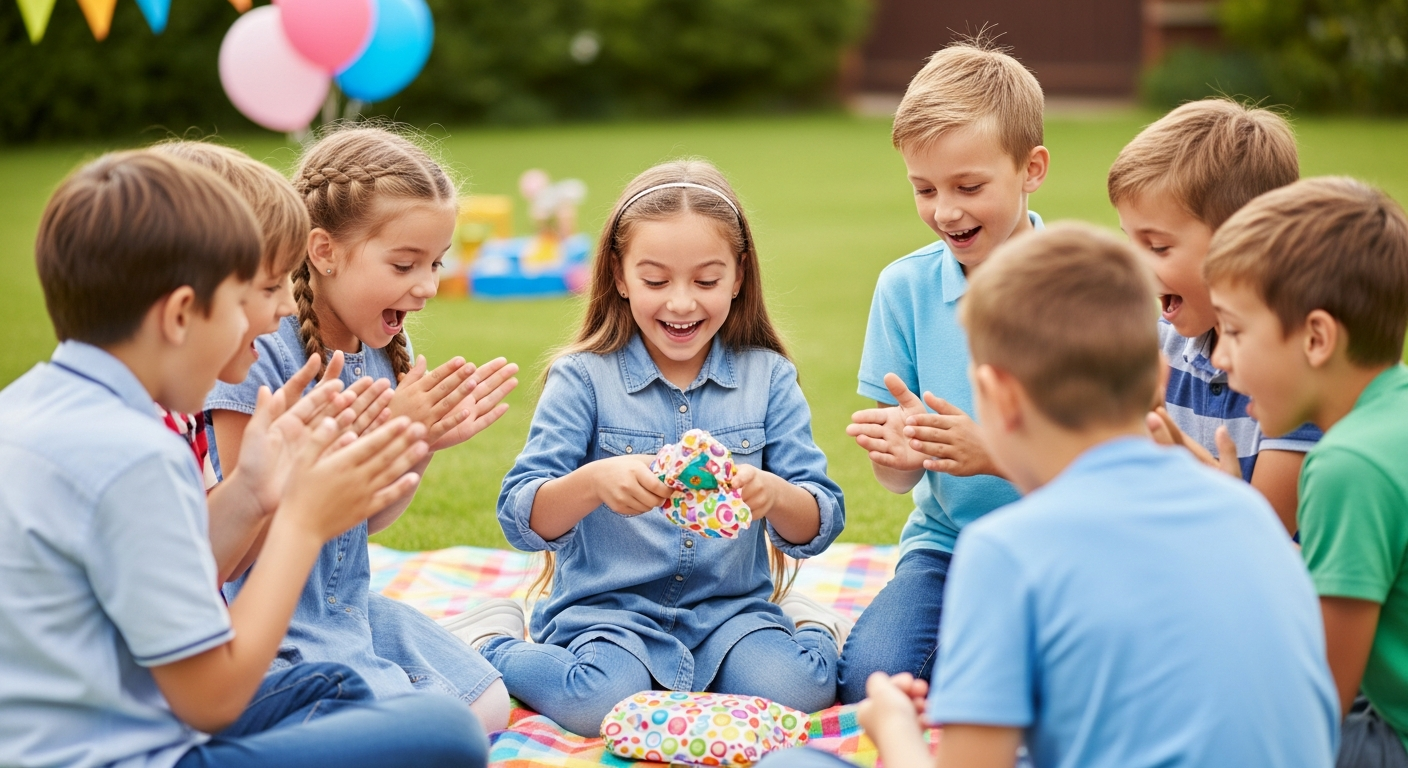
Table of Contents
- Introduction to Party Play That Promotes Growth
- The Power of Play: More Than Just Fun and Games
- Planning Your Party Game Lineup: Key Considerations
- Top Picks: Exciting Games for Kids' Birthday Parties
- Enhancing Communication Through Play
- Practical Tips for Party Game Success
- Conclusion: Making Memories and Building Skills
- Frequently Asked Questions
The excited squeals, the vibrant decorations, the cake, and the cherished memories – a child's birthday party is a magical occasion! Yet, for many parents, the thought of keeping a group of energetic kids entertained and engaged can feel a little daunting. The quest for the perfect game for kids birthday party often leads to endless scrolling, seeking activities that are not only fun but also foster positive interactions and perhaps even a little learning.
We understand this challenge deeply at Speech Blubs. Our mission is to empower children to speak their minds and hearts, and we believe that joyful play is at the core of this empowerment. That's why we’re here to share a comprehensive guide to birthday party games that promise laughter, connection, and developmental benefits, turning potential chaos into celebrated moments. This post will walk you through a variety of engaging games, offer tips for smooth execution, and show you how these playful interactions lay the groundwork for strong communication skills, confidence, and social growth. Get ready to transform your next birthday bash into an unforgettable adventure!

Introduction to Party Play That Promotes Growth
Remember the sheer delight of a simple game of musical chairs or a treasure hunt during your own childhood parties? These aren't just fond memories; they were formative experiences. Children learn by doing, by interacting, and by playing. A birthday party, far from being just a chance for cake and presents, is a powerful social learning environment. It's where kids practice sharing, taking turns, expressing themselves, understanding rules, and navigating social dynamics – all critical components of early communication and development.
This article delves into a curated selection of party games, ranging from high-energy outdoor escapades to captivating indoor activities. We'll explore how each game contributes to not only the fun factor but also key developmental milestones. You’ll find ideas for different age groups, party sizes, and themes, ensuring you have the perfect toolkit for your child’s special day. Our goal is to equip you with the knowledge and inspiration to host a party where every child feels included, joyful, and subtly building skills for a lifetime of confident communication.
The Power of Play: More Than Just Fun and Games
Before diving into specific game ideas, let's appreciate why play, especially structured group play like party games, is so vital. Play is the primary language of childhood. It's how children explore the world, understand social cues, express emotions, and, critically, develop their communication skills. When children engage in games, they are:
- Practicing turn-taking: Essential for conversation and social interaction.
- Following instructions: A key component of receptive language.
- Expressing desires and frustrations: Developing expressive language.
- Negotiating and collaborating: Building vital social problem-solving skills.
- Expanding vocabulary: Learning new words related to the game, actions, and objects.
- Building confidence: Succeeding in a game, even a small victory, boosts self-esteem.
These are the same foundational skills that we nurture at Speech Blubs. Our app provides "smart screen time" by transforming passive viewing into an interactive, engaging learning experience, especially for the 1 in 4 children who need speech support. We use our unique "video modeling" methodology, where children learn by watching and imitating their peers, fostering communication in a joyful and effective way. Just as party games encourage real-world interaction, our app bridges the gap, making learning fun and accessible.

Planning Your Party Game Lineup: Key Considerations
A successful game lineup starts with thoughtful planning. Consider these factors:
Age-Appropriateness
- Toddlers (1-3 years): Simple, sensory-rich games with clear, immediate rewards. Focus on imitation, simple actions, and short attention spans. "Follow the Leader" or "Bubble Pop" are perfect.
- Preschoolers (3-5 years): Games with clear rules but still lots of room for imagination. Activities that involve movement and basic problem-solving work well. "Musical Statues" or "Simple Treasure Hunt" fit the bill.
- Early Elementary (5-8 years): More complex rules, team challenges, and creative expression. Games that encourage strategy and cooperation. "Capture the Flag" (simplified) or "Charades" are excellent choices.
- Older Elementary (8-12 years): Competitive games, complex puzzles, and activities that allow for greater independence. "Minute to Win It" challenges or elaborate scavenger hunts are often hits.
Party Size and Location
- Small groups (under 8): Games that require individual turns or closer interaction work well, like "Kim's Game" or "Pass the Parcel."
- Large groups (8+): Activities that can involve many children simultaneously or divide them into teams, such as "Zombie Tag," "Water Balloon Games," or "Photo Scavenger Hunt."
- Indoor vs. Outdoor: Plan for both! Have backup indoor games in case of bad weather. Giant bubbles are perfect outdoors, while a riddle balloon game is ideal indoors.
Theme Integration
If you have a party theme (superheroes, dinosaurs, princesses), try to integrate games into it. "Pin the Tail on the Donkey" can become "Pin the Cape on the Superhero" or "Pin the Horn on the Unicorn." This adds an extra layer of magic and cohesion to your celebration.
Top Picks: Exciting Games for Kids' Birthday Parties
Here’s our curated list of engaging games, designed to cater to various ages and interests, ensuring every child finds something to love.
Classic Crowd-Pleasers
These timeless games are classics for a reason – they’re easy to explain, universally loved, and guarantee giggles.
1. Indoor Treasure Hunt
A treasure hunt encourages problem-solving, reading (or picture recognition for younger kids), and teamwork. Design a series of clues, each leading to the next, with a fun prize at the end for everyone. To ensure everyone gets a turn to "find" a clue, assign specific clues to individual children or pairs.
- Speech Blubs Connection: Following multi-step directions, using descriptive language ("It's under the red chair!"), and expressing excitement or frustration are all natural outcomes. For a child who loves animals, an animal-themed treasure hunt could involve clues like "Find the clue where the mooing cow lives" (referencing a toy cow), providing a fun way to practice animal sounds and names, much like the engaging "Animal Kingdom" section in Speech Blubs.
2. Musical Hats (or Musical Statues/Chairs)
A fun twist on musical chairs, kids walk around a circle of hats. When the music stops, everyone grabs a hat. Remove one hat each round. The child who doesn't get a hat is out. This game practices listening skills, quick reactions, and graceful exits!
- Speech Blubs Connection: Listening to the music, understanding "stop" and "go" commands, and expressing feelings about winning or losing contribute to language development. It also helps with motor planning and coordination.
3. Pass the Parcel
Inspired by the popular show Bluey, this game involves a gift wrapped in many layers. While music plays, kids pass the parcel. When the music stops, the child holding it unwraps one layer. The person who unwraps the final layer gets the main prize, with small treats for everyone else along the way.
- Speech Blubs Connection: This game is excellent for turn-taking, following rules, and managing anticipation. It also allows for verbal prompts like "Whose turn is it?", "Pass it to Sarah!", which are great for conversational practice. The structured nature of this game provides practice in sequencing actions, a skill reinforced through the guided activities within Speech Blubs.
4. Pin the Tail on the Donkey (or a Themed Variation)
A timeless favorite! Blindfolded children try to pin the "tail" in the correct spot. You can easily adapt this to your party's theme – "Pin the Crown on the Princess," "Pin the Eye Patch on the Pirate," or "Pin the Hat on the Cat."
- Speech Blubs Connection: Following instructions, spatial reasoning, and expressing anticipation or delight. Kids might describe where they think the tail should go ("Higher! Lower!").
Active & Energetic Games
Perfect for burning off some birthday cake energy!
5. Zombie Tag
A thrilling twist on classic tag. One or two children start as "zombies" and can only move like zombies (no bending legs or arms). When tagged, a player also becomes a zombie. This is a fantastic way to encourage movement and imaginative play.
- Speech Blubs Connection: Understanding and following game rules, using descriptive language for movement, and expressing emotions during the chase. The vocalizations and expressions during active play are natural opportunities for speech practice.
6. Capture the Flag
Ideal for older kids (ages 8+) and outdoor parties, this team-based game encourages strategy, teamwork, and lots of running. Divide players into two teams, each with a "flag." The goal is to capture the opposing team's flag while protecting your own.
- Speech Blubs Connection: Complex rule comprehension, teamwork, strategic communication ("Go left!", "Distract them!"), and problem-solving. This high-energy game encourages children to use language in a functional, collaborative way.
7. Water Balloon Games
If the weather permits, water balloon games are a guaranteed hit! From simple water balloon tosses to water balloon fights or even water balloon piñatas, these games provide refreshing fun.
- Speech Blubs Connection: Expressing excitement, counting (how many balloons left?), and understanding concepts like "wet" and "dry." The sheer joy often leads to spontaneous vocalizations and laughter, which are vital for communication development.
8. Glow-in-the-Dark Balloon Stomp
For an evening party, crack glow sticks and put one inside each balloon before inflating. Tie a balloon to each player's ankle, turn off the lights, and let them stomp to pop each other's balloons. The last player with an intact balloon wins!
- Speech Blubs Connection: Following specific instructions in a unique environment, spatial awareness, and expressing competitive spirit. The dark setting adds an element of sensory play and descriptive language ("It's dark!", "I see a glow!").
Creative & Quiet Games
For when you need a calmer activity or to spark imagination.
9. Riddle Balloon Game
Write riddles on small slips of paper and put them inside balloons before inflating. Kids pop their balloons, retrieve the riddles, and work together to solve them. You can even have answers in separate balloons for a matching game.
- Speech Blubs Connection: Critical thinking, problem-solving, vocabulary expansion, and collaborative communication. Sharing ideas and listening to others' suggestions are crucial for language development.
10. Kim's Game (Memory Game)
Place 10-15 small, varied objects on a tray. Allow children one minute to observe them. Cover the tray, and then ask them to list or draw as many items as they can remember. The child with the most correct items wins.
- Speech Blubs Connection: Memory recall, descriptive language (identifying colors, shapes, functions of objects), and focus. This game subtly strengthens cognitive skills that underpin language acquisition.
11. Storytelling Circle
Start a story with one sentence, then go around the circle, with each child adding a sentence or two to continue the narrative. This encourages imaginative thinking, active listening, and sequential storytelling.
- Speech Blubs Connection: This is a direct exercise in expressive language, narrative skills, and active listening. For children working on sequencing or expanding sentence length, this game offers an organic, low-pressure environment to practice.
12. Charades or Pictionary
Classic games that don't require much speaking but rely heavily on non-verbal communication and understanding. Kids act out or draw words/phrases for their team to guess.
- Speech Blubs Connection: Understanding abstract concepts, expressive non-verbal communication, and developing receptive language skills as they try to guess. Even the guessing involves verbalizing possibilities.
Unique & Engaging Experiences
To make your party stand out!
13. Saran Wrap Ball Game
Wrap small prizes and candy in layers of saran wrap, with a main prize in the center. Kids take turns unwrapping a layer until they find a prize. This game builds anticipation and offers a fun way for everyone to get a treat.
- Speech Blubs Connection: Turn-taking, expressing excitement, and fine motor skills. Kids often vocalize their wishes for specific prizes or express surprise when they find one.
14. Minute to Win It Games
Set up a series of quick, fun challenges using household items (e.g., stacking cups, moving cookies from forehead to mouth without hands, tissue box shake). Each child gets a minute to complete as many as possible.
- Speech Blubs Connection: Following complex instructions, spatial reasoning, problem-solving under pressure, and expressing frustration or triumph. Giving instructions and clarifying rules provides excellent language practice.
15. Donut on a String
Hang donuts from a string at various heights. Kids race to eat their donut, hands behind their backs. It's messier than it sounds but incredibly fun and hilarious to watch!
- Speech Blubs Connection: Focus, fine motor skills, and expressing determination or amusement. The physical challenge often leads to playful grunts, giggles, and exclamations.
16. The Candy Bar Game
Place a tray of different candy bars in the middle of a table. Kids take turns rolling a die. If they roll a 1 or a 6, they can choose a candy bar. As the game progresses, they can also steal candy bars from other players. The game continues until all candy bars are gone.
- Speech Blubs Connection: Counting, number recognition, understanding rules of chance, and negotiating. The "stealing" aspect creates lively (but usually good-natured) discussion and negotiation.
Enhancing Communication Through Play
At Speech Blubs, we believe that every interaction is an opportunity for communication. Party games are fantastic for this, but sometimes children need a little extra support to confidently speak their minds and hearts. Our founders, all of whom grew up with speech problems, created Speech Blubs because they wished they had such a tool during their own childhoods. We built an immediate, effective, and joyful solution for children who need speech support, blending scientific principles with play.
For a child who might be a "late talker" or struggles with specific sounds, the pressure of a fast-paced game might be overwhelming. Here's how Speech Blubs can help:
- Low-Pressure Environment: Our app provides a safe, encouraging space for children to practice sounds, words, and sentences at their own pace.
- Video Modeling: Children learn by watching real children their age on screen, imitating their mouth movements and sounds. This unique approach, backed by scientific research, effectively activates mirror neurons in the brain, making learning intuitive and engaging. You can explore the research behind our highly-rated method here.
- Engaging Content: With over 1,500 activities, including sing-alongs, educational videos, and speech-sound games, our app offers a rich vocabulary and sound library. For instance, the "Animal Kingdom" section can help a child practice animal sounds, which can then be transferred to a party game like an animal sound charades!
We offer a screen-free alternative to passive viewing, transforming screen time into "smart screen time" that fosters family connection and active learning. Many parents have seen incredible progress, turning frustration into confident communication. Read their inspiring stories and testimonials here.
When to Consider Extra Support
If you're noticing your child is consistently struggling with communication skills, even in a playful environment, it might be time to investigate further. Are they having trouble understanding instructions? Are they unable to express their needs or desires? While party games are great for practice, sometimes more targeted support is beneficial.
Unsure if your child could benefit from speech support? Take our quick 3-minute preliminary screener to get a simple assessment and a free 7-day trial of our app. It involves 9 simple questions and provides an assessment and next-steps plan tailored to your child’s needs. Get started with the screener here.
Practical Tips for Party Game Success
- Explain Rules Clearly: Use simple language and demonstrate if possible. Repeat rules patiently.
- Emphasize Participation Over Winning: While some friendly competition is good, ensure the focus remains on having fun and trying, not just winning. Offer small participation prizes or collective rewards.
- Have Backup Games: Sometimes a game falls flat. Have a few extra ideas in your back pocket.
- Be Flexible: Adapt rules on the fly if a game isn't working or if children want to make their own variations.
- Involve Adults: Encourage parents and other adults to join in the fun! This models positive play and participation.
- Manage Expectations: Not every child will love every game. That’s okay! Provide options and allow children to observe if they prefer.
- Safety First: Ensure the play area is safe, especially for active games. Monitor children closely.
Conclusion: Making Memories and Building Skills
Hosting a child's birthday party is a wonderful opportunity to create lasting memories, filled with laughter, joy, and meaningful connections. By carefully selecting a game for kids birthday party that is not only fun but also thoughtfully designed to encourage interaction and skill-building, you're doing more than just entertaining – you're fostering a love for communication, building confidence, and laying key foundational skills.
Whether it’s the thrill of a treasure hunt, the rhythm of musical hats, or the strategic fun of Capture the Flag, each game offers unique avenues for children to develop their expressive and receptive language, social skills, and emotional intelligence. These playful experiences are invaluable stepping stones on their developmental journey.
And when you're looking for an additional, engaging resource to further support your child's communication growth, remember Speech Blubs. Our app is designed to complement these real-world interactions with scientifically-backed, playful learning that empowers children to speak their minds and hearts. We provide a powerful tool for family connection, turning screen time into an opportunity for growth and joy.
Ready to unlock a world of expressive communication for your child? Start your journey today! Download Speech Blubs on the Apple App Store or Google Play Store.
We believe in making high-quality speech and language support accessible. Our pricing is designed with families in mind:
- Monthly Plan: $14.99 per month.
- Yearly Plan: Just $59.99 per year, which breaks down to an incredible value of only $4.99 per month! This plan offers a significant saving of 66% compared to the monthly option.
The Yearly Plan is truly the best choice, offering superior value and exclusive features:
- A generous 7-day free trial, so you can experience the full benefits before committing.
- Includes access to the extra Reading Blubs app, enhancing your child’s literacy journey.
- Early access to new updates and a prioritized 24-hour support response time.
The Monthly Plan does not include these valuable benefits. Don't miss out on the full suite of features and the best savings!
Create your account and begin your 7-day free trial today by choosing our Yearly Plan here. Let's empower your child to communicate confidently, starting with fun, engaging play!
Frequently Asked Questions
Q1: How do I choose the best games for my child's specific age group?
A1: Always consider the children's developmental stage. For toddlers and preschoolers, focus on simple rules, lots of movement, and sensory engagement. As children get older (5+), you can introduce more complex rules, team challenges, and games that require strategy or creative thinking. It's often best to have a mix, including a couple of high-energy games and one or two quieter activities.
Q2: My child is shy. How can I encourage them to participate in party games?
A2: For shy children, avoid putting them on the spot. Offer roles that don't require being the center of attention initially, like being a "helper" or participating in a team activity where they can blend in. Games like "Storytelling Circle" or "Kim's Game" can be less intimidating than highly competitive ones. Sometimes, simply observing for a while allows them to warm up and join in when they feel comfortable.
Q3: How can these party games help with my child's speech and language development?
A3: Party games are fantastic for speech and language! They naturally encourage turn-taking, following instructions, expressing wants and needs, expanding vocabulary related to actions and objects, and understanding social cues. Active games promote vocalizations and emotional expressions, while collaborative games foster negotiation and problem-solving through dialogue. Every game presents opportunities for children to use and understand language in a functional, engaging context.
Q4: How does Speech Blubs fit in with using games for communication development?
A4: Speech Blubs complements real-world party games by offering a structured, joyful, and scientifically-backed approach to communication practice. While party games provide organic interaction, our app uses video modeling to help children learn specific sounds, words, and sentences in a low-pressure, engaging environment. It's "smart screen time" that supports core speech skills, making it easier for children to confidently participate and communicate in all social settings, including birthday parties. Many parents find it a powerful supplement to their child's overall development plan.
About the author