
Explore Outdoors: Engaging Nature Activities for Kids
 By Speech Blubs Team•Jan 13, 2026•21 min.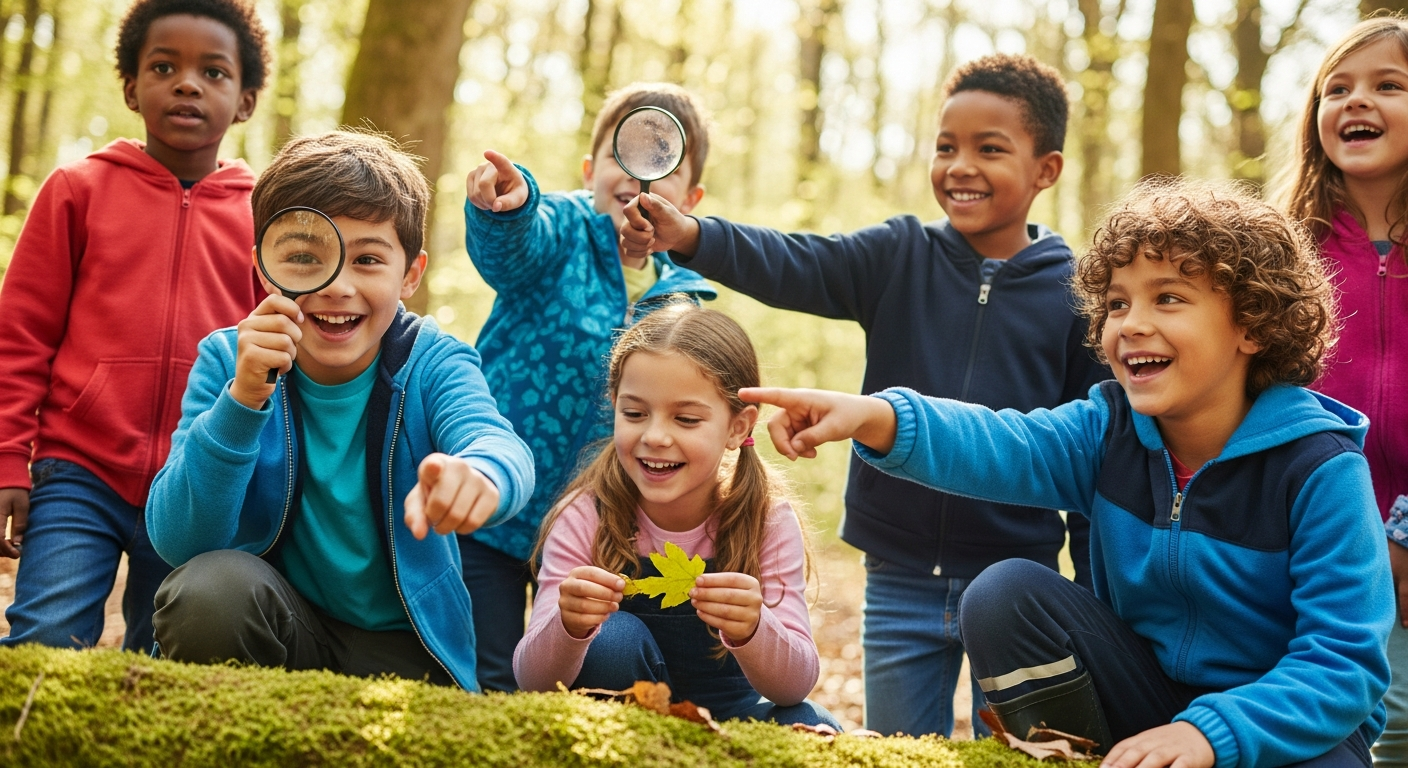
Table of Contents
- Introduction
- Why Nature Play Is Essential for Growing Minds and Voices
- Speech Blubs' Connection to Nature Play
- Getting Started: Creating Your Nature Play Zone (No Matter the Size)
- Fun Nature Activities for Kids: A Comprehensive Guide
- Bringing Nature's Lessons Indoors: The Speech Blubs Advantage
- Making the Most of Speech Blubs: Value and Features
- Conclusion
- FAQ
Imagine a world where the rustle of leaves whispers new words, the vibrant hues of a butterfly inspire conversation, and the squish of mud sparks imaginative stories. This isn't just a picturesque dream; it's the reality of nature play, a powerful, often overlooked, catalyst for a child's holistic development. In an era where screens often dominate playtime, many parents wonder how to genuinely engage their children and foster foundational skills, including confident communication. The answer often lies just beyond our doors, in the boundless classroom of the great outdoors.
This blog post will delve into the profound benefits of integrating nature activities into your child's routine, exploring how these experiences enrich everything from cognitive skills to emotional resilience and, crucially, language development. We'll offer a wealth of actionable, fun nature activities suitable for various ages and environments, demonstrating how the natural world provides endless opportunities for learning and connection. We'll also explore how Speech Blubs, born from our founders' personal journeys with speech challenges, complements these outdoor adventures, transforming screen time into "smart screen time" that empowers children to speak their minds and hearts.

Introduction
Have you ever noticed how effortlessly children are drawn to the natural world? A puddle becomes an ocean, a stick transforms into a magic wand, and a fallen leaf holds endless wonder. Yet, despite this innate connection, many children today spend less time outdoors than any previous generation. This shift has profound implications, not just for physical health, but for cognitive, emotional, and especially communicative development. The simple truth is, nature is a child's first and finest teacher, offering a multisensory, dynamic environment that stimulates growth in ways no indoor setting can fully replicate.
At Speech Blubs, we believe every child deserves the opportunity to communicate confidently and joyfully. Our mission is to empower children to speak their minds and hearts, and we understand that true communication skills blossom from rich, varied experiences – many of which are found outdoors. This article will serve as your comprehensive guide to unlocking the power of nature play, providing a treasure trove of engaging activities and showing you how these experiences lay a robust foundation for speech and language, seamlessly integrating with the supportive tools we offer.
Why Nature Play Is Essential for Growing Minds and Voices
Nature play is far more than just "playing outside." It's a critical component of healthy child development, fostering a unique blend of skills that are difficult to cultivate indoors. For parents focused on their child's language journey, the outdoor world presents unparalleled opportunities.
Beyond the Fun: Holistic Development
Spending time in nature is inherently joyful, but its benefits extend far beyond immediate entertainment. It provides a holistic workout for a child's entire being – physically, cognitively, emotionally, and socially. This integrated development creates a fertile ground for language acquisition and expression. When a child feels balanced and engaged, their capacity for learning, including speech and language, significantly increases.

Sensory Richness: A Foundation for Speech
The natural world is a symphony of sensory experiences. Children touch rough bark, feel soft moss, smell damp earth, hear birdsong, and see an endless palette of colors. This constant, varied sensory input is crucial for brain development and forms a vital foundation for speech. When children engage multiple senses simultaneously – like hearing a bird, seeing it fly, and then attempting to imitate its call – they create stronger neural connections. This kind of multisensory learning is exactly what helps them associate sounds with objects and actions, a fundamental step in building vocabulary and forming sentences. For instance, when a child who is a "late talker" explores the garden, pointing to a "flower" and feeling its petals, they are engaging in a concrete experience that makes the word meaningful, far more so than just seeing a picture.
Cognitive Benefits: Problem-Solving, Creativity, and Attention
Nature provides an open-ended playground where children are the architects of their own adventures. There are no fixed rules or predetermined outcomes, encouraging creative thinking and problem-solving.
- Problem-solving: How do I cross this stream? How can I make this stick stand up?
- Creativity: A log becomes a bridge, a pile of leaves transforms into a secret fort, mud turns into fantastical creatures.
- Attention: Observing an ant trail, watching a cloud drift by, or waiting for a squirrel to appear helps children develop sustained attention – a key prerequisite for listening comprehension and focused communication.
These cognitive muscles are essential for organizing thoughts, constructing narratives, and understanding complex language structures.
Emotional Well-being: Calm, Confidence, and Self-Regulation
The calming effect of nature is well-documented, even for adults. For children, it's a powerful antidote to stress and overstimulation. The quiet rhythms of the natural world help reduce anxiety, improve mood, and foster a sense of peace. As children explore, discover, and overcome small challenges in nature, they build confidence and self-esteem. They learn to self-regulate, managing their excitement or frustration as they navigate uneven terrain or try a new activity. An emotionally regulated child is better equipped to engage in communication, express feelings, and participate in social interactions.
Physical Health: Gross and Fine Motor Skills
From climbing trees and running through fields (gross motor skills) to picking up tiny pebbles and threading leaves (fine motor skills), nature offers a full-body workout. These physical activities strengthen muscles, improve coordination, and enhance balance. Fine motor skills, in particular, are intricately linked to speech development, as the same neural pathways that control the delicate movements of fingers are often involved in the precise muscle movements required for articulation. A child who is adept at manipulating small objects often has an easier time with tongue and lip movements needed for clear speech.
Communication Boost: Language Opportunities and Narrative Building
Perhaps most importantly for our mission, nature play is a goldmine for language development.
- Vocabulary Expansion: Every new discovery – a "smooth" rock, a "spiky" pinecone, a "chirping" bird – provides opportunities to introduce and reinforce new words.
- Descriptive Language: Encouraging children to describe what they see, hear, feel, and smell helps them develop rich descriptive language. "The leaf is crunchy and red," "The bird sings a happy song."
- Question Asking: "What is this? Why is it like that? Where did it go?" Nature fuels endless curiosity, leading to a cascade of questions and answers.
- Narrative Skills: Building a fort or creating a mud pie often involves planning, explaining, and retelling, all of which are critical for developing narrative and storytelling abilities. These are the building blocks for complex conversations and effective communication.
Speech Blubs' Connection to Nature Play
At Speech Blubs, we deeply understand the transformative power of play, especially when it's integrated with purposeful learning. Our company was born from the personal experiences of our founders, who all grew up with speech problems and created the tool they wished they had. We are committed to providing an immediate, effective, and joyful solution for the 1 in 4 children who need speech support, empowering them to truly speak their minds and hearts.
We advocate for screen-free alternatives like nature play because we believe in the foundational power of real-world experiences. However, we also recognize that technology, when used intentionally, can be a powerful ally. That's why we blend scientific principles with play into one-of-a-kind "smart screen time" experiences. We are not about passive viewing like cartoons; we provide an interactive, engaging tool for family connection and targeted speech development.
Our unique approach leverages "video modeling," where children learn by watching and imitating their peers. This method taps into mirror neurons in the brain, making the learning process intuitive and highly effective. Imagine your child discovering a "frog" outside and then reinforcing that word and sound by imitating a peer in the Speech Blubs app. This seamless integration of outdoor exploration and guided digital practice creates a holistic learning environment. Our research-backed methodology has placed us in the top tier of speech apps worldwide, a testament to our commitment to blending the best of science with joyful learning, as you can read more about on our research page.
Getting Started: Creating Your Nature Play Zone (No Matter the Size)
You don't need a sprawling forest or a vast garden to introduce your child to the wonders of nature. Every green space, no matter how small, holds potential.
Backyard Basics: Mud Kitchens, Sensory Bins, and Natural Materials
Even a small backyard can become a rich sensory hub.
- Mud Kitchen: Provide old pots, pans, spoons, and a source of water. Children will spend hours concocting "recipes" with mud, leaves, and pebbles. This is excellent for imaginative play and developing vocabulary around cooking, textures, and actions.
- Nature Sensory Bin: Fill a bin with items like pinecones, leaves, acorns, smooth stones, twigs, and sand. Add scoops, cups, and small toys. This invites exploration of different textures, shapes, and sizes, enhancing descriptive language.
- "Loose Parts" Play: Offer various natural loose parts – sticks, rocks, seed pods, flowers. Children will use these to build, arrange, and create, fostering creativity and problem-solving.
Neighborhood Explorations: Parks, Trails, and Local Green Spaces
Expand beyond your yard to local parks, walking trails, or even a tree-lined street. Each new environment offers different discoveries.
- Structured vs. Unstructured: Sometimes, a nature scavenger hunt provides focus, but often, simply letting your child lead the way and explore what captures their attention is most beneficial.
- Observe and Follow: Allow your child to point out interesting things. Ask open-ended questions like, "What do you notice about that tree?" or "How does that leaf feel?" This encourages observation and dialogue.
The Importance of Adult Co-Play and Observation
While unstructured play is vital, your presence and engagement amplify the learning.
- Be a Partner: Join in the play! Help build a fort, dig for worms, or collect interesting leaves. This models enthusiasm and strengthens your bond.
- Narrate and Expand: As your child plays, provide a running commentary. "Oh, you found a long, bumpy stick!" "Look at that bright yellow butterfly flitting around!" This expands their vocabulary and helps them connect words to experiences.
- Listen and Respond: Pay attention to what your child is trying to communicate. If they point to something and make a sound, respond with the correct word and encourage imitation.
If you're ever unsure about your child's communication development, or wonder if they could benefit from extra support, our quick 3-minute preliminary screener can provide a simple assessment and next-steps plan. It's a great, easy way to gain clarity and even includes a free 7-day trial of Speech Blubs!
Fun Nature Activities for Kids: A Comprehensive Guide
Here’s an extensive list of engaging nature activities designed to spark curiosity, foster development, and open up a world of language opportunities.
Creative & Crafty Nature Explorations
- Press Flowers and Leaves: Collect beautiful specimens, press them between heavy books, and then use them to decorate cards, bookmarks, or create beautiful collages. Language Focus: Colors, shapes, textures, plant names.
- Nature Collages: Use contact paper, glue, or even just arrange items on a piece of paper to create art from natural finds like leaves, petals, and twigs. This can be adapted into "sun catchers" or "mandalas" for more intricate designs. Language Focus: Arrangement, patterns, descriptive words.
- Nature Crowns & Bracelets: Use masking tape, double-sided tape, or pipe cleaners to create wearable art adorned with flowers, leaves, and other small treasures found on a walk. Language Focus: Adjectives, body parts, "sticky," "pretty."
- Mud Painting / Dirt Drawing: Give children old paintbrushes and a bucket of mud or simply sticks to draw in the dirt. Trees, logs, or even paper can become a canvas. Language Focus: Actions ("paint," "draw"), colors, textures.
- Leaf Rubbings: Place leaves under paper and rub over them with crayons to reveal their intricate patterns. Collect different leaf shapes to compare. Language Focus: Shapes, patterns, "veins," "rough," "smooth."
- Building Fairy Houses: Gather small sticks, leaves, moss, pebbles, and bark to construct miniature homes for imaginary fairies or gnomes. Set them at the base of trees or in quiet corners of the garden. Language Focus: Storytelling, size words, prepositions ("under," "on top").
- Nature Mobiles: Use a sturdy stick as a base and thread natural items like leaves, feathers, and seed pods onto string or yarn to create a hanging mobile. Language Focus: Balancing, hanging, light, movement.
Wildlife Observation & Interaction
- Bug Hunts: Grab a magnifying glass and a bug catcher! Explore under rocks, logs, and leaves to find insects. Observe them carefully before releasing them. Language Focus: Insect names, actions ("crawl," "fly"), descriptive words ("tiny," "many legs"). For a child who loves animals, our "Animal Kingdom" section in Speech Blubs offers a fun way to practice animal sounds and names they've discovered outdoors. You can download Speech Blubs on the App Store or Google Play Store to explore.
- Bird Watching: Set up a bird feeder, look for nests, and use a field guide to identify local birds. Listen for different bird calls. Language Focus: Bird names, sounds ("chirp," "caw"), colors, actions ("fly," "peck").
- Go Rockpooling: If you're near the coast, explore tide pools for crabs, anemones, and other sea creatures. Discuss the environment and what the creatures eat. Language Focus: Sea creature names, habitats, actions ("swim," "hide").
- Feed the Butterflies: Make a simple fruit feeder (overripe fruit) to attract butterflies and observe their beauty up close. Language Focus: Butterfly names, colors, actions ("flutter," "sip").
- Dig for Worms: Kids love to find these wiggly creatures! Talk about their role in the soil and how they move. You can even create a simple "wormery" for short-term observation. Language Focus: "Wiggle," "dig," "earth," "soil," "underground."
Active & Adventurous Nature Games
- Nature Scavenger Hunts: Create a list of items for your child to find (e.g., something red, something smooth, a feather, a specific leaf shape). For younger children, a "nature color hunt" with sidewalk chalk is fun. Language Focus: Following instructions, colors, shapes, textures, object names.
- Building Forts: Use fallen branches, leaves, or even blankets draped over outdoor furniture or natural structures to create secret hideaways. This encourages cooperative play and imaginative storytelling. Language Focus: Planning, describing, "inside," "outside," "tall," "big."
- Balancing on Logs: Find fallen logs or curbs and practice walking across them, developing balance and coordination. Language Focus: Balance, "steady," "wobble," "careful."
- Climbing Trees: For older children, supervised tree climbing offers a thrill and develops strength, coordination, and calculated risk-taking. Language Focus: Up, down, branches, trunk, "high."
- Outdoor Obstacle Courses: Use natural elements like logs, rocks, and uneven ground, combined with household items like hula hoops or blankets, to create a fun obstacle course. Language Focus: Prepositions ("over," "under," "through"), actions ("jump," "crawl," "run").
- Flying a Kite: On a windy day, head to an open field and enjoy the simple joy of flying a kite. Language Focus: Wind, "high," "fly," "string."
- Playing in the Sprinkler / Water Balloons: Simple water play is a timeless outdoor activity, perfect for cooling off and having fun. Language Focus: Wet, splash, cool, "throw," "catch."
Sensory & Imaginative Nature Play
- Mud Pies & Mud Kitchens: As mentioned, this is a cornerstone of sensory play. Let them get messy and create culinary masterpieces with dirt, water, and natural garnishes. Language Focus: Cooking verbs, ingredients, textures ("gooey," "gritty").
- Mixing "Potions": Provide various containers and encourage children to collect natural items (leaves, petals, berries, dirt) and mix them with water to create magical potions. Language Focus: Mixing, stirring, bubbling, colors, scents.
- Finding Shapes in Clouds: Lie back on the grass and gaze at the sky, identifying different shapes and characters in the clouds. Language Focus: Shapes, imagination, storytelling, "fluffy."
- Rock Collecting & Sorting: Encourage children to collect interesting rocks. They can then sort them by size, color, texture, or shape. Washing them can reveal new details. Language Focus: Categories, comparisons ("bigger," "smaller"), descriptive words.
- Nature Sensory Bags: For younger children, a clear, sealed bag filled with leaves, flowers, or water with a few natural items offers safe sensory exploration without the mess. Language Focus: Soft, hard, squishy, colors.
- Storytelling in Nature: Find a quiet spot and take turns telling stories inspired by your surroundings. A gnarled tree root can become a sleeping dragon, or a patch of wildflowers, a fairy village. Language Focus: Narrative structure, imagination, character development.
Educational & Scientific Nature Discoveries
- Sorting Parts of a Flower: Carefully dissect a flower (with supervision for younger children) and identify its different parts. Language Focus: Petal, stem, leaf, pollen, roots, "inside," "outside."
- Using a Field Guide: Take a children's field guide on your walks to identify plants, trees, birds, or insects. This introduces observation skills and scientific classification. Language Focus: Identification, characteristics, names.
- Learning About Tree Rings: Find a tree stump and count the rings, explaining how each ring represents a year of the tree's life. Discuss the story the rings tell. Language Focus: Counting, growth, age, "story."
- Drawing in a Nature Journal: Encourage children to draw or write about what they observe in nature. This combines art with scientific recording. Language Focus: Observation, description, reflection, labeling.
- Simple Outdoor Science Experiments: Conduct messy experiments outdoors, like making a baking soda and vinegar "volcano" or exploring how water flows and changes the landscape. Language Focus: Prediction, observation, cause and effect.
- Wildlife Photography: Encourage older children to capture nature's beauty with a camera or phone, focusing on composition and detail. Language Focus: Focus, frame, light, subject.
"Helping Hands" Nature Activities
- Gardening: Involve children in planting seeds, watering plants, weeding, and harvesting. This teaches responsibility, patience, and the life cycle of plants. Language Focus: Plant names, tools, actions ("water," "dig," "grow").
- Picking Up Trash: Take a bag and gloves on a walk and collect litter. This teaches environmental stewardship and community responsibility. Language Focus: Clean, dirty, recycle, protect.
- Volunteering to Walk a Dog: If you know someone who needs help walking their dog, this is a great way for children to get exercise, learn responsibility, and interact with animals. Language Focus: Animal care, commands, "leash."
Bringing Nature's Lessons Indoors: The Speech Blubs Advantage
The rich experiences gained outdoors are invaluable, and Speech Blubs helps you reinforce and expand upon that learning, transitioning effortlessly from real-world exploration to targeted practice. For a child whose 3-year-old "late talker" has just spent an afternoon in the park captivated by a chirping bird, the "Animal Kingdom" section of Speech Blubs offers a fun, motivating way to practice "bird" sounds and words, connecting the visual memory with verbal imitation.
Our app provides a structured, yet playful, environment to cement the vocabulary and concepts learned in nature. For instance, after a nature scavenger hunt, you could use Speech Blubs to:
- Reinforce Vocabulary: The "Shapes" or "Colors" sections can help solidify the understanding of attributes like "round rock" or "green leaf."
- Practice Animal Sounds: The "Animal Kingdom" module is perfect for imitating the sounds of creatures encountered in the wild.
- Build Narratives: Encourage your child to use new words in sentences about their outdoor adventures, perhaps using the "When I Grow Up" section to talk about becoming a botanist or a wildlife photographer.
We are proud of the feedback we receive from parents, many of whom have seen significant progress in their children's communication skills. You can read some of their inspiring stories on our testimonials page. This isn't just an app; it's a powerful tool for family connection, offering a unique blend of scientific methodology and engaging play, transforming screen time into a truly smart, beneficial experience. To explore more about our vision and offerings, visit our homepage.
Making the Most of Speech Blubs: Value and Features
We believe in making high-quality speech and language support accessible to every family. Transparency in our pricing helps build trust, and we want to ensure you get the most value from our offerings.
Speech Blubs offers two primary subscription plans:
- Monthly Plan: For $14.99 per month.
- Yearly Plan: For $59.99 per year. This breaks down to just $4.99 per month, representing a significant savings of 66% compared to the monthly option.
The Yearly plan is undeniably the best choice, offering superior value and exclusive, high-value features designed to enhance your child's learning journey:
- 7-Day Free Trial: Only with the Yearly plan can you experience the full Speech Blubs app completely free for seven days. This allows you and your child to explore all the features and see the benefits firsthand.
- Reading Blubs App: The Yearly plan includes complimentary access to our companion app, Reading Blubs, which provides additional literacy support.
- Early Access to New Updates: Be among the first to benefit from our continuous improvements and new content.
- 24-Hour Support Response Time: Our dedicated support team is there for you with expedited assistance.
The Monthly plan, while flexible, does not include these valuable benefits. To unlock the full suite of features and ensure your child has every opportunity to thrive, we highly recommend choosing the Yearly plan.
Conclusion
The natural world offers an unparalleled classroom for our children, nurturing their physical, cognitive, emotional, and communicative development in profoundly meaningful ways. From the simple act of digging in the dirt to the intricate observation of wildlife, every outdoor adventure is an opportunity to expand vocabulary, build descriptive language, foster imagination, and strengthen the foundational skills necessary for confident communication. These joyful, screen-free experiences lay the groundwork for a lifelong love of learning and discovery.
At Speech Blubs, we are passionate about empowering children to express themselves fully, to truly speak their minds and hearts. We understand that while nature provides the richest real-world experiences, targeted and engaging digital tools can amplify that learning. Our app serves as a powerful supplement, bridging the gap between outdoor discovery and structured speech practice, ensuring that every moment of your child's learning journey is impactful and fun.
Ready to embark on this dual journey of outdoor exploration and empowered communication? We invite you to experience the full potential of Speech Blubs. Choose our value-packed Yearly plan to get your 7-day free trial and unlock exclusive features, including the Reading Blubs app and priority support. Download Speech Blubs today on the App Store or Google Play Store and begin creating unforgettable learning moments with your child.
FAQ
Q1: Why is nature play particularly important for speech and language development?
Nature play is rich in sensory experiences, which are crucial for brain development and connecting sounds to objects and actions. It constantly introduces new vocabulary, encourages descriptive language as children describe what they see and feel, and fosters narrative skills through imaginative play and storytelling about their discoveries. The calming effect of nature also reduces stress, making children more receptive to learning and communication.
Q2: How does Speech Blubs integrate with or complement outdoor nature activities?
Speech Blubs perfectly complements outdoor play by allowing children to reinforce and expand on concepts learned in nature. For example, after an outdoor animal observation, a child can use our "Animal Kingdom" section to practice animal sounds and names through video modeling with peers. This "smart screen time" transforms passive viewing into an interactive learning experience, cementing real-world observations with targeted speech practice.
Q3: What if I don't have a large backyard or easy access to vast natural spaces?
You don't need a large space! Even a small patio, a local park, or a tree-lined street offers plenty of opportunities. Simple activities like observing clouds, collecting leaves, or setting up a small sensory bin with natural items can be incredibly enriching. The key is to engage with nature, however small your available space may be, and to be present with your child as they explore.
Q4: How can I try Speech Blubs and what are the best subscription options?
You can try Speech Blubs by signing up for our Yearly plan, which includes a 7-day free trial. The Yearly plan costs $59.99 per year (just $4.99/month), offering a 66% savings compared to the Monthly plan ($14.99/month). The Yearly plan also provides exclusive benefits like the Reading Blubs app, early access to updates, and 24-hour support response. We highly recommend the Yearly plan for the best value and full access to our features.
About the author