
Festive and Easy Halloween Toddler Craft Ideas
 By Speech Blubs Team•Feb 23, 2026•15 min.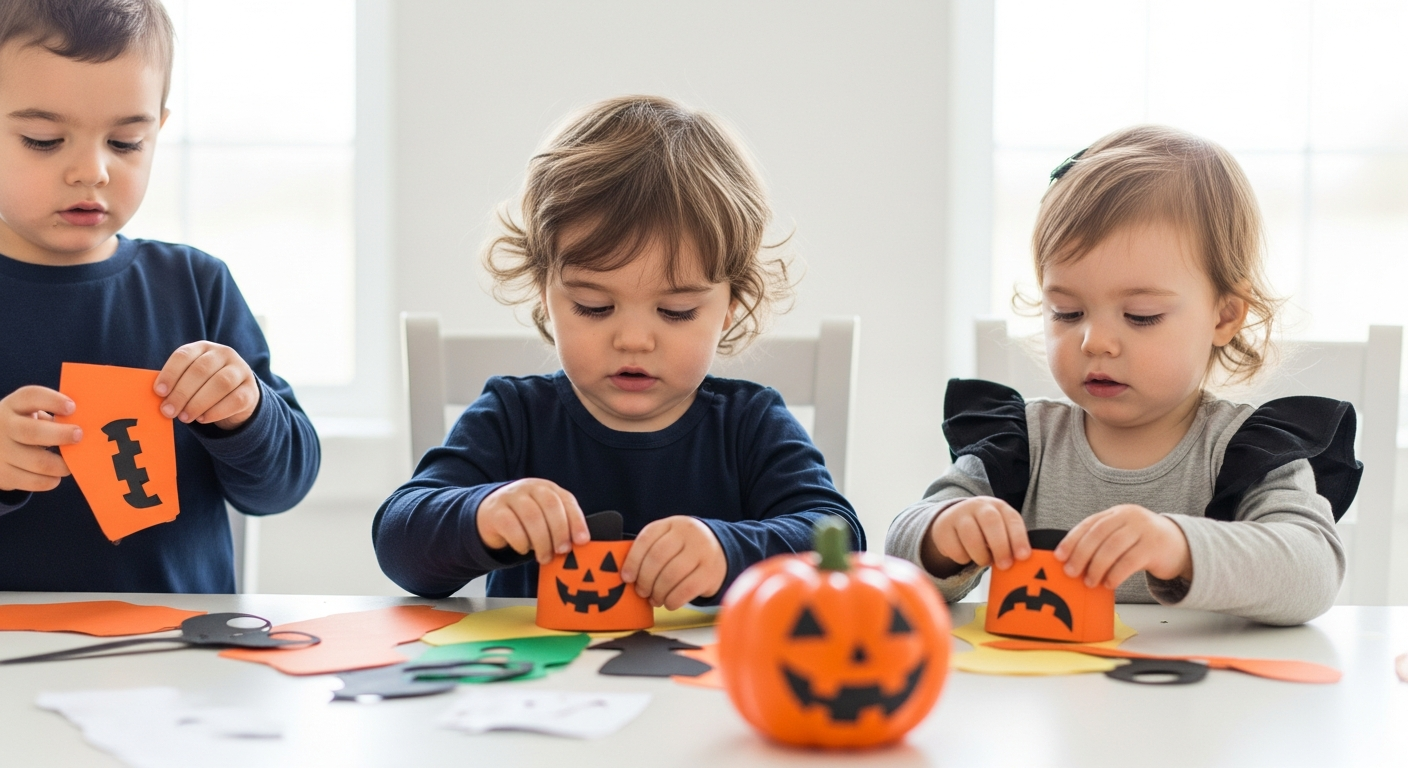
Table of Contents
- Introduction
- Why Crafting is "Smart Screen Time" for Toddlers
- Sensory-Focused Halloween Toddler Crafts
- Fine Motor Skill Builders
- Crafts That Encourage Language and Sound Imitation
- Nature-Inspired Spooky Activities
- Creating Memories: Keepsake Crafts
- Maximizing the Experience: Tips for Parents
- How Speech Blubs Supports Your Toddler’s Journey
- Conclusion
- Frequently Asked Questions
Introduction
Did you know that by the age of three, a child’s brain is twice as active as an adult’s brain? This incredible period of neuroplasticity means that every pumpkin carved, every cotton ball glued, and every "spooky" sound imitated is a building block for lifelong learning. Halloween isn't just a time for costumes and candy; it is a sensory-rich wonderland perfectly designed to help your little one explore the world. If you are looking for the perfect halloween toddler craft, you are in the right place. We believe that play is the most powerful tool in a child's developmental toolkit, and seasonal activities provide the perfect "hook" to engage their curiosity.
In this guide, we will explore a variety of hands-on Halloween crafts that do more than just decorate your fridge. We will dive into activities that strengthen fine motor skills, boost sensory processing, and—most importantly—encourage the foundational communication skills your child needs to thrive. We’ll cover everything from "messy" shaving cream art to quiet yarn-wrapping projects, all while showing you how to turn these moments into "smart screen time" opportunities.

Our mission at Speech Blubs is to empower children to speak their minds and hearts. This blog post is designed to give you practical, joy-filled strategies to support that mission at home. By the end of this article, you will have a full calendar of spooky activities and a deeper understanding of how to foster your child’s confidence and love for communication through the magic of crafting.
Why Crafting is "Smart Screen Time" for Toddlers
In a world filled with passive entertainment, it can be hard to find high-quality engagement for your little one. At Speech Blubs, our company was born from the personal experiences of our founders, who all grew up with speech problems and created the tool they wished they had. We advocate for what we call "smart screen time"—an interactive, co-playing experience that moves away from the "zombie-like" state of watching cartoons.
When you pair a halloween toddler craft with an interactive tool, you are creating a multi-sensory learning loop. For example, if your child is working on a bat craft, you can download Speech Blubs on the App Store and find the "Animal Kingdom" section. There, your child can watch other children (their peers) make "flap flap" sounds or mimic a bat’s squeak. This is our unique "video modeling" methodology in action. Children learn best by watching and imitating other children, and seeing a peer participate in a similar activity builds immediate confidence.
Crafting provides a screen-free alternative to passive viewing and acts as a powerful tool for family connection. It encourages "joint attention"—the shared focus of two individuals on an object. This is a critical milestone in language development. When you and your toddler are both looking at a sticky orange pumpkin, you are creating the perfect environment for new words to emerge.
Sensory-Focused Halloween Toddler Crafts
Sensory play is essential for toddlers because it helps them process information from their environment. These crafts focus on textures, smells, and visual changes, which are all great for sparking "proto-conversations" (the babbles and sounds that come before full words).

1. The "Puffy" Cotton Ball Ghost
This is a classic for a reason. It is simple, tactile, and provides immediate gratification for little hands.
- Materials: White cotton balls, black construction paper cut into a ghost shape, and child-safe glue.
- The Activity: Let your child dip the cotton balls into the glue and press them onto the paper.
- Developmental Tip: As they touch the cotton, use descriptive words like "soft," "fluffy," and "white." For a child who is just starting to use sounds, encourage a simple "Ooooh!" sound for the ghost. This mimics the vowel sounds we practice in our app to help build vocal strength.
2. Shaving Cream Pumpkin Art
If you aren't afraid of a little mess, this is a sensory goldmine. It’s perfect for kids who love to get their hands dirty.
- Materials: A tray, shaving cream, orange food coloring (or washable paint), and a paper cutout of a pumpkin.
- The Activity: Fill the tray with shaving cream and add drops of orange. Let your toddler swirl the colors together with their fingers. Once the "marble" effect is created, press the paper pumpkin onto the foam to create a beautiful print.
- Speech Connection: Use this time to practice "action words." Words like "squish," "swirl," and "push" are great for expanding a toddler's vocabulary. If your child is more of a visual learner, you might find that our research-backed methods on peer modeling can help them feel more comfortable with the "messy" aspect of sensory play.
3. Contact Paper Jack-o-Lanterns
For parents who want a mess-free sensory experience, contact paper (sticky back plastic) is your best friend.
- Materials: Clear contact paper, orange tissue paper squares, and black paper for the face features.
- The Activity: Tape a piece of contact paper to a window or table, sticky side out. Let your toddler press the orange squares onto the surface.
- Why it Works: This builds the "pincer grasp" (using the thumb and index finger), which is vital for later writing skills. It also allows the sun to shine through, creating a "stained glass" effect that fascinates young eyes.
Fine Motor Skill Builders
Fine motor skills involve the coordination of small muscles in the hands and fingers. Developing these skills is a precursor to many life tasks, including feeding themselves and eventually holding a pencil.
4. Masking Tape Mummies
This is perhaps the easiest halloween toddler craft for kids who are obsessed with "doing it myself."
- Materials: Black paper cut into a person shape (gingerbread man style), white masking tape, and googly eyes.
- The Activity: Give your toddler small strips of masking tape and let them "wrap" the mummy by sticking the tape across the black paper in random patterns.
- The Challenge: Tearing the tape or even just pulling it off the roll is a fantastic workout for tiny hand muscles.
- Real-World Scenario: Imagine a parent whose 3-year-old "late talker" struggles with frustration when they can't express themselves. An activity like this, which is nearly impossible to "mess up," builds the child's self-esteem. As they successfully stick the tape, you can cheer, "Yay! You did it!" fostering a positive association with achievement and communication.
5. Yarn-Wrapped Pumpkins or Mummies
Yarn wrapping is a rhythmic, calming activity that can help a high-energy toddler settle down for a few minutes of focused play.
- Materials: Cardboard cut into pumpkin or circle shapes, orange or white yarn, and tape.
- The Activity: Tape one end of the yarn to the back of the cardboard and show your child how to wind the yarn around and around.
- Speech Strategy: This is a great time to practice "prepositions." Use words like "over," "under," and "around" as they wrap. By narrating their actions, you are mapping language onto their physical movements.
6. Spider Web Plate Threading
This is a slightly more advanced fine motor craft that is perfect for older toddlers (ages 3 and up).
- Materials: A paper plate with holes punched around the edges, white yarn, and a plastic "needle" (or just a taped end of the yarn).
- The Activity: Let your child "sew" the spider web by threading the yarn through the holes in any order they like.
- The Benefit: This encourages bilateral coordination—using both hands together to accomplish a task. One hand holds the plate while the other moves the yarn.
Crafts That Encourage Language and Sound Imitation
At Speech Blubs, we are experts in the sounds of childhood. We know that before a child says "Halloween," they need to master simpler sounds like "Ah," "Oh," and "Mmm."
7. Paper Bag Monster Puppets
Puppets are one of the most effective tools for encouraging speech because they allow a child to "hide" behind a character.
- Materials: Paper lunch bags, paint, googly eyes, and scrap paper.
- The Activity: Decorate the bag to look like a friendly monster. Once dry, put your hand inside and make the monster "talk."
- The "Speech Blubs" Twist: Use the puppet to model simple sounds. Does the monster say "Roar"? Does he say "Gulp gulp" when he eats? You can create your account and begin your 7-day free trial today to see how our app uses similar playful characters to encourage kids to use their voices.
8. The "Secret" Crayon Resist Ghost
This feels like a magic trick and is a wonderful way to teach the concept of "hidden" and "found."
- Materials: White crayons, white paper, and watercolor paints.
- The Activity: Draw a ghost or a pumpkin with the white crayon (you may need to do this part). Then, give your child the watercolors to paint over the whole page. The wax will "resist" the paint, and the white image will magically appear.
- Language Hook: This is the perfect time for the word "Look!" or "Where is it?" Encouraging your child to point and label the ghost as it appears is a major win for early communication.
9. Shape Monsters
This craft combines creativity with early math and labeling skills.
- Materials: Pre-cut shapes (circles, triangles, squares) in various colors, glue, and markers.
- The Activity: Tell your child, "Let's make a monster with a square head and three circle eyes!"
- Why it works: It requires the child to listen to directions and identify specific attributes (color, shape, size). If you aren't sure where your child stands with these developmental milestones, you can take our quick 3-minute preliminary screener to get a simple assessment and a next-steps plan. It involves just 9 simple questions and provides a wealth of insight.
Nature-Inspired Spooky Activities
You don't always need to go to the craft store to find materials. Sometimes, the best halloween toddler craft starts with a walk around the neighborhood.
10. The Spooky Twig Forest
- Materials: Twigs collected from outside, black playdough or a piece of cardboard, and white paint.
- The Activity: Stand the twigs up in the playdough to create a "forest." Your child can paint the tips of the twigs white to look like "ghost trees" or hang small bits of cotton wool as spider webs.
- Connection: This links the physical world to the creative world. Discussing the "crunchy" leaves or the "rough" bark during your walk is a great way to build descriptive vocabulary.
11. Potato Stamped Pumpkins
- Materials: A potato cut in half, orange paint, and paper.
- The Activity: Use the flat side of the potato as a stamp. Dip it in orange paint and press it onto the paper to make perfect pumpkin circles.
- Variations: Once the paint is dry, use a black marker to add different faces. Is the pumpkin happy? Is he sad? Is he sleepy? This is a great way to introduce "emotion words."
Creating Memories: Keepsake Crafts
While many toddler crafts end up in the recycling bin eventually, some are worth keeping forever to remember how tiny those hands and feet once were.
12. Footprint Ghosts
- Materials: White washable paint, black paper, and a willing toddler foot!
- The Activity: Paint the bottom of your child's foot white and press it upside down onto the black paper. The heel becomes the ghost's head, and the toes become the "wispy" bottom.
- The Phrase: Write "Trick or Treat, Smell my Feet!" at the bottom. This is a classic rhyme that kids find hilarious, and humor is a fantastic motivator for speech.
13. Handprint Bats
- Materials: Black construction paper, a pencil, and scissors (for the adult).
- The Activity: Trace your child's hands on black paper and cut them out. These become the "wings" for a toilet paper roll body.
- The Value: Seeing their own hands turned into something else gives a child a sense of agency and pride. "I made that!" is a powerful sentence for a developing toddler.
Maximizing the Experience: Tips for Parents
To make the most of your halloween toddler craft session, keep these three principles in mind:
- Focus on the Process, Not the Product: Your toddler's ghost might look like a blob of glue. Their pumpkin might be more blue than orange. That is okay. The goal isn't to create a Pinterest-perfect decoration; the goal is to foster a love for communication, build confidence, and create joyful family learning moments.
- Narrate Everything: Think of yourself as a sports commentator for your child's life. "You're picking up the red glitter. Now you're shaking it. Shake, shake, shake!" This constant stream of language helps their brain map words to actions.
- Co-Play is Key: Our app is most effective when used with an adult, and the same goes for crafting. Your presence and encouragement are the "secret sauce" that turns a simple activity into a developmental leap.
At Speech Blubs, we don’t suggest guaranteed outcomes like "your child will be giving public speeches in a month." Instead, we focus on the incremental, beautiful benefits of the process: reducing frustration and developing key foundational skills. We are a powerful supplement to a child's overall development plan and professional therapy.
How Speech Blubs Supports Your Toddler’s Journey
While crafting is a wonderful offline activity, we know that modern parents need a variety of tools. Speech Blubs is a leading provider of speech therapy apps for kids, blending scientific principles with play into one-of-a-kind experiences.
Our app is designed to be an immediate, effective, and joyful solution for the 1 in 4 children who need speech support. We use video modeling because it works. When your child sees another child blowing a bubble or making a "pop" sound, their "mirror neurons" fire, making them much more likely to try the sound themselves. You can see what other parents are saying about their child's success with Speech Blubs to understand the impact of this joyful approach.
Transparency in Pricing
We want to be a long-term partner in your child's growth, which is why we offer flexible and transparent pricing.
- Monthly Plan: $14.99 per month. This is a great way to test the waters.
- Yearly Plan: $59.99 per year. This is our best value choice, breaking down to just $4.99 per month (a 66% saving compared to the monthly plan).
When you choose the Yearly Plan, you get more than just a lower price. You also receive:
- A 7-day free trial to ensure it's the right fit for your family.
- Access to the Reading Blubs app, helping your child transition from speech to literacy.
- Early access to all new updates and features.
- A 24-hour support response time from our dedicated team.
Ready to get started? Create your account and begin your 7-day free trial today. We recommend the Yearly plan to get the full suite of features and the best possible experience for your little one.
Conclusion
Halloween is a time of transformation, and there is no transformation more beautiful than watching your child find their voice. Whether you are building a "Shape Monster" or getting messy with shaving cream, every halloween toddler craft is an opportunity to connect, learn, and grow. At Speech Blubs, we are honored to be a part of that journey, providing the "smart screen time" tools that help children speak their minds and hearts.
Remember to keep the activities low-pressure and high-fun. The goal is to build foundational skills while making memories that last far longer than a jack-o-lantern on a porch. We invite you to join our community of parents who are choosing play-based, scientifically-backed methods to support their children.
Start your journey today. Download Speech Blubs on Google Play or the App Store, and don't forget to select the Yearly plan to unlock the 7-day free trial and the Reading Blubs app. Let’s make this Halloween the most "talkative" one yet!
Frequently Asked Questions
1. What is the best age to start Halloween crafting with a toddler?
Most children can begin very simple crafts (like finger painting or sticking cotton balls) around 18 months. At this age, the focus should be entirely on the sensory experience—the feeling of the paint or the stickiness of the glue—rather than the finished product. As they move toward ages 2 and 3, they can begin more complex tasks like "wrapping" or "stamping."
2. My toddler still puts everything in their mouth. Is crafting safe?
Safety is always the priority. For toddlers who are still exploring with their mouths, choose edible "paints" (like yogurt with food coloring) and avoid small choking hazards like sequins or small beads. Always supervise your child closely during any activity involving glue, markers, or small parts.
3. How can I encourage my "late talker" to speak during these activities?
Don't pressure them to "say the word." Instead, use "expectant pauses." For example, hold up a googly eye and look at them with an excited expression, waiting a few seconds to see if they make a sound or gesture. If they don't, simply say the word ("Eye!") and continue. Using the Speech Blubs app alongside crafting can also help, as it shows them other children making those same sounds in a fun, non-threatening way.
4. Why does Speech Blubs use video modeling?
Video modeling is a research-based method where children learn behaviors or skills by watching a video of someone else performing them. In our case, we use "peer modeling," which means the videos feature other children. This is particularly effective because toddlers are naturally wired to imitate their peers, which builds their confidence and encourages them to try new sounds and words.
About the author