
Festive Christmas Crafts: Boost Kids' Speech & Joy
 By Speech Blubs Team•Dec 22, 2025•18 min.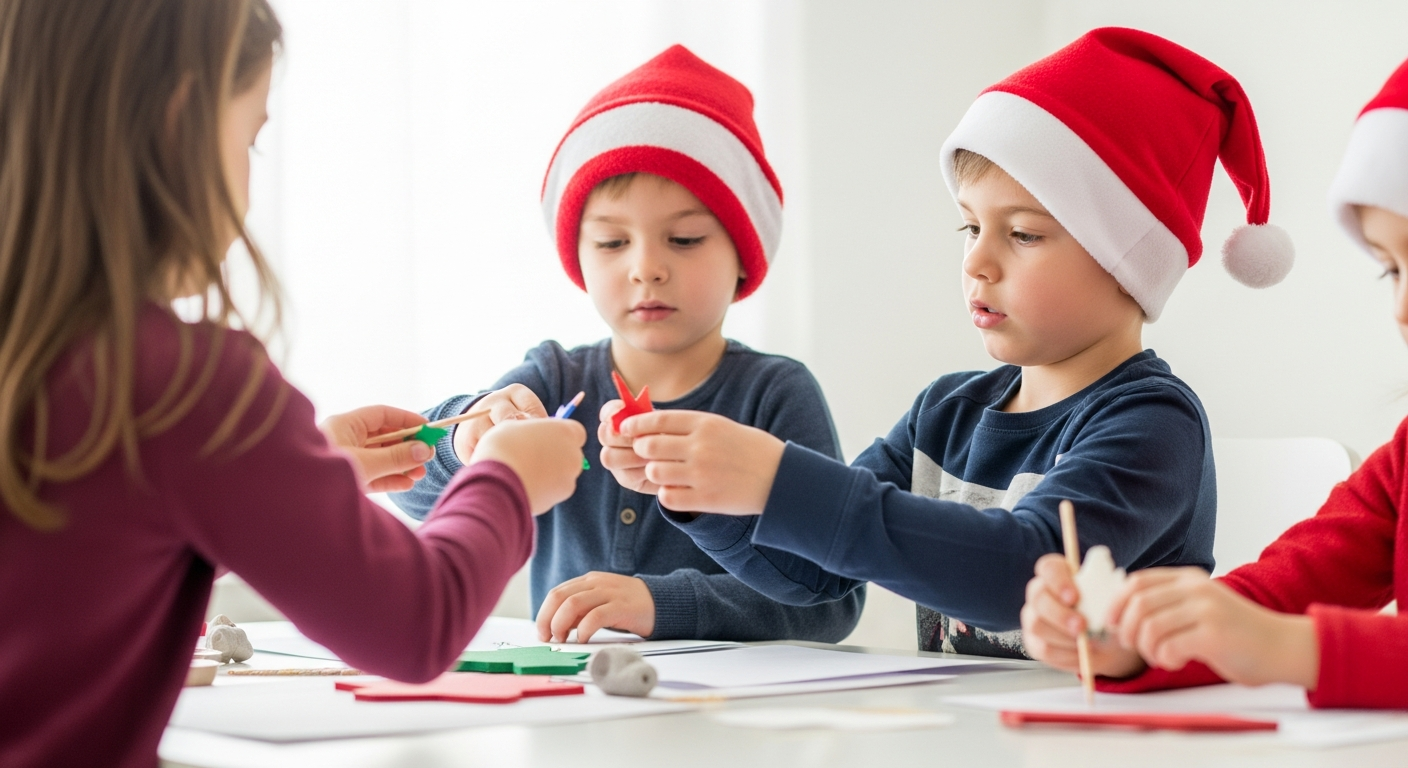
Table of Contents
- Why Christmas Crafts Are More Than Just Fun: A Developmental Boost
- Integrating Speech Blubs into Your Craft Time
- A Sleigh Full of Christmas Craft Ideas to Spark Communication
- Tips for Maximizing Speech & Language During Craft Time
- Speech Blubs: Your Partner in Joyful Learning
- Making the Most of Your Speech Blubs Journey: Pricing & Value
- Conclusion
- Frequently Asked Questions
The holiday season twinkles with magic, a time when memories are made, traditions are cherished, and the air is filled with wonder. Amidst the flurry of gift-wrapping and cookie baking, there's a unique opportunity to slow down, connect with our children, and nurture their development in the most joyful way: through Christmas crafts. These aren't just pretty decorations; they are vibrant pathways to enhancing fine motor skills, boosting cognitive abilities, and, perhaps most powerfully, unlocking incredible speech and language development.
At Speech Blubs, we understand the profound importance of communication. Our mission, born from the personal experiences of our founders who grew up with speech challenges, is to empower children to "speak their minds and hearts." We believe that every child deserves the tools to express themselves, and we're committed to providing an immediate, effective, and joyful solution for the 1 in 4 children who need speech support. This holiday season, we invite you to discover how simple Christmas crafts, combined with our unique approach, can become powerful engines for communication, creativity, and unforgettable family bonding.

Why Christmas Crafts Are More Than Just Fun: A Developmental Boost
Engaging in arts and crafts during the festive season offers a treasure trove of developmental benefits that go far beyond creating a beautiful keepsake. For children, the act of making something with their hands is a holistic experience that stimulates various areas of growth.
Fine Motor Skill Development
Think about all the actions involved in crafting: cutting paper with scissors, gluing small decorations, peeling stickers, drawing intricate lines, or molding clay. Each of these activities refines a child's fine motor skills – the coordination of small muscles, especially in the hands and fingers. These skills are crucial for everyday tasks like writing, dressing themselves, and even eating. When children manipulate craft materials, they are strengthening these muscles, improving hand-eye coordination, and building dexterity, all of which indirectly support their ability to articulate sounds and manage their mouths for speech.
Cognitive Growth and Problem-Solving
Craft projects often come with instructions, even if they're just verbal cues from a parent. Following these steps helps children develop their ability to follow directions, understand sequences, and engage in problem-solving. "First, we glue the beard, then we add the eyes." This logical progression enhances their cognitive flexibility and planning skills. They learn about shapes, colors, textures, and spatial relationships ("put the star on top of the tree"). When a craft doesn't go exactly as planned, children also learn resilience and creative problem-solving, figuring out alternative ways to achieve their desired outcome.
Emotional Expression and Confidence Building
Crafting provides an outlet for self-expression. Children can choose their colors, design their patterns, and bring their unique vision to life. This creative freedom fosters a sense of individuality and accomplishment. The pride radiating from a child who holds up their handmade ornament or card is invaluable. This boost in confidence can translate into other areas of their lives, including feeling more comfortable and eager to communicate their thoughts and feelings. Celebrating their creations, regardless of perfection, reinforces their self-worth and encourages continued effort.

Unlocking Speech and Language Development
Perhaps one of the most exciting benefits of Christmas crafts is their immense potential for fostering speech and language skills. Every step, every material, every finished product presents a natural opportunity for communication.
- Vocabulary Expansion: As you craft, you'll naturally introduce new words. "Look at this sparkly glitter!" "Can you pass the velvety ribbon?" "We're going to fold the paper." From colors and shapes to textures, actions, and holiday-specific terms like "reindeer," "snowflake," and "gingerbread," crafts enrich a child's lexicon.
- Following Multi-Step Directions: "First, cut the circle, then glue it here." Craft activities are perfect for practicing multi-step commands, which are essential for comprehension and school readiness.
- Sequencing and Retelling: After the craft is complete, encourage your child to explain the process. "What did we do first? What happened next?" This helps develop narrative skills and the ability to organize thoughts chronologically.
- Descriptive Language: "Tell me about your snowman. What color is his hat? Is he big or small?" Prompting children to describe their creations encourages them to use adjectives and expand their sentences.
- Social Communication: Crafting together naturally promotes social interaction. Children learn to share materials, take turns, ask for help, and express their preferences respectfully. These are foundational social communication skills.
- Expressing Wants and Needs: "More glue, please!" "I need the red crayon." Crafts provide authentic contexts for children to practice requesting and communicating their needs clearly.
Integrating Speech Blubs into Your Craft Time
At Speech Blubs, we believe in supporting every child's communication journey with engaging, effective, and joyful experiences. While hands-on crafts are invaluable, our app offers a unique "smart screen time" solution that can seamlessly complement and enhance these activities, making them even more potent for speech development.
Our core methodology, based on the scientific principles of "video modeling," allows children to learn by watching and imitating their peers. This is a powerful, brain-friendly approach that activates mirror neurons, making learning feel natural and fun. Imagine your child creating a beautiful red and green Christmas ornament. Afterward, they can explore the "Colors" section in Speech Blubs, watching other children identify and articulate "red" and "green" sounds. This reinforcement bridges the gap between hands-on experience and targeted speech practice.
For a parent whose child struggles with using descriptive words, the "What Is It?" or "Wh-Questions" sections within Speech Blubs can be incredibly helpful. Before or after a craft session, your child can practice describing objects they see on screen, then apply those newfound descriptive skills to their actual craft. "This is shiny! This is soft!" The app provides a safe, encouraging environment for them to hear and practice these words repeatedly, building confidence before applying them in real-world interactions.
We are committed to providing a screen-free alternative to passive viewing, transforming screen time into a powerful tool for active learning and family connection. Speech Blubs isn't just an app; it's a partner in your child's communication journey, empowering them to "speak their minds and hearts."
Ready to see the magic unfold? Download Speech Blubs on the App Store or Google Play to begin your family's journey toward joyful communication.
A Sleigh Full of Christmas Craft Ideas to Spark Communication
Let's dive into some fantastic Christmas craft ideas, each designed with speech and language development in mind. Remember to engage with your child, ask questions, and model language throughout the process.
1. DIY Ornament Decorating
- Materials: Plain baubles (plastic or wood), acrylic paints, glitter, glue, sequins, markers.
- Speech Focus:
- Colors: "What color should we paint this one? Red? Green? Blue?"
- Actions: "Let's paint the bauble. Now, sprinkle the glitter. Glue the star on top."
- Descriptive Words: "This ornament is so sparkly! It feels smooth. It's a round shape."
- Requesting: "More glitter, please!" "Can I have the red paint?"
- Scenario: For a child working on imitating sounds, you can make "shhh" sounds while sprinkling glitter or "tap-tap" sounds while dabbing paint.
2. Paper Plate Snowmen
- Materials: Paper plates, cotton balls, googly eyes, orange construction paper (for nose), black construction paper (for mouth/buttons), glue.
- Speech Focus:
- Body Parts: "Where do the eyes go? Let's put the nose here."
- Quantity: "We need many cotton balls for his body." "How many buttons does he have?"
- Spatial Concepts: "Put the hat on top. The scarf goes around his neck."
- Verbs: "Let's glue the cotton balls. Stick on the eyes."
- Scenario: Ask "Who is this?" to elicit "Snowman!" and describe his features to encourage descriptive language.
3. Handprint or Footprint Reindeer/Santa
- Materials: Non-toxic paint, sturdy paper, markers, googly eyes.
- Speech Focus:
- Body Parts: "Whose hand is this? It's your foot!" "Here are Santa's fingers."
- Naming Characters/Animals: "It's a reindeer! Ho ho ho, it's Santa!"
- Comparing Sizes: "Your handprint is small, mommy's is big."
- Action Verbs: "Let's dip your hand in paint. Press it down. Now we draw the antlers."
- Scenario: Focus on animal sounds ("clip-clop" for reindeer) or character sounds ("ho ho ho") for younger children or those practicing sound imitation.
4. Pipe Cleaner Candy Canes
- Materials: Red and white pipe cleaners.
- Speech Focus:
- Colors: "A red pipe cleaner and a white one."
- Counting: "Let's count how many twists we make."
- Verbs: "Now we twist them together. Bend the top to make a hook."
- Sequencing: "First red, then white, then red..."
- Scenario: This simple craft is great for practicing simple commands like "twist," "bend," "more," and "all done."
5. Gingerbread House Decorating (Paper or Edible!)
- Materials: Cardboard cutouts or graham crackers, glue or frosting, cotton balls, buttons, small candies, glitter.
- Speech Focus:
- Food Vocabulary (for edible): "What candy do you want? Gumdrop? M&M?"
- Descriptive Words: "This candy is sweet! The frosting is sticky."
- Requesting: "Can I have more gumdrops?" "I need the green button."
- Prepositions: "Put the chimney on top of the roof. Place the little man next to the door."
- Scenario: This craft offers rich opportunities for imaginative play and storytelling about who lives in the gingerbread house, using "Wh-Questions" (Who, What, Where).
6. Salt Dough Ornaments
- Materials: Flour, salt, water, cookie cutters, paint, glitter.
- Speech Focus:
- Action Verbs: "Let's mix the ingredients. Now, roll the dough. Cut out a star shape."
- Textures: "The dough is soft. After baking, it will be hard."
- Shapes: "What shape is your cookie cutter? A star! A tree!"
- Sensory Words: "It smells salty."
- Scenario: This is wonderful for practicing following a recipe (sequencing) and describing the sensory experience.
7. Toilet Paper Roll Characters (Santa, Elf, Reindeer)
- Materials: Empty toilet paper rolls, construction paper, glue, markers, cotton balls, pipe cleaners.
- Speech Focus:
- Character Naming: "Who are we making? Santa! An elf! A reindeer!"
- Storytelling: Once made, create a little play with the characters. "Santa is going to deliver presents!"
- Describing Features: "Santa has a long, white beard." "The elf has pointy ears."
- Prepositions: "Put the hat on Santa's head."
- Scenario: Use Speech Blubs' "Talk About" section to encourage discussion about characters and their roles in stories.
8. DIY Christmas Cards
- Materials: Cardstock, crayons, markers, stamps, stickers, glitter, glue.
- Speech Focus:
- Greetings: "What should we write? 'Merry Christmas!'"
- Naming Recipients: "Who are we making this card for? Grandma? Uncle John?"
- Expressing Feelings: "This card will make Grandma feel happy!"
- Writing Names/Letters: Practice recognizing and saying letters, or tracing names.
- Scenario: Encourage your child to dictate a message for the card, practicing sentence formation and word retrieval.
9. Popsicle Stick Christmas Trees
- Materials: Popsicle sticks, green paint, glue, small pom-poms, sequins, a star sticker.
- Speech Focus:
- Counting: "Let's count how many popsicle sticks we need." "How many pom-poms did you use?"
- Shapes: "We are making a triangle shape for our tree."
- Colors: "Green paint for the tree, red pom-poms for ornaments."
- Spatial Concepts: "Put the star on top."
- Scenario: For children working on early vocabulary, focus on single words like "tree," "star," "green," "glue."
10. Cotton Ball Beards (Santa, Gnome)
- Materials: Paper cutouts of Santa or gnome faces, cotton balls, glue.
- Speech Focus:
- Textures: "The cotton balls are so soft and fluffy!"
- Body Parts: "Where does Santa's beard go? And his mustache?"
- Action Verbs: "Let's glue the cotton balls on." "We're making a big, white beard!"
- Scenario: This is a simple, tactile craft that is excellent for sensory descriptive words and practicing basic action verbs.
Tips for Maximizing Speech & Language During Craft Time
To truly transform your Christmas craft sessions into powerful speech-boosting opportunities, keep these tips in mind:
- Follow Your Child's Lead: Let their interests and choices guide the craft. If they're fascinated by stars, make star crafts! Their intrinsic motivation will lead to more engagement and, consequently, more communication.
- Model Language: Use clear, simple language. Narrate your actions as you craft. "I am cutting the paper." "You are gluing the eyes." This provides a rich language environment for your child to absorb.
- Ask Open-Ended Questions: Instead of "Do you like this?" (yes/no), ask "What color should we use next?" or "How should we make our snowman's smile?" These questions encourage more elaborate responses.
- Expand on Their Utterances: If your child says "star," you can expand it to "Yes, a shiny yellow star!" or "You put the star on top!" This models longer, more complex sentences without correcting them.
- Provide Choices: "Do you want red paint or green paint?" Offering choices gives them a sense of control and encourages them to use their words to express preferences.
- Wait and Listen: After asking a question or making a comment, pause and give your child plenty of time to respond. Avoid jumping in too quickly, allowing them space to formulate their thoughts and words.
- Focus on the Process, Not Just the Product: Celebrate their effort, their ideas, and their participation, regardless of how the final craft looks. The goal is communication and connection, not perfection.
- Repetition is Key: Children learn new words and phrases through repetition. Don't be afraid to repeat new vocabulary words, action verbs, and descriptive terms multiple times throughout the craft session.
If you're ever uncertain about your child's communication development, we're here to help. Take our quick 3-minute preliminary screener to get a simple assessment and a free 7-day trial of Speech Blubs. It involves just 9 simple questions and provides an assessment along with a next-steps plan.
Speech Blubs: Your Partner in Joyful Learning
We understand that modern parenting can be challenging, and finding effective resources for your child's development is crucial. At Speech Blubs, we are more than just an app; we are a community-driven tool born from real-life experiences, dedicated to making speech development accessible and enjoyable for every child. Our "smart screen time" is a far cry from passive viewing like cartoons. It's an active, interactive experience designed to foster critical communication skills through the power of peer imitation.
Our unique video modeling approach, where children learn by watching and echoing the speech of their enthusiastic peers, is backed by extensive research. In fact, our scientific methodology has placed us in the top tier of speech apps worldwide, as recognized by various research studies and high MARS scale ratings. You can explore the research behind our methodology to learn more. But don't just take our word for it; see what other parents are saying about their child's incredible success with Speech Blubs.
We don't promise your child will be giving public speeches in a month. Instead, we focus on fostering a love for communication, building confidence, reducing frustration, developing key foundational skills, and creating joyful family learning moments. Speech Blubs is a powerful supplement to your child's overall development plan and, when applicable, professional therapy, providing consistent, engaging practice that supports their growth.
Making the Most of Your Speech Blubs Journey: Pricing & Value
We believe in transparency and providing exceptional value for families. Our pricing is straightforward, designed to offer flexibility while strongly encouraging the most beneficial option for your child's long-term development.
- Monthly Plan: For just $14.99 per month, you get access to our comprehensive speech learning platform.
- Yearly Plan: Our most popular and highly recommended option is the Yearly plan, priced at $59.99 per year. This breaks down to an incredible value of just $4.99 per month!
The Yearly plan is the clear best choice, allowing you to save 66% compared to the monthly subscription. Beyond the significant cost savings, it unlocks exclusive, high-value features designed to maximize your child's progress and your family's experience:
- 7-Day Free Trial: Only with the Yearly plan can you start with a completely free 7-day trial, allowing your child to explore the app and for you to witness the engaging activities firsthand before committing.
- The Extra Reading Blubs App: The Yearly plan includes full access to our companion Reading Blubs app, providing an integrated approach to early literacy and phonics.
- Early Access to New Updates: Be the first to experience new activities, features, and content as we continuously enhance the app.
- 24-Hour Support Response Time: Get priority support with a guaranteed 24-hour response time from our dedicated team.
The Monthly plan, while flexible, does not include these invaluable benefits. We strongly encourage you to choose the Yearly plan to get the free trial and the full suite of features that will truly empower your child's communication journey.
Ready to unlock a world of joyful speech development? Create your account and begin your 7-day free trial today by choosing our Yearly plan!
Conclusion
The holiday season is a magical time, ripe with opportunities for connection, creativity, and development. Christmas crafts offer far more than just festive decorations; they are invaluable tools for enhancing fine motor skills, boosting cognitive function, and, most importantly, igniting a child's speech and language growth. By engaging in these joyful activities, asking open-ended questions, modeling language, and celebrating every effort, you're not just making ornaments; you're building a foundation for confident communication and lasting family memories.
At Speech Blubs, we are honored to be a part of your family's journey. Our mission is to provide an immediate, effective, and joyful solution for children, allowing them to "speak their minds and hearts" through our unique video modeling methodology. This holiday season, let's combine the warmth of traditional crafting with the innovative power of Speech Blubs, creating a holistic approach to nurturing your child's communication skills.
Don't let another moment of potential pass by. Give your child the gift of confident communication this Christmas. Start your journey today! Download Speech Blubs on the App Store or Google Play and remember to select the Yearly plan to enjoy a free 7-day trial and unlock all the exclusive features designed to empower your child's voice.
Frequently Asked Questions
Q1: What age group are these Christmas crafts suitable for?
A1: Most of these Christmas crafts are highly adaptable and suitable for a wide range of ages, generally from toddlers (with significant adult supervision for safety, especially with small parts or paint) up through early elementary school. For younger children, focus on simpler steps, sensory experiences, and basic vocabulary. For older children, you can introduce more complex instructions, finer details, and encourage more elaborate storytelling and descriptive language. Always tailor the complexity to your child's developmental stage and abilities.
Q2: How can I make Christmas crafts more accessible for children with special needs or varying developmental levels?
A2: To make crafts more accessible, simplify steps, use adaptive tools (e.g., larger scissors with loops, chunky crayons), and focus on process over product. Provide extra support for fine motor tasks, use visual schedules for instructions, and offer choices using pictures or objects. For children with communication challenges, focus on a few target words or sounds, use gestures, and keep language simple and repetitive. Our Speech Blubs app, with its video modeling and peer imitation, can also be a fantastic supplementary tool, offering structured, engaging practice for specific sounds, words, and concepts that can be reinforced during craft time.
Q3: How often should we do crafts to see benefits in speech development?
A3: Consistency is more important than intense frequency. Engaging in craft activities a few times a week, even for short periods (15-30 minutes), can provide significant cumulative benefits. The key is to make it a regular, enjoyable part of your routine. The quality of interaction during the craft session—your engagement, modeling of language, and encouragement—is far more impactful than the sheer number of crafts completed. Combining these hands-on activities with daily practice in apps like Speech Blubs ensures continuous reinforcement and exposure to language in varied contexts.
Q4: How does Speech Blubs really help with communication during hands-on play like crafting?
A4: Speech Blubs acts as a powerful complement to hands-on activities by providing targeted, engaging practice in a fun, "smart screen time" environment. Before or after a craft session, your child can use the app to practice specific sounds, words, or concepts (like colors, shapes, action verbs, or descriptive words) that are relevant to the craft. Our video modeling methodology, where children imitate their peers, helps them learn correct articulation and usage in a low-pressure setting. This pre-exposure or post-reinforcement from Speech Blubs makes it easier for them to then apply those skills and vocabulary naturally during your crafting time, bridging the gap between guided app practice and real-world communication.
About the author