
Festive Christmas Crafts for Kids
 By Speech Blubs Team•Dec 22, 2025•20 min.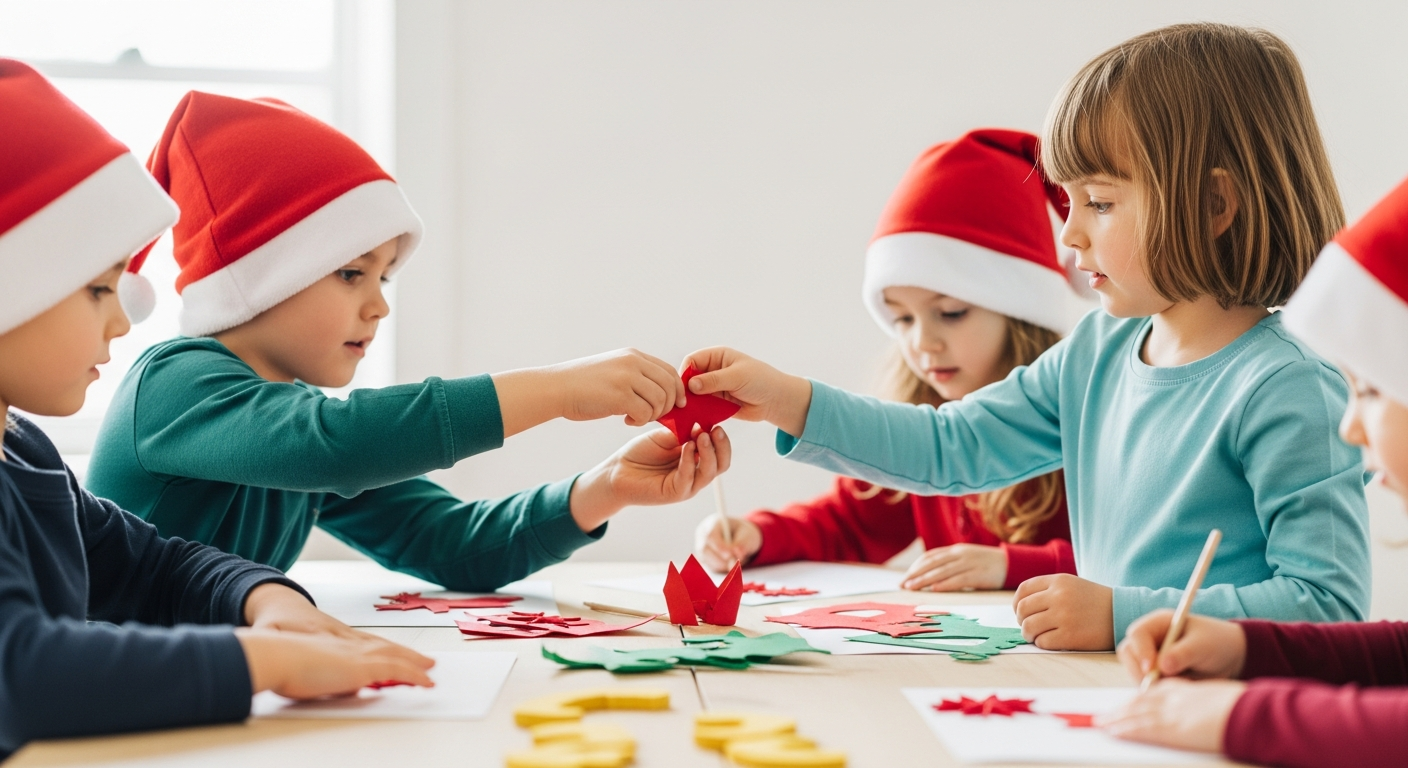
Table of Contents
- Introduction
- The Magic of Christmas Crafting: Beyond the Glitter
- The Language of Craft: Boosting Communication Skills
- Delightful Christmas Craft Ideas for Every Age
- Integrating Speech Blubs for Enhanced Communication
- Making the Most of Speech Blubs: Value and Features
- Conclusion
- Frequently Asked Questions about Christmas Crafts for Kids
The air crackles with excitement, the scent of gingerbread fills the kitchen, and children's eyes gleam with anticipation. Christmas is a magical time, not just for receiving, but for creating. Beyond the twinkling lights and holiday carols, there lies a profound opportunity for connection, creativity, and crucial developmental growth for our children. Crafting during the holidays isn't just about making pretty decorations; it's a powerful tool for fostering imagination, refining motor skills, and, perhaps most importantly, enhancing communication.
This comprehensive guide will journey through a wonderland of Christmas craft ideas perfectly suited for children of all ages. We'll explore activities that not only bring festive cheer but also lay the groundwork for essential skills, from problem-solving to expressive language. We’ll delve into how these joyful, hands-on experiences serve as rich environments for verbal interaction, vocabulary expansion, and social bonding, making memories that last far beyond the holiday season. Our mission at Speech Blubs is to empower children to speak their minds and hearts, and we believe that engaging in activities like Christmas crafting provides the perfect backdrop for nurturing this vital development. Get ready to transform simple materials into cherished keepsakes while giving your child's communication skills a festive boost!

Introduction
Imagine a quiet afternoon, a sprinkle of glitter on the table, and the joyful chatter of children as they transform ordinary objects into extraordinary Christmas treasures. This isn't just a picturesque holiday scene; it's a profound learning environment disguised as festive fun. For many parents, the holiday season brings a desire to create lasting memories and meaningful experiences, often leading to a search for engaging activities for their children. Christmas crafts offer a perfect solution, blending creativity with education in the most delightful way.
Far from being mere distractions, these activities are crucial for developing fine motor skills, encouraging imaginative play, and building a foundation for early literacy and numeracy. More significantly, they serve as incredible opportunities for language development. When children describe their creations, ask for materials, or follow instructions, they are actively practicing communication. This post will guide you through a variety of delightful Christmas craft ideas, detailing how each can become a unique platform for growth. We’ll also explore how these hands-on experiences, when paired with supportive tools like Speech Blubs, can truly empower your child to find their voice and express the wonder of the season.
The Magic of Christmas Crafting: Beyond the Glitter
Christmas crafting offers a unique blend of sensory experience, creative expression, and cognitive development. It's more than just a seasonal activity; it's a holistic learning opportunity. As children snip, glue, paint, and mold, they are engaging multiple areas of their brain, building foundational skills that will serve them well beyond the holiday season.
Fostering Creativity and Imagination
At its heart, crafting is an exercise in imagination. A pipe cleaner becomes a reindeer's antler, a cotton ball transforms into fluffy snow, and a paper plate turns into a festive wreath. This process encourages children to think outside the box, to visualize a finished product, and to problem-solve when their initial idea doesn't quite work. It's about seeing potential in everyday items and bringing their unique visions to life. This creative freedom is vital for developing divergent thinking, a skill that helps children approach challenges with innovative solutions.

Developing Fine Motor Skills and Hand-Eye Coordination
Many Christmas crafts involve precise movements: cutting with scissors, threading beads, squeezing glue, tearing paper, or painting within lines. These activities are phenomenal for strengthening the small muscles in a child's hands and fingers, improving dexterity, and refining hand-eye coordination. These are the same skills that are essential for writing, dressing themselves, and a myriad of other daily tasks. For younger children, simply manipulating materials like playdough or large craft sticks provides a crucial sensory and motor workout.
Enhancing Cognitive Skills: Problem-Solving and Sequencing
Crafting often involves following a sequence of steps, which helps children understand cause and effect, develop logical thinking, and practice patience. "First we cut the paper, then we glue it here, then we add glitter." This sequential thinking is a precursor to academic skills like reading comprehension and mathematical reasoning. When a craft doesn't go exactly as planned, children learn to adapt, find alternative solutions, and persist until they achieve their goal, fostering resilience and problem-solving abilities.
Building Self-Esteem and Confidence
There's immense pride in creating something with one's own hands. Displaying a child's handmade ornament on the tree or a decoration on the mantelpiece validates their efforts and artistic expression. This sense of accomplishment boosts self-esteem and confidence, encouraging them to tackle new challenges and embrace their creativity further. It teaches them that their ideas have value and that their efforts can produce tangible, beautiful results.
Promoting Family Connection and Bonding
Perhaps one of the most heartwarming aspects of Christmas crafting is the opportunity for family bonding. Sitting together, sharing materials, offering encouragement, and collaborating on a project creates invaluable memories. These moments of shared focus and joy strengthen family ties and provide a relaxed environment for meaningful conversations. It's a chance to put away screens and truly connect. If you're looking for more ways to foster this kind of connection through play, consider exploring how our Speech Blubs app can turn screen time into "smart screen time," designed for interactive engagement rather than passive viewing.
The Language of Craft: Boosting Communication Skills
Beyond the visual and motor benefits, Christmas crafts are incredibly rich for language development. Every step of the crafting process offers opportunities for verbal interaction, vocabulary acquisition, and expressive communication. This is where Speech Blubs' mission truly aligns with the joy of holiday crafting. Our goal is to provide immediate, effective, and joyful solutions for children needing speech support, blending scientific principles with play.
Expanding Vocabulary
Crafting introduces a wealth of new words:
- Materials: "felt," "glitter," "ribbon," "pinecone," "glue stick," "pipe cleaner."
- Actions: "cut," "paste," "fold," "thread," "paint," "sprinkle," "decorate."
- Adjectives: "sparkly," "sticky," "smooth," "rough," "shiny," "fuzzy," "festive."
- Colors & Shapes: "red star," "green circle," "blue triangle." As you craft together, naming these items and actions naturally expands your child's lexicon. For a child who might be a "late talker" or needs help with specific sounds, describing the "red ribbon" or "sparkly glitter" provides perfect opportunities for repetition and reinforcement. Our app is full of engaging categories that build vocabulary around everyday objects and activities, much like crafting does.
Practicing Following Instructions
"First, get the scissors. Then cut the paper along the line. Next, put glue on the back." Following multi-step instructions is a critical skill for school readiness and daily life. Crafting provides a fun, low-pressure environment to practice this, helping children improve their auditory processing and memory. Break down instructions into small, manageable steps, and use visual cues.
Encouraging Expressive Language and Storytelling
As children create, encourage them to talk about what they're doing and what they've made.
- "Tell me about your reindeer. What's his name? What does he like to do?"
- "Which part was your favorite to make?"
- "How did you make that star so shiny?" These questions prompt descriptive language, encourages them to articulate their choices, and even invent stories about their creations. For a child learning to speak their mind and hearts, these moments are invaluable. Speech Blubs uses a unique "video modeling" methodology where children learn by watching and imitating their peers, providing a powerful, screen-free alternative to passive viewing. This mirrors the natural learning that happens when a child watches you craft and then tries to imitate your actions and articulate their own version.
Developing Social Communication
When crafting in a group or with a parent, children practice turn-taking ("My turn to glue!"), sharing materials ("Can I have the red marker?"), and asking for help ("I need help opening this bottle."). These are fundamental social communication skills. The shared experience also encourages conversation, laughter, and collaborative problem-solving.
Delightful Christmas Craft Ideas for Every Age
Here’s a curated list of festive crafts, broken down by approximate age-appropriateness, along with specific developmental and language benefits. Remember, adult co-play and support are crucial for these activities to be truly effective and safe.
Crafts for Toddlers (Ages 1-3): Simple Wonders and Sensory Joy
At this age, the focus is on sensory exploration, basic motor skills, and single-word or short-phrase communication. Keep crafts simple, safe, and process-oriented rather than perfection-focused.
1. Handprint or Footprint Christmas Ornaments
- Materials: Salt dough, air-dry clay, or non-toxic paint and cardstock; glitter (optional), ribbon.
- Steps: Press child's hand or foot into soft clay/dough, or paint and stamp onto cardstock. Cut around the print, make a hole for ribbon (if using dough/clay), and decorate once dry.
- Developmental & Language Benefits:
- Sensory Exploration: Touching the soft dough or paint. "Sticky!" "Squishy!"
- Body Parts: "Where's your hand?" "Let's put your foot here."
- Colors: "What color paint should we use? Red? Green?"
- Action Words: "Press," "stamp," "roll."
- Requesting: "More paint," "Help me."
- Speech Blubs Connection: For a child who might be working on body part identification or color recognition, the "My Body" or "Colors" sections in Speech Blubs offer fun, engaging video models. The app’s repetition of target words in a playful context can reinforce the vocabulary learned during crafting.
2. Pinecone "Critters" or Ornaments
- Materials: Pinecones, googly eyes, cotton balls, small pom-poms, craft glue, pipe cleaners.
- Steps: Gather pinecones (a fun nature walk in itself!). Glue googly eyes, pom-poms (for noses, ears), and cotton balls (for beards, snow) onto the pinecones to create reindeer, owls, or little snow creatures. Add a loop of string to hang as an ornament.
- Developmental & Language Benefits:
- Nature Vocabulary: "Pinecone," "tree," "soft," "prickly."
- Animal Sounds: "What sound does a reindeer make?"
- Descriptive Words: "Big eyes," "little nose," "fuzzy beard."
- Prepositions: "Put the eyes on the pinecone."
- Speech Blubs Connection: If your child loves animals, the "Animal Kingdom" section in Speech Blubs is a fantastic resource. They can practice animal names and sounds, reinforcing the play they have with their pinecone critters. Our video modeling shows real children making these sounds, making it highly engaging.
Crafts for Preschoolers (Ages 3-5): Growing Skills and Creative Expression
At this stage, children can follow more complex instructions, use scissors (with supervision), and engage in more detailed conversations.
3. Paper Plate Christmas Wreaths
- Materials: Paper plates (center cut out), green construction paper, red pom-poms, glue, child-safe scissors.
- Steps: Have children tear or cut green paper into strips or leaf shapes. Glue these around the paper plate rim to create a wreath effect. Add red pom-poms for "berries."
- Developmental & Language Benefits:
- Shapes: "Circle" (plate), "strips" (paper).
- Colors: "Green" and "red."
- Counting: "How many pom-poms do we need?"
- Action Sequences: "First cut, then glue."
- Describing: "My wreath is so colorful!"
- Speech Blubs Connection: For a child practicing sentence structure or describing objects, asking "What color is this?" or "Where does this go?" during craft time directly supports early communication goals. Our app's "Things That Go" or "Food" categories, for example, teach vocabulary in a similar interactive question-and-answer format, making it easier for children to generalize these skills.
4. Popsicle Stick Christmas Characters
- Materials: Popsicle sticks, craft glue, googly eyes, felt or construction paper scraps, pipe cleaners, paint or markers.
- Steps: Glue 3-5 popsicle sticks together to form a base. Paint or color them. Add googly eyes, felt cut-outs for hats/noses/antlers/scarves to create Santa, reindeer, elves, or snowmen.
- Developmental & Language Benefits:
- Character Naming: "Santa," "reindeer," "elf," "snowman."
- Storytelling: "What does Santa do?" "Where does the reindeer live?"
- Prepositions: "Put the hat on Santa's head." "The nose goes in the middle."
- Fine Motor Precision: Gluing small pieces, coloring within lines.
- Speech Blubs Connection: Creating characters like Santa or reindeer is a fantastic prompt for imaginative play and storytelling. Children can then practice saying the names of these characters. Our app offers numerous categories with animated characters and activities that encourage vocalizations and imaginative responses, providing a rich linguistic environment that complements creative play.
Crafts for School-Aged Children (Ages 6+): Detailed Creations and Independent Work
At this age, children can follow multi-step instructions, use a wider range of tools, and often work more independently, focusing on detail and more complex designs.
5. DIY Personalized Christmas Gift Tags
- Materials: Cardstock, scissors, hole punch, string/ribbon, markers, glitter, stickers.
- Steps: Cut cardstock into various tag shapes. Decorate with festive designs, draw pictures, or write names of recipients. Punch a hole and thread with ribbon.
- Developmental & Language Benefits:
- Letter Recognition & Writing Practice: Writing names like "Mom," "Dad," "Santa."
- Categorization: Discussing "who gets what" and matching gifts to recipients.
- Descriptive Writing (older kids): "This gift is for Grandma because it's soft and cozy."
- Vocabulary: "Recipient," "wrap," "present."
- Speech Blubs Connection: For older children who are developing early literacy skills or working on expressing complex ideas, creating personalized tags allows them to practice written and verbal communication. While Speech Blubs focuses primarily on spoken language, the foundational vocabulary and sentence structure skills built within the app directly support a child's ability to articulate their thoughts for writing tasks. We are excited about our new Reading Blubs app, which provides even more support for these early literacy steps. Did you know our Yearly plan members get access to the extra Reading Blubs app for free?
6. Salt Dough Ornaments (Advanced Decorating)
- Materials: Salt dough (flour, salt, water), cookie cutters, baking sheet, paint, glitter, varnish, ribbon.
- Steps: Prepare salt dough, roll it out, and use Christmas cookie cutters to make shapes. Bake until hard, then cool. Decorate with paint, glitter, and seal with varnish. Add ribbon for hanging.
- Developmental & Language Benefits:
- Following a Recipe: Measuring ingredients, understanding "steps."
- Sensory Vocabulary: "Smooth dough," "rough salt," "wet paint," "shiny varnish."
- Fine Motor Control: Detailed painting, precise glitter application.
- Planning: Deciding colors, patterns, and designs before painting.
- Speech Blubs Connection: The entire process, from mixing ingredients to detailed decorating, offers countless opportunities for discussion and description. For children who might have trouble sequencing events or articulating their steps, prompting them to explain what they did first, next, and last can be incredibly helpful. Our app helps build confidence in expressing sequential thoughts through its interactive exercises and playful prompts.
7. Paper Chain Countdown
- Materials: Construction paper strips (red, green, white), glue stick or stapler.
- Steps: Form a loop with one strip of paper and glue/staple the ends. Thread the next strip through the first loop, form another loop, and glue/staple. Continue until you have a long chain. Remove one link each day to count down to Christmas!
- Developmental & Language Benefits:
- Counting: "One, two, three links."
- Patterns: "Red, green, red, green."
- Action Verbs: "Loop," "thread," "glue," "count."
- Time Concepts: "Today," "tomorrow," "Christmas Day."
- Speech Blubs Connection: This craft is excellent for practicing numbers, colors, and understanding time-related vocabulary. For a child working on numerical concepts or articulation of specific colors, the repetitive nature of this craft provides an ideal practice ground. Our app includes activities designed to reinforce basic concepts, offering a supportive environment for learning and growth.
Integrating Speech Blubs for Enhanced Communication
At Speech Blubs, we understand that supporting a child's speech and language development is a journey, not a destination. Our app is designed to be a powerful supplement to a child's overall development plan and, when applicable, professional therapy. We believe that every child deserves the chance to "speak their minds and hearts," and our tool was born from the personal experiences of our founders, who all grew up with speech problems and created the tool they wished they had.
How Speech Blubs Harmonizes with Crafting
Crafting provides the real-world context and motivation for communication, and Speech Blubs offers targeted practice and reinforcement in a fun, engaging way.
- Vocabulary Building: As mentioned, crafts introduce new words. Speech Blubs then helps solidify these words through its vast library of categories like "Animal Kingdom," "Sounds," "When I Grow Up," and "Things That Go." Our unique video modeling allows children to observe and imitate their peers, making learning feel natural and less intimidating. For example, if your child is making a reindeer craft, they can practice the word "reindeer" and its sound by watching real children articulate it within the app.
- Articulation Practice: Many crafts involve describing colors, shapes, and actions. If your child struggles with specific sounds (e.g., "s" in "scissors," "r" in "red"), crafting provides a natural context. Speech Blubs offers exercises that target specific phonemes, helping children refine their pronunciation through engaging activities.
- Sentence Structure: Encouraging children to describe their crafts or explain the steps helps them build sentences. Speech Blubs supports this by providing sentence prompts and interactive dialogues that encourage fuller utterances.
- Engagement and Motivation: Both crafting and Speech Blubs are designed to be joyful experiences. This positive reinforcement makes learning fun, reducing frustration and building confidence. Our app provides screen-free alternatives to passive viewing and a powerful tool for family connection, just like crafting.
Discovering Your Child’s Potential
Unsure if your child could benefit from a little extra speech support? It's a common question, and we're here to help. Take our quick 3-minute preliminary screener to get a simple assessment and a next-steps plan. This valuable tool can offer immediate insights and help you understand how Speech Blubs might fit into your family's routine.
We are committed to providing an immediate, effective, and joyful solution for the 1 in 4 children who need speech support. Our method is backed by science, placing us in the top tier of speech apps worldwide, as detailed in our research section. Don't just take our word for it; see what other parents are saying about their child's progress and success in our testimonials section.
Making the Most of Speech Blubs: Value and Features
We believe in transparency and making our powerful tools accessible to every family. When you choose Speech Blubs, you're investing in your child's future, fostering a love for communication, building confidence, and creating joyful family learning moments. We focus on benefits of the process: fostering a love for communication, building confidence, reducing frustration, developing key foundational skills, and creating joyful family learning moments.
We offer two main plans:
- Monthly Plan: For $14.99 per month, you get access to the core Speech Blubs app and its extensive library of activities.
- Yearly Plan: This is by far our most popular and value-packed option, priced at just $59.99 per year. This breaks down to an incredible value of just $4.99 per month, allowing you to save 66% compared to the monthly plan!
Why choose the Yearly Plan? It's not just about the significant savings; it's about unlocking the full Speech Blubs experience:
- 7-Day Free Trial: The Yearly plan includes a comprehensive 7-day free trial, allowing you and your child to explore all the features and see the magic unfold before committing. The Monthly plan does not include this trial.
- Extra Reading Blubs App: Exclusively with the Yearly plan, you gain access to our companion Reading Blubs app, designed to further support early literacy skills.
- Early Access to New Updates: Be among the first to experience new features, activities, and improvements.
- 24-Hour Support Response Time: Get priority support from our dedicated team whenever you have questions or need assistance.
These exclusive benefits make the Yearly plan the clear best choice for families committed to their child's long-term speech and language development.
Ready to provide your child with an immediate, effective, and joyful solution for speech support? Create your account and begin your 7-day free trial today! We encourage you to select the Yearly plan to get the free trial and the full suite of features, including the Reading Blubs app and priority support.
Conclusion
Christmas crafting offers a beautiful, tangible way to celebrate the season, create cherished memories, and significantly contribute to your child's development. From boosting fine motor skills and encouraging creative thinking to expanding vocabulary and fostering expressive language, these festive activities are much more than just fun – they are powerful learning experiences.
By engaging in these joyful, hands-on projects, you're not only decorating your home but also nurturing your child's communication abilities in a relaxed and supportive environment. These moments of shared creativity provide a rich tapestry for conversation, instruction-following, and storytelling, helping your child to articulate their thoughts and feelings with greater confidence.
To further empower your child's voice and turn everyday moments into opportunities for growth, we invite you to explore Speech Blubs. Our app is designed with love and backed by science, providing a one-of-a-kind "smart screen time" experience that complements the wonderful learning that happens during family activities like crafting. It’s a powerful tool to help children speak their minds and hearts, offering targeted practice through our unique video modeling methodology.
Don't let this holiday season pass without making the most of these precious developmental opportunities. Experience the difference for yourself. Ready to get started? You can download Speech Blubs on the App Store or Google Play to begin your child's journey to clearer, more confident communication. Remember to choose the Yearly plan to unlock your free 7-day trial and gain access to exclusive features like the Reading Blubs app and early updates. Let's make this Christmas a season of joyful creation and transformative communication!
Frequently Asked Questions about Christmas Crafts for Kids
Q1: What are the best Christmas crafts for toddlers to ensure safety?
A1: For toddlers (ages 1-3), focus on crafts with large, non-toxic materials to prevent choking hazards. Excellent options include handprint/footprint ornaments using salt dough or non-toxic paint, simple pinecone decorating with large pom-poms and googly eyes, or tearing paper for collages. Always supervise closely and use child-safe scissors if applicable.
Q2: How can I make Christmas crafting educational for my child?
A2: To make crafting educational, engage your child in conversation throughout the process. Name materials, describe actions ("We're cutting the red paper"), ask open-ended questions ("What do you want to make next?"), and encourage them to explain their choices. Focus on the process, not just the perfect outcome, and allow for their independent creativity. This fosters vocabulary, instruction-following, and expressive language skills.
Q3: My child gets easily frustrated with crafts. How can I keep them engaged?
A3: Keep it simple, manageable, and fun! Choose age-appropriate crafts that aren't too challenging. Break down complex steps into smaller, achievable tasks. Offer plenty of praise for their effort, not just the final product. Let them choose colors or materials to give them a sense of control. If frustration sets in, take a break or switch to a different activity, remembering that the goal is enjoyment and connection, not perfection.
Q4: What are the specific language benefits of Christmas crafting for children with speech delays?
A4: Christmas crafting provides a natural, motivating environment for language development. It offers opportunities for:
- Vocabulary Expansion: Learning new words for materials, colors, and actions.
- Articulation Practice: Repeating specific words or sounds related to the craft.
- Instruction Following: Listening to and executing multi-step directions.
- Expressive Language: Describing their creations, making requests, and storytelling about their festive characters.
- Social Communication: Practicing turn-taking, sharing, and asking for help.
These hands-on experiences, paired with targeted support like the Speech Blubs app, can significantly boost communication confidence and skills.
About the author