
Festive Christmas Crafts for Kids: Joyful Learning
 By Speech Blubs Team•Dec 22, 2025•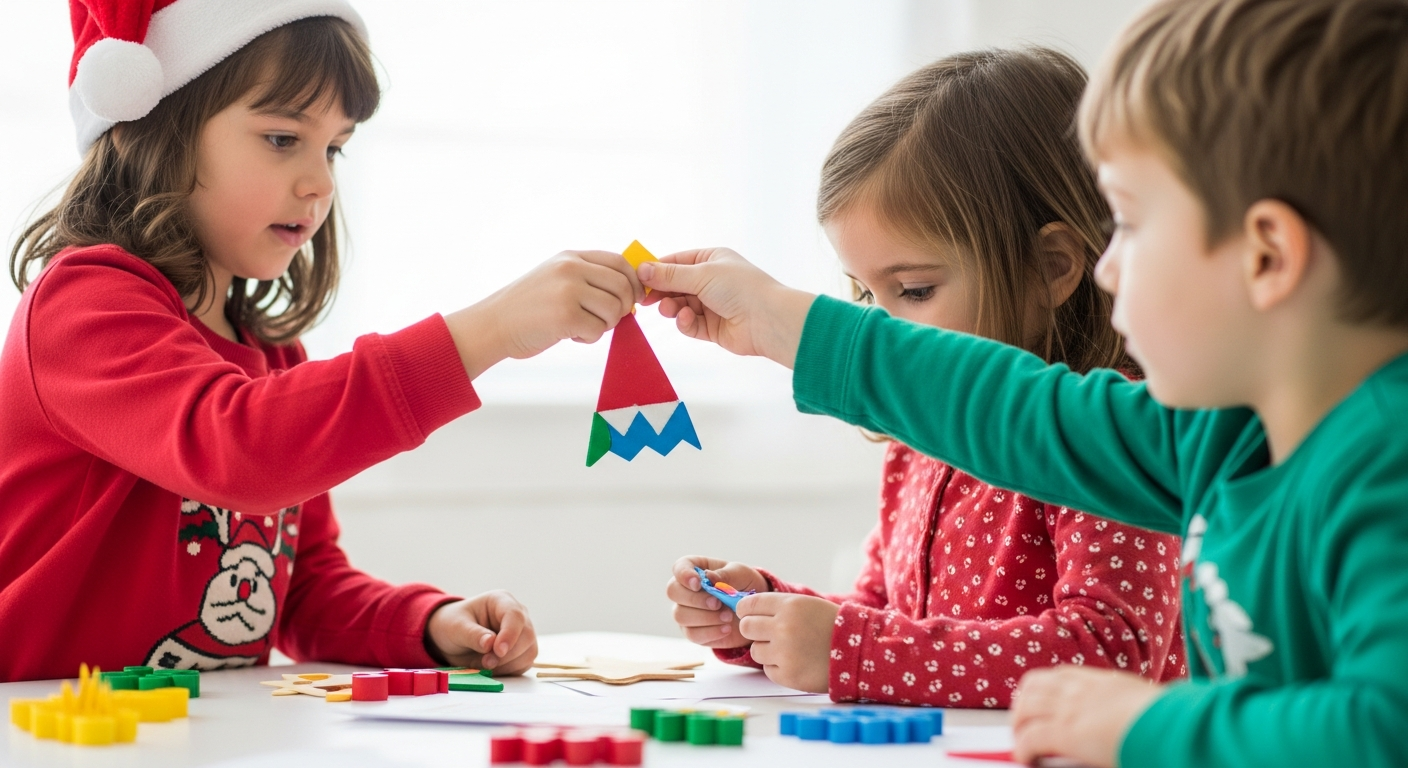
Table of Contents
- Introduction to the Magic of Christmas Crafts for Communication Development
- Beyond the Glitter: Unpacking the Developmental Benefits of Christmas Crafts
- Creating a Language-Rich Crafting Environment
- Festive Christmas Craft Ideas for Every Age and Stage
- Making the Most of Your Crafting Time: Tips for Parents
- When to Consider Extra Support: A Gentle Reminder
- Conclusion
- Frequently Asked Questions
The air crackles with anticipation, tiny hands are eager to help, and the scent of pine and gingerbread fills the home. Christmas is a magical time, often bursting with holiday traditions, family gatherings, and, for many parents, a dash of joyful chaos. Amidst the flurry of gift-wrapping and cookie-baking, have you ever considered that the simple act of making a holiday craft could be a powerful catalyst for your child's communication skills and overall development? Far from being just a decorative pastime, engaging in Christmas crafts with your little ones offers a unique, hands-on opportunity to foster language, fine motor skills, cognitive growth, and emotional expression. This season, let's explore how to transform glitter, glue, and paper into more than just pretty ornaments – into tools for learning, connection, and empowerment. Join us as we dive into a world of festive crafts, revealing how these joyful activities can become invaluable moments for your child to find their voice and express their hearts.
Introduction to the Magic of Christmas Crafts for Communication Development
For many children, the holiday season brings a whirlwind of new sights, sounds, and experiences. While these moments are often treasured, they can also present unique challenges for children who are still developing their communication skills. A child who might be a "late talker" or struggling with certain speech sounds can find themselves overwhelmed by social situations or frustrated when they can't express their excitement or needs. This is where the magic of Christmas crafts truly shines. These activities offer a calm, focused, and incredibly motivating environment for practicing communication without the pressure of a busy social setting.
At Speech Blubs, our mission is to empower children to speak their minds and hearts, and we believe that learning should always be joyful and engaging. Our company was born from the personal experiences of our founders, who all grew up with speech problems and created the tool they wished they had. We understand the profound impact that early intervention and consistent practice can have, and we champion approaches that blend scientific principles with play. Crafts provide a wonderful, screen-free alternative to passive viewing, offering a powerful tool for family connection and development that perfectly complements the "smart screen time" experiences found in the Speech Blubs app.
Imagine a parent whose three-year-old struggles with sound articulation, often getting frustrated when trying to name familiar objects. During a crafting session to make a "reindeer," the parent can gently repeat "reindeer," emphasizing the 'r' sound, while the child glues on googly eyes and a red nose. This specific, focused interaction, repeated in a fun context, can be far more effective than direct drilling. Crafts allow for organic, low-pressure repetitions of words, sounds, and phrases. They provide tangible outcomes, boosting a child's confidence and encouraging them to vocalize their choices, describe their actions, and celebrate their creations. It’s a holistic approach to nurturing a child’s blossoming communication abilities, all wrapped up in the festive spirit of Christmas.
Beyond the Glitter: Unpacking the Developmental Benefits of Christmas Crafts
Christmas crafts are far more than just fun holiday projects; they are rich, multi-faceted learning experiences that stimulate a wide range of developmental areas. When a child engages with craft materials, they are simultaneously refining their motor skills, boosting their cognitive abilities, expanding their language, and exploring their emotions.
Fine Motor Skill Development
Crafts are a playground for fine motor skill development. Every act of cutting paper with child-safe scissors, peeling stickers, gluing small pieces, drawing lines, or manipulating pipe cleaners strengthens the tiny muscles in a child’s hands and fingers. These seemingly simple actions are crucial for later tasks like writing, tying shoelaces, and buttoning clothes. The precision required for placing a tiny bead or threading a string through an ornament hole significantly improves hand-eye coordination and dexterity.
Cognitive Growth and Problem-Solving
Engaging in crafts stimulates a child's cognitive development in multiple ways. Following step-by-step instructions, even simple ones, helps children practice sequencing and understanding cause and effect. They learn to plan, predict, and adapt when things don't go exactly as expected. For instance, figuring out how to make a pom-pom stick to a paper plate Santa involves problem-solving. They learn about shapes, sizes, colors, and textures as they interact with various materials. This active engagement keeps their minds stimulated and encourages logical thinking, which are foundational skills for academic success.
Language and Communication Enhancement
This is where Christmas crafts truly shine as a speech and language development tool. The very nature of crafting invites conversation:
- Vocabulary Expansion: Children learn new words related to materials (glitter, glue, felt, pipe cleaner), actions (cut, glue, paint, fold), colors (scarlet, emerald, silver), shapes (star, circle, snowflake), and holiday themes (Santa, reindeer, elf).
- Descriptive Language: Parents can encourage children to describe their creations ("It's a sparkly, green Christmas tree!"). This helps them use adjectives and expand their sentences.
- Narrative Skills: As they work, children can talk about what they are doing, planning, or even imagine stories about their craft. "My snowman is going to sing!" This builds foundational narrative abilities crucial for storytelling and academic writing.
- Following Directions: Craft instructions provide an excellent opportunity to practice listening comprehension and following multi-step directions, which are essential for classroom learning and everyday tasks.
- Turn-Taking and Social Skills: When crafting with others, children learn to share materials, wait for their turn, and comment on each other's work. These interactions naturally foster social communication and cooperation.
- Emotional Expression: Crafts allow children to express their creativity and personality, which can be a huge confidence booster. The pride they feel in their finished piece encourages them to vocalize their achievements.
Sensory Exploration and Creativity
Crafts engage multiple senses. Children feel the stickiness of glue, the softness of cotton balls, the smoothness of paper, and the texture of glitter. They see vibrant colors and sometimes even smell the materials, like cinnamon sticks or scented playdough. This sensory input is vital for brain development and helps children connect abstract concepts to concrete experiences. Moreover, crafts provide an open canvas for creativity and imagination, allowing children to personalize their projects and explore unique ideas, fostering a sense of individuality and self-expression.
Emotional Regulation and Patience
Crafting often requires patience – waiting for glue to dry, carefully cutting shapes, or painstakingly placing small items. Children learn to manage frustration when a piece doesn't fit perfectly or when their hands get messy. This practice in emotional regulation is incredibly valuable, helping them develop resilience and a positive attitude towards challenges.
Creating a Language-Rich Crafting Environment
To truly maximize the communicative benefits of Christmas crafts, parents play a pivotal role in creating an interactive and language-rich environment. It's about being present, engaged, and intentional with your words.
Talk Through the Process
Narrate your actions and your child's actions. "I'm cutting the red paper. Now you're gluing the snow onto Santa's beard." Use action words and descriptive adjectives. Ask open-ended questions that encourage more than a "yes" or "no" answer, such as "What do you think we should add next?" or "Tell me about your sparkling star." This models rich language and invites your child to participate verbally.
Model and Expand Language
If your child points to the glue and says "goo," you can model the correct word: "Yes, that's glue! We need the glue to make it stick." If they say "tree," you can expand on it: "Yes, it's a big, green Christmas tree!" This gentle expansion helps children hear correct grammar and vocabulary without feeling corrected. This approach aligns perfectly with our "video modeling" methodology at Speech Blubs, where children learn by watching and imitating their peers, reinforcing the power of observation and active participation.
Encourage Choices and Decision-Making
Give your child opportunities to make choices: "Do you want the red glitter or the green glitter?" "Should we put the star at the top or on the side?" This not only empowers them but also creates natural opportunities for them to use language to express preferences and make decisions.
"Read" Your Child's Cues
Pay attention to your child's interest level and communication style. If they are quiet, you might simply narrate your actions and offer gentle prompts. If they are chatty, encourage them to lead the conversation. Adapt the craft to their abilities and attention span to keep it a positive experience. Remember, the goal is interaction and joy, not perfection. Just as we strive to create engaging and personalized experiences within our app, we encourage you to tailor your crafting time to your child's unique needs.
Integrate Speech Blubs into Your Play
While crafts are screen-free, you can seamlessly connect them to your Speech Blubs routine. For a parent whose child loves animals and is making a reindeer craft, the "Animal Kingdom" section in Speech Blubs offers a fun, motivating way to practice 'moo' and 'baa' sounds and animal names. For a child working on colors with craft materials, the Colors and Shapes section in the app can reinforce that learning through engaging video modeling. It’s a powerful combination of hands-on and smart screen time, designed to accelerate progress and make learning fun. You can download Speech Blubs on the App Store or Google Play to explore these complementary activities today.
Festive Christmas Craft Ideas for Every Age and Stage
Let’s get those creative juices flowing with some delightful Christmas craft ideas, broken down by age group, along with their specific developmental benefits.
For Toddlers (1-3 Years): Simple & Sensory Explorations
Toddlers thrive on sensory experiences and simple, achievable tasks. Focus on crafts that allow for tearing, sticking, and broad movements.
1. Pom-Pom Christmas Tree
- Materials: Green construction paper (cut into a tree shape), colorful pom-poms, glue, small bowl for glue.
- Steps: Provide the tree shape and pom-poms. Let your child dip pom-poms in glue (using a finger or a craft stick) and stick them onto the tree.
- Language Benefits: "Green tree," "sticky glue," "red pom-pom," "more," "on," "put." Practice color naming and counting.
- Developmental Benefits: Fine motor (pinching pom-poms), sensory (texture of pom-poms and glue), hand-eye coordination.
2. Footprint/Handprint Ornaments
- Materials: Salt dough or non-toxic paint, glitter (optional), ribbon.
- Steps: Press your child's hand or foot into salt dough, cut out the shape, make a hole for hanging, and bake/dry. Or, paint their hand/foot and press onto paper or a blank ornament. Decorate once dry.
- Language Benefits: "My hand," "your foot," "squeeze," "red paint," "sparkle." Talk about body parts and actions.
- Developmental Benefits: Sensory exploration, body awareness, creating a lasting memory.
3. Paper Plate Santas or Snowmen
- Materials: Paper plates, cotton balls, glue, red/black construction paper, markers.
- Steps: Let your child glue cotton balls onto the bottom of a paper plate for Santa’s beard or all over for a snowman. Add paper shapes for hats, eyes, nose.
- Language Benefits: "Round plate," "fluffy cotton," "red hat," "black eyes," "big smile." Practice facial features and descriptive words.
- Developmental Benefits: Tearing and gluing, basic shape recognition, imaginative play.
For Preschoolers (3-5 Years): Expanding Skills and Creativity
Preschoolers are ready for slightly more complex tasks, involving cutting, stringing, and following simple sequences.
1. Pasta Noodle Ornaments
- Materials: Various dry pasta shapes (e.g., penne, rotini, farfalle), glue, glitter, paint, string.
- Steps: Children can glue pasta shapes together to create designs (e.g., a snowflake, a star) or paint individual noodles and then string them onto yarn.
- Language Benefits: "Long pasta," "round pasta," "sticky glue," "paint it blue," "string," "pattern." Introduce spatial concepts like "next to" or "on top."
- Developmental Benefits: Fine motor (precision gluing, stringing), pattern recognition, creativity. For a child who might be a late talker but loves animals, the
Animal Kingdomsection within Speech Blubs is fantastic for mimicking sounds and expanding vocabulary, much like they are learning new textures and shapes here.
2. Salt Dough Ornaments
- Materials: Salt dough (flour, salt, water), cookie cutters, paint, glitter, ribbon.
- Steps: Roll out the dough, use Christmas-themed cookie cutters, bake/dry, then paint and decorate.
- Language Benefits: "Roll the dough," "cut a star," "decorate it," "shiny glitter." Discuss shapes, colors, and the process from dough to ornament.
- Developmental Benefits: Hand strength (rolling dough), shape recognition, creative expression. If your child is working on early sounds, the
Early Soundsactivities in our app can reinforce the specific sounds they might use to name their ornament shapes and colors.
3. Pinecone Animals/Ornaments
- Materials: Pinecones, googly eyes, felt scraps, small pom-poms, glue.
- Steps: Transform pinecones into little animals (owls, reindeer, hedgehogs) by gluing on features. Add a string to hang them as ornaments.
- Language Benefits: "Prickly pinecone," "big eyes," "fuzzy tail," "make a reindeer." Encourage imaginative storytelling about their pinecone creature.
- Developmental Benefits: Nature exploration, fine motor (attaching small parts), imaginative play.
For Early Elementary (5-8 Years): More Complex and Collaborative Projects
Older children can handle more intricate designs, longer instructions, and enjoy crafts that offer opportunities for writing and detailed work.
1. DIY Christmas Cards
- Materials: Cardstock, markers, crayons, colored pencils, glitter, stickers, glue, scissors.
- Steps: Guide children in designing and writing personalized Christmas cards for family and friends.
- Language Benefits: "Who are you writing to?" "What message will you write?" "Merry Christmas!" Encourages writing skills, expressing feelings, and understanding audience.
- Developmental Benefits: Pre-writing/writing skills, fine motor (cutting, drawing), social awareness.
2. Gingerbread House Decorating (Pre-baked or Kit)
- Materials: Gingerbread house kit or pre-baked pieces, icing, candies, sprinkles.
- Steps: Follow kit instructions or decorate your own pre-assembled house.
- Language Benefits: "Sticky icing," "sweet candy," "put the gumdrop on the roof," "what's next?" Excellent for following multi-step directions, sequencing, and food vocabulary.
- Developmental Benefits: Fine motor control, following instructions, collaboration (if working in a group). This activity is perfect for practicing descriptive language and sequencing, skills that our
Word Practicesections in Speech Blubs help develop.
3. "Stained Glass" Tissue Paper Ornaments
- Materials: Black construction paper, tissue paper in various colors, glue stick, contact paper or clear sticky plastic.
- Steps: Cut out Christmas shapes (stars, bells) from black construction paper, leaving a frame. Cut tissue paper into small squares. Children glue tissue paper to cover the open areas, then cover with contact paper for a "stained glass" effect.
- Language Benefits: "Bright colors," "see-through," "sticky paper," "cut the squares." Discuss colors, shapes, and light.
- Developmental Benefits: Precision cutting, color mixing, understanding light and transparency, fine motor skills.
Making the Most of Your Crafting Time: Tips for Parents
To ensure these crafting sessions are as beneficial and enjoyable as possible, here are some practical tips for parents:
- Preparation is Key: Gather all materials beforehand. A well-organized workspace minimizes frustration for both you and your child.
- Focus on the Process, Not Perfection: The goal is participation, exploration, and communication, not a museum-worthy masterpiece. Celebrate effort and creativity over flawless execution.
- Be Present and Engage: Put down your phone and sit with your child. Your active participation and engagement are crucial for fostering connection and language development. Share in their excitement and challenges.
- Encourage Independence (Within Limits): Provide guidance, but let your child take the lead when possible. Allow them to make choices and experience the satisfaction of creating something on their own.
- Clean Up Together: Make tidying up part of the activity. This teaches responsibility and reinforces the idea of completing a task from start to finish.
- Display Their Art: Proudly display your child's finished crafts. This boosts their self-esteem and provides tangible evidence of their hard work and creativity, encouraging them to communicate about their achievements.
Just as we encourage active participation and parent involvement with our app, crafting together fosters invaluable family connection. Our founders created Speech Blubs from personal experience, knowing the importance of supportive learning environments for every child's journey.
When to Consider Extra Support: A Gentle Reminder
While crafts are wonderful for encouraging communication, it's also important for parents to be aware of developmental milestones. If you have concerns about your child's speech and language development, such as significant delays in using words, difficulty understanding simple instructions, or persistent frustration when trying to communicate, it's always a good idea to seek professional advice.
We believe in providing immediate, effective, and joyful solutions. If you ever wonder if your child could use a little extra help with their speech and language development, we've created a simple, quick tool just for you. You can take our quick 3-minute preliminary screener to get a simple assessment and a next-steps plan. It's a great starting point for parents seeking clarity and guidance. Our method is backed by science, placing us in the top tier of speech apps worldwide, as detailed on our research page.
Conclusion
This holiday season, let's embrace the joyous mess and incredible learning potential of Christmas crafts. From cutting paper snowflakes to decorating gingerbread houses, these activities are more than just festive fun; they are powerful tools for nurturing your child's fine motor skills, cognitive development, and, most importantly, their burgeoning communication abilities. By creating a language-rich environment, engaging actively, and celebrating every step of the creative process, you're not just making ornaments – you're building confidence, reducing frustration, and fostering a lifelong love for communication.
As you deck the halls with your child's handmade treasures, remember that every snip, every dab of glue, and every shared giggle is an opportunity for growth. And for those moments when you're looking for an immediate, effective, and joyful supplement to your child's communication journey, remember Speech Blubs. We are committed to providing "smart screen time" experiences that blend scientific principles with play, using our unique video modeling methodology to help children learn by imitating their peers.
Ready to provide your child with every opportunity to speak their minds and hearts? Start your journey with us today! We invite you to begin with our risk-free 7-day trial. The best way to experience everything Speech Blubs has to offer is by choosing our Yearly plan for just $59.99 per year (which breaks down to an incredible $4.99/month, saving you 66% compared to the monthly option!). This plan includes the 7-day free trial, access to our extra Reading Blubs app, early access to new updates, and 24-hour support response time. While a Monthly plan is available for $14.99 per month, it does not include these exclusive, high-value benefits or the free trial.
Don't miss out on empowering your child's communication journey. Create your account and begin your 7-day free trial today by selecting the Yearly plan to unlock the full suite of features and value! You can also download Speech Blubs on the App Store or Google Play Store to get started immediately. Join the thousands of parents who have seen their children thrive with Speech Blubs. You can even read what other parents are saying about their child's success with Speech Blubs on our testimonials page.
Frequently Asked Questions
Q1: What if my child isn't interested in crafts?
A1: Every child is different! If your child isn't keen on traditional crafts, try to find out what does spark their interest. Perhaps they prefer building with blocks, playing with playdough, or engaging with nature. You can adapt the principles of communication-rich play to these activities. Focus on talking through the process, modeling language, and encouraging choices, even if it's not a "craft" in the traditional sense. Keep sessions short and follow their lead to make it enjoyable.
Q2: How do crafts specifically help with speech development?
A2: Crafts create a natural, motivating context for speech development. They introduce new vocabulary (colors, shapes, actions, materials), encourage descriptive language ("sticky glue," "sparkly star"), and provide opportunities for following instructions and turn-taking. The hands-on nature reduces pressure, making it easier for children to experiment with new words and sounds while having fun. Parents can also model correct articulation and sentence structures organically during the activity.
Q3: What age are these Christmas crafts suitable for?
A3: We've provided suggestions for toddlers (1-3 years), preschoolers (3-5 years), and early elementary children (5-8 years). However, these are general guidelines. Always adapt crafts to your child's individual developmental stage, attention span, and skill level. Simpler, more sensory crafts are great for younger children, while older kids can enjoy more complex projects that involve cutting, detailed decorating, and even writing.
Q4: How can Speech Blubs enhance the benefits of crafting?
A4: Speech Blubs offers a complementary approach to the hands-on learning of crafts. While crafts provide screen-free interaction, Speech Blubs offers "smart screen time" through video modeling, where children learn by imitating real peers. For example, if your child learned new words like "star" or "red" during crafting, they can reinforce that vocabulary in the app's Colors and Shapes sections. The app's structured activities, like those in Early Sounds or Word Practice, provide focused practice on speech sounds and word usage, enhancing the communication skills fostered during festive craft time. It's a powerful blend of interactive play and targeted speech development. You can learn more about how Speech Blubs works on our main homepage.