
Festive Christmas Crafts for Kids to Make & Learn
 By Speech Blubs Team•Dec 22, 2025•19 min.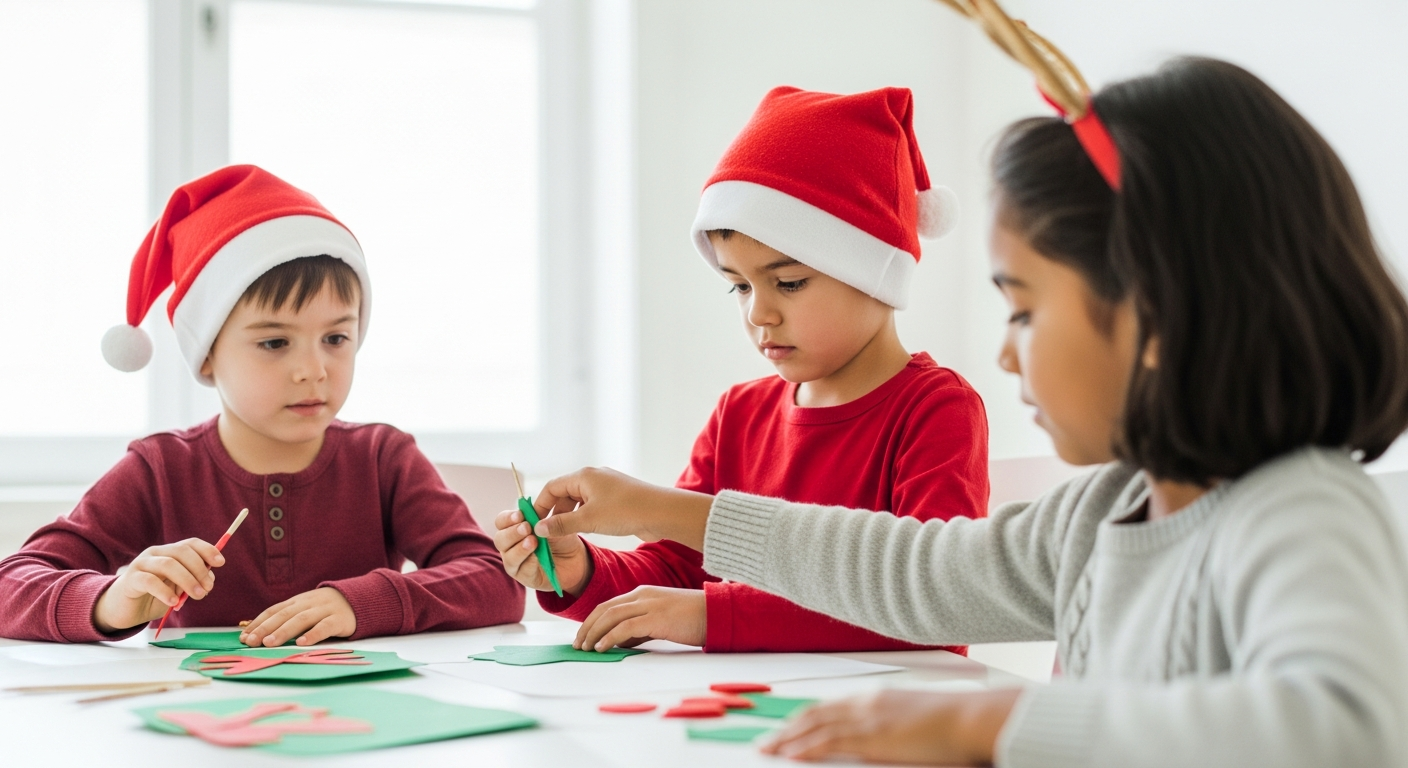
Table of Contents
- Introduction
- The Magic of Christmas Crafts for Development
- Delightful Christmas Craft Ideas for Kids (and Communication!)
- Enhancing Language Development with Speech Blubs
- Conclusion
- Frequently Asked Questions (FAQ)
Christmas is a magical time for children, filled with wonder, anticipation, and the joy of creation. For many parents, the holiday season can also bring a unique set of challenges and opportunities for their child's development. Perhaps you've noticed your little one struggling to express their excitement, articulate their wishes for Santa, or engage in back-and-forth conversations with family members. While these moments can be frustrating, they also highlight a wonderful avenue for growth: hands-on activities. This blog post isn't just about sharing delightful Christmas craft ideas for kids; it's about transforming holiday crafting into powerful, playful learning experiences that naturally foster speech and language development. We'll explore a variety of festive projects, from simple ornaments to thoughtful gifts, and show you how each one can become a unique "smart screen time" opportunity when paired with supportive tools like Speech Blubs, empowering your child to speak their minds and hearts.
Introduction
Imagine a child's face lighting up as they proudly hold up a sparkly, handmade ornament, ready to hang on the Christmas tree. This isn't just a pretty decoration; it's a testament to their burgeoning fine motor skills, their understanding of instructions, and a catalyst for communication. Holiday crafts offer a unique blend of sensory engagement, creativity, and developmental benefits that extend far beyond simply keeping little hands busy. They create a natural, pressure-free environment for practicing new sounds, expanding vocabulary, and building the confidence to express thoughts and feelings. We believe that every interaction is a chance to learn and grow, and the festive season provides an abundance of such opportunities. Here, we'll guide you through a sleigh full of engaging Christmas craft ideas, connecting each activity to specific speech and language milestones, and demonstrating how our unique approach at Speech Blubs can amplify these benefits, turning joyful family moments into powerful developmental strides.

The Magic of Christmas Crafts for Development
Engaging in Christmas crafts is more than just a seasonal activity; it's a rich, multi-faceted learning experience that supports numerous areas of a child's development. From the moment they choose their materials to the final flourish of glitter, children are actively learning and growing.
Fine Motor Skill Development
Many Christmas crafts involve intricate movements that are crucial for developing fine motor skills. Activities like cutting with child-safe scissors, peeling stickers, threading beads, squeezing glue, or manipulating small objects help strengthen the muscles in their hands and fingers. These are the same muscles essential for holding a crayon, using utensils, and eventually, writing. Precision and control improve with each craft, laying a vital foundation for academic success. For instance, creating a paper snowflake requires careful folding and snipping, while decorating a gingerbread cookie demands delicate handling of icing and sprinkles. These seemingly small tasks build significant dexterity.
Cognitive Growth and Problem-Solving
Crafts are inherently problem-solving exercises. Children must follow instructions (verbal and visual), sequence steps, and make choices about colors, shapes, and materials. What happens if the glue doesn't stick? How do they attach two pieces of paper? These are small challenges that encourage critical thinking and adaptability. When making a 3D craft, they learn about spatial reasoning and how different parts fit together. A child trying to build a pipe cleaner reindeer might experiment with how to make the antlers stand up, engaging their cognitive flexibility.
Emotional Expression and Confidence Building
Crafting provides a wonderful outlet for self-expression. Children can choose colors, designs, and themes that reflect their unique personality and feelings. The pride a child feels upon completing a project, especially one they can display or give as a gift, is immense. This sense of accomplishment boosts self-esteem and confidence, encouraging them to try new things and take on more complex tasks. A child who has successfully made a personalized gift for a grandparent experiences not only the joy of creation but also the satisfaction of giving, reinforcing positive emotional connections.

Speech and Language Development: A Natural Fit
Perhaps most importantly, Christmas crafts are a natural springboard for speech and language development. The interactive nature of crafting lends itself perfectly to conversation, instruction-following, and descriptive language.
- Vocabulary Expansion: Naming colors, shapes, textures (sticky, smooth, rough), materials (paper, glitter, pipe cleaners), and holiday-specific items (star, bell, Santa, reindeer).
- Following Directions: "First, glue the cotton ball, then add the googly eyes." This helps with understanding multi-step commands.
- Descriptive Language: Encouraging children to describe what they are making, how it feels, and what colors they are using. "My snowman is big and white with a carrot nose!"
- Sequencing and Storytelling: Talking about the steps involved in making the craft, from start to finish. "What did we do first? What comes next?"
- Asking and Answering Questions: Children naturally ask questions about the craft, and parents can ask open-ended questions to encourage more detailed responses.
- Social Communication: When crafting together, children practice turn-taking, sharing materials, making requests ("Can I have the red marker?"), and offering help.
At Speech Blubs, we understand that these organic, playful interactions are the most powerful catalysts for communication growth. Our mission, born from the personal experiences of our founders who all grew up with speech problems, is to empower children to speak their minds and hearts by blending scientific principles with play into one-of-a-kind "smart screen time" experiences. We are committed to providing an immediate, effective, and joyful solution for the 1 in 4 children who need speech support, ensuring that moments like these Christmas crafts are amplified and truly impactful.
Delightful Christmas Craft Ideas for Kids (and Communication!)
Let's dive into some fantastic Christmas craft ideas that are not only fun but also packed with opportunities for speech and language enrichment. Remember, the key is to engage with your child, talk through the steps, and encourage their participation and expression.
1. Festive Salt Dough Ornaments
Salt dough is a classic for a reason – it's simple, tactile, and provides endless possibilities for creativity!
Materials:
- 1 cup salt
- 2 cups flour
- 1 cup warm water
- Cookie cutters (Christmas shapes like stars, trees, gingerbread men)
- Straw (for making a hanging hole)
- Paints, glitter, markers for decorating
- Ribbon or string
Instructions:
- Mix salt, flour, and water in a bowl until a dough forms. Knead for a few minutes until smooth.
- Roll out the dough to about 1/4 inch thick.
- Use cookie cutters to create shapes.
- Make a hole at the top of each ornament with a straw.
- Bake at 250°F (120°C) for 2-3 hours, or until hardened. Let cool completely.
- Decorate with paints, glitter, or markers.
- Thread ribbon through the hole to hang.
Communication Boosters:
- Vocabulary: Discuss textures ("sticky," "smooth," "hard"), actions ("mix," "knead," "roll," "cut," "paint"), colors, and the names of Christmas shapes.
- Following Directions: "First, we mix the ingredients. Next, we roll the dough."
- Descriptive Language: "What color should we paint the star? How does the glitter feel?"
- Sequencing: Recount the steps: "We mixed, then rolled, then cut, and now we paint!"
Relatable Scenario: For a child who loves helping in the kitchen but is a late talker, making salt dough ornaments can be incredibly motivating. As you mix the ingredients, you can narrate each step: "Mix, mix, mix the flour!" and encourage imitation of simple action words. While decorating a gingerbread man ornament, you can point to the "eyes," "nose," and "buttons." Afterward, you can open Speech Blubs to our "Body Parts" section and practice identifying and naming these same features through engaging video modeling, watching peers demonstrate the words. This connection between a hands-on craft and focused language practice reinforces learning and builds confidence.
2. Paper Chain Garland
Simple yet wonderfully effective for decorating, paper chains are great for practicing patterns and fine motor skills.
Materials:
- Construction paper in various Christmas colors (red, green, white, gold)
- Scissors
- Glue stick or tape
Instructions:
- Cut paper into strips (e.g., 1 inch wide, 6-8 inches long).
- Form one strip into a loop and secure with glue or tape.
- Thread another strip through the first loop, form it into a loop, and secure.
- Continue this process, alternating colors to create a pattern.
Communication Boosters:
- Colors and Patterns: "Red, green, red, green! What color comes next?"
- Counting: Count the loops as you add them.
- Actions: "Cut," "loop," "glue," "tape," "thread."
- Spatial Concepts: "Through," "next to," "long," "short."
3. Handprint Reindeer or Santa
Handprint crafts are precious keepsakes and perfect for young children.
Materials:
- Brown or red paint (child-safe)
- White paper
- Googly eyes
- Red pom-pom (for nose)
- Markers
Instructions (Reindeer):
- Paint child's palm brown.
- Press onto paper to make the reindeer's head.
- Once dry, add googly eyes and a red pom-pom nose.
- Draw antlers, ears, and a mouth with markers.
Instructions (Santa):
- Paint child's palm white (for beard) and thumb red (for hat).
- Press onto paper.
- Once dry, draw Santa's face, hat trim, and add details.
Communication Boosters:
- Body Parts: "Where is your hand? Let's paint your palm." "Point to the reindeer's nose!"
- Colors: "Brown paint for the reindeer," "Red for Santa's hat."
- Action Verbs: "Paint," "press," "dry," "draw," "glue."
- Describing: "My reindeer has big antlers!"
4. Pinecone Christmas Trees
Bringing nature indoors for crafting is a wonderful sensory experience.
Materials:
- Pinecones (collected from outdoors, or purchased)
- Green paint
- Glitter, small pom-poms, beads for decoration
- Glue
- Small star (optional, for the top)
Instructions:
- Paint the pinecones green (or leave natural).
- Once dry, apply glue and sprinkle with glitter, or stick small decorations onto the "branches."
- Add a star to the top if desired.
Communication Boosters:
- Sensory Words: "Rough," "spiky," "sticky," "sparkly."
- Prepositional Concepts: "On top," "in between," "under."
- Quantity: "Many decorations," "a little glue."
- Comparison: "This pinecone is big, that one is small."
Relatable Scenario: Imagine a child who struggles with using descriptive words. As you collect pinecones, discuss how they feel ("rough," "bumpy") and how they look ("brown," "pointed"). While decorating, encourage them to choose specific colors and textures, saying, "I want the shiny red glitter for my tree!" or "Let's put the soft white pom-pom on top." This verbalizes their choices. To further develop their descriptive vocabulary, you can then use Speech Blubs' "Colors" or "Shapes" sections to practice identifying and describing different attributes, reinforcing the language used during the craft. It's a fantastic way to bridge hands-on experience with focused screen-time learning.
5. DIY Snow Globes
A captivating craft that combines art with a touch of science.
Materials:
- Small, clean glass jar with a tight-fitting lid
- Small waterproof figurines (e.g., plastic trees, reindeer, snowmen)
- Distilled water
- Glycerin (optional, helps glitter fall slower)
- Glitter
- Waterproof glue (e.g., super glue, hot glue)
Instructions:
- Glue the figurine(s) to the inside of the jar lid. Let dry completely.
- Fill the jar almost to the top with distilled water.
- Add a pinch of glitter and a few drops of glycerin (if using).
- Carefully screw the lid on tightly, making sure it's secure. You might want to add a line of glue around the rim for extra sealing.
- Shake and watch the snow fall!
Communication Boosters:
- Action Verbs: "Glue," "fill," "add," "shake," "watch."
- Descriptive Language: "Sparkly," "shiny," "slow," "fast," "clear."
- Concepts: "Up," "down," "float," "sink."
- Cause and Effect: "If we shake it, the glitter falls."
6. Cardboard Roll Characters (Santa, Elves, Reindeer)
Simple, eco-friendly, and perfect for imaginative play.
Materials:
- Empty toilet paper or paper towel rolls
- Construction paper (various colors)
- Googly eyes, pom-poms, pipe cleaners
- Markers, glue, scissors
Instructions (Santa):
- Cover a cardboard roll with red paper.
- Cut a strip of white paper for the beard and glue it on.
- Add googly eyes and a red pom-pom for the nose.
- Cut a red hat shape and glue it to the top.
- Draw a mouth and other details.
Communication Boosters:
- Character Names: "Santa," "elf," "reindeer."
- Body Parts: Point to and name Santa's beard, hat, eyes, nose.
- Storytelling: Once characters are made, encourage imaginative play and create a Christmas story together.
- Role-Playing: Use the characters to practice different voices and dialogue.
Relatable Scenario: For a child who enjoys pretend play but struggles with social communication or back-and-forth dialogue, making these characters is ideal. As you create Santa, discuss what Santa says: "Ho ho ho!" or "Merry Christmas!" Then, use the finished characters to act out simple scenes, taking turns with dialogue. To reinforce social communication skills, Speech Blubs offers sections on "Social Skills" where children can learn about greetings, expressing emotions, and asking questions through video modeling, watching peers demonstrate these interactions in a fun, engaging way. This provides a bridge between imaginative play and structured learning, nurturing confidence in communication.
7. DIY Picture Frame Ornaments
Personalized gifts that capture memories.
Materials:
- Craft sticks (popsicle sticks) or cardboard
- Glue
- Paint, glitter, sequins for decoration
- Small photo
- Loop of ribbon or string
Instructions (Craft Stick Frame):
- Glue four craft sticks together to form a square or rectangle.
- Decorate the frame with paint, glitter, etc.
- Glue a small photo into the center of the frame.
- Glue a ribbon loop to the back for hanging.
Communication Boosters:
- People Recognition: Talk about the people in the photo. "Who is this? What are they doing?"
- Emotions: "Are they happy in the picture?"
- Memory Recall: "Do you remember when this picture was taken?"
- Sharing: Discuss who the ornament is for and why it's a special gift.
8. Crayon Shaving Ornaments
A colorful, translucent craft perfect for older preschoolers and early elementary children.
Materials:
- Wax paper
- Old crayons (peeled)
- Pencil sharpener
- Iron (adult supervision required)
- Cookie cutters
- Hole punch
- String or ribbon
Instructions:
- Place a sheet of wax paper on a protected surface.
- Use a pencil sharpener to shave crayons onto the wax paper. Arrange shavings into a thin layer.
- Place another sheet of wax paper on top.
- With adult supervision, gently iron over the top wax paper until the crayon shavings melt and fuse the two sheets together.
- Let cool.
- Use cookie cutters to cut out shapes.
- Punch a hole at the top and thread with string.
Communication Boosters:
- Colors & Blending: Discuss how colors mix when melted. "What happens when red and yellow mix?"
- Process Verbs: "Shave," "melt," "iron," "cut," "cool."
- Temperature Concepts: "Hot," "cool."
- Observation: "What do you see happening to the crayons?"
Enhancing Language Development with Speech Blubs
While hands-on crafting provides an unparalleled foundation for language, sometimes children need an extra boost, a different modality, or a structured environment to practice specific sounds and words. That's where Speech Blubs comes in. Our app is not about replacing these invaluable family moments but about complementing and enhancing them, turning screen time into "smart screen time."
At Speech Blubs, we believe every child deserves to find their voice. Our founders, each having navigated their own speech challenges as children, created the very tool they wished they had. This personal connection fuels our commitment to providing an immediate, effective, and joyful solution for the 1 in 4 children who need speech support. We blend scientific principles, particularly our unique "video modeling" methodology, with engaging play to help children develop critical communication skills.
The Power of Video Modeling
Our core approach, "video modeling," is what sets us apart. Instead of just hearing a word, children watch real kids their age speaking words and sounds. This unique visual and auditory input leverages mirror neurons in the brain, making imitation more intuitive and effective. When a child sees another child making a "ba" sound while bouncing a ball, they are more likely to imitate and internalize that sound themselves. This is a powerful, science-backed way to build a love for communication, develop key foundational skills, and boost confidence.
Imagine your child has just made a vibrant Christmas tree ornament. You've talked about the "tree," the "star," the "green" color. Now, you can open Speech Blubs to our "Outdoor Wonderland" or "Colors" section, where they can see and imitate peers saying words like "tree," "star," or naming various colors. This seamless transition reinforces learning from the craft session in a dynamic, engaging way.
Beyond Crafts: A Powerful Tool for Family Connection
Our app isn't just a screen-time activity; it's a powerful tool for family connection. We encourage parents to co-play with their children, participating in the activities, imitating alongside them, and celebrating every sound and word. This shared experience deepens bonds and makes learning a joyful, collaborative adventure. It offers a screen-free alternative to passive viewing experiences like cartoons, transforming passive consumption into active, interactive learning.
For instance, if your child is working on early sounds and you've just made some animal-themed ornaments, you can use Speech Blubs to explore the "Animal Kingdom" section. As your child watches peers make animal sounds, you can imitate alongside them, creating a fun, encouraging atmosphere. This kind of shared engagement reduces frustration, builds confidence, and creates precious family learning moments.
We understand that parents might be unsure if their child could benefit from speech support. That's why we offer a quick and easy way to assess your child's needs. Take our quick 3-minute preliminary screener – it involves just 9 simple questions and provides an assessment along with a personalized next-steps plan. It's a great first step to understanding how we can support your child's communication journey.
Our methodology is not just anecdotal; it's backed by research, placing us in the top tier of speech apps worldwide with a high MARS scale rating. You can learn more about the science behind our approach here and see what other parents are saying about their child's success on our testimonials page.
Your Child's Journey with Speech Blubs
We are committed to making effective speech support accessible and affordable. Here's a transparent look at our subscription plans:
- Monthly Plan: For $14.99 per month, you get access to our core features.
- Yearly Plan: Our best value at just $59.99 per year, which breaks down to an incredible $4.99 per month! By choosing the Yearly plan, you save a significant 66% compared to the monthly option.
The Yearly plan is truly the superior choice, offering not just cost savings but also exclusive, high-value features designed to maximize your child's progress:
- A 7-day free trial: Experience the full power of Speech Blubs before committing.
- The extra Reading Blubs app: An entire additional app focused on early reading skills, perfectly complementing speech development.
- Early access to new updates: Be the first to enjoy new content and features.
- 24-hour support response time: Get prompt assistance whenever you need it.
The Monthly plan, while an option, does not include these valuable benefits. We highly recommend starting with the Yearly plan to unlock the free trial and the complete suite of tools that will empower your child to speak their minds and hearts.
Conclusion
The festive season offers a truly unique opportunity to combine the joy of creation with meaningful developmental growth. These Christmas craft ideas for kids are more than just holiday decorations; they are pathways to enhanced fine motor skills, cognitive development, emotional expression, and, critically, robust speech and language development. By engaging in these activities, parents can naturally foster vocabulary, listening skills, descriptive language, and social communication in a fun, pressure-free environment.
And when you're looking to amplify these moments, to provide focused, science-backed support for your child's communication journey, Speech Blubs is here. Our app empowers children to speak their minds and hearts through engaging video modeling, turning screen time into smart, interactive learning. We understand the unique challenges parents face, and we're dedicated to providing immediate, effective, and joyful solutions.
Ready to watch your child's communication blossom this Christmas season? Don't miss out on the incredible value and comprehensive support our Yearly plan offers. You'll save 66% and gain access to a 7-day free trial, the Reading Blubs app, early updates, and dedicated support.
Download Speech Blubs on the App Store or Google Play today to begin your journey. Alternatively, you can create your account and begin your 7-day free trial directly on our website – just remember to choose the Yearly plan for the best experience and full suite of features! Let's make this Christmas a season of delightful crafts and blossoming communication for your child.
Frequently Asked Questions (FAQ)
Q1: How do Christmas crafts specifically help with speech development?
A1: Christmas crafts provide a natural, engaging environment for practicing many aspects of speech and language. They encourage vocabulary expansion by naming colors, shapes, and materials; improve listening skills by following multi-step instructions; foster descriptive language as children talk about what they're making and how it feels; and promote social communication through turn-taking, sharing, and asking questions when crafting together. These hands-on activities create real-world contexts for language use.
Q2: My child struggles to focus. How can I make crafting more engaging for them?
A2: Keep crafting sessions short and sweet, perhaps 10-15 minutes, especially for younger children. Offer choices of materials or colors to give them a sense of control. Focus on the process rather than a perfect outcome, celebrating effort and creativity. Break down complex crafts into simpler steps. Integrating tools like Speech Blubs can also help by offering focused, interactive "smart screen time" that complements the hands-on activity, making the entire learning experience more varied and engaging.
Q3: What age range are these Christmas craft ideas suitable for?
A3: The crafts listed are generally suitable for preschoolers (ages 3-5) and early elementary children (ages 6-8), with appropriate adult supervision. Simpler crafts like handprint art or salt dough ornaments are great for toddlers and younger preschoolers, while paper chains, pinecone trees, and snow globes can engage older children with more developed fine motor skills. The key is to adapt the complexity to your child's individual abilities and provide guidance as needed.
Q4: How does Speech Blubs integrate with these craft activities?
A4: Speech Blubs acts as a powerful supplement to hands-on learning. After a craft session where you've discussed specific words (e.g., "star," "red," "cut"), you can use the app to reinforce these words through video modeling. For instance, if you made a snowman, you could then go to Speech Blubs' "Body Parts" section to practice identifying and saying words like "nose," "eyes," and "buttons" by watching peers demonstrate them. This creates a bridge between physical activity and focused language practice, enhancing learning through a fun, interactive platform. Download Speech Blubs to explore how it can enrich your child's communication journey.
About the author