
Festive Christmas Cut Out Crafts for Kids
 By Speech Blubs Team•Dec 22, 2025•21 min.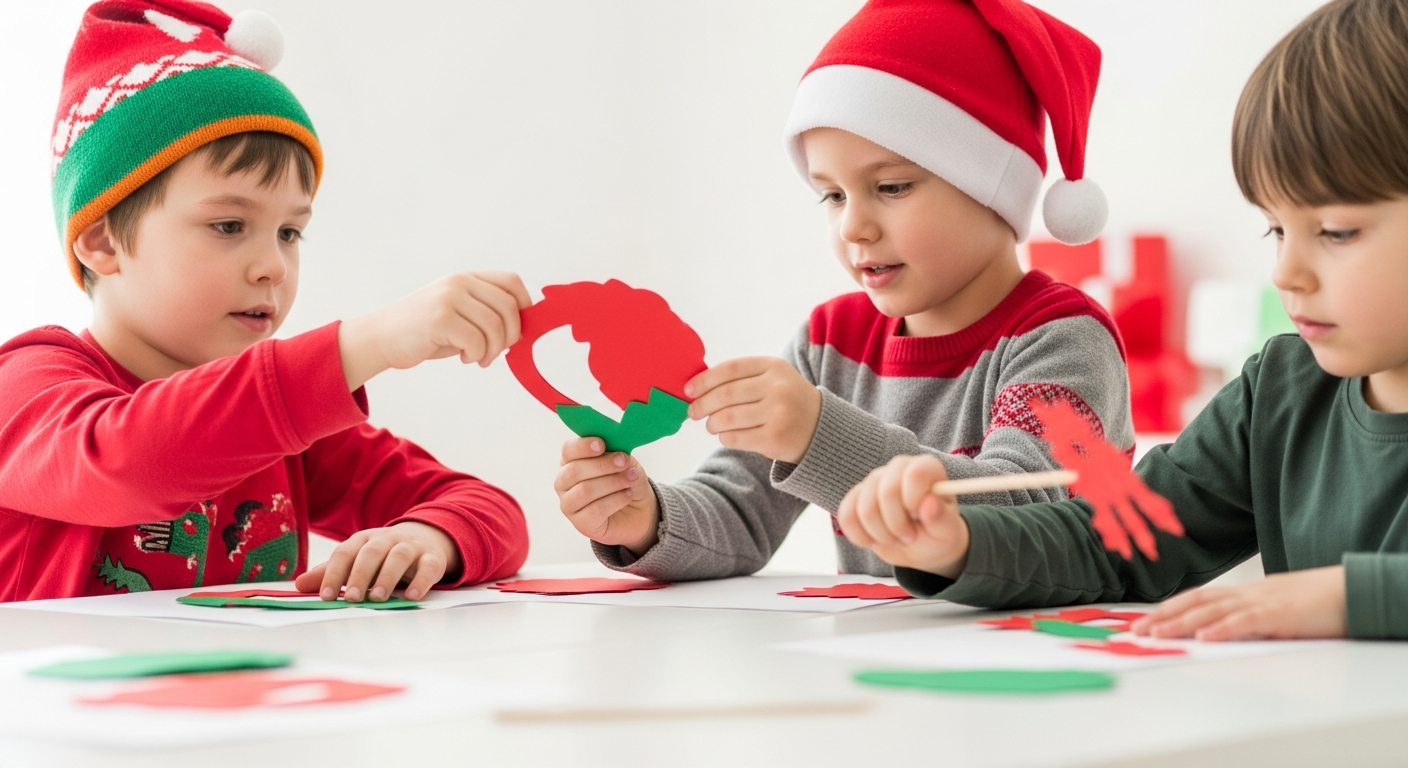
Table of Contents
- Introduction
- The Power of Play: Why Crafts Matter for Development
- Essential Tools for Your Crafting Adventures
- Festive Christmas Cut Out Crafts for Kids: Ideas and Communication Boosters
- Nurturing Communication with Speech Blubs: A Complementary Approach
- Your Partner in Joyful Learning: The Speech Blubs Value
- Setting Realistic Expectations: Progress Takes Time and Joy
- Conclusion
- Frequently Asked Questions (FAQ)
The air fills with the scent of pine and gingerbread, lights twinkle, and a special kind of magic descends upon our homes. Christmas is a time of wonder, connection, and creating cherished memories. For parents, it's an opportunity to engage with their children in joyful activities that aren't just fun, but also incredibly beneficial for their development. This holiday season, imagine transforming simple paper, scissors, and a dash of creativity into powerful tools for growth, especially in communication. This post will guide you through a sleigh-full of delightful Christmas cut-out crafts that are perfect for kids of all ages, offering step-by-step instructions, material lists, and most importantly, insights into how each craft can playfully boost your child's fine motor skills, cognitive abilities, and, of course, their emerging speech and language. We'll also explore how Speech Blubs, our award-winning app, can seamlessly complement these hands-on activities, making your family's holiday season not just merry, but profoundly meaningful. Get ready to cut, glue, chat, and create a truly memorable Christmas!

Introduction
As parents, we cherish those fleeting moments of childhood wonder. The holiday season, with its vibrant colors and festive cheer, offers a unique canvas for creating lasting memories and nurturing our children's growth. But what if those joyous crafting sessions could do more than just produce beautiful decorations? What if they could actively contribute to your child's communication development, helping them build confidence in expressing their thoughts and feelings? That’s exactly what we aim to achieve this Christmas. This blog post isn't just a collection of craft ideas; it’s a guide to transforming simple cut-out crafts into engaging speech and language-boosting activities. We believe that through creative play, combined with focused support, every child can find their voice and learn to "speak their minds and hearts."
The Power of Play: Why Crafts Matter for Development
Beyond the immediate joy they bring, engaging in arts and crafts offers a treasure trove of developmental benefits for children. While many naturally associate crafting with fine motor skill development – the precise movements needed to grasp scissors, draw lines, or spread glue – its impact extends far wider, touching upon cognitive processing, problem-solving, social-emotional learning, and crucially, communication skills.
Holistic Development Through Crafting
- Fine Motor Skills: Holding a crayon, snipping paper, or peeling a sticker strengthens the small muscles in the hands and fingers, which are foundational for writing, dressing, and many daily tasks. Precision in cutting shapes or drawing details directly refines these essential skills.
- Cognitive Skills: Following instructions, identifying shapes and colors, understanding cause and effect (e.g., cutting a folded paper creates a symmetrical design), and planning out a craft project all stimulate cognitive development. Children learn sequencing, spatial reasoning, and creative problem-solving.
- Social-Emotional Growth: Crafting together fosters teamwork, patience, and the ability to share materials. It’s an opportunity to express individuality, build self-esteem through accomplishment, and learn to manage frustration when a project doesn't go exactly as planned.
- Sensory Exploration: The varying textures of paper, the stickiness of glue, the scent of paint, and the visual delight of colorful materials provide rich sensory input that helps children understand their world.
- Communication Skills: This is where the magic truly happens, especially when parents are actively involved. Crafting provides countless natural opportunities for conversation:
- Vocabulary Expansion: Naming colors, shapes, materials, and actions ("cut," "glue," "fold," "decorate").
- Following Directions: "First, cut the circle, then glue it here."
- Descriptive Language: "Tell me about your shiny red ornament."
- Asking and Answering Questions: "What color should Santa's beard be?" "Can I have the blue paper?"
- Narrative Skills: Explaining the steps they took or telling a story about their finished creation.
At Speech Blubs, we understand that learning flourishes when it's engaging and interactive. Our mission, born from the personal experiences of our founders who all grew up with speech problems, is to provide an immediate, effective, and joyful solution for the 1 in 4 children who need speech support. We believe in "smart screen time" that actively engages children, blending scientific principles with play. Hands-on activities like these Christmas crafts are a perfect complement to our video modeling methodology, where children learn by watching and imitating their peers. This synergy creates a powerful environment for learning, building confidence, and fostering a love for communication, reducing the frustration that can often accompany speech challenges.

Essential Tools for Your Crafting Adventures
Before diving into the festive fun, gather a basic collection of supplies. Safety is paramount, especially when working with younger children. Always ensure adult supervision, particularly when scissors are involved.
Basic Crafting Toolkit:
- Paper: Construction paper in various Christmas colors (red, green, white, brown, gold, silver), cardstock, plain white paper, patterned paper.
- Child-Safe Scissors: Look for blunt-tip scissors designed for little hands. Training scissors that spring open can also be helpful for beginners.
- Glue: Glue sticks are great for paper, while liquid white glue (like Elmer's) works well for slightly heavier items and glitter.
- Coloring Supplies: Crayons, colored pencils, washable markers, paint (tempera or washable acrylics).
- Decorations: Glitter, cotton balls, googly eyes, pom-poms, stickers, pipe cleaners, small buttons, yarn.
- Templates/Stencils: Printable templates for various Christmas shapes (Santa, reindeer, snowflakes, stars, gingerbread men) can be found online or drawn freehand.
- Miscellaneous: Hole punch, ribbon or string for hanging ornaments, paper plates, toilet paper rolls.
Having these items readily available will make your crafting sessions smoother and more enjoyable, encouraging spontaneous creativity!
Festive Christmas Cut Out Crafts for Kids: Ideas and Communication Boosters
Here are some wonderful cut-out crafts that are perfect for sparking imagination and stimulating communication this holiday season. For each craft, we’ll outline materials, steps, and specific ways to integrate speech and language practice.
1. Jolly Paper Plate Santa & Friends
Paper plates are incredibly versatile for crafts! Let's make Santa and his festive pals.
- Materials: Paper plates, red, white, pink, and black construction paper, cotton balls, glue, child-safe scissors, markers, googly eyes (optional).
- Steps:
- Santa: Cut a large red triangle for Santa's hat, and a smaller red circle for his nose. Cut out two white half-circles for the brim of his hat. Glue the hat onto the top of the paper plate. Glue cotton balls along the brim and for his beard. Draw or glue on googly eyes. Glue the red nose. Draw a happy mouth.
- Reindeer: Paint the paper plate brown or glue brown paper onto it. Cut out two brown antlers and two pink inner ears. Glue them to the top of the plate. Glue on two googly eyes and a bright red pom-pom for Rudolph's nose!
- Communication Boosters:
- Vocabulary: "Plate," "red," "white," "beard," "hat," "nose," "eyes," "antlers," "reindeer," "Santa," "brown."
- Describing: "Santa has a fluffy white beard." "Rudolph has a shiny red nose."
- Action Words: "Cut," "glue," "paint," "draw," "stick."
- Sounds: Encourage "Ho ho ho!" for Santa or "Neigh!" for the reindeer.
- Scenario: For a child working on consonant-vowel combinations, making a Santa craft can be a fun prompt to practice "ho ho ho" or identifying the "red" hat and "white" beard. You can then transition to the Animals section of Speech Blubs to practice more animal sounds and names.
2. Handprint & Footprint Holiday Keepsakes
These personalized crafts make wonderful gifts and cherished memories.
- Materials: Cardstock (various colors), child-safe paint, markers, glitter, glue, ribbon, hole punch, child-safe scissors.
- Steps:
- Handprint Reindeer: Paint your child's palm brown. Press onto cardstock with fingers pointing up. Once dry, add googly eyes, a red nose (pom-pom or cut-out), and draw antlers.
- Handprint Santa: Paint the palm white and the thumb red. Press onto cardstock. Once dry, turn it upside down so the red thumb is the hat. Add a face, cotton ball beard, and a pom-pom on the hat.
- Footprint Mistletoe: Paint your child's foot green and press onto white cardstock. Repeat with the other foot slightly overlapping. Once dry, add small red cut-out circles for berries.
- Communication Boosters:
- Body Parts: "Hand," "foot," "fingers," "toes."
- Colors: "Brown," "red," "green," "white."
- Action Words: "Paint," "press," "dry," "cut," "glue."
- Sensory Language: "Wet paint," "sticky glue."
- Possession: "My hand," "your foot."
- Scenario: Practicing "my" and "your" or identifying body parts ("Show me your hand!") can be naturally integrated into this activity. The repetitive actions are also great for children who benefit from structured activities.
3. Sparkling Salt Dough Ornaments
Salt dough allows for creative cutting and decorating, perfect for unique ornaments.
- Materials: 1 cup flour, 1/2 cup salt, 1/2 cup water (adjust as needed), rolling pin, Christmas cookie cutters (star, tree, gingerbread man), straw or pencil (to make a hole), paint, glitter, glue, ribbon.
- Steps:
- Mix flour, salt, and water to form a firm dough. Knead until smooth.
- Roll out the dough to about 1/4 inch thick.
- Use cookie cutters to cut out shapes. Make a small hole at the top of each with a straw.
- Bake at 250°F (120°C) for 2-3 hours or until hard. Let cool completely.
- Once cooled, paint and decorate your ornaments with glitter.
- Thread ribbon through the hole to hang.
- Communication Boosters:
- Action Words: "Mix," "knead," "roll," "cut," "bake," "paint," "decorate," "hang."
- Descriptive Words: "Salty," "smooth," "hard," "sparkly," "warm," "cool."
- Shapes: "Star," "tree," "circle."
- Sequencing: "First, we mix; then we roll; then we cut."
- Scenario: This multi-step craft is excellent for practicing sequential language and verbs. For a child working on descriptive language, encourage them to talk about the "smooth dough" or the "sparkly paint."
4. Classic Paper Chain Garlands
A simple, timeless craft that helps with color recognition and counting.
- Materials: Construction paper in various Christmas colors, child-safe scissors, glue stick or tape.
- Steps:
- Cut strips of paper, about 1 inch wide and 8-10 inches long.
- Form one strip into a circle and glue/tape the ends together.
- Thread another strip through the first circle, then glue/tape its ends together to form a second link.
- Continue linking strips to create a long garland.
- Communication Boosters:
- Colors: "Red," "green," "white," "gold," "silver."
- Counting: "One link, two links, three links..."
- Action Words: "Cut," "glue," "link," "hold."
- Concepts: "Long," "short," "more," "less."
- Asking/Answering Questions: "What color should we use next?" "How many links do we have?"
- Scenario: This repetitive task is wonderful for practicing rote counting and color identification. For a child who is just beginning to combine words, focus on simple phrases like "Red link" or "More green."
5. Winter Wonderland Snowflake Cut-Outs
A beautiful way to explore symmetry and patterns.
- Materials: White or light blue paper, child-safe scissors.
- Steps:
- Start with a square piece of paper.
- Fold it diagonally to make a triangle.
- Fold the triangle in half again.
- Fold the triangle into thirds.
- Cut small shapes (triangles, squares, curves) from the folded edges.
- Carefully unfold to reveal your unique snowflake!
- Communication Boosters:
- Action Words: "Fold," "cut," "unfold," "open."
- Shapes: "Triangle," "square," "star" (if they see one in the pattern).
- Descriptive Words: "Pretty," "sparkly" (imagine), "big," "small," "delicate."
- Concepts: "Symmetry," "pattern," "same," "different."
- Predicting: "What do you think it will look like when we open it?"
- Scenario: This craft is excellent for practicing spatial concepts and descriptive language. Encourage your child to describe the different cuts they are making and the patterns they see.
6. Gingerbread Man & House Decorating
Cut-out shapes become canvases for imaginative decoration.
- Materials: Brown construction paper or cardstock (pre-cut gingerbread men/houses), white puffy paint or glitter glue, markers, small buttons, pom-poms, fabric scraps, glue, child-safe scissors.
- Steps:
- Provide pre-cut gingerbread men and house shapes.
- Let your child decorate them using various materials. Use markers for faces and details, glue on buttons for eyes, fabric scraps for clothing, or puffy paint for icing details.
- Cut out smaller shapes (circles for gumdrops, rectangles for windows) from colored paper to add to the gingerbread house.
- Communication Boosters:
- Vocabulary: "Gingerbread man," "house," "button," "icing," "window," "door," "roof," "candy."
- Colors & Shapes: Identify the colors of decorations and shapes of cut-outs.
- Action Words: "Decorate," "glue," "draw," "add."
- Storytelling: Encourage your child to tell a story about their gingerbread man or who lives in their gingerbread house.
- Scenario: This craft is fantastic for expanding vocabulary related to food and homes, as well as encouraging imaginative play and simple storytelling. After decorating, you could even act out a short story with the gingerbread man.
7. Toilet Paper Roll Christmas Characters
Recycle and create adorable characters!
- Materials: Empty toilet paper rolls, construction paper (brown, white, green, red), googly eyes, pom-poms, pipe cleaners, glue, child-safe scissors, markers.
- Steps:
- Reindeer: Wrap a toilet paper roll in brown paper. Glue on googly eyes, a red pom-pom nose, and pipe cleaner antlers (pushed through small holes or glued to the inside).
- Snowman: Wrap a toilet paper roll in white paper. Add a face with googly eyes and an orange carrot nose (cut from paper). Draw buttons down the front. Add a scarf and hat cut from colorful paper.
- Elf: Wrap in green paper. Add a face, pointy ears, and a red hat with a small pom-pom.
- Communication Boosters:
- Character Names: "Reindeer," "snowman," "elf."
- Body Parts: "Eyes," "nose," "hat," "ears," "scarf."
- Colors: "Brown," "white," "green," "red," "orange."
- Prepositions: "On," "under," "top," "bottom."
- Imaginative Play: Encourage dialogue between the characters once they are complete.
- Scenario: This craft helps reinforce body part vocabulary and descriptive words. Using the finished characters for imaginative play provides an excellent opportunity for practicing dialogue and social communication skills.
8. Felt Christmas Tree & Ornaments
A reusable, interactive tree for little ones.
- Materials: Large piece of green felt (for the tree), various colors of smaller felt pieces (for ornaments), Velcro dots (optional), child-safe scissors.
- Steps:
- Cut the large green felt into a Christmas tree shape. You can glue it to a wall or a large piece of cardboard.
- From the smaller felt pieces, cut out various ornament shapes: stars, circles, candy canes, stockings, bulbs.
- For very young children, felt naturally sticks to felt. For older children or for more secure placement, attach one side of a Velcro dot to the back of each ornament.
- Communication Boosters:
- Shapes: "Star," "circle," "candy cane."
- Colors: "Red," "blue," "yellow," "green," "purple."
- Prepositions: "Put the star on top," "Put the ball next to the candy cane."
- Action Words: "Decorate," "put on," "take off."
- Counting: "How many ornaments are on the tree?"
- Scenario: This interactive craft is perfect for practicing prepositions and descriptive words as children place and rearrange the ornaments. The ability to repeat the activity offers multiple opportunities for language practice.
9. Q-Tip Snowman & Reindeer Art
A unique way to create texture and practice precision.
- Materials: White or brown paper (with pre-drawn snowman or reindeer outlines), Q-tips, washable paint (white for snowman, brown for reindeer, red for nose), child-safe scissors (if cutting outlines).
- Steps:
- Draw a simple outline of a snowman or a reindeer on paper, or print a template.
- Have your child use a Q-tip to dot paint within the outline. This creates a textured, pointillism-style effect.
- For the snowman, use white paint. For the reindeer, use brown paint and a red dot for the nose.
- Once dry, you can cut out the finished art.
- Communication Boosters:
- Action Words: "Dot," "paint," "tap," "cut."
- Colors: "White," "brown," "red."
- Concepts: "Inside," "outside," "full," "empty."
- Counting: Counting the dots if desired.
- Scenario: The repetitive "dotting" action can be soothing and provides a simple way to practice verbs and color words. For a child working on following simple instructions, "Dot the white paint inside the snowman!" is a clear and achievable goal.
10. Personalized Christmas Cards
A heartfelt craft that encourages social language.
- Materials: Folded cardstock, construction paper scraps, child-safe scissors, glue, markers, glitter.
- Steps:
- Cut out festive shapes (stars, trees, bells, candy canes) from colored construction paper.
- Glue these cut-outs onto the front of the card to create a personalized design.
- Decorate with glitter, markers, or stickers.
- Inside, help your child write or dictate a simple message like "Merry Christmas, Grandma!" or "Love, [Child's Name]."
- Communication Boosters:
- Social Greetings: "Merry Christmas," "Happy Holidays," "Love."
- Recipient Names: Practicing names of family and friends.
- Descriptive Words: Describing the card ("sparkly," "colorful," "my card").
- Action Words: "Write," "draw," "cut," "glue."
- Expressing Gratitude: "Thank you for..." (if it's a thank you card).
- Scenario: This craft is perfect for practicing social language and understanding the purpose of communication (sending wishes to loved ones). It also reinforces print awareness and early literacy skills as they see their words in print.
Nurturing Communication with Speech Blubs: A Complementary Approach
While hands-on crafts are invaluable for development, we at Speech Blubs understand that modern families also navigate the digital world. That's why we’ve created a unique tool that transforms screen time into "smart screen time" – active, engaging, and scientifically-backed learning experiences. Our mission is to empower children to "speak their minds and hearts," and our company was born from the personal experiences of our founders, who all grew up with speech problems and created the tool they wished they had. We are committed to providing an immediate, effective, and joyful solution for the 1 in 4 children who need speech support.
Imagine finishing a lively crafting session, perhaps making a paper plate reindeer, and then seamlessly transitioning to the Animal Kingdom section of Speech Blubs. Here, your child can watch real children imitate reindeer sounds or practice the names of other animals, reinforcing the vocabulary and sounds learned during crafting. This is the power of our video modeling methodology – children learn by watching and imitating their peers, a concept proven to be highly effective for speech acquisition.
Speech Blubs offers a screen-free alternative to passive viewing, like cartoons, and a powerful tool for family connection. When you and your child engage with our app, you're not just watching; you're actively participating, imitating, and interacting. This mimics the natural way children learn to speak – by observing and repeating. Our app guides children through various sounds, words, and sentences in an engaging way, helping them build confidence and reduce communication frustration.
Our approach is backed by science, placing us in the top tier of speech apps worldwide. You can learn more about the science behind our method and how we apply principles of neuroplasticity and mirror neuron activation to foster speech development.
Your Partner in Joyful Learning: The Speech Blubs Value
We believe in making high-quality speech and language support accessible to every family. That's why we're transparent about our pricing and dedicated to providing exceptional value.
For just $14.99 per month, you can access our comprehensive range of activities and features designed to help your child thrive. However, we highly recommend our Yearly plan, which offers superior value and an enriched experience for only $59.99 per year. That breaks down to just $4.99 per month, allowing you to save 66% compared to the monthly subscription!
The Yearly plan isn't just cheaper; it unlocks a full suite of benefits crafted to support your child's continuous growth:
- A 7-day free trial: Experience the full potential of Speech Blubs before committing.
- The extra Reading Blubs app: Dive deeper into literacy development with a dedicated reading companion.
- Early access to new updates: Be among the first to explore exciting new content and features.
- 24-hour support response time: Get prompt assistance whenever you need it.
The Monthly plan, while flexible, does not include these exclusive benefits, such as the free trial or the Reading Blubs app. For long-term development and the most comprehensive support, the Yearly plan is the clear best choice.
Ready to provide your child with this powerful tool for communication? Start your 7-day free trial today by choosing the Yearly plan and unlock a world of joyful learning.
Setting Realistic Expectations: Progress Takes Time and Joy
It's important to approach your child's developmental journey with patience and understanding. While activities like Christmas crafts and engaging with Speech Blubs can significantly boost communication skills, it's crucial to set realistic expectations. There are no guaranteed outcomes or overnight miracles (e.g., your child won't be giving public speeches in a month!).
Instead, focus on the invaluable benefits of the process:
- Fostering a Love for Communication: Creating a positive and fun environment around speaking and interacting encourages children to want to communicate.
- Building Confidence: Successfully expressing themselves, even with a few words, builds self-esteem and reduces frustration.
- Reducing Frustration: When children have tools and opportunities to communicate, they are less likely to become frustrated by their inability to express their needs and desires.
- Developing Key Foundational Skills: These activities lay the groundwork for more complex language acquisition, including vocabulary, sentence structure, and social communication.
- Creating Joyful Family Learning Moments: Most importantly, you're building precious memories and strengthening your bond through shared experiences.
Speech Blubs is designed to be a powerful supplement to your child's overall development plan and, when applicable, a fantastic complement to professional speech therapy. We always encourage co-play and adult support during app usage, just as we do for crafts. These tools are most effective when integrated into a rich, interactive environment where communication is celebrated and encouraged.
If you're unsure whether your child could benefit from additional speech support, take our quick 3-minute preliminary screener. It involves 9 simple questions and provides you with an immediate assessment and next-steps plan, along with an invitation for a free 7-day trial of Speech Blubs. You can also see what other parents are saying about their child's success with our app.
Conclusion
This Christmas, let's embrace the magic of creativity and connection. The simple act of making Christmas cut-out crafts with your child offers so much more than just festive decorations; it provides a vibrant playground for their developing minds and burgeoning communication skills. From snipping paper snowflakes to gluing cotton ball beards on Santa, each activity is an opportunity to expand vocabulary, practice articulation, follow directions, and build confidence in expressing themselves.
We at Speech Blubs are proud to be a part of your child's developmental journey, offering a unique blend of scientific methodology and playful learning that perfectly complements these hands-on activities. Our "smart screen time" provides an active, engaging experience that nurtures speech and language skills, empowering children to "speak their minds and hearts" with joy and confidence.
This holiday season, give your child the gift of communication. Make cherished memories with these delightful crafts, and then extend the learning and fun with Speech Blubs. Ready to embark on this joyful adventure? Download Speech Blubs on the App Store or Get Speech Blubs on Google Play today! To get the best value, including a 7-day free trial, the extra Reading Blubs app, and early access to updates, be sure to choose our Yearly plan when you create your account and begin your journey.
Frequently Asked Questions (FAQ)
Q1: What age are these Christmas cut-out crafts suitable for?
These crafts are adaptable for a wide range of ages, generally from toddlers (with significant adult assistance for cutting and gluing) up to early school-aged children. For toddlers and preschoolers (2-5 years), focus on larger cuts, pre-cut shapes, and simple gluing tasks. Older children (6-8+ years) can handle more intricate cutting, detailed decorating, and multi-step projects independently. Always use child-safe scissors and supervise younger children closely.
Q2: How do crafts specifically help speech development beyond just talking about them?
Beyond the direct conversational opportunities, crafting supports speech development indirectly by strengthening foundational skills. Fine motor control developed through cutting and gluing can impact oral motor control, which is crucial for articulation. Following multi-step instructions enhances auditory processing and comprehension. The creative expression involved boosts confidence and reduces anxiety, which can make a child more willing to attempt speaking. Furthermore, the sensory input from different materials can stimulate neural pathways that also contribute to language processing.
Q3: Is Speech Blubs a replacement for professional speech therapy?
No, Speech Blubs is designed to be a powerful supplement and complement to professional speech therapy, not a replacement. Our app provides an engaging, scientifically-backed tool for practicing speech and language skills in a fun home environment. It can extend the benefits of therapy, provide consistent practice, and support development for children who may not yet qualify for therapy or are on a waiting list. Always consult with a qualified speech-language pathologist for diagnosis and a personalized treatment plan if you have concerns about your child's speech development.
Q4: What's the best way to get started with Speech Blubs?
The best way to start your journey with Speech Blubs is to sign up for our Yearly plan. This provides the best value, allowing you to save 66% compared to the monthly subscription. Crucially, the Yearly plan includes a 7-day free trial, giving you full access to all features, including the extra Reading Blubs app, early access to new updates, and 24-hour support. This allows you and your child to experience the full benefits before committing. You can easily download Speech Blubs on the App Store or get Speech Blubs on Google Play.
About the author