
Festive Christmas Headbands: Fun Crafts for Kids
 By Speech Blubs Team•Dec 22, 2025•21 min.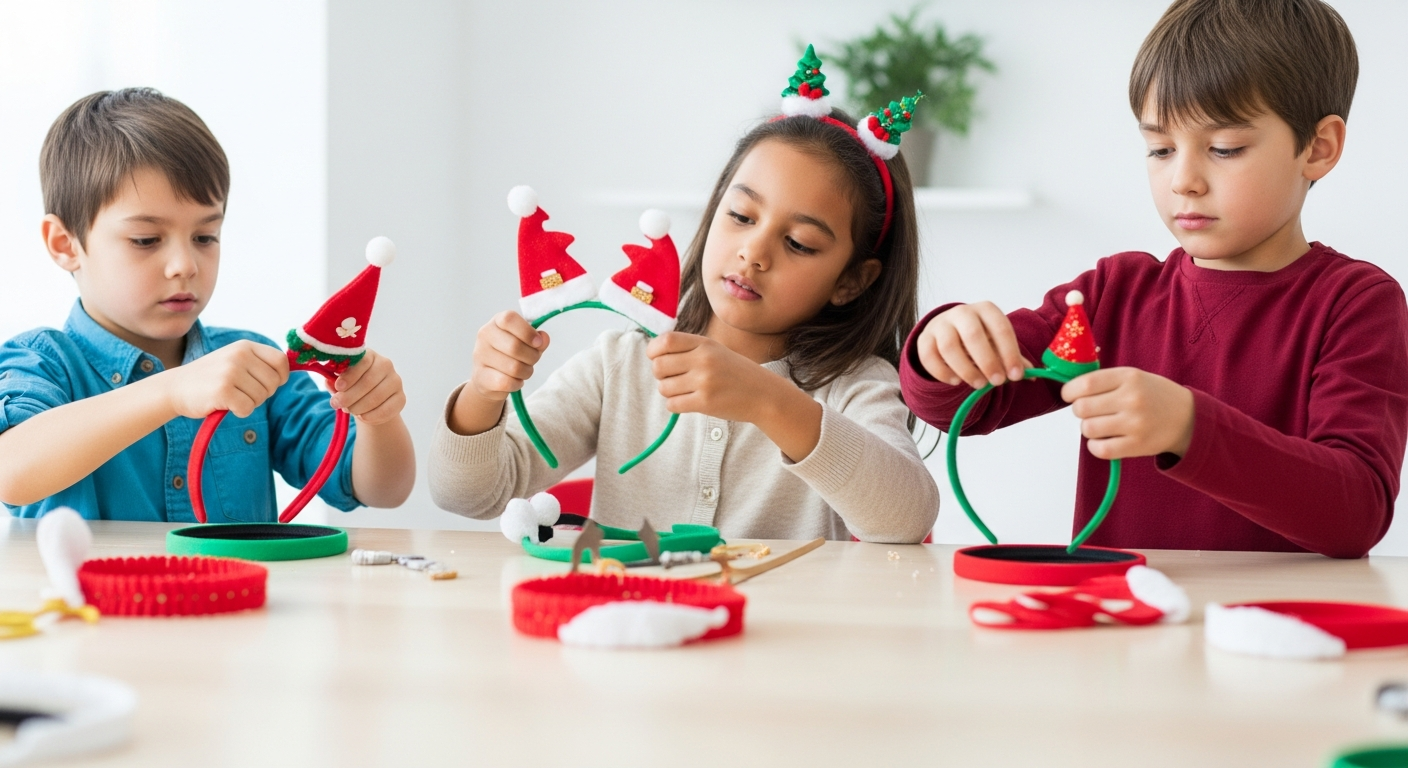
Table of Contents
- Introduction
- Why Christmas Crafts? More Than Just Fun
- Our Favorite Christmas Headband Crafts for Kids
- Enhancing Language and Communication Through Crafting
- Speech Blubs: Your Partner in Festive Communication
- Choosing the Right Speech Blubs Plan: Maximize Your Child's Progress
- Tips for a Smooth and Joyful Crafting Experience
- Conclusion
- FAQ
Introduction
As the holiday season twinkles into view, parents everywhere are looking for ways to capture that magical Christmas spirit with their children. Beyond the twinkling lights and delicious treats, there's an extraordinary joy to be found in hands-on activities that not only entertain but also secretly nurture crucial developmental skills. Think about it: a simple craft project isn't just about glue and glitter; it's a vibrant playground for budding imaginations, nimble fingers, and, perhaps most importantly, developing language. This post will guide you through crafting delightful Christmas headbands with your little ones, transforming ordinary materials into cherished festive accessories. More than just creating keepsakes, we'll explore how these joyful moments can be powerful opportunities to boost communication skills and foster a love for language, all while making memories that last a lifetime. Get ready to embark on a creative journey that strengthens little hands and opens up a world of words!

Why Christmas Crafts? More Than Just Fun
Engaging in Christmas crafts, especially projects like making headbands, offers a sleigh-full of benefits for children's development, far beyond simply keeping them occupied. It's a holistic learning experience wrapped in festive cheer.
Sensory Exploration and Fine Motor Skill Development
From the moment children touch a fluffy cotton ball, a piece of rough glitter paper, or sticky glue, they are engaging their senses. This sensory input is vital for brain development, helping them understand the world around them. Crafting directly supports the refinement of fine motor skills – those small, precise movements of the hands and fingers. Cutting with scissors, peeling stickers, drawing shapes, or carefully gluing tiny sequins all require coordination and dexterity. These skills are foundational for tasks like writing, buttoning clothes, and self-feeding, laying the groundwork for greater independence.
Nurturing Creativity and Imagination
A blank piece of paper or a simple craft base is an invitation to imagine. When crafting a Christmas headband, children aren't just following instructions; they're envisioning a reindeer with sparkling antlers or a snowman with a goofy smile. This process allows them to express themselves, make choices about colors and decorations, and bring their unique ideas to life. Fostering creativity helps children develop problem-solving skills, think outside the box, and approach challenges with an innovative mindset.
Following Instructions and Sequencing
Craft projects inherently involve a sequence of steps. "First, we cut the antlers, then we glue them, then we add glitter." This seemingly simple process helps children practice following multi-step directions, understanding cause and effect, and developing their sequencing abilities. These are critical cognitive skills that translate into academic success and everyday life, from getting dressed in the morning to understanding a story.
Language Development Opportunities
This is where the magic truly happens, especially from our perspective at Speech Blubs. Crafting provides a natural, low-pressure environment for language to flourish. As children engage with materials and create their headbands, they are constantly exposed to new vocabulary and opportunities for communication.

- Descriptive Language: "Look at the sparkly green paper!" "This glue is so sticky." "Can I have the fluffy cotton ball?"
- Action Verbs: "Let's cut the paper." "Please glue this here." "Can you stick the nose on?"
- Requesting: "More glitter, please!" "Can I have the red marker?"
- Commenting: "My reindeer is so cute!" "I love my tree!"
- Narrating: Explaining the steps they are taking, or describing their finished creation. "First I cut, then I glue, now it's finished!"
- Pre-Linguistic Skills: For our youngest crafters, activities like joint attention (focusing on the same object together), turn-taking (sharing materials), and pointing are all naturally encouraged.
Family Bonding and Connection
Perhaps one of the most heartwarming benefits of crafting together is the sheer joy of shared experience. These moments create lasting memories, strengthen family bonds, and provide a precious opportunity for parents to connect with their children in a meaningful way. It’s a chance to put aside distractions, engage face-to-face, and celebrate the season together.
For many parents, the holiday season can bring heightened awareness of their child's developmental milestones. If you ever find yourself wondering if your child could benefit from a little extra support with their communication, we invite you to take our quick 3-minute preliminary screener. It involves 9 simple questions and provides an assessment and a next-steps plan.
Our Favorite Christmas Headband Crafts for Kids
Let’s dive into some wonderfully festive and surprisingly simple Christmas headband crafts that are perfect for kids of all ages. Each project is designed to be engaging and offers fantastic opportunities for language practice.
Classic Reindeer Antlers Headband
The quintessential Christmas character, a reindeer headband is always a hit! This craft is fantastic for practicing animal sounds and descriptive words.
Materials:
- Brown construction paper or cardstock
- Scissors (child-safe)
- Glue stick or liquid glue
- Plain headband (an old one or a cheap plastic one)
- Optional: Red glitter, small bells, brown pipe cleaners, cotton balls (for "snow" on antlers)
Step-by-Step Instructions:
- Prepare the Antlers: Help your child draw two antler shapes on brown paper. They can be simple "Y" shapes or more branched, depending on their age and skill level. Encourage them to describe the shape: "They look like tree branches!"
- Cut the Antlers: Supervise as your child cuts out the antlers. This is excellent practice for fine motor control. Talk about the action: "You are cutting carefully!"
- Attach to Headband: Apply glue to the bottom of each antler. Help your child press them firmly onto the top of the headband, spaced appropriately. "Where should the antlers go?"
- Decorate: Now for the fun part! Add glitter to the tips, glue on cotton balls for a snowy effect, or wrap brown pipe cleaners around for extra texture. If they're making Rudolph, don't forget the bright red nose! Encourage them to describe what they are doing: "I am adding sparkly glitter!" or "This is soft cotton."
Speech Blubs Connection:
For a child who is expanding their vocabulary related to animals, making a reindeer headband is a perfect fit. You can practice sounds like "Neigh!" (if you imagine a horse-like reindeer sound) or simple phrases like "Run, run, run!" or "Big antlers!" After crafting, you could explore the "Animal Kingdom" section in the Speech Blubs app to reinforce animal names and sounds, helping to connect their real-world crafting experience with targeted speech practice. It’s a powerful supplement to their overall development plan!
Sparkly Christmas Tree Headband
Bring the sparkle and joy of a Christmas tree right to their heads! This craft is wonderful for color identification and learning about different shapes.
Materials:
- Green construction paper or cardstock
- Scissors (child-safe)
- Glue stick or liquid glue
- Plain headband
- Decorations: Glitter, sequins, small pom-poms, stickers, mini bows, cotton balls (for snow)
- Yellow paper or glitter foam for a star
Step-by-Step Instructions:
- Cut the Tree Shape: Help your child draw a simple triangle or a tiered Christmas tree shape on green paper. "What shape is a tree?" "It's a tall triangle!"
- Cut and Attach: Supervise as your child cuts out the tree and glues it upright to the headband. "We are making a green tree."
- Make a Star: Cut a small star from yellow paper or glitter foam. "What color is the star?"
- Decorate the Tree: This is where creativity shines! Let your child go wild with sequins, glitter, pom-poms, and stickers. Encourage them to name each item they place: "I'm putting a shiny sequin here!" "This is a red pom-pom."
- Place the Star: Glue the star to the top of the tree. "The star goes on top!"
Speech Blubs Connection:
This activity is fantastic for practicing descriptive words (shiny, green, tall), colors, and spatial concepts (top, on, under). You can encourage phrases like "decorate the tree" or "star on top." For children working on early vocabulary, the "Colors" or "Shapes" sections within Speech Blubs can further solidify these concepts through interactive video modeling, where children learn by watching and imitating their peers, fostering essential communication skills.
Jolly Santa Hat Headband
"Ho ho ho!" Every child loves Santa. This headband is great for practicing festive sounds and simple character descriptions.
Materials:
- Red construction paper or cardstock
- Cotton balls or white felt
- Scissors (child-safe)
- Glue stick or liquid glue
- Plain headband
Step-by-Step Instructions:
- Shape the Hat: Cut a tall, slightly curved triangle shape from red paper – this will be Santa's hat. "This is a red hat."
- Attach to Headband: Glue the bottom edge of the red hat shape to the headband.
- Add White Trim: Glue a strip of white felt or a row of cotton balls along the bottom edge of the red hat. "This is Santa's fluffy trim!"
- Add Pom-Pom: Glue a large cotton ball or a white pom-pom to the tip of the hat. "And here's the pom-pom!"
Speech Blubs Connection:
Making a Santa hat provides a perfect opportunity to practice sounds like "Ho ho ho!" or words like "red," "white," "fluffy." You can describe Santa: "He wears a red hat!" "He has a white beard!" For children learning action words, activities in Speech Blubs' "We Play" section, focusing on actions like put, glue, and make, can be a fun way to reinforce these concepts after the craft.
Adorable Elf Ears Headband
Get ready to help Santa in style with these cute elf ears! This craft encourages shape recognition and learning about body parts.
Materials:
- Green felt or construction paper
- Pink or peach felt or construction paper (for inner ear)
- Scissors (child-safe)
- Glue stick or liquid glue
- Plain headband
- Optional: Tiny bells, glitter glue
Step-by-Step Instructions:
- Cut Green Ears: Help your child draw two elongated, pointy ear shapes on green felt or paper. "Look at these pointy ears!"
- Cut Inner Ear: Cut smaller, similar shapes from pink or peach felt/paper for the inner ear.
- Assemble Ears: Glue the smaller pink/peach shapes onto the green shapes. "The pink goes inside the green."
- Attach to Headband: Glue the completed elf ears to the sides of the headband, positioning them to stick up. "Where do ears go?"
- Decorate: Add a tiny bell to the tip of each ear with hot glue (adult supervision required) or some glitter glue for a festive touch. "Listen to the bell!"
Speech Blubs Connection:
This craft is excellent for practicing words related to body parts ("ears"), colors ("green," "pink"), and descriptive terms ("pointy," "little"). You can talk about the sequence of actions: "First we cut, then we glue." For a child working on following multi-step directions, this craft allows for real-time practice. For further reinforcement, activities in Speech Blubs that focus on "My Body" or "Story Time" can help connect physical actions and body parts to language.
Snowman Smile Headband
Build a friendly snowman without the cold! This craft is great for practicing basic shapes, colors, and emotional expressions.
Materials:
- White construction paper or cardstock
- Orange construction paper (for nose)
- Black construction paper or marker (for eyes and mouth)
- Scissors (child-safe)
- Glue stick or liquid glue
- Plain headband
- Optional: Glitter, cotton balls, small twigs (adult supervision for twigs)
Step-by-Step Instructions:
- Cut Snowman Head: Help your child cut a large circle from white paper for the snowman's head. "What shape is the head?" "A round circle!"
- Cut Carrot Nose: Cut a small triangle from orange paper for the carrot nose. "It's an orange nose."
- Cut Eyes and Mouth: Cut two small circles for eyes and a curved line or several small circles for the mouth from black paper. "Black eyes and a happy smile."
- Assemble Face: Glue the eyes, nose, and mouth onto the white circle. Encourage your child to describe the snowman's expression: "He looks happy!"
- Attach to Headband: Glue the completed snowman face to the headband.
- Decorate: Add cotton balls for snow, or even tiny twigs for arms if desired. "More snow for the snowman!"
Speech Blubs Connection:
The snowman headband is ideal for practicing shapes (circle, triangle), colors (white, orange, black), and emotions ("happy," "friendly"). You can focus on phrases like "big smile" or "carrot nose." For a parent whose 3-year-old "late talker" loves playing with emotions and faces, activities in Speech Blubs' "Emotions" section offer a fun, motivating way to practice identifying and naming feelings, which can then be reinforced when making a snowman with a specific expression.
Angel Halo Headband
A touch of ethereal sparkle for your little angel! This craft is wonderful for practicing descriptive adjectives and gentle movements.
Materials:
- Gold or silver pipe cleaners (2-3 per halo)
- Gold or silver glitter foam (for optional star accents)
- Scissors (child-safe, for foam)
- Plain headband
- Optional: Ribbon, small feathers, beads
Step-by-Step Instructions:
- Form the Halo: Take one pipe cleaner and form a circle. Twist the ends together to secure. "Make a round circle."
- Attach to Headband: Take a second pipe cleaner, wrap one end around the halo circle, and the other end around the headband, securing the halo upright. You might need a third pipe cleaner to make it more stable, twisting it around both the halo and the headband. "Twist the shiny pipe cleaner."
- Decorate (Optional): Cut small stars from glitter foam and glue them onto the halo. Add ribbons or small feathers for a softer look. "It's so sparkly!"
Speech Blubs Connection:
This craft offers opportunities to use descriptive words like "shiny," "sparkly," "golden," "soft." You can talk about the shape of the halo and its placement: "The halo goes above your head." For children expanding their descriptive vocabulary, engaging with the Speech Blubs app's various categories helps them practice these new words in different contexts, seeing and imitating peers, solidifying their understanding and usage.
Enhancing Language and Communication Through Crafting
Beyond the joy of creation, Christmas headband crafts are rich with opportunities to develop essential communication skills. As parents, you are your child's first and most important language teacher, and these hands-on activities provide a perfect environment for incidental learning.
Descriptive Language
Every material, every color, every texture is a chance to introduce new adjectives. "Feel how fuzzy the cotton ball is!" "This glitter is so sparkly." "What a long piece of ribbon!" By narrating your actions and asking open-ended questions, you invite your child into a world of words, helping them build a rich descriptive vocabulary.
Action Verbs
Crafting is a highly active process, involving a myriad of verbs. "Let's cut the paper." "Can you glue the eyes?" "Time to stick the star on top!" Repeated exposure to these action words in context helps children understand and use them accurately. Encourage your child to use the verbs themselves: "What are you doing?"
Following Directions
Most crafts involve a sequence of steps. This is a natural way to practice following multi-step directions. "First, get the scissors. Then, cut the antlers. After that, we'll glue them." Breaking down tasks into smaller, manageable steps supports comprehension and helps develop their ability to listen and process information, which is a key pre-literacy skill.
Problem-Solving and Explaining
Sometimes things don't go as planned – the glue doesn't stick, or a piece tears. These moments are invaluable for problem-solving. "Oh no, the antler fell off! What should we do?" Encourage your child to vocalize their ideas and explain their solutions. This fosters critical thinking and narrative skills.
Narrative Skills
As children craft, they are essentially creating a story. "First, I made the hat. Then, I put the fluffy trim. And now, Santa is ready!" Encouraging them to narrate their process, or tell you about their finished headband, helps them practice sequencing events and organizing their thoughts into coherent sentences.
Pre-Linguistic Skills
For younger children who may not yet be speaking in full sentences, crafting still offers immense value. Joint attention (looking at the same object together), turn-taking (sharing the glue), imitation (copying your movements), and pointing are all crucial pre-linguistic skills that naturally emerge during these activities. These are the building blocks of communication that pave the way for spoken language.
Speech Blubs: Your Partner in Festive Communication
At Speech Blubs, we believe every child deserves to "speak their minds and hearts." We understand the unique challenges some children face because our company was born from the personal experiences of our founders, who all grew up with speech problems and created the tool they wished they had. We are deeply committed to providing an immediate, effective, and joyful solution for the 1 in 4 children who need speech support, blending scientific principles with play into one-of-a-kind "smart screen time" experiences.
Our app provides a screen-free alternative to passive viewing, like cartoons. Instead of just watching, children learn actively through our unique "video modeling" methodology, where they observe and imitate their peers. This approach harnesses the power of mirror neurons, encouraging children to repeat words and sounds, building confidence and fostering a love for communication.
Imagine a parent whose 3-year-old "late talker" adores animals. While making a reindeer headband, they can practice "run" or "antlers." Then, by transitioning to the "Animal Kingdom" section of the Speech Blubs app, the child can see and imitate other children making animal sounds and actions, reinforcing the vocabulary learned during crafting. This seamless integration of real-world activities and targeted app practice creates powerful learning moments.
We understand that you want the best for your child, and we strive to provide realistic expectations. Speech Blubs is a powerful supplement to your child's overall development plan and can work wonderfully alongside professional therapy. Our goal is to reduce frustration, build confidence, and create joyful family learning moments, helping children develop key foundational skills. We are proud that our method is backed by science, placing us in the top tier of speech apps worldwide, as detailed on our research page.
Choosing the Right Speech Blubs Plan: Maximize Your Child's Progress
We want to make sure every family can access the incredible benefits of Speech Blubs. We offer two clear plan options, designed to fit your needs, but one truly stands out in value.
Our Monthly Plan is available for $14.99 per month. It provides access to the core Speech Blubs experience.
However, for the best value and a truly comprehensive experience, we highly recommend our Yearly Plan, priced at just $59.99 per year. This breaks down to an incredible $4.99 per month, allowing you to save 66% compared to the monthly option!
The Yearly Plan isn't just cheaper; it comes with exclusive, high-value features designed to supercharge your child's communication journey:
- A 7-day free trial: Experience the full power of Speech Blubs before committing.
- The extra Reading Blubs app: An additional resource focused on early literacy, complementing speech development.
- Early access to new updates: Be among the first to explore exciting new features and content.
- 24-hour support response time: Get prompt assistance whenever you need it.
The Monthly Plan does not include these valuable benefits. To unlock the full potential of Speech Blubs, including a 7-day free trial and all the exclusive features, we encourage you to choose the Yearly Plan. This investment means more tools, more support, and more opportunities for your child to thrive.
Ready to see the difference Speech Blubs can make? Start your 7-day free trial today and choose the Yearly Plan to begin your journey to confident communication.
Tips for a Smooth and Joyful Crafting Experience
To ensure your Christmas headband crafting session is filled with smiles and minimal stress, here are some practical tips:
- Prepare Materials in Advance: Before you call your little crafters, gather all the necessary papers, glues, scissors, and decorations. This prevents interruptions and keeps the momentum going.
- Set Up a Dedicated Space: Choose an area that's easy to clean – a kitchen table covered with an old newspaper or plastic tablecloth is perfect. Having a designated craft zone helps children understand boundaries and makes cleanup simpler.
- Allow for Mess: Crafting with kids is often messy, and that's okay! Embrace the glitter, the glue, and the scattered paper. It's part of the creative process and the fun.
- Focus on Process, Not Just Product: The goal isn't a museum-worthy masterpiece; it's the experience of creating, exploring, and communicating. Celebrate your child's effort and unique choices, regardless of how the final headband looks.
- Engage with Questions and Conversation: This is your prime opportunity for language development! Ask open-ended questions ("What color should we use next?"), narrate your actions ("I'm cutting a big star!"), and encourage your child to talk about what they're doing and seeing.
- Be Patient and Encouraging: Crafting can sometimes be challenging for little hands. Offer gentle guidance and plenty of positive reinforcement. "You're trying so hard!" "Great job cutting that line!"
- Adapt to Age and Skill Level: Simplify crafts for younger children (pre-cut shapes, fewer steps) and offer more complex challenges for older ones (intricate cutting, independent design). Remember, it's about meeting them where they are.
- Showcase Their Work: Once their Christmas headbands are complete, display them proudly! Let your child wear it, hang it on the tree, or photograph them wearing their creation. This boosts their confidence and sense of accomplishment.
Making Christmas headbands together is more than just a holiday activity; it's an investment in your child's development, a boost to their communication skills, and a wonderful way to connect as a family. Embrace the festive fun and the learning opportunities it brings!
Conclusion
As we've explored, creating festive Christmas headbands with your children is a delightful holiday tradition that offers a bounty of developmental benefits. From strengthening fine motor skills and sparking creativity to, most importantly, fostering rich language and communication, these simple crafts are powerful tools for growth. Each snip of the scissors, every dab of glue, and every choice of glitter becomes an opportunity to build vocabulary, practice following directions, and engage in meaningful conversations.
At Speech Blubs, we champion every child's journey to express themselves confidently and joyfully. Our app, built on scientific principles and the unique video modeling method, provides a "smart screen time" solution that complements these hands-on activities, making communication development a fun and interactive experience. By blending festive crafting with our innovative tools, you're not just creating a cute accessory; you're building a foundation for a lifetime of confident communication and joyful family connection.
Are you ready to make this holiday season even more special with crafts that teach and a powerful app that empowers? Dive into the world of speech-boosting fun today! Download Speech Blubs on the App Store or Get Speech Blubs on Google Play to embark on your child's communication journey. Remember, for the best value and access to all our exclusive features, including a 7-day free trial and the Reading Blubs app, choose our Yearly Plan! See what other parents are saying about their child's success with Speech Blubs by visiting our testimonials page.
FAQ
Q1: What age group are these Christmas headband crafts best suited for?
These crafts are highly adaptable and suitable for a wide range of ages, generally from toddlers (with significant adult assistance) up to early elementary school children. For toddlers, focus on simpler steps like gluing pre-cut shapes and supervising their interactions with materials. Older children can handle more intricate cutting, independent design choices, and more complex multi-step instructions, offering a richer language development opportunity. Always prioritize child-safe scissors and non-toxic glues.
Q2: How do crafting activities specifically help with speech and language development?
Crafting provides a natural, engaging environment for language learning. As children participate, they are exposed to new vocabulary (e.g., "sparkly," "sticky," "pipe cleaner"), action verbs (e.g., "cut," "glue," "attach"), and descriptive adjectives (e.g., "red," "fluffy," "pointy"). They practice following directions, sequencing events, and narrating their actions. This hands-on context makes abstract words concrete and gives children a reason and opportunity to communicate, both receptively (understanding) and expressively (speaking).
Q3: Do I need to buy special materials for these Christmas headbands, or can I use what I have at home?
Many of these crafts can be made with common household items or inexpensive craft supplies. Construction paper, cotton balls, glue sticks, and plain headbands are often readily available. While special items like glitter foam or pipe cleaners add extra sparkle, you can easily substitute them with things like aluminum foil, fabric scraps, or colored paper. The emphasis is on creativity and engagement, not expensive materials.
Q4: How can Speech Blubs integrate with or enhance these crafting activities?
Speech Blubs perfectly complements hands-on activities like Christmas headband crafting by providing targeted practice and reinforcement of language skills. For example, if you're making a reindeer, you can practice animal sounds or action verbs ("run, run, run!"). Then, you can transition to the Speech Blubs app to explore sections like "Animal Kingdom" or "We Play" to see and imitate peers, strengthening those same sounds and words in a fun, interactive "smart screen time" environment. This dual approach helps children connect words to real-world experiences and digital learning, fostering a holistic approach to communication development. We encourage adults to co-play with children during app use to maximize learning and interaction. Find out more about how we help on the Speech Blubs website.
About the author