
Festive Christmas Kids Games for Joyful Family Fun
 By Speech Blubs Team•Dec 23, 2025•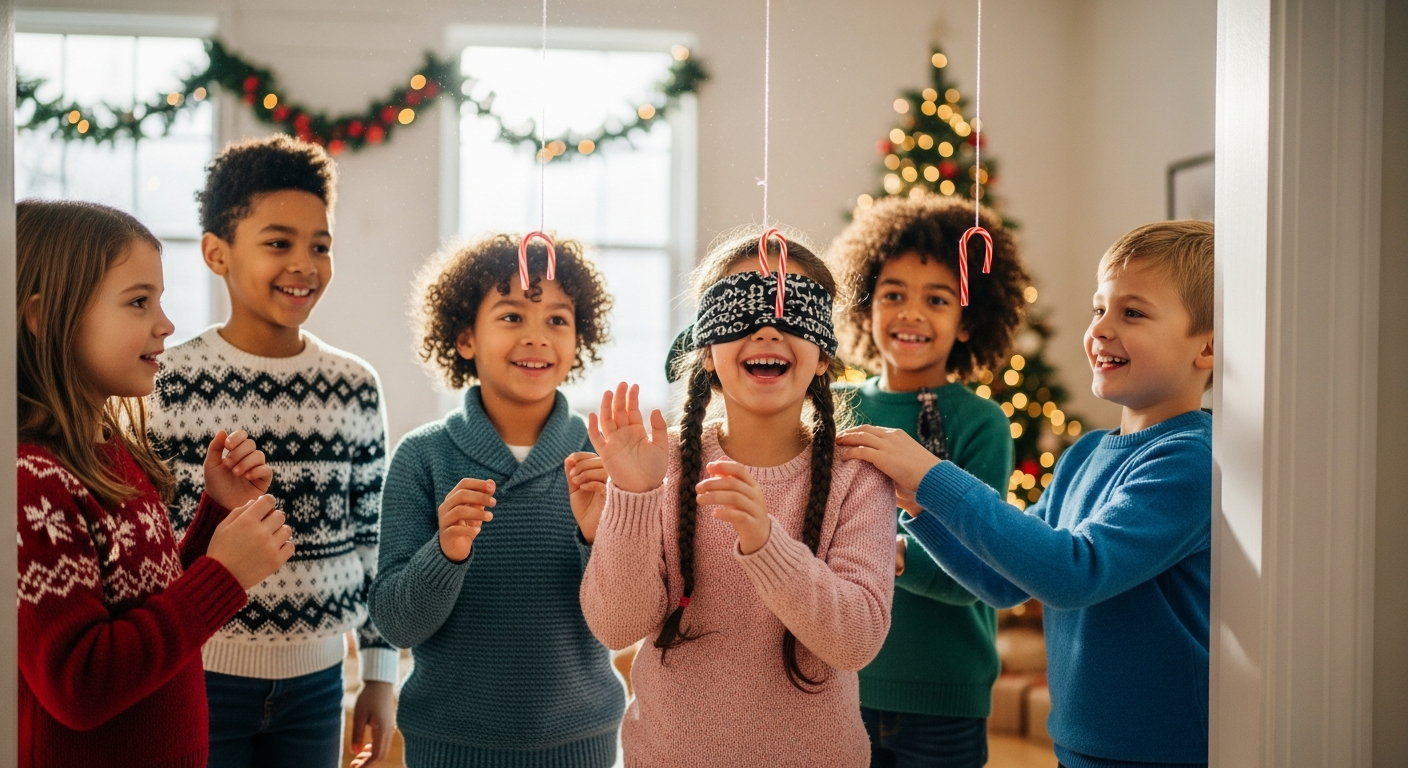
Table of Contents
- Introduction
- The Power of Play: How Games Boost Speech and Language
- Easy Holiday Party Games for All Ages
- Preschool Christmas Party Games: Little Learners, Big Fun
- Elementary School Xmas Party Games: Engaging and Energetic
- Middle & High School Christmas Party Games: Social and Strategic
- Outdoor Christmas Party Games for Kids: Fresh Air Fun
- Speech Blubs: Your Partner in Communication Development
- Spreading Holiday Cheer and Boosting Communication
- Frequently Asked Questions (FAQ)
Introduction
The holiday season twinkles with a unique magic, painting memories that glow in our hearts long after the last ornament is packed away. For many families, this period is a cherished opportunity to gather, connect, and celebrate. Yet, for parents navigating the wonderful, sometimes challenging, journey of child development, the holidays can also be a golden chance to foster crucial communication skills through the most joyful medium: play.
Imagine a living room filled with laughter, the sweet scent of gingerbread, and the sound of little voices excitedly naming colors on a decorated cookie or mimicking reindeer sounds in a spirited game. These aren't just moments of fun; they are invaluable learning experiences, building blocks for language, social interaction, and emotional expression. At Speech Blubs, we believe deeply in empowering children to "speak their minds and hearts," and the holiday season, with its inherent joy and opportunities for connection, provides the perfect backdrop for this mission.
This blog post is your comprehensive guide to transforming ordinary festive gatherings into extraordinary opportunities for speech and language growth. We’ll explore a delightful array of Christmas kids games, tailored for various ages and settings, while subtly weaving in how these playful interactions lay the groundwork for confident communication. From the boisterous energy of a "Snowball Relay" to the quiet concentration of a "Holiday I Spy," we’ll show you how to choose, adapt, and maximize these games to encourage vocalization, vocabulary expansion, listening skills, and social confidence. Our goal is to equip you with engaging ideas that make learning to communicate a joyful, natural part of your family’s holiday traditions, reinforcing the very principles we embrace in our own scientifically-backed approach to speech development.
The Power of Play: How Games Boost Speech and Language
Play is often called the "work of children," and for good reason. It's through play that children explore the world, experiment with social rules, and, critically, develop language. Christmas games, with their inherent festive themes and built-in excitement, amplify these benefits, creating a stimulating environment for communication growth. When children are engaged and having fun, they are more receptive to learning new words, imitating sounds, and expressing themselves.
Think about the simple act of playing "Santa Says." This isn't just a game of following directions; it's an exercise in auditory processing, memory, and even motor planning as children respond to commands like "Santa says touch your red nose" or "Santa says say 'ho ho ho!'" Such activities encourage:
- Vocabulary Expansion: Naming objects, colors, and actions related to the game.
- Listening Skills: Paying close attention to instructions and cues.
- Imitation: Mimicking sounds, words, and actions – a cornerstone of early speech development, much like the video modeling methodology we champion at Speech Blubs.
- Turn-Taking: Learning the rhythm of conversation and social interaction.
- Confidence Building: Experiencing success and encouragement in expressing themselves.
These foundational skills are what we aim to nurture at Speech Blubs. Our founders, who themselves navigated speech challenges, envisioned a tool that transforms screen time from passive viewing into active, "smart screen time" – a concept perfectly complemented by interactive holiday games. We’ve seen firsthand how blending scientific principles with play creates one-of-a-kind experiences that genuinely help children thrive.
Easy Holiday Party Games for All Ages
Let's dive into some timeless classics that shine during the holidays, perfect for gatherings with a mix of ages. These games foster interaction and create shared experiences that naturally encourage communication.
Christmas Bingo: A Festive Learning Game
Christmas Bingo is a fantastic, versatile game that never fails to engage. You can create custom bingo cards featuring holiday symbols like candy canes, presents, snowmen, or even words like "joy" and "elf." For younger children, picture-based cards help with object recognition and vocabulary. For older kids, word-based cards can reinforce reading skills. Using small candy pieces as markers adds a sweet incentive!
- Speech Blubs Connection: As you call out items, encourage children to vocalize what they see or hear. "Who has a tree? Can you say tree?" This active engagement helps them connect the visual image with the spoken word. The repetitive nature of Bingo is also excellent for reinforcing new vocabulary, much like how Speech Blubs uses repetition in engaging contexts to embed new sounds and words.
To make it even more interactive, consider having players make specific sound effects when certain items are called – a "ho ho ho" for Santa or "jingle jingle" for bells. This adds an element of fun vocalization and active listening.
Gingerbread House Decorating Contest: Sweet Communication
A gingerbread house decorating contest is a wonderful way to unleash creativity and encourage descriptive language. Divide participants into teams or work individually, providing each with a basic gingerbread house kit, plenty of frosting, and an assortment of candies and decorations.
- Speech Blubs Connection: This activity is a treasure trove for language development. Encourage children to describe what they are doing: "I'm putting white frosting on the roof!" or "I need a round red candy for the door." Ask open-ended questions: "What kind of house are you building?" "Tell me about your design." These interactions encourage longer sentences, descriptive vocabulary, and expressive communication. It's a prime example of how adult co-play and support enhance learning, a core philosophy behind our app.
Provide additional materials like pretzel rods for fences, shredded coconut for snow, and various candies for creative landscaping. Creating fun categories like "Most Architectural," "Best Winter Wonderland Scene," or "Most Colorful Design" ensures everyone feels like a winner and provides more opportunities to use descriptive language during judging.
Cookie Decorating Competition: Edible Art and Eloquence
Similar to gingerbread houses, cookie decorating competitions are crowd-pleasers. Use plain Christmas cookies and provide a variety of frostings, sprinkles, and edible decorations.
- Speech Blubs Connection: As children decorate, they can talk about their choices: "I'm making a green tree with star sprinkles." This helps them practice colors, shapes, and action verbs. For a child who might be a "late talker," simply naming the colors of sprinkles or the shapes of cookies is a great starting point for verbal interaction. This low-pressure, high-reward activity builds confidence in vocalizing preferences and observations.
Set up decoration stations with different colored frostings, piping bags, and an array of toppings. You might even demonstrate basic decorating techniques, introducing new vocabulary like "swirl," "drizzle," or "pipe." Encourage children to describe their creations or even invent stories about their decorated cookies.
Preschool Christmas Party Games: Little Learners, Big Fun
For our youngest communicators, keeping activities simple, engaging, and focused on basic concepts is key. These games build foundational speech and language skills in a playful, low-pressure environment.
Santa Says: A Festive Twist on a Classic
"Santa Says" (a holiday version of Simon Says) is perfect for developing listening skills and encouraging imitation. Children follow commands like "Santa says touch your red nose" or "Santa says march like a toy soldier."
- Speech Blubs Connection: This game directly taps into imitation, a critical skill for speech development. When Santa says "Say 'Ho ho ho!'" or "Make a reindeer sound!" children are prompted to produce specific sounds and words. It’s an interactive way to practice articulation and vocalizations, mirroring the peer-to-peer video modeling methodology that makes Speech Blubs so effective. For a parent whose 3-year-old 'late talker' loves animals, "Santa Says" with animal actions can be a fantastic way to practice new sounds, similar to how our 'Animal Kingdom' section uses fun, peer-led videos to encourage sounds like 'moo' and 'baa.'
Add festive commands like "Santa says wrap a present," "Santa says decorate the tree," or "Santa says ride in the sleigh." The leader can wear a Santa hat and speak in a jolly voice, making the experience even more immersive and fun for language practice.
Freeze Dance with Holiday Tunes
Freeze dance becomes extra festive with a playlist of upbeat holiday music. When the music stops, kids must freeze like snowmen!
- Speech Blubs Connection: This game encourages motor imitation and following auditory cues. You can add a layer of language by having children describe their "frozen" pose or make sounds related to it. "Are you a snowman? What sound does a snowman make?" (silence, or a shiver sound!). The joyful movement also reduces inhibitions, making children more likely to experiment with vocalizations and expressive movements.
Create a playlist of upbeat holiday songs and mix in some traditional favorites. Encourage creative movement by suggesting different holiday characters to imitate, such as elves making toys, reindeer flying, or Christmas trees swaying in the wind.
Sort the Christmas Tree Ornaments: Categorizing for Cognition
Sorting Christmas tree ornaments helps develop color recognition, counting, and categorization skills. Provide various plastic ornaments and have children sort them by color, size, or shape.
- Speech Blubs Connection: This activity is fantastic for building foundational language concepts. As children sort, encourage them to name the colors ("This is red!"), sizes ("This is big!"), and shapes ("This is round!"). For children working on early sentence structures, you can model phrases like "Put the blue ball in the box." This builds vocabulary and the ability to combine words meaningfully.
Make it cooperative by working together to decorate a classroom tree with the sorted ornaments, turning a simple sorting task into a shared, language-rich experience.
Holiday I Spy: Sharpening Observational Vocabulary
Holiday I Spy engages observation skills and introduces Christmas vocabulary. Create a festive scene (or use a printable) and have children find specific items.
- Speech Blubs Connection: This game directly targets descriptive language and object identification. For very young children, start with obvious items like "something red" or "something that sparkles." As they develop, introduce more specific vocabulary: "I spy something that Santa delivers," or "I spy a small, shiny star." This encourages them to use adjectives and nouns, fostering richer descriptive language. This kind of focused attention and labeling is similar to how Speech Blubs uses targeted activities to help children identify and name objects in their environment.
Add complexity for older preschoolers by including more specific items or counting elements. This game helps develop vocabulary, observation skills, and patience, all while immersed in holiday cheer.
Elementary School Xmas Party Games: Engaging and Energetic
For elementary school-aged children, activities that incorporate a bit more competition, strategy, and creativity are often a hit. These games encourage more complex language use and social interaction.
Snowball Race: Coordination and Communication
The snowball race involves using plastic spoons to transfer cotton balls ("snowballs") from one container to another. Teams race against each other or the clock.
- Speech Blubs Connection: This game offers opportunities for directive language ("Go! Faster!"), encouragement ("You can do it!"), and problem-solving discussions ("How can we go quicker?"). It also naturally creates a context for explaining rules, cheering on teammates, and discussing strategies, all of which enhance conversational skills and active listening.
This activity is great for developing hand-eye coordination and can be made into a team relay, fostering teamwork and communication among peers. If a child drops a "snowball," they might need to articulate what happened or ask for help, further prompting verbal interaction.
Pin the Nose on the Reindeer: A Festive Favorite
Pin the Nose on the Reindeer updates the classic party game with a holiday twist. Blindfolded players try to place a red pompom nose on a large reindeer picture.
- Speech Blubs Connection: This game involves following multi-step directions ("Walk forward three steps, now turn left"), spatial vocabulary ("up," "down," "left," "right"), and descriptive feedback from peers ("You're close!" "A little to the right!"). It’s a fun way to practice and understand directional language in a playful context, building skills that are transferable to everyday communication.
Create a large reindeer face on poster board and make it more challenging by having players spin three times before attempting to place the nose. Keep track of each attempt by writing players' names near their placed noses, which can also lead to discussions about "who was closest" and "why."
Candy Cane Hunt: Sweet Discovery
A candy cane hunt puts a holiday spin on an Easter egg hunt. Hide candy canes around the space and give each child a small basket or bag.
- Speech Blubs Connection: This game encourages children to use language to describe where they found items ("I found one under the chair!"), count how many they have, and compare their finds with others. You can add descriptive elements by hiding different colored or sized candy canes and encouraging children to describe their specific finds ("I found a big red-and-white one!"). This reinforces adjectives and prepositions, enriching their expressive language.
Make it more challenging by assigning different point values to different candy cane sizes or colors, prompting more complex counting and comparison language.
Holiday Mad Libs: Hilarious Grammar Practice
Holiday Mad Libs create laugh-out-loud stories with a Christmas theme, helping children practice parts of speech while creating silly tales about Santa's workshop or reindeer adventures.
- Speech Blubs Connection: This game is a fantastic, playful way to reinforce grammar and vocabulary. By asking for "a noun," "an adjective," or "an action verb," children are actively engaging with linguistic categories and expanding their word knowledge. The silliness of the resulting stories makes learning enjoyable and memorable, reducing any pressure associated with grammar exercises. This activity helps children understand how different types of words function in sentences, a crucial step toward complex communication.
Create custom stories about holiday traditions or Santa's preparations. Before playing, review different parts of speech with the group and provide examples. After completing each story, have volunteers act it out for additional entertainment, further promoting expressive and performance-based communication.
Middle & High School Christmas Party Games: Social and Strategic
Older kids appreciate more sophisticated activities that encourage social interaction, strategic thinking, and often, a bit of friendly competition. These games provide a rich environment for advanced conversational skills and group dynamics.
White Elephant Gift Exchange: Generosity and Giggles
White elephant gift exchanges teach the art of giving and receiving with good humor. Set a reasonable price limit and encourage creative wrapping.
- Speech Blubs Connection: This game is ripe for social language practice. Participants use language to describe gifts ("It's a mystery box!"), negotiate ("I'll trade you for that!"), express surprise or disappointment, and strategize. It's an excellent exercise in turn-taking, persuasive language, and understanding social cues in a fun, low-stakes environment.
Consider themed exchanges like "only red and green items" or "must be useful in winter" to add another layer of descriptive language to the gift descriptions.
Shake the Snowballs Out: Boisterous Fun
"Shake the snowballs out" is a hilarious party starter. Players tie a tissue box filled with ping pong balls around their waist and must shake them all out without using their hands.
- Speech Blubs Connection: While primarily a physical game, the laughter and excitement it generates create a natural context for spontaneous vocalizations, exclamations, and encouragement. Players might shout "Go! Go! Go!" or describe their efforts with words like "Wiggle!" or "Shake it!" This type of uninhibited expression is valuable for building vocal confidence.
Make tissue box "backpacks" using ribbon or string and fill each box with ping pong balls. Create tournament brackets for multiple rounds of competition, leading to more opportunities for social banter and cheering.
Holiday Charades: Expressive Communication
Holiday Charades gets everyone moving and laughing. Include modern references along with traditional holiday themes. Categories might include Christmas movies, songs, traditions, and characters.
- Speech Blubs Connection: Charades is a powerful tool for non-verbal communication and understanding, which underpins verbal language. It encourages expressive gestures, understanding of concepts, and the ability to articulate guesses. For a parent whose child is shy about speaking up, this game can be a gentle, low-pressure way to encourage expression through actions, much like how our app introduces new words through engaging actions from peers. It helps children connect abstract concepts to physical representations, improving their overall communication fluidity.
Divide players into teams and encourage a wide range of holiday-themed ideas, from "Santa riding a sleigh" to "decorating a gingerbread man."
Christmas Movie Trivia: Knowledge and Nuance
Christmas movie trivia appeals to competitive spirits. Create multiple-choice questions about popular holiday films, from classics to contemporary favorites.
- Speech Blubs Connection: This game requires active listening, recall, and the ability to articulate answers clearly. In team play, it fosters collaborative discussion, negotiation of answers, and the explanation of reasoning ("I think it's 'Elf' because..."). It's excellent for developing complex conversational skills and verbal reasoning.
Consider team play to encourage cooperation and discussion. You can also vary the difficulty of questions to cater to different age groups or knowledge levels, ensuring everyone feels included and challenged.
Outdoor Christmas Party Games for Kids: Fresh Air Fun
When the weather permits, taking the festivities outside adds another layer of excitement and opportunity for energetic play and open-air communication.
Snow Paint: Colorful Creativity
Snow paint activities let children express creativity on a unique canvas. Mix food coloring and water in spray bottles to let kids create colorful designs in the snow.
- Speech Blubs Connection: As children paint, they can describe the colors they are using ("I'm making a blue snowflake!"), the shapes they are creating, and the stories behind their snow art. This open-ended activity encourages imaginative play and descriptive language, allowing children to practice new vocabulary in a novel and exciting way.
Encourage them to work together on a large snow mural, prompting discussions and collaborative language use.
Snowman Building Competition: Teamwork and Talk
A snowman building competition brings out team spirit and creativity. Provide traditional accessories like carrots and scarves, as well as unexpected items like sports equipment or holiday decorations.
- Speech Blubs Connection: This is a fantastic opportunity for planning, directing, and collaborating verbally. Teams must discuss their design, assign roles, and give instructions to each other ("Roll the snowball bigger!" "Put the hat on top!"). This fosters teamwork, negotiation, and the use of imperative and descriptive language in a real-world, dynamic context.
Award prizes for categories like "Most Original" and "Most Holiday Spirit," leading to further discussions and descriptions of their creations.
Christmas Obstacle Course: Active Language and Following Directions
Design a Christmas obstacle course using holiday-themed challenges. Players might crawl through "Santa's tunnel," toss "presents" into a chimney, and weave through candy cane poles.
- Speech Blubs Connection: This activity is rich in directional language, prepositions, and action verbs. As children navigate the course, they follow instructions ("Crawl under the blanket, then step over the rope"). When it's their turn, they can describe what they are doing or cheer on others, using words like "jump," "climb," "balance," and "through." This active learning helps children internalize these concepts through physical experience.
Add festive music to increase excitement. Create stations that incorporate different skills: balancing on a "frozen pond" (blue tarp), delivering presents (carrying boxes while navigating obstacles), and "flying" through ribbon hoops. You might also consider team relay versions for larger groups, enhancing team communication.
Campfire Storytelling: Nurturing Narrative Skills
Campfire storytelling creates a cozy atmosphere for sharing holiday memories and traditions. Serve hot chocolate and encourage everyone to contribute a story.
- Speech Blubs Connection: Storytelling is a cornerstone of advanced language development. It cultivates narrative skills, imagination, and the ability to sequence events, describe characters, and convey emotions. Children can share favorite holiday memories, invent tales about North Pole adventures, or even contribute to a collaborative story. This activity fosters active listening and provides a supportive environment for expressive language, helping children articulate their thoughts and feelings.
This relaxed setting is ideal for encouraging children to "speak their minds and hearts," sharing personal experiences or imaginative narratives, a core value we uphold at Speech Blubs.
Speech Blubs: Your Partner in Communication Development
While these festive games provide incredible opportunities for natural language development, sometimes children need a little extra support on their communication journey. That's where Speech Blubs comes in, offering a unique blend of science-backed methodology and engaging play. We believe that every child deserves the chance to communicate confidently, and our app is designed to provide that immediate, effective, and joyful solution for the 1 in 4 children who need speech support.
Our commitment to empowering children stems from the personal experiences of our founders, who all grew up with speech problems and created the tool they wished they had. We've harnessed the power of "video modeling," where children learn by watching and imitating their peers, fostering a love for communication and building confidence in a way that traditional passive screen time cannot. Our approach is backed by extensive research and has earned us a top-tier MARS scale rating, proving our effectiveness.
We understand that parents are looking for tools that are not only effective but also easy to integrate into busy family life. Speech Blubs offers a screen-free alternative to passive viewing, transforming device time into a powerful tool for family connection and "smart screen time." Through engaging activities and a positive learning environment, we focus on fostering a love for communication, building confidence, reducing frustration, and developing key foundational skills, all while creating joyful family learning moments.
Spreading Holiday Cheer and Boosting Communication
Whether you're hosting a classroom party, a family gathering, or a neighborhood celebration, incorporating a mix of active games, creative projects, and engaging activities ensures everyone finds something to enjoy. These festive moments are not just about fun; they are powerful opportunities to nurture essential speech and language skills. Capturing photos of these moments helps preserve the holiday memories for years to come, reminding you of the laughter and the learning.
Remember, every giggle, every shouted answer, and every shared story is a step forward in your child's communication journey. These Christmas kids games are more than just entertainment; they are invaluable tools for connection, growth, and joy.
Ready to give your child the gift of confident communication this holiday season and beyond? Download Speech Blubs on the App Store or Google Play Store and begin your 7-day free trial today! For the best value, choose our Yearly plan at just $59.99 per year (breaking down to only $4.99/month), and save 66% compared to the Monthly plan. The Yearly plan also includes exclusive features like the extra Reading Blubs app, early access to new updates, and 24-hour support response time. The Monthly plan, priced at $14.99 per month, does not include these incredible benefits. Make the most of your child's learning by choosing the Yearly plan to unlock their full communication potential.
Unsure if your child could benefit from speech support? Take our quick 3-minute preliminary screener to get a simple assessment and a free 7-day trial. You can also explore testimonials from other parents who have seen amazing progress with Speech Blubs.
Frequently Asked Questions (FAQ)
1. How can Christmas games specifically help my child's speech development?
Christmas games provide natural, low-pressure environments for children to practice various speech and language skills. For instance, games like "Santa Says" encourage listening and imitation, while "Gingerbread House Decorating" prompts descriptive language. The festive context makes learning fun and memorable, increasing a child's motivation to vocalize, ask questions, and follow directions, all of which are crucial for speech development. These activities also boost social interaction and turn-taking, which are foundational for conversational skills.
2. What age groups are these Christmas kids games suitable for?
The games listed are highly adaptable for a wide range of ages. For preschoolers, focus on simple games that involve color and object recognition, like "Holiday I Spy" or basic "Santa Says" commands. Elementary school children can enjoy more competitive games like "Snowball Race" or creative activities like "Holiday Mad Libs" that build more complex language skills. For middle and high schoolers, games like "White Elephant" or "Christmas Movie Trivia" encourage social interaction, strategic thinking, and advanced conversational abilities. Many games can be modified to suit mixed age groups, ensuring everyone can participate and learn together.
3. How does Speech Blubs fit into holiday play for speech development?
Speech Blubs complements holiday play by offering targeted, engaging "smart screen time" that reinforces the communication skills practiced during games. While games provide real-world interaction, Speech Blubs uses its unique video modeling approach to help children learn new sounds and words by imitating their peers. The app can be a fun warm-up before a game or a focused activity to target specific sounds. It's a powerful supplement that transforms passive screen time into an active, joyful learning experience, aligning with our mission to empower children to "speak their minds and hearts."
4. What are the best ways to encourage reluctant speakers to participate in holiday games?
For reluctant speakers, the key is to create a supportive and pressure-free environment. Start with games that have minimal verbal requirements but offer rich opportunities for observation and imitation, such as "Freeze Dance" or "Holiday Charades." Focus on positive reinforcement for any vocalization or participation, no matter how small. Offer choices ("Do you want the red frosting or the green?"), which empowers them. Adults can model language by narrating actions or making sounds, creating a safe space for the child to eventually join in. Remember, the goal is joyful engagement, not perfect articulation, which builds confidence over time.