
Festive Christmas Ornament Crafts for Kids
 By Speech Blubs Team•Dec 22, 2025•18 min.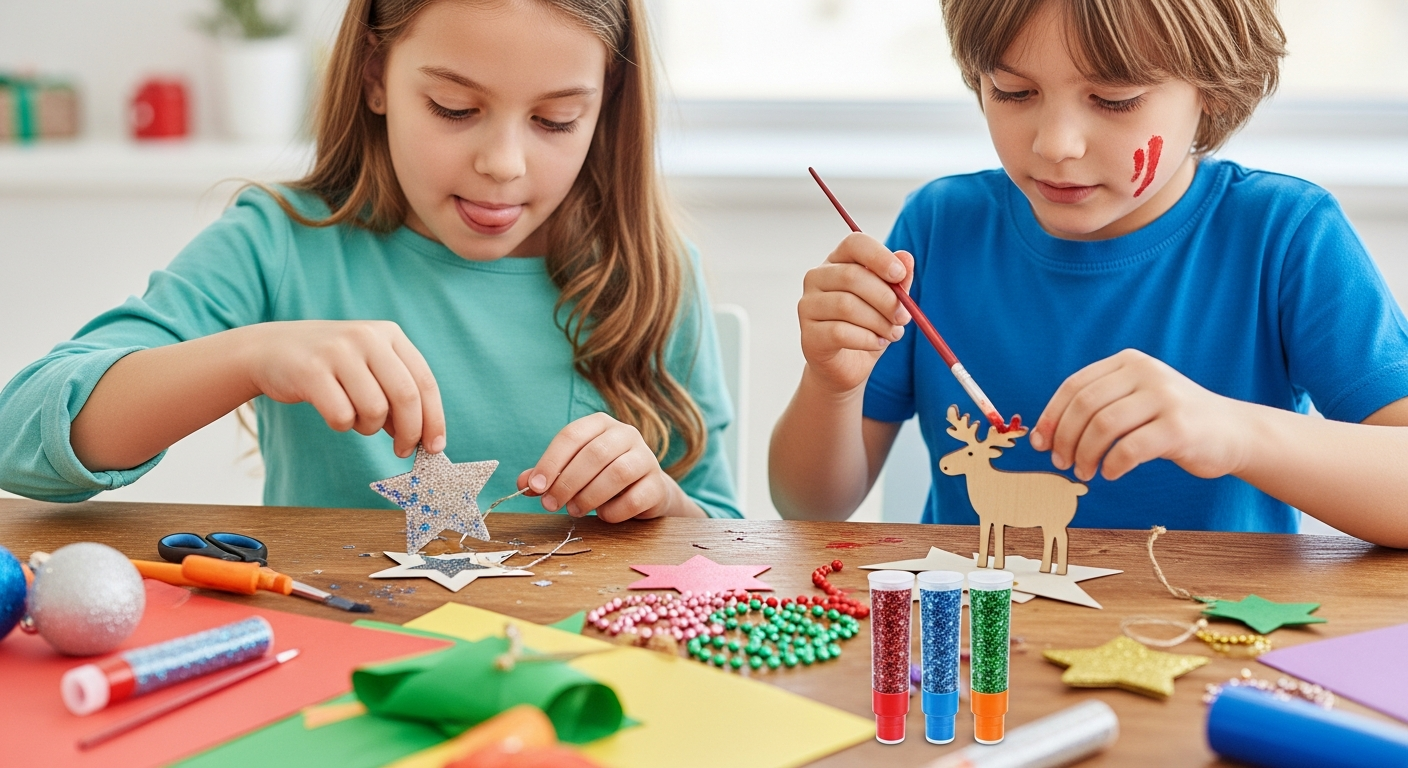
Table of Contents
- The Magic and Developmental Benefits of Crafting
- Our Favorite Christmas Ornament Crafts for Kids: Age-by-Age Guide
- Tips for a Successful and Speech-Boosting Crafting Session
- Integrating Speech Blubs into Your Child's Communication Journey
- Conclusion
- FAQ
The air fills with the sweet scent of pine, twinkling lights begin to adorn every corner, and the joyous melodies of the season whisper promises of warmth and wonder. For many of us, this magical time of year is deeply intertwined with cherished family traditions, and few traditions spark as much delight and creativity as making Christmas ornaments with our children. Imagine their eyes lighting up as they proudly hang a handmade creation on the tree, a tangible memory of shared laughter and artistic expression. But beyond the glitter and glue, these crafting sessions are a powerful, often underestimated, springboard for your child's overall development, especially their communication skills.
This post isn't just about sharing fun ideas for [christmas ornament craft for kids]; it's about exploring the profound benefits these simple activities offer. We’ll dive into a treasure trove of age-appropriate ornament crafts, from delightful designs for toddlers to intricate creations for school-aged children. More importantly, we'll uncover how these hands-on projects naturally foster fine motor skills, boost creativity, and, crucially, lay a robust foundation for speech and language development. We'll also show you how integrating focused, engaging tools like Speech Blubs can amplify these benefits, helping your child find their voice and express their unique minds and hearts during this most wonderful time of the year.

The Magic and Developmental Benefits of Crafting
There's something inherently magical about crafting, especially for children. It’s a sensory feast, a creative outlet, and a delightful challenge all rolled into one. When children engage in making a [christmas ornament craft for kids], they're not just creating a pretty decoration; they're actively developing a wide array of essential skills. These skills are fundamental building blocks for their cognitive, physical, and emotional growth, and they play a surprisingly significant role in their journey towards confident communication.
Fine Motor Skill Development
Think about the intricate movements involved in crafting: holding a small bead, carefully snipping paper with scissors, squeezing a tube of glitter glue, or painting a tiny detail. These actions require precision, dexterity, and hand-eye coordination – all components of fine motor skills. Strong fine motor skills are essential not only for writing and self-care tasks but also for the nuanced movements of the mouth and tongue required for clear articulation. The more control a child gains over their hands and fingers, the better equipped they are to master the subtle movements needed for speech sounds.
Boosting Creativity and Imagination
Crafting is an open invitation for children to let their imaginations soar. There's no single "right" way to decorate a snowman ornament or create a glittery star. This freedom encourages innovative thinking, problem-solving, and the ability to visualize an idea and bring it to life. When children are given the space to be creative, they also feel more comfortable experimenting with language to describe their ideas, their process, and their finished product.
Fostering Communication and Language Skills
This is where the true magic intertwines with our mission at Speech Blubs. Crafting sessions are natural conversation starters. As children select materials, follow instructions, and describe their progress, they are constantly engaging with language.

- Vocabulary Expansion: Naming colors, shapes, textures (fuzzy, sparkly, smooth), actions (cut, glue, paint, stick), and objects (star, tree, bell, snowflake).
- Following Directions: "First, we glue the cotton ball, then we add the googly eyes." This builds auditory processing and sequencing skills, vital for understanding and producing multi-step instructions and narratives.
- Descriptive Language: "My ornament is red and sparkly, and it feels a little bumpy." Encouraging children to describe their work helps them practice adjectives and sensory language.
- Questioning and Explaining: "What should I do next?" "Why is this glue sticky?" "I made it like this because..." These interactions promote critical thinking and the ability to articulate thoughts.
- Narrative Skills: "First I got the paper, then I cut the shape, and then I put the glitter on it. Now it's a beautiful star!" Re-telling the steps of their craft helps develop narrative structure.
For parents whose children might be experiencing a speech delay or difficulty, these interactions during crafting become invaluable therapy moments. For instance, if a child loves making animal-themed ornaments, a parent can engage them by asking about the animal sounds ("What sound does a reindeer make?") or naming parts of the animal ("Where are the antlers?"). Later, after craft time, this interest can seamlessly transition into activities within Speech Blubs, such as our "Animal Kingdom" section. Here, children watch and imitate their peers making sounds and words related to animals, reinforcing the sounds and vocabulary they encountered during crafting. This beautiful synergy between hands-on play and our unique "video modeling" approach creates a dynamic learning environment where kids truly thrive. We believe in providing "smart screen time" that is active, engaging, and builds powerful family connections, unlike passive viewing experiences.
Enhancing Problem-Solving Abilities
What happens when the glue doesn't stick, or the glitter spills? Crafting often presents small, manageable "problems" that children can learn to overcome. They might need to find an alternative material, adjust their technique, or ask for help. This iterative process of trying, failing, and adapting builds resilience and problem-solving skills, which are crucial for navigating both social interactions and academic challenges.
Building Confidence and Self-Esteem
Every child feels a surge of pride when they complete a project. Seeing their creation displayed prominently on the Christmas tree is a powerful affirmation of their abilities. This sense of accomplishment boosts self-esteem and encourages them to take on new challenges, including expressing themselves verbally. A child who feels confident in their ability to create is more likely to feel confident in their ability to communicate.
Our Favorite Christmas Ornament Crafts for Kids: Age-by-Age Guide
Getting started with a [christmas ornament craft for kids] doesn't have to be complicated. We've gathered some fantastic, age-appropriate ideas that are big on fun and even bigger on developmental benefits. Remember, the goal is the process, not perfection!
For Our Littlest Elves (Toddlers: 1-3 Years Old)
Crafts for toddlers should focus on sensory exploration, simple actions, and safe, non-toxic materials. Adult supervision and assistance are key!
1. Salt Dough Ornaments
- Why we love them: This classic craft is a sensory delight! Mixing, kneading, rolling, and cutting the dough strengthens hand muscles and provides tactile input. Painting them later introduces color recognition and fine motor control.
- How to make them:
- Mix 2 cups flour, 1 cup salt, and 1 cup water until a dough forms. Knead for 5-10 minutes until smooth.
- Roll out the dough to about 1/4 inch thick.
- Use cookie cutters (stars, circles, trees) to cut out shapes. Don't forget to poke a hole at the top with a straw for hanging!
- Bake at 250°F (120°C) for 2-3 hours or until hardened.
- Once cooled, let your toddler paint and decorate them with kid-safe paints.
- Speech Connection: "Roll," "cut," "paint," "smooth," "hard," "star," "tree." Practice "more" dough, "all done" baking, describing colors.
2. Handprint/Footprint Ornaments
- Why we love them: These create precious keepsakes and involve fun, tactile experiences.
- How to make them:
- Use air-dry clay or the salt dough from above.
- Help your child press their hand or foot gently into the material to make an imprint.
- Cut around the imprint, smooth the edges, and poke a hole for hanging.
- Let it dry completely (or bake salt dough).
- Decorate with paint, glitter, or simply write their name and the year.
- Speech Connection: "Hand," "foot," "press," "print," "soft," "squishy." Talk about "big hand," "little foot."
3. Pom-Pom and Pipe Cleaner Ornaments
- Why we love them: Excellent for developing the pincer grasp (picking up small objects), color recognition, and hand-eye coordination when gluing.
- How to make them:
- Provide various sizes of pom-poms, pipe cleaners, and a base shape (e.g., a cardboard star or circle).
- Let your toddler glue pom-poms onto the shape. They can also thread large beads onto pipe cleaners to create loops or spirals.
- Twist pipe cleaners into simple shapes and glue them on.
- Speech Connection: "Pom-pom," "glue," "stick," "soft," "fluffy," naming colors, "more," "finished."
For Growing Explorers (Preschoolers: 3-5 Years Old)
Preschoolers can handle slightly more complex instructions, use kid-safe scissors (with supervision), and engage in more detailed decorating.
1. Popsicle Stick Ornaments (Trees, Stars, Snowflakes)
- Why we love them: These encourage spatial reasoning, following patterns, and precise gluing.
- How to make them:
- Glue 3-4 popsicle sticks into a triangle for a tree, or an X shape for a star/snowflake. Let dry.
- Paint the shapes green for a tree, or white/blue for a snowflake.
- Decorate with glitter, sequins, small buttons, or mini pom-poms. Add a string for hanging.
- Speech Connection: "Popsicle stick," "triangle," "star," "snowflake," "glue," "paint," "sparkle." Practice "first, second, third" as you assemble.
2. Paper Plate Wreath Ornaments
- Why we love them: Fantastic for cutting skills, creativity in decorating, and understanding shapes.
- How to make them:
- Help your child cut out the center of a paper plate to create a wreath shape.
- Provide green construction paper strips, glitter, small festive cut-outs, and glue.
- Children can glue the green strips to resemble foliage, then add decorations.
- Speech Connection: "Paper plate," "wreath," "cut," "round," "green," "decorate," "sticky." Discuss "inside" and "outside" the wreath.
3. Photo Frame Ornaments
- Why we love them: Personalized and heartfelt, these allow children to recognize faces and create gifts.
- How to make them:
- Cut out cardboard shapes (circle, square, star) with a smaller opening in the center for a photo.
- Let your child decorate the frame with markers, glitter, stickers, or small beads.
- Glue a favorite photo of your child or family behind the opening. Add a ribbon hanger.
- Speech Connection: "Photo," "frame," "decorate," "smile," "family," naming family members. "Who is this?" "What are they doing?"
4. Cinnamon Stick Ornaments
- Why we love them: These engage the sense of smell, adding another layer to the sensory experience.
- How to make them:
- Tie a few cinnamon sticks together with twine or ribbon.
- Add a decorative bow or glue on small craft berries, leaves, or even dried orange slices.
- Ensure a loop for hanging.
- Speech Connection: "Cinnamon," "smell," "sweet," "spicy," "tie," "ribbon," "stick." Describing the scent and appearance.
For Creative Commanders (School-Aged Kids: 5+ Years Old)
Older children can follow multi-step instructions, use more intricate materials, and work with greater independence, leading to more sophisticated designs.
1. Beaded Pipe Cleaner Ornaments
- Why we love them: Excellent for fine motor precision, pattern recognition, and focus.
- How to make them:
- Bend a pipe cleaner into a shape (e.g., star, candy cane, spiral).
- Thread small beads onto the pipe cleaner, filling the shape.
- Twist the ends to secure the beads.
- Add a ribbon for hanging.
- Speech Connection: "Bead," "thread," "pattern," "star," "colorful," "small," "big." Discuss sequencing: "What color bead comes next?"
2. Yarn-Wrapped Ornaments
- Why we love them: A calming, repetitive activity that builds patience and finger strength.
- How to make them:
- Take a styrofoam ball or a cardboard shape.
- Apply a thin layer of glue, then begin wrapping yarn tightly around the shape, securing the end with more glue.
- Continue wrapping, adding glue as needed, until the shape is completely covered.
- Decorate with small felt pieces, buttons, or sequins.
- Speech Connection: "Yarn," "wrap," "soft," "fuzzy," "round," "cover," naming colors. "Keep wrapping," "almost done."
3. DIY Glitter Ornaments
- Why we love them: Visually stunning and offers a chance to explore cause and effect with liquids and solids.
- How to make them:
- Choose clear plastic or glass ornaments (plastic is safer for kids).
- Squirt a small amount of liquid floor polish or Mod Podge inside the ornament. Swirl it around to coat the entire inner surface.
- Pour out any excess liquid.
- Immediately pour glitter inside the ornament. Swirl and shake until the glitter adheres to the wet surface.
- Turn upside down to dry, letting excess glitter fall out.
- Speech Connection: "Glitter," "sparkle," "shake," "swirl," "inside," "empty," "full." Describing the process and appearance.
4. Felt Ornaments with Simple Stitching
- Why we love them: Introduces basic sewing skills, promotes precision, and results in adorable, soft creations.
- How to make them:
- Cut out two identical felt shapes (e.g., a stocking, star, heart).
- Using a blunt needle and thick yarn, help your child do a simple running stitch or blanket stitch around the edges, leaving a small opening.
- Stuff with cotton balls or polyfill, then stitch the opening closed.
- Decorate with small felt cut-outs, buttons, or embroidery. Add a loop for hanging.
- Speech Connection: "Felt," "soft," "stitch," "needle," "yarn," "stuff," "stocking," "star." "Up and down," "push and pull."
Tips for a Successful and Speech-Boosting Crafting Session
Making a [christmas ornament craft for kids] should be a joyful, low-stress experience for everyone. Here are some tips to maximize the fun and the developmental benefits:
- Prepare Your Space: Lay down newspaper or a plastic tablecloth. Have all materials easily accessible before you start. This reduces frustration and keeps the flow going.
- Embrace the Mess: Crafting can be messy, and that's okay! Focus on the learning and fun, not pristine cleanliness.
- Focus on the Process, Not Perfection: The goal isn't a museum-worthy ornament. It's about the child's engagement, creativity, and the skills they develop along the way. Celebrate their effort and uniqueness.
- Talk, Talk, Talk! Narrate what you're doing ("Now I'm cutting the paper"), ask open-ended questions ("What color glitter should we use next?"), and encourage your child to describe their actions and choices. Use rich descriptive language.
- Follow Their Lead (Within Reason): If they want to glue a pom-pom where a star should go, let them! It’s their creation. This fosters independence and creativity.
- Break Down Instructions: For younger children or those with speech delays, give one-step instructions at a time. Use visual cues and model the actions. "First, glue. Then, stick."
- Connect to Real-World Objects: Point out similar shapes, colors, or textures in their environment or in books.
- Incorporate Music: Play festive Christmas music in the background to set a cheerful mood. Singing along can also be a fun way to practice speech sounds and rhythm.
- Use Tools Like Speech Blubs to Reinforce Learning: After a session of making a [christmas ornament craft for kids], if your child enjoyed naming colors or describing textures, open Speech Blubs. For example, if they worked with a lot of red and green, you can explore the "Colors" section. Or if they made an animal ornament, dive into the "Animal Kingdom." Our innovative "video modeling" method, where children learn by imitating their peer role models, makes learning sounds and words incredibly engaging. Our commitment at Speech Blubs is to empower children to speak their minds and hearts, and we provide an immediate, effective, and joyful solution for the 1 in 4 children who need speech support, blending scientific principles with play. This makes Speech Blubs a powerful supplementary tool to the hands-on learning from crafting. You can explore more about our methodology and its scientific backing on our research page.
Integrating Speech Blubs into Your Child's Communication Journey
At Speech Blubs, we understand the incredible power of play and connection in a child's development. Our founders, who grew up with speech challenges themselves, created the tool they wished they had – a joyful, scientifically-backed app that helps children unlock their communication potential. We are dedicated to providing a "smart screen time" experience that actively engages children and fosters family interaction, making it a valuable alternative to passive viewing.
When you notice your child showing particular interest in certain words or sounds during your crafting sessions, that's a perfect cue to transition to Speech Blubs.
- For a child making a star ornament: You can use Speech Blubs to practice the 's' sound with words like "star," "sparkle," or "see."
- If your child is excitedly naming colors while painting: Head over to our "Colors" section where they can mimic children saying "red," "green," "blue," reinforcing their newly acquired vocabulary.
- For a parent whose 3-year-old 'late talker' loves making reindeer ornaments: The "Animal Kingdom" section of Speech Blubs offers a fun, motivating way to practice sounds and words like "deer," "run," or "ho-ho." This provides a structured, engaging environment where imitation and repetition are encouraged, helping to reduce frustration and build confidence.
- If your child is practicing following multi-step instructions for a craft: Speech Blubs activities often involve sequencing and following cues, which can further strengthen these auditory processing skills.
We believe in setting realistic expectations; Speech Blubs is a powerful supplement to a child's overall development plan and, when applicable, professional therapy. It's about fostering a love for communication, building confidence, and creating joyful learning moments together. See what other parents are saying about their child's success and confidence growth by visiting our testimonials page.
Unsure if your child could benefit from targeted speech support? Take our quick 3-minute preliminary screener to get a simple assessment and a personalized next-steps plan. It involves just 9 simple questions and can provide valuable insights.
Conclusion
Making a [christmas ornament craft for kids] is so much more than a holiday activity; it's a rich, multi-faceted experience that profoundly impacts a child's development. From honing fine motor skills and sparking creativity to building confidence and, most importantly, laying a strong foundation for speech and language, these festive projects offer invaluable learning opportunities. By engaging in conversation, narrating actions, and encouraging descriptive language during crafting, parents can organically foster critical communication skills.
And when these hands-on activities are paired with the focused, engaging, and scientifically-backed approach of Speech Blubs, the potential for growth is truly amplified. Our mission is to empower children to "speak their minds and hearts," and by blending joyful play with our unique video modeling methodology, we offer a powerful tool for family connection and communication development.
Ready to bring more confidence, joy, and clear communication into your child's life this holiday season and beyond? Explore the full range of activities and features designed to help your child thrive. We encourage you to start your journey with a 7-day free trial and unlock the full potential of Speech Blubs.
For the very best value and access to our complete suite of features, choose our Yearly plan. For just $59.99 per year (which breaks down to an incredible $4.99/month), you save 66% compared to the monthly plan. The Yearly plan also includes a 7-day free trial, the extra Reading Blubs app, early access to new updates, and 24-hour support response time. The Monthly plan, priced at $14.99 per month, does not include these exclusive benefits.
Download Speech Blubs today on the Apple App Store or Google Play Store to begin your 7-day free trial. You can also create your account on our website and get started right away. Give the gift of confident communication this Christmas!
FAQ
Q1: Why are Christmas ornament crafts particularly good for children's development?
Christmas ornament crafts offer a unique blend of fun and learning. They are fantastic for developing fine motor skills (cutting, gluing, painting), boosting creativity and imagination, and enhancing problem-solving abilities. Crucially, they create natural opportunities for conversation, allowing children to practice vocabulary, follow directions, describe their work, and express their ideas, all of which are vital for speech and language development.
Q2: What age ranges are these Christmas ornament crafts suitable for?
The crafts listed cater to various age groups. For toddlers (1-3 years), simple, sensory-focused activities like salt dough or handprint ornaments are ideal. Preschoolers (3-5 years) can engage in slightly more complex crafts like popsicle stick or paper plate wreaths, with supervision. School-aged children (5+ years) can tackle more intricate projects such as beaded or felt ornaments, fostering greater independence and precision. Always adapt the complexity and supervision level to your child's individual abilities.
Q3: How can making Christmas crafts specifically help with my child's speech development?
Crafting provides a rich, interactive environment for language practice. As children make a [christmas ornament craft for kids], they learn new vocabulary (colors, shapes, textures, actions), practice following multi-step instructions, and develop descriptive language skills when they talk about their creations. These activities encourage question-asking, explaining, and narrative building, all of which are fundamental to developing strong communication. Using an app like Speech Blubs afterward can reinforce these skills through targeted, engaging exercises.
Q4: How can Speech Blubs further support my child's communication journey during the holidays and beyond?
Speech Blubs is designed to be a powerful, joyful tool that complements hands-on learning. After a crafting session, you can transition to the app to reinforce specific words, sounds, or concepts your child encountered (e.g., colors, animal names, descriptive words). Our unique "video modeling" method, where children learn by imitating peers, makes speech practice engaging and effective. We aim to provide "smart screen time" that actively builds communication skills, reduces frustration, and fosters confidence, helping your child speak their minds and hearts year-round. You can learn more about Speech Blubs on our homepage.
About the author