
Festive Christmas Paint Crafts for Kids
 By Speech Blubs Team•Dec 22, 2025•19 min.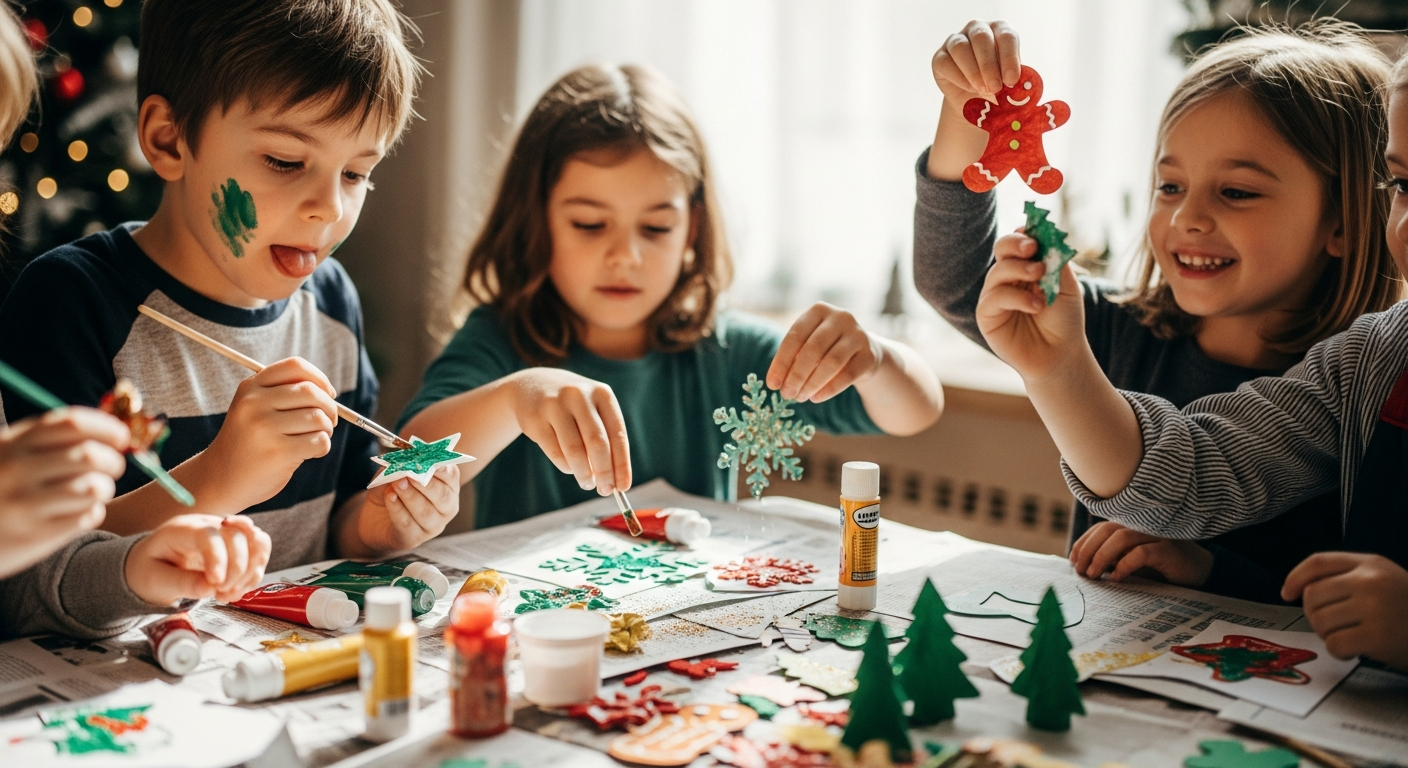
Table of Contents
- Introduction
- The Magic of Christmas Crafts: More Than Just Fun
- Preparing for a Festive Paint Adventure: Tips for Success
- Top Christmas Paint Crafts for Kids (with a Developmental Twist)
- Enhancing Communication Through Play with Speech Blubs
- Unlocking Full Potential: Choosing the Right Speech Blubs Plan
- Conclusion
- FAQ
Introduction
As the air grows crisp and a palpable excitement buzzes through our homes, there's a unique magic that only the holiday season can bring. For children, Christmas is a wonderland of twinkling lights, festive songs, and, of course, endless opportunities for creative play. Among these joyous activities, Christmas paint crafts stand out as a beloved tradition, often leading to glitter-dusted tables, colorful smudges, and cherished handmade ornaments. But beyond the immediate fun and the charming mess, these simple acts of creation offer profound developmental benefits. This holiday season, let's explore how inviting children into the vibrant world of paint can do more than just deck your halls; it can foster fine motor skills, ignite imagination, and, most importantly, open pathways for rich language development and heartfelt communication.
The Magic of Christmas Crafts: More Than Just Fun
The joy on a child's face as they dip a brush into a pot of shimmering red paint, or the intense concentration as they carefully dab a snowflake onto paper, is a gift in itself. Yet, the value of these moments extends far beyond the visual delight and the creation of festive decorations. Christmas paint crafts are powerful tools that subtly yet significantly contribute to a child's holistic development.

Beyond the Glitter: Developmental Benefits
Engaging in art activities, especially painting, activates multiple areas of a child's developing brain and body:
- Fine Motor Skills: The very act of holding a paintbrush, squeezing a tube of glitter glue, or carefully pressing a sponge onto paper strengthens small muscles in the hands and fingers. This precision and control are crucial for tasks like writing, fastening buttons, and many other daily activities.
- Creativity & Self-Expression: There's no "wrong" way to paint a Christmas tree in a child's world! Paint crafts encourage children to experiment with colors, shapes, and textures, fostering a unique sense of self-expression. It allows them to translate their inner world, their festive dreams, and their emotions onto paper or an ornament.
- Cognitive Development: From following simple instructions ("First, paint the snowman white, then add the hat") to problem-solving ("How can I make this star look shiny?"), painting engages a child's cognitive abilities. They learn about cause and effect, sequencing, and spatial awareness as they plan and execute their artistic visions.
- Sensory Exploration: The tactile experience of paint—its smooth, cool texture, the vibrant colors, the way it spreads and blends—provides rich sensory input. This multi-sensory engagement is vital for brain development and helps children understand the world around them.
- Language Development: Perhaps one of the most exciting, yet often overlooked, benefits of craft time is its potential for fostering language. As children paint, they are immersed in a world of descriptive words: "red," "sparkly," "smooth," "sticky." They narrate their actions, ask questions, and describe their creations, building a robust vocabulary and practicing sentence structure in a natural, engaging context.
At Speech Blubs, we are deeply committed to empowering children to "speak their minds and hearts." We understand that every interaction, every moment of play, is an opportunity for communication. Crafting sessions, filled with shared experiences and conversations, are perfectly aligned with our mission to support children's speech and language journeys.

Preparing for a Festive Paint Adventure: Tips for Success
Before the paint party begins, a little preparation can go a long way in ensuring a joyful, less stressful experience for everyone involved.
Setting Up for Success (and Less Mess!)
- Workspace Preparation: Lay down old newspapers, a plastic tablecloth, or a designated craft mat to protect your surfaces. If you're feeling extra cautious, setting up outside or in a garage on a mild day can be a game-changer!
- Appropriate Attire: Dress your child (and yourself!) in old clothes that you don't mind getting stained. A smock or an old oversized t-shirt can offer additional protection.
- Paint Selection: Always opt for child-safe, washable paints. Tempera paints and finger paints are excellent choices as they are non-toxic and clean up relatively easily from skin and many surfaces. Watercolors are also a good, less-messy option for older children.
- Tools of the Trade: Provide a variety of brushes—thick ones for broad strokes, thin ones for details. Don't limit yourselves to brushes; sponges, cotton balls, Q-tips, even leaves or pinecones can make interesting marks and textures. Small containers for water (for rinsing brushes) and paper towels should be readily available.
- Clean-up Strategy: Have a wet cloth or baby wipes handy for quick clean-ups of stray drips and sticky fingers. A designated sink area for washing hands immediately after crafting will also save you time and effort.
Encouraging Communication During Craft Time
Crafting together is an ideal setting for fostering verbal interaction. Here’s how you can weave language-building into your festive paint sessions:
- Ask Open-Ended Questions: Instead of "Do you like the red paint?" try "What do you think of this bright red color? What does it remind you of?" or "What should we paint next?" This encourages more than just a 'yes' or 'no' response, prompting descriptive language and imaginative thinking.
- Describe Actions and Materials: Narrate what you and your child are doing. "You're swirling the shiny blue paint!" "We're making big green stripes on our tree." "Feel how smooth the paper is before we paint it." This models rich vocabulary and sentence structure.
- Narrate the Process: "First, we get the paper, then we choose a brush, and then we dip it into the paint!" This helps children understand sequencing and develops their ability to follow multi-step instructions, an important pre-literacy skill.
- Introduce New Vocabulary: Use specific, descriptive words related to colors, textures, and actions. Instead of just "red," try "crimson" or "scarlet." Instead of "shiny," use "sparkling" or "glistening." This expands their lexicon and appreciation for language.
- Connect to Real-World Scenarios: Talk about the objects you are painting. "This snowman needs a carrot nose! Do you think he's cold?" "What kind of presents do you think Santa will bring?" This creates opportunities for storytelling and imaginative play.
Consider a parent whose child is learning to express choices and needs more support in articulating them. During a painting session, the parent might ask, "Do you want the blue or red paint?" and the child might simply point. This is a perfect opportunity to gently guide them: "Show me blue!" or "Try to say red!" as they point. This is precisely where tools like Speech Blubs can step in to reinforce these foundational language skills. Our app provides a safe, fun, and interactive environment where children can practice naming colors, identifying objects, and expressing preferences through engaging activities, empowering them to use their voice not just during craft time, but in all aspects of their lives. We believe in providing an immediate, effective, and joyful solution for the 1 in 4 children who need speech support, blending scientific principles with play into one-of-a-kind "smart screen time" experiences that actively encourage communication.
Top Christmas Paint Crafts for Kids (with a Developmental Twist)
Let's dive into some specific Christmas paint crafts that are not only fun but also packed with developmental benefits, transforming simple activities into powerful learning experiences.
Classic Handprint & Footprint Keepsakes
There's something incredibly heartwarming about preserving the size of tiny hands and feet during the holidays. These crafts become cherished mementos for years to come.
- "My Little Reindeer" Handprint Art: Paint your child's palm and fingers brown. Press onto paper. Once dry, add a red thumbprint for a nose and draw on antlers and eyes.
- "Santa's Helper" Footprint Art: Paint the entire foot white. Press onto paper. Once dry, paint a red Santa hat on the heel part of the footprint and add a cotton ball beard to the toes.
- Developmental Focus: These crafts enhance body awareness ("That's my hand!"), help children follow multi-step instructions, and provide opportunities to discuss colors, sizes ("big hand, little hand"), and even emotions ("Are you excited for Santa?").
- Speech Blubs Connection: While creating these, engage your child in conversation about "my hand," "your foot," "brown," "red," "wet paint," "dry paper." Simple sentences like "Paint my hand" or "Big footprint!" reinforce early vocabulary. We at Speech Blubs know that building foundational vocabulary is key to developing confident communicators. Our various sections, such as "Animal Kingdom" or "When I Grow Up," introduce hundreds of words and phrases through engaging video modeling, where children learn by watching and imitating their peers, much like they imitate your actions during crafting. This active learning process, which is a screen-free alternative to passive viewing, makes learning fun and effective.
Sparkling Ornament Creations
Making ornaments is a quintessential Christmas activity that adds a personal touch to your tree.
- DIY Painted Ball Ornaments: Purchase clear plastic or glass ball ornaments. Pour small amounts of different colored acrylic or tempera paint inside. Swirl the ornament gently to coat the inside. Let them dry upside down.
- Salt Dough Ornaments: Make salt dough (flour, salt, water). Roll it out, cut out Christmas shapes (stars, trees, gingerbread men). Bake until hard, then paint with festive colors.
- Developmental Focus: These crafts require fine motor control, patience (especially waiting for paint to dry!), and sequencing. Swirling paint introduces color mixing, while decorating salt dough allows for creative design.
- Speech Blubs Connection: Talk about the colors blending, "swirling," "glittery," "shiny." For a child learning to express a desire, this is a great opportunity to practice. "More red?" "I want sparkle!" Our app’s interactive games and activities can reinforce these concepts, helping children articulate their wishes and observations.
Winter Wonderland Window Art
Bring the beauty of a snowy scene indoors without the chill!
- Snowflake Resist Painting: Place snowflake stickers or cut-out paper snowflakes onto paper. Have your child paint over the entire paper with blue, white, or silver paint. Once dry, peel off the stickers to reveal white snowflake outlines.
- Fingerpaint "Snow" Scenes: Encourage children to use white finger paint to create snowdrifts, falling snow, or even a snowman on dark blue or black paper. Add glitter for extra sparkle.
- Developmental Focus: These activities foster creativity, help children understand positive and negative space, and provide a wonderful sensory experience with finger paints. Discussing the weather, seasons, and natural elements like "snow" and "ice" also expands their world knowledge and vocabulary.
Cardboard Tube Characters
Recycle and create adorable Christmas characters!
- Toilet Paper Roll Santas, Elves, Snowmen: Collect empty cardboard tubes. Paint them red for Santa, green for elves, or white for snowmen. Add details with markers, cotton balls, googly eyes, or felt scraps.
- Developmental Focus: This encourages imaginative play, promotes recycling, and allows for practicing cutting, gluing, and painting (if age-appropriate). Once created, these characters are perfect for storytelling and role-playing, further boosting language skills.
Pinecone Critters & Ornaments
Bring a touch of nature into your Christmas crafting.
- Painting Pinecones: Collect pinecones from outside. Paint them green to look like mini Christmas trees, or white for a snowy effect. Add glitter, small pom-poms, or beads. Attach a loop for hanging.
- Developmental Focus: This activity connects children with nature, introduces different textures (rough pinecone, smooth paint), and requires delicate manipulation, improving fine motor coordination.
Gingerbread House Painting (No Baking Required!)
All the fun of decorating a gingerbread house, without the sticky dough!
- Painting Pre-Cut Cardboard Gingerbread Houses: Cut out gingerbread house shapes from cardboard. Provide various colors of paint, glitter, and even small beads or buttons to glue on as "candy."
- Developmental Focus: This craft encourages design thinking, color coordination, and imaginative storytelling ("Who lives in this house? What treats do they eat?"). It's a fantastic way to develop narrative skills and expand vocabulary related to homes, food, and fantasy.
Sponge Painted Christmas Trees
A unique painting technique that's great for younger artists.
- Sponge Trees: Cut kitchen sponges into simple Christmas tree shapes. Dip the sponge into green paint and dab onto paper. Once dry, use finger paints or Q-tips to add colorful "ornaments" and a star on top.
- Developmental Focus: This introduces a different painting technique, encourages repetitive actions (good for focus), and allows for layering, which teaches sequencing and planning.
Q-Tip Pointillism Christmas Art
For a craft that encourages precision and patience.
- Q-Tip Dots: Provide Q-tips and various paint colors. Have your child use the Q-tips to create dots of color to form Christmas lights, ornaments on a tree, or a snowy background.
- Developmental Focus: This activity significantly hones fine motor precision, encourages patience, and helps children understand patterns and how small elements combine to form a larger picture.
Enhancing Communication Through Play with Speech Blubs
While Christmas paint crafts offer a fantastic foundation for language development, sometimes children need an extra boost to truly find their voice. That’s where Speech Blubs comes in, transforming screen time into a powerful, engaging, and scientifically-backed learning experience.
Why Language is Key During Play
Every splash of paint, every chosen color, every creation sparks a story. When children can articulate these stories, describe their process, and express their ideas, their confidence soars. Play is the natural environment for learning, and when language is integrated, it amplifies every developmental benefit.
How Speech Blubs Helps
Our mission at Speech Blubs is rooted in the personal experiences of our founders, all of whom grew up with speech challenges. They created the tool they wished they had—an immediate, effective, and joyful solution for children needing speech support.
- Video Modeling: At the core of our methodology is "video modeling." Children learn by watching and imitating their peers who are engaged in fun, age-appropriate activities. This mirrors how children naturally learn to speak, by observing and imitating those around them, and it’s a method strongly backed by research in child development. This unique approach is what makes our "smart screen time" so effective, offering a screen-free alternative to passive viewing like cartoons.
- Engaging Activities: Our app is packed with thousands of speech therapy activities, games, and exercises designed to keep children actively involved. From categories like "Early Sounds" to "When I Grow Up," children are exposed to a rich vocabulary and diverse communicative contexts.
- Vocabulary Building: Just as you might introduce new words during a craft ("crimson," "sparkle"), Speech Blubs systematically introduces and reinforces a wide array of vocabulary, connecting words to actions, objects, and concepts. This direct link helps children understand and use new words effectively.
- Confidence Building: For children who struggle with speech, the frustration can be immense. Speech Blubs provides a supportive, non-judgmental environment where they can practice at their own pace, celebrate small victories, and gradually build the confidence to speak their minds and hearts in real-world interactions.
Consider a parent whose child struggles to describe what they've created. After proudly painting a snowman, the parent might ask, "What did you make?" and the child points silently or with a single, unclear sound. This moment, though common, can be a sign that focused language practice could help. Speech Blubs, with its diverse range of activities focusing on sounds, words, and phrases, offers children the tools to express their ideas more clearly. Imagine a child engaging with our "Winter Wonderland" activities in the app, learning to articulate words like "snowman," "cold," and "scarf." Then, with newfound confidence, they might proudly declare, "I made a cold snowman!" when describing their painting. This powerful connection between app-based learning and real-world application is at the heart of what we do. You can learn more about our scientific methodology and how it places us in the top tier of speech apps worldwide.
Making the Most of Your Speech Blubs Experience
- Co-Play is Key: While Speech Blubs is designed to be highly engaging for children, it truly shines as a tool for family connection. Sit with your child, participate in the activities, repeat the words, and celebrate their efforts. This shared experience deepens bonding and reinforces learning.
- Realistic Expectations: Speech development is a journey, not a race. Our app is a powerful supplement to a child's overall development plan and, when applicable, professional therapy. Focus on celebrating progress, fostering a love for communication, and creating joyful family learning moments, rather than expecting overnight transformations. We empower children to build confidence, reduce frustration, and develop key foundational skills over time.
- Seamless Integration: Speech Blubs complements other developmental activities like crafts. The vocabulary and communication skills practiced in the app can be immediately applied and reinforced during creative play, creating a holistic learning environment. Curious if Speech Blubs is right for your little one? You can take our quick 3-minute preliminary screener to get a simple assessment and a free 7-day trial.
Unlocking Full Potential: Choosing the Right Speech Blubs Plan
We understand that every family has unique needs, and we're committed to providing flexible options to support your child's speech journey. To ensure you get the most out of our app and unlock its full potential, it's important to understand our pricing structure.
Our plans are designed to provide maximum value and access to our comprehensive suite of tools:
- Monthly Plan: For $14.99 per month, you gain access to the core Speech Blubs app. This plan is ideal for those who prefer month-to-month flexibility.
- Yearly Plan: Our most popular and recommended option is the Yearly Plan, priced at just $59.99 per year. This breaks down to an incredible value of only $4.99 per month, allowing you to save 66% compared to the monthly subscription!
The Yearly Plan is truly the best choice, offering significant savings and exclusive, high-value features designed to enhance your child's learning experience:
- A 7-day free trial: Experience the full Speech Blubs app before committing, giving you ample time to see the incredible benefits firsthand.
- The extra Reading Blubs app: Double the fun and learning with our companion app focused on early reading skills, a perfect complement to speech development.
- Early access to new updates: Be among the first to explore exciting new features and content as they are released.
- 24-hour support response time: Get prompt assistance whenever you need it, ensuring a smooth and uninterrupted learning experience.
The Monthly Plan, while flexible, does not include these additional benefits. For the ultimate value, comprehensive features, and the peace of mind of a free trial, the Yearly Plan is the clear choice.
Ready to see the difference Speech Blubs can make in your child's life? We invite you to start your 7-day free trial today and choose the Yearly plan to unlock all these amazing benefits. You can also download Speech Blubs on the App Store or get it on Google Play to begin your family's journey towards joyful communication. We've seen incredible success stories; see what other parents are saying about their child's progress with Speech Blubs.
Conclusion
This Christmas, let your home be filled not only with the sparkle of holiday decorations but also with the vibrant energy of creative exploration and the joyful sounds of developing language. Christmas paint crafts offer a magical gateway to fostering essential skills—from fine motor coordination and creativity to crucial language development. Each brushstroke, each color choice, and every shared giggle during craft time is a step towards building a confident communicator and creating priceless family memories.
By combining the hands-on fun of festive painting with the targeted support of tools like Speech Blubs, you're giving your child the best of both worlds. We are dedicated to providing enriching "smart screen time" experiences that are active, engaging, and rooted in scientific principles, fostering connection and empowering children to speak their minds and hearts.
Don't let this holiday season pass without embracing these enriching opportunities. Spark creativity, build skills, and most importantly, connect with your child through the magic of Christmas paint crafts and the power of language. Ready to begin? Download Speech Blubs on the App Store or get it on Google Play and create your account today. Remember to choose the Yearly plan to receive a 7-day free trial, the bonus Reading Blubs app, and exclusive benefits that provide the best value for your family's journey.
FAQ
Q1: What age group are these Christmas paint crafts suitable for? A1: Many of these crafts, especially handprint/footprint art and sponge painting, are suitable for toddlers and preschoolers (ages 1-5) with adult supervision. Older children (ages 6+) can enjoy more detailed crafts like painting salt dough ornaments, cardboard tube characters, or Q-tip pointillism, often with more independence. Always adapt the complexity to your child's skill level and attention span.
Q2: How can I make Christmas crafting less messy? A2: Preparation is key! Lay down a large drop cloth or old newspaper, dress your child in old clothes or a smock, and have wipes or a damp cloth readily available. Using washable paints and small, easy-to-manage quantities of materials can also help. Designating a specific "craft zone" that's easy to clean is also a great strategy.
Q3: Can these crafts really help with my child's language development? A3: Absolutely! Crafts provide a natural, engaging context for language learning. As you paint together, you can model vocabulary ("red," "sparkly," "smooth"), describe actions ("You're squeezing the glue!"), ask open-ended questions ("What should we add next?"), and encourage your child to narrate their process. This interactive communication during play is incredibly beneficial for building vocabulary, sentence structure, and conversational skills.
Q4: How do I know if Speech Blubs is right for my child? A4: Speech Blubs is designed to support children who are just starting to talk, expanding their vocabulary, or need extra practice with specific sounds and words. If you have any concerns about your child's speech development or simply want to enrich their language skills, our app is a wonderful resource. We recommend you take our quick 3-minute preliminary screener. It provides a simple assessment and offers a free 7-day trial, allowing you to experience the app firsthand and see if it's a good fit for your child's needs.
About the author