
Festive Christmas Party Crafts for Kids
 By Speech Blubs Team•Dec 22, 2025•18 min.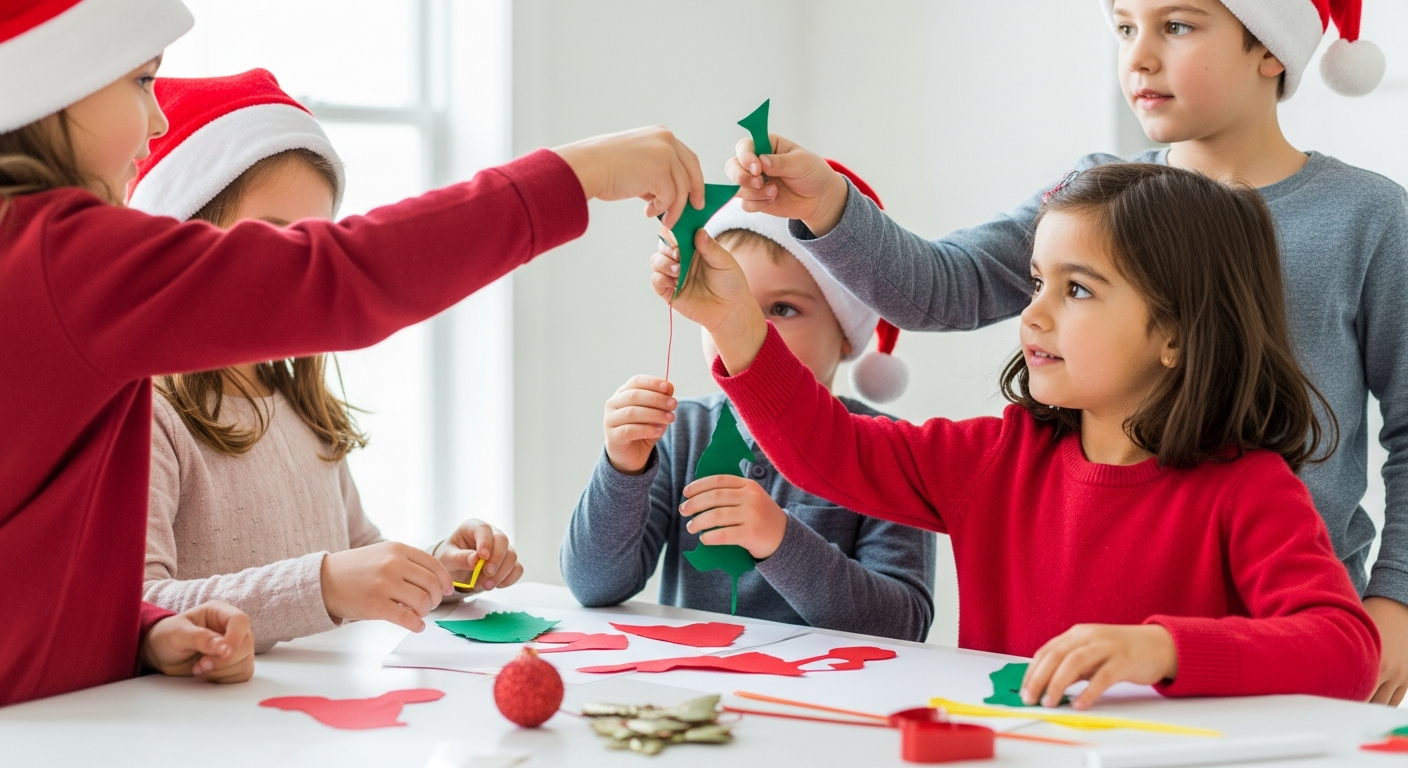
Table of Contents
- Why Christmas Crafts Are More Than Just Fun: A Developmental Perspective
- Planning the Perfect Christmas Craft Party for Kids
- Our Favorite Communication-Boosting Christmas Crafts
- Making the Most of Your Craft Party: Tips for Parents
- How Speech Blubs Elevates Your Child's Communication Journey
- Investing in Your Child's Future: Choosing the Right Speech Blubs Plan
- Conclusion
- Frequently Asked Questions (FAQ)
The air is crisp, the lights are twinkling, and the scent of pine needles fills the home – it's Christmas party season! For parents, this time of year often brings a flurry of excitement, but also the question: how do we keep the little ones engaged, entertained, and still fostering their development amidst all the festive fun? While cartoons and movies might offer a temporary reprieve, they often mean passive screen time. What if we told you that your child's Christmas party crafts could be a powerful, joyful way to boost their communication skills, creativity, and connection with others?
At Speech Blubs, we believe every child deserves to speak their minds and hearts, and we know firsthand the challenges some families face. Our company was born from the personal experiences of our founders, all of whom grew up with speech problems and set out to create the supportive tool they wished they had. We've dedicated ourselves to transforming screen time into "smart screen time," blending scientific principles with playful activities to offer an immediate, effective, and joyful solution for the 1 in 4 children who need speech support. This Christmas, let's explore how simple, festive crafts can become catalysts for communication, turning party moments into valuable learning experiences. This post will guide you through planning the perfect Christmas craft party, offering specific craft ideas that are not just fun but are designed to nurture your child's speech and language development, all while highlighting how tools like Speech Blubs can seamlessly integrate into your family's journey.

Why Christmas Crafts Are More Than Just Fun: A Developmental Perspective
Christmas craft parties are more than just an excuse to get sticky and glittery; they are vibrant playgrounds for a child's holistic development. In the festive spirit, children naturally become more open, curious, and eager to participate, creating an ideal environment for growth.
Building Communication Skills Through Festive Play
Think about the sheer amount of language involved in a craft project: listening to instructions, asking for specific colors, describing textures, expressing ideas, and even negotiating for materials. For children, especially those who might be late talkers or have specific speech challenges, these moments are invaluable. For instance, a child might point to a glue stick, but when encouraged to ask for the "glue stick, please," they begin to understand the power of words. Crafting requires following multi-step directions, which strengthens receptive language skills, while choosing colors and materials provides opportunities for expressive language practice. Imagine a child excitedly telling you about the "sparkly green star" they made, boosting their descriptive vocabulary. These interactions are fundamental to language acquisition, and they happen organically in the context of play. Our approach at Speech Blubs emphasizes learning through imitation and interaction, much like children learn during shared craft experiences. Our unique video modeling methodology allows children to learn by watching and imitating their peers, making communication skills feel natural and fun. We know that children thrive when learning is engaging and relevant to their world, and what could be more relevant during the holidays than festive crafts? If you're wondering how your child's language development is progressing, consider taking our quick 3-minute preliminary screener for an assessment and next-steps plan.
Fostering Creativity and Problem-Solving
Crafts ignite imagination. Children aren't just following instructions; they're making choices, adapting when things don't go as planned, and expressing their unique vision. This process builds confidence and teaches resilience. What happens if the glitter spills? How can they fix a broken reindeer antler? These small challenges become opportunities for problem-solving, enhancing cognitive flexibility. This sense of accomplishment when a project is completed, regardless of perfection, is crucial for a child's self-esteem.

Strengthening Family Bonds
Shared crafting experiences create cherished memories and strengthen family connections. Working together on a festive project encourages cooperation, patience, and mutual support. These moments are rich with opportunities for conversation, laughter, and understanding each other's perspectives. It’s a powerful screen-free alternative to passive viewing, promoting genuine interaction that can be missing in our increasingly digital world.
Planning the Perfect Christmas Craft Party for Kids
A successful Christmas craft party doesn't have to be complicated. With a little planning, you can create a joyful, low-stress environment that maximizes both fun and developmental benefits.
Age-Appropriate Craft Selection
Consider the ages and developmental stages of the children attending. Toddlers will thrive with simple, tactile crafts like tearing paper and gluing, while preschoolers can handle more complex cutting and assembling. Older kids might enjoy multi-step projects that require a bit more precision and planning. Offering a few different options, or stations, can cater to varied interests and abilities.
Setting Up a Stress-Free Craft Zone
- Protect Surfaces: Lay down old tablecloths, newspapers, or craft paper to protect tables from spills and glue.
- Organize Materials: Place all craft supplies in easy-to-access containers. Labeling them (e.g., "glue," "glitter," "pom-poms") provides natural opportunities for reading and vocabulary practice.
- Provide Aprons/Old Shirts: Keep party clothes clean with smocks or old t-shirts.
- Prep Ahead: Pre-cut shapes for younger children or prepare individual craft kits to minimize waiting time and maximize engagement.
Encouraging Interaction and Language
Remember, the goal isn't just the finished product, but the process. Actively participate with the children, asking questions, offering descriptive words, and modeling language.
- Use descriptive language: "Wow, that red pom-pom feels so soft!" or "You're gluing the sparkly green star right next to the shiny blue one."
- Ask open-ended questions: "What do you think we should add next?" or "Tell me about your festive creation."
- Narrate actions: "First, we spread the glue, then we sprinkle the glitter." This helps children understand sequencing and builds their vocabulary.
Ready to see how Speech Blubs can make everyday interactions even more impactful? Download Speech Blubs on the App Store or Google Play to begin your 7-day free trial and explore a world of interactive learning.
Our Favorite Communication-Boosting Christmas Crafts
Let's dive into some fantastic craft ideas that are perfect for a Christmas party and packed with developmental benefits.
1. Reindeer Food Jars
This simple, magical craft is a huge hit with kids and offers countless language opportunities. Materials: Small jars or resealable bags, oats, edible glitter (optional, but fun!), sprinkles, small candies, plastic scoops, decorative ribbons. Process: Children mix various ingredients in a bowl and then scoop them into their jars, ready to sprinkle on Christmas Eve for Santa's reindeer. Communication Boost:
- Sequencing: "First, we add the oats, then the glitter, and last, the sprinkles."
- Descriptive Vocabulary: Encourage words like "crunchy," "sparkly," "sweet," "colorful," "smooth," "rough."
- Action Verbs: "Pour," "scoop," "mix," "sprinkle," "shake."
- Imaginative Play: Talk about where the reindeer live, what sounds they make, and what they might say when they eat the food. For a child who loves animals, this activity connects perfectly with Speech Blubs' "Animal Kingdom" section, where they can practice animal sounds and names through video modeling.
- Requesting: "More glitter, please!" or "Can I have the red sprinkles?"
2. DIY Ornament Station
A creative station where children can personalize their own ornaments to take home. Materials: Plain ornament blanks (clear plastic, wooden shapes, felt cutouts), various paints, glitter, sequins, pom-poms, pipe cleaners, glue, paintbrushes, ribbon for hanging. Process: Set out all the materials and let children decorate their ornaments as they wish. Communication Boost:
- Color & Shape Recognition: "I'm using the blue paint for the circle." or "Can you pass me the red star?" For a child who struggles with expressing choices, this station provides a low-pressure environment to practice saying "red star" or "blue circle."
- Expressing Preferences: "I like the sparkly ones best!" or "I want to put a green pom-pom here."
- Following Multi-Step Directions: "First, paint your ornament, then let it dry, and then add glitter."
- Spatial Concepts: "Put the star on top," "the glitter goes inside," "the ribbon is through the hole."
- Sharing & Turn-Taking: Learning to wait for a paintbrush or a specific color of glitter.
3. Christmas Story Stones/Blocks
These are fantastic for encouraging narrative skills and imaginative play. Materials: Smooth rocks or wooden blocks, acrylic paints or permanent markers, clear sealant. Process: Have children paint or draw Christmas-themed images on the stones/blocks (e.g., Santa, reindeer, snow, star, present, tree). Once dry, they can use the stones to create their own festive stories. Communication Boost:
- Narrative Skills: Encourage children to arrange the stones and tell a story, including a beginning, middle, and end. "Once upon a time, Santa flew over the snowy houses..."
- Vocabulary Expansion: Introduce words like "journey," "adventure," "magical," "surprise."
- Asking & Answering Questions: "What happens next?" "Why did the reindeer stop?"
- Sentence Formation: Children practice building increasingly complex sentences as they develop their stories. Speech Blubs helps children build foundational sentence structures through engaging interactive activities. You can find more about our research-backed methods on our research page.
- Imagination: Encourage children to think beyond the obvious and create unique narratives.
4. Paper Plate Christmas Characters
Simple, low-cost, and wonderfully expressive. Materials: Paper plates, construction paper (various colors), googly eyes, pom-poms, pipe cleaners, glue, scissors (child-safe), crayons/markers. Process: Children can transform paper plates into Rudolph, Santa, an elf, a snowman, or even a Christmas angel. Provide examples but encourage individual creativity. Communication Boost:
- Body Parts/Features: Identifying and naming parts like "nose," "eyes," "antlers," "hat."
- Emotional Vocabulary: Discussing what expression their character might have – "Is Santa happy? How do you know?"
- Imaginative Play & Character Voices: Once created, children can use their characters in pretend play, practicing different voices and dialogue.
- Following Directions & Sequencing: "Cut out two ears for the reindeer," "glue the red nose in the middle."
- Descriptive Words: "Furry beard," "pointy hat," "sparkly eyes."
5. Salt Dough Handprint Keepsakes
A timeless craft that captures precious memories and engages multiple senses. Materials: Salt dough (flour, salt, water), cookie cutters (Christmas shapes), rolling pin, child-safe paint, glitter, ribbon. Process: Children press their hands into flattened salt dough, cut out shapes around them, bake/air-dry, and then decorate. Communication Boost:
- Sensory Language: "The dough is soft," "It feels cool," "The glitter is scratchy."
- Action Verbs: "Roll," "press," "cut," "paint," "sprinkle."
- Memory & Recall: Talk about how small their hands are now and how they will grow. This can lead to discussions about past Christmases and future wishes.
- Expressing Feelings: "This makes me feel happy because it's a memory."
- Fine Motor Skills: The act of kneading dough, pressing hands, and decorating all contribute to fine motor development, which is intrinsically linked to speech motor skills.
6. Christmas Card Creation Station
Encourage thoughtfulness and social connection through handmade cards. Materials: Blank cards, construction paper, festive stickers, stamps, crayons, markers, glue, glitter, small festive cutouts. Process: Provide a variety of materials and let children create personalized cards for family and friends. Communication Boost:
- Social Pragmatics: Discussing who the card is for and what message they want to convey (e.g., "Merry Christmas, Grandma!").
- Expressing Gratitude: Encouraging children to think about why they are thankful for the recipient.
- Vocabulary for Emotions: "Happy," "loving," "kind," "thankful."
- Early Writing/Drawing: Children can practice drawing pictures that tell a story or attempting to write their name or simple words.
- Describing Artwork: "I drew a big green Christmas tree and a yellow star on top."
Making the Most of Your Craft Party: Tips for Parents
To truly transform a Christmas craft party into a communication-rich experience, parents and caregivers play a crucial role.
Engage, Don't Just Observe
Sit with the children, get your hands messy, and participate in the crafts. Your engagement signals that the activity is valuable and fun, encouraging children to open up and interact. Model communication by talking about what you're doing.
Ask Open-Ended Questions
Instead of questions that elicit a simple "yes" or "no," ask questions that require more detailed answers.
- "Tell me about your reindeer. What's its name?"
- "What was your favorite part of making this ornament?"
- "If this Santa could talk, what do you think he'd say?" These types of questions encourage storytelling, critical thinking, and expressive language.
Celebrate Every Effort
Focus on the process and the effort, not just the perfect outcome. Praise attempts, creativity, and participation. "I love how you chose all those different colors!" or "You worked so hard to cut out that star." This builds confidence and a positive association with communication and learning.
Connecting Craft Time to Daily Learning with Speech Blubs
The communication skills nurtured during Christmas crafts can be reinforced and expanded with Speech Blubs. Our app offers thousands of activities that turn everyday objects and scenarios into speech practice. For instance, after making a paper plate snowman, you can open Speech Blubs to an activity that involves naming body parts, describing winter clothes, or making "brrr" sounds. This creates a bridge between hands-on play and structured learning, making communication development a continuous, enjoyable journey. To see how other parents have successfully integrated Speech Blubs into their daily routines, check out our testimonials page.
How Speech Blubs Elevates Your Child's Communication Journey
At Speech Blubs, we are committed to providing an immediate, effective, and joyful solution for children's speech and language development. Our innovative approach ensures that every moment spent with our app is productive and engaging.
Our "Smart Screen Time" Approach
We understand parents' concerns about screen time. That's why we've designed Speech Blubs to be a "smart screen time" experience. Unlike passive viewing of cartoons, our app requires active participation. Children learn by interacting, imitating, and engaging with content that is specifically designed to target speech and language skills. It's screen time that actively builds essential communication abilities, preparing children to speak their minds and hearts.
The Power of Video Modeling
Central to our methodology is video modeling. Children learn best by watching and imitating their peers. Speech Blubs features thousands of real children demonstrating sounds, words, and phrases, which encourages imitation through mirror neurons. This creates a natural and highly effective learning environment, fostering confidence and reducing frustration often associated with speech challenges. Our scientifically backed approach places us in the top tier of speech apps worldwide, earning a high MARS scale rating for effectiveness and engagement.
Personalized Learning for Every Child
Every child is unique, and their learning journey should be too. Speech Blubs offers a personalized experience with a vast library of themed activities, from "Animal Kingdom" to "Yummy Mouth Gym," catering to diverse interests and developmental needs. This tailored approach ensures that learning is always motivating and relevant.
Our Mission and Values
Our mission extends beyond just teaching words; it's about empowering children to communicate effectively and confidently. We believe in providing a powerful tool for family connection, turning learning into a shared, joyful experience. As founders who grew up with speech problems, we created Speech Blubs to be the supportive resource we wished we had—a blend of scientific principles and playful engagement. We invite you to explore the world of Speech Blubs and discover how our app can supplement your child's overall development plan and, if applicable, professional therapy. Learn more about our vision and offerings by visiting our main homepage.
Investing in Your Child's Future: Choosing the Right Speech Blubs Plan
When you decide to join the Speech Blubs family, you’re investing in your child's confidence, communication, and a brighter future. We offer flexible plans designed to meet your family's needs, but one clearly stands out in terms of value and benefits.
Monthly vs. Yearly: A Clear Choice
We offer two main subscription options:
- Monthly Plan: For $14.99 per month.
- Yearly Plan: For an annual payment of $59.99, which breaks down to just $4.99 per month.
The Yearly Plan is the best choice, offering incredible value and a comprehensive learning experience for your child. By choosing the Yearly plan, you save a remarkable 66% compared to the monthly subscription, making high-quality speech and language support more accessible.
Exclusive Benefits of the Yearly Plan
Beyond the significant cost savings, the Yearly plan unlocks a suite of exclusive, high-value features designed to maximize your child’s progress and enhance your family’s experience:
- 7-Day Free Trial: Only with the Yearly plan do you get to experience the full power of Speech Blubs completely free for seven days. This allows you and your child to explore all our features and see the engaging activities firsthand before committing.
- The Extra Reading Blubs App: Access our companion Reading Blubs app, which further supports literacy development, extending the learning beyond speech. This powerful duo offers a holistic approach to communication.
- Early Access to New Updates: Be the first to enjoy new activities, features, and improvements as they are released, keeping your child’s learning journey fresh and exciting.
- 24-Hour Support Response Time: Our dedicated support team prioritizes Yearly plan subscribers, ensuring you receive prompt assistance whenever you need it.
The Monthly plan does not include these invaluable benefits. We highly recommend selecting the Yearly plan to ensure your child gets the full suite of features and the best value for their developmental journey.
Conclusion
Christmas craft parties are more than just a fleeting holiday activity; they are potent platforms for fostering communication, creativity, and connection in children. By intentionally integrating language-rich interactions into these festive moments, parents can significantly contribute to their child's speech and language development. From descriptive vocabulary used while making reindeer food to narrative skills honed with story stones, every glitter-filled, glue-covered moment is an opportunity for growth.
Remember, the goal is not perfection in crafting, but the joy of discovery and the power of communication. And as you embrace these hands-on activities, know that Speech Blubs is here to support and amplify your efforts. Our "smart screen time" approach, backed by video modeling and personalized learning, provides a powerful supplement to your child’s developmental journey.
Don't let another moment slip by without giving your child the gift of confident communication. Ready to empower your child to speak their minds and hearts, not just during the holidays but all year round? Take the leap today! Create your account and begin your 7-day free trial with Speech Blubs. Make sure to choose the Yearly plan to unlock your free trial, the extra Reading Blubs app, and all the exclusive benefits that offer the best value for your child’s bright future!
Frequently Asked Questions (FAQ)
Q1: What age group are these Christmas crafts best suited for?
These crafts are designed to be adaptable for a wide range of ages, generally from toddlers (with adult assistance) up to early school-aged children. For younger kids, focus on pre-prepped materials and simpler steps. Older children can handle more intricate details and independent work. The key is adult participation to help with safety and to maximize the communication opportunities.
Q2: How can I encourage a shy child to participate and talk more during craft time?
Create a supportive and non-pressured environment. Offer choices (e.g., "Do you want red or green paint?"), model language yourself, and narrate your own actions. Praise effort over outcome. For a shy child, asking open-ended questions about their choices or the story behind their creation can be less intimidating than direct instruction. Remember, Speech Blubs also offers a safe space for children to practice imitation with their peers, which can build confidence for real-world interactions.
Q3: What if my child isn't interested in a specific craft?
Offer choices! Having a few different craft stations or options allows children to gravitate towards what interests them most. If they're not keen on one craft, suggest another. The goal is engagement and fun, which naturally leads to more communication opportunities. You can also connect the craft to something they already love, like making a reindeer for a child who loves animals, or a "superhero Santa" for a fan of caped crusaders.
Q4: How does Speech Blubs specifically help with communication skills developed through crafting?
Crafting helps with receptive language (following instructions), expressive language (describing, requesting), and social communication (sharing, turn-taking). Speech Blubs complements this by providing structured practice in these areas. For example, our app has sections on vocabulary building, action words, and sentence formation that reinforce the language used during crafts. The video modeling feature, where children imitate peers, can help them confidently articulate words and phrases they might practice informally during craft time. Download Speech Blubs on the Apple App Store or Google Play Store to explore how our app provides a playful, scientific approach to speech development.
About the author