
Festive Family Fun: Engaging Christmas Activities with Kids
 By Speech Blubs Team•Dec 19, 2025•16 min.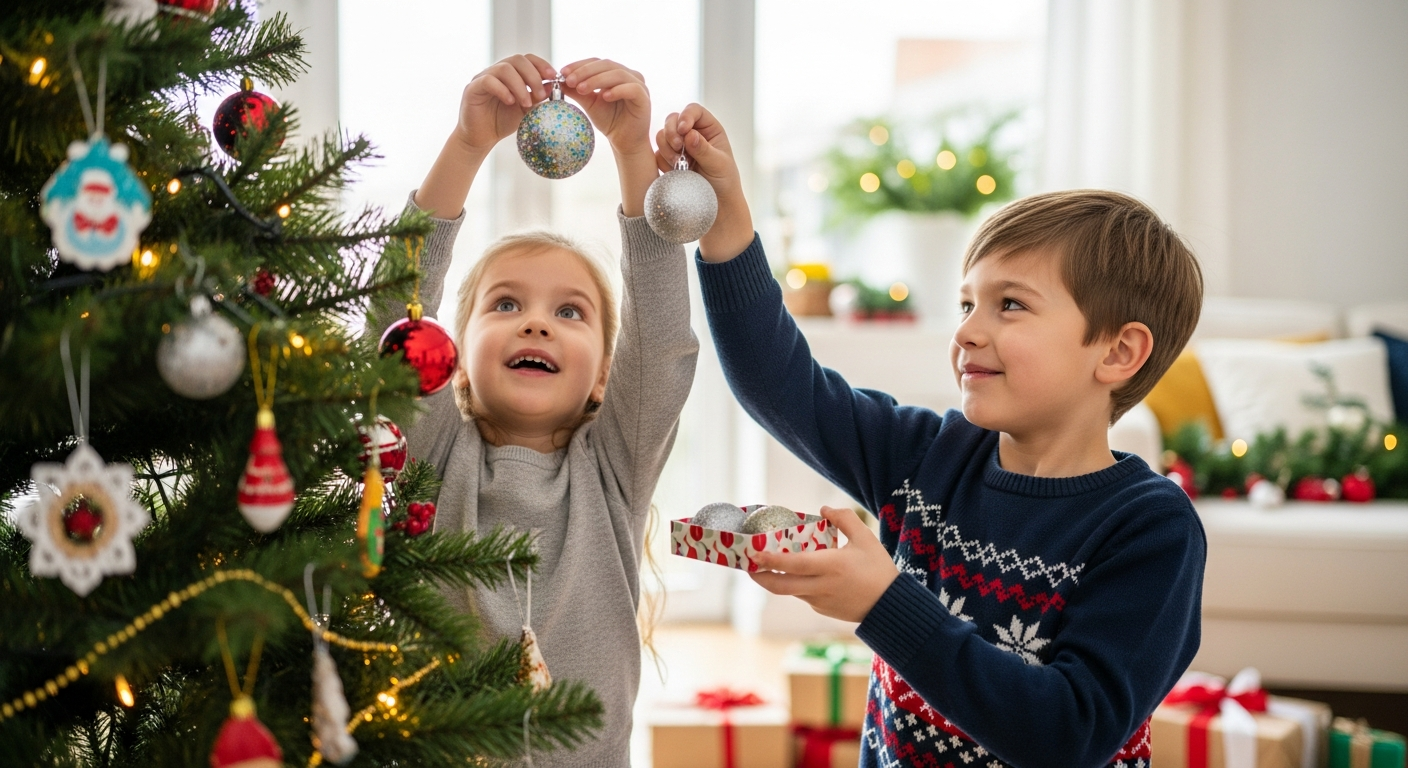
Table of Contents
- Why Christmas Is a Language-Rich Wonderland
- Crafting Communication: DIY Holiday Projects
- Kitchen Adventures: Baking & Cooking Up Language
- Storytelling & Imagination: Literary Holiday Joys
- Musical Moments: Singing & Dancing into the Season
- Outdoor & Community Explorations: Expanding Horizons
- Mindful Screen Time: Speech Blubs as a Holiday Helper
- Choosing the Right Plan: Maximize Your Child's Progress
- Conclusion
- Frequently Asked Questions (FAQ)
The crisp air, the twinkling lights, the scent of pine and gingerbread – Christmas truly is a magical time, especially when viewed through the eyes of a child. Beyond the excitement of presents, the holiday season offers a unique, vibrant canvas for creating cherished memories, building strong family bonds, and, perhaps surprisingly, fostering incredible language and communication development. This festive period is packed with opportunities for little ones to learn new words, practice sounds, express emotions, and engage in meaningful conversations.
We understand that parents are always looking for ways to enrich their children's lives, and at Speech Blubs, our mission is to empower children to "speak their minds and hearts." This holiday season, we invite you to explore a variety of Christmas activities that are not only fun and engaging but also intentionally designed to boost speech and language skills. By weaving language-rich moments into your festive traditions, you can transform ordinary holiday fun into powerful developmental milestones, enhanced by supportive tools like Speech Blubs.

Why Christmas Is a Language-Rich Wonderland
Christmas is a sensory extravaganza, providing countless natural conversation starters and learning opportunities that are hard to replicate at other times of the year. Every sight, sound, smell, and taste can become a prompt for language development.
- Expanded Vocabulary: Suddenly, children are introduced to a whole new lexicon: "ornament," "tinsel," "reindeer," "sleigh," "gingerbread," "carol," "chimney," and "stocking," among many others. These unique words provide a perfect chance to introduce and reinforce new concepts.
- Narrative Skills: The holiday season is steeped in stories – from classic tales like "The Night Before Christmas" to retelling cherished family traditions. This naturally encourages children to listen, recall, sequence events, and eventually create their own narratives.
- Social Communication: Family gatherings, visits with Santa, caroling with neighbors, and community events all provide invaluable opportunities for children to practice social greetings, turn-taking in conversations, asking and answering questions, and understanding non-verbal cues.
- Emotional Expression: The holidays evoke a wide range of emotions: excitement, joy, anticipation, gratitude, and sometimes even a little overwhelm. Discussing these feelings helps children develop emotional literacy and learn to articulate their inner experiences.
- Following Directions: Baking cookies, decorating the tree, or wrapping gifts all involve multi-step instructions, enhancing a child's ability to understand and execute complex commands.
At Speech Blubs, we believe that every child deserves the chance to communicate their deepest thoughts and feelings. Our company was born from the personal experiences of our founders, who all grew up with speech problems and created the tool they wished they had. We know firsthand the difference that early and joyful support can make, and the holiday season offers a perfect backdrop for this kind of growth.
Crafting Communication: DIY Holiday Projects
Hands-on activities are fantastic for developing fine motor skills, cognitive processing, and, crucially, language. Crafting provides a concrete context for learning new words and practicing communication.

Making Ornaments: A World of Descriptions
Decorating the Christmas tree is a highlight for many families. Instead of just hanging pre-made ornaments, try making some together! This activity offers endless opportunities for descriptive language.
- Discussion Prompts: "What colors should we use?" "Is this glitter sparkly or dull?" "Feel how bumpy this felt is." "Let's make a big, round snowflake!"
- Following Instructions: "First, we glue the cotton ball, then we add the eyes." This helps children practice sequencing and comprehension.
- Scenario for Language Practice: For a parent whose 3-year-old is a 'late talker' and loves shiny objects, making a glittery ornament is perfect. You can focus on words like "sparkle," "shiny," "pretty," and "more" as they request additional glitter. Even just pointing and labeling the colors – "red," "green," "gold" – provides valuable articulation practice.
Homemade Cards and Gifts: Expressing Love Through Words
Creating personalized cards or small gifts for loved ones encourages children to think about others and articulate their affections.
- Personalized Messages: Help children dictate messages for cards. Even if they can't write, they can tell you what they want to say: "Happy Christmas, Grandma! I love you."
- Drawing and Describing: As they draw pictures, ask them to describe what they are creating. "Tell me about your Santa drawing. What is he doing?"
- Gift-Giving Language: Practice phrases like "Merry Christmas!" "Thank you!" and "You're welcome!" as gifts are exchanged.
Paper Chains and Garland: Counting and Patterns
Simple paper chains are wonderful for developing fine motor skills and introducing mathematical concepts alongside language.
- Counting: "How many links do we have now?" "Let's count them together: one, two, three..."
- Color Recognition and Patterns: "What color comes next in our pattern?" "Red, green, red, green."
- Action Verbs: "Cut," "glue," "link," "hold," "pull."
Our unique approach at Speech Blubs blends scientific principles with play, creating one-of-a-kind "smart screen time" experiences. We use a "video modeling" methodology where children learn by watching and imitating their peers. Imagine a child watching peers create a festive craft in the app, then immediately applying those same vocabulary and action words to their own real-world crafting. It's a powerful way to bridge digital learning with hands-on experience. To learn more about the science behind our effective method, you can explore our research page.
Kitchen Adventures: Baking & Cooking Up Language
The kitchen is a fantastic natural laboratory for language development, especially during the holidays when baking cookies and preparing festive treats are common traditions.
Cookie Decorating: Requests and Descriptions
Baking and decorating Christmas cookies is a multi-sensory activity that appeals to almost every child.
- Requesting: "Can I have more sprinkles?" "I want the red frosting." This simple act of requesting helps children practice using descriptive words and making their wants known, reducing frustration.
- Describing: "My cookie is a star," "This icing is sticky," "These sprinkles are colorful."
- Following Steps: "First, we roll the dough. Next, we use the cookie cutters." This reinforces sequencing and auditory memory.
- Scenario for Language Practice: For a child who struggles with using full sentences, asking "What do you want?" while decorating cookies can encourage "Red sprinkles, please!" or "More frosting!" gradually building up sentence length.
Making Hot Cocoa or Festive Snacks: Following Recipes and Naming Ingredients
Even simple recipes provide a rich environment for language.
- Ingredient Naming: Identify and name ingredients: "milk," "cocoa powder," "marshmallows."
- Action Verbs: "Pour," "stir," "mix," "heat," "drink."
- Sensory Language: "It smells sweet," "The milk is warm," "The marshmallow is soft."
The kitchen provides real-world contexts that mimic the engaging, interactive learning experiences we champion at Speech Blubs. Our goal is to make learning joyful and immediate, just like the satisfaction of baking a delicious holiday treat.
Storytelling & Imagination: Literary Holiday Joys
The magic of Christmas is often found in its stories. Engaging with books and encouraging imaginative play are cornerstones of language development.
Reading Christmas Books: Predicting and Retelling
Snuggling up with a Christmas book is a beloved tradition that builds literacy and comprehension skills.
- Predicting: "What do you think will happen next?" as you turn a page. This encourages critical thinking and active listening.
- Retelling: After reading, ask your child to retell the story in their own words. "Can you tell me what happened to the gingerbread man?"
- Character Voices and Feelings: Use different voices for characters and discuss their emotions. "How do you think Santa felt when he got stuck in the chimney?"
- Scenario for Language Practice: Reading "The Night Before Christmas" allows for rich vocabulary exposure. Pause and ask, "What is a 'sleigh'?" or "What does 'twas the night before Christmas' mean?" For children practicing articulation, emphasizing words like "reindeer," "stocking," or "chimney" can be incredibly helpful.
Creating Holiday Stories: Nurturing Imagination
Beyond reading, encourage children to create their own holiday narratives.
- Picture Prompts: Look at Christmas pictures or ornaments and create stories about them. "Who lives in this gingerbread house?"
- "What If" Questions: "What if Rudolph lost his red nose?" "What if we had Christmas in July?" These questions spark creativity and expand expressive language.
- Sequencing: Help them structure their story: "First, then, next, finally."
Puppet Shows & Role-Playing: Embracing Different Voices
Puppets or dressing up as holiday characters can be a powerful tool for practicing dialogue and taking on different perspectives.
- Character Dialogue: Encourage children to speak as Santa, an elf, or a reindeer. This helps them experiment with different voices, tones, and vocabulary.
- Problem-Solving Scenarios: Set up simple scenarios: "Oh no, the elf can't find the presents! What should he do?"
- Link to "Smart Screen Time": We believe in "smart screen time" that sparks creativity and interaction, rather than passive viewing. While cartoons can be entertaining, our app offers a powerful tool for family connection, engaging children in communication practices that translate directly into imaginative play. Our approach ensures that screen time is a productive and interactive learning experience, supplementing hands-on play.
Musical Moments: Singing & Dancing into the Season
Music is a universal language, and Christmas carols are a fantastic way to engage children in rhythmic speech and group participation.
Christmas Carols: Rhythm, Memory, and Group Fun
Singing carols is more than just fun; it develops auditory processing, rhythm, and memory skills.
- Rhythmic Practice: The rhythm and repetition of songs help children internalize sound patterns and improve fluency.
- Vocabulary Reinforcement: Carols are full of festive vocabulary. Point to objects as you sing about them (e.g., "star," "bell," "tree").
- Turn-Taking: Sing verses alternately, or have one person sing a line and the child finish it.
- Action Songs: Incorporate actions to songs like "Jingle Bells" or "We Wish You a Merry Christmas" to combine movement with language.
Holiday Dance Party: Following Instructions and Expressing Joy
A holiday dance party is an energetic way to practice following instructions and express emotions.
- Simple Commands: "Clap your hands!" "Spin around!" "Wiggle your fingers!"
- Emotional Expression: Discuss how the music makes them feel. "Does this song make you feel happy or excited?"
- Gross Motor Skills: Dancing improves coordination and helps burn off holiday energy!
At Speech Blubs, we prioritize making learning enjoyable and engaging. Music naturally fosters joy and creates a positive environment for communication development, aligning perfectly with our values.
Outdoor & Community Explorations: Expanding Horizons
The holiday season often invites us to explore our neighborhoods and communities, providing rich real-world contexts for language learning.
Neighborhood Light Tour: Describing and Expressing Wonder
Taking a drive or walk to see Christmas lights is a simple yet magical activity.
- Descriptive Language: "Look at the bright blue lights!" "That Santa is so big!" "I see a sparkly reindeer."
- Question Formation: Encourage children to ask questions about what they see: "Who lives there?" "How did they put those lights up?"
- Comparing and Contrasting: "Which house has more lights?" "Do you like the blinking lights or the still lights better?"
- Scenario for Language Practice: For a child who might be struggling with specific speech sounds, pointing out "stars" or "trees" during a light tour provides a low-pressure, high-motivation opportunity to practice those sounds in a natural context.
Visiting Holiday Markets or Community Events: Social Skills
Local markets, parades, or community tree lightings offer opportunities for social interaction.
- Greetings and Farewells: Practice saying "Hello" and "Goodbye" to vendors or characters.
- Asking and Answering Questions: "What is that?" "Can I have one?" "Thank you!"
- Observation: Discuss what they see, hear, and smell. "I hear music!" "I smell popcorn!"
- Safety Talk: Discuss staying together and holding hands, introducing concepts like "safe" and "lost."
- Preliminary Screener: If you're observing your child in these new social situations and have any lingering questions about their communication development, our quick 3-minute preliminary screener can provide a simple assessment and a next-steps plan. It's a great tool for parents seeking clarity and validation, and it includes a free 7-day trial.
Acts of Kindness: Discussing Empathy and Giving
The spirit of giving is central to Christmas. Engaging in acts of kindness fosters empathy and provides language around social emotional concepts.
- Donating Toys/Clothes: Discussing why you're donating and who it will help. "These toys will make another child happy."
- Making Gifts for Others: Focus on the joy of giving, not just receiving.
- Volunteering: Even simple gestures like helping neighbors with decorations can open discussions about community and helping others.
- Emotional Language: "How do you think they will feel when they get this?"
Mindful Screen Time: Speech Blubs as a Holiday Helper
Amidst the joyful chaos of the holidays, parents sometimes need a structured, engaging activity to support their child's speech development. This is where Speech Blubs shines, offering "smart screen time" that works as a powerful supplement to all the wonderful hands-on activities you’re doing.
We are committed to providing an immediate, effective, and joyful solution for the 1 in 4 children who need speech support. Our app uses a unique "video modeling" methodology, where children learn by watching and imitating the speech of their real-life peers. This approach leverages mirror neurons, making learning feel natural and engaging.
- Targeted Practice: If your child needs help with specific sounds (like 's' for "star" or 't' for "tree") or a particular vocabulary category (like "animals" or "foods"), Speech Blubs offers thousands of activities that can be tailored to their needs.
- Quick, Focused Sessions: In between decorating, baking, or visiting family, a quick 5-10 minute session with Speech Blubs can provide valuable, focused practice without overwhelming your child. It's a wonderful way to reinforce skills learned through everyday holiday activities.
- Interactive Learning: Unlike passive cartoons, our app actively encourages children to participate, speak, and mimic. It's truly a screen-free alternative to passive viewing, promoting active engagement.
- Family Connection: Parents can sit with their child, engage with the app together, and celebrate every spoken word or sound. It’s a tool for shared learning and bonding.
- Scenario for App Use: For a 4-year-old who is practicing the 'g' sound, finding the "gifts" section in the app to say "gift" or "green" can be a perfect, fun way to get some targeted practice right before wrapping presents, reinforcing the sound in a meaningful context.
Don't just take our word for it! See what other parents are saying about their child's amazing progress with Speech Blubs. Our app is rated highly on the MARS scale, placing us in the top tier of speech apps worldwide.
Choosing the Right Plan: Maximize Your Child's Progress
We believe in making high-quality speech and language support accessible to every family. To ensure your child gets the most out of Speech Blubs, it's important to choose the right plan.
We offer two convenient subscription options:
- Monthly Plan: At $14.99 per month, this option provides flexibility.
- Yearly Plan: For just $59.99 per year, you save significantly, bringing the cost down to an equivalent of just $4.99 per month! This means you can save 66% by choosing the Yearly plan.
The Yearly plan is undoubtedly the best choice for value and features, designed to support your child's long-term communication journey. It includes exclusive, high-value benefits that are not available with the Monthly plan:
- A 7-day free trial: Experience the full power of Speech Blubs completely free for a week.
- The extra Reading Blubs app: Enhance literacy skills alongside speech development.
- Early access to new updates: Be among the first to explore our latest features and content.
- 24-hour support response time: Get prompt assistance whenever you need it.
We strongly encourage you to choose the Yearly plan to get the free trial and unlock the full suite of features that will truly empower your child's communication growth. It’s an investment in their future, making every holiday season a step forward in their ability to speak their minds and hearts.
Conclusion
The Christmas season is a precious time, brimming with warmth, wonder, and countless opportunities for connection. By intentionally incorporating language-rich activities into your festive traditions, you're not just creating beautiful memories; you're actively nurturing your child's speech and language development. From crafting descriptive ornaments and baking with purpose, to reading enchanting stories and singing joyful carols, every moment can be a chance for growth.
Active engagement, enthusiastic parental support, and innovative tools like Speech Blubs combine to create a powerful and joyful learning environment. We understand the unique journey of every child, and we are here to support you in fostering a love for communication, building confidence, reducing frustration, and developing foundational skills.
Ready to transform holiday fun into profound language growth for your child? There’s no better time to start! Download Speech Blubs on the App Store or Google Play today! Begin your 7-day free trial and embark on a journey of joyful communication. Remember to select the Yearly plan to unlock all the exclusive features, including the Reading Blubs app, and experience the best value our comprehensive platform has to offer!
Frequently Asked Questions (FAQ)
How can I encourage my child to talk more during Christmas activities?
The key is to make it natural and fun! Use open-ended questions (e.g., "What do you see?" instead of "Do you see lights?"), describe what you're doing ("I'm mixing the dough!"), and provide choices ("Do you want red or green frosting?"). Follow your child's lead and elaborate on their interests. If they point, label the object for them. Remember, every little attempt at communication is a victory.
What if my child is shy or hesitant to participate in group activities?
That's perfectly normal for many children. Don't pressure them. Instead, create a supportive environment. You can narrate what others are doing for them ("Look, your cousin is singing!"), or invite them to participate in a small, low-pressure way (e.g., "Would you like to shake the bell with me?"). One-on-one activities, like reading a book together, might be more comfortable first. Speech Blubs offers a safe, individual space for practice before engaging in larger group settings.
How does Speech Blubs specifically help with holiday-themed vocabulary?
Speech Blubs features an extensive library of activities categorized by themes, sounds, and word types. While we don't have a specific "Christmas" category, many of our existing sections, like "Animals," "Foods," "Colors," and "Everyday Objects," contain vocabulary highly relevant to the holidays (e.g., "star," "tree," "cookie," "red," "gift"). You can search for specific words or sounds that come up during your holiday activities and reinforce them using our video modeling method.
Is the Speech Blubs app a substitute for professional speech therapy?
No, Speech Blubs is designed to be a powerful and effective supplement to a child's overall development plan and, when applicable, professional therapy. It provides consistent, engaging practice opportunities that can reinforce skills learned in therapy or help children with mild speech delays. We always recommend consulting with a certified speech-language pathologist if you have concerns about your child's speech development. The app provides excellent 'smart screen time' that can complement expert guidance.
About the author