
Festive Food Fun: Easy Christmas Food Crafts for Kids
 By Speech Blubs Team•Dec 22, 2025•20 min.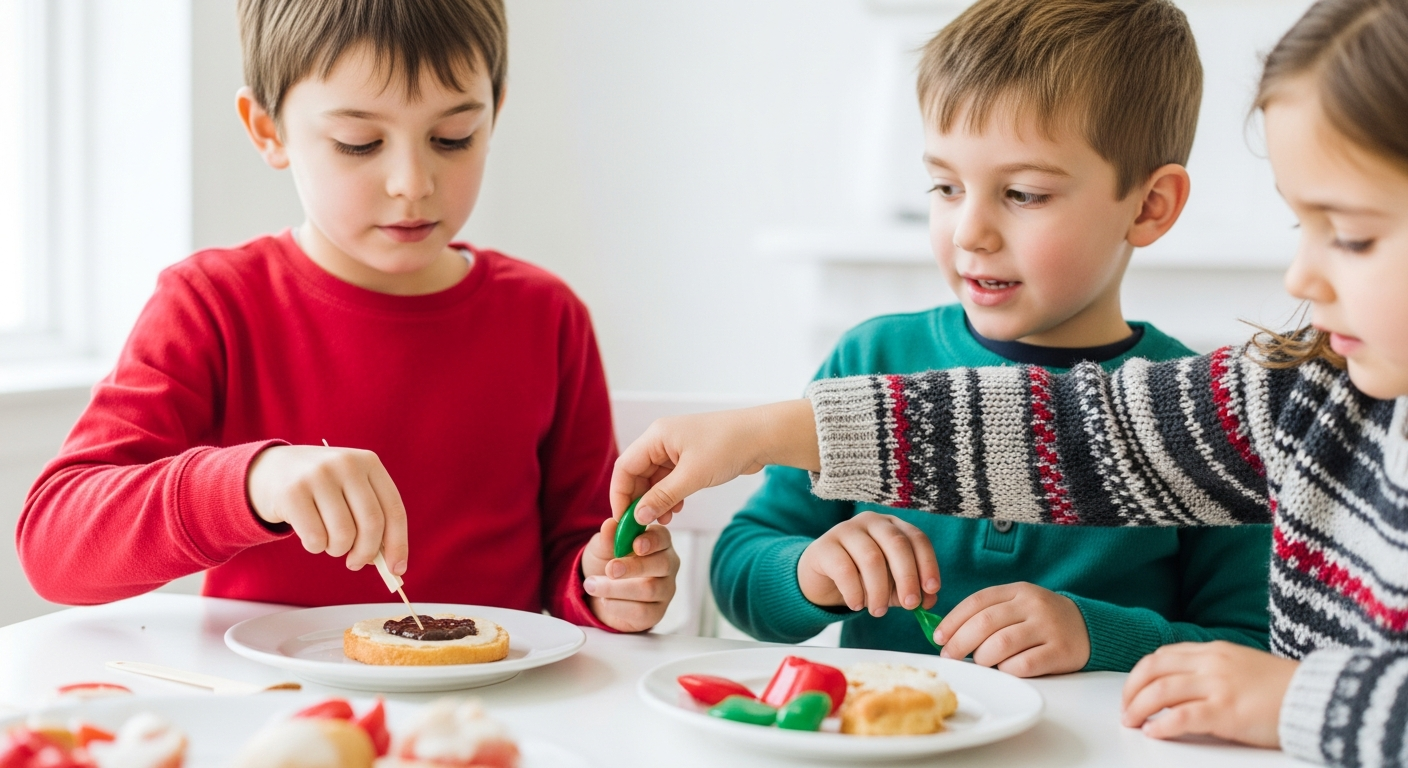
Table of Contents
- Introduction
- Why Food Crafts Are More Than Just Delicious Fun
- Getting Started: Safety First and Prep Tips
- Sweet & Simple Christmas Food Crafts
- Boosting Language Skills While You Craft
- The Speech Blubs Difference: How We Help Kids Speak Their Minds and Hearts
- Ready to Start Your Child's Communication Journey?
- Conclusion
- Frequently Asked Questions (FAQ)
The air crackles with excitement as the holidays draw near, bringing with them a magical blend of twinkling lights, festive songs, and the promise of cherished family moments. As parents, we often find ourselves searching for meaningful activities that not only entertain our children but also contribute to their growth and development, moving beyond passive screen time. Imagine a joyous afternoon filled with laughter, sticky fingers, and the sweet aroma of holiday treats – all while your child is actively building crucial skills.
This blog post will dive into the wonderful world of easy Christmas food crafts for kids, offering a treasure trove of simple yet enchanting ideas that you can create together. We'll explore how these delightful culinary adventures do much more than just produce yummy snacks; they become powerful tools for sensory exploration, fine motor skill development, and most importantly, language and communication growth. Our goal at Speech Blubs is to empower children to speak their minds and hearts, and we believe these hands-on activities are a fantastic complement to that journey. Get ready to transform your kitchen into a festive workshop, where every sprinkle and every bite is an opportunity for connection and learning.

Introduction
Christmas is a time of wonder, a season when even the simplest activities can become extraordinary memories. For many parents, the challenge lies in finding engaging ways to channel that holiday energy into constructive, joyful experiences that truly connect the family. We all want to make the most of this special time, creating traditions that will be remembered long after the last ornament is packed away. Instead of another cartoon, what if we suggested an activity that sparks imagination, engages all the senses, and subtly builds essential developmental skills?
This article aims to be your go-to guide for easy Christmas food crafts that are perfect for little hands. We'll walk you through a variety of simple, delicious, and visually appealing edible creations that promise smiles, laughter, and a delightful mess. Beyond the immediate fun, we'll uncover how these festive food projects are invaluable for fostering fine motor skills, encouraging sensory exploration, and significantly boosting language development. Join us as we discover how to make this Christmas season not just merry and bright, but also rich with opportunities for learning and connection.
Why Food Crafts Are More Than Just Delicious Fun
Engaging in food crafts with your child offers a unique blend of fun, learning, and sensory experience that goes far beyond simply making a snack. These activities naturally integrate multiple developmental areas, making them incredibly beneficial for young children. As a screen-free alternative to passive viewing, they provide a powerful tool for family connection, creating an environment where children can truly thrive and practice new skills.
Sensory Exploration and Development
Think about the sheer sensory richness of food crafts. Your child will:
- Touch: The stickiness of icing, the smoothness of chocolate, the crunch of sprinkles. This tactile input is crucial for sensory processing.
- Smell: The sweet aroma of vanilla, the zing of peppermint, the warmth of cinnamon. These scents engage the olfactory system and can evoke strong memories.
- Taste: The delightful reward of their efforts, experiencing different flavors and textures.
- See: Bright colors, fun shapes, the transformation of ingredients into a festive creation.
- Hear: The crinkle of wrappers, the clink of mixing bowls, the happy chatter.
This multi-sensory engagement helps children build a better understanding of the world around them and can even make picky eaters more comfortable with new foods.

Fine Motor Skill Enhancement
Many food crafts require precise movements that are excellent for developing fine motor skills, which are essential for tasks like writing, buttoning clothes, and self-feeding. Activities include:
- Pinching and Grasping: Picking up sprinkles, candy eyes, or small candies.
- Squeezing: Applying icing from a bag or bottle.
- Spreading: Using a knife (child-safe) or spoon to spread frosting.
- Rolling and Shaping: Working with dough or malleable treats.
- Decorating: Carefully placing items, drawing with icing.
These actions strengthen hand muscles and improve hand-eye coordination.
Cognitive and Life Skills
Food crafts are also fantastic for cognitive development:
- Following Instructions: Children learn to listen, remember, and sequence steps in a recipe. This is a foundational skill for academic success.
- Problem-Solving: What if the marshmallow keeps falling? How do we make the antlers stick? These small challenges encourage creative thinking.
- Measurement and Counting: Simple concepts like "a little bit," "more," or counting candies can be introduced.
- Cause and Effect: Understanding that mixing ingredients creates a new substance or that heat changes food.
Boosting Language and Communication
This is where food crafts truly shine, especially when paired with an intentional approach to communication, much like our philosophy at Speech Blubs. As founders who grew up with speech problems, we created the tool we wished we had – a system that blends scientific principles with play. During food crafts, you can naturally foster language development by:
- Vocabulary Expansion: Introducing new words related to ingredients (flour, sugar, sprinkles), actions (mix, stir, pour, spread, dip), colors (red, green, white), shapes (circle, star, tree), and descriptive terms (sticky, sweet, crunchy, yummy, festive).
- Descriptive Language: Encouraging your child to describe what they see, feel, smell, and taste. "What color is the icing? How does the candy feel?"
- Following Multi-Step Directions: "First, we spread the green frosting. Then, we add the sprinkles."
- Turn-Taking and Requesting: "My turn to stir," "Can I have more sprinkles, please?" These interactions build conversational skills.
- Storytelling and Imaginative Play: "Let's make a story about our gingerbread man!" This sparks creativity and narrative skills.
For a child who might be a "late talker," these hands-on, motivating activities create a rich environment for imitation. Just as our Speech Blubs app uses "video modeling" where children learn by watching and imitating their peers, you can model words and actions in the kitchen, encouraging your child to copy you. For instance, while making Rudolph pretzels, you might say "Dip!" as you dip the pretzel, and encourage your child to imitate the word and action.
Unsure if your child could benefit from a little extra support in their communication journey? Take our quick 3-minute preliminary screener to get a simple assessment and a personalized next-steps plan. It's a great starting point for parents seeking clarity.
Getting Started: Safety First and Prep Tips
Before you dive into the festive fun, a little preparation goes a long way to ensure a smooth, safe, and enjoyable experience for everyone.
Prioritizing Safety
- Adult Supervision is Key: Always supervise young children, especially when working with hot ingredients, sharp tools, or small candies that could be choking hazards.
- Hygiene First: Wash hands thoroughly before and during the activity.
- Allergy Awareness: Be mindful of any food allergies or sensitivities your child or other family members may have.
- Child-Friendly Tools: Invest in or use appropriate tools, such as blunt plastic knives, child-safe scissors for opening packages, and small, easy-to-handle mixing bowls and spatulas.
Preparing Your Workspace
- Clear the Area: Designate a specific, clutter-free space for crafting, like a kitchen counter or table.
- Protect Surfaces: Lay down old newspapers, parchment paper, or a wipeable tablecloth for easy cleanup. Food crafts can get wonderfully messy!
- Gather Ingredients and Tools: Have everything you need within easy reach before you start. This prevents interruptions and keeps your child engaged. Pre-measure ingredients where appropriate for younger children to focus on assembly and decorating.
- Dress for Success: Consider having your child wear an apron or an old t-shirt to protect their clothes.
By taking these simple preparatory steps, you'll create a welcoming and low-stress environment that allows both you and your child to fully immerse yourselves in the joy of creating.
Sweet & Simple Christmas Food Crafts
Now for the fun part! Here are some of our favorite easy Christmas food crafts, complete with simple instructions and ideas for boosting your child's communication skills along the way.
1. Santa's Strawberry Hats
These adorable, healthy-ish treats are a classic for a reason – they're incredibly simple and visually striking!
- Ingredients: Fresh strawberries, whipped cream (from a can for ease, or homemade), mini chocolate chips or sprinkles.
- Steps:
- Wash and hull the strawberries, cutting a small flat base if needed so they stand upright.
- Ask your child to pick a strawberry. "Which strawberry do you want? The big one? The small one?"
- Help them squirt a dollop of whipped cream on the wider end of the strawberry, forming the brim of Santa's hat. Talk about the texture: "It's so soft! So white!"
- Top with a small "pom-pom" of whipped cream.
- Add two mini chocolate chips for eyes or sprinkles for extra flair.
- Language Boosters:
- Vocabulary: "red," "white," "strawberry," "cream," "sweet," "hat," "top," "bottom," "squish," "eat."
- Following Directions: "First, we get a strawberry. Next, we add cream."
- Descriptive Language: "The strawberry is red and juicy." "The cream is fluffy."
- Imitation: Encourage your child to say "red" or "cream" as they handle the ingredients.
2. Rudolph Pretzels
A perfect blend of salty and sweet, these reindeer treats are always a hit.
- Ingredients: Pretzel rods or mini pretzels, milk chocolate melting wafers or chocolate chips, small red candies (like M&M's or Skittles) for noses, candy eyeballs.
- Steps:
- Melt the chocolate wafers according to package directions. This is a great opportunity to talk about "hot" and "melting."
- Help your child dip about two-thirds of a pretzel rod into the melted chocolate. "Dip it in! Slowly!"
- Lay the chocolate-covered pretzels on parchment paper.
- Before the chocolate sets, let your child carefully place two candy eyeballs and one red candy nose onto each pretzel. For pretzel twists, they can become Rudolph's head, with mini pretzels used as antlers.
- Language Boosters:
- Vocabulary: "salty," "sweet," "brown," "red," "eyes," "nose," "antlers," "reindeer," "dip," "melt," "stick."
- Action Words: "Dip," "place," "stick."
- Animal Sounds: Make a "snort" sound for the reindeer or talk about what a reindeer does.
- Body Parts: Focus on "eyes" and "nose" as you place the candies.
3. Gingerbread Men (Decorating Fun)
No need for complicated baking! Purchase pre-baked gingerbread cookies or use graham crackers cut into gingerbread shapes. The real fun is in the decorating!
- Ingredients: Pre-baked gingerbread cookies (or graham crackers), white and colored icing (tubes work great for small hands), various sprinkles, small candies (gumdrops, mini M&M's, silver balls).
- Steps:
- Give each child a cookie. "Here's your gingerbread man! What will he look like?"
- Let them squeeze icing to create faces, buttons, or clothing patterns. Talk about the colors. "Green icing! Purple buttons!"
- Encourage them to decorate with sprinkles and candies. "Sprinkle, sprinkle!" "Put a button on his belly."
- Create different expressions: a happy gingerbread man, a surprised one, a sleepy one.
- Language Boosters:
- Vocabulary: "gingerbread man," "icing," "sprinkles," "buttons," "eyes," "mouth," "arms," "legs," "decorate," "squeeze," "happy," "sad."
- Descriptive Language: "My gingerbread man has a big smile!" "He has sparkly green clothes."
- Storytelling: Ask them to tell a story about their gingerbread man. "Where is he going? What does he like to do?"
- Choice Making: "Do you want green icing or red icing?"
For a parent whose 3-year-old "late talker" loves animals, our Speech Blubs app offers a fantastic "Animal Kingdom" section. While decorating a gingerbread man, you could connect it to making animal sounds or describing animal features, just like children learn by watching and imitating their peers in our "video modeling" method.
4. Marshmallow Snowmen
These stackable, edible snowmen are a delight to assemble and eat.
- Ingredients: Large marshmallows, pretzel sticks (for arms), mini chocolate chips (for eyes/buttons), candy corn (for nose), edible marker or black icing for details.
- Steps:
- Help your child gently thread two or three marshmallows onto a pretzel stick or skewer to create the snowman's body. "One, two, three marshmallows!"
- Break pretzel sticks in half for arms and insert them into the middle marshmallow.
- Add mini chocolate chips for eyes and buttons. "Where do the eyes go? On top!"
- Insert a candy corn piece for a carrot nose.
- Use an edible marker or a tiny dab of black icing for the mouth.
- Language Boosters:
- Vocabulary: "snowman," "marshmallow," "white," "arms," "eyes," "nose," "buttons," "stack," "push," "pointy," "sweet."
- Counting: Count the marshmallows as you stack them. "How many marshmallows?"
- Spatial Concepts: "On top," "in the middle," "next to."
- Sequencing: "First, stack the marshmallows. Next, add the arms."
5. Edible Christmas Trees
Simple sugar cones transform into festive trees with just a few ingredients.
- Ingredients: Sugar cones, green frosting, various small candies (M&M's, sprinkles, silver balls, mini candy canes).
- Steps:
- Place a sugar cone upside down on a plate or piece of parchment paper.
- Help your child spread green frosting all over the cone to make it look like a tree. "Spread the green frosting!" "Make it smooth."
- Let them decorate their tree with all the colorful candies, pretending they are ornaments. "Put a red ornament here! And a yellow star on top!"
- For extra fun, sprinkle edible glitter.
- Language Boosters:
- Vocabulary: "tree," "green," "cone," "frosting," "ornaments," "star," "sparkle," "decorate," "spread."
- Colors and Shapes: Name the colors of the candies. "What shape is this candy?"
- Size Concepts: "Big candy," "small candy."
- Sensory Words: "Sticky frosting," "crunchy cone."
6. Grinch Fruit Skewers
A healthier, vibrant option that's quick to assemble and still incredibly festive.
- Ingredients: Green grapes, banana slices (dipped in lemon juice to prevent browning), strawberry halves, mini marshmallows.
- Steps:
- Help your child thread a green grape onto a skewer.
- Next, add a banana slice.
- Then, a strawberry half.
- Finally, top with a mini marshmallow to create the Grinch's iconic hat.
- Talk about the colors and fruits as you go. "Green grape, yellow banana!"
- Language Boosters:
- Vocabulary: "grape," "banana," "strawberry," "marshmallow," "green," "yellow," "red," "white," "skewer," "healthy," "fruit."
- Sequencing: "First, the grape, then the banana..."
- Questioning: "What fruit do you like best?" "Do you want more grape?"
- Healthy Eating: Discussing the benefits of eating fruit.
Boosting Language Skills While You Craft
Beyond the specific vocabulary for each craft, there are overarching strategies you can employ during any food crafting session to supercharge your child's language development. These strategies align perfectly with our mission at Speech Blubs to provide an immediate, effective, and joyful solution for the 1 in 4 children who need speech support.
1. Talk About It Constantly
- Narrate Your Actions: "I'm stirring the frosting. Now I'm adding blue sprinkles."
- Use Descriptive Words: Focus on colors, shapes, textures, smells, and tastes. "This icing is sticky," "The candy is crunchy," "This strawberry is bright red."
- Ask Open-Ended Questions: Instead of yes/no questions, encourage more elaborate answers. "What do you think we should do next?" "How does that feel?" "Tell me about your gingerbread man."
2. Follow Directions and Sequences
- Break Down Steps: Present instructions in small, manageable chunks. "First, put the pretzel on the paper. Then, add the eyes."
- Use Sequencing Words: "First," "Next," "Then," "Last," "Before," "After." This helps children understand the order of events, a crucial skill for narrative and conversational development.
- Practice Recall: After a few steps, ask, "What did we do first?" or "What's next?"
3. Imitation and Modeling
This is the core of our unique "video modeling" methodology at Speech Blubs, where children learn by watching and imitating their peers. You, as a parent, are a powerful model!
- Model New Words: If your child points to the sprinkles, say, "Sprinkles! Do you want some sprinkles?" Encourage them to repeat.
- Model Actions with Words: Say "Mix!" as you stir, "Dip!" as you dip. Pause and wait for your child to imitate the word or action.
- Expand on Their Utterances: If your child says "cookie," you can expand it to "Yes, a yummy cookie!" or "Decorate cookie!"
4. Storytelling and Pretend Play
- Give Life to Your Creations: "Our snowman looks a little chilly! What can we give him to warm up?"
- Create Scenarios: "The gingerbread man is going on an adventure! Where should he go?" This stimulates imagination and narrative skills.
5. Turn-Taking
- Share Responsibilities: "My turn to spread the frosting, then your turn to add the sprinkles." This teaches social interaction and cooperation.
- Wait Time: Give your child plenty of time to respond, process, and formulate their thoughts. Don't rush them.
Engaging with Speech Blubs can provide even more targeted support. Our app offers thousands of activities designed to make speech practice fun and effective. Our unique approach of teaching complex communication skills through video modeling, where children learn by watching and imitating their peers, complements these hands-on activities perfectly. Children are motivated to speak because they see real kids just like them, making the learning process engaging and natural.
We are committed to providing an immediate, effective, and joyful solution for families. Our method is backed by science, placing us in the top tier of speech apps worldwide, recognized for our strong engagement and positive outcomes. You can learn more about the scientific basis of our app on our Research page.
The Speech Blubs Difference: How We Help Kids Speak Their Minds and Hearts
At Speech Blubs, our mission is deeply personal and professionally driven: to empower children to speak their minds and hearts. Our company was born from the personal experiences of our founders, who all grew up with speech problems and created the tool they wished they had. We understand the challenges and frustrations that can come with communication difficulties, and we are committed to providing an immediate, effective, and joyful solution for the 1 in 4 children who need speech support.
We blend scientific principles with play into one-of-a-kind "smart screen time" experiences. Unlike passive viewing (like cartoons), Speech Blubs offers an active, interactive, and engaging alternative. We harness the power of "video modeling" methodology, where children learn by watching and imitating their peers. This approach taps into mirror neurons, making the learning process incredibly natural and effective, fostering genuine interaction and skill development.
Our app is designed to be a powerful tool for family connection, encouraging parents and caregivers to participate alongside their children. We focus on building confidence, reducing frustration, and developing key foundational skills that go beyond just pronunciation, nurturing a love for communication itself. While we never promise guaranteed outcomes, we consistently see children making progress, developing new sounds, words, and sentences, and finding their voice with greater clarity and joy. The app serves as a powerful supplement to a child's overall development plan and, when applicable, professional therapy, making it an invaluable resource for countless families worldwide. See what other parents are saying about their child's success with Speech Blubs on our Testimonials page.
Ready to Start Your Child's Communication Journey?
We believe every child deserves the chance to communicate clearly and confidently. That's why we've designed Speech Blubs to be accessible, engaging, and highly effective. Getting started with Speech Blubs is simple, and we offer flexible plans to suit your family's needs.
Our Monthly Plan is available at $14.99 per month. It's a great option for those who want to try the app for a shorter period.
However, for the best value and the most comprehensive experience, we highly recommend our Yearly Plan, priced at just $59.99 per year. This breaks down to an incredible value of just $4.99 per month, allowing you to save 66% compared to the monthly subscription!
The Yearly Plan isn't just cheaper; it also unlocks exclusive, high-value features designed to support your child's development even further:
- A 7-day free trial: Experience the full power of Speech Blubs before committing.
- The extra Reading Blubs app: Enhance literacy skills alongside speech development.
- Early access to new updates: Be the first to enjoy new content and features.
- 24-hour support response time: Get prompt assistance whenever you need it.
Please note that the Monthly plan does not include these valuable benefits. To make the most of Speech Blubs and access the full suite of features, including your free trial and the Reading Blubs app, choosing the Yearly plan is the clear best choice.
Conclusion
This Christmas, let's move beyond the ordinary and create extraordinary memories in the kitchen. Easy Christmas food crafts offer a delightful way to celebrate the season, not just with delicious treats, but with invaluable opportunities for your child's development. From fostering fine motor skills and sensory exploration to significantly boosting language and communication, these festive activities provide a rich environment for growth and family connection. Every sprinkle, every stir, and every bite becomes a chance to learn, talk, and laugh together.
Remember, the goal isn't perfection in crafting, but the joy of the process and the meaningful interactions that unfold. These moments of "smart screen time" and hands-on play are powerful complements to your child's overall development.
If you're looking for an immediate, effective, and joyful solution to further support your child's communication skills, look no further than Speech Blubs. Our app, built on scientific principles and video modeling, empowers children to speak their minds and hearts by learning from their peers. We are dedicated to providing a tool that fosters confidence, reduces frustration, and sparks a lifelong love for communication.
Ready to give your child the gift of a clearer voice and unleash their full potential? Download Speech Blubs today to begin your child's journey to confident communication! Start your 7-day free trial by signing up for the Yearly Plan on our website or find us on the Apple App Store or Google Play Store. Choose the Yearly plan to get the best value, including the free trial and the extra Reading Blubs app!
Frequently Asked Questions (FAQ)
Q1: What age group are these Christmas food crafts suitable for? A1: Most of these crafts are suitable for toddlers (2-3 years old) and preschoolers (4-5 years old) with adult supervision. Younger children can participate in simpler tasks like stirring or adding sprinkles, while older children can handle more steps independently. Always prioritize safety, especially with small pieces or hot ingredients.
Q2: How can I make these crafts more educational for my child? A2: Integrate language by narrating your actions, asking open-ended questions, and using descriptive words for colors, shapes, textures, and tastes. Focus on following multi-step directions, practicing turn-taking, and encouraging imitation of words and actions. These activities naturally complement the "video modeling" approach used in the Speech Blubs app.
Q3: My child has food allergies. Can we still do food crafts? A3: Absolutely! You can adapt many recipes to be allergy-friendly by substituting ingredients (e.g., gluten-free pretzels, dairy-free whipped cream, nut-free chocolates). Always double-check ingredient labels. Alternatively, consider using non-food craft materials inspired by food, but ensure they are clearly labeled as non-edible.
Q4: How does Speech Blubs specifically help with communication development? A4: Speech Blubs utilizes a unique "video modeling" methodology where children learn by watching and imitating their peers, making speech practice engaging and effective. Our app offers thousands of activities designed to target specific sounds, words, and sentences, building vocabulary, pronunciation, and confidence. It's an active, fun, and scientifically backed approach to "smart screen time" that supports and empowers children to find their voice, and can be a powerful supplement to professional therapy.
About the author