
Festive & Free Christmas Crafts for Kids
 By Speech Blubs Team•Dec 22, 2025•21 min.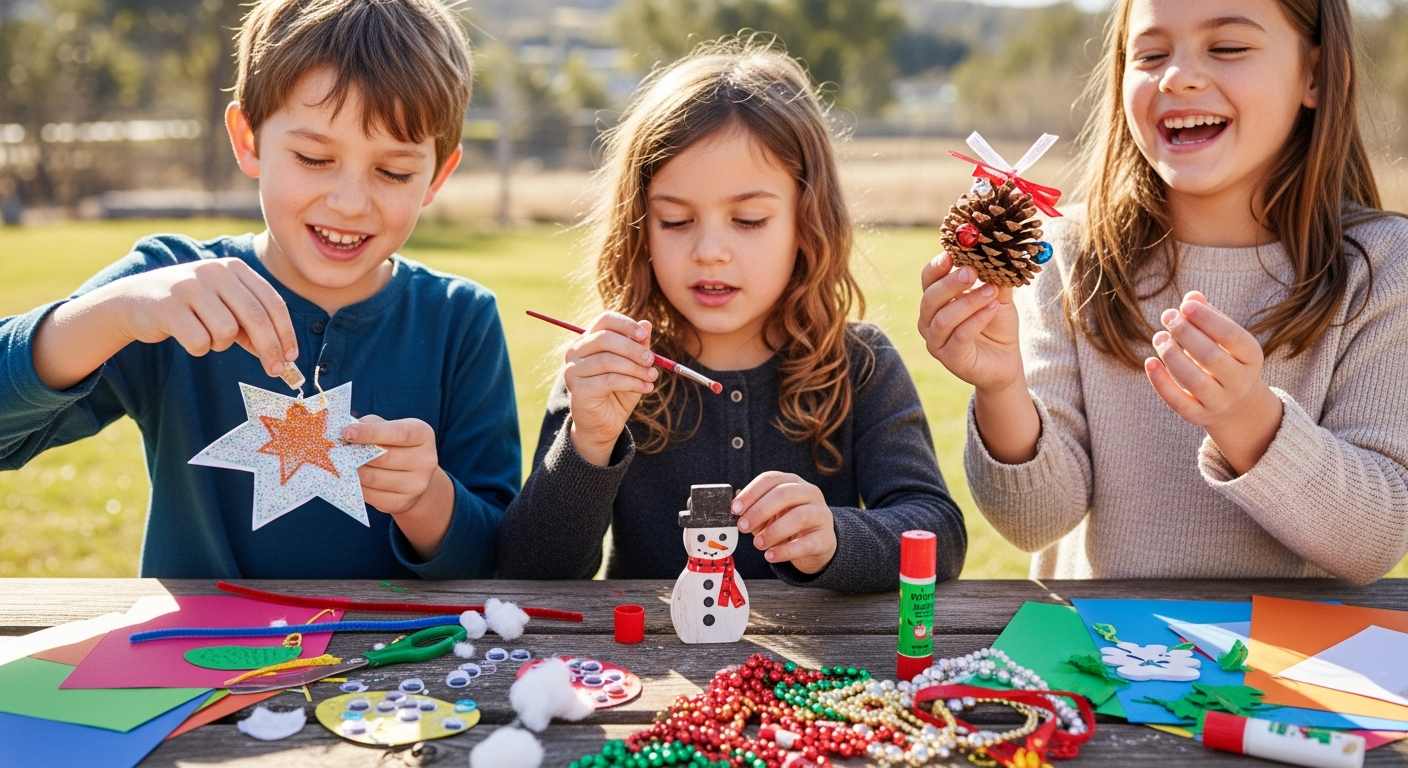
Table of Contents
- Introduction
- Why Christmas Crafts? More Than Just Fun!
- Our Favorite Free Christmas Craft Categories
- Crafting for Communication: Integrating Speech Blubs' Principles
- Making Crafts Accessible for All Ages and Stages
- Beyond the Craft: Extending the Learning
- A Powerful Partner in Your Child's Communication Journey
- Ready to Empower Your Child's Voice?
- Conclusion
- FAQ
Introduction
Picture this: the twinkling lights, the scent of pine, the joyous carols playing in the background. Christmas is a magical time, filled with warmth and wonder, but for many parents, it can also feel like a whirlwind of activities and expenses. Finding engaging, meaningful ways to celebrate with your children without breaking the bank can be a challenge. But what if we told you that some of the most memorable and developmentally beneficial holiday activities are completely free, right at your fingertips (or in your recycling bin!)?
This holiday season, let's rediscover the simple joy of creating. This blog post isn't just about sharing a list of fun crafts; it's about harnessing the power of creative play to foster communication, build confidence, and strengthen family bonds. We'll explore a treasure trove of free Christmas crafts for kids, showing you how everyday items can transform into festive masterpieces. Beyond the glitter and glue, we'll delve into how these activities naturally align with principles of speech and language development, creating joyful opportunities for your child to "speak their minds and hearts."

Why Christmas Crafts? More Than Just Fun!
When children engage in crafting, they're doing far more than just making something pretty. They're embarking on a multi-sensory journey that stimulates their minds and bodies in profound ways. These seemingly simple activities are rich learning experiences, laying foundations for crucial developmental milestones.
Developing Fine Motor Skills
Crafting is a fantastic workout for little hands and fingers. Activities like cutting with child-safe scissors, gluing small pieces, drawing lines, molding clay, or even just tearing paper require precision and coordination. These actions strengthen the small muscles in the hands and wrists, which are essential for tasks like writing, buttoning clothes, and self-feeding. The repetitive nature of many craft tasks helps refine these skills, improving dexterity and control.
Encouraging Communication and Language
Perhaps less obvious, but equally significant, is the role crafts play in language development. As children select materials, follow instructions, or describe their creations, they naturally engage in communication. They might ask, "What color should I use?" or exclaim, "Look at my shiny star!" Parents can narrate actions ("Now we're gluing the red paper"), ask open-ended questions ("Tell me about your reindeer"), and introduce new vocabulary ("texture," "pattern," "sparkle"). This interactive environment fosters a natural back-and-forth, encouraging descriptive language, sequential thinking, and expressing ideas. For children who may be struggling with speech, a low-pressure, engaging activity like crafting provides a perfect backdrop for practicing new sounds and words in a fun, meaningful context.
Boosting Creativity and Problem-Solving
Crafts ignite imagination. Children learn to think outside the box, experimenting with materials and finding unique ways to bring their visions to life. What happens if we use a pinecone instead of paper for the body? How can we make this snowman stand up? These moments of exploration and improvisation build vital problem-solving skills and foster a sense of accomplishment. There's no "wrong" way to be creative, and this freedom can be incredibly empowering for a child.

Strengthening Family Bonds
In our busy lives, dedicated family time can sometimes feel elusive. Crafting offers a wonderful opportunity to slow down, connect, and create memories together. It's a shared experience, where parents can guide, assist, and simply enjoy the process alongside their children. This quality time builds strong emotional bonds, creates a sense of belonging, and leaves children with tangible mementos of their shared holiday experience. These are the moments when families truly connect, reinforcing our mission at Speech Blubs to empower children and families through communication.
Our Favorite Free Christmas Craft Categories
The beauty of "free" crafts lies in their accessibility. Many materials are already in your home or can be found with a quick trip outdoors. Let's explore some categories to inspire your festive creativity.
Nature-Inspired Crafts: Gifts from the Great Outdoors
Nature is a boundless source of free craft materials, offering textures, shapes, and scents that awaken the senses. A simple walk in your local park or backyard can yield a treasure trove.
Pinecone Ornaments
- What you need: Pinecones, paint (if you have some leftover craft paint or even tempera), glitter (optional, but very festive!), string or yarn.
- How to make them: Gather pinecones. Children can paint them in festive colors like red, green, white, or silver. While the paint is wet, sprinkle with glitter for extra sparkle. Once dry, tie a loop of string or yarn around the top scales to hang on the tree.
- Communication connection: Talk about the "spiky" texture of the pinecone, the "smooth" paint, the "sparkly" glitter. Practice color names and action verbs like "paint," "sprinkle," "tie." For a child working on articulation, focusing on words like "pinecone" (initial /p/ and /k/) or "sparkle" (initial /s/ and /blend/) can be beneficial.
Leaf Print Christmas Cards
- What you need: Fallen leaves (fir, holly, oak shapes work well), paint, plain paper or cardstock (even cut-up paper bags or old envelopes can work).
- How to make them: Collect leaves of various shapes and sizes. Paint one side of a leaf with a thin layer of festive color. Carefully press the painted side onto paper, then peel it away to reveal a beautiful print. These can be used as unique holiday cards or gift tags.
- Communication connection: Describe the shapes of the leaves – "pointy," "round," "jagged." Discuss the colors used and the process: "First we paint, then we press, then we lift!"
Stick Reindeer
- What you need: Small twigs, googly eyes (if you have them, or draw eyes with a marker), red pom-poms (for Rudolph's nose, or use a painted pebble/berry), glue.
- How to make them: Find a Y-shaped twig for the head and antlers, and a straight stick for the body. Children can help glue the pieces together. Add googly eyes and a red nose.
- Communication connection: Practice animal sounds ("Reindeer say 'snort!'"), body parts ("head," "antlers," "nose"), and positional words ("glue the eyes on the stick").
Recycled Material Crafts: Upcycling for Holiday Cheer
Before you toss that empty toilet paper roll or cereal box, think of its potential! Recycled materials are a fantastic, free resource for endless crafting possibilities.
Toilet Paper Roll Santas, Reindeer, or Elves
- What you need: Empty toilet paper rolls, paint or markers, cotton balls, construction paper scraps (red, green, white), glue.
- How to make them: Paint a toilet paper roll red for Santa, brown for a reindeer, or green for an elf. Add details: cotton balls for Santa's beard and hat trim, construction paper antlers for reindeer, or pointy ears for elves.
- Communication connection: Discuss the characters: "Santa has a big, white beard!" "Rudolph has a shiny, red nose!" Practice imaginative play and storytelling with the finished figures. This also provides an excellent opportunity to practice sequential language: "First we paint the roll red, then we glue on the cotton."
Cardboard Box Gingerbread Houses
- What you need: Small cardboard boxes (cereal boxes, tissue boxes), brown paper bags or brown paint, markers, cotton balls, cut-up magazine pictures for "candy" decorations, glue.
- How to make them: Cover boxes with brown paper or paint them brown. Let children draw windows and doors with markers. Use cotton balls for "snow" on the roof, and glue on colorful cut-out pictures from magazines as "candy" decorations.
- Communication connection: "Build" vocabulary around house parts ("roof," "windows," "door"), colors, and descriptive words ("sweet," "cozy," "decorated").
Newspaper Snowmen
- What you need: Old newspapers, white paint, markers, construction paper scraps, glue.
- How to make them: Crumple newspaper into balls of different sizes for the snowman's body parts. Secure with tape. Paint them white. Once dry, stack and glue them together. Add eyes, a carrot nose, and stick arms using markers and paper scraps.
- Communication connection: Practice size concepts ("big," "medium," "small"), body parts ("eyes," "nose," "arms"), and action verbs ("crumple," "paint," "stack").
Paper Crafts: Simple, Versatile, and Always Fun
Paper is perhaps the most fundamental craft material, often available in various forms around the house. Old magazines, newspapers, even junk mail can find new life!
Paper Plate Santas, Angels, or Snowmen
- What you need: Paper plates, paint or markers, cotton balls, construction paper scraps, glue.
- How to make them: These are wonderfully versatile! Children can paint a paper plate red for Santa's face, add cotton for his beard, and craft a hat. Or paint it white for a snowman, adding eyes and a carrot nose. For an angel, use two plates – one for the body, cut another in half for wings.
- Communication connection: Identify facial features, body parts, and emotions ("Happy Santa!"). Discuss the circle shape of the plate.
Classic Paper Snowflakes
- What you need: Plain paper (any paper will do, even old bills or receipts!), child-safe scissors.
- How to make them: Fold a square piece of paper multiple times (demonstrate carefully). Then, children can cut small shapes and designs into the folded paper. Unfold to reveal a unique snowflake!
- Communication connection: This is excellent for following multi-step directions. Talk about "folding," "cutting," "unfolding." Discuss shapes cut out ("triangle," "square") and patterns created.
Magazine Collage Ornaments
- What you need: Old magazines, scissors, cardboard scraps (from cereal boxes, etc.), glue, string.
- How to make them: Cut cardboard into simple ornament shapes (circles, stars, trees). Children can then cut out colorful pictures or interesting textures from magazines and glue them onto the cardboard shapes, creating a unique collage. Punch a hole and add a string.
- Communication connection: Identify colors, objects, and people in the magazine pictures. Encourage children to describe their favorite elements and explain their choices. This activity is wonderful for sparking conversations about interests and preferences.
Handprint/Footprint Keepsakes
- What you need: Paint (washable!), plain paper or cardstock.
- How to make them: Dip your child's hand or foot in washable paint and press it onto paper. Transform these prints into festive characters! A green handprint can be a Christmas tree; a white handprint with red accents can be Santa's face.
- Communication connection: Practice body parts ("hand," "foot," "fingers," "toes"), colors, and descriptive words ("wiggle," "press," "lift"). These are also fantastic for discussing memories and creating lasting mementos.
Edible Crafts: Delicious and Engaging
Crafts you can eat add an extra layer of sensory delight and motivation! While some ingredients might require a quick pantry check, many simple edible crafts use very common items.
Popcorn Garlands
- What you need: Popped popcorn (air-popped is cheapest!), needle with a large eye, strong thread or dental floss.
- How to make them: Children can help string popped popcorn onto a thread using a blunt needle. This requires fine motor skill and concentration.
- Communication connection: Discuss the "crunchy" texture and "salty" taste of popcorn. Practice counting the pieces of popcorn as they string them. It's also great for practicing patience and fine motor control.
Cookie Decorating (if ingredients are on hand)
- What you need: Pre-made plain cookies (even simple butter cookies from a mix are fine if you have the ingredients), icing (powdered sugar + a little milk/water + food coloring), sprinkles (if available).
- How to make them: Let children loose with icing and sprinkles to decorate cookies. This is a messy but incredibly fun and engaging activity!
- Communication connection: Talk about colors, shapes, and the process of decorating. Describe the taste and smell. Practice requesting items: "More sprinkles, please!"
Toast Painting
- What you need: Bread, milk, food coloring, clean paintbrushes or cotton swabs.
- How to make them: Lightly toast bread. Mix a few drops of food coloring into small amounts of milk. Children can "paint" designs onto the toast with the colored milk. Re-toast lightly to set the colors, then eat!
- Communication connection: Discuss colors, patterns, and the "painting" process. This can be a great way to talk about trying new foods in a fun context.
Crafting for Communication: Integrating Speech Blubs' Principles
At Speech Blubs, we believe that learning should be joyful, interactive, and rooted in the way children naturally explore the world. This is why our approach to speech development so beautifully complements the benefits of hands-on activities like Christmas crafts. We understand that parents are looking for immediate, effective, and joyful solutions for the 1 in 4 children who need speech support, and our app provides just that, blending scientific principles with play.
Video Modeling & Imitation
Our core methodology at Speech Blubs is "video modeling," where children learn by watching and imitating their peers. This is incredibly effective because children are naturally wired to learn from observation. Crafting offers a real-world, screen-free parallel. As you demonstrate how to fold paper for a snowflake or how to apply glue, your child watches, processes, and then imitates your actions. This natural mimicry is a foundational step in learning new skills, including speech sounds and language patterns. Narrate your actions as you go: "Watch me! I'm going to cut here."
Engagement & Interaction
Both crafting and Speech Blubs emphasize active engagement over passive consumption. When your child is making a reindeer out of a stick, they are actively participating, making choices, and problem-solving. This isn't passive viewing like watching a cartoon. Instead, it's "smart screen time" when using our app, and "smart craft time" when creating. During crafting, maximize interaction:
- Ask Open-Ended Questions: Instead of "Do you like it?", try "What's your favorite part?" or "Tell me about your snowman."
- Narrate Your Actions: "I'm putting the glue on the stick. Now I'm pressing it down."
- Encourage Choices: "Do you want red paint or green paint for the ornament?"
- Reinforce Sounds and Words: Repeat back what your child says, expanding on it. If they say "tree," you can say, "Yes, a big green Christmas tree!"
Building Vocabulary
Every craft activity introduces opportunities for new words. From "pinecone" and "glitter" to "crumple" and "pattern," expand your child's lexicon. Our app, just like a well-guided craft session, introduces children to a wide array of vocabulary through engaging themes and activities. The more words a child hears and uses in a meaningful context, the richer their understanding and expression become.
Following Directions
Many crafts involve multi-step instructions, which are excellent for developing auditory processing and memory skills. "First, get the scissors, then cut the paper, then glue it here." Starting with two-step directions and gradually adding more complexity helps children develop this vital skill, which is crucial for academic success and daily life.
Emotional Expression
Crafting can be a journey of emotions. The joy of a finished piece, the slight frustration when something doesn't work out as planned, the pride in showing off their creation. These are all opportunities to discuss feelings. "Are you feeling happy about your sparkly ornament?" "It's okay if the glue got a little messy, we can fix it!" Our mission to empower children to "speak their minds and hearts" extends to helping them articulate their emotional world.
Making Crafts Accessible for All Ages and Stages
One of the many wonderful things about free Christmas crafts is their adaptability. You can tailor them to suit various developmental levels, ensuring every child can participate and feel successful.
Toddlers (1-3 Years)
- Focus: Sensory exploration, simple actions, cause and effect.
- Activities: Scribbling with chunky markers on paper, tearing paper into strips (great for strengthening finger muscles!), sticking large pre-cut shapes onto paper, painting with fingers or sponges, playing with playdough (homemade or store-bought). Supervision is key to ensure safety with small parts.
- Communication focus: Naming colors, simple nouns ("ball," "paint"), animal sounds, prepositions ("on," "off").
Preschoolers (3-5 Years)
- Focus: Developing fine motor skills (scissors!), following 2-3 step directions, naming colors and shapes, creative expression.
- Activities: Cutting along lines, gluing smaller pieces, drawing recognizable objects, simple collages, more complex painting techniques (e.g., using brushes), helping gather natural materials.
- Communication focus: Expanding vocabulary with descriptive words ("sparkly," "rough"), using action verbs ("cut," "glue," "draw"), telling simple stories about their creations. For a parent whose 3-year-old "late talker" loves animals, making a stick reindeer offers a fun, motivating way to practice "reindeer" or "nose" sounds, and the "Animal Kingdom" section in Speech Blubs offers a dynamic way to reinforce these sounds through peer video modeling.
School-Aged Children (5+ Years)
- Focus: Independent design, planning, intricate details, writing, expressing complex ideas.
- Activities: Designing their own craft projects, writing messages on cards, more complex folding/cutting, sewing simple stitches (with supervision), creating 3D structures.
- Communication focus: Explaining their creative process, problem-solving through verbalizing ideas, discussing complex instructions, writing descriptive captions or stories about their art.
Our app offers activities that similarly adapt to different developmental stages, ensuring that every child finds engaging challenges that match their unique needs. Whether your child is just starting to produce sounds or is working on more complex sentence structures, Speech Blubs provides a powerful supplement to their overall development plan.
Beyond the Craft: Extending the Learning
The learning and communication opportunities don't stop when the glue dries. Extend the joy and learning of your free Christmas crafts!
Storytelling About the Crafts
Encourage your child to tell you a story about their creation. Who is the pinecone elf? Where does the cardboard gingerbread house live? What adventures will the stick reindeer have? This promotes narrative skills, imagination, and self-expression.
Gift-Giving and Discussing the Recipient
If the crafts are intended as gifts, talk about who will receive them and why. "Grandma will love this handprint card because she loves your hands!" This helps develop empathy and understanding of social connections.
Displaying the Art
Proudly display your child's creations. This validates their effort and creativity, boosting their self-esteem and encouraging future artistic endeavors. Talk about where to put them, and how they make the room feel festive.
These extensions naturally build on the foundational skills developed through both crafting and our app. We are designed to be a powerful tool for family connection, creating moments of shared learning and joy. We believe in providing screen-free alternatives to passive viewing and empowering active, engaging experiences that foster growth.
A Powerful Partner in Your Child's Communication Journey
The joy and developmental benefits of free Christmas crafts are undeniable. They are a wonderful, accessible way to nurture your child's growth. At Speech Blubs, we are committed to extending that same spirit of joyful, effective learning into the digital realm. Our company was born from the personal experiences of our founders, all of whom grew up with speech problems and created the tool they wished they had. We understand the unique challenges and triumphs of this journey.
We are dedicated to providing an immediate, effective, and joyful solution for children who need speech support, empowering them to truly "speak their minds and hearts." Our unique approach blends scientific principles, like the power of mirror neurons in our video modeling methodology, with engaging play into one-of-a-kind "smart screen time" experiences. We are proud of our methodology, which has earned us a high MARS scale rating, placing us in the top tier of speech apps worldwide. You can learn more about the research behind our methods here.
Whether through hands-on crafts or interactive app play, our goal is the same: to foster a love for communication, build confidence, reduce frustration, and develop key foundational skills. We offer a powerful supplement to a child's overall development plan and, when applicable, professional therapy.
Unsure if your child could benefit from a little extra communication support? Take our quick 3-minute preliminary screener to get a simple assessment and a personalized next-steps plan. It's a great way to gain insight and includes a free 7-day trial of our app. See what other parents are saying about their child's success with Speech Blubs by visiting our testimonials page.
We invite you to explore the world of Speech Blubs and discover how we can be a supportive part of your family's journey. Visit our homepage to learn more.
Ready to Empower Your Child's Voice?
Just like a handmade ornament, your child's unique voice is a treasure. We're here to help it shine. Speech Blubs offers engaging, expert-designed activities that can complement your child's communication development every day.
We believe in making our empowering tools accessible to all families. Here’s a transparent look at our subscription options:
- Monthly Plan: For $14.99 per month, you get access to our core speech and language activities.
- Yearly Plan: For an incredible value of $59.99 per year, you save 66% compared to the monthly plan – that breaks down to just $4.99 per month! This is truly the best choice for comprehensive support.
The Yearly Plan isn't just about saving money; it unlocks a full suite of premium benefits designed to maximize your child's progress:
- A 7-day free trial: Experience the full app before committing.
- The extra Reading Blubs app: Further boost your child's literacy journey.
- Early access to new updates and features: Be the first to try our latest innovations.
- 24-hour support response time: Get prompt assistance whenever you need it.
The Monthly Plan does not include these valuable benefits, making the Yearly Plan the superior choice for serious engagement and long-term support.
Ready to embark on a journey of joyful communication with your child? We encourage you to choose the Yearly Plan to get the free trial and unlock the full suite of features and benefits. You can download Speech Blubs on the App Store or get it on Google Play Store to begin. Alternatively, you can create your account and begin your 7-day free trial today through our website.
Conclusion
This holiday season, let's embrace the magic of creation and connection. Free Christmas crafts for kids offer an incredible opportunity to infuse your home with festive cheer, ignite creativity, and build essential developmental skills. From the simplest pinecone ornament to a detailed paper plate Santa, each craft becomes a canvas for imagination and a catalyst for communication.
By engaging in these joyful, hands-on activities, you're not just making holiday decorations; you're creating lasting memories, strengthening family bonds, and providing invaluable opportunities for your child to practice fine motor skills, expand their vocabulary, and express themselves. These moments of shared attention and interactive play perfectly complement the mission of Speech Blubs: to empower children to "speak their minds and hearts" through engaging, scientifically-backed methods.
We are here to support you in every step of your child's communication journey, blending the power of play with expert guidance. Empower your child's communication journey today! Choose the Yearly plan to get the free trial and the full suite of features by downloading Speech Blubs on the App Store, on Google Play, or by creating your account and starting your 7-day free trial online.
FAQ
Q1: What are the best free materials for Christmas crafts with kids?
A1: The best free materials are often found right at home or in nature! Think about items like empty toilet paper rolls, cardboard boxes (from cereal, tissues), old newspapers, magazines, leaves, pinecones, twigs, pebbles, and even simple plain paper from old receipts or junk mail. Leftover craft supplies like paint, glue, or yarn from previous projects can also be put to good use.
Q2: How can crafts help my child's speech and language development?
A2: Crafts provide a rich, natural environment for communication. Children use language to request materials ("red paint!"), describe their actions ("I'm cutting the paper"), express ideas ("This is a happy snowman!"), and follow instructions ("First glue the eyes, then the nose"). Parents can narrate actions, ask open-ended questions, and introduce new vocabulary, all of which are crucial for language acquisition and practice. This interactive play mirrors the engaging, interactive approach we use at Speech Blubs to foster communication.
Q3: What is the benefit of the Yearly Speech Blubs plan over the Monthly plan?
A3: The Yearly plan for Speech Blubs offers significantly more value and features. At $59.99/year (which breaks down to just $4.99/month), it saves you 66% compared to the Monthly plan ($14.99/month). Crucially, the Yearly plan includes a 7-day free trial, access to the additional Reading Blubs app, early access to new updates, and a faster 24-hour support response time. These benefits are not included with the Monthly plan, making the Yearly plan the best choice for comprehensive support.
Q4: Are these free crafts suitable for children of all ages?
A4: Yes, these crafts can be adapted for children of various ages and developmental stages. For toddlers, focus on sensory exploration, simple actions like tearing paper or finger painting. Preschoolers can engage in more complex activities like using child-safe scissors and following 2-3 step instructions. School-aged children can be encouraged to design their own crafts, write messages, and work on more intricate details. Always ensure supervision and choose age-appropriate materials and tools to ensure safety and enjoyment.
About the author