
Festive Fun: 50+ Joyful Xmas Activities for Kids
 By Speech Blubs Team•Jan 13, 2026•19 min.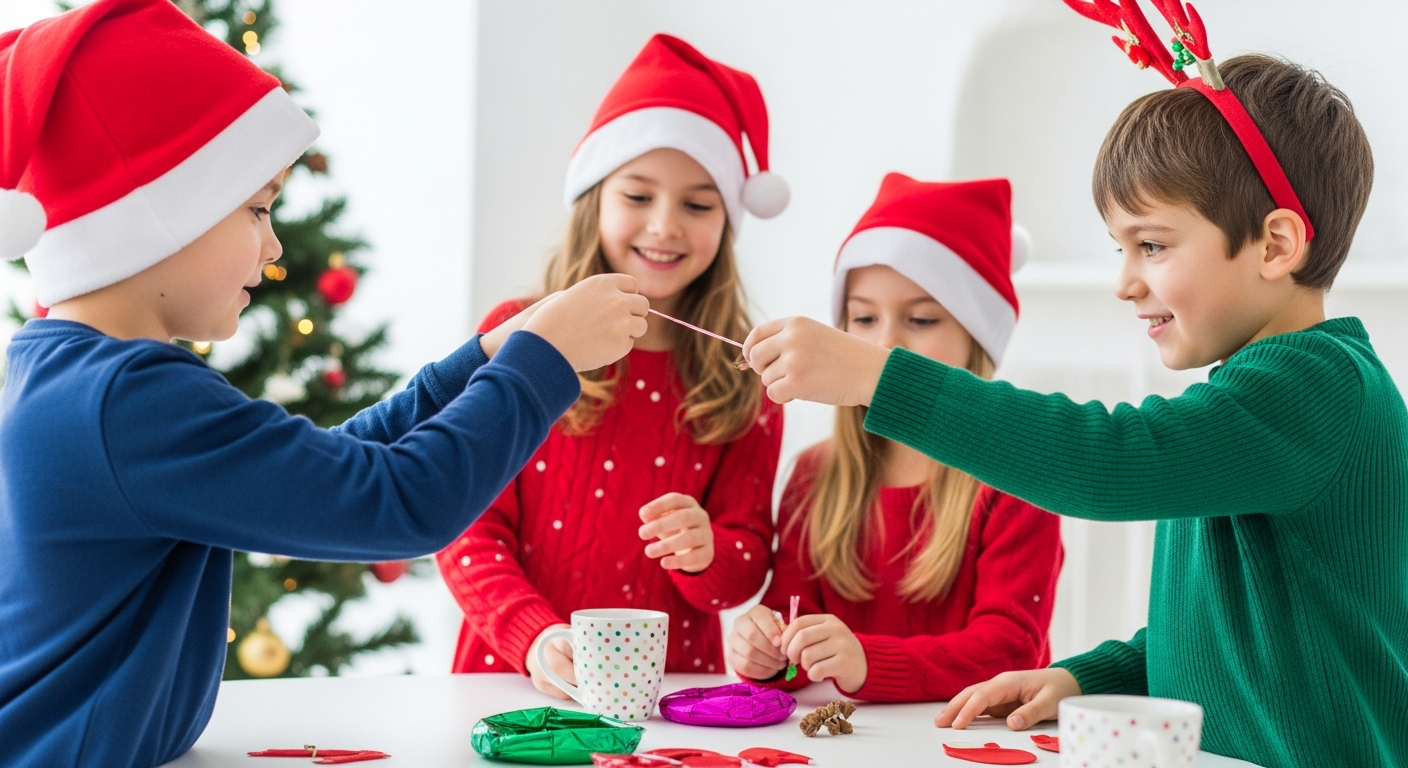
Table of Contents
- Introduction
- Embracing the Spirit: Making Christmas Prep a Joyful Adventure
- Creating Lasting Memories: Engaging Activities for Every Child
- Ensuring a Confident Holiday Season with Speech Blubs
- Conclusion
- Frequently Asked Questions
Introduction
As the air grows crisp and a magical hush settles over the world, the holiday season arrives, bringing with it a unique opportunity to create cherished memories with our children. For many parents, however, the sheer volume of holiday preparations can sometimes overshadow the simple joy of connection. We want to make this time truly special, but figuring out how to engage little ones in meaningful, fun, and developmentally enriching ways can feel like another item on an already long to-do list.
Imagine a December filled with laughter, discovery, and precious moments of togetherness, where every activity, big or small, contributes to your child’s growth and sense of wonder. At Speech Blubs, we believe that every child deserves to speak their minds and hearts, and the festive season is a perfect backdrop for nurturing communication skills through play. Our mission, born from the personal experiences of our founders who all navigated speech challenges in their youth, is to empower children by blending scientific principles with joyful, interactive learning. This guide is crafted to help you navigate the holiday season with ease and excitement, offering a treasure trove of fun Christmas activities that not only entertain but also subtly support your child’s development, fostering a love for communication and building confidence along the way. Get ready to transform your home into a hub of holiday cheer and meaningful learning!

Embracing the Spirit: Making Christmas Prep a Joyful Adventure
The lead-up to Christmas can often feel like a race against time, but what if we reframed these tasks as opportunities for connection and learning? In our experience, some of the most beautiful holiday memories stem from these shared preparatory moments. Instead of seeing chores, let's see chances to engage, teach, and create.
Capturing Memories: Festive Photoshoots and Card Making
Gathering your family for a holiday photoshoot is more than just getting a nice picture; it's an event in itself. Involve your children in choosing outfits – practicing color names, discussing textures ("soft sweater," "sparkly dress"), and even expressing preferences. "Do you want to wear the red hat or the green scarf?" This simple interaction builds descriptive language and decision-making skills. Venture to a local park, decorate a corner of your home with festive props, or even set up a silly photo booth with Santa hats and reindeer antlers. The process of posing, making funny faces, and reviewing the pictures together offers wonderful chances for social interaction and emotional expression.
Once you have those perfect shots, turn them into personalized Christmas cards. This activity is fantastic for fine motor skills – cutting, gluing, and holding crayons or markers. For older children, writing a short message for loved ones helps with literacy and expressing gratitude. Even younger children can practice making scribbles or "writing" their names. Discuss who the cards are for ("This card is for Grandma and Grandpa!") and what special memories you want to share. This naturally encourages conversation about family and relationships.
The Great Tree Hunt: Picking the Perfect Evergreen
For many families, grabbing a Christmas tree from a temporary lot is convenient, but a trip to a Christmas tree farm transforms a simple errand into an enchanting adventure. The journey itself offers a wealth of sensory experiences and vocabulary-building opportunities. Discuss what you see on the drive: "Look at the red barn!" or "Can you spot any pine trees?" Once at the farm, the scent of pine needles, the feel of the rough bark, and the sight of countless trees become a multi-sensory learning experience.

Encourage your child to describe their ideal tree: "Do we want a tall tree or a short tree? A bushy tree or a skinny tree?" These comparative words are crucial for language development. Let them lead the way, pointing out trees, and discussing why they like certain ones. "This one has strong branches for ornaments!" or "This one smells so fresh!" This shared decision-making process builds critical thinking and gives them a sense of ownership over this cherished family tradition. The memory of finding the "perfect" tree, chosen together, will last far longer than the tree itself.
Decking the Halls: Tree Decorating and Light Displays
Unboxing ornaments, reminiscing about their origins, and carefully placing them on the tree is a tradition rich with language and connection. Turn on some festive music, sip on warm cider, and let the joy unfold. For younger children, consider a second, smaller tree within their reach. This empowers them to decorate freely without worrying about breaking precious ornaments, fostering independence and creativity.
As you decorate, talk about each ornament: "This is the angel we made last year," or "This sparkly ball reminds me of a snowflake." Use descriptive words – "shiny," "fragile," "heavy," "light." Ask open-ended questions: "Where do you think this reindeer should go?" or "What color is this ornament?" These conversations are invaluable for expanding vocabulary and encouraging spontaneous speech. For children working on imitation, you can model sounds like "ooh!" for a pretty ornament or "up, up, up!" as you lift one to a high branch. This seemingly simple activity is a goldmine for expressive language and fine motor coordination as they grasp and hang each decoration.
Beyond the tree, decorating the whole house offers similar opportunities. From hanging stockings to swapping throw pillows, involve your child in every step. When it comes to outdoor lights, make it a fun challenge to create the most festive display on the block. Discuss colors, patterns, and shapes. "Should we put the blinking lights here or there?" Planning a route to drive around and admire neighborhood lights is a fantastic way to practice observation skills and descriptive language ("Look at the blue lights!" "That house has a giant Santa!").
Virtual Connections: The 12 Days of Christmas Calls
For families with loved ones spread across the country, bridging the distance is especially important during the holidays. Plan a "12 Days of Christmas Calls," scheduling virtual meet-ups with different friends or family members over the two weeks leading up to Christmas. This helps children practice social greetings, asking and answering questions, and maintaining a conversation, even virtually. Encourage them to share what they’ve been doing, show off a new decoration, or sing a favorite carol. These structured social interactions are vital for developing communication confidence and fostering a sense of belonging. For children who might be shy on video calls, you can prepare a few simple questions or prompts beforehand, building their readiness to engage.
Creating Lasting Memories: Engaging Activities for Every Child
When planning Christmas activities for kids, remember that the most treasured memories often come from simple, shared experiences. Focus on activities that align with your family's energy and interests, emphasizing connection over perfection.
Culinary Delights: Gingerbread Houses and Christmas Cookies
Nothing quite sparks holiday magic like the aroma of freshly baked goods. Decorating gingerbread houses is a wonderfully messy and creative activity that engages all the senses and provides a fantastic context for language development. Many supermarkets offer kits, but personalizing it with extra candies makes it truly special.
- Candy Exploration: As you open the bags of candy, name each one: "marshmallows," "gumdrops," "candy canes." Discuss their colors, shapes, and textures: "These are soft and squishy," "These are hard and stripy."
- Following Directions: "First, put the roof on, then add the snow." This helps with sequencing and understanding multi-step instructions.
- Descriptive Language: Encourage your child to describe their design: "I'm putting red M&Ms on the roof!" or "My fence is made of pretzel sticks."
- Imaginative Play: Once built, the gingerbread house can become a prop for stories and imaginative play, further enhancing narrative skills.
Baking Christmas cookies offers similar benefits. Involve your child in every step, from mixing ingredients (practicing action verbs like "stir," "pour," "mix") to using festive cookie cutters (naming shapes: "star," "tree," "snowman"). Decorating with frosting and sprinkles is a treat for fine motor skills and provides endless opportunities to talk about colors and patterns. "Let's put green sprinkles on the Christmas tree cookie!" Even a "late talker" can be encouraged to say "more" for sprinkles or "yum" for a taste.
Holiday Movie Magic: Cozy Nights In
Starting a tradition of watching a favorite Christmas movie together creates a comforting ritual. Whether it's "Elf," "The Grinch," or "The Polar Express," snuggling up in Christmas pajamas with hot cocoa and holiday treats is pure bliss. This quiet, shared experience offers a chance for conversation about the story, characters, and emotions.
- Story Comprehension: Ask questions about the plot: "What is Buddy the Elf trying to do?" or "Why is the Grinch so grumpy?"
- Emotional Vocabulary: Discuss how characters are feeling: "The conductor looks excited," or "Cindy Lou Who is sad for the Grinch."
- Predicting Outcomes: "What do you think will happen next?"
For an extra layer of fun, consider having a "carpet picnic" in front of the movie. This informal setting reduces pressure and makes the experience even more relaxed and enjoyable, fostering family bonding and relaxed conversation.
Creative Crafts: Homemade Ornaments and Cards
Crafting is a cornerstone of holiday fun and an exceptional way to build fine motor skills, creativity, and language. Simple projects like making salt dough ornaments, paper snowflakes, or personalized Christmas cards are incredibly rewarding.
- Salt Dough Ornaments: Mixing, rolling, cutting shapes, and painting. These steps provide practice with verbs, spatial concepts ("roll it flat," "cut out a circle"), and color names.
- Paper Snowflakes: Folding and cutting require precision and concentration. Discuss symmetry and patterns.
- Homemade Cards: Beyond the photo cards, simple construction paper cards can be decorated with glue, glitter, and cut-outs. Encourage children to draw pictures for the recipient and dictate messages to you to write down. This connects their ideas to written words, a foundational literacy skill.
When crafting, remember that the process is more important than the perfect outcome. Focus on the effort and creativity, and celebrate every unique creation. For children who are developing their speech, describing the steps ("I'm cutting the red paper") or the colors they are using ("This is shiny green") can be a fantastic way to practice new words and phrases.
Acts of Kindness: Giving Back During the Holidays
The holiday season is a wonderful time to instill values of compassion and generosity. Engaging in acts of kindness teaches empathy and shows children the joy of giving.
- Operation Christmas Child Shoeboxes: Let your children help pick out items to fill a shoebox for a child in need. Discuss the child who will receive it: "What do you think they would like? A doll or a toy car?" This encourages perspective-taking.
- Donating Toys: Before new toys arrive, go through old ones together to donate. This helps children understand the concept of charity and letting go. "This toy brought you joy; now it can bring joy to someone else."
- Volunteering: As a family, volunteer at a local charity or food bank. Even small tasks like sorting cans can be a powerful lesson in community involvement.
- Creating "Wish Lists" for Others: Beyond personal wish lists, have children create a list of wishes for their family, community, or the world. This shifts focus from receiving to giving and thinking about the greater good.
These activities foster social-emotional development and provide rich contexts for discussing feelings, needs, and the importance of helping others.
Language-Boosting Fun with Speech Blubs
While many of these activities naturally support communication, we also know that sometimes, a little extra, targeted support can make a huge difference. That's where Speech Blubs comes in, transforming screen time into "smart screen time" that actively builds communication skills. Our app is designed to empower children to speak their minds and hearts by mimicking their peers through our unique video modeling methodology, which is backed by science and rated highly on the MARS scale.
For a child who might be a "late talker" or is working on specific sounds, imagine enhancing these holiday activities with our engaging content. If your child loves singing Christmas carols, consider our "Sing Along" section to practice rhythm and articulation. If they are fascinated by the animals in a nativity scene, our "Animal Kingdom" section offers a fun, motivating way to practice "moo" and "baa" sounds by watching and imitating other children.
Our founders, having grown up with speech problems themselves, created Speech Blubs to be the immediate, effective, and joyful solution they wished they had. We offer a screen-free alternative to passive viewing, transforming solitary screen time into a powerful tool for family connection and development. It's a fantastic supplement to your child's overall development plan and, when applicable, professional therapy. You can learn more about the science behind our approach and how it helps children develop essential communication skills by visiting our research page.
Ready to see how Speech Blubs can make a difference this holiday season and beyond? Take our quick 3-minute preliminary screener to get a simple assessment and a personalized next-steps plan. It involves just 9 simple questions and can offer valuable insights into your child's speech development. Take the Speech Blubs Preliminary Screener!
Exploring the World: Christmas Around the Globe
Broaden your child’s horizons by researching how Christmas is celebrated in different countries. This can be a fascinating way to introduce new cultures and expand vocabulary related to traditions, food, and customs. Use an interactive map or children's books to learn about Santa Claus in France (Père Noël) or the Christmas traditions in Mexico. This activity promotes global awareness, encourages research skills, and offers countless opportunities for comparative language: "In France, they leave shoes by the fireplace, but here, we hang stockings."
Storytelling and Imagination: Roll a Christmas Story
Spark creativity and narrative skills with a "Roll a Christmas Story" activity. Assign characters, settings, and problems to numbers on a die, then roll to create a unique holiday tale. Will it be a mischievous snowman at a classroom party searching for Santa’s lost bell? Or an angry elf in a huge toy store trying to save Christmas? This encourages imaginative thinking, builds vocabulary, and helps children develop a story structure. For younger children, you can write the story together as a class, while older students can write their own or act them out. This is a powerful way to foster both verbal and non-verbal communication, as they learn to convey emotions and plot points.
Learning Through Play: Festive Math and Literacy
Even during the holidays, learning can be fun! Integrate festive themes into simple math and literacy games.
- Emoji Math Puzzles: Create simple addition or subtraction problems using Christmas emojis (🎁+🎁+🎁 = ___) for younger kids, or more complex equations for older ones. This makes math engaging and visual.
- Update a Christmas Classic: Read "'Twas the Night Before Christmas" aloud and then challenge students to put a modern twist on it. What would Santa encounter in a modern home? This activity boosts comprehension, critical thinking, and creative writing skills. Discuss words that are no longer common, like "kerchief" or "peddler," and brainstorm modern equivalents, expanding their vocabulary.
- Christmas Bingo or Scavenger Hunts: These games are excellent for reinforcing vocabulary, listening skills, and observation. Hide candy canes around the house for a hunt, or create a bingo board with holiday-themed pictures or words.
These activities seamlessly blend education with holiday cheer, showing children that learning can happen anywhere, anytime, especially when it's fun!
Ensuring a Confident Holiday Season with Speech Blubs
We understand that you want the very best for your child's development, and our commitment at Speech Blubs is to provide a joyful, effective, and empowering solution. Our video modeling approach means children learn by watching and imitating their peers, creating an engaging experience that feels more like play than therapy. It’s a powerful tool for fostering confidence, reducing frustration, and developing key foundational skills that go far beyond just sounds and words – it’s about empowering them to speak their minds and hearts.
For parents seeking to further support their child's communication journey, Speech Blubs offers robust, scientifically backed content. Many parents have shared their incredible success stories, highlighting how our app has transformed their children's ability to communicate and connect with the world. You can read some of these heartwarming testimonials from other parents. See what other parents are saying about their child's success with Speech Blubs!
Our app is designed not to replace professional therapy but to be a powerful, accessible, and fun supplement that can be easily integrated into your daily family routine, including during the busy holiday season. It's about creating "smart screen time" that actively contributes to your child’s development, fostering a love for communication, and building confidence every step of the way.
We offer two main subscription plans to fit your family’s needs:
- Monthly Plan: For $14.99 per month.
- Yearly Plan: Our best value at $59.99 per year, which breaks down to just $4.99 per month – a saving of 66%!
The Yearly Plan is truly the best choice for comprehensive support. It includes:
- A 7-day free trial to explore all the features before committing.
- Access to our extra Reading Blubs app, helping to build early literacy skills.
- Early access to new updates and a 24-hour support response time, ensuring you always have the latest features and dedicated assistance.
The Monthly Plan does not include these valuable benefits. We encourage you to choose the Yearly plan to get the free trial and the full suite of features that will truly empower your child's communication journey.
Ready to give your child the gift of confident communication this Christmas? Download Speech Blubs on the App Store to start your free trial today! Get Speech Blubs on Google Play and begin building essential skills! Or, create your account and start your 7-day free trial via our website!
Conclusion
The holiday season is a precious, fleeting time, and with a little planning and a lot of heart, it can be transformed into a period of profound connection, joy, and developmental growth for your children. By choosing activities that resonate with your family's unique spirit, focusing on simple pleasures, and embracing every moment as an opportunity for learning and communication, you’re not just celebrating Christmas; you're building a foundation of cherished memories and essential skills.
From baking gingerbread cookies and decorating the tree to embarking on a neighborhood light tour or creating handmade gifts, each activity offers a chance for laughter, discovery, and language enrichment. Remember that the magic lies not in perfection, but in the shared experience and the conversations sparked along the way. Whether your child is working on new sounds, building vocabulary, or simply learning to express themselves with greater confidence, every festive interaction is a step forward.
As you embark on these wonderful holiday adventures, know that Speech Blubs is here to support your family every step of the way. We are committed to providing immediate, effective, and joyful solutions that blend scientific principles with play, empowering children to speak their minds and hearts. Our app offers "smart screen time" that complements your efforts, making learning fun and accessible.
Don't let this holiday season pass without giving your child the gift of confident communication. Start your journey with Speech Blubs today, and make this Christmas one filled with not just presents, but progress, connection, and countless joyful words. To unlock the full potential and the best value, be sure to select the Yearly plan to access the 7-day free trial, the extra Reading Blubs app, early updates, and 24-hour support.
Ready to make this Christmas magical and speech-tastic? Start your free trial with Speech Blubs!
Frequently Asked Questions
Q1: How can I balance all these fun Christmas activities with daily routines and avoid holiday burnout?
A1: The key is to prioritize and simplify. Instead of trying to do everything, choose a few activities that genuinely excite your family. Involve your children in the selection process to foster enthusiasm. Break down larger activities into smaller steps, and don't be afraid to embrace spontaneity. Remember, the most cherished memories often come from simple moments, not over-scheduled days. Building in quiet time for rest and open-ended play is just as important as planned activities.
Q2: My child is a late talker. How can I adapt these activities to specifically help with their speech development?
A2: Focus on creating "language-rich" environments. Use simple, repetitive language, narrate your actions, and give your child opportunities to imitate sounds and words. During activities like decorating, name colors and objects repeatedly. While baking, use action verbs like "stir" and "pour." Ask open-ended questions that require more than a yes/no answer. Most importantly, model clear speech and praise every attempt at communication. Tools like Speech Blubs can also be a fantastic support, offering structured, engaging practice through video modeling, allowing children to learn from their peers in a fun, pressure-free environment.
Q3: How does Speech Blubs offer "smart screen time" during the holidays?
A3: At Speech Blubs, we believe screen time can be a powerful tool for learning when used correctly. Our app is designed to be interactive, not passive. Through our unique video modeling methodology, children actively engage by imitating their peers, practicing sounds, words, and sentences in a fun, game-like format. This contrasts sharply with passive screen time like watching cartoons. During the holidays, Speech Blubs can be a calm, educational activity that complements the busy festivities, providing targeted speech support in an engaging way. It's also a great way to encourage family connection, as many activities are designed for co-play.
Q4: Is Speech Blubs affordable, and what's the best way to try it out?
A4: We strive to make high-quality speech support accessible. Our Monthly plan is $14.99 per month. However, for the best value and comprehensive features, our Yearly plan is just $59.99 per year, which significantly reduces the monthly cost to $4.99 – saving you 66%. The Yearly plan also includes a 7-day free trial, access to our Reading Blubs app, early updates, and 24-hour support. We highly recommend starting with the Yearly plan to take advantage of the free trial and experience the full suite of benefits. It's a risk-free way to discover how Speech Blubs can empower your child's communication journey.
About the author