
Festive Fun: Christmas Activities for Kids at Home
 By Speech Blubs Team•Dec 19, 2025•17 min.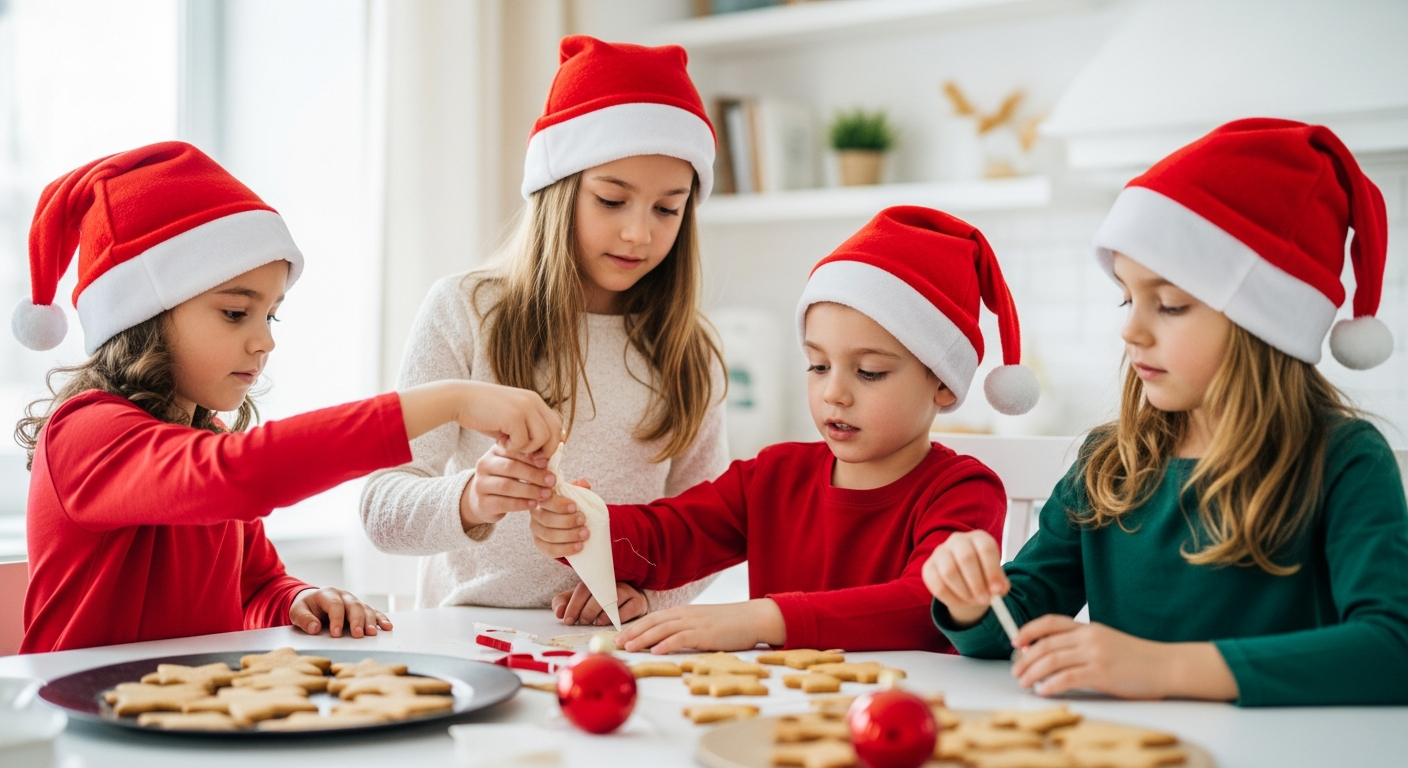
Table of Contents
- Introduction
- The Magic of Festive Activities: More Than Just Fun
- Crafty Christmas Creations: Sparking Imagination and Language
- Sweet & Simple Christmas Treats: Baking Up Language Skills
- Magical Christmas Storytelling & Play: Building Narratives
- Music, Movement & Merriment: Rhythmic Language Fun
- Acts of Kindness & Connection: Empathy and Social Language
- Integrating Speech Blubs into Your Festive Fun
- Making the Most of Speech Blubs: Value and Pricing
- Conclusion
- Frequently Asked Questions
The holiday season is a whirlwind of twinkling lights, festive music, and the joyful anticipation of celebrations. As parents, we often find ourselves caught between the desire to create magical memories for our children and the endless to-do list that comes with the holidays. But what if we told you that some of the most memorable and developmentally beneficial moments can be found right at home, amidst simple, heartfelt activities?
This Christmas, let's shift our focus from elaborate outings to creating cherished traditions and engaging experiences within the comfort of your own home. Beyond the sheer delight, these activities offer incredible opportunities for children to learn, grow, and connect. From boosting communication skills to fostering creativity and strengthening family bonds, the right festive activities can be a powerful force for good. We'll explore a sleigh-full of fun Christmas activities for kids at home that promise not just entertainment, but also valuable developmental strides, and show you how Speech Blubs can seamlessly become a part of your joyful learning journey. Our mission at Speech Blubs is to empower children to speak their minds and hearts, and we believe that even during the most wonderful time of the year, every interaction is a chance to grow.

Introduction
The holiday season often conjures images of bustling malls, crowded attractions, and a flurry of external engagements. Yet, for many families, the most profound and impactful holiday experiences unfold within the familiar embrace of their own homes. Imagine the cozy warmth of a living room, filled with the scent of pine and gingerbread, as your child's laughter echoes while decorating a simple ornament or singing a favorite carol. These aren't just fleeting moments of entertainment; they are rich, sensory-filled opportunities that fuel development, spark imagination, and build lasting memories.
This blog post is your comprehensive guide to transforming your home into a hub of holiday magic and learning. We’ll delve into a variety of fun Christmas activities for kids at home that cater to different ages and interests, all while subtly nurturing crucial developmental skills, especially in communication. From crafting sparkling decorations to baking delightful treats, storytelling, and engaging in acts of kindness, each suggestion is designed to be joyful, accessible, and deeply enriching. We'll also explore how incorporating "smart screen time" with tools like Speech Blubs can amplify these benefits, turning passive viewing into active, engaging learning experiences that help children build confidence in their communication.
The Magic of Festive Activities: More Than Just Fun
Christmas activities at home offer a unique blend of joy, education, and connection. They provide a structured yet playful environment where children can develop a wide array of skills.
Fostering Communication and Language Development
Every activity, from mixing cookie dough to decorating a tree, is a conversation starter. Children learn new vocabulary (e.g., "sparkly," "sticky," "garland"), practice following multi-step directions, express preferences, and describe their experiences. For a child who might be a "late talker" or needs extra support with articulation, these real-world contexts are invaluable. They offer natural prompts for sound production and word use, often more effectively than structured drills alone. Our founders at Speech Blubs, having personal experiences with speech challenges in their childhoods, understand this deeply. They created a tool they wished they had—one that integrates seamlessly with real-life learning to make speech development immediate, effective, and joyful.

Strengthening Family Bonds and Creating Traditions
Shared experiences during the holidays forge powerful connections. Baking together, reading stories by the fire, or crafting handmade gifts become cherished family traditions. These moments of focused interaction strengthen the parent-child relationship, build a sense of belonging, and create a reservoir of happy memories that children will carry with them for years to come. These are the moments where children truly feel seen, heard, and valued.
Nurturing Creativity and Imagination
The holiday season is ripe for imaginative play. Crafting allows children to express themselves artistically, while storytelling or acting out festive scenarios encourages them to think creatively and develop narrative skills. These activities stimulate the brain, helping children think outside the box and develop problem-solving abilities.
Enhancing Sensory Exploration
Many Christmas activities are inherently sensory-rich. The scent of cinnamon, the feel of sticky dough, the sight of twinkling lights, or the sound of carols—all engage a child's senses, contributing to their cognitive development and their understanding of the world around them.
Building Confidence and Reducing Frustration
Successfully completing a craft project, helping bake a cake, or mastering a new word through playful interaction can significantly boost a child's self-esteem. When children feel capable and their efforts are celebrated, it reduces frustration and encourages them to try new things and persevere through challenges. Speech Blubs supports this by providing a safe, encouraging environment where children learn by imitating their peers, fostering confidence in their communication abilities.
Crafty Christmas Creations: Sparking Imagination and Language
Crafts are a cornerstone of holiday fun and a fantastic avenue for language development. They involve following instructions, describing materials, and discussing the creative process.
DIY Ornaments: Personalizing the Tree
Creating handmade ornaments is a timeless tradition.
- Salt Dough Ornaments: Mix flour, salt, and water. Children can roll, cut shapes with cookie cutters, decorate with paint or glitter, and bake. This activity is rich in descriptive language: "sticky dough," "smooth paint," "sparkly glitter." It also involves sequencing ("first we roll, then we cut"). For a parent whose child is working on their 's' sound, discussing "star" shapes or "sparkly" glitter provides gentle practice opportunities.
- Handprint/Footprint Ornaments: Use salt dough or non-toxic paint to capture tiny prints, turning them into reindeer, Santa, or snowmen. This is perfect for naming body parts and describing the finished character.
Christmas Card Making: Spreading Cheer and Practicing Skills
Gather construction paper, glue, glitter, markers, and festive stickers. Encourage children to create cards for family, friends, or even community heroes. This activity offers chances to:
- Follow Directions: "Glue the snowflake on the corner."
- Identify Colors and Shapes: "Use the red paper for Santa's hat."
- Practice Writing/Drawing: Even scribbles or drawing a picture communicates a message. For older children, practicing writing their name or simple festive words ("Joy," "Love") is valuable.
Gingerbread House Decorating: A Sweet Learning Experience
Whether you buy a kit or bake your own gingerbread, decorating a gingerbread house is a feast for the senses and an amazing language opportunity.
- Vocabulary Expansion: Name all the candies and decorations: "gumdrops," "candy canes," "sprinkles," "icing."
- Descriptive Language: Talk about colors, shapes, and textures: "sticky frosting," "round M&Ms," "crunchy pretzels."
- Sequencing: "First, we put the icing on the roof, then the candy."
- Requesting: "Can I have more sprinkles?" or "I want a gumdrop." If your little one struggles with asking for things, baking cookies together provides natural prompts for "more sugar" or "I want chocolate chips." This practical scenario helps them practice expressive language in a motivating context.
Paper Snowflakes & Garlands: Simple Beauty
Cutting paper snowflakes or stringing popcorn and cranberry garlands are classic, low-cost activities. They build fine motor skills and offer opportunities for discussion about patterns, shapes, and counting.
Sweet & Simple Christmas Treats: Baking Up Language Skills
Cooking and baking are fantastic ways to incorporate language learning into everyday routines. They involve following recipes, measuring, and collaborative work.
Cookie Baking & Decorating: A Delicious Dialogue
Choose a simple Christmas cookie recipe.
- Recipe Following: Read the steps aloud and have your child help. "What do we do next?"
- Measurement Concepts: Talk about "cups," "spoons," "more," "less."
- Action Verbs: "Stir," "mix," "pour," "roll," "cut."
- Sensory Descriptions: "Sweet dough," "warm cookies," "delicious smell."
- Decorating: Like gingerbread houses, decorating cookies is perfect for naming colors, shapes, and candies.
Hot Chocolate Bar: Custom Creations
Set up a hot chocolate bar with various toppings: marshmallows, whipped cream, chocolate syrup, peppermint sticks, sprinkles.
- Choice Making: "Do you want marshmallows or whipped cream?" This encourages simple sentence formation.
- Requesting: "Can I have two marshmallows?"
- Descriptive Language: "Fluffy whipped cream," "minty candy cane."
Reindeer Food: A Magical Tradition (Not for Eating!)
Mix oats with a little glitter and place in small bags. Children can sprinkle it outside on Christmas Eve for Santa's reindeer.
- Imaginative Play: Talk about the reindeer, Santa, and what they might like.
- Vocabulary: "Sparkly," "magical," "reindeer."
Magical Christmas Storytelling & Play: Building Narratives
Stories and imaginative play are fundamental for cognitive and linguistic development.
Reading Christmas Books Aloud: Vocabulary and Comprehension
Gather your favorite Christmas picture books. Reading aloud exposes children to new vocabulary, sentence structures, and narrative elements.
- Ask Questions: "What do you think will happen next?" "How does the character feel?"
- Point to Pictures: "Look at the big red sleigh!"
- Retell the Story: Encourage your child to retell parts of the story in their own words, boosting comprehension and sequencing.
Creating a Christmas Play or Puppet Show: Expressive Language
Use puppets, stuffed animals, or even family members as characters. Choose a simple Christmas story or make one up together.
- Character Voices: Experiment with different voices for characters.
- Dialogue Practice: Encourage children to create dialogue for their characters. For a quiet child, acting out a simple Christmas story with puppets can lower communication barriers and encourage expressive language, making it easier for them to "speak their minds and hearts."
- Sequencing Events: Help them structure the story from beginning to end.
Christmas-themed Charades or Pictionary: Non-Verbal and Verbal Communication
Write down Christmas-related words (e.g., Santa, snowman, reindeer, decorating the tree, singing carols) on slips of paper.
- Charades: Children act out the word without speaking. This enhances non-verbal communication and understanding.
- Pictionary: Children draw the word for others to guess, promoting visual representation and vocabulary.
"I Spy" Christmas Edition: Observation and Descriptive Skills
Play "I Spy" with Christmas decorations or items around the house. "I spy with my little eye something red and shiny" (an ornament). This sharpens observation skills and encourages the use of adjectives.
Music, Movement & Merriment: Rhythmic Language Fun
Music and movement are powerful tools for language development, especially for phonological awareness and prosody (the rhythm and intonation of speech).
Christmas Carol Sing-Along: Rhythm and Rhyme
Singing together is joyous and beneficial.
- Rhyme Recognition: Carols are full of rhymes, which are crucial for early literacy.
- Rhythm and Pace: The rhythm of songs helps children understand speech patterns.
- Vocabulary: Many carols introduce festive vocabulary.
Dance Party with Christmas Music: Action Words and Following Directions
Put on some upbeat Christmas tunes and have a dance party!
- Action Verbs: "Spin," "jump," "wiggle," "clap."
- Following Directions: "Clap your hands," "Stomp your feet."
Creating Homemade Instruments: Sound Exploration
Use household items to make simple instruments:
- Rice or beans in plastic bottles for shakers.
- Pots and spoons for drums.
- Rubber bands on tissue boxes for string instruments.
- Talk about the sounds: "Loud," "soft," "shaky," "bumpy."
Acts of Kindness & Connection: Empathy and Social Language
The spirit of giving is central to Christmas. Engaging in acts of kindness teaches empathy and social skills.
Making Cards or Small Gifts for Loved Ones/Community Workers
Encourage children to create personalized cards or small crafts for grandparents, teachers, neighbors, or even mail carriers and firefighters.
- Expressing Gratitude: Discuss who they are making the gift for and why, practicing expressions of thanks.
- Social Language: How do we give a gift? What do we say?
Donating Toys or Clothes: Understanding Generosity
Go through toys and clothes that are no longer used and talk about donating them to children in need.
- Empathy: Discuss how giving can make others happy.
- Categorization: Sorting items ("these are toys, these are clothes").
"Secret Santa" for Family Members: Thoughtfulness
Even a simple "Secret Santa" within the family, where children pick a name and make a small handmade gift or perform a kind act for that person, fosters thoughtfulness and secrecy (a fun challenge for young children!).
Integrating Speech Blubs into Your Festive Fun
While these hands-on activities are incredibly enriching, we also understand the role "smart screen time" can play in a child's development. At Speech Blubs, we believe in turning screen time into an active learning adventure, a powerful tool for family connection, and a screen-free alternative to passive viewing. Our app is rooted in scientific principles, blending joyful play with evidence-based methods to support speech and language development.
Imagine your child has just decorated a magnificent paper snowflake. You can then transition to Speech Blubs. For a parent with a 3-year-old who is practicing 's' sounds, the 'Silly Sounds' section within Speech Blubs can make practicing 'Santa' or 'snowman' sounds fun and engaging through peer modeling, turning screen time into an active learning session. Our unique "video modeling" methodology allows children to learn by watching and imitating their peers, rather than adults or cartoon characters, which research shows is incredibly effective for developing complex communication skills. Children naturally mimic other children, making the learning process intuitive and engaging.
Speech Blubs offers sections like 'Animal Kingdom,' 'Early Sounds,' 'When I Grow Up,' and 'We Are Family,' which can be tied into your festive activities.
- Descriptive Words: After making colorful ornaments, explore categories in Speech Blubs that use colors or shapes.
- Action Words: After a dance party, practice action words in the app.
- Storytelling: If your child enjoyed creating a Christmas play, they can practice narrative skills within Speech Blubs' storytelling sections.
- Vocabulary: Discover new words related to emotions or objects that resonate with the feelings of the holiday season.
Our app is designed to provide immediate, effective, and joyful solutions for the 1 in 4 children who need speech support. It's a powerful supplement to your child's overall development plan and, when applicable, professional therapy, fostering a love for communication, building confidence, and creating joyful family learning moments. We are proud that our methods are backed by science, placing us in the top tier of speech apps worldwide. You can learn more about the science behind our methods on our website.
Ready to see how Speech Blubs can enhance your child's language journey this Christmas and beyond? You can download Speech Blubs on the App Store or get it on Google Play to explore our engaging activities.
Making the Most of Speech Blubs: Value and Pricing
We are committed to making effective speech therapy accessible and affordable for every family. We offer two main subscription plans to best suit your needs, but one stands out as the clear best value.
- Monthly Plan: Priced at $14.99 per month, this plan provides ongoing access to the core Speech Blubs app.
- Yearly Plan: Our most popular and highly recommended option, priced at $59.99 per year. This breaks down to just $4.99 per month, allowing you to save 66% compared to the monthly plan!
The Yearly Plan isn't just about significant savings; it's about unlocking the full Speech Blubs experience and maximizing your child's progress. With the Yearly Plan, you receive:
- A 7-Day Free Trial: This gives you a full week to explore all the features and see the magic of Speech Blubs firsthand before committing.
- The Extra Reading Blubs App: Access our dedicated reading app, designed to complement speech development and boost early literacy skills.
- Early Access to New Updates: Be among the first to experience new activities, features, and content.
- 24-Hour Support Response Time: Get priority assistance whenever you need it.
The Monthly Plan, while flexible, does not include these invaluable benefits. By choosing the Yearly Plan, you're not just investing in an app; you're investing in a comprehensive, year-long journey of growth and joyful learning for your child, backed by dedicated support and additional resources. To get started and experience the full suite of features, we strongly encourage you to start your 7-day free trial today by choosing our Yearly Plan. It's the best way to support your child's development and integrate our "smart screen time" into your family's routine.
Unsure if Speech Blubs is right for your child? Take our quick 3-minute preliminary screener for a simple assessment and a free 7-day trial. You can also read inspiring testimonials from other parents who have seen incredible progress with their children using Speech Blubs.
Conclusion
This Christmas, let's rediscover the simple joys of home and transform ordinary moments into extraordinary learning opportunities. The festive season offers a treasure trove of fun Christmas activities for kids at home that extend far beyond mere entertainment. They are powerful catalysts for language development, creative expression, family bonding, and building a child's self-confidence. By intentionally engaging in crafts, baking, storytelling, and acts of kindness, we create a rich, sensory-filled environment that naturally fosters communication and connection.
And as you embark on these joyful adventures, remember that Speech Blubs is here to support you every step of the way. We provide a unique blend of scientific methodology and playful learning, turning screen time into "smart screen time" that complements your family's efforts. Through our innovative video modeling approach, children learn by imitating their peers, empowering them to "speak their minds and hearts" with confidence and joy.
Don't let this holiday season pass without making the most of these incredible opportunities for growth and connection. We invite you to explore the world of Speech Blubs and discover how our app can become a cherished part of your family's learning journey.
Ready to unlock a year of joyful communication for your child? Create your account and explore Speech Blubs today! Choose our Yearly Plan to get the best value, including a 7-day free trial, access to Reading Blubs, early updates, and priority support. Download Speech Blubs on the App Store or get it on Google Play and start building confidence and communication skills with your little one, making this Christmas truly special.
Frequently Asked Questions
Q1: How can I make Christmas activities more educational for my child?
A1: Focus on integrating language and sensory experiences. Describe what you're doing, ask open-ended questions, encourage choices, and use new vocabulary. For instance, when making ornaments, talk about the "sparkly" glitter or the "rough" texture of the dough. When baking, discuss the steps (sequencing) and the names of ingredients. Speech Blubs can then reinforce these concepts through playful, targeted activities.
Q2: My child has a short attention span. How can I keep them engaged in Christmas activities?
A2: Keep activities short and varied. Offer choices to give them a sense of control. Break down tasks into smaller, manageable steps. Incorporate movement and music, and don't be afraid to take breaks. Remember, the goal is fun and connection, not perfection. Speech Blubs offers short, engaging video modeling sessions that are designed to hold a child's attention effectively.
Q3: What if I'm not very crafty or good at baking? Can I still do these activities?
A3: Absolutely! Many activities require minimal skill. Focus on the process and the shared experience, not the perfect outcome. Simple crafts like paper snowflakes or store-bought gingerbread house kits are great. The most important thing is spending quality time together and communicating. There are also many no-bake options for treats!
Q4: How does Speech Blubs fit into busy holiday schedules?
A4: Speech Blubs is designed for flexibility. Even 5-10 minutes of "smart screen time" with the app can be highly beneficial. It's an excellent way to transition between activities or provide a focused learning session during downtime. Our app offers a powerful alternative to passive screen viewing, ensuring that even during busy times, your child is actively learning and developing communication skills.
About the author