
Festive Fun: Christmas Crafts for Kids
 By Speech Blubs Team•Dec 22, 2025•17 min.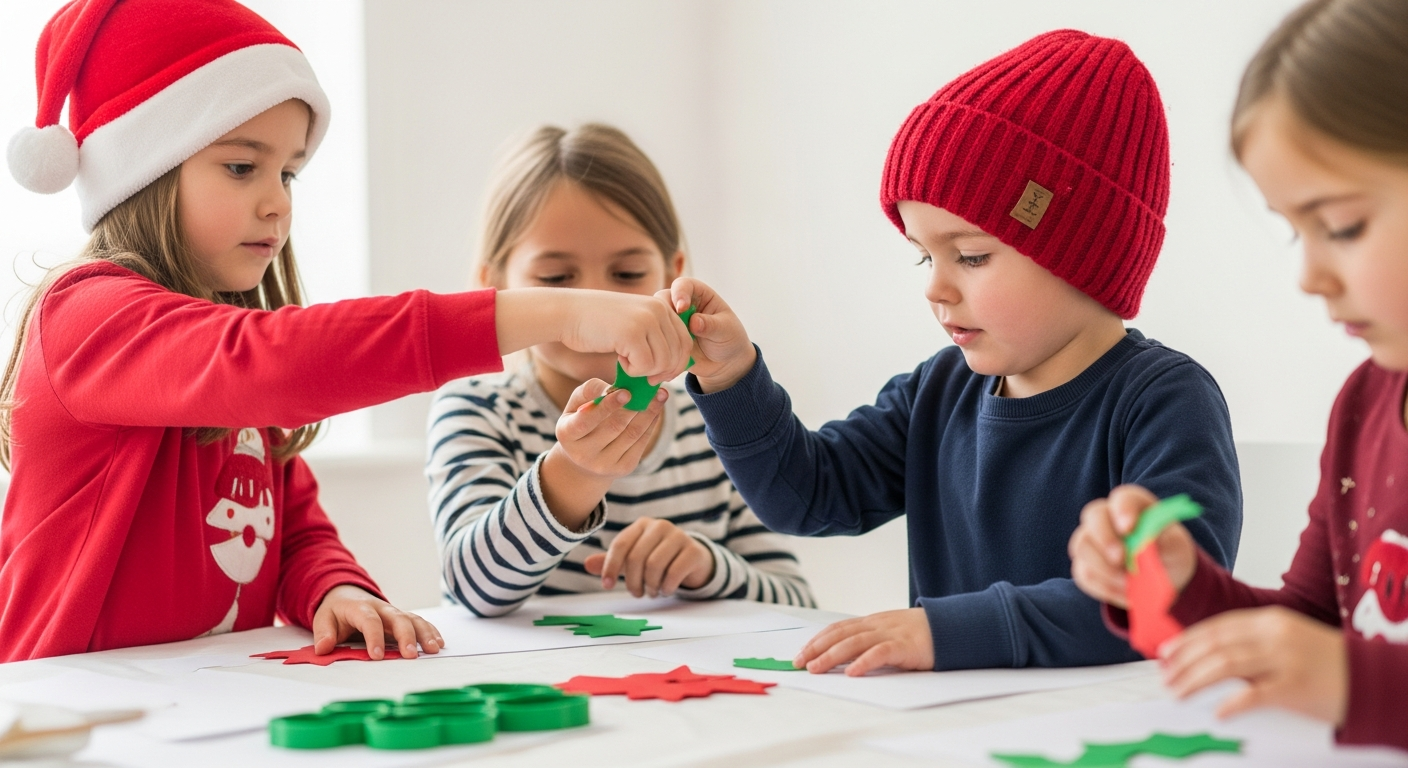
Table of Contents
- Introduction
- Beyond the Pretty Picture: The Developmental Wonders of Christmas Crafts
- Choosing the Right Christmas Craft: Age-Appropriate Ideas for Every Little Helper
- Making Craft Time a Communication Catalyst: Tips for Parents
- Beyond the Craft Table: Extending the Learning with Speech Blubs
- Unlocking Your Child's Potential: The Value of Speech Blubs
- Conclusion
- FAQ
Introduction
As the days grow shorter and the festive spirit fills the air, there's a unique magic that only Christmas can bring. For children, this season is a dazzling wonderland of twinkling lights, joyful carols, and the anticipation of presents. But beyond the glitter and gifts, Christmas offers a wonderful opportunity to create cherished memories and foster essential developmental skills through the simple, heartwarming activity of crafting. Imagine the sparkle in your child's eyes as they transform a humble craft stick into a shimmering ornament, or the proud grin as they present a handmade card. These aren't just pretty decorations; they are tangible expressions of creativity, learning, and connection. This blog post will dive into the myriad benefits of engaging your little ones in Christmas crafts, from boosting fine motor skills to sparking imaginative play. More importantly, we'll explore how these festive projects become powerful catalysts for speech and language development, laying a joyful foundation for your child to speak their minds and hearts.

Beyond the Pretty Picture: The Developmental Wonders of Christmas Crafts
Christmas crafts offer so much more than just a fun way to pass the time; they are miniature developmental bootcamps disguised as festive play. Each snip, glue, and dab contributes significantly to a child's growth across multiple domains.
Fine Motor Skill Fortification
Think about the intricate movements involved in even the simplest craft. Cutting shapes with scissors, peeling stickers, threading beads onto a string, or carefully applying glitter with a brush – these activities are all powerful exercises for developing fine motor skills. These are the small, precise movements of the hands and fingers that are crucial for everyday tasks like holding a pencil, buttoning a shirt, or using utensils. When children engage in Christmas crafting, they are strengthening the muscles in their hands and improving hand-eye coordination, preparing them for future academic success and greater independence.
Cognitive Development on Display
Crafting involves a lot of thinking! Children follow instructions, whether verbal or visual, to complete a project. This requires sequencing skills ("first we cut, then we glue"), problem-solving ("how can I make this stick to that?"), and spatial reasoning ("where should this go on the page?"). They learn to identify colors, shapes, and textures, and to understand cause and effect ("if I press hard, the crayon will be darker"). These cognitive workouts are foundational for learning and critical thinking, building essential pathways in their young minds.
Creativity and Imagination Unleashed
Christmas crafts are an open invitation for children to express themselves. While there might be a "model" craft, every child's creation will be unique. They choose colors, decide on arrangements, and add their personal flair. This freedom encourages imaginative thinking, allowing them to transform ordinary materials into extraordinary festive masterpieces. It fosters a sense of individuality and teaches them that there's no single "right" way to be creative.

Emotional Growth and Confidence Building
The process of crafting teaches patience and persistence. Not every craft turns out exactly as envisioned, and children learn to adapt, try again, or embrace imperfections. Completing a project, especially one they can gift or display, instills a tremendous sense of pride and accomplishment. It builds self-esteem and confidence in their abilities. Furthermore, sharing their creations, whether with family or friends, encourages generosity and strengthens social bonds.
A Communication Catalyst: Crafting for Speech and Language Development
Perhaps one of the most exciting, and often underestimated, benefits of Christmas crafts is their profound impact on speech and language development. The craft table naturally becomes a vibrant hub for conversation, narration, and vocabulary expansion.
- Descriptive Language: As children work, parents can prompt them to describe what they see, feel, and create. "What color is that glitter?" "How does the felt feel?" "What shape is your ornament?" For a child who might struggle with descriptive language, creating a glittery star offers the perfect opportunity to vocalize its color, its sparkly texture, and its shape, practicing these words aloud in a meaningful context.
- Sequential Language: Talking through the steps of a craft ("First, we cut the paper. Next, we put glue on the back. Then, we stick it on the card.") helps children understand and use sequential language, crucial for storytelling and following directions.
- Vocabulary Expansion: Introducing new words related to materials (yarn, tinsel, stencil), actions (cut, glue, glitter, paint, decorate), and Christmas themes (reindeer, snowman, sleigh, elf) enriches their lexicon in a practical and engaging way.
- Asking and Answering Questions: Craft time is ripe with opportunities for questions: "Do you need more glue?" "What are you making next?" "Where does Santa live?"
- Narration and Storytelling: Children can narrate their process ("I'm drawing a snowflake. It has six points!"), or even invent stories about the characters they create (e.g., "This snowman is going to visit the North Pole").
This natural, play-based environment for communication practice is something we deeply value at Speech Blubs. Our mission is to empower children to speak their minds and hearts, and we believe in blending scientific principles with joyful play. Much like how crafting provides rich opportunities for interaction, our app offers "smart screen time" experiences that are far from passive. We use a unique video modeling methodology, where children learn by watching and imitating their peers, making the learning process engaging and effective. This approach is backed by science, placing us in the top tier of speech apps worldwide, a fact you can explore more on our research page.
Choosing the Right Christmas Craft: Age-Appropriate Ideas for Every Little Helper
Selecting crafts that match your child's developmental stage is key to ensuring enjoyment and maximizing learning. Here are some ideas, keeping communication at the forefront. For a general introduction to how we foster communication development, visit our homepage.
Toddlers (1-3 years): Simple Sensory & Exploration
At this age, it's all about exploring textures, colors, and basic actions. Focus on crafts that are safe, don't require too much precision, and encourage sensory input and simple vocalizations.
- Salt Dough Ornaments: Mix flour, salt, and water. Let your child squish, roll, and press cookie cutters into the dough. You can press their hand or foot into it for a keepsake.
- Communication Focus: Talk about the "sticky" dough, "soft" texture, "round" shapes. Ask, "What shape is this?" Encourage sounds like "squish!" and "pat, pat."
- Finger Painting Christmas Trees: Provide green paint, paper cut into a tree shape, and some red dots (or small stickers) for "ornaments."
- Communication Focus: Describe the colors – "green paint," "red dots." Count the "one, two, three dots." Talk about the action: "You're painting!"
- Cotton Ball Snowmen: Draw a snowman outline and let your child glue cotton balls onto it. Add googly eyes and construction paper features.
- Communication Focus: Focus on words like "soft," "white," "glue," "eyes," "nose." Ask, "Where is the snowman's nose?"
Preschoolers (3-5 years): Developing Dexterity & Following Instructions
Preschoolers can handle a bit more complexity, refining their fine motor skills and beginning to follow multi-step instructions. These crafts provide excellent opportunities for developing early vocabulary and forming simple sentences.
- Paper Plate Santa/Reindeer: Use paper plates as the base. Add cotton balls for Santa's beard, red construction paper for his hat, or brown paper for reindeer antlers and a red pom-pom for Rudolph's nose.
- Communication Focus: Practice identifying body parts ("Santa's beard," "reindeer's nose"). Follow directions: "First, glue the beard. Then, add the eyes." For a preschooler who is a "late talker" and hesitant to vocalize, a craft like decorating a Santa face encourages simple requests ("more cotton," "red hat") and descriptive words like "fluffy" or "round." Our app's video modeling helps children imitate peers and build confidence in trying new words and sounds.
- Pipe Cleaner Candy Canes: Guide your child to twist red and white pipe cleaners together to form a candy cane shape.
- Communication Focus: Talk about colors ("red and white"), shapes ("twist," "curve"), and numbers (if twisting multiple). Use action words: "twist," "bend," "make a hook."
- Yarn-Wrapped Stars: Cut star shapes from cardboard and let children wrap them with colorful yarn.
- Communication Focus: Discuss colors, textures ("soft yarn"), and actions ("wrap, wrap, wrap"). Ask, "Is it tight or loose?"
Unsure if your child could benefit from a little extra speech support, especially as they're developing their communication skills through activities like these? Take our quick 3-minute preliminary screener to get a simple assessment and a free 7-day trial.
Early Elementary (5-8 years): Creativity & Independent Work
At this age, children can handle more intricate designs and enjoy taking ownership of their creations. They can follow more complex instructions and engage in more detailed conversations about their projects.
- Handprint/Footprint Keepsakes: Use paint to make handprint reindeers, footprint snowmen, or handprint Christmas trees on cardstock or canvas.
- Communication Focus: Narrate the process: "First, we paint your hand. Then, we press it down." Talk about the size difference between their handprint and yours. Discuss feelings: "This will be a special gift!"
- Pop-up Christmas Cards: Teach them basic pop-up card techniques. This involves folding, cutting, and gluing in specific ways.
- Communication Focus: Practice spatial concepts ("inside," "outside," "fold," "crease"). Encourage them to think about what message they want to write or say in the card.
- DIY Advent Calendars: Using small boxes, envelopes, or paper bags, create an advent calendar. Children can decorate each compartment and help decide what goes inside.
- Communication Focus: Counting, sequencing (numbers 1-24). Talk about anticipation: "What do you think will be in box number 5?"
Older Kids (8+ years): Project-Based & Detailed
Older children enjoy more challenging crafts that allow for greater independence and the development of specific skills. These projects often involve multiple steps and require sustained attention.
- Gingerbread Houses: This classic project is perfect for teamwork or individual creativity. It involves assembly, detailed decorating, and planning.
- Communication Focus: Collaborative problem-solving: "How can we make the roof stable?" "What candies should we use for the path?" Storytelling about the gingerbread family who lives inside.
- Felt Stockings: Simple sewing projects like decorating pre-made felt stockings with sequins, embroidery, or fabric glue.
- Communication Focus: Discuss texture ("fuzzy felt," "smooth sequins"). Learn new vocabulary related to sewing (stitch, needle, thread, appliqué).
- Beaded Ornaments: Using wire and various beads, children can create intricate ornament designs.
- Communication Focus: Pattern recognition ("red, green, red, green"). Fine-tuning descriptive words for shape, color, and size of beads.
Seeing children thrive and gain confidence in their communication abilities through engaging activities like these crafts, and with the support of tools like Speech Blubs, is incredibly rewarding. Many parents have shared their success stories, which you can read on our testimonials page.
Making Craft Time a Communication Catalyst: Tips for Parents
To truly maximize the speech and language benefits of Christmas crafts, it’s important for parents to be active participants and facilitators. Here's how you can turn every craft session into a rich language-learning opportunity:
- Talk Through It: Narrate your own actions and your child's actions. "I'm cutting the red paper. You're gluing the snowflake." Ask open-ended questions that require more than a "yes" or "no" answer, such as, "What do you think we should do next?" or "Tell me about your shiny ornament."
- Model Language: Use clear, simple sentences to describe colors, actions, and objects. If your child says "cut," you can model, "Yes, I am cutting the paper with the sharp scissors." This expands their understanding and use of more complex phrases.
- Expand Vocabulary: Introduce new, rich vocabulary related to the craft. Instead of just "stuff," use "tinsel," "sequins," "glitter glue," or "pipe cleaners." Explain what these words mean and encourage your child to use them.
- Encourage Choices: Offering choices empowers children and gives them a reason to communicate. "Do you want the blue glitter or the silver glitter?" "Should we put the star on top or in the middle?"
- Celebrate Efforts, Not Just Perfection: Focus on the process and the joy of creation, rather than the final product needing to be flawless. Praise their effort, imagination, and willingness to try. This reduces pressure and encourages continued engagement.
- Make It a Conversation: Use craft time as a natural opportunity for back-and-forth conversation, much like a dialogue. Share stories about past Christmases or talk about who the gift is for.
This approach of making communication engaging and natural is at the heart of Speech Blubs. Our company was born from the personal experiences of our founders, who all grew up with speech problems and created the tool they wished they had. We understand the need for an immediate, effective, and joyful solution for the 1 in 4 children who need speech support. Our methods are designed to foster a love for communication, build confidence, and reduce frustration, providing a powerful supplement to a child's overall development plan.
Beyond the Craft Table: Extending the Learning with Speech Blubs
While hands-on activities like Christmas crafts are invaluable, consistent and targeted practice is also essential for speech and language development. This is where Speech Blubs seamlessly integrates into your child's learning journey, acting as a powerful complement to their creative playtime.
We offer a unique "smart screen time" experience, specifically designed to be an active, educational alternative to passive viewing like cartoons. Instead of just watching, children using Speech Blubs are actively participating, mimicking, and interacting. Our distinctive video modeling methodology allows children to learn by watching and imitating their peers, rather than animated characters. This approach taps into the power of mirror neurons, making the learning process incredibly effective and relatable for young learners. They see real children, just like them, making sounds, saying words, and forming sentences, which motivates them to do the same.
Speech Blubs focuses on teaching complex communication skills through fun, themed activities. For instance, if your child loves talking about animals while crafting a reindeer, our "Animal Kingdom" section can extend that enthusiasm, offering motivating ways to practice animal sounds and names. If they're excited about decorating, our "Dress Up" section might encourage them to describe outfits and actions, expanding their vocabulary even further. We help build foundational skills, reduce frustration, and, most importantly, create joyful family learning moments where parents can play and learn alongside their children.
Ready to experience the magic of Speech Blubs and empower your child to speak their minds and hearts? Download the app on the App Store or Google Play to begin your journey toward unlocking their full communication potential.
Unlocking Your Child's Potential: The Value of Speech Blubs
We are committed to providing an accessible and effective solution for families. We believe in transparency and want you to understand the full value of what Speech Blubs offers.
Our subscription plans are designed to provide flexibility, but we want to be clear about which option offers the most comprehensive benefits for your family:
- Monthly Plan: For $14.99 per month, you get access to our core Speech Blubs app. This plan is ideal for short-term use, but it doesn't include our full suite of valuable features.
- Yearly Plan: At just $59.99 per year, this plan breaks down to an incredible value of only $4.99 per month. Choosing the Yearly plan means you save 66% compared to the monthly option, making it the clear best choice for long-term development.
Exclusive Benefits of the Yearly Plan:
The Yearly plan isn't just cheaper; it's packed with high-value features designed to maximize your child's progress and your family's experience:
- 7-Day Free Trial: Only with the Yearly plan can you access a 7-day free trial, allowing you to explore the app's full potential with your child before committing. The Monthly plan does not include this trial.
- Extra Reading Blubs App: You'll also receive the Reading Blubs app, a fantastic resource for early literacy and phonics, completely free! This provides even more educational value to support your child's overall development.
- Early Access to New Updates: Be among the first to enjoy new activities, features, and content as soon as they're released, ensuring your child always has fresh, engaging material.
- 24-Hour Support Response Time: Our dedicated support team prioritizes Yearly plan subscribers, guaranteeing a response to any questions or concerns within 24 hours.
The Monthly plan does not include the 7-day free trial, the Reading Blubs app, early access to updates, or prioritized support. To truly give your child the full, enriching Speech Blubs experience and the best value, the Yearly plan is the way to go. It’s an investment in your child's foundational communication skills and overall developmental journey, fostering confidence and joy every step of the way.
We invite you to choose the Yearly plan to get the free trial and unlock the full suite of features that will empower your child to speak their minds and hearts. Create your account and start your 7-day free trial today!
Conclusion
Christmas crafts are more than just seasonal decorations; they are powerful tools for child development, offering a magical blend of creativity, learning, and family bonding. From boosting fine motor skills and cognitive abilities to nurturing emotional growth and, crucially, serving as dynamic catalysts for speech and language development, these festive activities lay a rich foundation for your child's future. By engaging in these joyful projects, parents can foster rich conversations, expand vocabulary, and celebrate every spoken word, encouraging their child to communicate with confidence and enthusiasm.
At Speech Blubs, we are dedicated to amplifying these developmental benefits through our innovative "smart screen time" approach. Our app complements hands-on play by providing a scientifically backed, play-based environment where children learn by imitating peers, building essential communication skills while having fun. This holiday season, embrace the opportunity to create lasting memories and foster critical developmental milestones. Give your child the invaluable gift of communication, empowering them to speak their minds and hearts.
Don't miss out on the incredible value and comprehensive features that can truly make a difference in your child's speech journey. Get started with a 7-day free trial on our Yearly plan by downloading Speech Blubs from the App Store or Google Play today!
FAQ
Q1: What are the main developmental benefits of kids' Christmas crafts? A1: Kids' Christmas crafts significantly boost fine motor skills through cutting and gluing, enhance cognitive development by following instructions and problem-solving, spark creativity and imagination, and build emotional resilience and confidence as children complete projects. Crucially, they serve as excellent opportunities for speech and language development by encouraging descriptive language, sequential narration, and vocabulary expansion in a fun, natural setting.
Q2: How can I best encourage my child's speech during craft time? A2: To encourage speech, narrate your actions and your child's actions ("I'm cutting the paper, you're gluing!"), ask open-ended questions ("What do you think will happen next?"), model language with simple, clear sentences, and introduce new vocabulary related to the craft materials and actions. Always celebrate their efforts and focus on the process, not just the perfect outcome, to build confidence.
Q3: How does Speech Blubs complement hands-on crafting activities? A3: Speech Blubs acts as a powerful complement by providing "smart screen time" that extends the learning beyond the craft table. Our unique video modeling methodology allows children to practice speech and language skills by imitating real peers, transforming screen time into an active, engaging, and scientifically backed learning experience. This reinforces and builds upon the communication skills practiced during hands-on activities, creating a holistic approach to development.
Q4: What's the best way to get started with Speech Blubs? A4: For the best value and to access all our premium features, we highly recommend choosing the Yearly plan. This plan not only saves you 66% compared to the monthly option but also includes a 7-day free trial, the Reading Blubs app, early access to updates, and 24-hour support. You can download the app and sign up for your free trial on the App Store or Google Play.
About the author