
Festive Fun: Christmas Party Activities for Kids
 By Speech Blubs Team•Dec 19, 2025•18 min.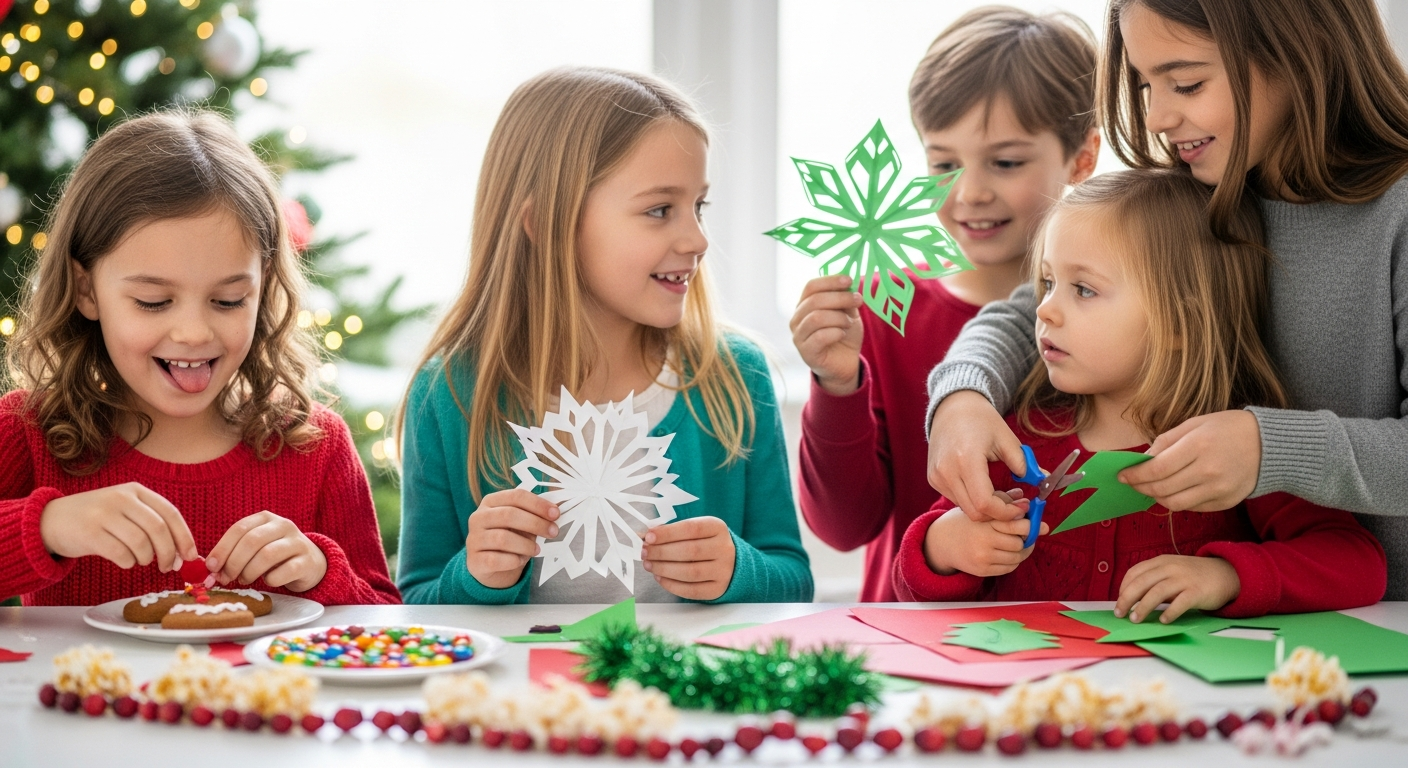
Table of Contents
- Introduction
- The Magic of Christmas: Why Parties Matter for Kids' Development
- Planning Your Festive Fun: Key Considerations
- Delightful Christmas Party Activities for Little Ones (Toddlers & Preschoolers)
- Engaging Christmas Party Games for Growing Communicators (Preschool & School-Age)
- Creative Christmas Party Crafts That Spark Conversation
- Speech Blubs: Your Partner in Festive Communication Fun
- Maximizing the Fun & Language Development
- Ready to Empower Your Child's Voice? Discover Speech Blubs!
- Conclusion
- FAQ
Introduction
As the magical holiday season draws near, so does the excitement of Christmas parties! For many children, these gatherings are a highlight of the year – a whirlwind of twinkling lights, festive treats, and joyful anticipation. Yet, for parents, organizing a Christmas party that truly engages little ones, sparks their imaginations, and perhaps even quietly supports their development can feel like a Herculean task. It's not just about keeping them entertained; it's about creating meaningful experiences that foster connection, learning, and above all, communication.
This post is your ultimate guide to crafting a memorable Christmas party for kids, filled with activities that are not only fun but also thoughtfully designed to encourage language and social-emotional growth. We’ll explore creative games, crafts, and interactive ideas tailored for various age groups, ensuring every child finds something to love. Our goal is to transform typical party chaos into constructive, joyous communication opportunities. Ready to explore activities that will bring joy and boost communication? Download Speech Blubs on the Apple App Store or Google Play Store today!

The Magic of Christmas: Why Parties Matter for Kids' Development
A Christmas party for kids is far more than just a gathering; it's a vibrant stage for developmental leaps. In the festive setting, children naturally engage in ways that support crucial areas of growth.
Social-Emotional Growth
Holiday parties provide a rich environment for children to practice vital social skills. They learn about sharing, taking turns, expressing emotions (both excitement and perhaps a little frustration), and understanding social cues. Navigating a group setting, even with familiar faces, helps build confidence and empathy, laying the groundwork for stronger relationships. They discover how to interact with different personalities and learn the joy of collective celebration.
Language-Rich Environment
Imagine the buzz of a Christmas party: children chattering about Santa, describing their favorite ornaments, or excitedly recounting a game. This is a prime opportunity for language development. New vocabulary related to the holidays (reindeer, mistletoe, carols, garlands), descriptive language ("The cookie is sparkly and sweet!"), and narrative skills (explaining game rules or party events) flourish in such a dynamic setting. For a child who might be a "late talker" or needs extra encouragement, the relaxed, fun atmosphere can make communication less intimidating and more spontaneous. At Speech Blubs, we believe that every child deserves to "speak their minds and hearts," and a lively party setting provides countless organic moments for this to happen.
Sensory Exploration
Christmas is a feast for the senses, and a party amplifies this experience. The aroma of gingerbread, the sparkle of glitter, the feel of soft tinsel, the sound of sleigh bells, and the taste of festive treats all contribute to a multi-sensory experience. This sensory input is crucial for cognitive development, helping children make connections, understand their environment, and build a rich internal library of experiences that can later be described and discussed.

Planning Your Festive Fun: Key Considerations
Successful Christmas party activities for kids don't just happen; they're thoughtfully planned. Considering these factors will ensure your celebration is joyful, inclusive, and developmentally supportive.
Age Appropriateness
One size does not fit all when it comes to kids' party activities.
- Toddlers (1-3 years): Focus on sensory experiences, simple cause-and-effect games, repetitive songs, and activities that involve gross motor skills (running, jumping, dancing). Keep activities short and engaging.
- Preschoolers (3-5 years): These children are developing imagination and cooperative play. Introduce simple rules, storytelling, basic crafts, and games that encourage verbal interaction.
- School-Age (5+ years): Older children enjoy more complex games with rules, team challenges, creative problem-solving, and crafts with a clear end product. They can engage in longer periods of focused activity.
Space and Setup
Consider your party venue. Is it indoors or outdoors? How much space do you have? Plan activities that fit your environment. Designate different "zones" if possible: a quiet corner for crafts, an open space for active games, and a cozy spot for story time. This helps manage energy levels and provides variety.
Materials and Budget
Christmas parties don't have to break the bank. Many engaging activities can be created with everyday household items or inexpensive craft supplies. Think about what you already have before buying new. A little creativity goes a long way!
Incorporating Communication Goals
Every activity can be a communication opportunity. As you plan, think about how each game or craft can encourage:
- Vocabulary: Introducing new words related to the activity or holiday.
- Following Directions: "First, put on the hat, then spin around."
- Descriptive Language: "Tell me about your shiny, green ornament."
- Social Language: Taking turns, asking questions, expressing needs.
- Sound Production: Making animal sounds, imitating festive sounds ("Ho ho ho!").
At Speech Blubs, our mission is deeply personal. Our founders grew up with speech problems, which inspired them to create the very tool they wished they had – a joyful, effective solution for children needing speech support. This personal experience fuels our commitment to blending scientific principles with play, crafting one-of-a-kind "smart screen time" experiences that are screen-free alternatives to passive viewing. Our unique approach teaches complex communication skills through "video modeling," where children learn by watching and imitating their peers, building confidence and fostering a love for communication. Learn more about our approach and values on the Speech Blubs homepage.
Delightful Christmas Party Activities for Little Ones (Toddlers & Preschoolers)
These activities are perfect for younger children, focusing on sensory exploration, simple language, and gross motor skills.
Sensory Bin Wonderland
Create a large bin filled with festive items that stimulate touch, sight, and sound.
- Materials: Large plastic bin, dried beans or rice (colored green/red), jingle bells, small plastic ornaments (unbreakable), pinecones, cookie cutters, mini gift boxes, child-safe tongs or scoops.
- How to Play: Let children explore freely. Encourage them to scoop, pour, sort, and hide items.
- Speech & Communication Focus:
- Vocabulary: "Sparkly," "smooth," "rough," "jingle," "hide," "find," "empty," "full."
- Descriptive Language: For a child who might be struggling with expanding their vocabulary, ask "What does this feel like?" or "What color is this ornament?" and model answers like, "It's a smooth, red ball!" or "This pinecone is rough!"
- Following Directions: "Put the bell in the box," "Find two green items."
- Sound Production: Shaking the jingle bells, making "crunch" sounds with rice.
Christmas Carol Sing-Along & Action Songs
Music is a powerful tool for language development, especially repetitive songs with actions.
- Materials: Speaker with Christmas music, simple props like scarves or shakers.
- How to Play: Sing classic carols like "Jingle Bells," "Rudolph the Red-Nosed Reindeer," or "We Wish You a Merry Christmas." Incorporate simple actions for each song.
- Speech & Communication Focus:
- Imitation: Children naturally imitate sounds and words in songs. For a child hesitant to speak, the low-pressure environment of singing with a group can build confidence. Our app uses a similar principle with video modeling, where children watch and imitate peers to practice sounds and words.
- Vocabulary: Learning new words through context in songs.
- Repetition: The repetitive nature of songs helps reinforce new words and phrases.
- Action Verbs: "Shake," "dance," "clap," "stomp."
Festive Story Time with Props
Bring classic Christmas stories to life with visual and tactile aids.
- Materials: Favorite Christmas picture books (e.g., The Night Before Christmas, How the Grinch Stole Christmas), puppets, small toys, or real objects representing characters or items in the story.
- How to Play: Read a story aloud, pausing to show props and encourage interaction.
- Speech & Communication Focus:
- Vocabulary: Introducing story-specific words.
- Narrative Skills: Asking "What do you think happens next?" or "Who is this character?"
- Engaging a "Late Talker": For a child whose speech is emerging, hand them a reindeer puppet and ask "What does Rudolph say?" This provides a gentle prompt for sound or word imitation.
- Joint Attention: Sharing focus on the book and props helps develop early communication skills.
"Pin the Nose on Rudolph" (Speech Twist)
A classic game with a linguistic twist.
- Materials: Large poster of Rudolph without a nose, red construction paper "noses" with tape on the back, blindfold.
- How to Play: Blindfold a child, spin them gently, and have them try to pin the nose on Rudolph.
- Speech & Communication Focus:
- Following Multi-Step Directions: "First, take the nose. Next, put on the blindfold. Then, turn around!"
- Spatial Concepts: Guide them verbally: "Go forward," "Move left," "A little bit down." This game is excellent for practicing prepositions and directional words.
- Giving Directions: Older preschoolers can try to tell a blindfolded peer where to go, using their own words.
Engaging Christmas Party Games for Growing Communicators (Preschool & School-Age)
These activities introduce more complex rules, encourage descriptive language, and foster cooperative play.
Christmas Charades or Pictionary
Fantastic for encouraging expressive language, both verbal and non-verbal.
- Materials: Small slips of paper with Christmas-themed words/phrases (e.g., Santa, snowman, decorating tree, caroling, hot cocoa), a hat or bowl, whiteboard/paper and markers for Pictionary.
- How to Play: Children pick a slip and act out (charades) or draw (Pictionary) the word/phrase for others to guess.
- Speech & Communication Focus:
- Vocabulary Retrieval: Thinking of words associated with Christmas.
- Descriptive Language: After a guess, encourage the child who acted/drew to describe how they conveyed the word. For example, "I pretended to be cold for 'snowman'!"
- Inferencing: Guessing based on clues.
- Perspective-Taking: Understanding what clues might help others guess.
Holiday Scavenger Hunt
A thrilling game that encourages exploration and following directions.
- Materials: List of Christmas-themed items (e.g., a green ornament, something sparkly, a Santa hat, a candy cane), small festive prizes. Hide items around the party area.
- How to Play: Give each child (or team) a list of items to find.
- Speech & Communication Focus:
- Following Multi-Step Directions: "First, look under the tree, then check by the window."
- Descriptive Language: Kids can describe what they found: "I found a shiny, round, red ornament!"
- Prepositions: "Is it under the chair? Is it behind the curtain?"
- Asking and Answering Questions: "Where should we look next?" "Did you find the sparkly star?"
- Problem-Solving: Encouraging collaboration if played in teams. This mirrors interactive challenges within Speech Blubs, where children follow specific prompts to achieve communication goals.
"Decorate the Christmas Cookie" (Language-Rich Craft)
A delicious activity that naturally sparks conversation.
- Materials: Plain sugar cookies (pre-baked), various colors of icing, sprinkles, small candies.
- How to Play: Provide a station for children to decorate their own cookies.
- Speech & Communication Focus:
- Sequencing: "First, I put on the icing, then the sprinkles, and last the candy."
- Descriptive Language: "My cookie is so colorful and sweet! It has swirly icing."
- Requesting: "Can I have more blue icing?" or "Please pass the star sprinkles."
- Expressing Preferences: "I like the red sprinkles best!"
- Fine Motor Skills: The act of decorating also supports the development of fine motor skills, which are linked to pre-writing skills.
Christmas Bingo (Picture or Word-Based)
A versatile game for various ages and language levels.
- Materials: Bingo cards with Christmas pictures (for younger kids) or words (for older kids), calling cards, small markers (candy corn, pom-poms).
- How to Play: Call out pictures or words, and children mark them on their cards until someone gets Bingo!
- Speech & Communication Focus:
- Receptive Vocabulary: Identifying specific pictures/words when called out.
- Expressive Vocabulary: For older kids, they can take turns being the caller.
- Matching: Developing visual discrimination.
- Turn-Taking: An essential social skill.
Creative Christmas Party Crafts That Spark Conversation
Crafts offer a wonderful opportunity for children to express creativity while developing fine motor skills and practicing language.
Ornament Making Station
Creating personalized ornaments is a cherished holiday tradition.
- Materials: Clear plastic ornaments, glitter, paint, small pom-poms, pipe cleaners, glue, festive ribbons. Alternatively, salt dough or clay can be used to make handprint/footprint ornaments.
- How to Play: Set up a station with all the materials and let children create their own ornaments.
- Speech & Communication Focus:
- Descriptive Language: "I'm making a sparkly, blue ornament for my tree." "My snowman has a long, orange nose."
- Explaining Process: "First, I rolled the dough, then I pressed my hand."
- Choice Making & Requesting: "Do you want red glitter or green?" "Can I have some more glue?"
- Naming Colors, Shapes, Textures: "This is a round ornament, and it feels smooth."
DIY Christmas Cards/Gift Tags
A thoughtful craft that encourages literacy and personal expression.
- Materials: Construction paper (red, green, white), holiday stickers, glitter glue, markers, crayons, scissors (child-safe).
- How to Play: Children create cards or gift tags for family and friends.
- Speech & Communication Focus:
- Expressing Affection: "This card is for Grandma because I love her!"
- Personal Narratives: "I'm drawing Santa's sleigh here."
- Pre-Writing/Writing Skills: Practicing drawing shapes, writing names, or simple holiday messages.
- Explaining Intent: "I chose this sticker because it reminds me of Christmas morning."
Speech Blubs: Your Partner in Festive Communication Fun
While these party activities are fantastic for encouraging communication in group settings, we understand that consistent, targeted support is often needed for a child's language development journey. That's where Speech Blubs comes in, offering a powerful supplement to your child's overall development plan.
Our founders, having personally experienced speech challenges, built Speech Blubs from the ground up to be the tool they wished they had: an immediate, effective, and joyful solution for the 1 in 4 children who need speech support. We are committed to empowering children to "speak their minds and hearts" by blending scientific principles with engaging play.
Our app provides "smart screen time" experiences, moving beyond passive viewing like cartoons. Instead, children engage actively, learning complex communication skills through our unique "video modeling" methodology. Imagine your child watching and imitating their peers on screen – this powerful, evidence-based approach leverages mirror neurons to make learning natural and fun. Our method is backed by robust scientific principles; delve into the research behind Speech Blubs to understand more.
Speech Blubs acts as a dynamic partner, offering hundreds of activities designed to build confidence, reduce frustration, and develop key foundational skills. From early sounds and words to more complex sentences and social pragmatic skills, our app provides a structured yet playful environment. For example, if a child loves animals, our "Animal Kingdom" section offers a fun, motivating way to practice sounds like "moo" and "baa" by imitating a real child, reinforcing the same imitation skills used in party games. For an immediate, effective, and joyful solution, you can also start your journey by creating an account on our website.
Maximizing the Fun & Language Development
Beyond specific activities, how you interact with children during the party can significantly boost their communication skills.
- Be Present: Co-play and Interaction: Instead of just supervising, get down on their level and engage! Play with them. Your active participation encourages them to communicate and makes the experience more meaningful.
- Model Language: Expand on What They Say: If a child says "Car!" when pointing to a toy car, you can expand by saying, "Yes, that's a fast red car!" or "Look, the car is going zoom!" This provides richer language models without correcting.
- Repetition is Key: Children learn through repetition. If an activity is a hit, play it again! Repeat new words and phrases in various contexts.
- Follow Their Lead: Observe what captures their interest. If they're fascinated by the tinsel, talk about it! "The tinsel is so sparkly! It feels soft." This makes learning relevant and enjoyable.
- Don't Force It: If a child is reluctant to participate in an activity, don't pressure them. Offer choices, or let them observe. Sometimes, simply being in a language-rich environment is enough.
Ready to Empower Your Child's Voice? Discover Speech Blubs!
We know that every child's journey is unique, and sometimes, parents need a little extra support to help their child find their voice. Our mission at Speech Blubs is to provide a comprehensive, joyful solution for families, empowering children not just to speak, but to truly express their minds and hearts.
Unsure if your child could benefit from a little extra support? Take our quick 3-minute preliminary screener to get an assessment and a personalized next-steps plan. It's a simple way to gain insights and see how Speech Blubs can make a difference. We're proud to be recognized for our effectiveness; our app consistently ranks in the top tier of speech apps worldwide based on scientific evaluation. But don't just take our word for it; see the difference we've made for countless families by reading our parent testimonials.
We offer flexible subscription plans to fit your family's needs:
- Monthly Plan: For $14.99 per month.
- Yearly Plan: Our most popular and highly recommended option at just $59.99 per year, which breaks down to an incredible value of just $4.99 per month! This means you save 66% compared to the monthly plan.
Choosing the Yearly Plan gives you much more than just savings. It includes:
- A 7-day free trial, allowing you to explore everything Speech Blubs has to offer with no commitment.
- Access to our valuable Reading Blubs app for an even broader developmental boost.
- Early access to new updates and a dedicated 24-hour support response time for peace of mind.
The Monthly Plan, while flexible, does not include these fantastic benefits. We truly believe the Yearly Plan provides the best value and the most comprehensive support for your child's communication journey.
Conclusion
Creating a memorable Christmas party for kids is all about blending festive cheer with intentional opportunities for growth. By incorporating these engaging, speech-boosting activities, you're not just throwing a party; you're cultivating a rich environment where children can learn, connect, and express themselves freely. From sensory bins for toddlers to scavenger hunts for older kids, each activity offers a chance to build vocabulary, practice social skills, and foster a love for communication. Remember, your active participation and enthusiastic modeling are the most powerful tools you have.
Don't wait to empower your child's voice. Take the first step towards a brighter, more communicative future for your little one. Download Speech Blubs today on the App Store or Google Play, or sign up on our website to begin your 7-day free trial. Be sure to select the Yearly plan to unlock all the premium features, including the Reading Blubs app, and enjoy significant savings. Let's make this holiday season a joyous celebration of communication and connection!
FAQ
Q1: How can I ensure all children participate in the party activities, especially those who are shy or have communication delays? A1: Create a welcoming, low-pressure atmosphere. Offer choices, allow children to observe before joining, and have a variety of activities to suit different interests and energy levels. Gentle encouragement and positive reinforcement work wonders. For children with communication delays, simplify instructions, use visual aids, and model the desired language. Our app, Speech Blubs, uses video modeling, which is excellent for building confidence in children who learn by observing peers.
Q2: What's the best way to manage energy levels during a festive kids' party? A2: Balance active games with quieter activities. For example, follow a high-energy scavenger hunt with a calm story time or a craft station. Providing different zones for different types of play can also help children self-regulate their energy. Ensure there's a designated space for snacks and drinks to allow for natural breaks.
Q3: Are there any simple ways to make party food more language-friendly? A3: Absolutely! Engage children in describing their food ("Is the cookie crunchy or soft?"), asking for items ("May I have a red candy cane?"), and expressing preferences ("I love the sweet gingerbread!"). You can also involve them in simple, safe food prep, like decorating cookies, which provides excellent opportunities for sequencing and descriptive language.
Q4: How does Speech Blubs fit into holiday party planning and year-round speech development? A4: While holiday parties offer wonderful spontaneous communication opportunities, Speech Blubs provides structured, consistent, and fun support for specific speech goals. Our "smart screen time" uses video modeling to help children practice sounds, words, and sentences in an engaging way, complementing the social practice they get at parties. It's a powerful tool for foundational skill-building that makes real-world communication, like at a Christmas party, easier and more enjoyable. Think of it as a consistent boost to their communication skills, empowering them to fully participate in all the festive fun.
About the author