
Festive Fun: Cute Christmas Craft Ideas for Kids & Communication
 By Speech Blubs Team•Dec 22, 2025•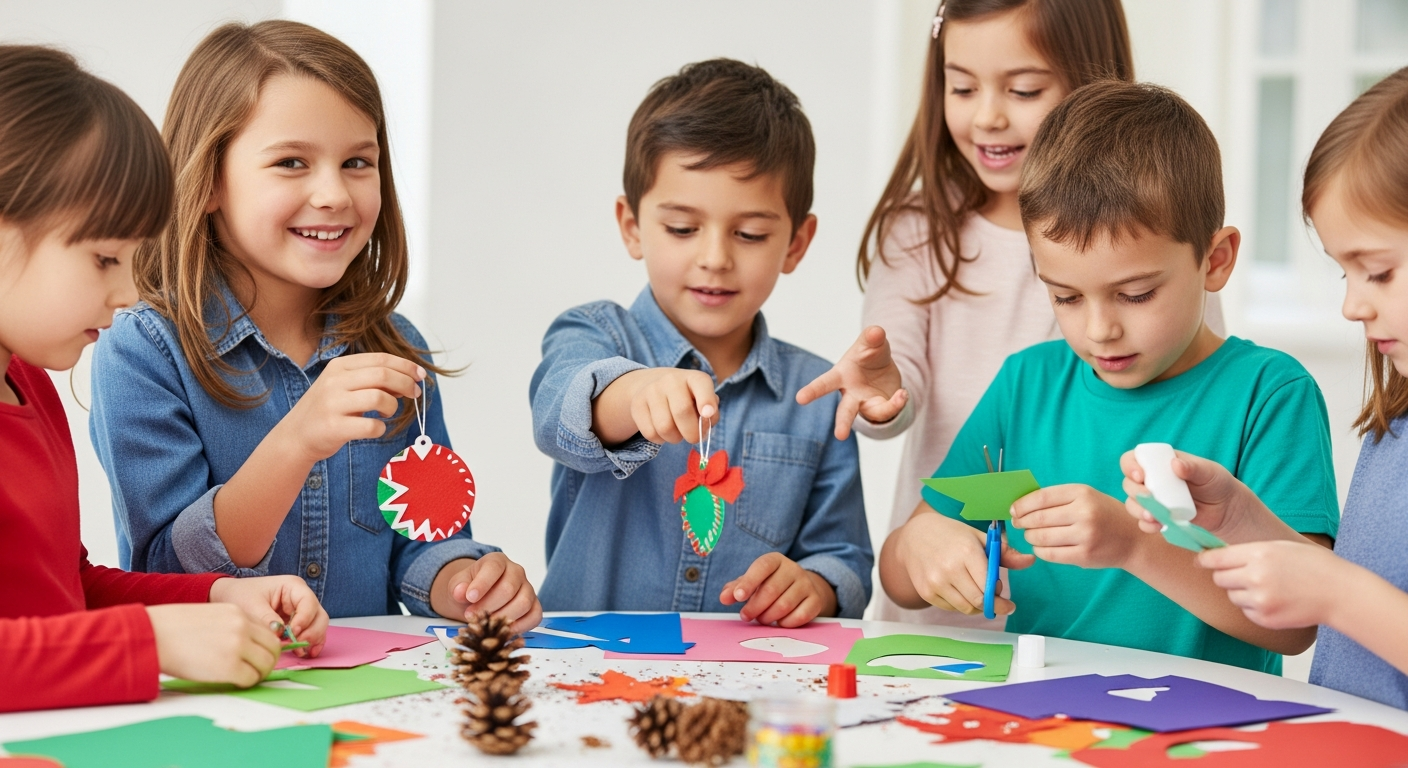
Table of Contents
- Introduction
- Why Christmas Crafts are More Than Just Play
- Integrating Speech Blubs with Your Crafting Fun
- Delightful & Cute Christmas Craft Ideas for Kids (and Their Speech!)
- Making the Most of Your Crafting Sessions: Tips for Parents
- How Speech Blubs Empowers Your Child's Communication Journey
- Frequently Asked Questions About Christmas Crafts and Speech
- Conclusion
Introduction
As the festive season twinkles into view, hearts begin to fill with the magic and wonder of Christmas. For families with young children, this time of year is an unparalleled opportunity to create cherished memories and engage in joyful activities that spark imagination and learning. Imagine the sparkle in your child's eyes as they transform simple materials into a beautiful, personalized ornament or a heartwarming gift. But what if these precious moments of creativity could also become powerful stepping stones in their communication journey? We believe they absolutely can. This post will delve into a delightful world of cute Christmas craft ideas for kids, showing you how to infuse language-rich interactions into every snip, glue, and glittery flourish. We'll explore crafts that aren't just fun and festive, but also strategically designed to enhance speech and language development, fostering confidence and reducing communication frustrations. Get ready to discover how crafting can be a profound, hands-on tool for your child to truly speak their minds and hearts this holiday season.
Why Christmas Crafts are More Than Just Play
At Speech Blubs, we deeply understand that every child deserves the chance to communicate effectively and joyfully. Our mission stems from the personal experiences of our founders, who, having navigated speech challenges themselves, created the very tool they wished they had: an immediate, effective, and joyful solution for the 1 in 4 children who need speech support. This mission extends beyond our app and into every aspect of a child's developmental journey, including engaging in hands-on activities like crafting.
Crafting, especially during a theme-rich season like Christmas, offers a multisensory experience that is incredibly beneficial for a child's holistic development. It's not just about creating a pretty decoration; it’s about nurturing fine motor skills, cognitive development, emotional expression, and, crucially, speech and language.
The Speech and Language Boost from Crafting
When children engage in a cute Christmas craft, they are actively participating in a rich language environment. Think about the descriptive words they learn: "sparkly," "sticky," "soft," "rough," "red," "green." Consider the action verbs: "cut," "glue," "paint," "fold," "press," "decorate." This hands-on learning anchors new vocabulary in tangible experiences, making it much more memorable and meaningful than simply hearing a word in isolation.
Moreover, crafting naturally encourages:
- Vocabulary Expansion: Naming materials, colors, shapes, and actions.
- Articulation Practice: Repeating words like "star," "bell," "snowman," or sounds like "snip-snip" and "goo-goo glue."
- Following Directions: Understanding and executing multi-step instructions, essential for both listening comprehension and expressive language.
- Sequencing Skills: Describing the steps they took to create something, which builds narrative abilities.
- Social Interaction and Collaboration: If crafting with a sibling or parent, children practice turn-taking, asking for help, and expressing their ideas.
- Problem-Solving: Figuring out how to make a piece of paper stick or how to arrange elements creatively.
- Confidence Building: The pride of creating something unique empowers children to express themselves more freely.
These benefits are deeply aligned with our philosophy at Speech Blubs. We believe in "smart screen time" that complements and enhances real-world experiences. Just as our app uses video modeling, where children learn by watching and imitating their peers, crafting provides a real-world "modeling" opportunity, allowing children to imitate actions and words, guided by an adult. For parents who are often wondering if their child is meeting developmental milestones, incorporating such activities can be a powerful, joyful supplement to their child's overall development plan. If you ever find yourself unsure about your child's communication progress, our quick 3-minute preliminary screener can offer a simple assessment and a personalized next-steps plan.
Integrating Speech Blubs with Your Crafting Fun
Our app is designed to provide powerful tools for family connection, acting as a screen-free alternative to passive viewing. Imagine a child who enjoys crafting but struggles with specific sounds or words. For a parent whose 3-year-old "late talker" loves animals and crafting, the 'Animal Kingdom' section within Speech Blubs offers a fun, motivating way to practice "moo" and "baa" sounds, which can then be reinforced when making animal-themed Christmas ornaments.
We integrate scientific principles with play, and this blend makes our "smart screen time" experiences truly one-of-a-kind. When your child interacts with our video models, they activate "mirror neurons" in their brain, the same mechanism that helps them learn by watching and imitating in real life—like watching you craft! For more details on the scientific methodology behind our app, you can explore our research page.
Delightful & Cute Christmas Craft Ideas for Kids (and Their Speech!)
Let's dive into some wonderful, accessible Christmas crafts that are perfect for encouraging speech and language development. Remember, the goal isn't perfection, but participation and communication!
1. Salt Dough Ornaments
Salt dough ornaments are a timeless cute Christmas craft for kids. They're simple, inexpensive, and offer endless opportunities for creativity and language building.
- Materials: 1 cup salt, 2 cups flour, 1 cup warm water, cookie cutters, rolling pin, straw, paint, glitter, string.
- Process & Speech Focus:
- Mixing: "Pour," "stir," "mix," "sticky," "smooth." Talk about the ingredients: "flour" (F sound), "salt" (S sound), "water" (W sound).
- Rolling & Cutting: "Roll it flat!" (R, F sounds). "Press the cutter down" (P, D sounds). Name the shapes: "star," "tree," "bell," "snowman." (S, T, B sounds). Use descriptive words: "big," "small," "round," "pointy."
- Baking & Decorating: "Bake it," "cool it." "Paint" (P sound), "brush" (B sound), "glitter" (G sound). Discuss colors: "red," "green," "blue," "gold."
- Relatable Scenario: For a child who struggles with multi-step directions, like our fictional 4-year-old Leo who gets frustrated when asked to do more than one thing at a time, crafting salt dough ornaments provides a concrete, visual sequence. You can say, "First, we roll. Then, we cut. After that, we poke a hole." As Leo completes each step, he builds confidence in his ability to follow instructions, strengthening his understanding of sequential language. You can reinforce this by using words like "next" and "finally" during the craft.
2. Paper Plate Santas or Reindeer
This is a classic cute Christmas craft for kids that's adaptable for various ages and offers fantastic opportunities for naming and describing.
- Materials: Paper plates, cotton balls, red/brown/white construction paper, googly eyes, glue, markers, pipe cleaners.
- Process & Speech Focus:
- Cutting & Gluing: "Cut the hat" (C, H sounds). "Glue the cotton balls" (G, B sounds). "Sticky."
- Naming Body Parts: For Santa: "beard," "hat," "eyes," "nose," "mouth." For reindeer: "antlers," "nose," "eyes." (Reinforces vocabulary and body part recognition).
- Describing: "Santa's beard is white and fluffy." "The reindeer's nose is red and round."
- Sounds: "Ho-ho-ho!" for Santa, or animal sounds for reindeer (e.g., a little snort!).
- Relatable Scenario: Consider Maya, a 3-year-old with a limited vocabulary. By making a paper plate Santa, her parent can label each part as it's added: "Here are Santa's eyes," "Now, let's put on his red hat." They can work on action words like "glue" and "stick." This repetition in a fun context helps Maya associate words with objects and actions, building her core vocabulary.
3. Handprint Christmas Trees or Wreaths
These crafts are not only adorable keepsakes but also wonderful for sensory exploration and fine motor skill development, both crucial for speech readiness.
- Materials: Green washable paint, paper, glitter (optional), small pom-poms or sequins, glue.
- Process & Speech Focus:
- Sensory & Action: "Dip your hand in the green paint!" "Press your hand down hard." "Wiggle your fingers!" "Wash, wash, wash hands!"
- Counting: "How many fingers?" "One, two, three, four, five!"
- Describing: "It's cold!" "It's sticky!" "Look at your big handprint!"
- Sequencing: "First, paint. Then, press. Finally, decorate."
- Relatable Scenario: For a child like Ethan, who is sometimes hesitant to try new textures or activities, the gentle sensory experience of handprint painting can be a breakthrough. The parent can model enthusiasm: "Wow, this green paint feels so smooth!" and encourage interaction: "Should we put a star at the top of our tree?" This low-pressure, high-sensory activity helps Ethan engage and open up to new experiences, paving the way for more communicative attempts.
4. DIY Photo Ornaments
These personalized ornaments are incredibly cute and create a wonderful opportunity for storytelling and discussing family.
- Materials: Clear plastic or glass ornaments (shatterproof for younger kids), small photos (cut to fit), glitter, fake snow, ribbon.
- Process & Speech Focus:
- Naming People: "Who is this in the picture?" "Mommy," "Daddy," "Grandma," "you!" (Reinforces family vocabulary).
- Describing Memories: "Remember when we went to the beach?" "You were laughing!" (Encourages narrative skills and memory recall).
- Action Verbs: "Cut," "roll" (the photo to fit), "put inside," "shake" (the glitter/snow).
- Descriptive Words: "Sparkly," "shiny," "smooth."
- Relatable Scenario: Olivia, a 5-year-old, sometimes struggles with telling a cohesive story. Creating photo ornaments allows her to practice narrating short, personal anecdotes. As she picks a photo, her parent can prompt her: "Tell me about this picture. Who is this? What were we doing? What happened next?" This structured storytelling helps Olivia organize her thoughts and practice using transition words, skills that are directly supported by Speech Blubs' "Talk About" activities.
5. Pinecone Critters and Ornaments
Nature provides wonderful inspiration for a cute Christmas craft for kids! Collecting pinecones is an adventure in itself.
- Materials: Pinecones, googly eyes, felt scraps, pom-poms, pipe cleaners, glue, string.
- Process & Speech Focus:
- Outdoor Exploration: "Find a big pinecone!" "Look, this one is small." "Is it bumpy or smooth?" (Rich vocabulary for textures, sizes, and location words).
- Naming Body Parts: Create a "pinecone owl" or "pinecone mouse." Name the "eyes," "wings," "ears," "nose."
- Action Verbs: "Glue," "stick," "wrap" (pipe cleaners).
- Imaginative Play: "What does your owl say?" "Hoo-hoo!" (Encourages imaginative play and sound imitation).
- Relatable Scenario: For a child like Noah, who is learning to differentiate between similar sounds (e.g., /b/ and /p/), crafting pinecone critters provides a fantastic opportunity for focused practice. As they attach "puffy" pom-poms for the body or "pipe" cleaners for legs, the parent can emphasize the "p" sound. Or, when gluing on "big" googly eyes, emphasize the "b" sound. This tangible connection to words and sounds aids in articulation development.
Making the Most of Your Crafting Sessions: Tips for Parents
Crafting with kids, especially little ones, can be a joyous whirlwind. Here are some empathetic tips to help you maximize the developmental benefits and minimize stress:
- Embrace the Mess (and Prepare for It!): Lay down newspapers or a plastic tablecloth. Dress children in old clothes. A little mess is part of the creative process and signals to your child that it's okay to explore and experiment.
- Focus on the Process, Not Perfection: The finished product is secondary. The real value is in the shared experience, the conversations, and the skills developed along the way. Your child's "imperfect" craft is a beautiful testament to their effort and creativity.
- Use Simple, Clear Language: Speak in short, digestible sentences. Use gestures to reinforce your words. For example, when saying "cut," make a scissor motion with your fingers.
- Narrate Your Actions: "I'm rolling the dough now. It feels soft." "You're putting the red pom-pom on the tree." This models language in context.
- Ask Open-Ended Questions: Instead of "Do you like it?", try "Tell me about your reindeer." or "What's your favorite part of this ornament?" This encourages more elaborate responses and critical thinking.
- Model and Imitate: If your child is struggling with a word or sound, gently model it for them. For example, "Can you say 'glue'?" if they point to the glue. If your child makes a new sound, imitate it back to them, showing you heard and understood.
- Give Choices: "Do you want red or green paint?" "Should we put the star on top or on the side?" This empowers your child and encourages them to express preferences.
- Praise Effort and Specificity: Instead of just "Good job!", try "I love how you chose all those sparkly colors!" or "You worked so hard to cut that perfectly!"
- Connect to Daily Life: Talk about where the craft will be displayed, or who might receive it as a gift. This extends the language practice beyond the crafting session.
- Bridge to Speech Blubs Activities: If you notice your child struggling with a particular sound or word during crafting, make a mental note to revisit that specific sound or vocabulary group in the Speech Blubs app. For instance, after making a paper plate Santa, you could go to the "S" sound section or the "People" category in the app to reinforce related words through our engaging video models. This integrated approach ensures that learning is continuous and reinforcing.
How Speech Blubs Empowers Your Child's Communication Journey
While crafting offers invaluable hands-on learning, we know that many parents seek additional, structured support for their child's speech and language development. This is where Speech Blubs truly shines, providing a powerful supplement to these real-world activities.
At Speech Blubs, we are committed to providing an immediate, effective, and joyful solution for children needing speech support. Our founders created this tool based on their own experiences, ensuring it’s built with deep empathy and a clear understanding of what works. We blend scientific principles with play, transforming screen time from passive viewing into an active, engaging, and educational experience. Our unique "video modeling" methodology is at the heart of our approach, where children learn to articulate and understand complex communication skills by watching and imitating their peers. This natural way of learning, powered by mirror neurons, makes speech development feel like play.
Our app is packed with thousands of exercises, face filters, and educational games designed to foster a love for communication, build confidence, and reduce the frustration that can come with speech challenges. We focus on developing key foundational skills, encouraging expressive language, and creating joyful family learning moments. We are proud that our method is backed by science, placing us in the top tier of speech apps worldwide, as detailed on our research page. Don't just take our word for it; see what other parents are saying about their child's success with Speech Blubs on our testimonials page.
Ready to give your child the gift of clear communication this Christmas and beyond? We invite you to explore Speech Blubs. You can easily download Speech Blubs on the App Store or Google Play Store to get started!
Our Pricing & Your Best Value
We believe in transparency and want to offer you the best value for your child's communication journey.
- Monthly Plan: Priced at $14.99 per month.
- Yearly Plan: Our most popular and highly recommended option, priced at just $59.99 per year. This breaks down to an incredible value of only $4.99 per month – a savings of 66% compared to the monthly plan!
Choosing the Yearly Plan isn't just about saving money; it unlocks the full Speech Blubs experience:
- 7-Day Free Trial: Try out all our features and see the magic firsthand with no commitment.
- Extra Reading Blubs App: Get access to our complementary reading app to further boost literacy skills.
- Early Access to New Updates: Be among the first to enjoy new features and content.
- 24-Hour Support Response Time: Get your questions answered quickly and efficiently.
The Monthly Plan, unfortunately, does not include these invaluable extra benefits. We highly encourage you to choose the Yearly plan to get the free trial and the full suite of features that will truly empower your child.
Frequently Asked Questions About Christmas Crafts and Speech
Q1: What age is best for starting Christmas crafts with a focus on speech?
A: You can start introducing simple Christmas crafts to toddlers as young as 18 months, adapting the complexity to their developmental stage. For very young children, focus on sensory exploration (e.g., painting with fingers, squishing playdough) and single-word utterances. As they grow, you can introduce more complex tasks, multi-step directions, and descriptive language. The key is to keep it fun and engaging, regardless of age.
Q2: My child gets frustrated easily when crafting. How can I make it more enjoyable for them?
A: Frustration is common! To make crafting more enjoyable, simplify the steps, offer plenty of praise for effort (not just the outcome), and let your child lead. If a specific material is causing distress, switch to something else. Break down tasks into very small, manageable steps. Focus on the process of exploration and communication rather than achieving a perfect final product. Remember, a "perfect" craft is one that involved joyful interaction and learning. Speech Blubs offers tools to build confidence in communication, which often translates to other areas of life.
Q3: How can I encourage my shy child to talk more during craft time?
A: Creating a low-pressure, supportive environment is crucial. Instead of demanding speech, try modeling language yourself and narrating your own actions. Ask open-ended questions that don't have a right or wrong answer, like "What do you think we should do next?" or "Tell me about your idea." Offer choices ("Do you want the blue or the red ribbon?"). Use repetition of new words. Sometimes, a child might express themselves through gestures or sounds before full words, and that's okay—acknowledge and affirm their communication attempts. Our app uses video modeling to encourage imitation in a playful, low-pressure way, which can be a great precursor to more expressive language during crafts.
Q4: My child loves crafting, but I'm worried about their speech development. Should I be concerned?
A: It's wonderful that your child enjoys crafting, as it provides a fantastic foundation for many developmental skills, including speech. If you have concerns about specific speech or language delays, it's always best to consult with a professional. In the meantime, you can utilize tools like our preliminary screener to gain some initial insights into your child's communication profile. Remember, Speech Blubs is designed to be a powerful supplement, providing targeted practice in an engaging format, and can be used in conjunction with any professional advice you receive.
Conclusion
This Christmas, let your creativity flow not just for beautiful decorations, but for building beautiful communication bridges with your children. Engaging in a cute Christmas craft for kids isn't merely about glitter and glue; it's about fostering vocabulary, sharpening articulation, enhancing cognitive skills, and building self-confidence. Every shared giggle, every descriptive word, and every "Look what I made!" contributes significantly to their developmental journey, helping them to truly speak their minds and hearts.
At Speech Blubs, we are honored to be a part of this journey, offering a unique, scientifically-backed approach that turns screen time into "smart screen time." Our mission is to empower children to communicate effectively, and we provide the tools to make that journey joyful and engaging. By combining the hands-on magic of Christmas crafting with the interactive power of Speech Blubs, you're giving your child a holistic, fun-filled pathway to confident communication.
Ready to embark on this exciting adventure? We invite you to experience the difference for yourself. Create your account and begin your 7-day free trial today! For the ultimate value and access to exclusive features like the Reading Blubs app and priority support, be sure to select the Yearly plan—it's the best way to support your child's communication development all year long. You can also download Speech Blubs on the App Store or Google Play Store to get started immediately. Let's make this a Christmas filled with connection, creativity, and confident communication!