
Festive Fun: Easy Christmas Bead Crafts for Kids
 By Speech Blubs Team•Dec 22, 2025•18 min.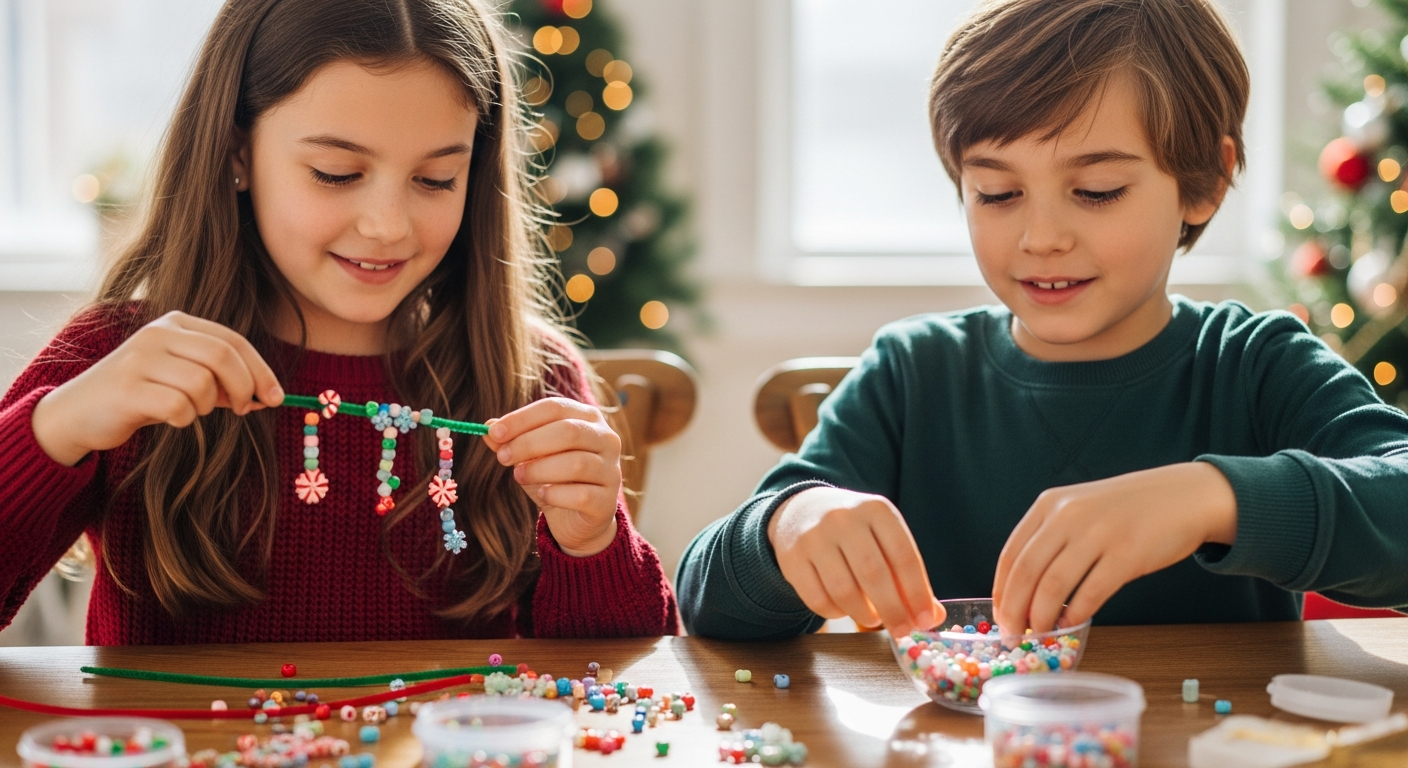
Table of Contents
- Introduction
- The Magic of Making: Why Crafts Matter for Young Minds
- Preparing Your Crafting Wonderland: Materials and Safety
- Our Favorite Christmas Bead Crafts for Kids
- Enhancing Language During Craft Time: Tips for Parents
- Speech Blubs: A Partner in Your Child's Communication Journey
- The Value of Investing in Your Child's Communication
- Getting Started with Speech Blubs: Our Plans
- Conclusion
- FAQs
The air fills with the scent of pine, twinkling lights begin to appear, and a special kind of magic settles in. Christmas is a time of wonder, connection, and creation, especially for our children. As parents, we cherish these moments, seeking activities that not only bring joy but also subtly nurture our little ones' growing minds and spirits. Imagine the delight in your child's eyes as they transform simple beads into a sparkling reindeer ornament or a vibrant candy cane necklace. These aren't just pretty decorations; they're doorways to discovery, fine motor skill development, and rich opportunities for language growth. This post will guide you through a world of enchanting Christmas bead crafts for kids, showing you how these festive activities can become powerful tools for learning, communication, and creating cherished family memories, perfectly complementing the developmental journey we champion at Speech Blubs.

Introduction
As holiday cheer starts to bubble, children's imaginations often soar, eager to embrace the festive spirit. What better way to channel that excitement than into hands-on creativity? Christmas bead crafts offer a delightful blend of fun and learning, transforming ordinary afternoons into adventures in color, texture, and design. Far from being just a way to pass the time, these engaging projects contribute significantly to a child's holistic development, from enhancing dexterity and problem-solving abilities to expanding their vocabulary and encouraging self-expression. We believe that every shared activity, especially during the holidays, can be a springboard for connection and communication. Here, we'll explore a variety of easy and captivating Christmas bead crafts, providing practical tips to maximize their developmental benefits and showing how they fit beautifully into a broader strategy for fostering your child's communication skills, just as our app, Speech Blubs, helps empower them to speak their minds and hearts.
The Magic of Making: Why Crafts Matter for Young Minds
Crafting is more than just an enjoyable pastime; it's a fundamental part of early childhood development, laying crucial groundwork for various skills. When children engage in activities like bead crafting, they're not just creating a tangible object; they're building a foundation for future learning.
Beyond the Glitter: Developmental Benefits of Crafting
The seemingly simple act of stringing beads or arranging them into a pattern activates a wide range of developmental processes:
- Fine Motor Skills and Dexterity: This is perhaps the most immediate benefit. Picking up small beads, threading them onto a string or pipe cleaner, and manipulating them into place requires precision, hand-eye coordination, and the development of the pincer grasp. These skills are vital not only for writing and self-care tasks but also for the intricate muscle movements involved in articulation and speech production. The more refined a child’s control over their small hand muscles, the better equipped they are for the nuanced movements of their tongue and lips.
- Cognitive Development: Crafting engages children in problem-solving and critical thinking. They learn to follow instructions, understand patterns, plan their designs, and visualize the final product. Counting beads, sorting by color or shape, and making decisions about placement all stimulate cognitive function. When a child decides to make a red, green, and white pattern, they are actively engaging in sequencing and categorization.
- Language and Communication: Craft time is prime time for conversation. Children learn new vocabulary as they describe colors, shapes, sizes, and textures ("sparkly," "smooth," "tiny," "long," "round," "rough"). They practice following multi-step directions ("First, get a blue bead, then put it on the string"). They narrate their actions ("I'm making a star!"), ask questions ("Can I have more green beads?"), and express their creativity and choices ("I want mine to be all rainbow!"). These interactions are invaluable for expanding receptive and expressive language.
- Emotional and Social Growth: Completing a craft project instills a sense of accomplishment and boosts self-esteem. Children learn patience and perseverance as they work through challenges, and they practice sharing materials and collaborating with siblings or caregivers. The pride they feel in showing off their handmade ornament is a powerful motivator. Crafting together also strengthens family bonds, creating shared experiences and opportunities for connection.
Preparing Your Crafting Wonderland: Materials and Safety
Before diving into the creative process, a little preparation goes a long way in ensuring a fun, safe, and frustration-free crafting experience for everyone.

Essential Bead Craft Supplies
The beauty of bead crafts is their versatility and the wide range of materials available. Here’s what you might need:
- Types of Beads:
- Pony Beads: These are larger, plastic beads with generous holes, perfect for younger children still developing their fine motor skills. They come in a rainbow of colors, often used for stringing, sorting, and melting crafts.
- Perler Beads (Fuse Beads): Small, cylindrical plastic beads that are placed on pegboards to create designs, which are then fused together with an iron (adult supervision required!). They’re excellent for creating pixelated designs and detailed ornaments.
- Wooden Beads: Available in various sizes, colors, and natural finishes, these are durable and easy for small hands to grasp.
- Alphabet Beads: Fantastic for incorporating letter recognition and spelling into crafts, allowing children to create personalized messages.
- Larger Craft Beads: Look for beads in different shapes (stars, hearts, animals) and textures to add interest and tactile stimulation.
- Stringing Materials:
- Pipe Cleaners: Flexible, fuzzy, and easy for young children to manipulate. Beads slide on effortlessly, and pipe cleaners can be bent into shapes.
- Elastic Cord: Ideal for bracelets and necklaces, as it stretches and is easy to tie.
- Fishing Line or Clear String: Best for more delicate ornaments or suncatchers where you want the beads to be the star.
- Yarn or Thick Thread: Another good option for larger beads, offering a different tactile experience.
- Tools & Extras:
- Child-Safe Scissors: For cutting string or yarn.
- Craft Glue: To secure knots or attach elements.
- Cookie Cutters: For Perler bead projects, especially for melting pony beads into shapes.
- Baking Paper and Iron: Essential for fusing Perler beads (adult use only!).
- Crafting Trays or Mats: To contain beads and prevent them from rolling off the table, making cleanup easier.
- Small Bowls or Muffin Tins: Excellent for organizing beads by color or type, encouraging sorting skills.
Safety First: Tips for Little Crafters
Ensuring a safe environment is paramount when crafting with children, especially with small items like beads.
- Age Appropriateness: Always consider the age of your child. Small beads can be a choking hazard for children under three years old. Opt for larger, chunky beads for toddlers and preschool-aged children, and closely supervise all crafting activities.
- Constant Supervision: Never leave young children unattended with small craft supplies. Adult presence is crucial, especially when using tools like scissors, glue, or an iron.
- Organized Workspace: Designate a clear, well-lit crafting area. This not only minimizes mess but also helps children focus and feel more in control of their activity.
- Demonstrate Proper Tool Use: Teach children how to use tools safely, such as holding scissors correctly or applying glue sparingly.
Our Favorite Christmas Bead Crafts for Kids
Now, let's dive into some specific, super fun Christmas bead craft ideas that are perfect for little hands and budding imaginations. Each project offers unique opportunities for developmental growth and festive cheer.
1. Dazzling Ornament Creations
Handmade ornaments are treasures that families cherish for years, and bead creations add a special sparkle to any Christmas tree.
- Pipe Cleaner & Pony Bead Ornaments:
- Description: This is a wonderfully simple and forgiving craft, ideal for even the youngest crafters (with supervision). Children thread colorful pony beads onto pipe cleaners, which can then be bent into festive shapes like stars, candy canes, circles, or even abstract designs. Once bent, the pipe cleaner ends can be twisted together to secure the shape, and another piece can be added for hanging.
- How it supports communication: This craft is rich with language opportunities. As your child selects beads, you can ask, "What color bead are you choosing now?" or "How many red beads do you want?" You can narrate their actions: "You're putting a blue bead on the pipe cleaner." Encourage them to describe their creation: "Tell me about your sparkly star ornament!" This helps them practice descriptive language and share their ideas.
- Perler Bead Designs:
- Description: Perler beads, also known as fuse beads, involve placing small, cylindrical beads onto a pegboard following a pattern or creating an original design. Once the design is complete, an adult carefully irons over the beads (covered with special paper) to melt and fuse them together. These can be turned into flat, sturdy ornaments in countless Christmas shapes – Santa hats, reindeer, snowflakes, or stockings.
- How it supports communication: Perler beads are fantastic for developing the ability to follow multi-step instructions and for spatial reasoning. "First, put the green beads in a line, then add a red one." You can discuss patterns: "What comes next in your pattern?" or "Are all the rows the same?" This activity encourages focused attention and precise language use. For a child who loves creating patterns, this is a wonderful way to practice sequencing and describing their design choices.
2. Festive Wearables: Bracelets and Necklaces
Children adore making and wearing their own jewelry, and Christmas offers the perfect theme for dazzling pieces.
- Christmas-Themed Jewelry:
- Description: Using elastic cord or durable string, children can create bracelets and necklaces with festive colors (red, green, white, gold, silver) or beads shaped like tiny candy canes, snowflakes, or bells. Encourage them to create patterns or simply mix and match their favorite holiday hues.
- How it supports communication: This activity naturally lends itself to discussions about patterns ("What comes next: red, green, red, green?"), counting ("How many beads have you used so far?"), and expressing preferences ("Do you like this sparkly bead or the matte one?"). You can talk about who the jewelry is for, fostering empathy and conversation about family members: "This could be a lovely gift for Grandma!" This type of sharing and planning builds conversational skills.
- Alphabet Bead Messages:
- Description: Incorporate alphabet beads into bracelets or necklaces to spell out holiday words like "JOY," "PEACE," "MERRY," or even the names of loved ones. This adds an educational twist to the craft.
- How it supports communication: This is excellent for letter recognition, phonological awareness, and early spelling. Ask your child, "What letter do we need for 'J-O-Y'?" or "Can you find the 'M' for Merry?" It's a fun way to reinforce literacy skills while creating something beautiful. For children learning to identify letters and basic words, this activity turns letter recognition into a tangible, personalized creation.
3. Beaded Art & Decorations
Beyond ornaments and jewelry, beads can be used to create charming decorations for windows, tables, or gifts.
- Sun Catchers:
- Description: This project involves arranging pony beads in metal cookie cutters on a baking sheet lined with parchment paper. An adult then bakes them in the oven until the beads melt and fuse into a solid, colorful disc. Once cooled, they can be popped out and strung with fishing line to hang in a window, catching the light beautifully.
- How it supports communication: The melting process itself is a fascinating topic for discussion. You can use verbs like "melt," "fuse," "solidify," "sparkle," and "shine." Talk about how the light changes when it passes through the colorful plastic. "Look how the light makes the red bead glow!" This encourages descriptive language and an understanding of cause and effect.
- Christmas Wreaths (Mini):
- Description: Small wire circles or even pipe cleaners can be used as a base for mini beaded wreaths. Children can string a variety of green, red, and gold beads onto the circle, perhaps adding a small bell or a tiny bow for a finishing touch. These can be hung as small ornaments or used as festive place settings.
- How it supports communication: This craft provides opportunities to discuss concepts like "circle," "round," "full," and "empty." Children can count the beads as they string them, compare sizes ("Which bead is bigger?"), and describe the texture of different beads. "This bead feels smooth, and this one feels bumpy."
Enhancing Language During Craft Time: Tips for Parents
Crafting offers a fantastic, natural environment for language development. As parents, we can maximize these opportunities with a few intentional strategies.
Turning Crafting into Conversation
- Narrate Your Actions: Talk about what you're doing as you craft alongside your child. "I'm picking up a shiny gold bead," or "Now I'm carefully threading the string through the hole." This models clear language and helps your child connect words to actions.
- Ask Open-Ended Questions: Instead of "Do you like it?" try "What do you like most about your creation?" or "What color should we use next and why?" "Tell me about your design." These questions encourage more elaborate responses and critical thinking.
- Introduce New Vocabulary: Craft time is perfect for expanding a child's lexicon. Use descriptive words: "sparkle," "gleam," "tinsel," "festive," "pattern," "symmetrical," "dazzling," "ornate." Explain what these words mean in context. For instance, if a child struggles with expressive language and loves to build, crafting a bead Christmas tree can be a chance to introduce words like "cone," "stack," "branch," and "decorate."
- Practice Following Directions: Start with simple, one-step instructions ("Get a red bead"). As your child's skills grow, introduce two-step directions ("First, get a blue bead, then put it on the string"). This is crucial for developing auditory processing and comprehension skills.
- Encourage Storytelling: Prompt your child to tell a story about their craft. "What adventure did your reindeer ornament have?" or "Who will wear this special bracelet?" This fosters imaginative play and narrative skills.
Speech Blubs: A Partner in Your Child's Communication Journey
At Speech Blubs, we understand that nurturing a child's ability to communicate is one of the most profound gifts you can give them. Our mission, born from the personal experiences of our founders who grew up with speech problems, is to empower children to "speak their minds and hearts." We provide an immediate, effective, and joyful solution for the 1 in 4 children who need speech support, ensuring that every child has the opportunity to connect with the world around them.
How We Empower Children to Speak Their Minds and Hearts
We are committed to blending scientific principles with play, creating one-of-a-kind "smart screen time" experiences. We stand apart by offering an active and engaging alternative to passive viewing (like cartoons), transforming screen time into a powerful tool for learning and family connection.
Our unique approach centers around video modeling, where children learn by watching and imitating their peers. This method harnesses the power of mirror neurons, encouraging children to mimic mouth movements, sounds, and words in a fun and natural way. Research backs our methodology, placing us in the top tier of speech apps worldwide, as detailed on our Research page.
Seamless Integration with Everyday Learning
Just as Christmas bead crafts provide a rich, hands-on context for language exploration, Speech Blubs complements these real-world experiences with structured, playful speech practice. Imagine a child who creates a beautiful animal-themed bead ornament. This hands-on activity can be seamlessly extended by exploring the "Animal Kingdom" section within the Speech Blubs app, where they can practice the sounds and names of their favorite creatures, reinforcing learning through different engaging modalities. We offer thousands of activities designed to build foundational communication skills, from first words to complex sentence structures.
For a parent whose 3-year-old "late talker" loves animals and is fascinated by their bead craft, the "Animal Kingdom" section in Speech Blubs offers a fun, motivating way to practice "moo" and "baa" sounds, or even the full words, by imitating children on screen. This interactive approach helps transfer the excitement from the physical craft to targeted speech practice, making learning consistent and enjoyable. Our app isn't just about exercises; it's about making communication a joyful adventure every day.
The Value of Investing in Your Child's Communication
Supporting your child's speech development early can have a profound impact on their confidence, social interactions, and academic readiness. Strong communication skills reduce frustration and unlock a child's full potential.
If you're unsure whether your child could benefit from extra support, we invite you to take our quick 3-minute preliminary screener. It involves 9 simple questions and provides an assessment along with a next-steps plan. This tool can offer valuable insights and guide you toward appropriate resources, including a free 7-day trial of Speech Blubs.
Don't just take our word for it; see what other parents are saying about their child's success with Speech Blubs by visiting our testimonials page. Their stories highlight the real-world impact our app has on families.
Getting Started with Speech Blubs: Our Plans
We believe in making effective speech support accessible to every family. That's why we offer transparent and flexible plans for the Speech Blubs app.
You can choose our Monthly plan for $14.99 per month. However, for the best value and a comprehensive experience, we highly recommend our Yearly plan. At just $59.99 per year, it breaks down to an incredible $4.99 per month, allowing you to save 66% compared to the monthly option!
The Yearly plan is truly the best choice, as it includes exclusive, high-value features designed to maximize your child's progress and your family's convenience:
- A 7-day free trial: Experience the full power of Speech Blubs before committing.
- The extra Reading Blubs app: Further support your child's literacy journey.
- Early access to new updates: Be the first to enjoy new features and content.
- 24-hour support response time: Get prompt assistance whenever you need it.
The Monthly plan does not include these fantastic benefits. We encourage you to choose the Yearly plan to unlock the free trial and the full suite of features that will empower your child's communication journey.
Conclusion
This holiday season, let the simple joy of creating Christmas bead crafts become a cornerstone of your family's traditions. These activities offer far more than just festive decorations; they are invaluable opportunities to foster fine motor skills, boost cognitive development, and, crucially, enrich your child's language and communication abilities. By engaging together, narrating actions, asking open-ended questions, and introducing new vocabulary, you're not just making ornaments – you're building bridges to clearer, more confident speech.
And as you embark on this crafting adventure, remember that Speech Blubs is here to support your child's communication journey every step of the way. Our unique video modeling method provides fun, engaging "smart screen time" that complements your family's hands-on learning, empowering children to articulate their thoughts and feelings. We are dedicated to providing immediate and effective solutions, blending scientific principles with playful activities.
Ready to give your child the gift of confident communication? Start your 7-day free trial today by creating your account on our website or by downloading the app directly from the Apple App Store or Google Play Store. Remember to select the Yearly plan to unlock the free trial, save 66%, and gain access to the full suite of features, including the extra Reading Blubs app and priority support. Let's make this holiday season a time of joyful creation and powerful communication for your little one!
FAQs
1. What age are bead crafts suitable for?
Bead crafts can be adapted for a wide range of ages! For toddlers (1-3 years), focus on large, chunky wooden or plastic beads and thick string or pipe cleaners to minimize choking hazards and simplify manipulation. Always supervise closely. Preschoolers (3-5 years) can handle pony beads and start exploring simple patterns. School-aged children (6+) can work with smaller beads like Perler beads, alphabet beads, and more intricate designs, enjoying the challenge of following complex instructions.
2. How can I adapt bead crafts for children with different developmental stages?
For younger children or those with developing fine motor skills, pre-sorting beads by color or shape can reduce frustration. Use larger beads, thicker string, and provide pipe cleaners which are easier to thread than thin string. For older children or those needing more challenge, introduce complex patterns, encourage original design creation, or use alphabet beads to spell words. You can also incorporate counting and color recognition games to make it more educational.
3. How can I make bead crafting less messy?
The key to less mess is preparation and containment! Use a crafting mat or an old towel to cover your workspace. Provide small bowls, muffin tins, or even ice cube trays to organize beads by color or type, preventing them from scattering. Work in a designated area and always remind children about keeping beads on the surface. For Perler bead projects, ensure a stable, flat surface. After crafting, a handheld vacuum can be a lifesaver for stray beads!
4. How does Speech Blubs help with speech development?
Speech Blubs helps children develop communication skills through our unique video modeling approach. Children learn by watching and imitating the mouth movements, sounds, and words of real peers on screen. This active learning environment, backed by scientific principles, encourages them to practice articulation, expand vocabulary, and build confidence in speaking. Our app offers thousands of engaging activities across various categories, providing a fun and effective way to practice speech and language skills in a supportive, interactive setting.
About the author