
Festive Fun: Easy Christmas Crafts for Kids DIY
 By Speech Blubs Team•Dec 22, 2025•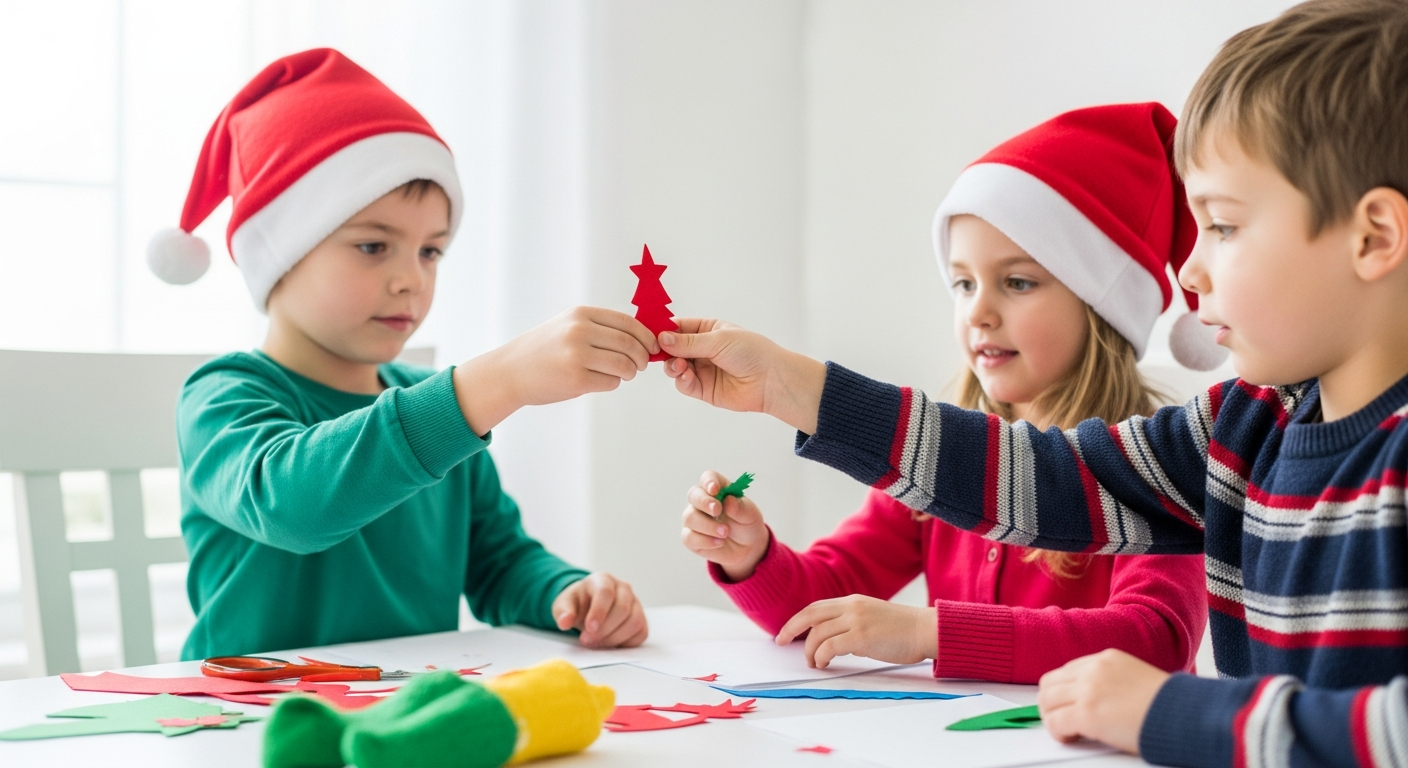
Table of Contents
- Introduction
- The Magic of Christmas Crafts for Kids
- Preparing for Your Crafting Adventure
- Enchanting Christmas Craft Ideas (with Speech & Development Focus)
- Maximizing the Developmental Benefits of Crafting
- Speech Blubs: Your Partner in Joyful Communication Development
- Conclusion
- FAQ
Introduction
Imagine the quiet concentration on your child's face, tiny hands carefully smearing glitter glue onto a homemade ornament, followed by a burst of joyful laughter as they proudly present their creation. This isn't just a pretty picture; it's a powerful moment of growth, learning, and connection. In a world increasingly filled with passive screen time, carving out moments for hands-on, creative play is more important than ever. Christmas, with its festive spirit and emphasis on tradition, offers the perfect opportunity to dive into the wonderful world of DIY crafts with your children. These activities aren't just about making decorations; they are rich playgrounds for developing essential skills, from fine motor coordination and problem-solving to, crucially, speech and language development. This post will explore the myriad benefits of engaging in Christmas crafts with your kids, provide a treasure trove of age-appropriate DIY ideas, and show you how these joyful activities can become a natural springboard for enhancing communication, often with a little help from innovative tools like Speech Blubs. Our main message is clear: crafting together is a fantastic way to bond, create lasting memories, and nurture your child's development, especially their ability to express themselves freely and confidently.
The Magic of Christmas Crafts for Kids
Engaging in christmas crafts kids diy projects is far more than just a seasonal pastime; it's a holistic developmental powerhouse. Every snip, glue, and dab contributes to a child's growth in multiple, interconnected ways.
Beyond Decoration: Holistic Child Development
When children create, they aren't just making an object; they are building foundational skills that will serve them throughout their lives. The act of crafting engages their senses, challenges their minds, and encourages self-expression. It’s a wonderful way to introduce concepts like following instructions, understanding sequences, and developing patience – all wrapped up in the excitement of making something special for the holidays.
Speech and Language Development Through Crafting
One of the most profound benefits of crafting together is its impact on speech and language. As parents, we often look for engaging ways to encourage our children to speak, express themselves, and expand their vocabulary. Crafts provide a natural, low-pressure environment for this.
- Vocabulary Expansion: Naming materials (glitter, ribbon, pinecone), actions (cut, glue, paint, sprinkle), colors, shapes, and textures (bumpy, smooth, sticky).
- Following Directions: "First, we glue the eyes. Next, we add the nose." This helps children understand sequential language and multi-step commands.
- Descriptive Language: Encouraging children to describe their creations: "My reindeer has big, shiny antlers!" or "This snowflake feels soft and fluffy."
- Narrative Skills: Talking about the process, planning what to do next, or telling a story about their finished craft, like "This is Santa's sleigh, and he's going to deliver presents!"
- Asking and Answering Questions: "What color should we use?" "Where does this go?" "Can you pass the glue?" These interactions build conversational turn-taking skills.
For a parent whose 3-year-old is a late talker, the simple act of making a handprint ornament offers countless opportunities for language. You can name body parts ("hand," "finger"), talk about actions ("press," "lift"), describe sensations ("wet," "cold," "sticky"), and express emotions ("fun," "happy"). This natural language immersion is incredibly valuable. If you're wondering if your child could benefit from a little extra support, you might consider taking our quick 3-minute preliminary screener to get an assessment and a next-steps plan.
Fine Motor Skills and Coordination
Crafts are a fantastic workout for small hands. Cutting with scissors, grasping tiny beads, peeling stickers, squeezing glue bottles, and manipulating pipe cleaners all strengthen the muscles in their fingers and hands, improving dexterity and hand-eye coordination. These skills are crucial for tasks like writing, dressing themselves, and eating independently.
Cognitive Benefits: Problem-Solving and Creativity
Every craft project presents mini-challenges. "How do I make the snowman stand up?" "Which color will look best here?" Children learn to experiment, adapt, and make decisions. This fosters critical thinking and problem-solving abilities. Beyond that, crafts ignite creativity, allowing children to express their unique ideas and see their imagination come to life. There's no "right" way to make a paper plate Santa, which empowers children to be original.
Emotional Development: Patience, Pride, and Connection
Working on a craft takes patience. Waiting for glue to dry, carefully placing small items, or repeating a step can be challenging for little ones, but it teaches perseverance. The sense of accomplishment when they finish a project is immense, boosting self-esteem and confidence. And perhaps most importantly, crafting together creates cherished memories, strengthens family bonds, and offers a wonderful opportunity for shared joy and connection, transforming passive screen time into interactive, "smart screen time" experiences.
Preparing for Your Crafting Adventure
Before you dive into a pile of glitter and glue, a little preparation can go a long way in ensuring a fun, frustration-free experience for everyone.
Setting Up a Kid-Friendly Craft Zone
Choose a dedicated space that’s easy to clean – a kitchen table covered with an old tablecloth or newspaper, a corner of a playroom, or even an outdoor picnic table if the weather permits. Ensure good lighting and comfortable seating. Having everything within reach, but also organized, helps maintain focus and minimizes interruptions.
Essential Craft Supplies Checklist
A well-stocked craft kit doesn't need to be expensive or elaborate. Here are some staples:
- Paper: Construction paper, cardstock, plain white paper, tissue paper.
- Adhesives: Child-safe glue sticks, liquid glue (white school glue), tape.
- Cutting Tools: Kid-safe scissors.
- Coloring Tools: Crayons, washable markers, tempera paint.
- Decorations: Glitter, cotton balls, pipe cleaners, googly eyes, pom-poms, craft sticks, yarn, felt scraps, buttons.
- Recyclables: Empty toilet paper rolls, paper plates, plastic bottles, cardboard boxes.
- Protection: Old shirts or smocks, newspaper/tablecloths.
Age-Appropriate Crafting Considerations
Matching crafts to your child's developmental stage is key to success and enjoyment.
- Toddlers (1-3 years): Focus on sensory exploration, simple tearing, sticking, large motor movements (big brush strokes). Less emphasis on a perfect end product, more on the process. Supervision is crucial for small parts.
- Preschoolers (3-5 years): Introduce cutting with safety scissors, more complex gluing, drawing shapes, and following 2-3 step instructions. They can start to plan their designs.
- School-Aged (5+ years): Encourage independence, detailed cutting, intricate designs, measuring, and multi-step projects. They can take pride in gifts they make for others.
Remember, every child develops at their own pace. What one 3-year-old can do, another might find challenging, and that's perfectly fine! The goal is enjoyment and engagement, not perfection.
Safety First: Tips for Little Hands
- Always supervise young children, especially when using scissors, glue, or small objects that could be a choking hazard.
- Choose non-toxic materials.
- Teach proper scissor safety: always cut away from the body, and never run with scissors.
- Ensure adequate ventilation if using paints or glues with strong odors.
- Prepare your space to be messy, but safe.
Enchanting Christmas Craft Ideas (with Speech & Development Focus)
Now for the fun part! Here’s a collection of christmas crafts kids diy ideas, broken down by age group, along with suggestions for how to boost speech and language during each activity.
Toddler-Friendly Wonders (Ages 1-3)
Toddlers thrive on sensory experiences and simple, repetitive actions. Keep instructions minimal and celebrate their effort, not just the outcome.
Handprint/Footprint Ornaments
- Materials: Salt dough, air-dry clay, or non-toxic paint, festive ribbon.
- Process: Help your toddler press their hand or foot into the dough/clay to make an impression, or paint their hand/foot and stamp it onto paper or a blank ornament. Add their name and year.
- Speech & Development Focus:
- Body Parts: "Where's your hand? Let's make a handprint!"
- Sensory Words: "Sticky," "cold," "soft," "squishy."
- Actions: "Press," "lift," "paint," "stamp."
- Emotions: "Happy," "fun!"
- Reinforcement: Our "All About Me" category in Speech Blubs can help reinforce body part names and self-awareness, making it a great follow-up activity.
- Conversation Starter: "Whose hand is this? It's [Child's Name]'s hand!"
Cotton Ball Snowmen
- Materials: Blue or black construction paper, white glue, cotton balls, googly eyes, orange paper for a nose, twig arms.
- Process: Draw a snowman outline on the paper. Have your toddler glue cotton balls onto the outline, then add eyes, nose, and arms.
- Speech & Development Focus:
- Texture & Color: "Fluffy," "soft," "white," "blue."
- Counting: "One cotton ball, two cotton balls."
- Actions: "Glue," "stick," "pat."
- Concept: "Round," "big," "small."
- Describing: "He has a big orange nose!"
- Pre-Linguistic Skills: Imitating the sound "brrr" for cold, or "plop, plop" as cotton balls are placed.
- Fine Motor: Picking up and placing cotton balls.
Pasta Noodle Ornaments
- Materials: Various dry pasta shapes (e.g., penne, rotini, wagon wheels), string or yarn, liquid glue, optional glitter or paint.
- Process: Children glue pasta shapes onto a piece of cardboard cut into a Christmas shape (star, tree, circle). Once dry, string yarn through a hole for hanging.
- Speech & Development Focus:
- Shapes & Sizes: "Long," "short," "round," "bumpy."
- Colors: If painting, "red," "green," "gold."
- Sorting & Categorization: "These are long noodles, these are round ones."
- Actions: "Glue," "decorate," "dry."
- Turn-Taking: "My turn to glue, then your turn."
- Sensory: Discussing the "hard" or "rough" texture of the pasta.
Preschooler Creations (Ages 3-5)
Preschoolers are ready for slightly more intricate tasks, capable of following more detailed instructions and expressing their ideas more clearly.
Paper Plate Santas or Reindeer
- Materials: Paper plates, red/brown construction paper, cotton balls, googly eyes, red pom-pom for nose, glue, scissors.
- Process: For Santa, children glue cotton balls around the edge of a paper plate (beard), add a red hat, googly eyes, and a pom-pom nose. For a reindeer, paint the plate brown, add construction paper antlers, eyes, and a red nose.
- Speech & Development Focus:
- Following Instructions: "First, cut the hat. Next, glue the beard."
- Describing Features: "Santa has a white beard and a red hat." "Rudolph has a shiny red nose!"
- Prepositions: "On top," "under," "beside."
- Storytelling: Imagining where Santa lives or what the reindeer do.
- Social Language: Offering to help a sibling or friend with their craft.
- Creative Extension: Drawing other Christmas characters or scenes.
Popsicle Stick Christmas Trees
- Materials: Green craft sticks, liquid glue, glitter, pom-poms, buttons, sequins, or small beads for decorations.
- Process: Glue 3-4 green craft sticks into a triangle shape for the tree. Add a short brown stick for the trunk. Decorate with various embellishments.
- Speech & Development Focus:
- Counting: Counting the sticks, counting the decorations.
- Sequencing: "First the sticks, then the glue, then the decorations."
- Colors & Shapes: Naming the colors of the pom-poms, identifying the triangle shape.
- Spatial Concepts: "Put the star on top!" "Decorate all around the tree."
- Pretend Play: Using the finished tree as a prop for imaginative Christmas stories.
- Reinforcement: Our "Numbers & Colors" category in Speech Blubs can provide fun, interactive practice for these concepts.
Pinecone Critters
- Materials: Pinecones, small pom-poms, googly eyes, felt scraps, pipe cleaners, liquid glue.
- Process: Collect pinecones (a fun outdoor activity!). Glue pom-poms for heads, googly eyes, felt ears/wings, and pipe cleaner antlers or legs to create owls, reindeer, or elves.
- Speech & Development Focus:
- Nature Vocabulary: "Pinecone," "spiky," "woodsy," "branch."
- Imaginative Play: "What animal is your pinecone?" "What does it do?"
- Descriptive Words: "Fuzzy" (pom-pom), "shiny" (googly eyes), "soft" (felt).
- Verbs: "Find," "collect," "glue," "attach."
- Problem-Solving: "How can we make the antlers stick?"
- Sharing: Explaining their creation to others.
School-Aged Masterpieces (Ages 5+)
Older children can handle more complex projects, enjoy detailed work, and appreciate the process of creating gifts for others.
Salt Dough Ornaments
- Materials: 1 cup flour, 1/2 cup salt, 1/2 cup water, cookie cutters, straw (for hanging hole), paint, glitter, varnish (optional).
- Process: Mix flour, salt, and water to form a dough. Roll it out, use cookie cutters to make shapes. Poke a hole for hanging. Bake at a low temperature (250°F/120°C) until hard, then cool. Decorate with paint and glitter.
- Speech & Development Focus:
- Action Verbs: "Mix," "knead," "roll," "cut," "bake," "paint."
- Measuring Concepts: "Cup," "half," understanding proportions.
- Sensory Words: "Doughy," "salty," "warm," "hard."
- Sequencing: Explaining the steps from start to finish.
- Gift-Giving Language: "Who will you give this to?" "What do you want to tell them?"
- Following Multi-Step Instructions: This craft involves many steps, perfect for reinforcing auditory processing and adherence to directions.
DIY Christmas Cards
- Materials: Cardstock, markers, crayons, glitter glue, stickers, felt, yarn, small cut-outs.
- Process: Fold cardstock. Encourage children to draw, write, and decorate personalized Christmas cards for family and friends.
- Speech & Development Focus:
- Writing & Literacy: Practicing writing their name, simple messages ("Merry Christmas," "Love, [Child's Name]").
- Expressing Feelings: Discussing what they want to say to the recipient.
- Personalization: "What does Grandma like?" "Let's draw a picture just for Uncle John."
- Vocabulary: Words related to family, friendship, and holiday greetings.
- Sentence Structure: Helping them construct simple sentences for their cards.
- Social Communication: Understanding the purpose of a card and who it's for.
Gingerbread House Decorating
- Materials: Pre-baked gingerbread house kit or homemade pieces, royal icing, various candies (gumdrops, M&Ms, candy canes, sprinkles).
- Process: Assemble the gingerbread house with icing. Then comes the fun part: decorating it with all the candies!
- Speech & Development Focus:
- Planning & Strategy: "Where should the roof go?" "How many gumdrops do we need for the path?"
- Descriptive Language: Naming candies, describing flavors ("sweet," "spicy"), colors, and shapes.
- Spatial Concepts: "Put the candy canes along the edge," "the sprinkles go on top of the roof."
- Problem-Solving: "Oh no, the wall is tilting! How can we fix it?"
- Turn-Taking & Sharing: Especially important if multiple children are decorating one house.
- Storytelling: Imagining who lives in the gingerbread house and what they do.
- Sensory Words: "Crunchy," "chewy," "sticky," "smooth."
Maximizing the Developmental Benefits of Crafting
While the crafts themselves are engaging, the real magic happens in the interactions and conversations that surround them. As child development experts, we know that language flourishes in a rich, interactive environment.
The Power of Conversation
Your role as a co-crafter is pivotal. Engage with your child, ask questions, and narrate your actions.
Asking Open-Ended Questions
Instead of "Do you like it?", try:
- "What's your favorite part about your snowman?"
- "Tell me about the colors you chose for your tree."
- "What will your reindeer do next?" These questions encourage more than a "yes" or "no" answer, prompting your child to elaborate and use more descriptive language.
Descriptive Language and Vocabulary Expansion
Be a language model! Use rich, varied vocabulary.
- "Look at this sparkling glitter!"
- "The glue feels so sticky on my fingers."
- "Let's carefully attach this tiny button."
- "This pinecone has such a bumpy texture, like little scales."
Narrative Skills: Telling the Story of the Craft
Encourage your child to recount the steps of their project or create a story about their finished item.
- "First, we mixed the dough, then we cut out the stars, and now we're painting them!"
- "This Santa is flying over the rooftops to deliver presents to good boys and girls." This helps develop sequencing, memory, and narrative structure, all vital for communication and literacy.
Social Communication: Sharing and Explaining
When the craft is finished, encourage your child to share it with other family members or friends.
- "Can you show Grandpa what you made?"
- "Tell Auntie about your beautiful Christmas tree ornament." This practice helps them develop social graces, confidence in speaking, and the ability to explain their ideas to an audience.
Integrating Speech Blubs into Your Play
At Speech Blubs, we believe in supporting every child's journey to "speak their minds and hearts." We know that effective speech development blends scientific principles with play. This is why our tool was born from the personal experiences of our founders, who all grew up with speech problems and created the app they wished they had. We are committed to providing an immediate, effective, and joyful solution for the 1 in 4 children who need speech support, making it a powerful supplement to your child's overall development plan.
Video Modeling: Learning from Peers
Our unique approach of teaching complex communication skills uses "video modeling" methodology. Children learn by watching and imitating their peers, rather than animated characters. This is incredibly effective because mirror neurons in the brain activate when we observe someone else performing an action, preparing us to do the same. When your child sees other children making specific sounds or words related to a craft, it provides a powerful, relatable prompt.
Imagine your child has just finished decorating a gingerbread house. You can then open Speech Blubs to the "Food" or "Shapes & Colors" sections. They might see children saying "cookie," "sweet," "round," or "star," reinforcing the vocabulary and concepts they just used in their craft. This creates a powerful connection between their hands-on experience and structured speech practice, extending the learning in a "smart screen time" way that is interactive and engaging, unlike passive viewing.
Fun Categories for Reinforcement
Speech Blubs offers a wide range of categories that can naturally tie into your christmas crafts kids diy sessions:
- Animals: After making a reindeer craft, explore the "Animal Kingdom" section to practice animal sounds and names. For a parent whose 3-year-old 'late talker' loves animals, the 'Animal Kingdom' section offers a fun, motivating way to practice 'moo' and 'baa' sounds, building confidence for similar, more complex sounds.
- Food: Perfect after gingerbread house decorating or making food-themed ornaments.
- Colors & Numbers: Reinforce these foundational concepts that are present in almost every craft.
- All About Me: Connect handprint crafts to learning body parts.
- Sounds: Many crafts involve actions that have associated sounds (e.g., "snip, snip" for scissors, "pop" for bubbles, "whoosh" for flying reindeer). Speech Blubs has sections dedicated to sound production, which can be a fun way to mimic and practice.
Our activities encourage interaction, turning screen time into a dynamic learning opportunity that supports crucial skills like imitation, early word formation, and narrative building. We provide a screen-free alternative to passive viewing (like cartoons) and a powerful tool for family connection, as the app is designed to be experienced with adult co-play and support. We are proud that our method is backed by science, placing us in the top tier of speech apps worldwide, as you can see on our research page.
Speech Blubs: Your Partner in Joyful Communication Development
At Speech Blubs, we understand the challenges and joys of raising children, especially when it comes to communication. We want to empower children to speak their minds and hearts, and we believe every child deserves the chance to communicate confidently.
Our Mission and Values: From Personal Experience to Global Impact
Our company's mission is deeply personal. Our founders all grew up with speech problems and created Speech Blubs to be the tool they wished they had during their own childhoods. This personal connection drives our commitment to providing an immediate, effective, and joyful solution for the 1 in 4 children who need speech support. We blend scientific principles with play, creating one-of-a-kind "smart screen time" experiences that are both educational and fun.
The Science Behind Our Success: Video Modeling and Mirror Neurons
We don't just guess what works; we rely on proven science. Our proprietary "video modeling" technique harnesses the power of mirror neurons. When your child watches their peers making sounds and words, these special brain cells activate, helping them imitate and learn effectively. This peer-to-peer interaction makes learning natural, engaging, and highly motivating, fostering a love for communication from an early age. Our high MARS scale rating is a testament to the quality and effectiveness of our app. To hear directly from other families who have experienced the benefits, visit our testimonials page.
Realistic Expectations: Fostering a Love for Communication
While Speech Blubs is a powerful tool, it’s important to have realistic expectations. We focus on fostering a love for communication, building confidence, reducing frustration, and developing key foundational skills. We don't promise your child will be giving public speeches in a month, but we do promise a supportive, engaging environment where they can grow and thrive. Speech Blubs is a powerful supplement to a child's overall developmental plan and, when applicable, professional therapy. It's about progress, not perfection, and celebrating every small victory along the way.
Value & Pricing: The Smart Choice for Families
We believe that high-quality speech and language support should be accessible to everyone. That's why we offer transparent and flexible pricing options.
- Monthly Plan: Our monthly subscription is available for $14.99 per month.
- Yearly Plan: For the best value, our yearly plan is priced at just $59.99 per year, which breaks down to an incredible $4.99 per month. That's a 66% savings compared to the monthly plan!
Choosing the Yearly plan isn't just about saving money; it's about unlocking the full Speech Blubs experience. The Yearly plan includes:
- A 7-day free trial to explore all the features before committing.
- Access to the extra Reading Blubs app, helping your child build foundational literacy skills.
- Early access to new updates and a dedicated 24-hour support response time, ensuring you always have the latest features and quick help when you need it.
The Monthly plan, while flexible, does not include these valuable benefits. We encourage you to experience the full potential of our app and choose the Yearly plan to get your free trial and the comprehensive suite of features designed to empower your child's communication journey. Get started by creating your account and beginning your 7-day free trial today.
Conclusion
The holiday season offers a unique opportunity to create cherished memories and foster essential developmental skills through christmas crafts kids diy projects. From the simplest handprint ornament for toddlers to intricate gingerbread houses for older children, these activities are more than just festive decorations; they are rich platforms for enhancing fine motor skills, cognitive abilities, emotional growth, and most importantly, speech and language development.
By engaging in conversations, asking open-ended questions, and describing actions and materials, parents can transform crafting time into a powerful language-rich experience. And when you integrate innovative tools like Speech Blubs, which uses peer video modeling to make learning joyful and effective, you amplify these benefits. Our mission at Speech Blubs is to empower children to speak their minds and hearts, providing them with a "smart screen time" solution that complements hands-on learning and fosters confidence.
So, gather your supplies, put on some festive music, and embark on a crafting adventure with your child this Christmas. Every glittery snowflake and painted ornament is not just a decoration, but a step forward in their journey to confident communication.
Ready to start creating and communicating? Download Speech Blubs on the Apple App Store or Google Play to begin your 7-day free trial. Remember to select the Yearly plan to unlock all the exclusive features and get the best value for your family!
FAQ
Q1: What are the main benefits of doing Christmas crafts with kids? A1: Christmas crafts offer numerous benefits, including enhancing fine motor skills, boosting creativity and problem-solving abilities, fostering emotional development like patience and pride, and significantly promoting speech and language development through vocabulary expansion, following directions, and descriptive conversation. They also create wonderful family bonding moments.
Q2: How can I make Christmas crafts more beneficial for my child's speech development? A2: To maximize speech benefits, engage in active conversation during crafting. Use descriptive language for materials and actions (e.g., "sticky glue," "sparkling glitter"). Ask open-ended questions ("What color will you use next?"), encourage storytelling about their creations, and prompt them to explain their process. Integrating apps like Speech Blubs after a craft can further reinforce vocabulary and sounds through engaging video modeling.
Q3: What age-appropriate craft ideas are best for toddlers and preschoolers? A3: For toddlers (1-3), focus on sensory-rich crafts like handprint/footprint ornaments, cotton ball snowmen, and simple pasta noodle decorations, which encourage basic actions and sensory vocabulary. For preschoolers (3-5), introduce slightly more complex tasks like paper plate Santas, popsicle stick Christmas trees, or pinecone critters, focusing on following 2-3 step instructions and descriptive language.
Q4: How does Speech Blubs integrate with hands-on activities like Christmas crafts? A4: Speech Blubs complements hands-on crafts by providing a "smart screen time" experience that reinforces learning. After making an animal craft, you can use the "Animal Kingdom" section in Speech Blubs to practice animal sounds and names. Similarly, "Food," "Colors," or "Numbers" categories can reinforce vocabulary used in decorating gingerbread houses or counting craft supplies. Our video modeling approach helps children imitate sounds and words from peers, extending the learning from their physical craft session into interactive digital practice.