
Festive Fun: Easy Christmas Crafts Kids Will Love
 By Speech Blubs Team•Dec 22, 2025•18 min.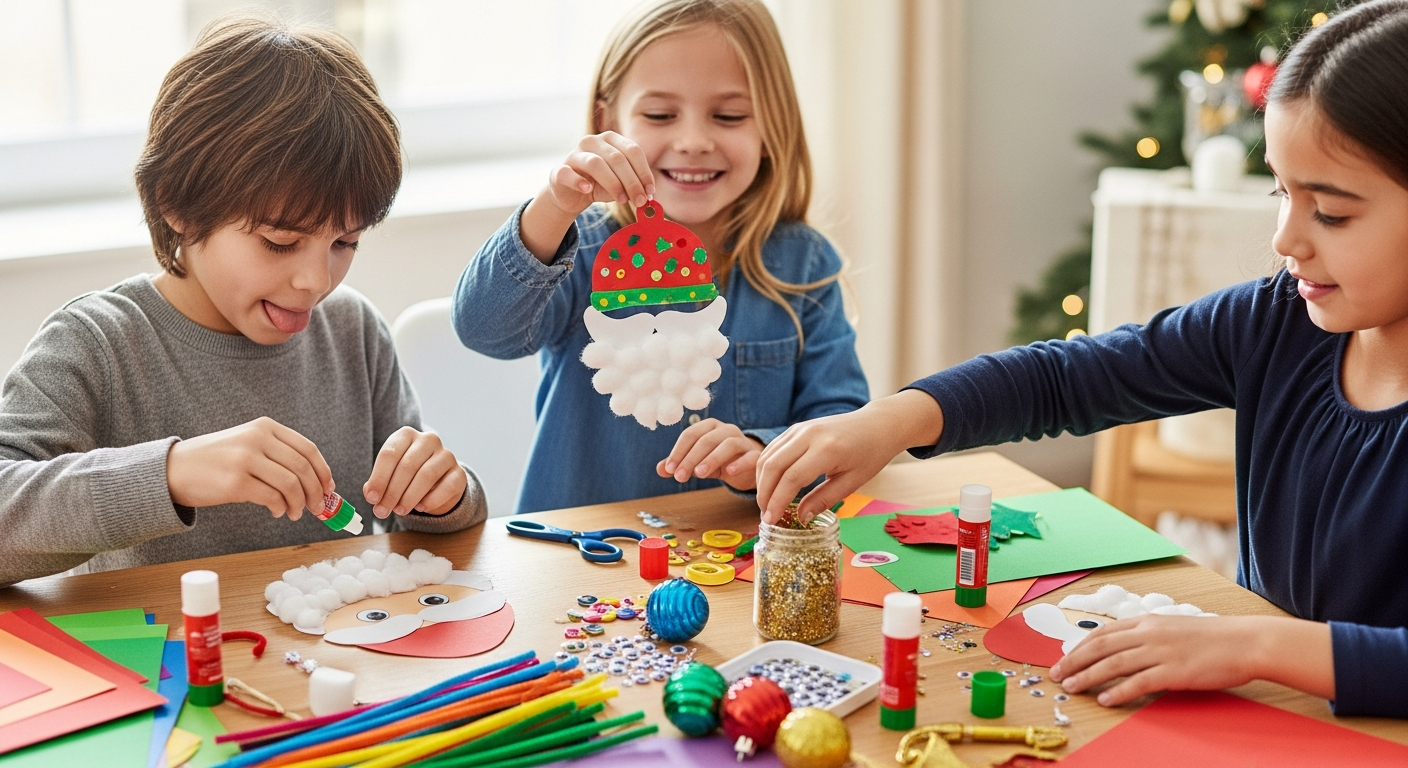
Table of Contents
- Introduction
- Beyond the Glitter: Why Christmas Crafts Are More Than Just Fun
- Our Favorite Easy Christmas Crafts for Kids (with a Speech Twist!)
- Maximizing Communication During Craft Time
- How Speech Blubs Elevates Your Child's Communication Journey
- Taking the Next Step with Speech Blubs: Value and Choice
- Conclusion
- Frequently Asked Questions
Introduction
There's a unique magic that settles in the air as the holiday season approaches, especially when seen through the eyes of a child. It's a time for cozy moments, sparkling decorations, and shared laughter. For many parents, the thought of embarking on elaborate Christmas crafts can feel overwhelming amidst the holiday hustle. You might envision glitter explosions, complicated instructions, and a quick descent into chaos. But what if we told you that the simplest Christmas crafts offer some of the most profound opportunities for joy, connection, and, crucially, a boost in your child's communication skills?
This blog post is your guide to transforming simple materials into cherished holiday memories and powerful learning experiences. We believe that engaging in "easy Christmas craft kids" activities isn't just about the final product; it's about the process—the conversations, the choices, the sensory exploration, and the blossoming confidence. We'll share our favorite fuss-free craft ideas, each designed with a specific focus on encouraging speech and language development. We’ll also show you how these hands-on activities complement the innovative learning approach offered by Speech Blubs, fostering a love for communication and helping your child truly speak their minds and hearts.

Beyond the Glitter: Why Christmas Crafts Are More Than Just Fun
While the festive sparkle of a completed craft is certainly rewarding, the true magic lies in the journey of creation. For children, particularly those developing their speech and language skills, Christmas crafts offer a multi-faceted platform for growth that extends far beyond just making something pretty.
Fueling Fine Motor Skills
The act of crafting engages a child's hands and fingers in critical ways. Cutting with child-safe scissors, peeling stickers, gluing small pieces, drawing lines, and even kneading dough all contribute to the development of fine motor skills. These are the tiny, precise movements essential for tasks like writing, buttoning clothes, and eventually, articulating sounds clearly. When little hands are busy, their brains are actively working on coordination and control.
Nurturing Cognitive Development
Crafting is a wonderful exercise in problem-solving and following instructions. From choosing colors to understanding a sequence of steps ("first, we cut; then, we glue"), children are constantly processing information. This helps build their cognitive flexibility, planning skills, and attention span. It’s also an incredible outlet for creativity, allowing children to express themselves and see their unique ideas come to life.
Boosting Emotional Growth
Successfully completing a craft, no matter how simple, instills a sense of pride and accomplishment. It teaches patience as they work through steps and resilience when a design doesn’t quite go as planned. Sharing their creations with family members also promotes emotional connection and helps them feel valued.
A Gateway to Speech and Language Development
Perhaps most importantly for us at Speech Blubs, easy Christmas crafts are a natural incubator for communication. Every step of the crafting process is ripe with opportunities for language use:
- Vocabulary Expansion: Introducing new words related to colors, shapes, textures (fuzzy, sticky, smooth), actions (cut, glue, paint, sprinkle), and festive items (star, snowman, Santa, tree).
- Following Directions: Practicing understanding and responding to multi-step instructions, a fundamental skill for learning and daily life.
- Descriptive Language: Encouraging children to describe what they see, feel, and are doing. "The glitter is sparkly!" "My hands are sticky."
- Expressing Choices: Giving children agency by asking, "Do you want the red paper or the green paper?" "Which ornament should we put here?"
- Narrative Skills: Helping them retell the steps of how they made their craft or explain the story behind their creation.
- Social Communication: Practicing turn-taking, sharing materials, asking for help, and praising others' work.
These are the foundational skills that empower children to communicate effectively in all aspects of their lives. If you're wondering about your child's communication progress or seeking to understand how these activities fit into their overall development, our quick 3-minute preliminary screener can offer a simple assessment and a personalized next-steps plan. It's a great starting point for parents who want to be proactive.

Our Favorite Easy Christmas Crafts for Kids (with a Speech Twist!)
Here are some of our top picks for easy Christmas crafts that are big on fun and even bigger on communication opportunities. Remember, the goal isn't perfection, but participation and interaction.
1. Paper Plate Santa or Reindeer Masks
Materials: Paper plates, cotton balls, red/brown construction paper, googly eyes, glue, child-safe scissors, elastic string or popsicle sticks.
Instructions:
- Cut the paper plate in half or leave it whole for a larger mask.
- For Santa: Glue cotton balls around the curved edge for a beard and to the top for a hat trim. Cut a red triangle for the hat and glue it on. Add googly eyes and a red pom-pom nose.
- For Reindeer: Paint the plate brown (or use a brown plate). Cut two brown antlers from construction paper and glue them on top. Add googly eyes and a red pom-pom for Rudolph's nose.
- Punch holes on the sides and attach elastic string, or glue a popsicle stick to the bottom.
Speech & Language Focus:
- Vocabulary: "Santa," "reindeer," "mask," "beard," "antlers," "nose," "eyes," "red," "brown," "white," "cotton," "fluffy," "sticky."
- Verbs: "Cut," "glue," "paint," "stick," "wear," "make."
- Concepts: "Big/small" (eyes, pom-pom), "on/under/next to" (placement of features).
- Sounds: Encourage animal sounds for reindeer ("neigh," "snort") or a "Ho ho ho!" for Santa.
Relatable Scenario: For a parent whose 3-year-old "late talker" loves animals, creating a reindeer mask can be highly motivating. As you work, you can emphasize sounds like "R-r-reindeer" or "N-n-nose," and practice animal sounds, much like the engaging "Animal Kingdom" section in our Speech Blubs app, where children learn by imitating peers making fun animal noises. This tactile, hands-on experience reinforces the auditory learning.
2. DIY Ornaments from Salt Dough or Clay
Materials: 1 cup salt, 2 cups flour, 1 cup warm water (for salt dough) OR air-dry clay; cookie cutters (Christmas shapes), paint, glitter, ribbon/string, rolling pin.
Instructions (Salt Dough):
- Mix salt, flour, and water until a dough forms. Knead for 5-10 minutes until smooth.
- Roll out the dough to about ¼ inch thick.
- Use cookie cutters to make festive shapes.
- Use a straw to poke a hole at the top of each ornament for hanging.
- Bake at 250°F (120°C) for 2-3 hours until hard, or air dry for 24-48 hours.
- Once cool and dry, let your child paint and decorate them.
- Thread ribbon through the hole to hang.
Speech & Language Focus:
- Sensory Vocabulary: "Smooth," "bumpy," "sticky," "soft," "hard," "warm," "cool."
- Action Verbs: "Mix," "knead," "roll," "cut," "press," "bake," "paint," "decorate," "hang."
- Shapes & Colors: Naming the shapes of the cookie cutters and the colors of the paint.
- Sequencing: "First, we mix, then we roll."
Relatable Scenario: If your child is working on descriptive words and early sequencing, the process of making salt dough ornaments is perfect. They can talk about how the dough feels ("sticky!"), the actions they perform ("roll, roll, roll!"), and the beautiful colors they use to decorate. This kind of active, descriptive play helps build a robust vocabulary, which is also a core focus of our activities at Speech Blubs, where we introduce words in engaging, context-rich environments.
3. Cotton Ball Snowman or Penguin
Materials: Construction paper (blue, black), cotton balls, googly eyes, orange/yellow construction paper (for nose/beak), glue.
Instructions (Snowman):
- Cut three circles of varying sizes from white paper (or directly glue cotton balls onto blue paper in circles).
- Glue cotton balls onto the white circles or directly onto blue paper to make a fluffy snowman body.
- Add googly eyes, an orange carrot nose, and black paper "coal" for the mouth and buttons.
- Draw or cut out a hat and scarf.
Instructions (Penguin):
- Cut an oval shape from black paper for the penguin's body.
- Cut a smaller white oval for its belly and glue it on.
- Glue cotton balls onto the white belly for a soft texture.
- Add googly eyes, a small orange triangle beak, and orange paper feet.
Speech & Language Focus:
- Textures: "Soft," "fluffy," "smooth."
- Body Parts: "Head," "belly," "eyes," "nose," "beak," "feet."
- Counting: Counting cotton balls, buttons.
- Contrasting Concepts: "Big/small" circles, "black/white."
Relatable Scenario: For a child who is expanding their descriptive vocabulary, the cotton ball snowman offers rich sensory words. You can emphasize "soft cotton," "fluffy snowman," and talk about "big eyes" and "small nose." This concrete, multi-sensory experience helps cement new words, much like how Speech Blubs uses visual modeling to make abstract concepts more tangible and understandable.
4. Handprint/Footprint Christmas Tree or Reindeer
Materials: Green or brown paint, large sheet of paper or canvas, glitter (optional), small pom-poms or buttons for decorations, markers.
Instructions (Christmas Tree):
- Paint your child's hand green and press it onto the paper, fingers pointing down. Repeat several times, overlapping to form a tree shape.
- Let dry.
- Once dry, let your child decorate the "tree" with fingerpainted "ornaments," glitter, small pom-poms, or star stickers.
- Add a trunk at the bottom.
Instructions (Reindeer):
- Paint your child's foot brown and press it onto the paper. The heel forms the head, and the toes form the antlers.
- Let dry.
- Once dry, add googly eyes and a red pom-pom nose to the heel area. Draw on ears.
Speech & Language Focus:
- Body Parts: "Hand," "foot," "fingers," "toes," "heel."
- Action Verbs: "Paint," "press," "print," "decorate," "dry."
- Colors & Shapes: Naming colors, identifying the shape of their hand/foot.
- Possession: "My hand," "your foot."
Relatable Scenario: If your child is learning to identify body parts or beginning to understand possessive pronouns, this craft is wonderfully engaging. You can talk about "Mommy's hand" and "your little hand," making comparisons. This builds concrete associations between words and body parts, a skill reinforced by many of our interactive games and activities in the Speech Blubs app, where children are encouraged to point to and name body parts they see modeled by their peers.
5. Cereal Garland or Pasta Ornaments
Materials: O-shaped cereal or dry pasta (like penne or ditalini), pipe cleaners or string, green/red food coloring (optional for pasta), glue, glitter (optional).
Instructions (Cereal Garland):
- Provide a bowl of O-shaped cereal and pipe cleaners.
- Help your child string the cereal onto the pipe cleaner.
- Once full, twist the ends together or tie a knot to make a loop or a long garland.
Instructions (Pasta Ornaments):
- (Optional pre-step for colored pasta): Place dry pasta in a plastic bag with a few drops of food coloring and a teaspoon of rubbing alcohol. Shake well, then spread on parchment paper to dry.
- Once dry, let your child glue different pasta shapes onto a cardboard cutout (e.g., a star, a circle) to create textured ornaments.
- Add glitter if desired.
- Punch a hole and add a string for hanging.
Speech & Language Focus:
- Counting & Quantity: "One, two, three pieces," "more," "less," "full."
- Sequencing & Patterns: "First red, then green," "next," "after."
- Fine Motor Language: "Thread," "string," "push," "pull."
- Descriptive Words: "Crunchy" (cereal), "long," "short," "different shapes" (pasta).
Relatable Scenario: For a child who needs practice with following sequences or understanding patterns, threading cereal or pasta is ideal. You can create a simple "red-green-red-green" pattern and ask them "What comes next?" This lays a cognitive foundation for understanding sentence structure and story sequences later on. Our Speech Blubs app helps children learn to follow visual and auditory cues, which directly supports their ability to understand and produce ordered information, whether it’s a pattern of sounds or a sequence of events.
6. Pinecone Bird Feeders
Materials: Pinecones, peanut butter (or sunflower seed butter for allergies), birdseed, string/ribbon.
Instructions:
- Tie a piece of string around the top of each pinecone to make a loop for hanging.
- Help your child spread peanut butter (or alternative) into all the crevices of the pinecone. This can be delightfully messy!
- Roll the peanut butter-covered pinecone in a dish of birdseed, pressing gently to make sure the seeds stick.
- Hang your bird feeders outside and watch for birds!
Speech & Language Focus:
- Nature Vocabulary: "Pinecone," "bird," "seed," "tree," "branch," "squirrel."
- Action Verbs: "Spread," "roll," "hang," "watch," "eat."
- Prepositions: "On," "in," "up," "down."
- Sensory Words: "Sticky," "bumpy," "tiny."
Relatable Scenario: This craft is fantastic for expanding vocabulary related to nature and introducing functional language. "Let's spread the sticky peanut butter," "Roll the pinecone in the seeds." Then, when you hang it, "We'll hang it on the tree for the birds to eat." This real-world application of language is incredibly powerful. To continue building vocabulary and understanding functional language, download Speech Blubs on the App Store or Google Play to discover interactive activities that reinforce these everyday concepts.
Maximizing Communication During Craft Time
Crafts are just the beginning. The real magic happens in the interaction. Here's how to turn every craft session into a communication powerhouse:
- Follow Their Lead & Offer Choices: Observe what excites your child. If they gravitate towards the blue paint, focus on "blue." Offer choices: "Do you want the big star or the small star?" This gives them agency and naturally encourages them to speak.
- Ask Open-Ended Questions: Instead of questions that require a simple "yes" or "no," prompt them with "Tell me about your snowman," or "What do you like most about your tree?" This encourages more elaborate responses and storytelling.
- Narrate and Describe: Talk about what you're doing and what your child is doing. "I'm cutting the red paper carefully." "You're gluing the sparkly star on top." This models language in context.
- Expand and Model: If your child says "star," you can expand it to "Yes, a shiny yellow star!" If they point, you can model the word: "You want more glue."
- Take Turns: Practice turn-taking not just in speaking, but in actions. "My turn to roll the dough, then your turn." This teaches the rhythm of conversation and cooperation.
- Praise Effort, Not Just Product: Focus on the process: "I love how carefully you glued that!" or "You worked so hard on those details!" This builds confidence and encourages continued participation, even if the final product isn't "perfect."
- Minimize Distractions: Turn off the TV or put away other toys. Dedicate this time to focused interaction between you and your child, enhancing the quality of your communication.
How Speech Blubs Elevates Your Child's Communication Journey
At Speech Blubs, our mission is to empower children to speak their minds and hearts. We understand the profound impact that communication challenges can have on a child and their family. Our company was born from the personal experiences of our founders, all of whom grew up with speech problems and created the tool they wished they had—a tool that combines scientific principles with play into one-of-a-kind "smart screen time" experiences. We are committed to providing an immediate, effective, and joyful solution for the 1 in 4 children who need speech support.
While hands-on activities like Christmas crafts are invaluable for fostering communication in a natural environment, Speech Blubs provides a powerful, targeted supplement. Our unique approach utilizes "video modeling," where children learn by watching and imitating their peers. This peer-to-peer learning environment creates a safe, engaging, and highly motivating space for children to practice sounds, words, and sentences. It's a screen-free alternative to passive viewing (like cartoons) because it demands active participation and engagement, transforming screen time into truly "smart screen time." It also becomes a powerful tool for family connection, as parents can join in the learning alongside their child.
Consider how Speech Blubs complements your crafting efforts:
- Reinforcing Vocabulary: The words and concepts introduced during crafting (colors, actions, objects, descriptions) can be reinforced through our app's themed sections.
- Practicing Sounds and Articulation: If your child struggles with specific sounds, our app provides clear models for imitation, allowing them to practice in a low-pressure, playful way that they can then bring to their interactions during crafts.
- Building Confidence: For a child who is shy or hesitant to speak, the peer video modeling in Speech Blubs provides a non-intimidating way to practice sounds and words, building confidence that can then be applied to social interactions during craft time.
- Structured Learning: While crafts offer organic learning, Speech Blubs offers structured, curriculum-based activities that ensure systematic progress in speech and language development.
Our method is backed by extensive research and places us in the top tier of speech apps worldwide, with a high MARS scale rating. Don't just take our word for it; read inspiring parent testimonials about their children's progress. We don't promise your child will be giving public speeches in a month, but we do promise to foster a love for communication, build confidence, reduce frustration, develop key foundational skills, and create joyful family learning moments. Experience the difference; start your free 7-day trial now!
Taking the Next Step with Speech Blubs: Value and Choice
We believe every child deserves the opportunity to communicate effectively, and we strive to make our solution accessible to as many families as possible. That's why we offer transparent pricing options:
- Monthly Plan: For just $14.99 per month, you can access our core features and help your child on their communication journey.
- Yearly Plan: This is by far our best value! For only $59.99 per year, you save a remarkable 66% compared to the monthly plan, breaking down to just $4.99 per month.
The Yearly Plan isn't just about saving money; it unlocks the full Speech Blubs experience:
- A 7-day free trial: Test out all the amazing features before committing.
- The extra Reading Blubs app: Double the fun and learning with our complementary reading app.
- Early access to new updates: Be the first to experience our latest enhancements and content.
- 24-hour support response time: Get prompt assistance whenever you need it.
The Monthly plan, while flexible, does not include these exclusive benefits, including the free trial or the Reading Blubs app. We strongly encourage you to choose the Yearly plan to get the best value, unlock all features, and truly experience the transformative power of Speech Blubs. Ready to empower your child's voice? Create your account and begin your 7-day free trial today!
Conclusion
This holiday season, let's rediscover the simple joys of childhood creativity. Easy Christmas crafts for kids offer so much more than just a pretty decoration; they are invaluable opportunities for fine motor skill development, cognitive growth, emotional expression, and, most importantly, robust speech and language development. By engaging intentionally—narrating, asking open-ended questions, and following your child's lead—you can transform a simple craft session into a powerful learning experience.
These joyful, hands-on activities lay a fantastic foundation, and when paired with the targeted, engaging "smart screen time" of Speech Blubs, your child's communication potential truly blossoms. Our unique video modeling methodology and commitment to blending science with play provide a comprehensive and effective solution for building confidence and reducing communication frustrations.
Don't let the holiday rush prevent you from creating these cherished moments of connection and learning. Bring the joy of communication into your home this Christmas. Make this holiday season not just about gifts, but about giving your child the gift of a confident voice.
Download Speech Blubs on the App Store or Google Play and remember to select the Yearly plan to unlock your free 7-day trial and the full suite of features, including Reading Blubs. Start your journey today!
Frequently Asked Questions
1. Are these crafts suitable for toddlers and preschoolers?
Absolutely! These crafts are specifically chosen for their simplicity and use of common, safe materials, making them ideal for toddlers and preschoolers. Always supervise young children, especially with small parts or scissors. The focus is on participation and sensory exploration, not perfection, making them adaptable for even the youngest crafters.
2. How can I adapt these crafts for children with different skill levels?
You can easily adjust the complexity. For younger children or those with developing fine motor skills, pre-cut shapes, use larger items, or opt for finger painting instead of brushes. For older children, encourage more intricate designs, multi-step instructions, or adding written elements like names or messages to their crafts. The key is to meet your child where they are and provide just enough challenge to keep them engaged without frustration.
3. What if my child isn't interested in crafting?
Not all children are equally enthralled by crafting, and that's perfectly fine! Start small with very quick, low-pressure activities. Focus on the sensory aspect – the feel of playdough, the stickiness of glue – rather than the final product. Sometimes, joining in alongside them, narrating your own actions, or letting them choose just one small part of the activity (like picking a glitter color) can spark their interest. Remember, the goal is interaction and communication, which can happen through many forms of play.
4. How does Speech Blubs specifically help with communication during activities like crafting?
Speech Blubs complements crafting by providing targeted practice and reinforcement of communication skills. While crafting offers natural opportunities for language, Speech Blubs' "video modeling" approach allows children to see and hear peers articulate words and sounds in a fun, engaging way. This builds vocabulary, improves pronunciation, and boosts confidence in a structured setting. These learned skills can then be more readily applied during craft time when your child needs to describe their creation, ask for materials, or follow multi-step directions, creating a powerful synergy for development.
About the author