
Festive Fun: Easy Christmas Ornaments for Kids
 By Speech Blubs Team•Dec 22, 2025•18 min.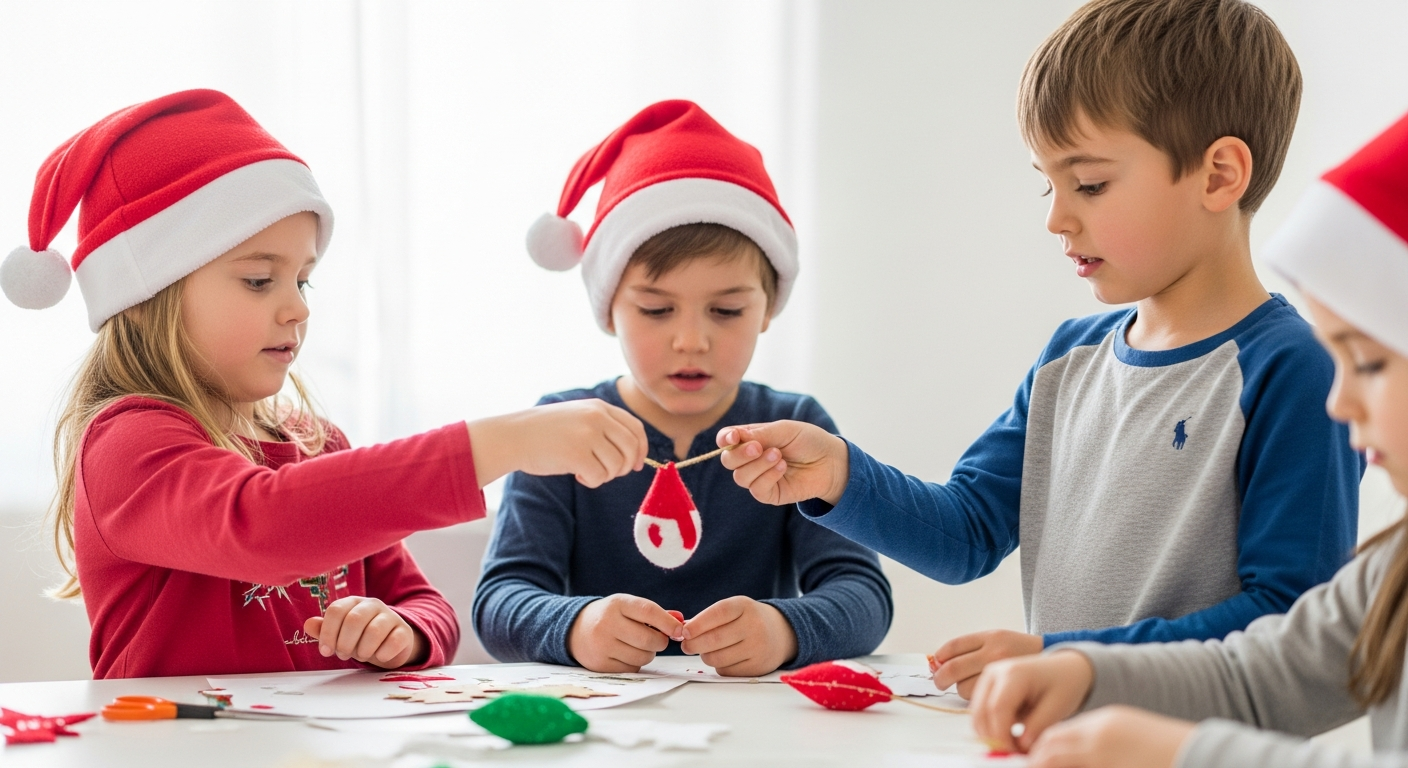
Table of Contents
- Introduction to the Magic of Crafting
- Why Crafting Is More Than Just Fun
- Safety First: Essential Crafting Guidelines
- Age-Appropriate Christmas Ornament Crafts
- Integrating Language Learning into Craft Time
- Tips for a Joyful Crafting Experience
- Making Memories, One Ornament at a Time
- Frequently Asked Questions About Christmas Ornaments for Kids
The air fills with a unique kind of magic as the holidays approach, a magic often sparked by the joyous clutter of glitter, glue, and construction paper. For many children, the festive season isn't just about receiving gifts, but about the sheer delight of creating them. Yet, sometimes, that creative spark can be dampened by frustration when a child struggles to express their ideas or articulate their observations.
This blog post is designed to ignite that creative spirit, providing a treasure trove of easy and enchanting Christmas craft ornaments for kids of all ages. We'll dive into how these hands-on activities do more than just decorate your tree; they foster crucial developmental skills, from fine motor coordination to language acquisition, and create cherished family memories. We believe that empowering children to "speak their minds and hearts" isn't just about formal lessons but also about harnessing the power of play and connection. By the end of this guide, you’ll be equipped with simple, fun ideas to transform your home into a festive workshop, making beautiful ornaments and lasting bonds.

Introduction to the Magic of Crafting
Imagine a child's eyes lighting up as they proudly hang an ornament they made themselves, a tangible piece of their creativity and effort gracing the family Christmas tree. This isn't just a decoration; it's a testament to their growing abilities, a boost to their self-esteem, and a conversation starter that weaves stories into the fabric of your holiday traditions. Christmas crafting offers a unique opportunity to slow down, connect, and engage in meaningful activities that extend far beyond the finished product.
In this comprehensive guide, we'll explore a variety of easy Christmas ornament crafts perfect for toddlers, preschoolers, and school-aged children. We'll discuss the developmental benefits inherent in each activity, providing tips for making the process enjoyable and inclusive for every child. You'll discover how simple materials can transform into festive keepsakes, fostering creativity, problem-solving skills, and, crucially, language development. Get ready to gather your craft supplies and embark on a joyful journey of festive creation with your little ones.
Why Crafting Is More Than Just Fun
Crafting is an incredible avenue for children's holistic development, extending its benefits into cognitive, emotional, social, and physical domains. For young children, every snip, glue, and sprinkle is a learning opportunity.
Boosting Fine Motor Skills and Hand-Eye Coordination
The act of creating ornaments naturally hones fine motor skills. Holding a paintbrush, manipulating small beads, cutting shapes with child-safe scissors, or threading yarn all require precision and control. These activities strengthen the small muscles in the hands and fingers, which are vital for tasks like writing, fastening buttons, and feeding themselves. Each carefully placed sequin or painted line also improves hand-eye coordination, helping children link what they see with what their hands do.
Nurturing Creativity and Imagination
Crafting is a playground for imagination. When children are given materials and a general idea, they naturally start to envision possibilities. There’s no single "right" way to make a snowflake or decorate a star. This freedom encourages innovative thinking, allowing children to express their unique perspectives and develop their artistic voices. It's about the process of creation, not just the perfection of the outcome.

Enhancing Problem-Solving and Following Directions
Every craft project presents mini-challenges: "How do I make this stick?" "What color should I use next?" "Where does this piece go?" Children learn to think through steps, adapt when things don't go as planned, and make choices. Following a sequence of instructions, like "first glue the cotton, then add the glitter," also strengthens their ability to understand and execute multi-step directions, a crucial cognitive skill.
Fostering Language and Communication Skills
Perhaps one of the most exciting benefits, especially for us at Speech Blubs, is the rich environment crafting creates for language development. As children engage with materials and tasks, they naturally use and expand their vocabulary.
- Descriptive Language: "This glitter is sparkly," "The pipe cleaner feels fuzzy," "This ornament is red and round."
- Action Verbs: "We cut the paper," "You glue that piece," "Let's paint this section," "Can you sprinkle the confetti?"
- Prepositions and Spatial Concepts: "Put it on the tree," "The star goes above the angel," "Let's place it beside the window."
- Following Instructions: Parents can give clear, sequential instructions, prompting children to listen and respond.
- Narration and Storytelling: As they create, children can narrate their process, describe their choices, and later tell stories about their finished ornaments. This collaborative storytelling strengthens narrative skills and encourages expressive language.
For children who might be a bit shy about speaking, or those needing a little extra support, these playful, low-pressure activities are invaluable. If you're wondering if your child could benefit from additional language support, our quick 3-minute preliminary screener offers a simple assessment and a personalized next-steps plan. It’s a great starting point for understanding your child's developmental journey.
Safety First: Essential Crafting Guidelines
Before diving into the glitter and glue, it's vital to ensure a safe crafting environment.
- Supervision is Key: Always supervise young children during crafting activities, especially when using scissors, small beads, or glue.
- Child-Safe Materials: Opt for non-toxic glue, paints, and markers. Ensure scissors are child-friendly with blunt tips.
- Choking Hazards: For toddlers and babies, avoid small items like tiny beads, buttons, or sequins that could be swallowed. Use larger, safer alternatives.
- Allergy Awareness: Be mindful of potential allergies to craft materials like certain glues, paints, or natural elements.
- Ventilation: If using sprays or strong-smelling glues, ensure the area is well-ventilated.
- Mess Management: Lay down old newspapers, a tablecloth, or a plastic sheet to protect your surfaces. Have wipes or a damp cloth ready for quick cleanups. This makes the experience less stressful for parents and more enjoyable for kids!
Age-Appropriate Christmas Ornament Crafts
Let's explore some delightful ornament ideas, categorized by age group to ensure maximum engagement and safety.
Toddler-Friendly Ornaments (Ages 1-3)
Toddlers thrive on sensory experiences and simple, repetitive actions. Focus on large, easy-to-handle materials and activities that require minimal precision.
1. Salt Dough Handprint/Footprint Ornaments
- Materials: 1 cup flour, 1/2 cup salt, 1/2 cup water, cookie cutters, straw, paint, glitter (optional), ribbon.
- Instructions:
- Mix flour, salt, and water until a dough forms. Knead for a few minutes.
- Roll out the dough to about 1/4 inch thick.
- Press your child's hand or foot firmly into the dough. You can also use cookie cutters to make other shapes around the print.
- Use a straw to make a hole at the top for hanging.
- Bake at 250°F (120°C) for 2-3 hours, or until completely hard. Alternatively, air dry for 24-48 hours.
- Once cooled, let your toddler paint the ornament. Encourage them to name the colors they use. "What color is this? Red!"
- Add glitter if desired.
- Thread a ribbon through the hole.
- Developmental Benefits: Sensory exploration (dough texture), early painting practice, color recognition, language related to body parts and actions.
2. Cotton Ball Snowman Ornaments
- Materials: Cardboard cutouts of snowman shapes, cotton balls, glue sticks (less messy for toddlers), googly eyes, small orange felt triangles for noses, pipe cleaners for arms, ribbon.
- Instructions:
- Have your toddler spread glue stick all over the snowman cutout.
- Show them how to gently pull apart and stick cotton balls onto the glue. This is great for fine motor control.
- Add googly eyes and the felt nose.
- Glue pipe cleaner pieces for arms.
- Make a small loop with ribbon and glue it to the back for hanging.
- Developmental Benefits: Pincer grasp (picking up cotton balls), texture vocabulary ("soft," "fluffy"), shape recognition, following simple two-step directions.
Preschooler Power Ornaments (Ages 3-5)
Preschoolers are gaining more control over their hands and are ready for slightly more complex tasks, including basic cutting and more intricate gluing. They love to chat about what they're doing!
1. Popsicle Stick Christmas Trees
- Materials: Green popsicle sticks (or plain ones they can paint green), glue, sequins, pom-poms, glitter, small star stickers, ribbon.
- Instructions:
- Help your child arrange three popsicle sticks into a triangle shape and glue them together to form a tree. Glue one more stick across the bottom for the trunk.
- Once dry, provide a variety of decorative elements like sequins and pom-poms. Let them freely decorate their "tree." Encourage them to tell you about their choices. "Why did you pick the blue pom-pom?" "Where are you putting the star?"
- Glue a ribbon loop to the top.
- Developmental Benefits: Shape recognition (triangle), counting (how many sticks?), sorting by color or size, expressive language about their creation, practicing fine motor skills with small embellishments.
2. Pasta Ornaments
- Materials: Various dry pasta shapes (wagon wheels, ziti, rotini, farfalle), glue, glitter glue, string or ribbon.
- Instructions:
- Provide a small dish of various pasta shapes.
- Encourage your child to create patterns or designs by gluing pasta onto a cardboard cutout (e.g., a circle, star, or wreath shape).
- Once the glue is dry, let them decorate with glitter glue.
- Thread a string through a hole at the top or loop around a pasta piece to hang.
- Developmental Benefits: Pattern recognition, categorizing (different pasta shapes), fine motor control, imaginative play with pasta as building blocks, describing textures and shapes.
3. Handprint Reindeer
- Materials: Brown construction paper, red pom-poms, googly eyes, glue, markers, ribbon.
- Instructions:
- Help your child trace their hand on brown construction paper and cut it out. The fingers will be the antlers.
- Glue on a red pom-pom for Rudolph's nose and googly eyes.
- Use markers to draw a mouth.
- Glue a ribbon loop to the back of the palm part for hanging.
- Developmental Benefits: Tracing skills, scissor practice, naming body parts, imaginative storytelling about reindeer.
School-Aged Sensation Ornaments (Ages 5+)
School-aged children can handle more intricate designs and use a wider range of tools. They enjoy following multi-step instructions and adding their personal flair.
1. Beaded Pipe Cleaner Ornaments
- Materials: Pipe cleaners (various colors), pony beads, small bells (optional), ribbon.
- Instructions:
- Show your child how to bend pipe cleaners into festive shapes like stars, candy canes, wreaths, or even letters.
- Thread pony beads onto the pipe cleaner, filling the shape. This can be a calming, focused activity.
- Twist the ends of the pipe cleaner to secure the beads and hold the shape.
- Add a small bell if desired.
- Attach a ribbon for hanging.
- Developmental Benefits: Fine motor dexterity, pattern creation, color sequencing, shape recognition, patience, concentration. For a child who might be working on articulation, this is a great opportunity to practice sounds by naming the colors of the beads or counting them aloud.
2. Nature-Inspired Ornaments (Pinecone Owls/Animals)
- Materials: Pinecones, felt scraps, googly eyes, glue, small twigs (for feet/ears), twine or ribbon.
- Instructions:
- Collect pinecones on a nature walk. This is a great precursor activity that encourages outdoor exploration and observational skills.
- Cut felt shapes for wings, beaks, and ears.
- Glue googly eyes onto the pinecone.
- Attach felt pieces and small twigs to create an owl, squirrel, or other forest animal.
- Loop twine around the top scales of the pinecone for hanging.
- Developmental Benefits: Connecting with nature, creativity, observation skills, using various textures, descriptive language about nature.
3. Yarn-Wrapped Star/Shape Ornaments
- Materials: Cardboard cutouts of stars, hearts, or circles, yarn (various colors), glue, glitter (optional), ribbon.
- Instructions:
- Cut sturdy cardboard into desired shapes.
- Spread glue thinly over a small section of the cardboard.
- Start wrapping yarn around the shape, applying more glue as you go, until the entire shape is covered.
- Once dry, children can add glitter or other small embellishments.
- Attach a ribbon for hanging.
- Developmental Benefits: Hand-eye coordination, fine motor skills, color mixing/matching, perseverance, spatial reasoning.
Integrating Language Learning into Craft Time
Beyond the inherent benefits of crafting, parents can intentionally weave in language-boosting strategies. These moments of playful interaction are where real breakthroughs happen, and they align perfectly with our mission at Speech Blubs to provide immediate, effective, and joyful solutions for children's speech and language needs.
1. Narrate the Process
Talk about everything you're doing and seeing. "First, we're cutting the blue paper. Now we're gluing it onto the star. Look, the glue is sticky!" This provides a rich language model for your child.
2. Ask Open-Ended Questions
Instead of "Do you like it?", try "What's your favorite part of this ornament?" or "Tell me about the colors you chose." These questions encourage more than a yes/no answer, prompting descriptive and narrative responses.
3. Use Descriptive Vocabulary
Introduce new adjectives and verbs. "This ribbon is silky," "Let's crumple this paper," "The paint is gloopy." The more words a child hears in context, the more likely they are to use them.
4. Practice Following Directions
Give two or three-step instructions: "First, get the green paint, then paint the top of the tree." For children who need help with multi-step directions, break them down into smaller, manageable chunks.
5. Focus on Sounds and Words
If your child is working on a specific sound (e.g., 's' sound), find opportunities to use words with that sound: "Look at the sparkly star!" or "Let's put the sequins straight." While crafting provides a wonderful hands-on approach, we understand that some children may need targeted support for specific sounds or language skills.
This is where Speech Blubs comes in, providing a powerful, scientifically backed supplement to your child's developmental journey. Our app utilizes a unique "video modeling" methodology where children learn by watching and imitating their peers. This natural, engaging approach taps into mirror neurons, making learning complex communication skills feel like play. Just as your child watches you demonstrate a craft step and then imitates it, they learn speech by imitating real kids, creating a screen-free alternative to passive viewing and a powerful tool for family connection. Ready to explore thousands of engaging activities that support speech and language development? Download Speech Blubs on the App Store or Google Play today and see the magic of peer imitation in action!
Tips for a Joyful Crafting Experience
To ensure that crafting remains a positive and enriching experience for everyone, consider these practical tips:
- Embrace the Mess: Crafting will be messy. Accept it, prepare for it, and even embrace it as part of the fun. Laying down protective coverings and having cleanup supplies ready can significantly reduce stress.
- Focus on the Process, Not Perfection: The goal is exploration, creativity, and bonding, not a gallery-worthy masterpiece. Encourage effort and unique expression over flawless execution. Celebrate imperfections – they make each ornament truly one-of-a-kind.
- Provide Choices: Offer a selection of materials and let your child choose. This gives them a sense of ownership and boosts their engagement. "Would you like red or green ribbon?" "Do you want big beads or small beads?"
- Set Realistic Expectations: Young children have shorter attention spans. Be prepared for activities to be brief and follow their lead. It's okay if an ornament isn't finished in one sitting.
- Collaborate and Connect: Sit down with your child and craft alongside them. This models enthusiasm and creates a shared experience. Talk, laugh, and listen. These moments of connection are priceless and reinforce our belief in making learning a joyful family activity.
- Display Their Work Proudly: Hang their handmade ornaments prominently on the tree. Let them see their creations valued and celebrated. This builds confidence and encourages future creative endeavors. For children working on confidence in communication, seeing their work appreciated can translate into more willingness to express themselves verbally.
At Speech Blubs, we are committed to providing an immediate, effective, and joyful solution for the 1 in 4 children who need speech support. Our company was born from the personal experiences of our founders, who all grew up with speech problems and created the tool they wished they had. We are deeply committed to blending scientific principles with play into one-of-a-kind "smart screen time" experiences. Our research-backed methodology, rated in the top tier of speech apps worldwide, ensures that children learn in the most effective and engaging way possible. You can read more about the science behind Speech Blubs and its effectiveness.
Making Memories, One Ornament at a Time
Crafting Christmas ornaments with your children is more than just a holiday activity; it's an investment in their development and a beautiful way to create lasting family memories. Each year, as you unpack these handmade treasures, you'll be reminded not just of the festive season, but of the laughter, learning, and love poured into each creation. These ornaments become tangible reminders of your child's growth, their blossoming creativity, and the precious moments you shared together.
Whether it’s the simple joy of a toddler sticking cotton balls onto a snowman or a school-aged child meticulously threading beads onto a pipe cleaner, these activities nurture essential skills, from fine motor coordination to confident communication. They are moments of connection, learning, and celebration, all wrapped up in the magic of Christmas.
Ready to add another powerful tool to your child's developmental toolkit? While hands-on crafts are wonderful, Speech Blubs offers a complementary approach to fostering communication skills. Our app provides hundreds of engaging activities designed to help children "speak their minds and hearts" through playful interaction.
We want to be transparent about our pricing to build trust and ensure you get the best value.
- Monthly Plan: For just $14.99 per month.
- Yearly Plan: Our most popular and recommended option, at $59.99 per year. This breaks down to an incredible value of just $4.99 per month, which means you save 66% compared to the monthly subscription!
The Yearly Plan isn't just cheaper; it also includes exclusive, high-value features that you won't get with the Monthly Plan:
- A 7-day free trial, allowing you to experience the full benefits before committing.
- The extra Reading Blubs app, expanding your child's learning beyond speech.
- Early access to new updates and a lightning-fast 24-hour support response time, ensuring you always have the best experience.
Don't miss out on these incredible benefits! To unlock the full suite of features and embark on a joyful learning journey with your child, choose the Yearly Plan. Start your 7-day free trial today by creating your account on our website or download Speech Blubs from the App Store or Google Play Store and select the Yearly plan to get your free trial and all the exclusive features. Hear what other parents are saying about their child's success with Speech Blubs and join our community of empowered families!
Frequently Asked Questions About Christmas Ornaments for Kids
1. What are the best age-appropriate materials for toddler Christmas crafts?
For toddlers (1-3 years old), it's best to use large, non-toxic, and easy-to-handle materials. Think chunky crayons or paint sticks, large pom-poms, cotton balls, wide ribbon, child-safe glue sticks, and sturdy paper or cardboard. Avoid small items that could be choking hazards, such as tiny beads or sequins. Focus on sensory experiences like salt dough or textured fabrics.
2. How can I keep my child engaged in crafting without them losing interest?
The key is to keep it fun and low-pressure. Offer choices of materials, work alongside them, and let them take the lead as much as possible. Keep sessions short, especially for younger children, and don't expect perfection. Focus on the process and praise their effort and creativity. If they start to lose interest, it's perfectly fine to take a break and come back to it later, or simply admire what they've already accomplished.
3. What developmental skills do children learn from making Christmas ornaments?
Making Christmas ornaments offers a wealth of developmental benefits. Children enhance their fine motor skills through cutting, gluing, and manipulating small objects. They boost creativity and imagination by designing unique pieces. Problem-solving skills are honed as they figure out how to attach items or make their vision come to life. Crucially, these activities are rich in language opportunities, encouraging descriptive vocabulary, following instructions, and verbalizing their choices and experiences.
4. How can I make Christmas crafting a family tradition that supports my child's language development?
Turn crafting into a conversational event! Narrate each step you take and ask open-ended questions about your child's choices. Use descriptive words for colors, textures, and shapes. Sing festive songs while you craft, or tell stories about previous Christmases and the ornaments you've made. These interactions transform simple craft time into a powerful language-learning experience, fostering connection and communication within your family.
About the author