
Festive Fun: Easy Christmas Party Crafts for Kids
 By Speech Blubs Team•Dec 22, 2025•20 min.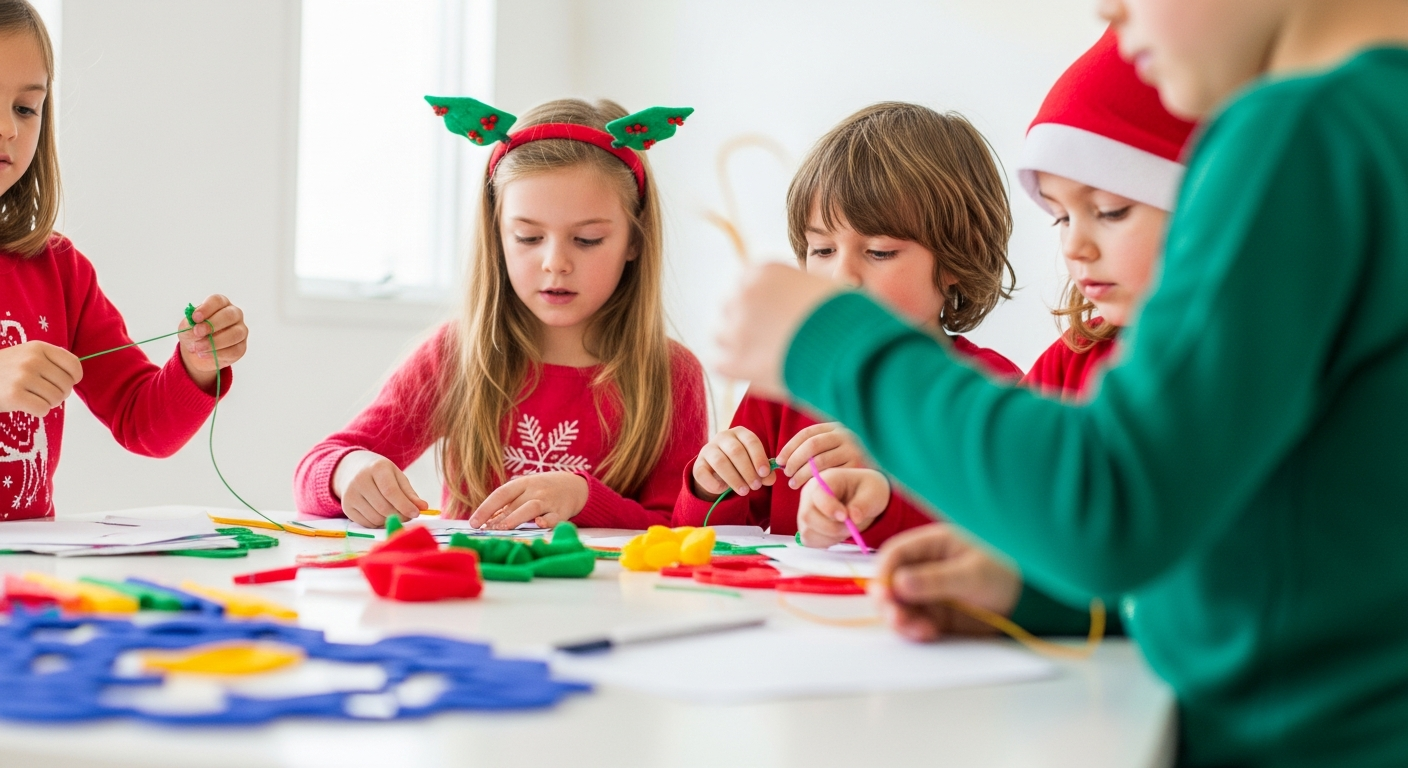
Table of Contents
- Introduction
- The Magic of Crafting for Little Voices
- Planning Your Festive Craft Extravaganza
- Dazzling Christmas Party Craft Ideas for Kids
- Maximizing the Language Learning in Every Craft
- When to Seek Additional Support: Recognizing Communication Milestones
- Why Speech Blubs is Your Partner in Communication
- Making the Most of Your Speech Blubs Journey: Pricing and Value
- Conclusion
- Frequently Asked Questions (FAQ)
Introduction
The air is crisp, the lights are twinkling, and a palpable sense of excitement fills the home – it's Christmas! For families with young children, this magical season often comes with a unique challenge: how do we channel all that festive energy into meaningful, joyful, and developmental activities? While cartoons and movies might offer a temporary reprieve, they rarely foster the active engagement and crucial skill-building that our little ones need. Imagine a bustling Christmas party, full of laughter and cheer, where children are not just entertained, but actively creating, learning, and, most importantly, communicating.
This blog post is your ultimate guide to hosting a Christmas party that’s as enriching as it is fun. We believe that holiday crafting isn't just about making pretty decorations; it's a powerful avenue for fostering language development, boosting confidence, and creating cherished family memories. We'll explore a sleigh-full of easy, engaging craft ideas perfect for various age groups, focusing on how each activity can become a "smart screen-free" opportunity for interaction and growth. From simple projects for toddlers to more intricate designs for older children, we’ll show you how to transform common materials into festive masterpieces while nurturing your child's burgeoning communication skills. Get ready to sprinkle some glitter, share some stories, and empower your child to speak their mind and heart this holiday season.

The Magic of Crafting for Little Voices
Christmas crafting offers far more than just a pretty ornament for the tree; it’s a dynamic playground for developing essential skills in children. As parents, we often focus on the artistic outcome, but the true magic lies in the process. When children engage in crafts, they aren't just cutting and gluing; they are problem-solving, exploring textures, making choices, and, critically, communicating. These activities are rich with opportunities for language acquisition, cognitive growth, and fine motor skill development – all intertwined to support a child’s holistic development.
At Speech Blubs, our mission is to empower children to "speak their minds and hearts," and we see crafting as a wonderful extension of this philosophy in a real-world, hands-on setting. Our company was born from the personal experiences of our founders, who all grew up with speech problems and created the tool they wished they had. We know firsthand the impact that early intervention and engaging learning methods can have. Crafting, much like our app, turns learning into play, making it immediate, effective, and joyful.
More Than Just Glitter: Developmental Benefits of Christmas Crafts
Let's unpack the treasure trove of developmental benefits hidden within every craft session:
- Fine Motor Skills: The act of grasping a crayon, snipping with scissors, squeezing glue, or threading beads meticulously strengthens the small muscles in a child’s hands and fingers. These skills are fundamental for tasks like writing, dressing, and self-care later on.
- Cognitive Skills: Following a sequence of instructions (e.g., "first glue, then sprinkle"), understanding concepts like "big" or "small," and making creative decisions ("What color should the reindeer's nose be?") all sharpen cognitive abilities. Children learn to plan, predict, and adapt.
- Language & Communication: This is where crafting truly shines as a speech-friendly activity.
- Vocabulary Expansion: Introducing new words like "tinsel," "holly," "garland," "sparkle," "jingle," and "decorate" naturally broadens a child's lexicon. Naming colors, shapes, and textures ("This felt is soft," "The glitter is bumpy") provides concrete examples for abstract terms.
- Descriptive Language: Encouraging children to talk about their creations ("My snowman has a funny hat and a carrot nose!") fosters the use of adjectives, verbs, and more complex sentence structures.
- Sequencing and Storytelling: Describing the steps they took ("First I cut the star, then I painted it yellow") helps children practice sequencing, a crucial pre-reading skill. They can also create imaginative stories about their characters or scenes.
- Social Language: When crafting in a group or with a caregiver, children learn invaluable social communication skills like sharing materials, asking for help ("Can I have the red marker?"), taking turns, and offering compliments.
- Imitation and Mirror Neurons: Our unique video modeling approach at Speech Blubs, where children learn by watching and imitating their peers, has a powerful real-world parallel in crafting. Children naturally observe and imitate the actions of others, whether it's how to hold the scissors or how to apply glue. This imitation activates mirror neurons, making learning deeply engaging and effective.
For example, for a parent whose 3-year-old 'late talker' loves animals, making a paper plate reindeer offers a fun, motivating way to practice sounds like "r-r-reindeer" and "brown," or even simple animal noises like "snort." The tactile experience makes the words more concrete and memorable.

Planning Your Festive Craft Extravaganza
Successful craft parties, whether for one child or a group, require a bit of foresight. Thoughtful planning ensures a smooth, enjoyable experience that maximizes the fun and minimizes the stress – for both you and the children.
Age-Appropriate Choices
- Toddlers (1-3 years): Focus on simple activities that involve large movements, sensory exploration, and minimal fine motor demands. Think gluing large pre-cut shapes, finger painting, or sticking cotton balls. Supervision is key to prevent ingestion of small parts.
- Preschoolers (3-5 years): They can handle more complex cutting (with child-safe scissors), gluing small items, and following two- or three-step instructions. Their creativity truly begins to blossom.
- Early Elementary (5+ years): Children in this age group can often manage multi-step projects, more intricate cutting, and detailed decorating. They enjoy having more autonomy in their creative process.
Material Prep: The Key to a Smooth Session
- Organize Everything: Before the party starts, lay out all materials for each craft. Use separate containers or trays for different colors of glitter, beads, or paper scraps.
- Safety First: Ensure all materials are non-toxic and child-safe. Have appropriate supervision, especially with scissors or smaller items.
- Pre-Cut Where Possible: For younger children, pre-cut some shapes or elements to save time and reduce frustration, allowing them to focus on assembly and decoration.
- Cover Your Surfaces: Protect tables with newspaper, old tablecloths, or plastic sheets. Crafting can get messy, and that's part of the fun!
Setting the Scene for Creativity
- Designated Space: Choose an area that's easy to clean and where spills won't cause lasting damage. Good lighting is also helpful.
- Festive Ambiance: Play some joyful Christmas music! This sets a cheerful mood and encourages relaxation and creativity.
- Manage Expectations: Explain what you'll be doing and what materials are available. Let children know that it's about having fun and being creative, not about perfection.
Creating a Language-Rich Crafting Environment
The environment you create around the craft activity is just as important as the craft itself for language development. This is your chance to provide a "screen-free alternative" to passive viewing, making it a powerful tool for family connection.
- Ask Open-Ended Questions: Instead of "Do you like that color?" try "Why did you choose that color?" or "What do you think will happen next?" These encourage more than a simple yes/no answer.
- Narrate Your Actions: "I'm putting the glue on the paper, now I'm pressing the button down." This models language and helps children connect words to actions.
- Encourage Storytelling: "Tell me about your reindeer. What's his name? What does he like to do?" This builds narrative skills and imagination.
- Patience and Encouragement: Celebrate effort and creativity, not just the final product. Acknowledge struggles and offer help ("It looks like the glue is a bit sticky, let's try pushing it harder"). This fosters a love for communication and builds confidence.
Just as we believe in joyful learning at Speech Blubs, these crafting moments are all about connection and interaction. Remember, our app provides a "smart screen time" experience that specifically encourages active participation, making it a wonderful complement to hands-on activities. To learn more about our interactive approach, visit our homepage.
Dazzling Christmas Party Craft Ideas for Kids
Now for the fun part! Here’s a collection of festive craft ideas, categorized by age group, designed to be easy, engaging, and excellent for sparking conversation.
Toddler & Preschooler Friendly Crafts (Ages 1-4)
These crafts are all about sensory exploration, simple assembly, and big, bold results that even the littlest hands can be proud of.
Paper Plate Christmas Characters
- Materials: Paper plates, construction paper (brown, red, white), googly eyes, cotton balls, glue sticks, crayons/markers.
- How-to:
- Reindeer: Paint the paper plate brown or provide brown construction paper shapes for ears and antlers. Glue on googly eyes and a red pom-pom for Rudolph’s nose.
- Santa: Glue cotton balls around the bottom edge for a beard, and a red construction paper triangle for his hat. Add googly eyes and a pink circle for his nose.
- Language Focus: Naming colors, body parts ("eyes," "nose," "ears"), sounds ("r-r-reindeer," "ho-ho-ho"), and descriptive words ("fuzzy beard," "round nose").
- Practical Scenario: For a child just beginning to vocalize, making a "ho-ho-ho" Santa beard with cotton balls provides a perfect opportunity to practice consonant-vowel combinations and joyful exclamations. Model the sounds, then help them make their Santa say "Ho-ho-ho!"
Cotton Ball Snowman/Santa Beard
- Materials: Blue or black construction paper, white glue, cotton balls, small orange paper triangles (for carrot nose), small black circles (for eyes/buttons).
- How-to: Draw a simple snowman outline or a Santa beard outline on the paper. Let the child spread glue (or help them) and stick cotton balls all over to fill the shape. Add eyes, buttons, and a carrot nose for the snowman.
- Language Focus: Talking about "soft" and "fluffy" textures, counting cotton balls, naming body parts, and practicing action verbs like "stick," "press," and "glue."
Pom-Pom Ornaments
- Materials: Cardboard cut-outs of stars, trees, or circles; colorful pom-poms (various sizes); white glue; ribbon or string.
- How-to: Have children glue pom-poms onto the cardboard shapes. They can make patterns or cover the entire shape. Once dry, attach a ribbon loop for hanging.
- Language Focus: Identifying colors, sizes ("big pom-pom," "small pom-pom"), and practicing spatial concepts ("on top," "next to").
Handprint/Footprint Art
- Materials: Washable paint (red, brown, white), construction paper, markers, wet wipes!
- How-to:
- Reindeer: Paint a child's hand brown (thumb up). Press onto paper. Once dry, draw antlers and a red nose.
- Santa: Paint a child’s foot white. Press onto paper. Once dry, add a red hat and face details.
- Language Focus: Talking about body parts, sensory input ("cold paint," "tickly brush"), and describing the transformation of their hand/foot into a Christmas character.
Early Elementary & Beyond Crafts (Ages 5+)
These crafts offer more opportunities for fine motor precision, multi-step processes, and individual creative expression.
DIY Ornament Station
- Materials: Clear plastic fillable ornaments, various colors of glitter, small beads, mini pom-poms, craft paint, small funnels, ribbon.
- How-to: Set up a station with all the decorative elements. Children can choose to fill the ornaments with glitter, paint designs on the inside or outside, or add beads and pom-poms. Secure the top and add a ribbon.
- Language Focus: Discussing design choices ("What colors will you use?"), describing actions ("I'm pouring the glitter," "I'm shaking the paint"), and using descriptive adjectives ("sparkly," "colorful," "shiny").
- Practical Scenario: If your child is working on sequencing words and understanding cause and effect, decorating a clear ornament allows you to model and practice terms like "first the glitter, then the beads, after that the ribbon." This focused interaction can be wonderfully enriching, much like the targeted practice found within Speech Blubs.
Popsicle Stick Sleds/Stars
- Materials: Popsicle sticks (regular and jumbo), white glue, craft paint, glitter, small embellishments (buttons, mini bows).
- How-to:
- Sleds: Glue three or four popsicle sticks together horizontally for the sled base. Then glue two more vertically underneath as runners. Paint and decorate.
- Stars: Arrange five popsicle sticks to form a star shape, gluing them at the intersections. Paint and decorate.
- Language Focus: Following multi-step instructions, counting, discussing shapes, and describing patterns.
Paper Chains & Garlands
- Materials: Strips of colorful construction paper (red, green, white, gold), glue sticks or stapler, scissors.
- How-to: Children cut paper strips (or use pre-cut). Form a loop, glue or staple the ends. Thread the next strip through the loop and repeat, creating a chain.
- Language Focus: Repetitive language ("loop and glue, loop and glue"), counting the links, discussing patterns ("red, green, red, green"), and practicing action verbs ("cut," "glue," "thread").
Felt Christmas Trees/Stockings
- Materials: Green felt for trees, various colored felt for decorations; scissors; fabric glue or hot glue (adult supervision); buttons, sequins, small pom-poms.
- How-to: Cut out tree or stocking shapes from felt. Children then cut smaller felt shapes (stars, circles, lights) and glue them onto the main shape. Add buttons or sequins for extra sparkle.
- Language Focus: Identifying shapes, colors, discussing textures ("soft felt," "hard button"), and describing their design choices.
Salt Dough Ornaments
- Materials: 1 cup flour, 1/2 cup salt, 1/2 cup water; cookie cutters (Christmas shapes); rolling pin; baking sheet; paint; glitter; clear sealant.
- How-to: Mix flour, salt, and water to form a dough. Roll it out and use cookie cutters. Make a small hole at the top for hanging. Bake at 250°F (120°C) until hard (2-3 hours). Once cool, paint and decorate. Seal with a clear coat.
- Language Focus: Following a recipe, describing sensory input ("sticky dough," "smooth paint"), discussing the transformation of the dough, and using words related to baking and decorating.
Sensory-Rich & Eco-Friendly Options
These crafts incorporate natural elements or recycled materials, promoting creativity and environmental awareness.
Pinecone Animals/Ornaments
- Materials: Pinecones, googly eyes, mini pom-poms, pipe cleaners, felt scraps, white glue.
- How-to: Transform pinecones into festive creatures (owls, reindeer) by gluing on googly eyes, felt ears/antlers, and pom-pom noses. Or, paint them and add glitter for sparkly ornaments.
- Language Focus: Describing natural textures ("prickly pinecone"), animal names and sounds, and discussing where pinecones come from.
Recycled Material Creations
- Materials: Cardboard tubes (toilet paper/paper towel), bottle caps, old magazines, cereal boxes, scissors, glue, paint, markers.
- How-to: Encourage children to transform these everyday items. Cardboard tubes can become Santa, elves, or reindeer. Bottle caps can be painted and decorated as mini ornaments. Old magazines can be cut into strips for paper chains or collages.
- Language Focus: Promoting imaginative play, problem-solving ("How can we make this into a hat?"), and using terms related to recycling and creativity.
Edible Crafts: Cookie Decorating
- Materials: Pre-baked gingerbread people or sugar cookies (cut into festive shapes), icing (various colors), sprinkles, candies, small bowls.
- How-to: Set up a decorating station. Let children unleash their creativity on the cookies using icing and an assortment of toppings.
- Language Focus: Talking about colors, flavors, textures ("crunchy sprinkles," "smooth icing"), and describing their finished (and delicious!) creations. This engages multiple senses, making the vocabulary particularly sticky.
Maximizing the Language Learning in Every Craft
Every craft is a prime opportunity for "smart screen time" – active, interactive engagement that builds communication skills. Here's how to turn every snip and glue into a language lesson:
- Descriptive Language Prompts:
- "Tell me about the texture of the cotton ball. Is it soft or rough?"
- "What colors did you choose for your ornament, and why?"
- "How does your reindeer feel? Is it happy or silly?"
- Action Verbs in Focus: Narrate your own actions and encourage your child to use action verbs: "We are cutting the paper," "I am gluing the eyes," "Can you sprinkle the glitter?"
- Prepositional Phrases: Help children understand spatial relationships: "Put the star on top of the tree," "The glitter is next to the glue," "The button goes under the hat."
- Turn-Taking & Sharing: Crafting naturally encourages social interaction. Model appropriate language for asking, sharing, and waiting: "May I please have the green marker?" "My turn to use the scissors, then your turn."
- Storytelling: Once a craft is finished, encourage your child to create a story about it. "Where does your snowman live? What does he like to do?" This fosters narrative skills and imaginative play.
We understand the power of play in learning. Our app provides an immediate, effective, and joyful solution for children needing speech support, blending scientific principles with play. Crafts are a perfect real-world extension of this philosophy, allowing children to practice the skills they learn in a fun, tangible way.
When to Seek Additional Support: Recognizing Communication Milestones
While Christmas crafts are fantastic for fostering communication, it's also important for parents to be aware of typical speech and language development milestones. Every child develops at their own pace, and a wide range of "normal" exists. However, sometimes a little extra support can make a world of difference.
General Guidelines to Consider:
- By 12 months: Babbling, responding to their name, understanding simple words like "no."
- By 18 months: Using several single words, pointing to objects when asked.
- By 24 months: Using 50+ words, combining two words ("more juice," "mama up").
- By 3 years: Using 3-word sentences, being understood by familiar people most of the time.
- By 4 years: Using complex sentences, telling simple stories, being understood by unfamiliar people most of the time.
If you ever find yourself wondering if your child could benefit from a little extra help with their communication journey, we’re here to support you. It's not about comparing your child to others, but about ensuring they have every opportunity to thrive. Our quick 3-minute preliminary screener is a great, low-pressure first step. It involves 9 simple questions and provides an assessment and a next-steps plan. This tool can offer peace of mind and guide you toward understanding your child's needs.
Why Speech Blubs is Your Partner in Communication
At Speech Blubs, we believe every child deserves to find their voice. Our story is deeply personal: our founders experienced speech challenges growing up and wanted to create the supportive, engaging tool they wished they'd had. This personal commitment drives our mission to provide an immediate, effective, and joyful solution for the 1 in 4 children who need speech support. We achieve this by blending scientific principles with play, creating one-of-a-kind "smart screen time" experiences.
Unlike passive viewing like cartoons, Speech Blubs offers an active, interactive learning environment. Our core methodology, video modeling, empowers children to learn complex communication skills by watching and imitating their peers. This natural, social learning approach is incredibly effective and engaging. We're proud that our method is backed by science, placing us in the top tier of speech apps worldwide, as validated by independent research.
Our app beautifully complements hands-on activities like Christmas crafting. While crafting provides tangible, real-world practice, Speech Blubs offers structured, targeted exercises for specific sounds, words, and concepts. It's a powerful tool for family connection, turning screen time into an opportunity for shared learning and growth. Don't just take our word for it; see what other parents are saying about their child's success with Speech Blubs by reading our testimonials. We're committed to helping your child discover the joy of communication and express their unique minds and hearts.
Making the Most of Your Speech Blubs Journey: Pricing and Value
We're transparent about our pricing because we believe in providing exceptional value and building trust with our families. We offer two main subscription plans designed to fit your family's needs:
- Monthly Plan: For just $14.99 per month, you get access to all the core features of Speech Blubs. This is a great option if you prefer flexibility.
- Yearly Plan: Our most popular and highly recommended choice, the Yearly Plan is priced at $59.99 per year. This breaks down to an incredible $4.99 per month, which means you save 66% compared to the monthly plan!
The Yearly Plan isn't just about significant savings; it's about unlocking the full Speech Blubs experience and maximizing your child's communication journey. With the Yearly Plan, you'll receive exclusive, high-value benefits that are not included in the Monthly Plan:
- A 7-day free trial: Experience the full power of Speech Blubs before committing.
- The extra Reading Blubs app: Double the fun and learning with our companion reading app.
- Early access to new updates: Be among the first to explore exciting new features and content.
- 24-hour support response time: Get prompt assistance whenever you need it.
Choosing the Yearly Plan gives you the confidence of a free trial and the comprehensive suite of features that will truly empower your child's communication development. It’s the best value for your investment in their future.
Conclusion
This Christmas, transform your party into a haven of creativity and communication with these fun, easy, and developmentally rich craft ideas. From the simple joys of a handprint reindeer for a toddler to the intricate design of a salt dough ornament for an older child, each activity is a unique opportunity to foster language skills, boost confidence, and create truly unforgettable family memories. These "smart screen-free" moments of connection are invaluable, providing a joyful space for children to speak their minds and hearts.
Remember, every snip, glue, and sprinkle can be a prompt for conversation, a chance to expand vocabulary, and an exercise in storytelling. And as you guide your children through these festive projects, know that you have a dedicated partner in their communication journey. At Speech Blubs, we are committed to providing an immediate, effective, and joyful solution for children needing speech support, blending scientific principles with play. Our video modeling approach and engaging activities are designed to complement your efforts at home, making learning fun and accessible.
Ready to infuse more language and joy into your child's Christmas and beyond? Don't miss out on the incredible value and comprehensive features that empower children to communicate with confidence. Start your journey today! We encourage you to choose our Yearly Plan for the best value and access to all exclusive features, including the invaluable 7-day free trial and the Reading Blubs app.
Download Speech Blubs on the App Store or get it on Google Play. Alternatively, create your account and begin your 7-day free trial today to unlock the full potential of Speech Blubs!
Frequently Asked Questions (FAQ)
How can I make sure my child stays engaged during craft time?
The key to engagement is often allowing for choice and focusing on the process, not just the perfect outcome. Offer a few craft options and let your child pick their favorite. Break down complex crafts into smaller, manageable steps. Most importantly, participate with them, providing encouragement and modeling enthusiasm. Keep the atmosphere light and playful, remembering that it’s about connection and learning, not perfection.
What if my child just wants to watch me do the craft?
It's perfectly normal for children, especially younger ones, to observe before participating. This is a form of learning through imitation, much like our video modeling approach. Continue narrating your actions, offering materials, and gently inviting them to join in without pressure. You can say, "Mommy is gluing the star, would you like to glue a pom-pom?" Often, seeing you enjoy the activity will eventually pique their interest.
Are these crafts suitable for a large group of kids?
Yes, many of these crafts are excellent for groups! For larger parties, prepare individual kits for each child to minimize sharing conflicts and speed up the process. Choose crafts with fewer steps and readily available materials. Setting up different craft stations for various activities can also help manage the flow and offer diverse options for different interests or age groups within the party.
How can Speech Blubs further support my child's language development alongside these crafts?
Speech Blubs provides structured, engaging activities that reinforce the language skills you practice during crafts. For example, if you're naming colors and shapes in a craft, our app has sections dedicated to these concepts. If your child is working on specific sounds, our exercises provide targeted practice. It's a "smart screen time" tool that complements hands-on learning, offering consistent exposure to language in a playful, interactive format. You can easily download Speech Blubs to start exploring its benefits.
About the author