
Festive Fun: Easy Kids Christmas Crafts for Joyful Communication
 By Speech Blubs Team•Dec 22, 2025•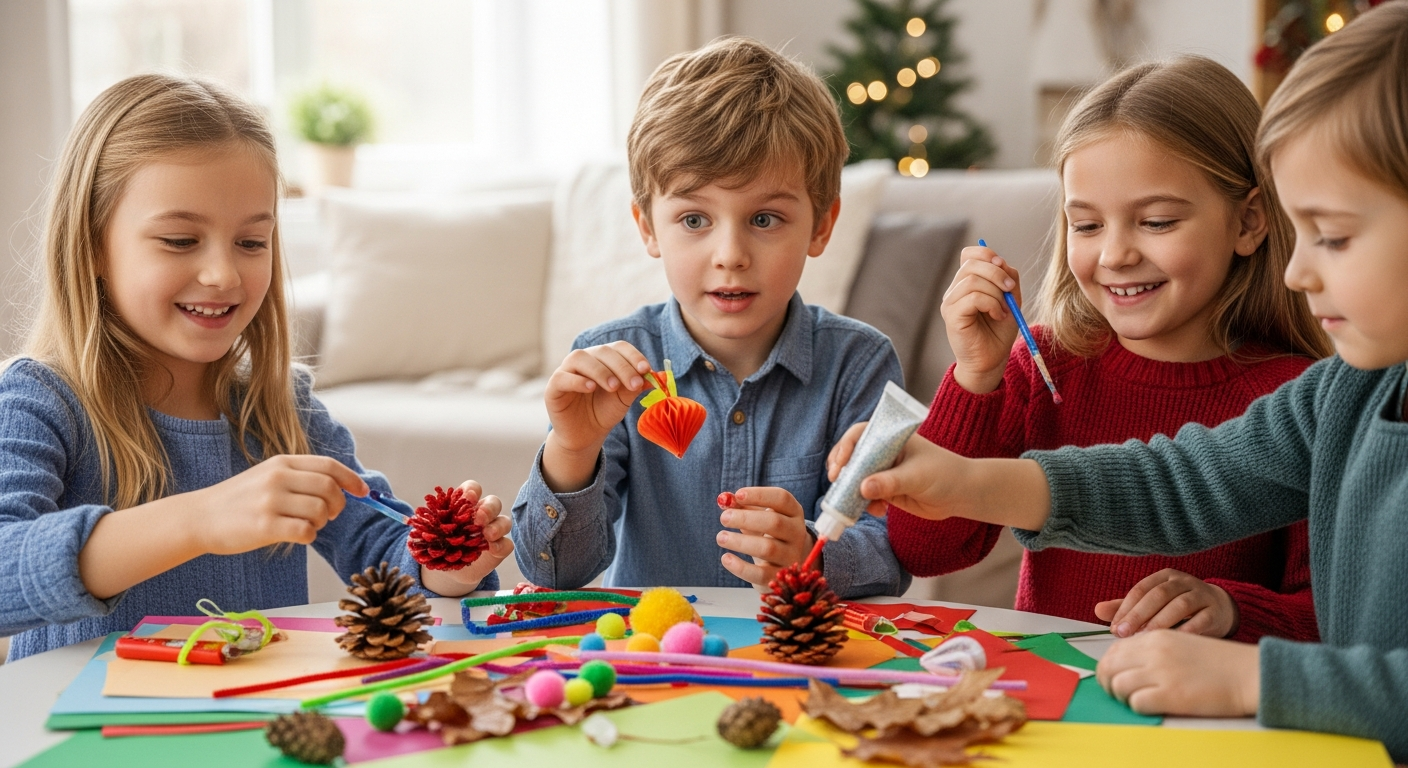
Table of Contents
- Why Christmas Crafts Are More Than Just Fun
- Our Top Easy Christmas Crafts for Kids
- Crafting for Communication: Integrating Speech Blubs Fun
- Making Craft Time a Language-Rich Experience
- Choosing the Right Tools and Materials Safely
- Speech Blubs: Your Partner in Joyful Learning
- Conclusion
- FAQ
The air is crisp, carolers are practicing, and the scent of pine is starting to fill our homes. For many of us, this time of year conjures up vivid memories of childhood, especially the simple joy of creating something beautiful with our own hands. But beyond the glitter and glue, engaging in easy kids Christmas crafts offers a powerful opportunity for growth, connection, and, perhaps most importantly, communication. It’s a chance to build more than just ornaments – it’s a chance to build words, confidence, and lasting family memories.
This blog post will guide you through a sleigh-full of delightful, easy Christmas crafts perfect for children of all ages. We’ll explore how these hands-on activities don't just spark creativity but also serve as incredible catalysts for language development, fine motor skills, and emotional expression. We believe that every child deserves to speak their minds and hearts, and often, the path to vibrant communication is paved with fun, engaging experiences. Get ready to transform everyday materials into festive masterpieces and, in doing so, unlock new worlds of conversation and connection with your little ones.
Why Christmas Crafts Are More Than Just Fun
Christmas crafts are often seen as delightful pastimes, a way to keep little hands busy during the holiday season. While they certainly achieve that, their value extends far beyond simple entertainment. Crafting provides a rich, multi-sensory environment that is incredibly beneficial for a child's holistic development, particularly in the areas of language and communication.
Fine Motor Skills and Coordination
From gripping a crayon to snipping with scissors or carefully placing a sequin, crafts are a fantastic workout for tiny fingers and hands. These activities refine fine motor skills, which are crucial for tasks like writing, drawing, and even self-feeding. The precision required to manipulate small objects strengthens hand-eye coordination, laying a foundational groundwork for many future skills. For instance, when a child learns to squeeze glue just right or tear paper into strips, they're developing control that transfers to other areas of their learning.
Language Development and Vocabulary Expansion
This is where the magic truly happens for communication. Crafting naturally encourages dialogue and active participation. As children create, they are exposed to a wealth of new vocabulary and concepts. Think about all the words that come up: glue, cut, stick, paint, glitter, red, green, soft, sparkly, bumpy, smooth, star, tree, Santa, reindeer. They learn action words, descriptive adjectives, and names for various objects and tools.
Craft time is also ripe for practicing following instructions and sequencing. "First, we put the glue on the paper plate. Then, we add the cotton balls for Santa's beard." This natural back-and-forth communication is key. At Speech Blubs, we understand that language blossoms when children are actively engaged and imitating. Just as our unique "video modeling" methodology helps children learn by watching and imitating their peers in our app, crafting with a parent provides a similar, real-world imitation opportunity for sounds, words, and sentences. It's a joyful learning environment that complements our mission to empower children to speak their minds and hearts.
Fostering Creativity and Imagination
Crafts are an open invitation to imagine, experiment, and express oneself. There's no single "right" way to make a paper plate snowman; perhaps it has purple buttons or a rainbow scarf! This freedom nurtures creativity, allowing children to explore their ideas and develop a sense of personal expression. This imaginative play is crucial for developing narrative skills – the ability to tell stories, plan, and think symbolically, which are all vital components of advanced communication.
Problem-Solving Skills
What happens if the glue runs out? How can we make the glitter stick better? Crafts often present small, manageable challenges that encourage children to think critically and find solutions. This process builds resilience and a sense of accomplishment, reinforcing the idea that they can overcome obstacles – a valuable lesson for all aspects of life, including navigating communication challenges.
Emotional Expression and Connection
Creating something tangible offers an outlet for emotions. A child might express excitement through bright colors or a sense of focus through intricate details. Most importantly, crafting together strengthens the bond between parent and child. It’s dedicated, quality time spent side-by-side, sharing laughter, encouragement, and conversation. These shared experiences build a foundation of trust and connection, making children feel safe and confident enough to express themselves verbally. This focus on family connection is central to our values at Speech Blubs, where we aim to provide a powerful tool for joyful family learning moments.
Our Top Easy Christmas Crafts for Kids
Ready to dive into some festive fun? Here are some of our favorite easy Christmas crafts, perfect for sparking joy and language development! Remember, the goal is participation and communication, not perfection.
Toddler-Friendly Delights (Ages 1-3)
For our youngest crafters, the focus is on sensory exploration, simple actions, and introducing basic vocabulary. Supervision is key, and keep materials age-appropriate and non-toxic.
Paper Plate Santa or Reindeer
- Materials: Paper plates, cotton balls, red and brown construction paper, googly eyes, glue sticks, markers.
- Instructions:
- Santa: Give your toddler a paper plate. Help them glue cotton balls around the bottom edge for Santa’s beard. Assist them in gluing a red paper triangle for his hat. Add googly eyes and draw a simple red nose and mouth with a marker.
- Reindeer: Paint the paper plate brown (or use a brown plate). Help glue on googly eyes and a red pom-pom for Rudolph's nose. Cut out brown antlers from paper and assist with gluing them to the top.
- Language Boost:
- Colors: "What color is Santa's hat? Red!" "Rudolph's nose is red!"
- Body Parts: "Where are Santa's eyes? Nose? Beard?"
- Actions: "Stick," "glue," "paint," "pat."
- Sounds: "Ho ho ho!" "Reindeer fly!"
- Identification: "Look, it's Santa!" "Who is this? Reindeer!"
Pom-Pom Christmas Tree
- Materials: Green construction paper (cut into a tree shape), various colored pom-poms, liquid glue or glue stick.
- Instructions: Draw or cut out a simple Christmas tree shape from green paper. Have your toddler stick colorful pom-poms onto the tree as ornaments. Encourage them to pick up individual pom-poms.
- Language Boost:
- Colors: "What color pom-pom is that? Blue!" "Let's find a yellow one."
- Counting: "One pom-pom, two pom-poms..."
- Sizes: "Big pom-pom, little pom-pom."
- Location words: "Put it on the tree," "put it here."
Fingerprint Christmas Lights
- Materials: Dark construction paper (black or dark blue), washable tempera paints in various bright colors, a marker.
- Instructions: Draw a squiggly line across the paper with a marker – this will be the "light string." Show your toddler how to dip their finger into different colors of paint and press it along the line to create "lights."
- Language Boost:
- Colors: "Red light!" "Green light!"
- Sensory: "Squishy paint!" "It feels wet."
- Actions: "Dip," "press," "wipe."
- Requests: "More red paint, please!"
Preschool & Kindergarten Creations (Ages 3-5)
For this age group, we can introduce slightly more complex steps, encourage more independent decision-making, and expand vocabulary with descriptive words and simple sentences.
Popsicle Stick Ornaments
- Materials: Popsicle sticks, liquid glue, various small decorations (sequins, glitter, small pom-poms, buttons), paint or markers, string or ribbon.
- Instructions:
- Glue 3-4 popsicle sticks together to form a triangle (for a tree) or a square (for a gift). Let it dry completely.
- Once dry, children can paint or color their shapes.
- Then, let them decorate with sequins, glitter, or buttons. This is a great opportunity to talk about patterns and design choices.
- Glue a loop of string or ribbon to the back for hanging.
- Language Boost:
- Shapes: "We're making a triangle tree!" "This is a square present."
- Descriptive words: "Sparkly," "shiny," "colorful," "rough."
- Sequencing: "First we glue, then we paint, then we decorate."
- Choices: "Do you want blue sequins or red glitter?"
- Imagination: "Who will get this ornament? What color should it be?"
Cotton Ball Snowman
- Materials: Blue or black construction paper, cotton balls, liquid glue, orange paper (for nose), black marker (for eyes/mouth), twigs (for arms).
- Instructions:
- Help your child draw two circles on the paper for the snowman's body.
- Have them spread glue inside the circles and cover them with cotton balls. This is a wonderful sensory experience!
- Cut a small triangle from orange paper for the carrot nose and glue it on.
- Draw eyes and a mouth with a black marker.
- Glue small twigs for arms. You can also add a paper hat or scarf.
- Language Boost:
- Sensory: "Soft cotton," "sticky glue."
- Body Parts: "Snowman's eyes, nose, arms."
- Size concepts: "Big circle for the bottom, small circle for the head."
- Storytelling: "What will our snowman do today? He might wave his twig arms!"
- Requests: "Can I have more cotton balls?" "Help me with the glue."
Salt Dough Ornaments
- Materials: 1 cup flour, 1/2 cup salt, 1/2 cup water, cookie cutters (Christmas shapes), paint, glitter, ribbon.
- Instructions:
- Mix flour, salt, and water to form a dough. Knead until smooth. This is a fantastic tactile activity!
- Roll out the dough (about 1/4 inch thick) and let children use cookie cutters to make shapes. Don't forget to poke a hole at the top of each ornament with a straw for hanging later.
- Bake at 250°F (120°C) for 2-3 hours or until hardened. Let cool completely.
- Once cool, kids can paint and decorate their ornaments. Add glitter while the paint is wet for extra sparkle.
- Thread ribbon through the hole for hanging.
- Language Boost:
- Verbs: "Mix," "roll," "cut," "bake," "paint," "thread."
- Sensory: "Smooth dough," "salty," "hard."
- Shapes: "Star," "tree," "bell."
- Sequencing: Discuss each step in order. "First, we make the dough..."
- Imagination: "What kind of design will you paint on your star?"
Elementary Age Masterpieces (Ages 6+)
Older children can handle more intricate steps, explore diverse materials, and engage in more complex language, including planning, problem-solving, and expressing detailed ideas.
DIY Christmas Cards
- Materials: Cardstock, markers, colored pencils, glitter, stickers, craft punches, scissors, glue.
- Instructions:
- Fold cardstock in half.
- Children can design their own cards, drawing festive scenes, writing messages, and decorating with glitter, stickers, or cut-out shapes. Encourage them to personalize each card for a specific recipient.
- Language Boost:
- Writing skills: Practicing handwriting, spelling, and sentence structure.
- Expressing feelings: "What message do you want to write to Grandma? What makes you happy about Christmas?"
- Planning: "What design will you put on the front? What will you write inside?"
- Descriptive language: Describing the scene they've drawn or the person they're writing to.
Pinecone Animals or Ornaments
- Materials: Pinecones, googly eyes, felt scraps, small pom-poms, pipe cleaners, liquid glue, glitter.
- Instructions:
- Collect pinecones (or buy them). If collected, ensure they are clean and dry.
- Transform them into animals (owls, reindeer, hedgehogs) by gluing on googly eyes, felt ears, pom-pom noses, or pipe cleaner antlers.
- Alternatively, decorate them with glitter and small pom-poms to make festive ornaments. Add a ribbon loop to the top for hanging.
- Language Boost:
- Nature vocabulary: "Pinecone," "scales," "tree."
- Animal names and sounds: "Owl," "ho ho ho," "meow."
- Describing characteristics: "This pinecone is rough," "the owl has big eyes."
- Storytelling: Create a story about the pinecone animal. "Where does this little owl live?"
Paper Chain Garland
- Materials: Construction paper in various Christmas colors, scissors, glue stick or stapler.
- Instructions:
- Cut construction paper into strips (e.g., 1 inch wide, 6 inches long). This is great for practicing scissor skills.
- Take one strip and form a loop, gluing or stapling the ends together.
- Thread the next strip through the first loop, form another loop, and glue/staple.
- Continue this process to create a long garland.
- Language Boost:
- Counting: "How many loops do we have now?"
- Colors and patterns: "Red, green, red, green!" "What color comes next?"
- Sequencing: "First loop, second loop..."
- Teamwork and cooperation: "You hold this end, I'll glue this one." This is excellent for turn-taking and shared attention.
Crafting for Communication: Integrating Speech Blubs Fun
As parents, we're always looking for ways to support our children's development, and combining hands-on crafts with focused speech practice can create a powerful synergy. At Speech Blubs, we believe in "smart screen time" – an active, engaging alternative to passive viewing. Our app's unique "video modeling" methodology, where children learn by watching and imitating their peers, is scientifically proven to be effective. Think of how similar that is to a child imitating your actions and words during a craft session!
Here’s how you can seamlessly integrate Speech Blubs with your crafting adventures:
- Before the Craft: Introduce new vocabulary related to your craft using Speech Blubs. If you're making a reindeer, explore the "Animals" section to hear and practice the 'R' sound, or watch videos of children saying "reindeer" or "hoof."
- During the Craft: Use the craft as a prompt for Speech Blubs activities. As you're painting a red ornament, pause and find the word "red" in the app's "Colors" section, or practice the "R" sound for 'red.' For a child who loves animals, the "Animal Kingdom" section offers a fun, motivating way to practice "moo" and "baa" sounds, which can then be applied to making animal crafts. For a parent whose 3-year-old "late talker" loves animals, the 'Animal Kingdom' section offers a fun, motivating way to practice 'moo' and 'baa' sounds. They can then create a farm animal craft and label their creations with the sounds they practiced.
- After the Craft: Use Speech Blubs to describe the finished product or tell a story about it. Our "Story Time" activities can inspire narrative around their creations. Take a picture of their craft and use the app to talk about what they made, the colors they used, and who it's for. This reinforces new words and encourages expressing their thoughts and feelings.
We know that 1 in 4 children needs speech support, and our founders, who grew up with speech problems themselves, created Speech Blubs to be the immediate, effective, and joyful solution they wished they had. It's a tool designed to blend scientific principles with play, making communication development a positive experience for the whole family. You can see how other parents are making strides with their children by reading our testimonials.
Making Craft Time a Language-Rich Experience
To truly maximize the communicative benefits of crafting, adopt these simple strategies:
- Talk About It, Constantly: Narrate every step. "Now we're cutting the paper. We need to glue this part. Look at the sparkly glitter!"
- Ask Open-Ended Questions: Instead of "Is this red?", try "What color should we use next?" or "How does that feel?" This encourages more than a yes/no answer.
- Encourage Imitation: If your child points to the glue, say "Glue!" and encourage them to repeat it. If they make a sound, mimic it back and then add a word.
- Sing Songs and Rhymes: Christmas carols are perfect for this! Singing builds phonological awareness and encourages vocal play.
- Praise Effort, Not Just the Product: Focus on their participation, creativity, and attempts at communication. "You worked so hard on that!" "I love how you chose those colors!"
- Take Turns: Model turn-taking by saying, "My turn to glue, then your turn!" This is foundational for conversational skills.
- Describe Sensory Details: "This cotton is soft," "The paint feels cool." Engage all their senses.
Choosing the Right Tools and Materials Safely
Ensuring a safe crafting environment is paramount.
- Age-Appropriate Materials: Always select non-toxic glues, paints, and markers, especially for younger children who might put things in their mouths. Avoid small choking hazards for toddlers.
- Supervision: Closely supervise children, especially with scissors or other sharp tools.
- Workspace: Cover your workspace with newspaper or an old tablecloth to protect surfaces and make cleanup easier.
- Allergies: Be mindful of any potential allergies your child might have to certain materials.
Speech Blubs: Your Partner in Joyful Learning
At Speech Blubs, we are committed to making speech and language development an accessible, effective, and joyful journey for every family. Our app is designed to be a powerful supplement to a child's overall development plan and, when applicable, professional therapy. It’s a wonderful screen-free alternative to passive viewing (like cartoons) because it encourages active participation and imitation, creating a powerful tool for family connection and learning. Our scientifically-backed methodology, including video modeling, engages children’s mirror neurons, making learning natural and fun. Discover more about the research behind our highly-rated app.
We understand that you want the best for your child, and we strive to provide immediate, effective support. Unsure if your child could benefit? Take our quick 3-minute preliminary screener to get a simple assessment and a personalized next-steps plan. It's a great way to gain insight and it even includes a free 7-day trial of our app!
We offer flexible subscription plans to fit your family's needs:
- Monthly Plan: For just $14.99 per month.
- Yearly Plan: Our best value at $59.99 per year, which breaks down to an incredible $4.99 per month! You save a whopping 66% compared to the monthly plan!
Choosing the Yearly Plan isn't just about savings; it unlocks the full Speech Blubs experience:
- A 7-day free trial: Try before you commit, completely risk-free.
- The extra Reading Blubs app: Double the fun, double the learning!
- Early access to new updates: Be the first to experience our latest features.
- 24-hour support response time: Our team is always here to help when you need it most.
The Monthly plan does not include these exclusive benefits, so for the complete experience and the best value, the Yearly plan is the clear choice.
Ready to empower your child to speak their minds and hearts? Download Speech Blubs today and start your journey!
Conclusion
This Christmas, let's embrace the simple magic of easy kids Christmas crafts as more than just decorations. They are precious opportunities to foster language, build confidence, and create unforgettable family moments. From the simplest finger painting for toddlers to crafting intricate cards with older children, each activity is a step towards richer communication and deeper connection. Remember, the glue, the glitter, and the giggles are all part of the beautiful journey of helping your child find their voice.
We are here to support you every step of the way. By combining the joy of hands-on crafting with the scientifically-backed, engaging activities in our app, you're giving your child a powerful foundation for confident communication.
Don't wait to ignite your child's potential! Take advantage of our best value offer. Create your account and begin your 7-day free trial today by choosing the Yearly plan. You can also download Speech Blubs on the App Store or Google Play to start your joyful learning journey.
FAQ
Q1: What age group are these easy Christmas crafts suitable for?
A1: We've included crafts for a wide range of ages, from toddlers (1-3 years old) focusing on sensory exploration and basic actions, to preschoolers (3-5 years old) developing fine motor skills and following simple instructions, all the way up to elementary-aged children (6+ years old) who can engage in more complex tasks and creative expression. Always adapt materials and supervision levels to your child's individual developmental stage.
Q2: How can I encourage my child to talk more during craft time?
A2: Create a language-rich environment! Narrate your actions ("I'm putting on the glue"), describe materials ("This glitter is so sparkly"), ask open-ended questions ("What color should we use next?"), and encourage imitation of words and sounds. Focus on turn-taking in conversation and praise their effort, not just the finished product. Using descriptive language and engaging all their senses can really spark conversation.
Q3: My child seems hesitant to try new crafts. How can I make it more appealing?
A3: Start small and keep it low-pressure. Offer choices of materials or colors to give them a sense of control. Engage alongside them, modeling enthusiasm and demonstrating the steps without expecting perfection. Connect the craft to something they already love, like a favorite Christmas story or character. Remember, the goal is fun and connection, not a perfect masterpiece.
Q4: How does Speech Blubs fit in with these hands-on craft activities?
A4: Speech Blubs complements hands-on crafts beautifully by providing a focused, engaging way to practice new vocabulary, sounds, and communication skills. You can use the app before crafting to introduce words related to your project, during the craft to practice specific sounds or names of colors and objects, and after to describe their creation and tell stories. Our "video modeling" approach encourages imitation, similar to how children learn by imitating you during crafting, making the learning experience cohesive and effective. Explore our mission and values on our homepage.