
Festive Fun: Engaging At-Home Christmas Activities for Kids
 By Speech Blubs Team•Dec 19, 2025•18 min.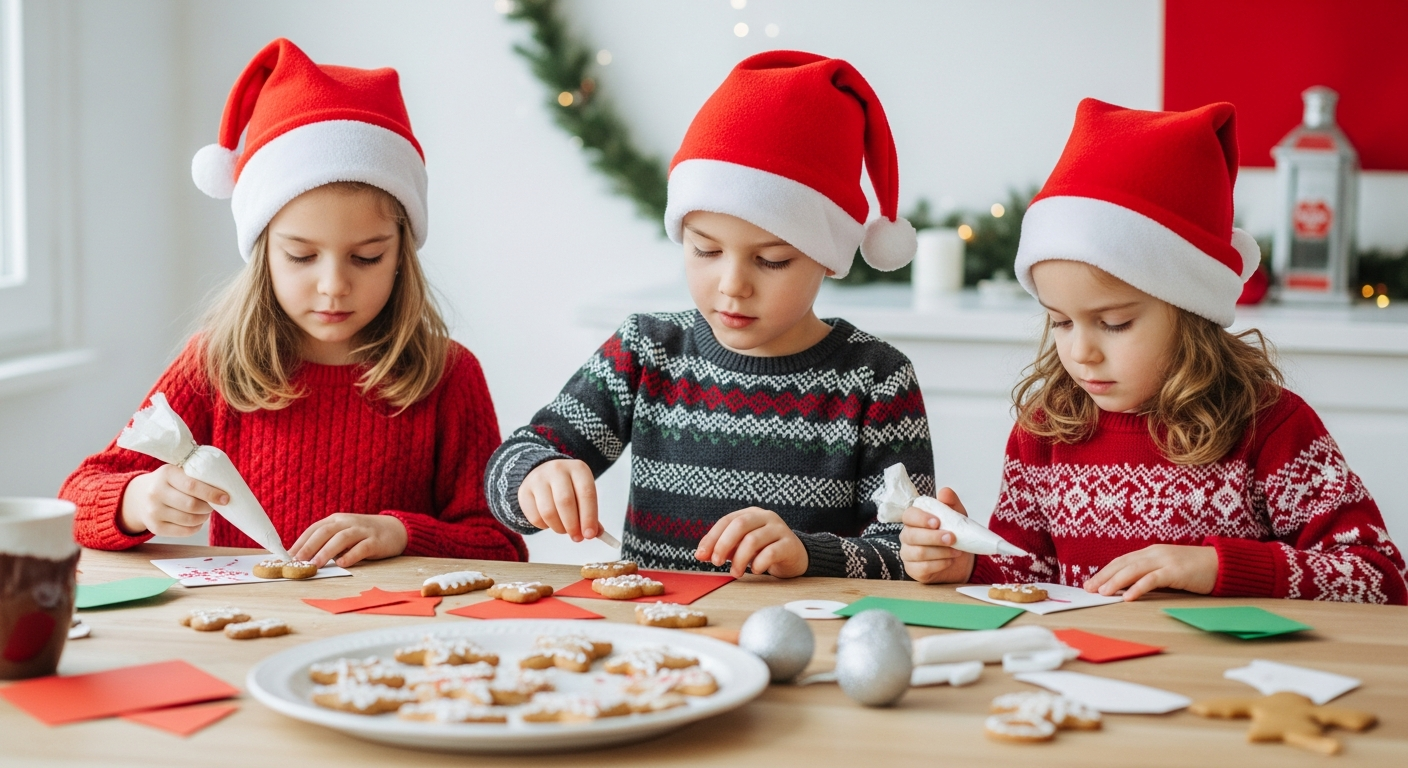
Table of Contents
- Introduction
- The Magic of Christmas: More Than Just Presents
- Decorating Delights: Crafting Communication
- Kitchen Adventures: Culinary Communication
- Storytelling & Sensory Play: Immersive Experiences
- Musical Merriment & Movement: Rhyme and Rhythm
- The Gift of Giving: Social-Emotional Growth
- How Speech Blubs Enhances Your Holiday Fun
- Choosing the Right Plan: Your Child's Journey with Speech Blubs
- Conclusion
- FAQ
The holiday season twinkles into view, bringing with it a unique kind of magic. For children, Christmas is often a time of wide-eyed wonder, vibrant decorations, and exciting anticipation. But beyond the glitter and the gifts, this special time of year offers a golden opportunity for rich developmental growth through joyful interaction. Imagine your living room transforming into a bustling workshop, a cozy bakery, or a vibrant stage – all while nurturing your child's communication skills, creativity, and confidence. This post will explore a sleigh-full of fun, easy, and incredibly beneficial at-home Christmas activities that promise to create cherished family memories while subtly boosting your child’s development. We'll delve into how these festive moments can become powerful learning experiences, and how tools like Speech Blubs can be a joyful companion on this journey, helping your child to truly "speak their minds and hearts."

Introduction
As parents, we often find ourselves navigating the delicate balance between creating magical memories and fostering healthy development, especially during a time as exciting as Christmas. The sheer joy of the season is palpable, but what if we told you that the very activities that bring so much delight could also be incredibly impactful for your child’s speech, language, and social-emotional growth? We're not talking about formal lessons or structured therapy sessions disguised as fun; rather, we’re focusing on organic, play-based experiences that naturally invite communication and connection. This guide aims to equip you with a treasure trove of engaging ideas for at-home Christmas activities that are not only bursting with festive cheer but are also designed to enhance crucial developmental milestones. Our main message is simple: the most wonderful time of the year can also be the most wonderful time for your child's growth, transforming everyday holiday moments into powerful opportunities for learning, bonding, and communication.
The Magic of Christmas: More Than Just Presents
The holiday season is often synonymous with presents, parties, and passive entertainment. While there's certainly a place for all of these, the true magic of Christmas often lies in the shared experiences and traditions we build within our homes. At-home activities provide a unique canvas for creating lasting memories, strengthening family bonds, and, perhaps most importantly, developing a wide array of skills in our children. From fine motor control in crafting to expressive language in storytelling, every festive endeavor holds developmental potential.
In an age where passive screen time often dominates, we at Speech Blubs advocate for "smart screen time" – experiences that are interactive, engaging, and developmentally beneficial. Our mission, born from the personal experiences of our founders who grew up with speech problems, is to empower children to "speak their minds and hearts" by providing an immediate, effective, and joyful solution for the 1 in 4 children who need speech support. We believe that learning complex communication skills can be achieved through play, and our unique "video modeling" methodology, where children learn by watching and imitating their peers, offers a screen-free alternative to passive viewing like cartoons. It’s a powerful tool for family connection, ensuring that even when interacting with a screen, your child is actively participating and developing.

Integrating purposeful play into your holiday routine not only creates cherished memories but also lays a strong foundation for future learning. It encourages curiosity, fosters resilience, and provides countless opportunities for both spontaneous and guided language practice. Whether your child is working on expanding their vocabulary, improving articulation, or simply building confidence in expressing themselves, the festive season offers a rich, motivating environment. For parents who are uncertain about their child's developmental progress, our quick 3-minute preliminary screener can provide a simple assessment and next-steps plan, offering immediate value and guidance.
Decorating Delights: Crafting Communication
Christmas decorations are often the first heralds of the holiday season, and involving children in their creation and arrangement turns a simple task into a rich developmental activity.
Crafting Homemade Ornaments
There’s something incredibly special about ornaments crafted by little hands. These activities are fantastic for developing fine motor skills, hand-eye coordination, and creativity. Beyond the physical aspects, they are a goldmine for language development. As children select materials, decide on colors, and follow instructions, they naturally engage in descriptive language, sequencing, and expressive communication.
Activity Ideas:
- Salt Dough Ornaments: Mix flour, salt, and water, then let kids roll, cut, and decorate. Once baked, they can paint their creations.
- Painted Pinecones: Collect pinecones and provide glitter glue, paint, and small pom-poms for decoration.
- Personalized Photo Frames: Use craft sticks or cardboard to create simple frames, then decorate with festive embellishments and insert a holiday photo.
Relatable Scenario: Consider a parent whose three-year-old struggles with vocabulary and expressing preferences. During an ornament-making session, the child can practice choosing colors, saying "red star" or "blue circle," and using descriptive words like "shiny" for glitter or "sticky" for glue. The parent can encourage them by asking open-ended questions like, "What color should we use next?" or "How does this feel?" This active participation transforms a craft session into a fun, motivating way to practice essential speech and language skills. For additional support in expanding vocabulary, the "My Creative World" section within Speech Blubs is a fantastic resource, encouraging children to describe what they see and create, much like they would with their ornaments.
DIY Holiday Decorations
Making decorations together can be a wonderful family bonding experience while also working on teamwork and following multi-step directions.
Activity Ideas:
- Paper Chains: Simple strips of paper, glued into loops, are excellent for practicing color recognition, counting, and sequencing ("first red, then green").
- Garland Making: Stringing popcorn, cranberries, or large beads helps with fine motor precision and patience.
- Window Clings: Drawing festive shapes on contact paper and decorating them.
Relatable Scenario: For a child who finds multi-step directions challenging, making a paper chain offers a clear, sequential task. A parent can guide them, reinforcing words like "first," "then," and "next" as they glue one loop to the other. "First, pick a red strip. Then, make a circle. Next, glue it to the green one." This structured yet playful approach helps solidify understanding of sequential commands, a vital skill for both daily life and academic success.
Kitchen Adventures: Culinary Communication
The kitchen during Christmas often buzzes with delicious aromas and delightful treats. Turning baking and cooking into a shared family activity provides countless opportunities for learning, sensory exploration, and language development.
Baking Christmas Cookies
Baking is a multi-sensory experience that engages children in a delightful way. It's a hands-on lesson in math (measuring), science (ingredients reacting), and, of course, language.
Benefits: Measuring, counting, following recipes, understanding instructions, sensory exploration (textures, smells, tastes), and expanding vocabulary related to food and actions.
Activity Ideas:
- Decorating Pre-Baked Cookies: Provide plain cookies, icing, and sprinkles. This is all about creativity and naming colors, shapes, and textures.
- Simple No-Bake Recipes: "Reindeer Noses" (pretzels, chocolate, and M&M's) or "Snowball Cookies" (butter, powdered sugar, vanilla, flour) are easy for little hands.
Relatable Scenario: Imagine a child with limited expressive language participating in baking. Naming the ingredients ("flour," "sugar," "eggs"), describing actions ("mix," "stir," "pour"), and commenting on tastes and smells ("sweet," "yummy," "spicy") provides natural and highly motivating language practice. The parent can model these words, encourage repetition, and praise attempts at communication. "Can you find the vanilla? It smells so good!" This reinforces connections between words and real-world experiences. For further vocabulary enrichment, our "Yummy Time" section in Speech Blubs is perfect for exploring food-related words and concepts.
Festive Snack Creations
Even simpler snack-making can be a powerful learning experience, focusing on healthy choices, categorizing, and following basic instructions.
Benefits: Simple instructions, healthy eating discussions, categorizing, shape recognition.
Activity Ideas:
- Fruit Skewers Resembling Candy Canes: Alternate red (strawberries, raspberries) and white (banana, marshmallow) fruits on a skewer.
- "Reindeer Food" Mix: A simple trail mix with cereals, dried fruit, and a few festive sprinkles. Discuss the different textures and colors.
Storytelling & Sensory Play: Immersive Experiences
Stories transport us, and sensory play grounds us. Combining these during the holidays creates deeply engaging and developmentally rich experiences.
Christmas Story Time & Puppetry
Reading together is one of the most powerful ways to foster literacy, expand vocabulary, and encourage imagination. Adding puppets elevates this experience by making stories interactive.
Benefits: Listening comprehension, narrative skills (understanding plot, characters), imaginative play, emotional vocabulary, perspective-taking.
Activity Ideas:
- Reading Classic Christmas Stories: "The Night Before Christmas," "How the Grinch Stole Christmas," or "The Polar Express."
- Creating Character Puppets: Use paper bags, socks, or craft sticks to make simple puppets of Santa, elves, reindeer, or even characters from your favorite holiday book.
Relatable Scenario: For a child who has difficulty answering "wh-" questions (who, what, where, when, why), engaging with a Christmas story using puppets can be transformative. After reading about Santa, the parent can ask, "Who lives at the North Pole?" or "What does Santa say?" Using a Santa puppet to "answer" or prompt the child can make the interaction less intimidating and more playful, encouraging recall and comprehension. This interactive storytelling builds foundational narrative skills, crucial for both academic success and social communication.
Sensory Bins with a Holiday Twist
Sensory bins are fantastic for exploration, fine motor skills, and descriptive language. Adding a holiday theme makes them even more inviting.
Benefits: Tactile exploration, fine motor skills (scooping, pouring, manipulating small objects), descriptive language (textures, smells, colors), imaginative play.
Activity Ideas:
- "Winter Wonderland" Bin: A base of rice, white beans, or fake snow with small plastic animals, miniature trees, and sparkly ornaments.
- "Gingerbread House" Bin: A base of oats or brown rice, cinnamon sticks, star anise, gingerbread-shaped cookie cutters, and small toy figures. The smells alone are wonderfully stimulating!
Musical Merriment & Movement: Rhyme and Rhythm
Music and movement are universal languages that bring joy and offer profound developmental benefits, especially for speech and language.
Singing Christmas Carols
Singing is an excellent way to work on auditory processing, rhythm, articulation, and memory. The repetitive nature of carols helps children learn new words and sounds in a fun, low-pressure environment.
Benefits: Auditory processing, rhythm, articulation practice, memory, social engagement, breath control.
Activity Ideas:
- Learning New Carols: Start with simple, well-known songs like "Jingle Bells" or "Rudolph the Red-Nosed Reindeer."
- Making Simple Instruments: Shakers from rice in plastic eggs or drums from upturned pots.
Relatable Scenario: For a child working on specific sound production, carols can provide a playful context. A child practicing the 's' sound can focus on words like "Santa" or "sleigh" in "Jingle Bells." The rhythmic and melodic nature of singing can make it easier to produce sounds than in regular speech, building confidence and muscle memory. The repetitive chorus of many carols is excellent for reinforcing new vocabulary and sound patterns.
Festive Dance Party
Getting those wiggles out to holiday tunes is not just fun; it's great for gross motor skills, following directions, and expressing emotions.
Benefits: Gross motor skills, coordination, following directions (e.g., "freeze dance"), expressing emotions through movement, energy release.
Activity Ideas:
- Dance to Holiday Music: Put on your favorite Christmas playlist and just move!
- "Freeze Dance" with a Holiday Twist: Play music and when it stops, everyone freezes like a snowman or a reindeer.
The Gift of Giving: Social-Emotional Growth
The spirit of giving is central to Christmas, and involving children in acts of kindness and generosity fosters empathy, social awareness, and emotional development.
Crafting Handmade Gifts
Creating gifts for others helps children think about the recipient's preferences and develops their sense of empathy.
Benefits: Empathy, understanding others' preferences, fine motor skills, planning, pride in creation.
Activity Ideas:
- Personalized Cards: Decorate cards for family members, discussing who each card is for and what message to write or draw.
- Small Handmade Crafts: Bracelets, painted rocks, or decorated coasters for grandparents, teachers, or friends.
Holiday Kindness Jar
Encouraging acts of kindness helps children recognize and appreciate positive behaviors, promoting prosocial development.
Benefits: Promoting prosocial behavior, discussing emotions, recognizing good deeds, gratitude.
Activity Ideas:
- Writing Down Kind Acts: Throughout the holiday season, write down acts of kindness your child does or witnesses and place them in a decorated "Kindness Jar."
- Reading Them Aloud: On Christmas Eve or Christmas Day, read the kind acts aloud and discuss how they made others feel. This sparks conversations about empathy and the impact of our actions.
How Speech Blubs Enhances Your Holiday Fun
While these hands-on activities are incredibly valuable, we understand that modern families also seek effective digital tools. At Speech Blubs, we believe in blending scientific principles with play to create one-of-a-kind "smart screen time" experiences that are more than just entertainment – they are powerful developmental aids. Our approach is a screen-free alternative to passive viewing, making it a powerful tool for family connection, not a substitute.
Our Methodology: Video Modeling: At the heart of Speech Blubs is our unique "video modeling" methodology. Children learn by watching and imitating their peers on screen. This taps into the brain's natural mirror neuron system, making imitation a highly effective and engaging way to acquire new speech and language skills. Unlike rote memorization, video modeling makes learning feel like a fun game, often without kids even realizing they are "practicing."
Science-Backed Play: Our app is developed in collaboration with speech-language pathologists and early childhood experts, placing us in the top tier of speech apps worldwide based on rigorous scientific evaluation. We are deeply committed to providing immediate, effective, and joyful solutions for children who need speech support. Explore Speech Blubs' science-backed approach to learn more about the research behind our methods.
Connecting Holiday Fun with Speech Blubs:
- For the late talker who loves animals: While decorating a tree with animal-themed ornaments, the "Animal Kingdom" section of Speech Blubs offers a fun way to practice animal sounds and names. A child might imitate "moo" for a cow ornament or "baa" for a sheep, directly linking the physical activity to targeted speech practice within the app.
- For vocabulary expansion during baking: When making gingerbread men, the "Yummy Time" section can reinforce names of ingredients, kitchen actions, and food-related vocabulary. The child can then apply these words in a practical context while helping in the kitchen.
- Building confidence through imitation: If your child is shy about singing carols aloud, using Speech Blubs' sections focused on early sounds or specific phonemes can help them gain confidence by first imitating peers in a low-pressure environment. Then, they might feel more ready to join the family sing-along.
Our founders' personal journeys with speech challenges led them to create the very tool they wished they had – a joyful, effective, and accessible solution. We empower children to find their voice, reduce frustration, and build confidence, transforming communication from a challenge into a celebration. Read what other parents are saying about their children's success with Speech Blubs and how it has positively impacted their family's communication journey.
Choosing the Right Plan: Your Child's Journey with Speech Blubs
We believe every child deserves the opportunity to communicate confidently. To support your family, we offer flexible subscription plans for Speech Blubs.
Our Monthly Plan is available for $14.99 per month. This is a great option for families who prefer month-to-month flexibility.
However, for the best value and the most comprehensive experience, we highly recommend our Yearly Plan at just $59.99 per year. This breaks down to an incredible value of only $4.99 per month, allowing you to save 66% compared to the monthly option!
The Yearly plan isn't just cheaper; it also unlocks exclusive, high-value features designed to maximize your child's learning journey:
- A 7-day free trial: Experience the full power of Speech Blubs before committing. This is not included with the Monthly plan.
- The extra Reading Blubs app: An entire additional app focused on early literacy skills, enhancing your child's overall language development.
- Early access to new updates: Be the first to try new activities, features, and content as soon as they are released.
- 24-hour support response time: Get faster assistance whenever you need it, ensuring a smooth and uninterrupted learning experience.
We are committed to providing a powerful supplement to a child's overall development plan and, when applicable, professional therapy. By choosing the Yearly plan, you’re investing in a full year of fun, engaging, and scientifically-backed learning experiences for your child, complete with additional resources and priority support.
Conclusion
The Christmas season is a precious time, overflowing with opportunities for joy, connection, and growth. By embracing fun at-home Christmas activities, you’re not just creating beautiful memories; you're actively nurturing your child's speech, language, fine motor, cognitive, and social-emotional development. From crafting ornaments and baking cookies to singing carols and engaging in imaginative play, each festive moment becomes a stepping stone towards building confidence and fostering a love for communication. These activities, done together, reduce frustration, build key foundational skills, and create joyful family learning moments that resonate long after the tree comes down.
At Speech Blubs, we are dedicated to supporting this journey by transforming screen time into "smart screen time" – a powerful, engaging, and scientifically-backed tool that complements your family's efforts. Our unique video modeling methodology and commitment to blending scientific principles with play ensures that your child is always actively learning, developing, and speaking their minds and hearts.
Ready to fill your home with laughter, learning, and the magical sound of your child's growing voice this Christmas? It’s time to discover the power of joyful communication. We encourage you to experience the full potential of our app.
Download Speech Blubs on the App Store or Get Speech Blubs on Google Play today and start your 7-day free trial. Remember to select the Yearly plan to unlock all exclusive features, including the extra Reading Blubs app and priority support, ensuring your child gets the most comprehensive and valuable experience. Give the gift of confident communication this Christmas! Sign up for Speech Blubs and begin your festive learning adventure.
FAQ
1. How can I make Christmas activities educational without feeling like schoolwork? The key is to focus on play-based learning and follow your child's lead. Instead of drills, integrate language naturally by describing actions ("We're stirring the batter!"), asking open-ended questions ("What color sprinkles should we use next?"), and narrating your shared experiences. Children learn best when they are engaged and having fun, so keep it light, joyful, and child-centered. The "smart screen time" offered by Speech Blubs also provides a playful, game-like environment for learning, making it feel less like a chore and more like a game.
2. What if my child is shy about participating in new activities or talking during them? That's perfectly normal! Start by modeling the activity yourself and inviting them to join without pressure. Offer choices ("Do you want to paint the ornament red or green?") to give them a sense of control. For communication, use parallel talk (describing what they are doing) and self-talk (describing what you are doing) to expose them to language without demanding a response. Speech Blubs, with its video modeling where children imitate peers, can be a fantastic way to build confidence in a no-pressure digital environment, preparing them to participate more actively in real-world interactions. You can also visit our main homepage to learn more about our approach to building confidence.
3. How does Speech Blubs fit into our holiday routine? Speech Blubs is designed to be a flexible and engaging supplement to your child's overall development. It's not meant to replace family activities but to enhance learning moments. For example, if you're making a craft, a quick session in Speech Blubs can reinforce vocabulary related to colors or shapes. If your child needs a short, focused activity during a busy holiday moment, Speech Blubs provides a screen-time option that is genuinely productive. It's about purposeful engagement, turning passive screen time into an active learning opportunity that complements your festive family fun.
4. Is the Yearly plan really worth it for our family? Absolutely! The Yearly plan offers exceptional value, saving you 66% compared to the monthly subscription. Beyond the significant cost savings, it includes exclusive features like a 7-day free trial, the bonus Reading Blubs app for early literacy, early access to new updates, and 24-hour support response time. These added benefits ensure a more comprehensive, seamless, and enriched learning experience for your child, making it the best choice for long-term developmental support and family satisfaction.
About the author