
Festive Fun: Engaging Christmas Kids Crafts
 By Speech Blubs Team•Dec 22, 2025•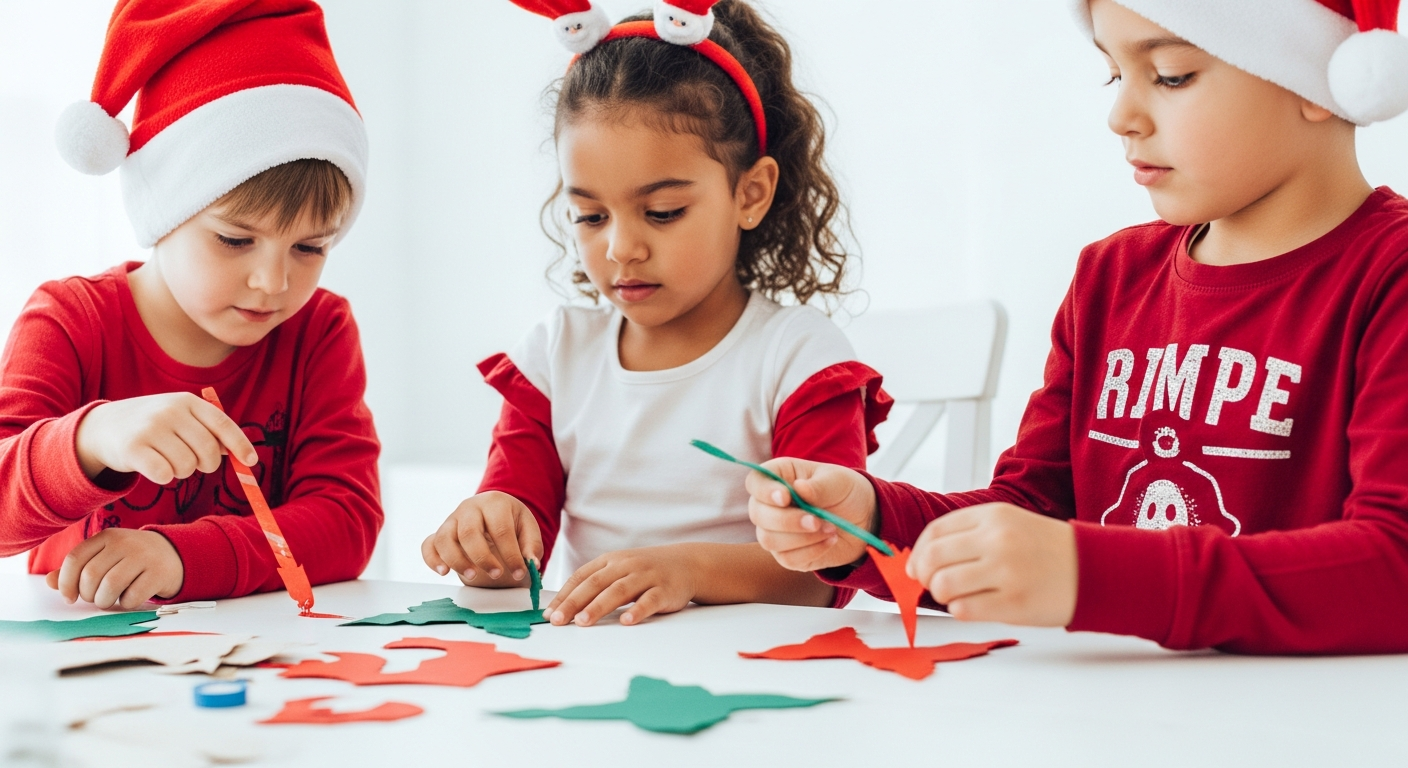
Table of Contents
- Introduction
- The Magic of Christmas Crafts for Child Development
- Our Favorite Christmas Kids Craft Ideas
- Making Crafts a Speech-Boosting Adventure with Speech Blubs
- Safety First: Tips for Crafting with Kids
- Getting Started with Speech Blubs: Your Partner in Communication
- Conclusion
- Frequently Asked Questions (FAQ)
Introduction
The air crackles with anticipation, the scent of pine fills the room, and little eyes sparkle with wonder at the magic of the holiday season. Christmas is a time of joy, connection, and creating cherished memories. For many families, this magic comes alive through the simple, heartwarming activity of crafting. Beyond just keeping little hands busy, engaging in Christmas kids crafts offers a treasure trove of developmental benefits that extend far beyond the finished product. These festive projects are not only a wonderful way to express creativity and foster family bonding but also serve as powerful catalysts for vital growth in children, particularly in areas of communication and fine motor skills.
In this comprehensive guide, we’ll explore the myriad ways that Christmas crafting enriches a child’s development, from boosting cognitive abilities to enhancing social-emotional skills. We'll dive into a sleigh-full of our favorite craft ideas, offering practical tips and easy-to-follow instructions perfect for various age groups. Most importantly, we'll demonstrate how these hands-on activities can beautifully complement and amplify speech and language development, creating meaningful opportunities for conversation and learning. At Speech Blubs, we believe in empowering children to speak their minds and hearts, and we're excited to show you how festive crafts, combined with our unique approach to "smart screen time," can make this holiday season a powerhouse for your child's growth.
The Magic of Christmas Crafts for Child Development
Long before children can express complex thoughts, they learn through doing, touching, and exploring. Christmas crafts provide an ideal canvas for this kind of experiential learning. Every snip of the scissors, every dab of glue, and every colorful stroke of a brush contributes to a child's holistic development in profound ways.
Beyond Glitter and Glue: Holistic Growth
Crafting isn't just about creating a pretty decoration; it's a multi-faceted activity that nurtures several key areas of a child's development:
- Fine Motor Skills: The intricate actions involved in crafting—cutting shapes, gluing small items, painting within lines, peeling stickers, stringing beads—are excellent exercises for developing fine motor control. These activities strengthen the small muscles in the hands and fingers, improving dexterity and hand-eye coordination. Strong fine motor skills are foundational for tasks like writing, dressing, and self-feeding.
- Cognitive Development: Crafting engages a child's brain in problem-solving and critical thinking. Following instructions, choosing colors, understanding spatial relationships, and envisioning a final product all contribute to cognitive growth. Children learn about cause and effect, sequence, and how different materials behave.
- Sensory Exploration: The tactile experience of various materials—the stickiness of glue, the smoothness of paper, the roughness of glitter, the softness of cotton balls, the unique scents of pinecones or cinnamon sticks—offers rich sensory input. This exploration helps children to better understand their world and process sensory information, which is crucial for learning and interacting with their environment.
- Social-Emotional Learning: Crafting alongside family members teaches valuable social skills such as sharing materials, taking turns, and offering encouragement. The process fosters patience, perseverance, and the ability to cope with minor frustrations when a project doesn't go exactly as planned. Completing a craft instills a sense of accomplishment and boosts self-esteem, allowing children to express themselves creatively and take pride in their unique creations.
Sparking Speech and Language Through Crafting
Perhaps one of the most exciting aspects of crafting, particularly from our perspective at Speech Blubs, is its incredible potential to supercharge speech and language development. Every step of a craft project presents a natural opportunity for communication.
- Vocabulary Expansion: As children engage with different materials and actions, they naturally acquire new words. Naming colors ("red glitter," "green construction paper"), shapes ("circle ornament," "star cookie cutter"), materials ("ribbon," "felt," "pipe cleaner"), and actions ("cut," "paste," "paint," "sprinkle") directly expands their lexicon. These concrete experiences help cement new vocabulary in their minds.
- Following Directions: Craft instructions, whether simple or multi-step, are perfect for practicing listening comprehension and the ability to follow directions. Parents can verbalize steps clearly ("First, put the glue on the paper. Then, put the cotton ball next to the tree.") using prepositions and sequencing words that are vital for language comprehension.
- Descriptive Language: Encourage children to describe what they are doing and seeing. "How does the glitter feel?" "What color is that star?" "This pinecone is bumpy!" Using adjectives and adverbs helps them articulate their observations and feelings, building richer and more complex sentences.
- Narrative Skills: As children craft, they often tell stories about their creations. "This snowman is going to sing Christmas carols!" or "My reindeer wants to fly!" Encouraging these narratives helps them organize their thoughts, sequence events, and develop storytelling abilities, which are critical for both social interaction and literacy.
- Questioning & Answering: The crafting process is full of opportunities for natural back-and-forth conversation. Children can ask, "What's next?" or "How do I do this?", and parents can respond, prompting further dialogue. This natural exchange strengthens conversational skills.
- Sound Practice: For children working on specific speech sounds, crafts offer a low-pressure environment to practice. For instance, focusing on the 's' sound while discussing "sparkly stars," "snowflakes," or "scissors," or the 't' sound with "Christmas tree" and "tape." Integrating these sounds into a fun activity makes practice engaging and effective.
Our Favorite Christmas Kids Craft Ideas
Ready to get creative? Here are some simple, fun, and speech-boosting Christmas craft ideas perfect for children of various ages. Remember, the goal isn't perfection, but participation and the joyful process of creating together.
Festive Ornaments for Tiny Hands
Creating ornaments to hang on the tree is a time-honored tradition that brings immense joy.
- Salt Dough Ornaments:
- Materials: 1 cup flour, 1/2 cup salt, 1/2 cup water, cookie cutters, straw, paint, glitter, ribbon.
- Instructions: Mix flour, salt, and water to form a dough. Roll it out and use cookie cutters to make festive shapes (stars, trees, bells). Use a straw to poke a hole at the top for hanging. Bake at 250°F (120°C) for 2-3 hours until hard, or air dry for longer. Once cooled, children can paint and decorate them.
- Speech Opportunities: Discuss "dough" (texture), "roll" (action), "star," "tree" (shapes), "red," "green" (colors), "shiny" (glitter). Practice following multi-step directions.
- Popsicle Stick Ornaments:
- Materials: Popsicle sticks, glue, paint, googly eyes, pom-poms, glitter, pipe cleaners.
- Instructions: Glue popsicle sticks together to form shapes like snowflakes, stars, or simple frames. Once dry, children can paint them any color they like and add decorations such as googly eyes to create reindeer or snowmen, small pom-poms, or glitter.
- Speech Opportunities: Focus on "stick" (object), "glue" (action), "round" (googly eyes), "soft" (pom-poms), counting sticks, describing colors.
- Handprint/Footprint Ornaments:
- Materials: Air-dry clay, paint, glitter, ribbon.
- Instructions: Roll out a piece of air-dry clay. Gently press your child’s hand or foot into the clay to create an imprint. Cut around the print, smooth the edges, and poke a hole at the top for hanging. Let it dry completely (follow clay package instructions). Once dry, children can paint the imprint and decorate it.
- Speech Opportunities: Name body parts ("hand," "foot," "fingers," "toes"), describe "print," "soft" (clay), "cold." Discuss the idea of "remembering" how small they were.
DIY Christmas Decorations
Transform your home into a winter wonderland with these child-made decorations.
- Paper Chain Garlands:
- Materials: Construction paper in festive colors, scissors, glue or tape.
- Instructions: Cut strips of construction paper. Form one strip into a loop and glue/tape the ends. Thread another strip through the first loop, form a loop, and secure. Continue until the chain is as long as desired.
- Speech Opportunities: Practice "cut," "loop," "glue," "long," "short." Focus on color names ("red," "green," "white"). Discuss patterns ("red, green, red, green").
- Pinecone Animals/Ornaments:
- Materials: Pinecones, glue, googly eyes, felt scraps, small pom-poms, pipe cleaners.
- Instructions: Collect pinecones (ensure they are clean and dry). Children can transform them into animals like owls or reindeer by gluing on googly eyes, felt ears, pom-pom noses, and pipe cleaner antlers. Add a loop of string to hang them.
- Speech Opportunities: Describe "pinecone" ("bumpy," "prickly"), name animals, discuss colors and shapes of felt. Practice animal sounds for imaginary play.
- Cotton Ball Snowman:
- Materials: Blue construction paper, glue, cotton balls, googly eyes, orange paper (for nose), black markers/buttons (for mouth).
- Instructions: Draw or trace three circles of increasing size on blue paper to form a snowman outline. Children can then glue cotton balls inside the circles to create a soft, fluffy snowman. Add googly eyes, an orange carrot nose, and a button or drawn mouth.
- Speech Opportunities: Focus on "snow" ("soft," "white"), "round" (circles), "big," "medium," "small." Practice actions like "glue," "stick," "draw."
Creative Christmas Gifts
Encourage the spirit of giving with these heartfelt, handmade presents.
- Decorated Picture Frames:
- Materials: Plain wooden or cardboard picture frames, paint, glitter, small stickers, sequins, glue.
- Instructions: Let children decorate simple frames using paint, glitter, stickers, and sequins. Once dry, insert a favorite family photo. These make wonderful gifts for grandparents.
- Speech Opportunities: Discuss "frame," "picture," "family." Describe feelings of "love" and "happy." Name colors and shapes of decorations.
- Homemade Cards:
- Materials: Construction paper, crayons, markers, stickers, glitter, glue.
- Instructions: Fold paper in half. Children can draw festive scenes, write their names (or dictate a message for an adult to write), and decorate the cards for friends and family.
- Speech Opportunities: Practice writing letters/names. Discuss who the card is for. Verbalize the message ("Merry Christmas!"). Use descriptive words for the drawings.
- "Reindeer Food" Bags:
- Materials: Small clear bags, uncooked oats, glitter, birdseed (optional), small scoops.
- Instructions: Mix oats, a pinch of glitter, and optional birdseed in a bowl. Children can scoop the "reindeer food" into small bags. Attach a tag that says, "Sprinkle this food on your lawn on Christmas Eve to help the reindeer find your house!"
- Speech Opportunities: Discuss "reindeer," "magic," "Christmas Eve." Practice "scoop," "mix," "sprinkle." Talk about giving and sharing.
Making Crafts a Speech-Boosting Adventure with Speech Blubs
While hands-on crafting provides invaluable speech and language opportunities, we understand that modern families also navigate screen time. At Speech Blubs, we've transformed traditional screen time into "smart screen time"—a powerful, engaging tool that can beautifully complement and even enhance your child's crafting adventures. Our mission is to provide an immediate, effective, and joyful solution for the 1 in 4 children who need speech support, and we do this by blending scientific principles with play.
Integrating Crafts and "Smart Screen Time"
Imagine this: your child is making a pinecone reindeer. You’re talking about "reindeer," "antlers," "brown," and "nose." Later, during a Speech Blubs session, you can select the "Animal Kingdom" section, where your child will see other children (their peers!) making reindeer sounds or saying "reindeer." This is our unique "video modeling" methodology in action. Children learn by watching and imitating their peers, activating mirror neurons in their brains, making learning highly effective and engaging.
Our app provides a screen-free alternative to passive viewing like cartoons, but it also functions as a powerful tool for family connection, turning screen time into interactive learning. Instead of passively watching, children actively participate, learn, and imitate. This interactive approach solidifies the vocabulary and concepts they encounter during crafting. You can explore how we achieve this by visiting the Speech Blubs homepage.
Enhancing Communication Skills
Speech Blubs offers targeted activities that directly support the communication skills fostered through crafting:
- Vocabulary Building: Naming craft supplies (glitter, ribbon, felt) and finished products (ornament, garland, snowman) during a craft session creates real-world context. Our app, with its extensive library of words and sounds, can then reinforce these new words through engaging video modeling. For instance, if you're making a red ornament, our "Colors" section can help them practice "red" with multiple peer models.
- Following Instructions: While crafting, you naturally give multi-step directions. This can be practiced further in Speech Blubs' structured activities, which often involve following visual and auditory cues, building listening comprehension skills essential for school readiness.
- Descriptive Language: Encouraging adjectives like "sparkly star," "bumpy pinecone," or "soft cotton" during crafting lays the groundwork for rich descriptive language. Speech Blubs’ activities prompt children to describe objects, actions, and emotions, further developing their ability to use a wide range of vocabulary to express themselves.
- Storytelling: Crafting often inspires imaginative play and stories about the creations. Speech Blubs includes sections designed to develop narrative skills, helping children organize their thoughts and articulate their imaginary worlds more clearly. They can describe the adventures of their homemade snowman or the magical journey of their reindeer food, using the words and sentence structures they've practiced in the app.
Practical Scenarios with Speech Blubs
Let’s look at how Speech Blubs can integrate seamlessly with your Christmas crafting efforts:
- Scenario 1: The Animal Enthusiast and Pinecone Animals. For a parent whose 3-year-old "late talker" adores animals and is making pinecone reindeer, the "Animal Kingdom" section within Speech Blubs offers a fun, motivating way to practice animal sounds and names. After gluing googly eyes on their reindeer, they can watch other children in the app make "Neigh!" or "Grrr!" sounds, or say "reindeer," helping them connect the physical craft with the verbal expression. This active imitation fosters both sound production and vocabulary retention.
- Scenario 2: Articulation Challenges and Festive Sounds. Imagine a child working on their 's' sounds while making "sparkly stars" or 't' sounds when talking about the "Christmas tree." With Speech Blubs, a parent can easily navigate to activities targeting specific sounds. The app's video models show peers articulating these sounds clearly in various words, providing a visual and auditory reference that complements the natural practice during crafting. This targeted reinforcement can significantly aid in articulation development.
- Scenario 3: Building Confidence and Communication. A child who is shy or frustrated with communication might initially be hesitant to talk about their craft. As they make a "Reindeer Food" bag, a parent can gently prompt descriptive words ("What does the glitter look like?"). Later, using Speech Blubs' "Talk About It" sections or social skill activities, the child can practice expressing ideas and feelings in a low-pressure environment, building confidence that then translates back to real-life interactions, like proudly showing off their homemade gift. Many parents have shared their success stories, which you can read on our testimonials page.
Safety First: Tips for Crafting with Kids
While the joy of crafting is immense, safety should always be your top priority.
- Age-Appropriate Materials: Always select materials suitable for your child's age and developmental stage. Avoid small items that could be choking hazards for very young children. Opt for non-toxic glues, paints, and markers.
- Supervision: Always supervise children during crafting activities, especially when using scissors, hot glue guns (for older kids, with strict supervision), or other potentially hazardous tools.
- Workspace Preparation: Lay down newspaper or a plastic tablecloth to protect surfaces from spills and messes. This also makes cleanup easier, allowing for more focus on the fun!
- Allergy Awareness: Be mindful of any allergies your child or others in the household might have, especially when using natural elements like pinecones or food items like oats.
Getting Started with Speech Blubs: Your Partner in Communication
At Speech Blubs, our mission is deeply personal. Our company was born from the founders' own childhood experiences with speech problems. We created the tool we wished we had—an immediate, effective, and joyful solution for the 1 in 4 children who need speech support. We are committed to fostering a love for communication, building confidence, reducing frustration, and developing key foundational skills through unique "smart screen time" experiences. Our approach is backed by science, utilizing the power of video modeling where children learn by observing and imitating their peers, a method that has placed us in the top tier of speech apps worldwide. You can dive deeper into the science behind our methodology by visiting our research page.
We don't promise guaranteed outcomes like "your child will be giving public speeches in a month," but we focus on the benefits of the process: building confidence, fostering a love for communication, reducing frustration, developing key foundational skills, and creating joyful family learning moments. We believe our app is a powerful supplement to your child's overall development plan and, when applicable, professional therapy, always with the understanding that adult co-play and support are crucial.
Choose Your Plan
To provide flexible access to our comprehensive tools, we offer two distinct plans:
- Monthly Plan: Priced at $14.99 per month. This plan provides access to the core Speech Blubs app.
- Yearly Plan: At just $59.99 per year, this plan breaks down to an incredible value of only $4.99 per month. By choosing the Yearly plan, you save a significant 66% compared to the monthly option.
The Yearly plan is undeniably the best choice, offering superior value and exclusive, high-value features designed to maximize your child's communication journey:
- 7-Day Free Trial: Experience the full power of Speech Blubs with a complimentary week-long trial, available only with the Yearly plan.
- Reading Blubs App: Gain full access to our complementary Reading Blubs app, a fantastic resource for early literacy development. This is an exclusive bonus for Yearly subscribers.
- Early Access to New Updates: Be among the first to experience our latest features and content.
- 24-Hour Support Response Time: Enjoy prioritized customer support, ensuring your questions are answered quickly and efficiently.
The Monthly plan does not include these valuable benefits.
Ready to Start the Journey?
If you're unsure whether Speech Blubs is the right fit for your child, we invite you to take our quick 3-minute preliminary screener. It involves 9 simple questions and provides you with an assessment and next-steps plan, which includes information on how to access your free 7-day trial through our Yearly plan.
Empower your child to speak, connect, and thrive this holiday season and beyond. Download Speech Blubs today and unlock a world of joyful communication:
- Download Speech Blubs on the Apple App Store
- Get Speech Blubs on the Google Play Store
- Create your account and start your free trial on the web
Conclusion
This Christmas, let the joy of crafting fill your home with laughter, creativity, and the blossoming sounds of communication. From the simplest paper chain to the most intricate salt dough ornament, every Christmas kids craft project is an opportunity for your child to grow, learn, and express themselves. These hands-on activities are powerful catalysts for developing fine motor skills, cognitive abilities, and crucial speech and language proficiency. By embracing the sensory richness and conversational prompts that crafting provides, you're not just creating festive decorations; you're building foundational skills for your child's future.
At Speech Blubs, we are honored to be a part of your child's communication journey. We believe in harnessing the magic of play and science to empower children to find their voice. By integrating the hands-on fun of Christmas crafts with the "smart screen time" experiences of Speech Blubs, you can create a dynamic and enriching environment that supports your child's development in a truly joyful way.
Ready to combine the magic of holiday crafting with the power of speech development? Join our community of happy families today. Start your 7-day free trial and experience the full suite of features by choosing the Yearly plan. It’s the smartest way to invest in your child's communication skills and enjoy all the exclusive benefits, including our Reading Blubs app. Don't wait—download Speech Blubs now on the Apple App Store or Google Play Store, or create your account on our website, and let the sounds of communication fill your home this Christmas!
Frequently Asked Questions (FAQ)
Q1: What age group are these Christmas crafts best for?
Most of the crafts mentioned are adaptable for a wide range of ages, generally from toddlers (with significant adult assistance) up to early elementary school children. For younger children (1-3 years), focus on sensory crafts, large movements, and simple tasks like gluing cotton balls or painting with fingers. Older children (4-8 years) can handle more complex instructions, use scissors (with supervision), and engage in more detailed decoration. Always choose activities appropriate for your child's developmental stage and ensure safety with materials.
Q2: How can I adapt crafts for children with special needs or varying abilities?
Adaptation is key! For children with fine motor challenges, offer larger craft materials, chunky glue sticks, or pre-cut shapes. For visual learners, provide clear visual instructions alongside verbal ones. For children who struggle with attention, break down tasks into very small, manageable steps and offer frequent praise. Focus on the process, not just the product, and allow for alternative methods of participation. The goal is engagement and communication, not perfection.
Q3: How does Speech Blubs help with speech development, especially alongside hands-on activities?
Speech Blubs utilizes a unique "video modeling" approach where children learn by imitating their peers, making it highly engaging and effective. When combined with hands-on activities like Christmas crafts, the app reinforces new vocabulary and concepts learned in real-world contexts. For example, if a child learns "red" while painting an ornament, they can then practice saying "red" in the app with peer models. Our app also targets specific sounds, articulation, and language skills, providing a structured yet playful environment that complements the organic learning from crafting.
Q4: What if my child isn't interested in crafting?
It's perfectly normal for children to have varying interests. If your child isn't keen on traditional crafting, try to find alternative activities that still offer similar developmental benefits. This could include baking Christmas cookies (for fine motor, following directions, vocabulary), decorating the tree, singing carols, or even simply reading Christmas stories aloud. Remember, the goal is interaction and communication. Speech Blubs offers a wide variety of engaging activities beyond crafts that can capture your child's interest and support their speech development through interactive "smart screen time."