
Festive Fun: Engaging Kids Classroom Christmas Games
 By Speech Blubs Team•Dec 24, 2025•21 min.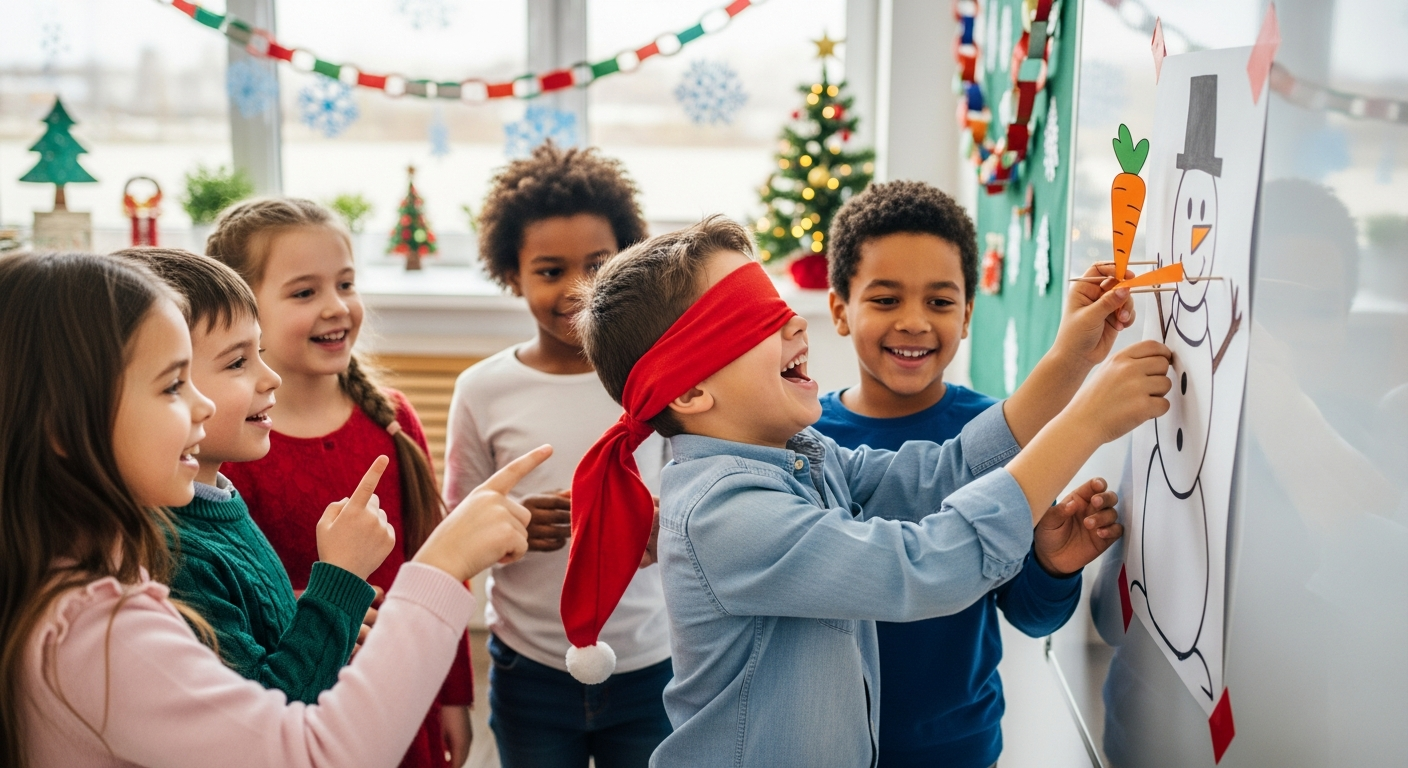
Table of Contents
- Why Classroom Christmas Games Matter: More Than Just Fun
- Planning Your Festive Fun: Key Considerations
- Engaging Games for Preschool & Early Elementary
- Exciting Challenges for Upper Elementary & Middle School
- Integrating Language & Communication Skills Naturally
- Making Games Inclusive for All Learners
- Beyond the Classroom: Extending the Fun Home
- Speech Blubs: Your Partner in Communication Development
- Ready to Empower Your Child's Voice? Discover Speech Blubs Today!
- Conclusion
- FAQ
As the scent of pine fills the air and festive lights begin to twinkle, a unique energy often bubbles up in classrooms. Children are buzzing with excitement, and while the holidays bring joy, they can also bring a whirlwind of restless anticipation. So, how can we channel this vibrant energy into meaningful, engaging experiences that are both fun and enriching? The answer lies in the magic of Christmas-themed games! Beyond just filling time, classroom Christmas games offer a wonderful opportunity to reinforce learning, build community, and enhance crucial developmental skills, especially in communication and social interaction.
In this comprehensive guide, we'll dive into a treasure trove of festive activities, carefully curated to suit various age groups and classroom settings. We’ll explore how these games not only spread holiday cheer but also foster essential skills like listening, turn-taking, problem-solving, and creative expression. We’ll also discuss how to adapt these games for inclusivity and connect their benefits to a child’s broader communication journey, highlighting how tools like Speech Blubs can further empower children to articulate their thoughts and feelings. By the end, you'll be equipped with practical, joyful ways to celebrate the season while nurturing your students' growth.

Why Classroom Christmas Games Matter: More Than Just Fun
Some might view classroom games as mere diversions, but modern educational philosophy, often called the "pedagogy of play," recognizes their profound impact on learning and development. The holidays provide a perfect context to integrate this approach. When children engage in well-designed Christmas games, they're not just having fun; they're actively developing a wide range of skills.
These games serve as powerful vehicles for:
- Social-Emotional Growth: Learning to cooperate, share, take turns, resolve conflicts, and manage excitement or disappointment.
- Cognitive Development: Practicing problem-solving, critical thinking, memory retention, and following multi-step instructions.
- Physical Development: Enhancing fine motor skills (e.g., decorating cookies, building with small items) and gross motor skills (e.g., freeze dance, obstacle courses).
- Language and Communication Skills: Expanding vocabulary, improving listening comprehension, practicing articulation, engaging in descriptive language, and expressing ideas and needs. This last point is particularly close to our hearts at Speech Blubs, where our mission is to empower children to speak their minds and hearts, using engaging activities that build foundational communication skills.
By intentionally incorporating festive games, educators and parents can create a joyful, low-pressure environment where learning happens organically, setting the stage for confident communicators.
Planning Your Festive Fun: Key Considerations
Before you dive into the game list, a little planning goes a long way to ensure your Christmas celebration is a resounding success and inclusive for all children.
Age-Appropriate Activities
Consider the developmental stage of your students. What excites a preschooler might bore a middle schooler, and vice-versa. We’ve categorized games to help you find the perfect fit.
Space and Materials
Assess your classroom or home environment. Do you have enough open space for active games? What materials are readily available, or what can be easily gathered or created with minimal effort? Many of our suggestions require very few special supplies.

Inclusivity and Adaptability
Every child is unique. Think about how games can be adapted for children with different learning styles, physical abilities, or communication needs. Simple modifications can ensure everyone feels included and can participate joyfully. For instance, in games requiring verbal responses, offer visual cues or allow pointing. Remember, the goal is participation and fun, not perfection.
Managing Expectations and Behavior
The excitement of the holidays can sometimes lead to heightened energy. Establish clear rules before playing, emphasize good sportsmanship, and focus on the joy of participation rather than just winning. Having a variety of games can help manage energy levels, alternating between active and calmer activities.
Engaging Games for Preschool & Early Elementary
For our youngest learners, simplicity, clear instructions, and plenty of opportunities for movement and sensory engagement are key. These games are designed to capture their imagination and foster early learning.
Santa Says
A festive twist on a classic, "Santa Says" is perfect for developing listening skills and following directions. The leader (teacher or a designated student) gives commands, but children only follow if the phrase begins with "Santa Says."
- Skill Focus: Auditory processing, impulse control, gross motor skills.
- Festive Commands: "Santa says touch your red nose," "Santa says march like a toy soldier," "Santa says wrap a present," or "Santa says decorate the tree."
- Language Boost: Encourage children to echo the commands, practice holiday vocabulary, and describe their actions.
Holiday Freeze Dance / Musical Chairs
Turn up the holiday tunes and let the wiggles out! In Freeze Dance, children dance freely until the music stops, at which point they must freeze like snowmen. Musical Chairs, with a Christmas playlist, encourages movement and quick thinking.
- Skill Focus: Gross motor coordination, listening, quick reactions, social interaction.
- Enhancement: Encourage them to freeze in specific holiday poses (e.g., "freeze like an elf making toys," "freeze like a reindeer flying").
- For Communication: This is a fantastic opportunity for children to imitate actions, which is a core part of how we teach communication at Speech Blubs. Our unique "video modeling" methodology, where children learn by watching and imitating their peers, is based on this natural human tendency to learn through observation and imitation.
Christmas Bingo
Create custom bingo cards with festive images (candy canes, Santa, reindeer, presents) or simple holiday words. Use small candies or festive erasers as markers.
- Skill Focus: Visual recognition, vocabulary, matching, focus.
- Adaptation: For younger children, use only pictures. For those developing literacy, incorporate words.
- Language Boost: As you call out items, encourage children to repeat the words, describe the pictures, or even make the sound associated with the image (e.g., "Ho ho ho!" for Santa). For children who are developing their speech, practicing these sounds and words in a fun, non-pressured environment can be incredibly beneficial.
Pin the Nose on Rudolph/Snowman
A classic party game with a holiday makeover! Print a large picture of Rudolph or a snowman. Blindfold players, spin them gently, and have them try to place a red pom-pom (Rudolph's nose) or a carrot shape (snowman's nose) in the right spot.
- Skill Focus: Spatial awareness, fine motor control, memory, humor.
- Teamwork Option: Have teammates verbally guide the blindfolded player using directional words ("left, right, up, down"). This enhances descriptive language and listening skills.
Sorting Christmas Ornaments
Provide a variety of plastic ornaments (safe for little hands) and encourage children to sort them by color, size, or shape. This can lead to decorating a small classroom tree together.
- Skill Focus: Color recognition, counting, shape identification, classification, fine motor skills.
- Language Opportunity: Ask open-ended questions: "What color is this ornament?" "Can you find a big, round ornament?" "How many blue ornaments do we have?"
Heads Down, Antlers Up
A quiet game perfect for calming excited children while engaging their memory and observation skills. Students put their heads down with one thumb (or "antler") up. A few chosen "pickers" silently tap one student's antler down. Those tapped then guess who chose them.
- Skill Focus: Memory, observation, quiet focus, social deduction.
- Adaptation: For very young children, simply having them raise and lower their "antlers" on cue can be fun.
Christmas Charades
Write down simple holiday words or phrases (e.g., "Santa Claus," "elf," "decorate a tree," "singing carols," "open a present") on slips of paper. Children act them out without speaking, while others guess.
- Skill Focus: Non-verbal communication, expressive movement, vocabulary, deductive reasoning.
- Communication Benefits: Charades encourages children to think about how to convey meaning without words, which strengthens their understanding of concepts and fosters imaginative play. For children working on articulation, this game can relieve pressure to speak perfectly while still engaging with language concepts.
Exciting Challenges for Upper Elementary & Middle School
Older children often enjoy games that incorporate strategy, teamwork, and a bit of friendly competition. These activities are designed to be more complex and engaging for this age group.
Christmas Tree Building Challenges
Divide students into teams and provide materials like gumdrops and toothpicks, or green plastic cups, rubber bands, and string.
- Gumdrop Challenge: Teams build the tallest freestanding Christmas tree using gumdrops and toothpicks within a time limit.
- No Hands Stacking Cups: Teams use a rubber band with strings attached (each team member holds a string) to stack green cups into a pyramid "Christmas tree" without using their hands.
- Skill Focus: Engineering, problem-solving, fine motor control, collaboration, communication.
- Relatable Scenario: For a parent whose child loves to tinker and build, these challenges translate well to home. They provide an excellent way for children to practice explaining their ideas and listening to others, crucial elements in fostering confident communication.
Snow Shoveling Race
Teams race to transfer cotton balls ("snowballs") from one container to another using only a plastic spoon. Set a marked distance for added challenge.
- Skill Focus: Hand-eye coordination, fine motor skills, teamwork, speed.
- Adaptation: For a less competitive version, focus on collaboration to see how quickly the whole class can move all the "snow."
Trim the Tree with Garland
This hilarious relay race involves teams wrapping one of their members with a streamer (acting as garland) in the fastest time.
- Skill Focus: Teamwork, speed, fine motor control, gross motor skills.
- Communication Twist: Encourage the "tree" to give verbal feedback to their "decorators" – "a little higher on my arm!" or "more around my waist!"
Build a Candy Cane
Provide pipe cleaners and red and white beads. Teams or individuals race to thread the most beads, alternating colors, onto their pipe cleaner within a minute.
- Skill Focus: Fine motor dexterity, patterning, focus, speed.
- Math Connection: Discuss patterns and counting the beads.
Holiday Movie Trivia / Mad Libs
- Christmas Movie Trivia: Create questions about popular holiday films, from classics to contemporary favorites. Can be played individually or in teams.
- Holiday Mad Libs: Use printable holiday-themed Mad Libs to create funny stories. This is fantastic for reviewing parts of speech in a hilarious context.
- Skill Focus: Memory, critical thinking, language arts (grammar, vocabulary), reading comprehension, creativity.
- Language Enhancement: Both games are excellent for expanding vocabulary and understanding narrative structure. For families who love stories, these activities make language learning incredibly fun. Our app, Speech Blubs, also features engaging story-based activities to encourage narrative development and vocabulary acquisition, making it a great complement to these games.
Christmas Scavenger Hunt
Hide candy canes or small festive items around the classroom or school and give clues for students to find them. Clues can range from simple pictures for younger kids to riddles for older ones.
- Skill Focus: Observation, problem-solving, reading comprehension, teamwork.
- Communication Focus: If clues involve riddles, children practice inferential thinking and can verbally collaborate to solve them.
White Elephant Gift Exchange
Set a low price limit (e.g., homemade items or funny trinkets) and have students bring wrapped gifts. Participants take turns opening new gifts or "stealing" already opened ones.
- Skill Focus: Social interaction, negotiation, decision-making, good humor, managing disappointment.
- Value: Teaches valuable lessons about giving, receiving, and polite social interaction in a lighthearted way.
Shake the Snowballs Out
Players tie a tissue box (decorated as a present or a snowman) filled with ping pong balls around their waist. The goal is to shake all the "snowballs" out without using hands.
- Skill Focus: Gross motor coordination, balance, humor, perseverance.
- Energy Release: A fantastic game for burning off some holiday energy!
Integrating Language & Communication Skills Naturally
Every game listed above, when approached thoughtfully, becomes a rich environment for language and communication development. At Speech Blubs, we understand that true communication goes beyond just forming words; it involves understanding, expressing, and connecting.
How These Games Foster Communication
- Turn-Taking: Almost every game requires children to wait their turn, listen to instructions, and respond appropriately. This is a foundational social and conversational skill.
- Descriptive Language: Whether it's describing the object they "spy," the charade they're acting out, or the strategy for building a gingerbread house, children are encouraged to use specific vocabulary and descriptive adjectives.
- Listening Comprehension: Following game rules, understanding clues, or listening to teammates' suggestions are all exercises in active listening.
- Expressing Needs and Ideas: Children learn to articulate their thoughts, ask for help, or explain their strategies to their peers.
- Non-Verbal Cues: Games like charades highlight the importance of body language, facial expressions, and gestures in conveying meaning.
The Role of Adult Interaction
As educators and caregivers, your involvement is paramount. Co-playing with children, modeling clear language, and providing scaffolding can significantly enhance the communicative benefits of these games.
- Model Language: Use rich vocabulary, varied sentence structures, and clear articulation.
- Ask Open-Ended Questions: Instead of "Is it red?", try "What color do you see?" or "Tell me about your strategy."
- Provide Positive Reinforcement: Praise effort and participation, not just winning. "I love how you explained that!" or "You did a great job listening to your friend."
- Connect to Real-World Scenarios: "That was great teamwork, just like when we work together to clean up!"
For parents whose children may need extra support in communication, these games offer a fun, low-pressure way to practice. Sometimes, the frustration children feel when they struggle to communicate can make them withdraw. Engaging, joyful activities can help reduce this frustration and build confidence.
Connecting to Speech Blubs
Our mission at Speech Blubs is rooted in the belief that every child deserves to "speak their minds and hearts." We know that a significant number of children, around 1 in 4, need some form of speech support. Our founders experienced speech challenges themselves, and they embarked on a mission to create the very tool they wished they had: an immediate, effective, and joyful solution that blends scientific principles with play.
Just as these classroom games create engaging learning moments, Speech Blubs provides a "smart screen time" experience. We offer a screen-free alternative to passive viewing like cartoons, by actively engaging children through our unique "video modeling" methodology. Children learn complex communication skills by watching and imitating real peers, stimulating mirror neurons and making learning highly effective and fun. It's a powerful tool for family connection, turning screen time into an interactive, developmental activity that can beautifully supplement the communication practice fostered by classroom games.
Want to learn more about the science behind our methods and how we are rated highly for effectiveness? Check out our research page to see why Speech Blubs is a top-tier app for speech development.
Making Games Inclusive for All Learners
Ensuring every child can participate and thrive in classroom Christmas games is crucial for fostering a supportive and joyful environment. Here are ways to make your holiday games inclusive:
Visual Aids and Clear Instructions
- Use pictures, symbols, or written instructions alongside verbal explanations.
- Demonstrate the game clearly before starting.
- Break down multi-step instructions into smaller, manageable parts.
Simplified Rules and Modifications
- Allow children to choose roles or adapt tasks to their comfort level.
- For active games, offer seated alternatives or allow children to participate as "cheerleaders" or scorekeepers.
- Focus on participation rather than strict adherence to rules, especially for children who might find complex rules challenging.
Sensory Considerations
- Be mindful of noise levels; provide quiet spaces for children who might get overstimulated.
- Offer various textures or materials if sensory play is involved.
- Some children might prefer observing before joining in; respect their pace.
Celebrating Effort and Progress
- Shift the focus from "winning" to "trying their best" and "working together."
- Acknowledge individual contributions and improvements. "I noticed how clearly you spoke when it was your turn!"
- Create categories for recognition that go beyond just first place, like "Most Creative," "Best Team Player," or "Most Enthusiastic."
An inclusive approach ensures that every child feels valued, capable, and excited to participate, further building their confidence and willingness to communicate.
Beyond the Classroom: Extending the Fun Home
The learning and joy from classroom Christmas games don't have to stop when the bell rings. Parents and caregivers play a vital role in continuing this communication-rich play at home. Encourage families to try some of these games or adapt them for their unique home environment.
Continuing these activities at home reinforces the skills learned in school and creates precious family bonding moments. It’s also an ideal opportunity to introduce tools that support speech and language development in a fun and effective way.
This is where Speech Blubs shines. We provide a unique "smart screen time" alternative that encourages interaction, imitation, and active learning, rather than passive viewing. Our app is designed to be a powerful tool for families, offering hundreds of engaging activities that support speech and language development.
Imagine your child practicing new words with the "Animal Kingdom" section, describing characters with the "Guess What?" game, or mimicking sounds in our "Speech Sounds" activities – all through the fun of watching and imitating their peers. This active engagement creates those meaningful family learning moments we champion.
Ready to explore how Speech Blubs can transform screen time into smart time and empower your child's communication journey? Download Speech Blubs on the App Store or Google Play to begin your adventure today!
Speech Blubs: Your Partner in Communication Development
At Speech Blubs, we are deeply committed to empowering children to "speak their minds and hearts." Our company was born from a very personal place: our founders all grew up with speech problems, and they embarked on a mission to create the exact tool they wished they had during their own developmental years. We understand firsthand the challenges and frustrations that can come with speech difficulties, and that empathy drives everything we do.
Our commitment is to provide an immediate, effective, and joyful solution for the 1 in 4 children who need speech support. We achieve this by blending scientific principles with engaging play, creating one-of-a-kind "smart screen time" experiences. Unlike passive screen activities like cartoons, Speech Blubs offers an active, interactive, and highly beneficial form of engagement. It’s a powerful tool for fostering family connection, as parents and children can explore and learn together.
Our unique approach centers around a "video modeling" methodology. This means children learn complex communication skills by watching and imitating their peers, rather than animated characters. This peer-to-peer interaction stimulates mirror neurons in the brain, making the learning process highly intuitive, natural, and incredibly effective. It’s a testament to our belief that children learn best when they are engaged, entertained, and feel a sense of connection.
While we are confident in the profound benefits of our app, we always set realistic expectations. Our goal is not to suggest guaranteed outcomes like "your child will be giving public speeches in a month." Instead, we focus on the invaluable benefits of the process: fostering a lifelong love for communication, building immense confidence, significantly reducing communication frustration, developing key foundational speech and language skills, and creating countless joyful family learning moments. We view Speech Blubs as a powerful supplement to a child's overall development plan and, when applicable, an excellent enhancement to professional speech therapy.
Our dedication to efficacy is also why we developed a quick 3-minute preliminary screener. If you're unsure whether your child could benefit from a structured approach to speech development, this screener involves just 9 simple questions and provides you with an instant assessment and a personalized next-steps plan, along with access to a free 7-day trial.
Ready to Empower Your Child's Voice? Discover Speech Blubs Today!
The holiday season is a perfect time to embrace new ways of learning and connecting. At Speech Blubs, we offer flexible plans designed to fit your family's needs, always providing exceptional value and powerful tools for speech and language development.
We believe in transparency, and we want you to make the best choice for your child. Our current plans are:
- Monthly Plan: Priced at $14.99 per month. This plan offers access to our core Speech Blubs app.
- Yearly Plan: Our absolute best value, priced at just $59.99 per year. This breaks down to an incredible $4.99 per month, allowing you to save 66% compared to the monthly plan!
The Yearly Plan is not just cheaper; it's packed with exclusive, high-value features designed to give your child the most comprehensive support:
- A 7-Day Free Trial: Try everything Speech Blubs has to offer before committing. This trial is only available with the Yearly plan.
- The Extra Reading Blubs App: Get complimentary access to our Reading Blubs app, designed to further enhance literacy skills.
- Early Access to New Updates: Be the first to experience our latest features and improvements.
- 24-Hour Support Response Time: Receive priority support whenever you need assistance.
The Monthly plan, while offering flexibility, does not include these fantastic benefits, including the free trial or the Reading Blubs app.
Our Recommendation: We strongly encourage you to choose the Yearly plan. It’s the smart choice for long-term development and the only way to unlock the full suite of features and benefits, starting with your 7-day free trial. Countless parents have seen remarkable progress in their children's communication journey with Speech Blubs, and we invite you to read their inspiring testimonials to see for yourself.
Take the first step towards a more confident, articulate child. Create your account and begin your 7-day free trial today by selecting the Yearly plan. You can also download Speech Blubs directly from the App Store or Google Play Store to explore our world of joyful learning.
Conclusion
The holiday season in the classroom is a golden opportunity to create joyful memories while fostering invaluable skills. From engaging "Santa Says" to collaborative Christmas tree building challenges, these games offer much more than just entertainment. They are powerful tools for enhancing social-emotional development, cognitive abilities, and, most importantly, critical language and communication skills. By thoughtfully integrating festive activities, we provide children with a fun, low-pressure environment to practice listening, expressing, cooperating, and connecting.
Remember that every interaction, every game, and every shared laugh contributes to a child's growing confidence and ability to communicate. And for those moments when you want to extend this supportive learning into a "smart screen time" experience at home, Speech Blubs is here to empower your child's voice through scientifically backed, peer-modeled play.
Don't let this festive season pass without discovering the potential within your child. Make communication a cornerstone of your holiday celebration. Download Speech Blubs today and unlock a world of expressive possibilities. We highly recommend choosing the Yearly plan to gain access to a 7-day free trial, the bonus Reading Blubs app, and exclusive features that will set your child on the path to speaking their minds and hearts with confidence. Start your journey with Speech Blubs and witness the magic of empowered communication unfold!
FAQ
Q1: How can I make these classroom Christmas games inclusive for all students?
A1: To ensure inclusivity, simplify rules, use visual aids alongside verbal instructions, offer modifications for different physical abilities or learning styles, and be mindful of sensory sensitivities. Focus on participation and effort, not just winning, and celebrate individual contributions to foster a supportive environment for every child.
Q2: What are the key benefits of incorporating communication-focused games into holiday classroom activities?
A2: Communication-focused games naturally encourage turn-taking, active listening, descriptive language, and expressing ideas or needs. They reduce pressure compared to formal lessons, build confidence, expand vocabulary, and strengthen both verbal and non-verbal communication skills, all while fostering social interaction and a love for language.
Q3: How can Speech Blubs complement these classroom games to support my child's speech development?
A3: Speech Blubs extends the benefits of interactive play into "smart screen time" by offering hundreds of engaging activities based on video modeling, where children learn by imitating peers. It helps reinforce skills like articulation, vocabulary, and sentence formation in a joyful, interactive home environment, making it a powerful supplement to both classroom activities and professional therapy. You can learn more about our app and mission on our homepage.
Q4: Which Speech Blubs plan offers the best value and features for families?
A4: The Yearly plan for Speech Blubs offers the best value, at $59.99 per year (saving 66% compared to the monthly plan). It includes a 7-day free trial, the bonus Reading Blubs app, early access to new updates, and 24-hour support response time. The Monthly plan ($14.99/month) does not include these exclusive benefits, making the Yearly plan the recommended choice for comprehensive support.
About the author