
Festive Fun: Kid-Friendly Christmas Activities for All Ages
 By Speech Blubs Team•Dec 19, 2025•19 min.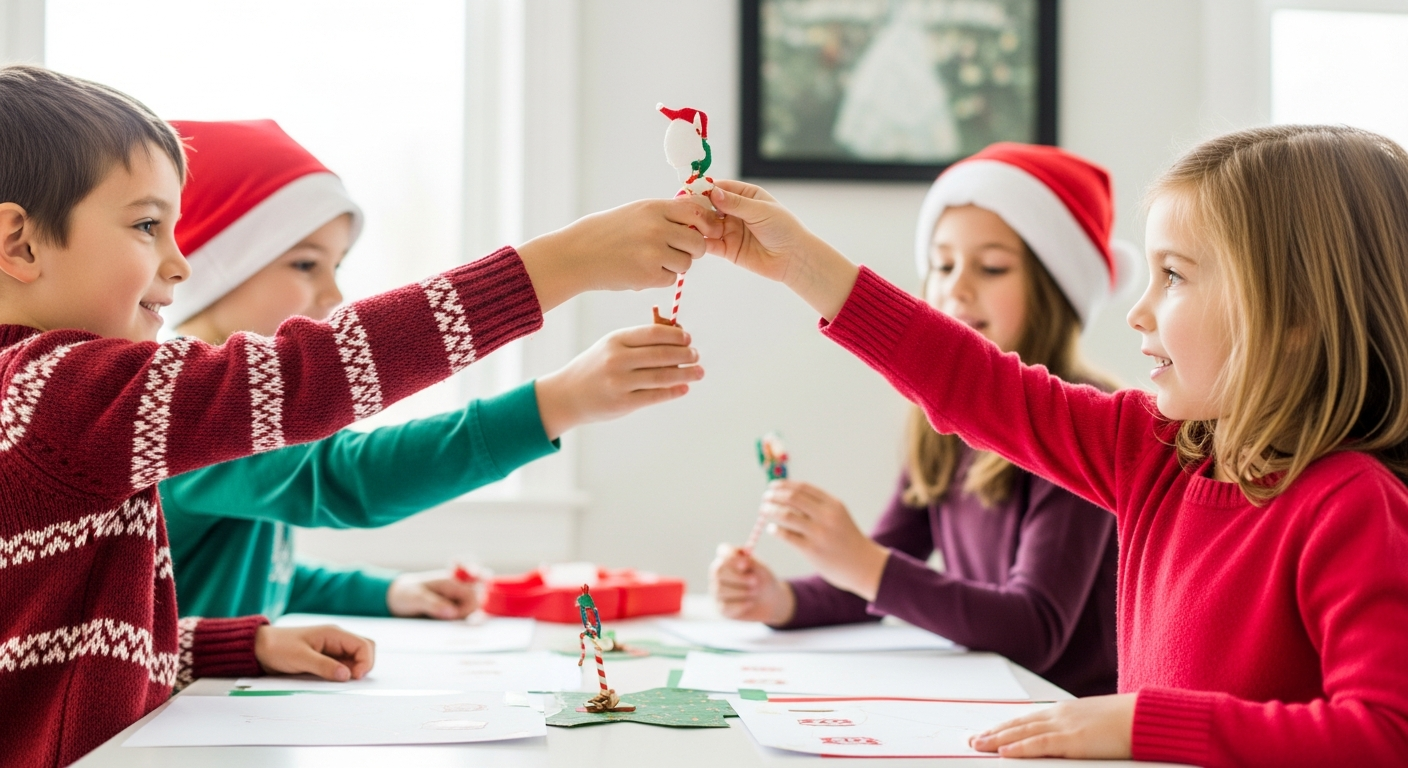
Table of Contents
- Introduction
- The Magic of Christmas Through a Child's Eyes
- Why Kid-Friendly Christmas Activities Matter for Development
- Category 1: Creative Crafts & Decorating
- Category 2: Sensory & Imaginative Play
- Category 3: Culinary Adventures & Festive Treats
- Category 4: Reading, Storytelling & Performance
- Category 5: Acts of Kindness & Community Spirit
- How Speech Blubs Enhances Your Festive Fun
- Making the Most of Your Speech Blubs Experience: Understanding Value and Pricing
- Conclusion
- FAQ
Introduction
The twinkling lights, the scent of pine, the joyous carols – Christmas holds a special kind of magic, especially for children. It’s a season brimming with wonder, anticipation, and countless opportunities for memory-making. But beyond the sheer delight, this festive period offers a unique landscape for nurturing a child's growth and development, particularly their communication skills. Imagine a time when every shared laugh over a lopsided gingerbread man or every whispered wish to Santa becomes a stepping stone in their linguistic journey.
This blog post will guide you through a sleigh-full of engaging, kid-friendly Christmas activities designed to spark joy, creativity, and connection. From hands-on crafts and delectable baking adventures to heartwarming acts of kindness and imaginative play, we’ll explore how these festive moments naturally foster crucial developmental milestones. You'll discover how simple holiday traditions can become powerful tools for expanding vocabulary, practicing descriptive language, building confidence, and strengthening family bonds. Our mission at Speech Blubs, born from the personal experiences of our founders, is to empower children to "speak their minds and hearts," and we believe that the magic of Christmas provides the perfect backdrop for this journey. Prepare to transform your holiday season into a vibrant tapestry of learning and love, creating cherished memories that resonate long after the last ornament is packed away.

The Magic of Christmas Through a Child's Eyes
For a child, Christmas isn't just a day; it's an entire season pulsating with sensory experiences and emotional depth. Think about the vibrant reds and greens, the sparkling glitter, the soft textures of new blankets, and the prickly feel of a pine tree. Hear the jingle of bells, the crackle of a warm fire, and the cheerful melodies of carols. Smell the sweet spices of gingerbread, the earthy scent of evergreen, and the comforting aroma of hot chocolate. These aren't just details; they are rich stimuli that ignite curiosity and invite interaction, forming the bedrock of early learning and communication.
This sensory richness provides an unparalleled opportunity for language development. Every new sight, sound, and smell offers a chance to introduce new vocabulary and descriptive words. "Look at the shiny ornament!" "Do you hear the bells jingle?" "The gingerbread smells so spicy!" These simple observations, shared between parent and child, build neural connections and expand a child's understanding of the world around them. For a child who might be a "late talker" or struggling with speech, these immersive experiences can be incredibly motivating, providing concrete contexts for abstract words and concepts. The excitement of the season naturally lowers inhibitions, making children more receptive to engaging in conversation and expressive play.
Why Kid-Friendly Christmas Activities Matter for Development
The holidays are often synonymous with gift-giving and feasting, but the true treasures of the season lie in the shared experiences. Engaging in kid-friendly Christmas activities does more than just fill time; it provides a holistic developmental boost across multiple domains:
- Social and Emotional Growth: Participating in activities as a family teaches children about cooperation, sharing, and patience. They learn to express their feelings, manage expectations, and experience the joy of giving. These interactions are crucial for developing empathy and social skills, which are fundamental to effective communication.
- Cognitive Development: Following instructions, problem-solving during craft projects, understanding sequences in recipes, and engaging in imaginative play all contribute to cognitive flexibility and critical thinking. The planning and execution of holiday activities, even simple ones, stimulate brain development.
- Fine Motor Skills: Decorating cookies, cutting shapes for crafts, wrapping gifts, or stringing popcorn for garlands are excellent exercises for developing fine motor coordination and dexterity, which are prerequisites for writing and many daily tasks.
- Speech and Language Development: This is where the magic truly unfolds. Every activity becomes a stage for linguistic exploration:
- Vocabulary Expansion: Introducing new words related to Christmas – wreath, sleigh, mistletoe, reindeer, carols, jolly, twinkling.
- Descriptive Language: Encouraging children to describe what they see, feel, smell, and taste – "The cookie is crunchy and sweet," "The light is sparkling," "This fabric feels soft."
- Following Instructions: Simple multi-step directions during baking or crafting – "First, roll the dough, then cut it with the star cutter."
- Turn-Taking and Conversation Skills: Engaging in dialogue while playing, asking and answering questions, sharing ideas.
- Narrative Skills: Telling stories about Santa, elves, or personal Christmas experiences, which helps build a child's ability to construct coherent narratives.
- Emotional Expression: Talking about the excitement, gratitude, or even occasional frustration associated with holiday activities provides a safe space for children to articulate their feelings.
At Speech Blubs, we understand that finding an immediate, effective, and joyful solution for the 1 in 4 children who need speech support is paramount. Our tool was created by founders who themselves grew up with speech problems, born from the desire to create the resource they wished they had. We are committed to blending scientific principles with play into one-of-a-kind "smart screen time" experiences that are screen-free alternatives to passive viewing like cartoons. We prioritize family connection, recognizing that true development flourishes in an engaging, interactive environment. Our unique approach of teaching complex communication skills through "video modeling," where children learn by watching and imitating their peers, aligns perfectly with the interactive nature of festive activities. For a parent whose child struggles with speech, engaging them in these activities while also using tools like Speech Blubs can significantly boost their confidence and desire to communicate. If you're wondering where to start, you can always take our quick 3-minute preliminary screener to get a simple assessment and a free 7-day trial.

Category 1: Creative Crafts & Decorating
Christmas crafts are more than just pretty decorations; they are tactile lessons in creativity, problem-solving, and fine motor development. They also provide abundant opportunities for language practice.
DIY Ornament Making
- Salt Dough Ornaments: Mix flour, salt, and water, then let your child roll, cut shapes, and decorate. Once baked, they can be painted.
- Speech & Language Benefits: During the process, describe actions ("roll," "cut," "mix," "paint"), shapes ("star," "circle"), colors ("red," "green"), and textures ("soft dough," "smooth paint"). Encourage your child to request materials ("More flour, please!") or describe their creation ("My snowman has a sparkly hat!").
- Nature-Inspired Ornaments: Collect pinecones, twigs, and leaves. Paint them, add glitter, or attach ribbons.
- Speech & Language Benefits: Use descriptive words like "prickly," "smooth," "brown," "green," "sparkly." Discuss where the items came from ("pine tree," "forest").
- Paper Chains & Snowflakes: Simple cutting and pasting activities.
- Speech & Language Benefits: Practice prepositions ("over," "under," "through"), sequential instructions ("first cut, then glue"), and describing patterns.
Personalized Gift Wrapping
Let children help wrap gifts! They can decorate plain paper with stamps, drawings, or even handprint designs.
- Speech & Language Benefits: Practice spatial concepts ("top," "bottom," "side"), actions ("fold," "tape," "draw"), and discussing who the gift is for. This activity also naturally encourages a sense of giving and thoughtfulness.
Christmas Cards for Loved Ones
Creating handmade cards is a wonderful way to express love and practice early writing or drawing skills.
- Speech & Language Benefits: Discuss who the card is for, what message to include, and describe the drawings. This fosters narrative skills and emotional vocabulary.
For a parent whose 3-year-old 'late talker' loves animals, making reindeer ornaments could be a fantastic entry point. You could make the antlers by tracing their hands, practicing words like "hand," "antler," "brown," "paint." Then, while decorating the reindeer, you could ask, "What sound does a reindeer make?" or "Where does Rudolf's nose go?" These kinds of activities create natural dialogue opportunities.
Category 2: Sensory & Imaginative Play
Sensory play engages multiple senses, making learning multi-dimensional and highly effective for young children. Christmas offers a treasure trove of sensory experiences.
Christmas-Themed Sensory Bins
Fill a bin with items like bells, pinecones, cinnamon sticks, cranberries, dry pasta, rice (dyed green or red), small ornaments, and cookie cutters.
- Speech & Language Benefits: Encourage exploration and description using words like "jingle," "prickly," "smooth," "cold," "soft," "crunchy," "sweet smell." Ask open-ended questions like, "What do you feel?" or "What can you find?" This is excellent for building descriptive vocabulary and practicing articulation in a relaxed setting.
- Scenario: Your child is scooping red rice with a spoon, you can ask, "Is that rice soft or hard? What color is it? Can you find the jingle bell?"
Pretend Play with Christmas Characters
Gather dress-up clothes, props, and simple backdrops to encourage imaginative play as elves, Santa, reindeer, or even characters from favorite Christmas stories.
- Speech & Language Benefits: Develops narrative skills, character voices, emotional expression, and problem-solving through imaginative scenarios. "What will Santa say when he sees your cookies?" "Oh no, the elf needs help wrapping a gift!"
- Scenario: A child pretending to be an elf, saying, "I'm a busy elf! I need to make toys for all the good children!" This allows them to experiment with different voices and expand their imaginative storytelling.
Gingerbread House Building
Whether from a kit or homemade, building a gingerbread house is a feast for the senses and a fantastic collaborative activity.
- Speech & Language Benefits: Excellent for following multi-step instructions, spatial reasoning ("put the roof on top"), naming ingredients ("gumdrops," "icing," "peppermint"), and describing the process or the finished product. This also encourages negotiation and teamwork if done with siblings or friends.
Category 3: Culinary Adventures & Festive Treats
The kitchen becomes a magical workshop during Christmas, offering delicious opportunities for language development and practical life skills.
Baking Christmas Cookies
From mixing dough to decorating, baking is a multi-sensory and highly motivating activity.
- Speech & Language Benefits: Practice sequencing ("First, we mix; then, we bake"), naming ingredients ("flour," "sugar," "eggs"), counting ("How many cookies do we have?"), describing actions ("stir," "roll," "cut," "decorate"), and discussing tastes and smells ("sweet," "spicy," "warm").
- Scenario: While decorating gingerbread men, you can ask, "Where should the buttons go? What color sprinkles do you want? Does your gingerbread man have happy eyes?" This encourages specific vocabulary and descriptive language.
Creating a Hot Cocoa Bar
Set up a station with different toppings like marshmallows, whipped cream, sprinkles, and candy canes.
- Speech & Language Benefits: Requesting items ("Can I have more marshmallows?"), describing preferences ("I like extra whipped cream!"), and using descriptive words for tastes and textures ("sweet," "creamy," "minty," "crunchy").
Edible Ornaments & Snacks
String popcorn and cranberries for garlands, or make pretzel rods dipped in chocolate and sprinkles.
- Speech & Language Benefits: Focus on fine motor skills, counting, sequencing, and describing ingredients and the process.
Category 4: Reading, Storytelling & Performance
Stories and songs are the heart of the holiday season, offering rich avenues for language and emotional development.
Reading Christmas Books
Snuggle up with classic tales like "The Night Before Christmas" or explore new, diverse holiday stories.
- Speech & Language Benefits: Exposure to rich vocabulary, narrative structure, character development, and emotional understanding. Ask open-ended questions: "What do you think will happen next?" "How does the character feel?" This encourages inferencing and prediction skills.
- Scenario: Reading a story about a lost reindeer, you can ask, "How do you think the reindeer feels? What could we do to help?" promoting empathy and problem-solving through discussion.
Family Christmas Play or Puppet Show
Create a simple script or improvise a story with puppets or family members as characters.
- Speech & Language Benefits: Develops narrative skills, voice modulation, memory, sequencing events, and public speaking confidence (even if it's just for family). It's a fantastic way to encourage expressive language in a fun, low-pressure environment.
Singing Carols
Singing traditional Christmas songs together is a joyful way to practice rhythm, rhyme, and memory.
- Speech & Language Benefits: Enhances phonological awareness, auditory memory, and encourages vocalization and expression. It's a simple, universally enjoyable activity that naturally fosters communication.
Category 5: Acts of Kindness & Community Spirit
Christmas is also a time for generosity and focusing on others. Involving children in acts of kindness teaches valuable life lessons and provides rich conversational topics.
Volunteering Together
Visit a local food bank, help at a toy drive, or collect clothes for those in need.
- Speech & Language Benefits: Discuss the concept of giving, empathy, and helping others. Talk about the "who," "what," and "why" of these acts, fostering abstract thinking and social-emotional vocabulary.
- Scenario: While sorting toys for a donation drive, you can ask, "Why do we help people who don't have toys? How do you think they'll feel when they get these?"
Making Cards for Seniors or Local Heroes
Create handmade cards to deliver to nursing homes, hospitals, or local first responders.
- Speech & Language Benefits: Practice expressing gratitude and kind wishes, discussing who the cards are for, and what messages they want to convey. This builds a sense of community and the joy of making someone else happy.
Caroling for Neighbors
Gather your family and spread cheer by singing carols to neighbors (with their permission, of course!).
- Speech & Language Benefits: A fun way to practice memory, rhythm, and projecting one's voice. It also offers opportunities for social greetings and interactions.
How Speech Blubs Enhances Your Festive Fun
While these activities are wonderful on their own, for families navigating speech and language development, they become even more powerful when complemented by targeted support. At Speech Blubs, our mission is deeply rooted in empowering children to "speak their minds and hearts," and we believe in integrating learning seamlessly into a child's world.
Our app provides a "smart screen time" experience, offering a meaningful alternative to passive viewing. Instead of just watching cartoons, children actively engage with content designed to stimulate speech and language. Our cornerstone is the "video modeling" methodology, where children learn by watching and imitating their peers. This natural, peer-to-peer interaction activates mirror neurons, making learning intuitive and highly effective. This approach, backed by extensive research, has positioned us in the top tier of speech apps worldwide.
Imagine a child who is excited by the idea of Christmas but struggles to articulate their desires or observations. With Speech Blubs, they can practice foundational sounds, words, and even social routines in a playful, motivating environment. For example, after an afternoon of making "reindeer" crafts, a child could engage with the "Animal Kingdom" section in Speech Blubs, practicing the "r" sound or the word "reindeer" by imitating the peer models. This reinforces the learning from the real-world activity, solidifying new vocabulary and improving articulation.
Speech Blubs is a powerful tool for family connection, too. Parents are encouraged to co-play with their children, turning app time into interactive learning sessions. This mirrors the collaborative spirit of Christmas activities, creating a consistent environment for growth. We don't promise miraculous overnight transformations, but we do commit to fostering a love for communication, building confidence, reducing frustration, and developing key foundational skills through joyful learning moments. Our approach is a powerful supplement to a child's overall development plan and, when applicable, professional therapy, providing consistent, accessible practice right at your fingertips. Take the first step today and download Speech Blubs on the App Store or get it on Google Play.
Making the Most of Your Speech Blubs Experience: Understanding Value and Pricing
We believe in transparency and providing exceptional value to every family. As you consider integrating Speech Blubs into your child's developmental journey and festive activities, it's helpful to understand our subscription options.
We offer two main plans:
- Monthly Plan: For just $14.99 per month, you get access to our core features.
- Yearly Plan: This is our most popular and value-packed option at $59.99 per year.
Let's break down why the Yearly plan is the clear best choice:
- Significant Savings: The Yearly plan breaks down to just $4.99 per month, which means you save a remarkable 66% compared to the monthly subscription. That’s a substantial saving for a full year of support!
- Exclusive Features with the Yearly Plan: Beyond the cost savings, the Yearly plan unlocks a suite of high-value benefits not available with the Monthly plan:
- 7-Day Free Trial: Only with the Yearly plan can you enjoy a full week to explore all that Speech Blubs has to offer, completely risk-free. It's the perfect way to see the impact of our "smart screen time" for yourself.
- Reading Blubs App Included: Get complimentary access to our sister app, Reading Blubs, designed to support early literacy skills. This adds even more value to your subscription, fostering comprehensive language development.
- Early Access to New Updates: Be among the first to experience new activities, features, and content as we continuously evolve and improve the app.
- 24-Hour Support Response Time: Enjoy prioritized customer service with a guaranteed response within 24 hours, ensuring you always have the help you need, when you need it.
The Monthly plan does not include the 7-day free trial, the Reading Blubs app, early access, or priority support. When you opt for the Yearly plan, you're not just choosing a more affordable option; you're investing in a more comprehensive, supported, and feature-rich experience for your child's communication journey. We've heard countless success stories from parents who've chosen this path, and you can read parent testimonials here.
Ready to give your child the gift of confident communication this Christmas and beyond? We encourage you to choose the Yearly plan to get your 7-day free trial and unlock the full suite of features that will empower your child to speak their minds and hearts.
Conclusion
The Christmas season is a precious time, filled with warmth, wonder, and the opportunity to create lasting memories. By thoughtfully selecting and engaging in kid-friendly Christmas activities, you're not just celebrating a holiday; you're nurturing your child's growth in profound ways. These shared experiences naturally weave in opportunities for social-emotional development, cognitive growth, fine motor skill refinement, and, most importantly, robust speech and language development. Every decorated cookie, every sung carol, and every act of kindness becomes a chance to expand vocabulary, practice articulation, build narrative skills, and foster a lifelong love for communication.
At Speech Blubs, we are committed to being a partner in this beautiful journey. Our "smart screen time" app, built on scientific principles and the powerful "video modeling" method, complements these real-world activities by providing an engaging, effective, and joyful way for children to strengthen their communication skills. We are here to empower your child to "speak their minds and hearts," turning every day into an opportunity for growth and connection.
Don't let this Christmas pass without embracing the full potential of its magic. Start creating unforgettable memories and building essential communication skills today. Download Speech Blubs on the App Store or get it on Google Play to begin your journey. Remember to create your account and start your 7-day free trial by choosing the Yearly plan to unlock the best value and exclusive features, including the Reading Blubs app and priority support. Make this Christmas a season of joyful sounds, meaningful words, and confident communication for your child.
FAQ
Q1: How can I make Christmas activities truly beneficial for my child's speech, even if they're not overtly vocal?
A: Focus on creating a rich language environment. Describe everything you see, hear, feel, and do during the activity. Use simple, direct language and pause to give your child time to respond, even with gestures or sounds. Ask open-ended questions like, "What do you think?" or "What should we do next?" rather than just yes/no questions. Remember that communication isn't just speaking; it's also listening, understanding, and expressing. Even if your child isn't talking much, they are absorbing all the language around them. Integrating Speech Blubs during these times can offer a parallel, low-pressure way for them to practice sounds and words related to what they're doing in real life.
Q2: What if my child is shy or reluctant to participate in some Christmas activities?
A: Respect your child's pace and preferences. Don't force participation, as this can create negative associations. Instead, offer choices ("Do you want to decorate cookies or make an ornament first?") and model enthusiasm yourself. Sometimes, children prefer to observe before joining in. You can describe what you're doing, inviting them to watch, and offer gentle invitations without pressure. For a child who might struggle with social interactions, activities that can be done one-on-one, or in parallel, like some of the Speech Blubs activities with you, might be a good start. Over time, as their confidence grows through smaller successes, they might become more willing to engage in group activities.
Q3: How does Speech Blubs fit into our family's Christmas traditions without adding more screen time?
A: Speech Blubs is designed as "smart screen time," meaning it’s interactive and purpose-driven, unlike passive viewing. Think of it as a tool for targeted practice that complements your traditions. For instance, if you're reading a Christmas book, you could then use Speech Blubs to practice new vocabulary or character sounds. If you're baking, you could use a Speech Blubs activity that focuses on sequencing or requesting items. It’s about quality, not just quantity, of screen time. We encourage co-play, turning the app into a shared learning experience that enhances, rather than detracts from, family connection during the holidays. Our goal is to provide a powerful tool for family connection, not a replacement for it.
Q4: Is Speech Blubs suitable for children with different speech needs?
A: Yes, Speech Blubs is designed to support a wide range of speech and language development needs. Our app utilizes video modeling and engaging activities to help children with various challenges, including articulation delays, apraxia, Down syndrome, and autism spectrum disorder. The app's flexibility allows children to progress at their own pace, focusing on areas where they need the most support. While it's a powerful tool, it's also a supplemental resource, and we always recommend consulting with a speech-language pathologist for personalized guidance and diagnosis. We're here to provide an accessible and joyful resource for many families seeking to empower their children's communication skills.
About the author