
Festive Fun: Kid Friendly Christmas Crafts for Communication
 By Speech Blubs Team•Dec 23, 2025•26 min.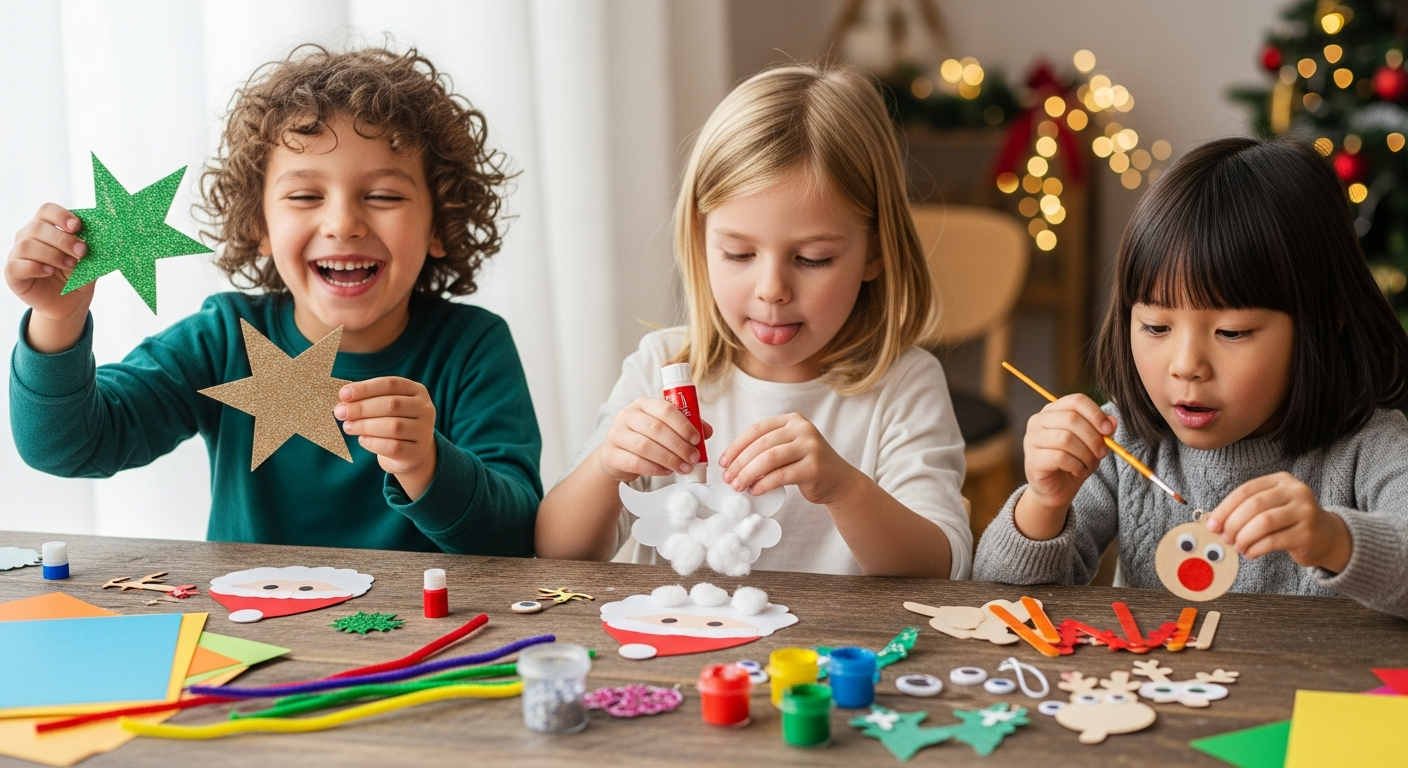
Table of Contents
- Why Christmas Crafts Are More Than Just Fun: The Developmental Benefits
- Getting Started: Crafting a Stress-Free Christmas Craft Experience
- Top Kid-Friendly Christmas Craft Ideas (with Speech & Language Tips for each)
- Elevating Communication Through Christmas Crafts: A Speech Blubs Approach
- Our Mission: Empowering Children to Speak Their Minds and Hearts
- Making the Most of Your Speech Blubs Journey: Plans and Features
- Beyond Crafts: Holistic Development with Speech Blubs
- Conclusion
- FAQ
Remember the sheer delight of creating something magical with your own hands during the holidays? The scent of pine, the glitter on your fingers, and the proud smile on your child’s face holding up their latest masterpiece – these are the moments that truly make the season bright. But what if these joyful craft sessions could also be powerful opportunities for your child’s speech and language development?
Many parents wonder how to turn everyday activities into enriching learning experiences, especially when it comes to communication skills. That's precisely what we aim to explore in this comprehensive guide. We believe that holiday crafting offers a treasure trove of benefits, far beyond just creating pretty decorations. From building vocabulary and practicing descriptive language to strengthening fine motor skills essential for pre-writing, Christmas crafts provide a multisensory, engaging platform for growth.

At Speech Blubs, our mission is to empower children to speak their minds and hearts. We understand the unique challenges and triumphs of childhood development because our company was born from the personal experiences of our founders, who all grew up with speech problems and created the tool they wished they had. We are committed to providing an immediate, effective, and joyful solution for the 1 in 4 children who need speech support, blending scientific principles with play into one-of-a-kind "smart screen time" experiences. We provide a screen-free alternative to passive viewing (like cartoons) and a powerful tool for family connection. This holiday season, we'll show you how to combine the magic of crafting with intentional communication strategies, creating lasting memories and significant developmental strides.
Join us as we dive into a sleigh-load of kid friendly Christmas crafts, offering practical tips and showing you how to infuse each activity with rich language-learning opportunities, often seamlessly connected to the types of engaging exercises you'll find in the Speech Blubs app. By the end, you'll be armed with creative ideas and confidence to transform your holiday crafting into a powerful tool for communication, connection, and joy.
Why Christmas Crafts Are More Than Just Fun: The Developmental Benefits
Beyond the glitter and glue, engaging in Christmas crafts with your child offers a wealth of developmental benefits that lay crucial groundwork for speech and language proficiency. It’s an immersive, hands-on learning experience that naturally fosters a love for communication and builds foundational skills.
Fine Motor Skills & Pre-Writing Readiness
Crafting inherently involves a lot of small, precise hand movements. Cutting with scissors, gluing small pieces, drawing lines, grasping paintbrushes, or even kneading salt dough all help strengthen the muscles in your child's hands and fingers. These fine motor skills are not just for crafting; they are essential for developing the dexterity needed for writing, self-feeding, and other daily tasks. The better developed these muscles are, the easier it will be for your child to hold a pencil, form letters, and ultimately express themselves through written communication. When your child carefully places sequins on a reindeer, they are practicing the same control they'll need for future writing.

Following Instructions & Sequencing
Every craft project, no matter how simple, involves a sequence of steps. "First, we get the paper. Then, we cut the shape. Next, we glue it here." This process helps children learn to follow multi-step directions, understand sequential order, and anticipate what comes next. This ability to comprehend and execute instructions is a fundamental component of receptive language (understanding what is said) and is vital for classroom learning and daily interactions. Discussing the steps as you go ("What do we do first? What comes after that?") can significantly boost this skill.
Vocabulary Expansion & Descriptive Language
Christmas crafts are a fantastic way to introduce and reinforce a vast array of vocabulary words. Think about all the things you can talk about:
- Colors: "Let's use the red paint for Santa's hat!"
- Shapes: "This ornament is a circle, just like a ball."
- Textures: "Feel how fuzzy this cotton ball is!" "This glitter is so sparkly."
- Actions/Verbs: "We are cutting, gluing, painting, folding, ripping, stirring."
- Sizes: "Let's make a big snowman and a small snowman."
- Prepositions: "Put the star on top of the tree," "The snow goes under the reindeer."
- Christmas-themed words: Santa, reindeer, elf, sleigh, ornament, wreath, snowflake, chimney, carol, gingerbread.
Encourage your child to describe what they are doing, what they see, and how things feel. For instance, when making a pinecone ornament, ask, "What does the pinecone feel like? Is it bumpy? Sticky? What color are we painting it?" This helps them move beyond single words to expressive language, forming sentences and sharing their thoughts. Speech Blubs, with its rich library of categories like "Colors and Shapes" or "Animal Kingdom," offers similar opportunities for children to learn and imitate new vocabulary, making craft time a perfect bridge to apply these words in a tangible context.
Expressive Language & Storytelling
Crafting provides natural prompts for conversation. Children can talk about their ideas, explain their choices, or even tell a story about their creation. "My snowman is going to sing Christmas songs!" or "This reindeer is flying to the North Pole to help Santa." This fosters imaginative play and narrative skills, which are crucial for developing coherent communication. Encourage "wh-" questions: "What are you making?" "Who is that for?" "Why did you choose that color?"
Social-Emotional Learning
Working on a craft project together teaches patience, sharing materials, and problem-solving. It builds self-esteem as children see their ideas come to life and feel a sense of accomplishment. These social-emotional skills are deeply intertwined with effective communication. A confident child is more likely to express themselves freely. Sharing a glue stick or waiting for paint to dry reinforces important social dynamics.
Sensory Exploration
Many crafts engage multiple senses. The feel of playdough, the smell of cinnamon from salt dough, the visual appeal of bright colors, the sounds of cutting paper – all these sensory inputs stimulate different parts of the brain and enhance learning. This multi-sensory engagement makes the learning experience more memorable and enjoyable, supporting better recall of new vocabulary and concepts.
Family Connection: Our Shared Value
Perhaps one of the most heartwarming benefits is the opportunity for meaningful family connection. Crafting together is a shared experience that creates lasting memories and strengthens bonds. It’s a chance to unplug, connect, and enjoy each other’s company. This is a core value at Speech Blubs; we believe in fostering strong family connections through engaging activities, transforming screen time into a powerful tool for interactive learning and bonding, rather than passive viewing. These shared moments, whether around a craft table or using our app, are invaluable for a child’s overall development and well-being.
Getting Started: Crafting a Stress-Free Christmas Craft Experience
To truly maximize the developmental benefits of Christmas crafts, it’s important to set the stage for success. A little preparation can go a long way in ensuring a fun, engaging, and stress-free experience for both you and your child.
Preparation is Key
Before you even think about glitter, take a moment to gather your materials. Having everything you need within reach will prevent interruptions and frustrations. Lay down old newspapers, a tablecloth, or a plastic mat to protect your surfaces. Have wet cloths or paper towels ready for quick clean-ups. Involving your child in the preparation, like helping you lay out the newspaper, can also be a valuable opportunity for following instructions and building anticipation.
Age-Appropriate Choices
Matching the craft to your child's developmental stage is crucial for engagement and avoiding frustration.
- Toddlers (1-3 years): Focus on sensory experiences and simple actions. Think large, easy-to-grip items, tearing paper, smearing glue sticks, cotton balls, chunky paintbrushes, and safe, non-toxic materials. The goal here is exploration and exposure to new textures and actions. Language focus: single words, action verbs, descriptive words (e.g., "sticky," "soft").
- Preschoolers (3-5 years): They can handle a bit more complexity. Introduce safety scissors, stickers, stamping, and more structured gluing. They're developing better fine motor control and can follow two or three-step instructions. Language focus: short sentences, "wh-" questions, sequencing ("first, then, next"), storytelling.
- School-Aged Children (5+ years): These children are often ready for more intricate designs, more precise cutting, and even independent work with some guidance. They can follow multi-step written or verbal instructions and enjoy expressing their creativity more elaborately. Language focus: complex sentences, explaining processes, problem-solving discussions, planning.
Safety First
Always supervise young children, especially when using scissors or small parts that could be choking hazards. Ensure all materials are non-toxic, particularly paints, glues, and playdough, as little hands often find their way to mouths. Opt for blunt-tipped safety scissors for younger children. Prioritizing safety allows everyone to relax and enjoy the creative process.
Embrace the Mess (and the Learning!)
Let’s be honest: crafts can get messy. But this mess is often where the best learning happens! Sticky fingers, spilled glitter, and paint splotches are signs of active engagement and exploration. Prepare for it, embrace it, and focus on the joy of creation rather than the pristine outcome. Discussing the mess can even be a language opportunity ("Oh no, the paint dripped! Let's wipe it up.")
Focus on the Process, Not Perfection
The goal of kid friendly Christmas crafts isn't to create gallery-worthy art. It's about the experience: the sensory exploration, the problem-solving, the fine motor practice, and most importantly, the communication and connection you share. Celebrate your child's efforts and creativity, no matter how abstract the final product might be. Ask them to tell you about their artwork – "Tell me about your reindeer! What's it doing?" This shifts the focus from a perfect outcome to the valuable process and the story behind it.
Top Kid-Friendly Christmas Craft Ideas (with Speech & Language Tips for each)
Now for the fun part! Here are some fantastic kid friendly Christmas crafts, each paired with specific tips to boost your child's speech and language development.
Ornament Crafts
Ornaments are wonderful because they're small, manageable projects that yield a tangible result perfect for decorating the tree or gifting.
Salt Dough Ornaments
Materials: Flour, salt, water, cookie cutters, paint, glitter, string/ribbon. Instructions: Mix flour and salt, gradually add water to form a dough. Knead, roll flat, cut shapes with cookie cutters. Bake at a low temperature until hard, then let cool. Paint and decorate! Speech & Language Tips:
- Action Verbs: "We are mixing, kneading, rolling, cutting, baking, painting, decorating."
- Sensory Words: "The dough feels soft, smooth, sticky." "Is it warm after baking?"
- Shapes: Practice naming the cookie cutter shapes ("This is a star! This is a tree!").
- Sequencing: "First, we mix. Then, we roll. Next, we cut."
- Prepositions: "Put the star on top of the tree ornament."
- Scenario: For a child working on action verbs, shaping and decorating salt dough offers numerous opportunities. "Let's roll the dough!" "Now, cut the star." "Time to paint it red!" Our Speech Blubs app has a fantastic "Action Verbs" section where children can watch peers demonstrate actions, which can then be reinforced during this hands-on activity.
Pinecone Ornaments
Materials: Pinecones, paint, glitter, small pom-poms, pipe cleaners, glue, string. Instructions: Go on a nature walk to collect pinecones! Paint them, glue on pom-poms (like ornaments), curl pipe cleaners for hooks, and attach string for hanging. Speech & Language Tips:
- Outdoor Exploration: Talk about where you found the pinecones. "Look at the big pinecone! Here's a small one."
- Descriptive Words: "The pinecone is bumpy, brown, rough." "The pom-poms are soft, colorful."
- Counting: Count how many pom-poms you glue on each pinecone.
- Colors: Name the colors of paint and pom-poms.
- Verbs: "Collect pinecones, paint them, glue the pom-poms, hang them up."
Popsicle Stick Ornaments
Materials: Popsicle sticks, glue, paint, glitter, buttons, small craft items, string. Instructions: Glue popsicle sticks together to form shapes (stars, triangles for trees, squares for houses). Paint them, then decorate with glitter, buttons, or other embellishments. Speech & Language Tips:
- Shapes & Counting: "We need four sticks to make a square." "How many sticks for this star?"
- Spatial Concepts: "Glue the button in the middle." "Put the glitter all over."
- Problem-Solving: "How can we make these sticks stick together?"
- Expressive Language: "What will your ornament be?" "My star is flying through the sky!"
Handprint/Footprint Ornaments
Materials: Salt dough or air-dry clay, paint, glitter, string. Instructions: Press your child's hand or foot into soft dough or clay. Cut around the impression, make a hole for string. Bake or air dry, then paint and decorate. Speech & Language Tips:
- Body Parts: Name "hand," "fingers," "foot," "toes."
- Action Verbs: "Press your hand down! Lift it up! Now paint your fingers."
- Sensory Words: "The clay feels cold and squishy."
- Possession: "This is your handprint!" "This is my handprint!"
Decoration Crafts
These crafts are perfect for adorning your home, bringing festive cheer, and providing ample opportunities for interactive communication.
Paper Plate Wreaths
Materials: Paper plates (center cut out), green construction paper, red craft items (berries, bows), glue. Instructions: Cut the center out of a paper plate. Tear or cut green construction paper into strips or leaf shapes and glue them around the plate ring. Add red "berries" (pom-poms, balled-up paper) and a bow. Speech & Language Tips:
- Verbs: "Tear the paper, cut the strips, glue them on, decorate."
- Shapes: "The plate is a circle." "The wreath is round."
- Colors: "We need green paper for the leaves and red for the berries."
- Directional Words: "Glue the leaves all around the circle."
- Scenario: For a child practicing fine motor skills and spatial awareness, tearing and gluing paper offers excellent practice. Talk about "putting the green paper around the circle" and "adding the red berries on top." This mirrors the focus on prepositions and multi-word phrases found in our app.
Cotton Ball Snowmen
Materials: Construction paper (blue or black), cotton balls, glue, small orange paper triangle (carrot nose), googly eyes, markers. Instructions: Draw a snowman outline on paper. Have your child glue cotton balls onto the outline to make the snowman's body. Add googly eyes, a carrot nose, and draw on a mouth and buttons. Speech & Language Tips:
- Descriptive Words: "The cotton balls are so fluffy, soft, white." "The paper feels smooth."
- Body Parts: "This is the snowman's head, body, nose, eyes, mouth."
- Counting: "How many cotton balls did you use for the head?" "How many buttons?"
- Verbs: "Glue the cotton balls, draw the smile."
- Comparatives: "This is the big circle, and this is the small circle."
Paper Chain Garlands
Materials: Strips of colorful construction paper, glue or stapler. Instructions: Make a loop with a paper strip and secure it. Thread another strip through the first loop, then secure it to make a second loop, and continue to form a chain. Speech & Language Tips:
- Colors & Patterns: "Let's make a red, green, red, green pattern!"
- Counting: Count how many links are in the chain as it grows.
- Sequencing: "First, make a loop. Then, link the next one."
- Verbs: "Cut the paper, loop it, glue it, link them together."
- Length: "Our chain is getting so long!"
DIY Christmas Cards
Materials: Construction paper, markers, crayons, glitter, stickers, craft stamps. Instructions: Fold paper for cards. Let your child draw, color, stamp, and decorate their own unique Christmas cards for family and friends. Help them write their name. Speech & Language Tips:
- Recipients: Talk about who each card is for. "This card is for Grandma! What do you want to tell her?"
- Describing Pictures: Encourage your child to describe what they've drawn on the card. "I drew a snowman and a reindeer jumping!"
- Letter Recognition/Pre-Writing: Practice writing their name or simple words like "Joy" or "Love."
- Social Language: Discuss the purpose of a card – "We give cards to show we care."
- Verbs: "Fold the paper, draw a picture, write your name."
Gift Crafts
These crafts become meaningful gifts, teaching generosity and the joy of giving.
Reindeer Food
Materials: Oats, birdseed, glitter (edible, or use sparingly if for outdoors), small Ziploc bags, printable labels. Instructions: Mix oats, birdseed, and a sprinkle of glitter in a bowl. Scoop into small bags and attach a label that says, "Magic Reindeer Food." Tell your child to sprinkle it on the lawn on Christmas Eve to guide Santa's reindeer. Speech & Language Tips:
- Action Verbs: "Mix the oats, scoop it in, shake the glitter."
- Quantifiers: "A little glitter, lots of oats."
- Imagination: "What will the reindeer do when they eat it?" "Will they fly faster?"
- Sensory Words: "The oats are crunchy." "The glitter is sparkly."
Jar Gifts (Layered Hot Cocoa Mix)
Materials: Mason jars, layers of hot cocoa mix ingredients (cocoa powder, sugar, chocolate chips, mini marshmallows), ribbon, gift tag. Instructions: Layer the ingredients neatly in the jar. Tie with a ribbon and attach a handmade gift tag. Speech & Language Tips:
- Sequencing: "First, we add cocoa. Then, sugar. Next, chocolate chips!"
- Measurements: "Let's add one cup of sugar."
- Descriptive Words: "The marshmallows are soft and white." "The chocolate chips are dark."
- Anticipation: "Who will get this yummy treat?" "They will stir it in hot milk!"
Play-Based Crafts
Some crafts are less about the final product and more about the immediate, interactive play.
DIY Christmas Playdough
Materials: Flour, salt, cream of tartar, oil, water, food coloring (red/green), cinnamon or peppermint extract (optional), glitter (optional). Instructions: Combine dry ingredients, then add wet ingredients. Cook over low heat, stirring until a dough forms. Knead until smooth. Divide and color with food coloring. Speech & Language Tips:
- Sensory Words: "The playdough is soft, squishy, warm." "Does it smell like cinnamon?"
- Action Verbs: "Mix, stir, knead, roll, squish, pat."
- Tools: "Let's use the rolling pin! Get the cookie cutters!"
- Shapes & Sizes: Form different Christmas shapes (tree, star, snowman) and discuss their sizes.
- Emotional Expression: "It's so fun to squish!" "I'm making a happy snowman."
Christmas Sensory Bins
Materials: Large bin, dried beans/rice (colored green/red), small Christmas ornaments, bells, mini cookie cutters, scoops, small toys (e.g., reindeer figurines). Instructions: Fill a bin with colored rice or beans. Add small Christmas-themed items. Let your child explore, scoop, pour, and play. Speech & Language Tips:
- Sound Words: "The bells jingle!" "The rice makes a shaking sound."
- Verbs: "Scoop, pour, hide, find, shake, sort."
- Counting & Colors: Count the ornaments, sort by color.
- Prepositions: "The reindeer is under the rice." "Put the bell in the scoop."
- Free Play Narration: Narrate your child's play and encourage them to tell you what they are doing.
Elevating Communication Through Christmas Crafts: A Speech Blubs Approach
While these crafts are fantastic on their own, we know that many parents are actively seeking ways to support their child's communication development more intentionally. This is where Speech Blubs comes in as a powerful partner, making "smart screen time" work for your family.
Imagine a child who is a "late talker" and especially loves animals. Crafting a simple reindeer mask might involve talking about its "antlers," "nose," and "hooves." Speech Blubs offers an "Animal Kingdom" section where children can watch real kids make animal sounds and movements, reinforcing the vocabulary in a dynamic and engaging way. When they return to their craft, they can confidently say "moo" for a cow or "baa" for a sheep they might also craft, making the learning concrete and applicable. This unique approach, called video modeling, is central to our scientific methodology. Children learn by watching and imitating their peers, which research shows is incredibly effective for developing complex communication skills.
For another child working on action verbs, crafting a snowman might involve discussing "rolling" the snow, "sticking" the eyes, and "buttoning" the coat. Speech Blubs’s "Action Verbs" section reinforces these concepts, showing other children "rolling" or "sticking," making the craft activity even more meaningful for practice. We transform screen time into an active, engaging learning experience, a powerful alternative to passive viewing like cartoons. This synergy between hands-on activities and interactive app-based learning creates a comprehensive and joyful path to communication success.
We encourage you to use the descriptive words and action verbs discussed during crafting time as a natural bridge to activities within Speech Blubs. If you’re making a red ornament, then exploring the "Colors and Shapes" section of the app can solidify the concept of "red" through peer imitation. This consistent exposure in varied contexts helps embed new vocabulary and speech patterns more deeply. Our app is designed to complement and enhance these real-world learning moments, making every interaction count.
If you're wondering whether your child could benefit from targeted speech support, we've developed a simple, helpful tool. You can take our quick 3-minute preliminary screener to get an assessment and a next-steps plan. It’s a great starting point for parents seeking clarity and guidance.
Our Mission: Empowering Children to Speak Their Minds and Hearts
At Speech Blubs, we are more than just an app; we are a community driven by a profound mission: to empower children to speak their minds and hearts. Our journey began with a very personal understanding of the challenges many families face. Our founders all grew up with speech problems, experiencing firsthand the frustration and isolation that can come with communication difficulties. It was this personal journey that inspired them to create the very tool they wished they had when they were children.
We understand that every child's path to communication is unique, and we are committed to providing an immediate, effective, and joyful solution for the 1 in 4 children who need speech support. Our approach is rooted in solid scientific principles, blending proven methods with the magic of play. This results in one-of-a-kind "smart screen time" experiences that are genuinely engaging and educational. We are proud of our high MARS scale rating, which reflects our commitment to research-backed efficacy. You can explore the research behind our methodology to understand more about how video modeling and other principles drive our success.
We consciously created Speech Blubs to be a screen-free alternative to passive viewing, such as cartoons. Instead of children passively absorbing content, our app actively encourages them to participate, imitate, and interact. It’s a powerful tool for family connection, too, providing parents with guided activities and prompts to engage with their child, turning screen time into quality bonding time. This commitment to active learning and family engagement ensures that Speech Blubs isn't just about overcoming speech challenges; it's about fostering confidence, reducing frustration, and creating joyful learning moments that lay the foundation for a lifetime of effective communication.
The success stories from parents using our app are truly heartwarming. Many have shared how Speech Blubs has made a tangible difference in their child's communication journey, often surprising them with new words or improved clarity. You can read some inspiring testimonials from other parents who have witnessed their children blossom with Speech Blubs.
Making the Most of Your Speech Blubs Journey: Plans and Features
We believe that exceptional speech support should be accessible and transparent. That's why we offer clear pricing and value, ensuring you can choose the plan that best fits your family's needs.
Let's be open about our commitment to making speech support accessible and effective. We offer two main plans for Speech Blubs, designed to provide flexibility and maximum value:
- Monthly Plan: This plan is available for $14.99 per month. It offers a flexible option for families who prefer a month-to-month commitment.
- Yearly Plan: Our most popular and highly recommended option is the Yearly plan, priced at $59.99 per year. This breaks down to an incredible value of just $4.99 per month, which means you save 66% compared to the monthly subscription!
The Yearly plan is undeniably the superior choice, not just for the significant cost savings, but also because it unlocks a suite of exclusive, high-value features designed to supercharge your child's communication journey:
- 7-Day Free Trial: Only with the Yearly plan do you get to experience the full benefits of Speech Blubs completely free for seven days. This allows your child to explore our engaging activities and for you to see the impact firsthand before committing.
- The Extra Reading Blubs App: This fantastic bonus app, included only with the Yearly plan, extends the learning experience to early literacy. Reading Blubs helps children develop phonological awareness, letter recognition, and early reading skills, creating a holistic approach to language development.
- Early Access to New Updates: As a Yearly subscriber, you'll be among the first to access exciting new features, activities, and content updates, ensuring your child's learning journey is always fresh and evolving.
- 24-Hour Support Response Time: We prioritize our Yearly subscribers with expedited customer support, ensuring that any questions or needs you have are addressed quickly and efficiently.
The Monthly plan does not include these exclusive benefits, making the Yearly plan the clear choice for families looking for the best value and the most comprehensive support for their child's speech and language development.
Ready to embark on this enriching journey? We encourage you to choose the Yearly plan to get the free 7-day trial and unlock the full suite of features that will empower your child to speak their mind and heart. You can create your account and begin your 7-day free trial today and explore everything Speech Blubs has to offer.
Beyond Crafts: Holistic Development with Speech Blubs
While Christmas crafts offer incredible opportunities, Speech Blubs provides a consistent, structured, and fun environment for daily speech practice, regardless of the season. Our app features a vast library of categories, from "Early Sounds" and "Pre-Reader" to "Talking with Peers" and "What's in the Box," ensuring there's always something new and engaging for every developmental stage. Each section is designed to build confidence, reduce frustration, and foster a love for communication in your child. Our activities are crafted to be powerful tools for family connection, turning screen time into productive, joyful learning moments.
Conclusion
This holiday season, transform your home into a hub of creativity and communication with kid friendly Christmas crafts. We’ve explored how these festive activities are not just about making beautiful decorations, but about nurturing vital developmental skills, from fine motor coordination and sequencing to vocabulary expansion and expressive language. Each snip, glue, and sparkle offers a unique chance to connect with your child and foster their love for communication.
Remember, the true magic of crafting lies in the shared experience, the process of creation, and the rich conversations that naturally unfold. By pairing these hands-on adventures with the scientifically backed, engaging activities of Speech Blubs, you're providing your child with a holistic, joyful, and effective pathway to speaking their mind and heart. Our commitment is to offer you a tool, born from personal experience and built on sound methodology, that supports your child's journey every step of the way.
Don't let another holiday season pass without leveraging these incredible opportunities for growth and connection. Embrace the glitter, the glue, and the giggles, and watch your child's communication skills blossom.
Ready to get started and unlock your child's full communication potential? Begin your journey today! We encourage you to choose our Yearly plan to get the best value, including a 7-day free trial, the Reading Blubs app, early access to updates, and 24-hour support.
Download Speech Blubs on the App Store or get it on Google Play to begin your free trial and make this Christmas a season of joyful communication!
FAQ
Q1: What age group are these Christmas crafts suitable for? A1: Many of these crafts are adaptable for various age groups! For toddlers (1-3), focus on simple sensory activities like tearing paper or playing with Christmas-themed playdough. Preschoolers (3-5) can enjoy cutting, gluing, and simple assembly. School-aged children (5+) can tackle more intricate designs and independent work. Always adjust materials and supervision according to your child's developmental stage for safety and engagement.
Q2: How can I integrate speech therapy goals into these crafts if my child is already in therapy? A2: Christmas crafts are a fantastic complement to professional therapy! Discuss your child's specific speech and language goals with their therapist. Then, choose crafts that naturally target those areas. For example, if your child is working on articulation of the "s" sound, you can emphasize words like "star," "snowman," "stickers," and "sparkly" during crafting. If they are working on sentence structure, encourage them to describe the steps or their creation using full sentences. Our Speech Blubs app uses a video modeling approach, where children imitate their peers, which is a great way to reinforce sounds, words, and sentences learned in therapy.
Q3: My child gets frustrated easily with crafts. How can I make it a positive experience? A3: The key is to focus on the process, not the perfect outcome. Keep projects simple and age-appropriate to minimize frustration. Offer choices ("Do you want red or green paint?"), give clear, simple instructions, and provide lots of encouragement, praising effort rather than perfection. If they get frustrated, take a break or simplify the task further. Remember, the goal is connection and communication, not a masterpiece. Utilizing Speech Blubs for a short, engaging session before or after crafting can also help build confidence and a positive association with learning.
Q4: How does Speech Blubs specifically help with communication development alongside crafts? A4: Speech Blubs acts as a powerful supplement by reinforcing vocabulary, sounds, and communication skills learned during hands-on activities. For instance, if you're making a red ornament and talking about the color "red," you can then open Speech Blubs to a section like "Colors and Shapes" where your child can watch and imitate peers saying "red." This video modeling approach helps children connect abstract concepts to concrete experiences. The app's interactive nature encourages active participation, reducing passive screen time and turning it into an opportunity for consistent, joyful speech practice that ties directly into the real-world language used during crafting.
About the author