
Festive Fun: Kid-Friendly Christmas Ornaments
 By Speech Blubs Team•Dec 22, 2025•18 min.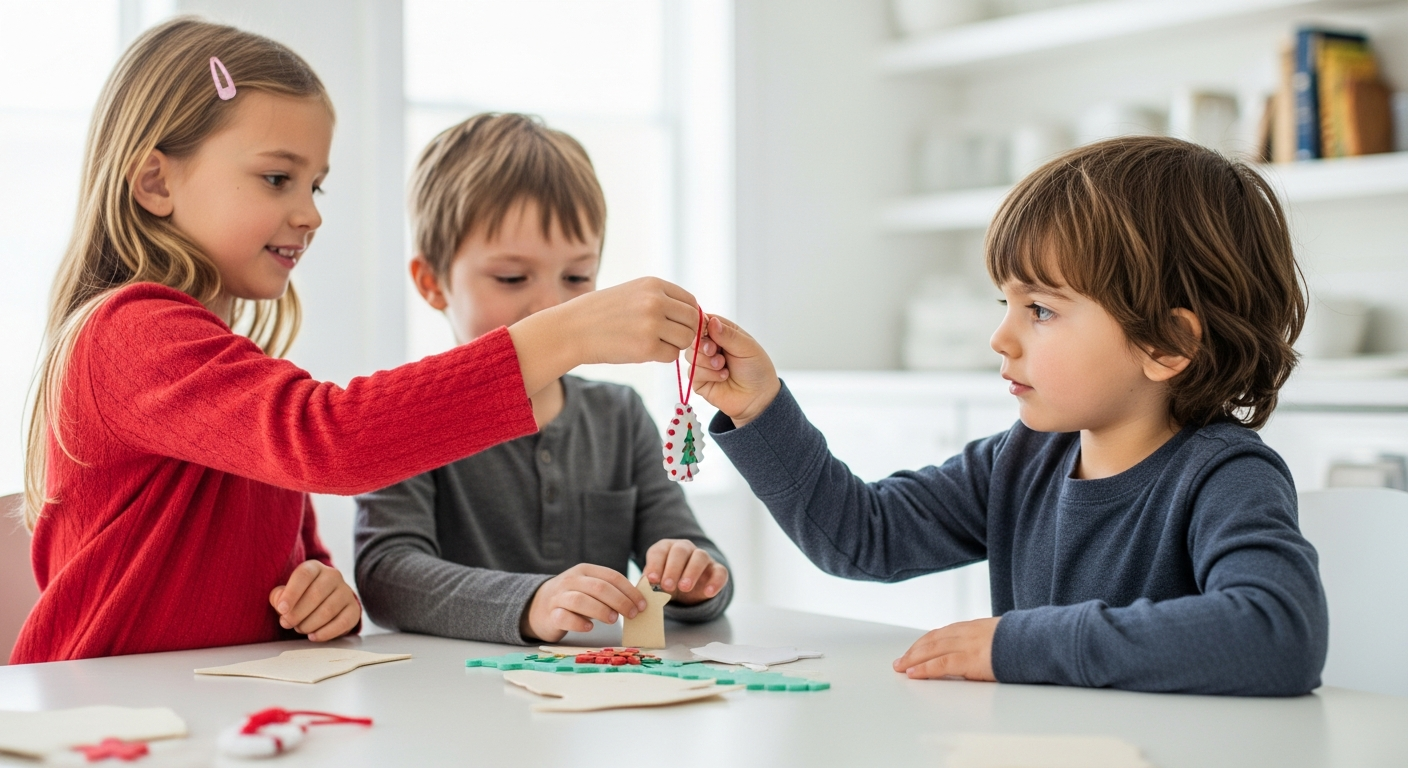
Table of Contents
- Introduction
- The Developmental Magic Behind Christmas Craft Ornaments
- Preparing for a Festive Craft Session
- Our Favorite Christmas Craft Ornaments for Kids (with Language-Boosting Tips!)
- Maximizing Language Opportunities During Craft Time
- The Speech Blubs Difference: Empowering Communication Through Play
- Unlocking Full Potential: Our Value and Pricing
- Conclusion
- Frequently Asked Questions (FAQ)
Introduction
As the festive season twinkles into view, many of us fondly recall childhood memories of decorating the Christmas tree. But beyond the joy of festive lights and glittering baubles, there's a unique magic in the ornaments we create ourselves – especially those made by little hands. These aren't just decorations; they're tangible memories, bursts of creativity, and often, silent testimonials to a child's growing skills. Did you know that engaging in simple Christmas craft ornaments for kids can be a powerhouse for development, fostering everything from fine motor skills to vital communication abilities?
Far from just keeping children busy, crafting during the holidays offers a rich, multi-sensory environment where kids can explore, learn, and express themselves. This post will delve into the wonderful world of DIY Christmas ornaments, offering a treasure trove of easy, engaging ideas suitable for various age groups. We’ll explore how these seemingly simple activities contribute significantly to your child's cognitive, emotional, and, crucially, their language development. We’ll also share how Speech Blubs seamlessly integrates with and amplifies these developmental benefits, turning crafting time into an even richer opportunity for growth and connection. Get ready to transform everyday materials into cherished keepsakes and meaningful learning experiences this holiday season.

The Developmental Magic Behind Christmas Craft Ornaments
The sparkle of glitter and the joy of creation are just the surface when it comes to holiday crafting. Engaging children in making Christmas craft ornaments is a truly holistic activity, touching upon several key areas of development that are crucial for their overall growth and, especially, for their communication skills.
Nurturing Fine Motor Skills and Coordination
From carefully cutting shapes with safety scissors to delicately placing a sequin or painting a design, every crafting step is a workout for little fingers and hands. These activities are instrumental in developing fine motor skills – the coordination of small muscles, usually in conjunction with the eyes.
- Scissor Skills: Learning to hold and manipulate scissors helps build hand strength and bilateral coordination (using both hands together).
- Gluing and Sticking: Precision is key when applying glue or placing small items, refining pincer grasp and hand-eye coordination.
- Painting and Drawing: Holding brushes and crayons strengthens grip and encourages controlled movements, foundational for future writing.
These precise movements are not just about crafting; they lay the groundwork for self-care tasks like buttoning shirts, using utensils, and even the intricate movements required for clear articulation in speech.
Boosting Language and Cognitive Development
Craft time is prime time for communication. It’s a natural setting for children to absorb new vocabulary, practice following instructions, and articulate their thoughts and ideas.
- Vocabulary Expansion: Introducing words like "sparkle," "smooth," "rough," "sticky," "decorate," "glue," "cut," "fold," "hang," and specific color and shape names.
- Following Multi-Step Instructions: Learning to listen and execute tasks in a sequence ("First, we cut the paper; then, we glue it to the ball"). This is a critical skill for both academic readiness and social interactions.
- Descriptive Language: Encouraging children to describe what they are making, the colors they are using, or the textures they feel. "Tell me about your shiny blue star!"
- Problem-Solving and Creativity: What if the glue runs out? How can we attach this tricky piece? Crafting encourages innovative thinking and decision-making.
- Storytelling and Imagination: Crafting can inspire stories. A child might create a "snowflake fairy" or a "reindeer who lost his nose," practicing narrative skills and imaginative play.
For a parent whose child is a "late talker," crafting offers a low-pressure, high-engagement environment to practice these language skills. For instance, if your 3-year-old loves animals, creating a pinecone animal ornament could spark discussions about animal sounds and names. This perfectly mirrors the approach we embrace at Speech Blubs, where we turn everyday interactions and playful activities into opportunities for meaningful communication practice.

Fostering Emotional and Social Growth
Beyond skills, crafting builds character and strengthens bonds.
- Patience and Persistence: Some crafts require time and effort, teaching children the value of seeing a project through.
- Self-Expression and Confidence: Creating something unique gives children a sense of accomplishment and pride, boosting their self-esteem.
- Sharing and Turn-Taking: When crafting with siblings or friends, children learn vital social skills like sharing materials and taking turns.
- Family Connection: Working together on a craft creates cherished memories and strengthens family bonds. These are the moments that truly make the holidays special.
This emphasis on joyful family connection and building confidence through accomplishment resonates deeply with our mission at Speech Blubs. We believe in empowering children to "speak their minds and hearts," reducing frustration, and fostering a love for communication in an immediate, effective, and joyful way.
Preparing for a Festive Craft Session
Setting the stage for success is key to a fun and fruitful crafting experience.
Choosing Age-Appropriate Crafts
Consider your child's age, developmental stage, and interests.
- Toddlers (1-3 years): Focus on sensory experiences, large movements, and simple tasks like tearing paper, sticking pre-cut shapes, or finger painting. Supervised activities with non-toxic materials are crucial.
- Preschoolers (3-5 years): Introduce safety scissors, basic gluing, and more defined shapes. They can follow two-to-three-step instructions.
- School-Aged Children (5+ years): They can handle more complex instructions, intricate cutting, weaving, and personalizing their creations with greater detail.
Gathering Materials and Setting Up a Safe Space
- Safety First: Ensure all materials are non-toxic and age-appropriate. Supervise young children closely, especially with small parts or sharp tools.
- Designated Craft Zone: Lay down newspaper or a washable tablecloth. Have wipes or a damp cloth ready for quick cleanups.
- Organized Supplies: Keep all necessary materials within reach but organized to prevent overwhelming your child. A tray with different compartments works wonderfully.
Managing Expectations and Encouraging Process Over Perfection
Remember, the goal is the experience, not a Pinterest-perfect ornament.
- Embrace Imperfection: A wobbly star or an uneven snowman is a sign of your child’s unique touch. Celebrate their effort!
- Focus on the Journey: Talk about what they are doing, how it feels, and what they think. The process of creation is far more valuable than the end product.
- Offer Support, Not Control: Guide them gently, but let them lead the creative charge. This builds independence and problem-solving skills.
Our Favorite Christmas Craft Ornaments for Kids (with Language-Boosting Tips!)
Here are some fantastic, kid-friendly ornament ideas that are perfect for holiday crafting and packed with opportunities for language development.
1. Classic Salt Dough Ornaments
Salt dough is a timeless classic for a reason – it’s easy to make, safe, and incredibly versatile.
- Materials: 1 cup salt, 2 cups flour, 1 cup warm water, cookie cutters, straw, paints, glitter, ribbon.
- How to Make: Mix salt, flour, and water until a dough forms. Knead on a floured surface. Roll out and use cookie cutters to make festive shapes. Use a straw to poke a hole for hanging. Bake at 250°F (120°C) for 2-3 hours until hard. Let cool, then decorate!
- Language Focus:
- Vocabulary: "Dough," "knead," "roll," "cut," "bake," "soft," "hard," "smooth," "star," "tree," "bell."
- Sequencing: "First, we mix the ingredients. Next, we roll the dough. Then, we cut out shapes."
- Descriptive: "What does the dough feel like?" "Which color paint will you use for your sparkly star?"
- Speech Blubs Connection: While crafting, encourage your child to vocalize the names of the shapes or colors they are using. This hands-on experience of identifying and naming objects, textures, and actions directly reinforces the vocabulary lessons found within Speech Blubs’ interactive games. Imagine making a "star" ornament and then going to Speech Blubs to practice saying "star" with our video modeling peers!
2. Popsicle Stick Ornaments
Simple popsicle sticks transform into charming ornaments with a little imagination.
- Materials: Popsicle sticks, glue, paint or markers, glitter, small embellishments (buttons, beads), ribbon.
- How to Make: Arrange popsicle sticks into shapes like a star, triangle (for a tree), or a snowflake pattern. Glue them together. Once dry, decorate with paint, glitter, or small items. Add a ribbon hanger.
- Language Focus:
- Shapes and Counting: "How many sticks do you need to make a triangle?" "Look, we made a star with five sticks!"
- Spatial Concepts: "Put the stick above this one," "Glue it next to the other."
- Action Words: "Glue," "paint," "stick," "arrange."
- Speech Blubs Connection: This activity is great for practicing prepositions and understanding quantity. For a parent whose child is learning to follow multi-step instructions, using phrases like "put it on top," "put it underneath" during crafting can be reinforced by Speech Blubs' focus on building listening comprehension through engaging activities. Our app can help children develop the foundational language skills they need to understand and use these spatial terms effectively.
3. Handprint/Footprint Ornaments
These personalized keepsakes are cherished for years to come.
- Materials: Air-dry clay or salt dough, non-toxic paint, glitter, ribbon.
- How to Make: Roll out clay or salt dough. Press your child's hand or foot firmly into the material. Cut around the print, smooth edges, and poke a hole. Let air dry or bake (for salt dough). Once dry, paint and decorate.
- Language Focus:
- Body Parts: "Where's your hand?" "Show me your fingers!"
- Emotions: "Are you excited to make your handprint?" "This makes me feel happy!"
- Memory and Time: "This is your hand from this Christmas! Look how much it's grown since last year."
- Speech Blubs Connection: This is a beautiful opportunity for self-expression and discussing body parts. Speech Blubs offers sections that focus on body awareness and naming, which can be a fun follow-up to this craft. It helps children connect words to their physical selves, reinforcing concepts like "hand," "finger," "thumb," and "palm," building confidence to express themselves and speak their minds and hearts.
4. Cinnamon Stick Ornaments
These natural ornaments smell wonderful and offer a great sensory experience.
- Materials: Large cinnamon sticks, hot glue (adult supervision!), festive ribbons, small sprigs of artificial greenery or berries, small wooden beads.
- How to Make: Glue three cinnamon sticks together to form a small triangle (tree shape) or a star shape. Decorate by tying ribbons, gluing on tiny berries or beads, or even adding a small painted wooden star to the top.
- Language Focus:
- Sensory Descriptors: "Smell the spicy cinnamon!" "The ribbon is smooth." "The berries are round and red."
- Comparative Language: "Is this cinnamon stick longer or shorter than that one?"
- Speech Blubs Connection: Sensory language is a fantastic way to expand vocabulary. Children learn best when engaged on multiple levels. Crafting an ornament like this creates a tangible object that ties into new words, which can then be reinforced through Speech Blubs' engaging activities that focus on descriptive language and expanding vocabulary.
5. Pinecone Critters and Ornaments
Nature provides the perfect canvas for imaginative creatures.
- Materials: Pinecones, googly eyes, felt scraps, pom-poms, pipe cleaners, glue, ribbon.
- How to Make: Gather pinecones (bake them briefly at a low temperature to open them and kill any bugs). Transform them into owls, reindeer, or other fantastical creatures using felt, pom-poms, googly eyes, and pipe cleaners. Add a ribbon loop for hanging.
- Language Focus:
- Imagination and Storytelling: "What kind of creature is your pinecone?" "What's his name?" "Where does he live?"
- Animal Sounds and Names: Perfect for practicing "Hoo, hoo!" for an owl or "Moo" for a cow if you make a barn animal.
- Prepositions: "Put the eyes on the pinecone," "The nose goes below the eyes."
- Speech Blubs Connection: This craft is a perfect lead-in to Speech Blubs' "Animal Kingdom" section. For a parent whose 3-year-old "late talker" loves animals, creating a pinecone animal offers a fun, motivating way to then practice animal sounds and names within the app. Our unique "video modeling" methodology, where children learn by watching and imitating their peers, makes learning these sounds engaging and effective. Download Speech Blubs from the App Store or Google Play to explore how we bring these concepts to life.
Maximizing Language Opportunities During Craft Time
Every step of crafting is a chance to communicate. Here's how to make the most of it:
- Narrate Your Actions: "I am cutting the paper. Now I'm gluing it here." This models language for your child.
- Ask Open-Ended Questions: Instead of "Do you like it?", try "What do you like best about your ornament?" or "Tell me about your design."
- Expand on Their Responses: If your child says "Red," you can respond with, "Yes, that's a bright red star! It’s sparkling!"
- Give Choices: "Do you want the blue glitter or the silver glitter?" This encourages them to make a verbal choice.
- Encourage Turn-Taking: "My turn to glue, then your turn to stick." This is crucial for conversational skills.
- Sing Songs: Holiday songs or simple action songs can add a fun, rhythmic element that supports language acquisition.
The Speech Blubs Difference: Empowering Communication Through Play
At Speech Blubs, we deeply understand the journey of child development and the paramount importance of communication. Our mission is clear: to empower children to "speak their minds and hearts." We know firsthand the challenges families face, as our company was born from the personal experiences of our founders, who all grew up with speech problems and created the tool they wished they had. We are committed to providing an immediate, effective, and joyful solution for the 1 in 4 children who need speech support.
We blend scientific principles with play, creating one-of-a-kind "smart screen time" experiences. Unlike passive viewing like cartoons, Speech Blubs provides a screen-free alternative by requiring interaction. It's a powerful tool for family connection, as parents and children engage together in fun activities.
Our unique approach centers on our "video modeling" methodology. Children learn complex communication skills by watching and imitating their peers. This technique leverages the power of mirror neurons in the brain, making learning feel natural and intuitive. For example, if your child is struggling with a particular sound or word, Speech Blubs offers a delightful and targeted way to practice.
How Speech Blubs Supports Your Child's Communication Journey
- Video Modeling & Mirror Neurons: Our scientific methodology, backed by extensive research, uses short video clips of real children modeling sounds, words, and phrases. This activates mirror neurons, making learning feel intuitive and engaging.
- Building Foundational Skills: From expanding vocabulary to improving articulation and developing social reciprocity, Speech Blubs covers a comprehensive range of skills. We help children understand and use language in various contexts, just as they would during a crafting session.
- Confidence Building & Frustration Reduction: For a child who struggles to communicate their needs or ideas, the frustration can be immense. Speech Blubs provides a safe, encouraging environment for practice, helping children build confidence and reduce communication-related anxieties.
- A Powerful Supplement: We believe in a holistic approach. Speech Blubs is a powerful supplement to a child's overall development plan and, when applicable, professional therapy. It extends learning beyond therapy sessions and classroom walls, integrating seamlessly into daily life.
Consider a scenario: a parent notices their child often points rather than naming objects. After a fun crafting session where they tried to name different colors and shapes, the parent can transition to Speech Blubs. The app offers interactive activities focused on object naming and color identification, reinforcing the vocabulary learned during crafting. The child sees other children confidently saying "red" or "star," which encourages them to try too. It’s a complementary experience that enriches learning. You can read inspiring testimonials from other parents who have seen incredible progress with their children using our app.
Unsure if your child could benefit? Take our quick 3-minute preliminary screener to get a simple assessment and a free 7-day trial. It's a great way to understand your child's communication needs and explore how Speech Blubs can support them.
Unlocking Full Potential: Our Value and Pricing
We are dedicated to making effective speech and language support accessible to every family. That’s why we offer transparent and flexible pricing options for Speech Blubs.
- Monthly Plan: For $14.99 per month, you can access our core features and help your child on their communication journey.
- Yearly Plan: Our most popular and recommended option is the Yearly plan, priced at just $59.99 per year. This breaks down to an incredible $4.99 per month, allowing you to save 66% compared to the monthly plan!
Why the Yearly Plan is the Best Choice
The Yearly plan isn't just about saving money; it’s about unlocking the full Speech Blubs experience and maximizing your child's developmental progress. When you choose the Yearly plan, you receive:
- A 7-Day Free Trial: Explore all of Speech Blubs’ features with no commitment before you subscribe. This allows you to see the impact firsthand.
- The Extra Reading Blubs App: This bonus app helps develop literacy skills, seamlessly complementing the speech and language development in Speech Blubs. It’s two powerful apps for the price of one!
- Early Access to New Updates: Be among the first to experience new features, activities, and content as we continuously evolve and improve the app.
- 24-Hour Support Response Time: Our dedicated support team is there for you around the clock, ensuring any questions or concerns are addressed promptly.
The Monthly plan, while flexible, does not include these valuable extra benefits. We encourage families to consider the Yearly plan to gain comprehensive access to all the tools and support we offer, setting your child up for sustained success.
Conclusion
This holiday season, let the magic of crafting extend beyond glittering decorations. By engaging in simple yet meaningful Christmas craft ornaments for kids, you’re not only creating beautiful keepsakes but also nurturing essential developmental skills—from fine motor coordination to vital language and social abilities. Every snip, glue, and brushstroke offers a unique opportunity for learning, expression, and connection, enriching your child's world in profound ways.
And as you embark on these joyful crafting adventures, remember that Speech Blubs is here to complement and amplify your efforts. We offer "smart screen time" that transforms learning into play, leveraging video modeling to help children confidently "speak their minds and hearts." We provide a supportive, engaging environment that empowers children to communicate effectively, build confidence, and reduce frustration, all while fostering invaluable family connection.
Don't let another holiday season pass without exploring the full potential of your child's communication. Ready to make a real difference this Christmas and beyond? Create your account and begin your 7-day free trial today by choosing the Yearly plan for the best value and access to all our exclusive features, including the Reading Blubs app and priority support. You can also download Speech Blubs from the App Store or Google Play to get started on this exciting journey of discovery and communication.
Frequently Asked Questions (FAQ)
Q1: How can I make sure my child stays engaged during craft time?
A1: To keep your child engaged, choose crafts that match their age and interest level. Provide a comfortable, dedicated space, and let them have creative control, offering help only when needed. Make it a fun, collaborative experience rather than a strict task. Incorporate songs, stories, and enthusiastic praise for their efforts, not just the final product.
Q2: My child struggles with fine motor skills. Are there any simpler ornament crafts?
A2: Absolutely! For children with developing fine motor skills, focus on crafts that involve larger movements and sensory exploration. Ideas include tearing paper into strips for a collage ornament, finger painting on a simple shape, or creating ornaments from playdough or larger salt dough pieces that don't require intricate cutting. Large beads or pasta can also be easier to string than small ones.
Q3: How does crafting specifically help with speech development?
A3: Crafting is a fantastic tool for speech development because it naturally introduces new vocabulary (colors, shapes, textures, action words), encourages following multi-step instructions (listening comprehension), and provides opportunities for descriptive language and storytelling. It also promotes turn-taking and social interaction, which are foundational for conversational skills. Discussing what they are making and how they are making it is a direct pathway to language practice.
Q4: How often should my child use Speech Blubs to see results, and is it a replacement for therapy?
A4: Consistency is key with Speech Blubs. We recommend engaging with the app for 5-10 minutes daily, or a few times a week, to see consistent progress. Speech Blubs is designed as a powerful supplement to your child's overall development plan and can significantly complement professional speech therapy. It is not intended to replace personalized therapy from a certified speech-language pathologist but rather to extend learning and practice into daily routines in a fun, engaging way.
About the author