
Festive Fun: Quick Easy Christmas Crafts for Kids
 By Speech Blubs Team•Dec 22, 2025•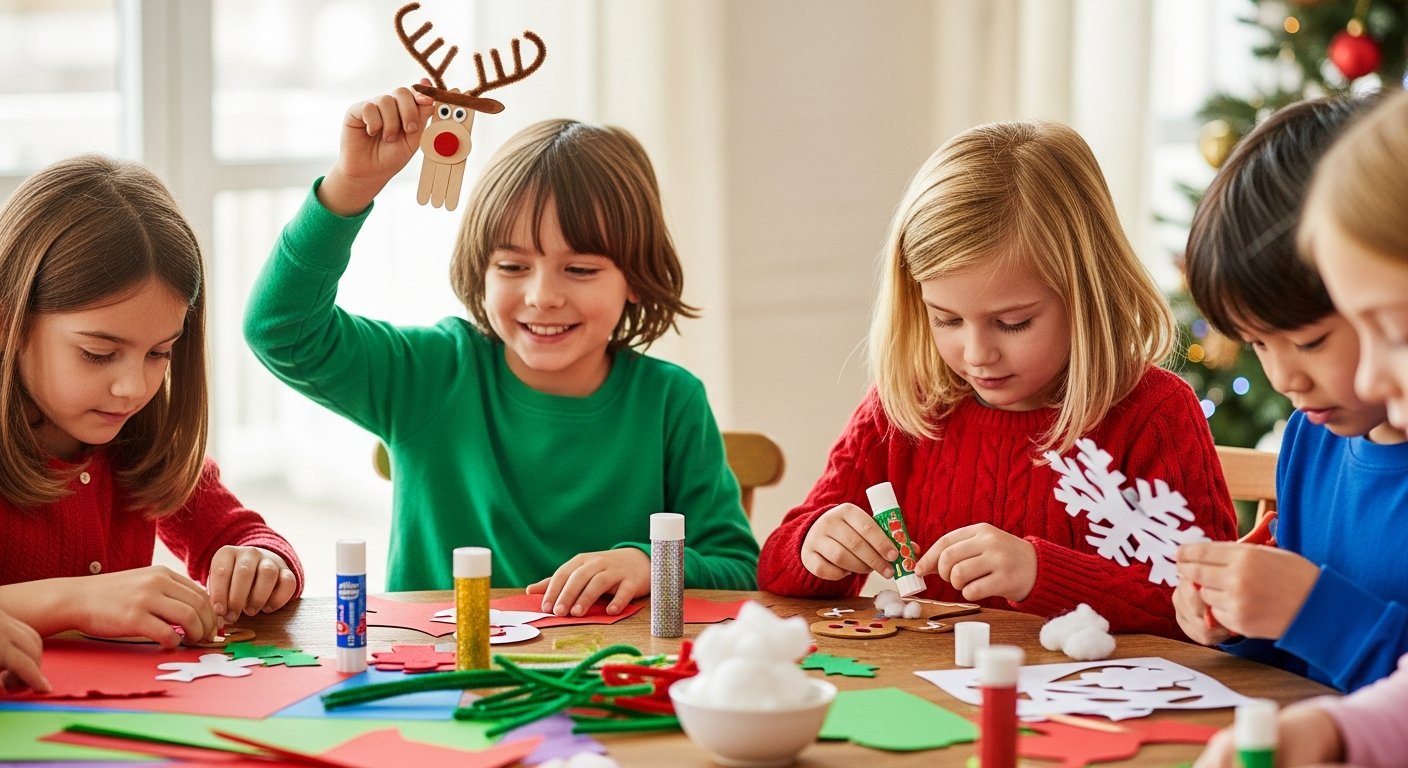
Table of Contents
- Why Holiday Crafting is More Than Just Fun
- Simple Christmas Crafts for Little Hands (and Developing Voices!)
- Nurturing Communication Through Creativity: The Speech Blubs Approach
- Tips for a Jolly Crafting Session
- Discover the Full Potential with Speech Blubs: Our Value and Pricing
- Conclusion
- Frequently Asked Questions
The air fills with a special kind of magic as the holidays approach, and nowhere is this more evident than in the sparkling eyes of a child. Imagine the delight on their face as they proudly hang an ornament they made themselves, or the joy in their voice as they describe their glittery creation. Christmas crafts offer a unique opportunity to capture this magic, creating cherished memories and decorating your home with truly personal touches. But let's be honest, busy parents often need ideas that are quick, easy, and don't require a fine arts degree or endless hours of preparation.
This blog post is designed to be your festive guide, packed with engaging, simple Christmas craft ideas perfect for little hands. We'll show you how these delightful projects not only fill your home with holiday cheer but also play a crucial role in your child's development, especially in fostering communication skills. Each craft is a stepping stone for creativity, a boost for fine motor skills, and a chance for connection. You'll discover how these simple activities naturally foster communication development, and how valuable tools like Speech Blubs can further amplify these benefits, transforming screen time into "smart screen time" that complements hands-on play.
Why Holiday Crafting is More Than Just Fun
Crafting with children during the holidays is much more than just keeping them occupied or adding a homemade touch to your decor. It’s a rich, multi-faceted activity that provides immense developmental benefits, laying crucial foundations for their growth.
- Fine Motor Skills: From wielding a glue stick to carefully cutting shapes or manipulating tiny pom-poms, crafts demand precision and coordination. These activities strengthen the small muscles in your child's hands and fingers, which are essential for tasks like writing, buttoning clothes, and eventually, clear articulation.
- Cognitive Development: Following step-by-step instructions, understanding cause and effect (e.g., "if I press hard, the paint spreads"), and problem-solving (e.g., "how can I make the snowflake look spikier?") are all robust cognitive workouts. Crafts encourage children to think creatively and logically.
- Sensory Exploration: The world of crafting is a feast for the senses. Children get to explore different textures (soft cotton, bumpy pinecones, smooth paper), vibrant colors, and even the unique smells of paint or dough. This sensory input helps them understand and process their environment.
- Emotional Expression: The pride a child feels when showing off something they've made is immeasurable. Crafts offer a safe outlet for emotional expression, allowing children to convey their ideas, feelings, and festive spirit through their creations.
- Language & Communication: This is where crafting truly shines as a developmental powerhouse. As you craft together, you naturally engage in conversation. You describe colors, name shapes, use action verbs, and ask questions. This interactive environment is a fertile ground for language acquisition. This natural interaction aligns perfectly with the mission of Speech Blubs, which focuses on providing "smart screen time" that complements and enhances these real-world learning experiences.
Simple Christmas Crafts for Little Hands (and Developing Voices!)
Here are some wonderfully quick and easy Christmas craft ideas that are perfect for sparking joy and encouraging communication. For each craft, we’ll suggest specific ways to integrate speech and language practice.
1. Paper Plate Snowman or Santa
These classic characters come to life with just a few simple materials, offering endless opportunities for imaginative play and language practice.
- Materials: Paper plates, cotton balls, glue, construction paper (orange, red, black), child-safe scissors, markers.
- Instructions:
- Snowman: Have your child paint the paper plate white (or leave it unpainted). Guide them to glue cotton balls around the edge for a snowy "body." Cut out paper shapes for a carrot nose (orange), coal eyes (black circles), and a button mouth. Add a paper hat.
- Santa: Paint the plate a light pink or peach color for Santa's face. Glue cotton balls for his fluffy beard and the trim of his hat. Cut out a red construction paper hat shape and glue it on top. Add marker details for eyes and a rosy nose.
- Speech Blubs Connection & Prompts: As you work, use descriptive words: "round plate," "soft cotton," "sticky glue," "pointy hat." Ask engaging questions: "What color is Santa's hat?" "Where does the nose go?" Encourage fun sounds like "Ho ho ho!" for Santa or "Brrr!" for the snowman. Focus on action words like cut, glue, paint, stick. Practice identifying colors and shapes.
2. Salt Dough Ornaments
Salt dough is wonderfully tactile and creates lasting ornaments that can be treasured for years. It’s also incredibly forgiving for little crafters.
- Materials: 1 cup flour, 1/2 cup salt, 1/2 cup water (adjust as needed), cookie cutters (holiday shapes like stars, trees, gingerbread men), a straw (for making holes), paint, glitter, ribbon or string.
- Instructions: In a bowl, mix the flour and salt, then gradually add water until a firm dough forms. Knead it until smooth. Roll out the dough to about 1/4 inch thick. Let your child choose cookie cutters to press into the dough. Use a straw to make a small hole at the top of each ornament for hanging. Bake at 250°F (120°C) for 2-3 hours, or air dry over several days, until completely hard. Once cool, they can be painted and decorated with glitter.
- Speech Blubs Connection & Prompts: Talk about the texture: "squishy dough," "smooth," "sticky." Use action verbs: "mix," "roll it flat," "cut," "bake." Name the shapes: "star shape," "tree," "circle." "My star is red." "Can you make a heart?" Discuss how the dough changes from soft to hard.
3. Pinecone Critters
Transform simple pinecones into adorable festive animals, encouraging creativity and imaginative play.
- Materials: Pinecones (collected from outdoors, dried), googly eyes, felt scraps (various colors), small pom-poms, craft glue, pipe cleaners.
- Instructions: Let your child pick a pinecone. Guide them in gluing googly eyes onto the top of the pinecone. Use felt scraps for ears, wings, or tiny hats. Pom-poms can become noses, and pipe cleaners can be twisted into antlers for a reindeer or legs for a little forest creature.
- Speech Blubs Connection & Prompts: Describe the pinecone: "bumpy," "pointy," "brown." Use action verbs: "glue," "stick," "twist." Talk about the animals they are creating: "deer," "owl," "fox." Ask "What color are the antlers?" "Does your animal have ears?" Practice animal sounds like "hoot" or "snort" as you make your creatures.
4. Handprint or Footprint Keepsakes
These personalized crafts capture a moment in time and make heartwarming gifts or decorations.
- Materials: Washable craft paint (red, green, white), cardstock or craft paper, glitter, markers.
- Instructions: Carefully paint your child's hand or foot, then gently press it onto the paper. Once the paint is dry, you can decorate it. Turn a handprint into a Santa beard, a reindeer, or a Christmas tree with finger-painted "ornaments." A footprint can become a snowman or a penguin. Add glitter for extra sparkle.
- Speech Blubs Connection & Prompts: "My hand is red!" "Tickly paint." "Press down hard." Name body parts: "hand," "foot," "fingers," "toes." Count fingers. Describe the shape created: "big hand," "little foot." Talk about whose hand/foot it is.
5. Cotton Ball Polar Bear
A snowy polar bear craft is perfect for discussing winter animals and exploring soft textures.
- Materials: Blue construction paper, cotton balls, craft glue, black marker.
- Instructions: Draw a simple polar bear outline on the blue paper. Have your child fill in the outline by gluing cotton balls inside, creating a soft, fluffy fur coat. Use a black marker to add eyes, a nose, and a mouth.
- Speech Blubs Connection & Prompts: "Soft cotton," "cold bear," "blue paper." Focus on contrasting concepts: the "white" bear on "blue" paper. Ask "Where is the bear's nose?" "What sound does a bear make?" Introduce adjectives like "fluffy" and "fuzzy."
6. Popsicle Stick Stars or Trees
These simple shapes are a great way to practice geometry and decorating skills.
- Materials: Popsicle sticks, craft glue, paint, glitter, small pom-poms, string or yarn.
- Instructions: Guide your child to glue popsicle sticks together to form a star or a triangle (Christmas tree) shape. Once the glue is dry, they can paint the shapes. Then comes the fun part: decorating with glitter and small pom-poms. Attach a piece of string for hanging.
- Speech Blubs Connection & Prompts: "Long stick," "pointy star," "green tree." Count the sticks used. "How many points does your star have?" Describe the decorating process: "sparkly glitter," "tiny red pom-pom." Practice saying "up," "down," "across."
7. DIY Snow Globes
Create a miniature winter wonderland that's captivating to watch and surprisingly simple to make.
- Materials: Small, clean jar with a tight-fitting lid, super glue (adults only), small plastic toy figures (mini trees, snowmen, reindeer), distilled water, glitter (silver, white, blue), a few drops of glycerin (optional, helps glitter fall slowly).
- Instructions: Super glue the base of the plastic toy figure(s) to the inside of the jar lid (adult step). Let it dry completely. Fill the jar with distilled water, leaving a small gap at the top. Add a spoonful or two of glitter and a few drops of glycerin if desired. Carefully place the lid with the attached figure into the jar and screw it on tightly. You may want to put a ring of super glue around the lid for a permanent seal. Shake and watch the "snow" fall!
- Speech Blubs Connection & Prompts: "Shake it!" "Sparkly snow," "little tree." Talk about "up" and "down" as the glitter falls. "Is the snow globe big or small?" Use words like "clear," "shiny," "magic."
8. Paper Chain Garland
A classic decoration that teaches sequencing and strengthens fine motor skills.
- Materials: Strips of construction paper (various festive colors, about 1 inch wide and 8 inches long), craft glue or a stapler.
- Instructions: Take one paper strip, form it into a loop, and glue or staple the ends together. Take a second strip, thread it through the first loop, and glue/staple its ends. Repeat this process, linking new strips through the previous loop, to create a long chain.
- Speech Blubs Connection & Prompts: "Long chain," "red loop," "blue loop." Practice colors, counting the links as you add them. "My chain is long." "Can you make a short one?" Introduce patterns: "red, green, red, green." Use "first," "next," "last."
9. Reindeer Food
A magical craft that helps prepare for Santa's arrival and encourages imaginative thinking.
- Materials: Rolled oats, edible glitter (optional, but fun!), small Ziploc bags or paper bags, paper, markers, ribbon.
- Instructions: In a bowl, combine oats and a sprinkle of edible glitter. Let your child help mix it. Scoop small portions into Ziploc bags. Decorate the bags with drawings of reindeer, or write a simple rhyme like "Sprinkle on the lawn tonight, for reindeer on their Christmas flight!"
- Speech Blubs Connection & Prompts: "Crunchy oats," "shiny glitter." Talk about reindeer: "fast," "fly," "red nose." Discuss what sound a reindeer might make. "What do reindeer eat?" Use verbs like "mix," "scoop," "sprinkle."
10. Pasta Ornaments
Pasta comes in so many interesting shapes, making it a surprisingly versatile and creative craft material.
- Materials: Various pasta shapes (bowties, rotini, penne, wagon wheels, ditalini), craft glue, paint (spray paint or acrylic), glitter, string.
- Instructions: Let your child choose and paint different pasta shapes. Once dry, they can arrange and glue the painted pasta onto a piece of cardstock or even onto other pasta shapes to create unique designs – snowflakes, wreaths, or abstract patterns. Add glitter for extra sparkle and attach a string for hanging.
- Speech Blubs Connection & Prompts: "Different shapes," "bumpy pasta." Ask "Can you find a bowtie?" "What color is this pasta?" Practice describing: "long," "curly," "flat." Count the pieces of pasta. Use comparative words: "bigger," "smaller."
Nurturing Communication Through Creativity: The Speech Blubs Approach
At Speech Blubs, our mission is to empower children to "speak their minds and hearts." We know firsthand the challenges some children face with communication – our company was born from the personal experiences of our founders, who all grew up with speech problems and created the tool they wished they had. We are committed to providing an immediate, effective, and joyful solution for the 1 in 4 children who need speech support, blending scientific principles with play into one-of-a-kind "smart screen time" experiences.
Crafting alongside your child is a powerful way to naturally encourage speech and language development. As you guide them through creating a festive ornament or a sparkly snow globe, you're not just making art; you're building a rich communicative environment.
The Speech & Language Benefits of Crafting
- Vocabulary Expansion: Crafting naturally introduces a wealth of new words. Think beyond "paint" and "glue" to "sparkle," "texture," "attach," "decorate," "squishy," "bumpy," "smooth," and words related to colors, shapes, and actions.
- Following Directions: "First, we paint the plate white. Next, we glue on the cotton balls." This step-by-step process is crucial for developing receptive language skills – the ability to understand and respond to instructions.
- Descriptive Language: Encourage your child to describe what they see, feel, and do. "My star is shiny and red!" "This glitter feels scratchy." This builds their expressive language skills.
- Question Asking & Answering: The interactive nature of crafting lends itself perfectly to questions. "What color should we use?" "Where does the ribbon go?" "What should we do next?"
- Narrative Skills: As you create, talk about the process, what they made, and who they might give it to. This helps build early narrative skills and storytelling abilities.
- Social Interaction: Sharing materials, taking turns, and collaborating on a project with you enhances social communication skills and fosters connection.
How Speech Blubs Supercharges Craft Time Communication
While crafting offers fantastic hands-on learning, integrating a tool like Speech Blubs can provide a complementary boost, transforming ordinary "screen time" into "smart screen time." We blend scientific principles with play, using a one-of-a-kind "video modeling" methodology. Children learn by watching and imitating their peers, making learning engaging and effective. It's a screen-free alternative to passive viewing like cartoons, fostering active engagement and building family connection, much like crafting does.
Imagine your child is making a "Pinecone Critter." You can:
- Use Speech Blubs to introduce animal sounds: Before or after the craft, explore the "Animal Kingdom" section in the app to practice "bear," "deer," or "owl" sounds. The video modeling will show other children making these sounds, making it a fun, imitative experience that builds confidence.
- Reinforce action words: After gluing, go to a section in Speech Blubs that focuses on action verbs like "stick," "put," "make," or "cut." This helps solidify the meaning of these words in a different context.
- Boost emotional vocabulary: When they're proud of their creation, use Speech Blubs to practice words like "happy," "proud," or "excited" to help them verbalize their feelings.
For a parent whose 3-year-old 'late talker' loves animals, the 'Animal Kingdom' section in Speech Blubs offers a fun, motivating way to practice 'moo' and 'baa' sounds, building confidence and reducing frustration before they even try to verbalize words like "reindeer" during craft time. Our app serves as a powerful supplement to a child's overall development plan and, when applicable, professional therapy. Don't just take our word for it; read testimonials from other parents who have seen amazing results. Our methodology is backed by science, placing us in the top tier of speech apps worldwide. Explore the research behind Speech Blubs to understand our commitment to effective, play-based learning.
Tips for a Jolly Crafting Session
Making crafts with kids should be a joyful experience, not a stressful one. Here are some tips to ensure your holiday crafting sessions are filled with cheer and successful communication opportunities:
- Prepare Ahead: Gather all your materials before you start. This minimizes interruptions and keeps your child engaged without waiting for you to find the glue.
- Embrace the Mess: Crafting will be messy, and that's okay! Lay down newspaper, an old tablecloth, or a washable mat. See the mess as a sign of creative exploration.
- Focus on the Process, Not Perfection: The goal is exploration, learning, and fun, not a Pinterest-perfect outcome. Praise effort and creativity, even if the end result isn't exactly what you envisioned.
- Offer Choices: Empowering children with choices boosts engagement. "Do you want red paint or green paint?" "Should we use glitter or pom-poms?"
- Narrate and Describe: Talk through each step, what you're doing, and what you see. "Now I'm cutting the long, red strip of paper." "Look, your tree has sparkly, green glitter!"
- Be Patient & Encouraging: Every child develops at their own pace. Celebrate effort and participation. If frustration arises, offer support, break tasks into smaller steps, or suggest a break.
- Model Language: Use clear, simple language. Repeat new words and phrases. Point to objects as you name them.
- Co-Play and Support: Always frame activities with an implicit understanding of adult co-play and support. Your active, engaged participation is key to both the craft's success and the invaluable communicative benefits.
Discover the Full Potential with Speech Blubs: Our Value and Pricing
We believe that every child deserves the opportunity to communicate effectively and joyfully. That's why we've made Speech Blubs accessible and packed with value.
You can start your journey with Speech Blubs through two main subscription options:
- Monthly Plan: For $14.99 per month.
- Yearly Plan: For just $59.99 per year, which breaks down to an incredible $4.99 per month.
The Yearly Plan is our best value, hands down. When you choose the Yearly plan, you save a massive 66% compared to paying monthly. But the savings are just the beginning of the benefits. The Yearly plan also unlocks exclusive features designed to give your child the most comprehensive support:
- A 7-day free trial to explore all the amazing activities and see the magic of video modeling firsthand.
- Access to the extra Reading Blubs app, helping your child build foundational literacy skills alongside their speech development.
- Early access to new updates and features, ensuring your child always has the latest and greatest content.
- 24-hour support response time from our dedicated team, so you always have help when you need it.
The Monthly plan, while an option, does not include these exclusive benefits like the free trial, Reading Blubs, early updates, or prioritized support. To truly experience the full potential of our unique "smart screen time" and empower your child to speak their minds and hearts, the Yearly plan is the clear best choice.
Ready to provide your child with an immediate, effective, and joyful solution for their speech development? Start your Speech Blubs journey now and choose the Yearly plan to unlock all features and the 7-day free trial! Unsure if your child could benefit? Take our quick 3-minute preliminary screener to get a simple assessment and a free 7-day trial.
Conclusion
Christmas is a time for wonder, joy, and creating cherished memories that last a lifetime. Engaging in quick, easy Christmas crafts with your children not only fills your home with festive cheer but also provides invaluable opportunities for growth—especially in communication. From the simplest paper plate Santa to a glittery salt dough ornament, each craft becomes a canvas for imagination, fine motor skill development, and rich language interaction.
Remember, the goal isn't just a perfect craft but the shared experience, the laughter, the learning, and the invaluable moments of connection. These activities naturally encourage your child to speak their mind and hearts, developing confidence, expanding their vocabulary, and reducing frustration. They are learning to communicate not just with words, but through their actions and creations as well.
To further amplify these benefits and ensure your child has the best support for their communication journey, we encourage you to explore Speech Blubs. Our app beautifully complements these joyful, hands-on activities by providing structured, play-based learning that empowers children to communicate effectively. Download the app on the App Store or Google Play today! Choose the Yearly plan to begin your 7-day free trial and unlock the Reading Blubs app, early updates, and dedicated support, giving your family the full suite of our "smart screen time" solution.
Frequently Asked Questions
Q1: What age group are these Christmas crafts suitable for?
These crafts are designed to be adaptable for a wide range of ages, generally from toddlers (with significant adult assistance) up to early elementary school children. The complexity can be adjusted by simplifying steps for younger children or allowing older kids more creative freedom and intricate details. Adult supervision and co-play are essential for all ages, especially when using scissors, glue, or small parts.
Q2: How can I make these crafts more educational for my child?
To maximize the educational value, focus on verbalizing every step and concept. Ask open-ended questions like "What color should we use?" or "How does this feel?" Encourage your child to describe what they are doing and seeing. Introduce new vocabulary related to the materials, actions, and Christmas themes. For example, instead of just saying "paint," say "Let's spread the red paint smoothly on the paper." You can also connect the craft to a story or song to build narrative skills and strengthen comprehension.
Q3: What if my child isn't interested in crafting or gets frustrated easily?
It's important to keep craft time low-pressure and fun. Start with very simple crafts that have a quick payoff to build initial interest and confidence. If your child isn't interested, don't force it; try again another day or choose a different type of activity. If frustration arises, offer immediate support and encouragement. Break tasks into smaller, more manageable steps, praise effort over perfection, and remember that the process of creating and spending time together is more important than the finished product. Sometimes just sitting beside them and doing your own simple craft can spark their curiosity and encourage participation.
Q4: How does Speech Blubs help with speech development in conjunction with crafts?
Speech Blubs enhances speech development by providing targeted practice in a playful, engaging format. While crafts offer a natural, open-ended environment for communication, Speech Blubs uses "video modeling" – where children imitate peers – to teach specific sounds, words, and concepts. For instance, if you're making a reindeer craft, you can then use Speech Blubs to practice animal sounds or the word "deer." This provides structured reinforcement of vocabulary and articulation in a "smart screen time" setting that complements hands-on learning, building confidence and reinforcing communication skills practiced during crafting.