
Festive Fun: The Best Reindeer Toddler Craft Activities
 By Speech Blubs Team•Feb 20, 2026•15 min.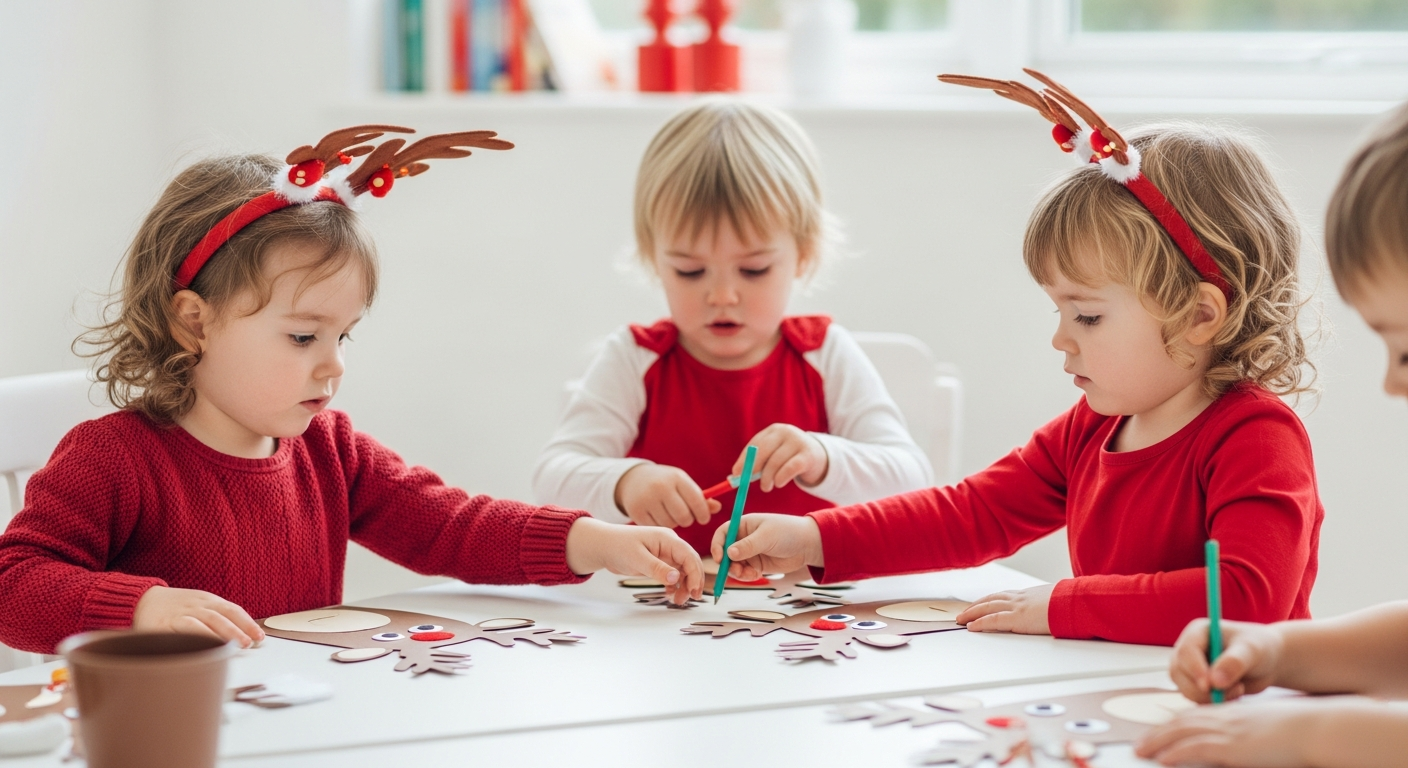
Table of Contents
- Introduction
- Why Crafting is Essential for Toddler Development
- 1. The Classic Paper Plate Reindeer Mask
- 2. Handprint and Footprint Reindeer Keepsakes
- 3. The Popsicle Stick Triangle Reindeer
- 4. Paper Bag Reindeer Puppets
- 5. Sensory-Friendly Reindeer Rice Art
- 6. Toilet Paper Roll Reindeer
- 7. Sponge Painted Reindeer
- 8. Reindeer Ornament Crafts
- Integrating Language Learning with Crafting
- Managing Expectations: Process Over Perfection
- The Role of Smart Screen Time in Learning
- Choosing the Right Plan for Your Family
- Conclusion
- FAQs
Introduction
Did you know that the simple act of tracing a toddler’s hand to create a pair of reindeer antlers can actually stimulate thousands of neural pathways related to spatial awareness and fine motor control? It’s true! The holiday season brings a unique kind of magic into our homes, but for parents of toddlers, it also brings a wonderful opportunity to foster developmental growth through play. Whether your child is a "late talker" or is already chatting up a storm, engaging in a reindeer toddler craft is more than just a way to decorate the fridge—it’s a powerful tool for building communication skills, confidence, and family bonds.
In this comprehensive guide, we are going to explore a variety of creative and accessible reindeer-themed crafts specifically designed for little hands. We will cover everything from classic paper plate masks to sensory-rich rice art, all while explaining how these activities support your child’s journey toward reaching their developmental milestones. At Speech Blubs, we believe that every moment is a learning moment, and our mission is to empower children to speak their minds and hearts through joyful, science-based interaction. By the end of this post, you’ll have a full toolkit of holiday activities and a deeper understanding of how to use "smart screen time" to supplement your child’s offline creativity.

Why Crafting is Essential for Toddler Development
Before we dive into the glitter and glue, let’s talk about the "why" behind the "what." For a toddler, crafting is an exercise in multi-sensory learning. When a child picks up a crayon or squeezes a glue bottle, they aren't just making a mess; they are practicing "pincer grasps" and hand-eye coordination. These are the same foundational physical skills that will eventually help them hold a pencil in school or use a fork at dinner.
Beyond the physical, crafting is a language goldmine. Think about the vocabulary involved in a reindeer toddler craft: brown, red, antlers, nose, sticky, fuzzy, soft, top, bottom. By narrating these actions and objects, you are providing your child with a rich linguistic environment. This mirrors our own scientific methodology at Speech Blubs, where we use video modeling to show children how their peers use language in context. Just as watching a peer in our app can encourage a child to try a new sound, watching you fold a piece of paper or glue a button encourages them to imitate your movements and words.
1. The Classic Paper Plate Reindeer Mask
One of the most effective ways to encourage a toddler to engage in pretend play—a key precursor to complex communication—is through masks. The paper plate reindeer is a staple for a reason: it’s sturdy, easy to hold, and instantly recognizable.
Materials Needed:
- Paper plates (standard white or pre-colored brown)
- Brown acrylic paint or crayons
- Brown construction paper
- Red pom-poms or red circles of paper
- Large googly eyes
- Popsicle sticks
- Glue sticks or school glue
How to Create It:
First, have your child paint the back of the paper plate brown. If you want to avoid the mess of wet paint, brown crayons or markers work just as well! Once the plate is dry, trace your child’s hands on the brown construction paper and cut them out. These handprints will serve as the reindeer's antlers.
Glue the handprints to the top of the plate. Next, help your child glue on the googly eyes and the big red pom-pom for the nose. To turn this into a mask, glue a popsicle stick to the bottom of the plate so your child can hold it up to their face.

Pro-Tip for Language: As you hold the mask up, practice making "reindeer sounds" or talking about what a reindeer eats. If your child is using Speech Blubs, you can head to the "Animal Kingdom" section of the app to see how other animals move and sound, then bring that energy back to your reindeer play!
2. Handprint and Footprint Reindeer Keepsakes
There is nothing quite as sentimental as a holiday craft that captures how small your child’s hands and feet once were. This reindeer toddler craft is perfect for creating holiday cards for grandparents.
Materials Needed:
- Cardstock or heavy construction paper
- Washable brown paint
- Red paint or a red marker
- A black marker
How to Create It:
For the handprint version, paint your child’s palm and fingers brown and press them onto the paper. The fingers become the antlers, and the palm becomes the head. For the footprint version, paint the sole of your child’s foot brown. When you press it onto the paper, the heel becomes the reindeer’s nose, and the toes are the top of the head.
Once the paint is dry, you can add eyes and a red nose. This activity is a great way to talk about body parts. "Where is your hand? Where is the reindeer’s nose?" Engaging in these simple identification games builds the foundational vocabulary that we focus on in our early language modules.
If you are curious about how your child’s vocabulary and communication skills are tracking, you can take our quick 3-minute preliminary screener to get an assessment and a personalized next-steps plan.
3. The Popsicle Stick Triangle Reindeer
This craft is excellent for teaching basic geometry. Toddlers are just beginning to recognize shapes in the world around them, and the triangle is a fun one to master.
Materials Needed:
- Three popsicle sticks per reindeer
- Brown paint
- Pipe cleaners (brown or sparkly)
- Googly eyes
- Red buttons or pom-poms
How to Create It:
Help your child glue three popsicle sticks into a triangle shape. Once the glue is set, have them paint the sticks brown. Wrap a pipe cleaner around the top corners to create curly antlers. Finally, glue the eyes on the top two sticks and the red nose at the bottom point of the triangle.
This activity requires a bit more "wait time" while the glue dries, which is a perfect opportunity to use the Speech Blubs app for a few minutes of "smart screen time." Our app is designed to be a powerful tool for family connection, not a passive distraction. You can watch the video models together, imitating the sounds of the season, and then go back to your craft once the glue is tacky. Download Speech Blubs on the App Store to have these interactive moments ready at your fingertips.
4. Paper Bag Reindeer Puppets
Puppetry is a fantastic way to lower the pressure of communication. Often, a child who is hesitant to speak directly to an adult will happily "chat" with a puppet.
Materials Needed:
- Standard brown paper lunch bags
- Construction paper (brown, red, white)
- Glue stick
- Markers
How to Create It:
The bottom flap of the paper bag is the reindeer’s face. Have your child glue eyes and a red nose onto this flap. Cut out antler shapes and glue them to the "back" of the flap so they stick up. Your child can then slide their hand into the bag and make the reindeer "talk."
Developmental Focus: Use the puppet to practice turn-taking. The reindeer asks a question, and the child answers. This mimics the conversational flow we encourage in our app. If you’re seeing progress and want to hear from other families who have used our tools to spark communication, check out our parent testimonials.
5. Sensory-Friendly Reindeer Rice Art
For children who crave tactile input, sensory crafts are incredibly engaging. This activity uses colored rice to create a textured reindeer.
Materials Needed:
- Uncooked rice
- Brown food coloring or acrylic paint
- A Ziploc bag
- Cardstock with a reindeer outline
- School glue
How to Create It:
First, color the rice by putting it in a Ziploc bag with a few drops of brown coloring and shaking it up. Spread it out on a tray to dry. While the rice dries, have your child apply glue inside the reindeer outline on the paper. Once the rice is dry, let them sprinkle the "reindeer fur" (brown rice) onto the glue.
This activity is wonderful for practicing fine motor control—the "sprinkling" motion requires a delicate touch. It’s also a great way to discuss textures like "bumpy," "smooth," and "crunchy."
6. Toilet Paper Roll Reindeer
Don't throw away those cardboard tubes! They are the perfect base for a 3D reindeer toddler craft.
Materials Needed:
- Empty toilet paper or paper towel rolls
- Brown paint or construction paper
- Pipe cleaners
- Googly eyes
- Red pom-pom
How to Create It:
Wrap the roll in brown paper or paint it brown. Punch two small holes near the top for the antlers. Help your child thread a pipe cleaner through the holes and twist it into antler shapes. Glue the face onto the front of the roll. These little reindeer can stand up on their own, making them perfect for a holiday table centerpiece.
For a child who loves animals, this is a great extension of the learning they do in the Speech Blubs app. In the app, they might watch a peer make a "reindeer face" or practice animal sounds. Recreating that animal in 3D helps solidify the concept in their mind. Ready to start your journey? Sign up on our web page to explore our full library of activities.
7. Sponge Painted Reindeer
Sponge painting is ideal for toddlers because it doesn't require the precise grip of a paintbrush.
Materials Needed:
- A kitchen sponge cut into a triangle
- Brown paint
- Paper
- Markers
How to Create It:
Dip the triangle sponge into brown paint and press it onto the paper. This creates a perfect reindeer head shape every time! Once the paint is dry, use markers to draw on antlers and a smile.
This craft is excellent for "cause and effect" learning. The child sees that pressing the sponge results in a shape on the paper. This foundational cognitive skill is something we build upon in Speech Blubs by showing children that their vocalizations (the cause) result in a fun interaction on the screen (the effect).
8. Reindeer Ornament Crafts
Making something that actually goes on the Christmas tree gives a toddler a huge sense of pride and belonging.
Materials Needed:
- Clear plastic ornaments
- Brown pom-poms or brown shredded paper
- Brown pipe cleaners
- Red buttons
- Glue
How to Create It:
Have your child stuff the clear ornament with brown pom-poms or shredded paper. This is great for "finger dexterity." Once full, put the cap back on and wrap a pipe cleaner around the top to make antlers. Glue a red button nose and googly eyes onto the outside of the plastic.
Integrating Language Learning with Crafting
At Speech Blubs, we are committed to providing an immediate, effective, and joyful solution for the 1 in 4 children who need speech support. We know that the best learning happens when children are having fun with the people they love. When you are doing a reindeer toddler craft, you are essentially doing a "live" version of our video modeling methodology.
Our founders grew up with speech problems themselves, so we understand the frustration that can come when a child wants to express themselves but doesn't yet have the tools. That’s why we created the tool we wished we had. By blending scientific principles with play, we offer a "smart screen time" experience that acts as a powerful supplement to your child's overall development.
While your child is busy gluing and painting, try these language-boosting tips:
- Parallel Talk: Describe what you are doing. "I am putting the glue on the paper. Now I am sticking the nose on."
- Self-Talk: Describe what your child is doing. "You are picking up the brown crayon. You are making big circles!"
- Expansion: if your child says "Reindeer," you say "Yes, a brown reindeer!"
Managing Expectations: Process Over Perfection
It is important to remember that with toddlers, the goal is never a "perfect" craft. In fact, a reindeer with one eye on its chin and antlers sticking out of its nose is a sign of a child who was deeply engaged in the process! Our focus at Speech Blubs is on fostering a love for communication and building confidence, not on guaranteed immediate outcomes like "public speaking in a month."
Building foundational skills takes time, and every child develops at their own pace. Use these crafting moments to create joyful family learning moments rather than focusing on the end result. If your child gets frustrated because the glue is too sticky, acknowledge the feeling: "I see you're frustrated. Glue is very sticky! Let’s try again together." This empathy builds the emotional intelligence necessary for successful communication.
The Role of Smart Screen Time in Learning
You might wonder how an app fits into a day filled with "offline" crafting. Speech Blubs is designed to be a bridge. Unlike passive cartoons that children watch in a trance, our app requires active participation. Children watch their peers—real kids, not animations—perform speech exercises. Because of "mirror neurons," children are naturally inclined to imitate what they see other children doing.
We provide a screen-free alternative to passive viewing by making the screen time active, interactive, and educational. Use the app to get your child excited about a topic (like animals or the holidays), and then use that excitement to fuel a hands-on reindeer toddler craft. This "blended" approach is what makes Speech Blubs a leader in the field.
Choosing the Right Plan for Your Family
We want to be transparent about our pricing to help you make the best decision for your child’s development. We offer two main plans to fit your needs:
- Monthly Plan: $14.99 per month. This is a great way to test the waters.
- Yearly Plan: $59.99 per year. This is our best value option, breaking down to just $4.99 per month.
We highly recommend the Yearly Plan because it offers a much more comprehensive experience. When you choose the yearly option, you receive:
- A 7-day free trial to explore everything we have to offer.
- The Reading Blubs app, which helps transition those early speech skills into literacy.
- Early access to all new updates and features.
- Priority 24-hour support response time.
The Monthly plan does not include the Reading Blubs app or the free trial, so the Yearly plan truly is the clear choice for families committed to long-term progress.
Conclusion
The holiday season is a beautiful time to slow down and connect with your little one. A simple reindeer toddler craft can be the highlight of their day, providing them with sensory input, fine motor practice, and a wealth of new vocabulary. Remember to focus on the joy of the process, celebrate the "messy" results, and use every opportunity to encourage your child to speak their mind and heart.
At Speech Blubs, we are honored to be a part of your child’s journey. Our blend of peer video modeling and interactive play is designed to reduce frustration and build the confidence your child needs to thrive. Whether you are crafting at the kitchen table or using our "smart screen time" on the go, you are giving your child a powerful gift: the gift of communication.
Ready to see the difference for yourself? Download Speech Blubs on Google Play or the App Store today. Don't forget to select the Yearly Plan to unlock your 7-day free trial and the Reading Blubs app!
FAQs
1. What is the best age to start reindeer toddler crafts?
Most toddlers can begin simple crafting around 18 to 24 months. At this age, they are developing the motor skills to hold large crayons and can help with "sticking" items onto glue that an adult has applied. As they reach age 3 and 4, they can take a more active role in cutting (with safety scissors) and following multi-step directions.
2. How can I keep the mess under control during holiday crafting?
Preparation is key! Use a plastic tablecloth or an old sheet to cover your work surface. For toddlers, "dot markers" or crayons are often less messy than liquid paint. Having a damp cloth nearby for "sticky fingers" can also prevent glue from ending up on your furniture. Remember, a little mess is a sign of a lot of learning!
3. How does Speech Blubs help with a child’s speech delay?
Speech Blubs uses a scientifically-proven method called video modeling. By watching videos of other children (their peers) making sounds and saying words, toddlers are naturally motivated to imitate them. This reduces the pressure of "learning" and turns it into a game of "copycat." It’s an effective supplement to professional therapy and a great way to build foundational skills at home.
4. Should I do these crafts every day?
There’s no need to craft every day! The most important thing is consistency in interaction. Whether you are doing a craft, reading a book, or using Speech Blubs for 10-15 minutes, the goal is to engage in "active" time with your child. Aim for a few times a week during the holiday season to keep the excitement alive without it feeling like a chore.
About the author