
Festive Joy: Easy Christmas Wreath Crafts for Kids
 By Speech Blubs Team•Dec 22, 2025•18 min.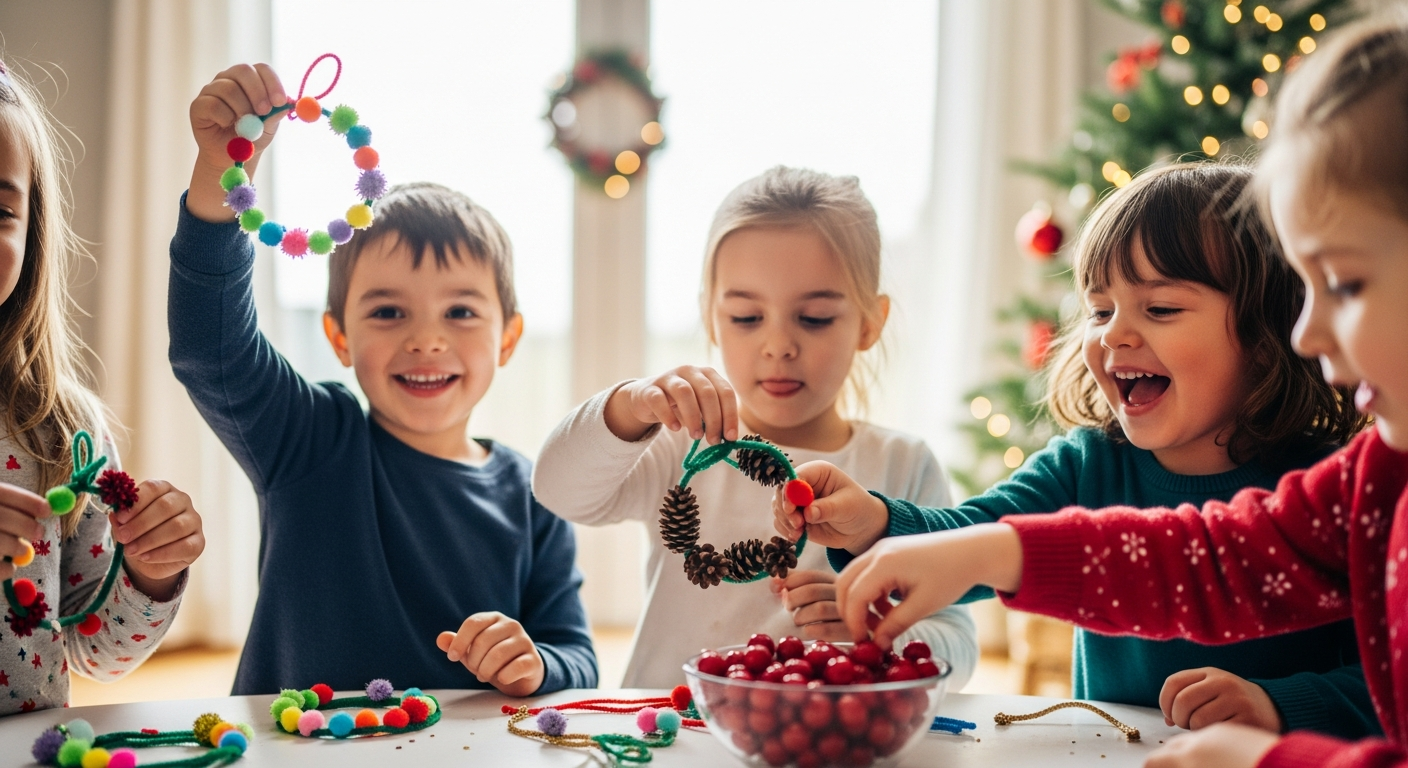
Table of Contents
- Introduction
- The Magic of Crafting: More Than Just Sparkles
- Getting Started: Materials and Preparation
- Easy Christmas Wreath Crafts for Toddlers and Preschoolers
- More Involved Christmas Wreath Crafts for School-Aged Kids
- Tips for a Joyful Crafting Experience
- Supporting Speech Development Beyond the Craft Table
- Choosing Your Speech Blubs Plan: Value and Features
- Conclusion
- FAQ
Introduction
Picture this: your kitchen table covered in glitter, paper scraps, and a flurry of tiny hands eagerly gluing, cutting, and shaping. In the midst of the holiday season, with its hustle and bustle, finding moments of focused, joyful activity with our children can feel like a precious gift in itself. Christmas wreath crafts offer more than just a decorative touch for your home; they are a fantastic gateway to creativity, fine motor skill development, and, perhaps most importantly, communication. Through the simple act of crafting, children explore their world, express themselves, and build foundational skills that extend far beyond the craft table. This post will guide you through a wonderland of easy and engaging Christmas wreath crafts perfect for kids of all ages, highlighting how these creative endeavors can also be powerful catalysts for language development and family connection. We’ll explore various craft ideas, offer practical tips for making the most of your crafting sessions, and reveal how innovative tools, like our very own Speech Blubs app, can seamlessly enhance your child’s speech and communication journey.

The Magic of Crafting: More Than Just Sparkles
Crafts are often seen as purely fun activities, and while they certainly are enjoyable, their benefits for child development are profound. Engaging in creative projects stimulates different parts of a child's brain, fostering cognitive growth, problem-solving abilities, and emotional expression. For young children, the tactile experience of handling different materials – the stickiness of glue, the crinkle of paper, the smooth coolness of a button – is a crucial part of sensory development.
When it comes to Christmas wreath crafts, the festive theme adds an extra layer of excitement and purpose. Children aren't just making something; they're creating a piece of holiday cheer, a decoration that will be proudly displayed. This sense of accomplishment boosts self-esteem and encourages participation. Moreover, these crafts provide excellent opportunities for practicing a range of skills:
- Fine Motor Skills: Cutting with scissors, gluing small pieces, tying ribbons, peeling stickers – all these actions refine hand-eye coordination and strengthen the small muscles in the hands and fingers, essential for writing and other daily tasks.
- Cognitive Development: Following instructions, recognizing patterns, sorting colors and shapes, planning out their design, and understanding cause and effect (e.g., "If I put too much glue, it gets messy") are all part of the crafting process.
- Creativity and Imagination: There's no single "right" way to make a wreath. Children are encouraged to experiment, choose their own colors, and personalize their creations, fostering original thought and imaginative play.
- Language and Communication: This is where the magic truly unfolds. As children craft, they naturally engage in conversations. They describe what they're doing, ask questions, explain their choices, and learn new vocabulary related to colors, shapes, textures, actions, and holiday themes. This active communication during play is incredibly beneficial for speech and language development.
At Speech Blubs, we believe in empowering children to "speak their minds and hearts." Our mission, born from our founders' personal experiences with speech challenges, is to provide immediate, effective, and joyful solutions for the 1 in 4 children who need speech support. We understand that every interaction is a chance to build communication skills. Just as a craft session provides a rich environment for dialogue, Speech Blubs offers a complementary "smart screen time" experience that blends scientific principles with play, fostering these vital connections. If you're curious about your child's communication progress, you can take our quick 3-minute preliminary screener to get an assessment and a personalized next-steps plan.

Getting Started: Materials and Preparation
Before diving into the craft ideas, a little preparation goes a long way to ensure a smooth and enjoyable experience for everyone.
Essential Craft Supplies
Gathering a well-stocked craft box can make spontaneous crafting sessions much easier. For Christmas wreath crafts, consider having these basics on hand:
- Bases: Paper plates (cut out the center), cardboard rings, or even sturdy paper bags cut into a ring shape.
- Decorative Elements: Construction paper in various colors (red, green, white, gold, silver), cotton balls, pom-poms, buttons, pipe cleaners, felt scraps, fabric scraps, ribbons, yarn, googly eyes, glitter, sequins, small craft bells, natural elements (pinecones, leaves, twigs – collected during an outdoor adventure!).
- Adhesives: Child-safe glue sticks, liquid craft glue, tape.
- Tools: Child-safe scissors, hole punch, paintbrushes, crayons, markers.
Safety First
Always supervise young children, especially when using scissors, small beads, or glitter. Ensure all materials are non-toxic. For toddlers, focus on tearing, sticking, and painting activities that don't involve small parts that could be choking hazards.
Setting the Stage for Success
- Prepare the Space: Cover your table with newspaper, a plastic tablecloth, or an old sheet to protect surfaces from glue, paint, and glitter.
- Pre-Cut Materials (for younger kids): For toddlers and preschoolers, pre-cutting some shapes or strips of paper can help them focus on the assembly and gluing, reducing frustration.
- Talk Through the Process: Explain what you're going to make and the steps involved. This helps with comprehension and introduces new vocabulary. "First, we'll get our paper plate. Then, we'll choose green paper to stick on it..."
- Embrace the Mess: Crafting with kids is inherently messy, and that's part of the fun and learning! Focus on the process, not just the pristine final product.
Easy Christmas Wreath Crafts for Toddlers and Preschoolers
These crafts are designed to be simple, engaging, and rich in developmental benefits for our youngest crafters. They focus on gross motor skills, sensory exploration, and early language concepts.
1. Paper Plate Tearing Wreath
This craft is fantastic for developing fine motor skills and hand strength through tearing paper.
- Materials: Paper plate (center cut out), green and red construction paper, liquid glue, optional: small pom-poms or cotton balls for "snow."
- Instructions:
- Provide strips of green construction paper. Encourage your child to tear the paper into smaller pieces. This is an excellent pre-cutting skill!
- Spread glue all over the paper plate ring.
- Have your child stick the torn green paper pieces onto the glue, covering the plate.
- Once the green is mostly covered, tear small pieces of red paper for "berries" or use red pom-poms and glue them on top.
- Optional: Add white cotton balls for a snowy effect.
- Language Opportunities:
- Action Words: "Tear," "stick," "glue," "cover."
- Colors: "Green," "red," "white."
- Textures: "Sticky," "soft" (cotton), "rough" (torn paper).
- Shapes: "Circle" (plate), "pieces."
- Following Instructions: "First, tear the paper. Then, put on the glue."
2. Handprint Wreath
A beloved classic, this craft creates a beautiful keepsake and is wonderful for body awareness and counting.
- Materials: Green construction paper, red construction paper, liquid glue, scissors, a marker.
- Instructions:
- Trace your child's hand (or help them trace their own) onto green construction paper multiple times. Aim for 8-10 handprints depending on the size of your "wreath."
- Carefully cut out the handprints. For older preschoolers, they can practice cutting themselves.
- Arrange the handprints in a circle, overlapping slightly, and glue them together at the "palms" to form a wreath shape.
- Cut out small circles from red paper for "berries" and glue them onto the handprints. You can also add a red paper bow.
- Language Opportunities:
- Body Parts: "Hand," "fingers," "palm."
- Counting: Count the handprints as you cut them out or glue them. "One handprint, two handprints..."
- Colors: "Green," "red."
- Size: "Big hand," "small hand."
- Actions: "Trace," "cut," "glue," "overlap."
3. Nature's Wreath Collage
Take a walk outside to gather your supplies for this sensory-rich craft!
- Materials: Sturdy paper plate (center cut out) or cardboard ring, liquid glue, natural elements collected from outdoors (small leaves, twigs, pine needles, small pinecones, acorns, pebbles).
- Instructions:
- Go on a "nature hunt" with your child to collect various small natural items. Talk about what you find.
- Back inside, spread glue liberally around the paper plate ring.
- Let your child arrange and press their collected natural treasures onto the glue, creating a textured wreath.
- Allow plenty of time to dry.
- Language Opportunities:
- Descriptive Words: "Rough," "smooth," "prickly," "green," "brown," "big," "small," "crinkly."
- Categorization: "These are leaves," "These are sticks."
- Prepositions: "On," "under," "next to."
- Vocabulary: "Pinecone," "acorn," "twig," "leaf."
- Observational Skills: Discuss where the items were found, what they look like, and how they feel.
For a parent whose 3-year-old "late talker" loves animals, while decorating their nature wreath, you can point out shapes that resemble animal features (e.g., a twig shaped like an antler) and practice animal sounds. Then, transition to the Speech Blubs app, where the "Animal Kingdom" section offers fun, motivating video modeling to practice "moo," "baa," and other animal sounds and words, directly reinforcing the sounds encountered during play. We've seen incredible transformations as children begin to "speak their minds and hearts" with confidence. Our unique video modeling methodology, where children learn by watching and imitating their peers, is backed by science and rated in the top tier of speech apps worldwide.
More Involved Christmas Wreath Crafts for School-Aged Kids
As children grow, their fine motor skills become more refined, and their ability to follow multi-step instructions increases. These crafts offer more complexity and room for intricate design.
1. Felt or Fabric Scraps Wreath
This tactile craft allows for lots of color and texture exploration.
- Materials: Cardboard ring, various felt or fabric scraps (greens, reds, whites, metallics), scissors, fabric glue or hot glue (adult supervision required for hot glue).
- Instructions:
- Cut felt or fabric scraps into various shapes – strips, leaves, circles, bows.
- Wrap strips of felt around the cardboard ring and glue them down to create a base.
- Glue the cut-out shapes onto the felt-covered ring, layering them to create depth and texture.
- Add small bells or buttons for extra embellishment.
- Language Opportunities:
- Sequencing: "First, we cut. Then, we wrap. Next, we glue."
- Descriptive Words: "Soft," "fuzzy," "smooth," "shiny," "rough," "patterned."
- Colors and Patterns: Discuss color combinations and fabric patterns.
- Planning and Problem-Solving: How to arrange the pieces, what colors go together, where to put the embellishments.
- Storytelling: Create a story about the fabric scraps – where they came from, what they used to be.
2. Button and Pom-Pom Wreath
This craft is excellent for fine motor precision, sorting, and pattern recognition.
- Materials: Cardboard ring, assorted buttons, assorted pom-poms (various sizes and colors), liquid glue, optional: glitter glue for sparkle.
- Instructions:
- Have your child sort the buttons and pom-poms by color, size, or shape. This is a great pre-craft activity!
- Apply glue to sections of the cardboard ring.
- Carefully place buttons and pom-poms onto the glue, creating patterns or a random, colorful design. Encourage them to overlap and fill in gaps.
- Once dry, add a ribbon for hanging.
- Language Opportunities:
- Sorting and Categorization: "These are big buttons, these are small buttons." "These are all red."
- Counting: Count the buttons or pom-poms as they are added.
- Patterns: "Red, green, red, green" or "big, small, big, small."
- Spatial Concepts: "On top," "next to," "between."
- Negotiation and Choice: "Do you want a blue button or a green button here?"
3. Pinecone and Berry Wreath
Bringing the outdoors in, this wreath has a classic, rustic charm.
- Materials: Sturdy cardboard ring or a grapevine wreath base (available at craft stores), pinecones (small to medium), faux berries or red pom-poms, liquid glue or hot glue (adult supervision), optional: green leaves (faux or collected), twine or ribbon.
- Instructions:
- Arrange pinecones around the wreath base to get an idea of spacing before gluing.
- Glue the pinecones securely onto the base. Use plenty of glue and hold them in place for a moment.
- Fill in the gaps with faux berries or red pom-poms, gluing them firmly.
- Add any other natural or faux embellishments like small twigs, leaves, or a festive bow.
- Allow ample drying time.
- Language Opportunities:
- Descriptive Adjectives: "Spiky," "bumpy," "prickly," "fragrant," "smooth," "rough."
- Size and Comparison: "This pinecone is bigger than that one."
- Instructions and Sequencing: Giving multi-step directions and explaining the order of operations.
- Nature Vocabulary: "Evergreen," "cone," "berry," "stem."
- Sensory Exploration: Discuss how the different natural items feel and smell.
For a parent whose 5-year-old is mastering articulation and following multi-step instructions, creating a pinecone wreath offers a perfect opportunity to practice these skills. You can verbally guide them through the steps, emphasizing sounds like "p" in "pinecone" or "b" in "berry," and encourage them to repeat instructions. For further reinforcement, Speech Blubs provides a treasure trove of activities targeting specific sounds and complex sentences. For instance, our "Wh-Questions" section can help them articulate answers about their craft, like "What did you use?" or "Where does it go next?" You can download Speech Blubs on the App Store or Google Play to get started with empowering your child's speech journey today.
Tips for a Joyful Crafting Experience
Creating crafts with kids should be a fun and low-stress activity. Here are a few tips to ensure a positive experience for everyone:
- Focus on the Process, Not the Product: The goal isn't to create a Pinterest-perfect wreath. It's about the joy of creating, the learning that happens, and the time spent together. Celebrate your child's unique creation, no matter how "perfect" it looks.
- Be Patient and Flexible: Kids work at their own pace. Some might spend an hour on a craft, others might lose interest after 15 minutes. Follow their lead and don't force it. It's okay to come back to a project later.
- Encourage Independence (within limits): Offer choices and let your child make decisions about colors, materials, and placement. This fosters a sense of ownership and boosts confidence.
- Talk, Talk, Talk! Use crafting as a natural springboard for conversation. Ask open-ended questions like, "What do you want to put on next?" or "Why did you choose that color?" Describe what you're doing and what you see. These conversations are invaluable for language development. At Speech Blubs, we believe deeply in the power of conversation to build confidence, reduce frustration, and develop key foundational communication skills.
- Take Photos: Capture the messy fun and the proud smiles! These are cherished memories.
- Display Their Art: Proudly hang their finished wreaths where everyone can see them. This reinforces their efforts and creativity.
Supporting Speech Development Beyond the Craft Table
While crafting offers incredible opportunities for incidental language learning, some children may benefit from more targeted support. At Speech Blubs, our mission is built around the belief that every child deserves the chance to "speak their minds and hearts." Our company was born from the personal experiences of our founders, all of whom grew up with speech problems and created the tool they wished they had. We are committed to providing an immediate, effective, and joyful solution for children needing speech support, blending scientific principles with play into one-of-a-kind "smart screen time" experiences. We offer a screen-free alternative to passive viewing (like cartoons) and a powerful tool for family connection.
Our unique approach is centered on "video modeling," where children learn by watching and imitating their peers. This method harnesses mirror neurons in the brain, making speech acquisition feel like a natural, imitative game. It's similar to how a child might learn to draw a star by watching an adult, but applied specifically to speech sounds and words. You can explore more about our methodology and its proven effectiveness on our research page.
For example, a child who is struggling with specific consonant sounds might benefit from a craft where you emphasize words containing those sounds (e.g., "pinecone" for 'p,' "ribbon" for 'r,' "snow" for 's'). After the craft, you could then engage with the relevant section of the Speech Blubs app. Our app turns speech practice into an adventure, with themed activities like "Yummy Time" or "Getting Ready," making learning sounds and words incredibly fun and motivating. We provide hundreds of exercises targeting various speech milestones, offering a powerful supplement to a child's overall development plan and, when applicable, professional therapy. See what other parents are saying about their child's success with Speech Blubs by visiting our testimonials page.
Choosing Your Speech Blubs Plan: Value and Features
We believe in making high-quality speech support accessible to every family. When you decide to bring Speech Blubs into your home, you have two primary subscription options, and we want to ensure you get the most value for your family:
- Monthly Plan: Priced at $14.99 per month. This plan offers flexibility and full access to our core speech therapy activities.
- Yearly Plan: Our best value! Priced at just $59.99 per year, this breaks down to an incredible $4.99 per month, allowing you to save 66% compared to the monthly option.
The Yearly Plan is designed to give your child the most comprehensive and beneficial experience with Speech Blubs. It includes several exclusive, high-value features that are not available with the Monthly Plan:
- 7-Day Free Trial: Only with the Yearly Plan do you get a full 7-day free trial to explore all the amazing features Speech Blubs has to offer before committing.
- The Extra Reading Blubs App: Unlock access to our companion app, Reading Blubs, designed to build foundational literacy skills hand-in-hand with speech development.
- Early Access to New Updates: Be among the first to experience new activities, features, and content as we continuously enhance the app.
- 24-Hour Support Response Time: Get priority access to our support team for any questions or assistance you might need, ensuring a smooth and uninterrupted learning journey.
We highly encourage families to choose the Yearly Plan to truly unlock the full potential of Speech Blubs and Reading Blubs. It’s the smart choice for long-term progress and the best way to support your child’s communication journey comprehensively. Create your account and begin your 7-day free trial today and see the difference it can make!
Conclusion
Christmas wreath crafts for kids are a delightful way to celebrate the holiday season, nurture creativity, and develop essential skills. From the simplest paper plate designs for toddlers to more intricate pinecone wreaths for school-aged children, each craft offers unique opportunities for sensory exploration, fine motor practice, and, critically, language development. By engaging in these activities, parents can foster a love for communication, build confidence, and create lasting family memories.
Remember, every shared laugh, every descriptive word, and every question asked during a craft session contributes significantly to your child's communication journey. And for those moments when you want to provide targeted, engaging support, Speech Blubs is here to help. Our app complements hands-on play with scientifically-backed "smart screen time," ensuring your child continues to grow their speech and language skills in a joyful and effective way. Ready to empower your child's voice and bring more joy into their learning? Download Speech Blubs on the App Store or Google Play now. Make sure to select the Yearly Plan to get your free 7-day trial and unlock all the exclusive features, including the Reading Blubs app, and give your child the gift of confident communication this Christmas season and beyond! Visit our homepage to learn more.
FAQ
Q1: What age group are Christmas wreath crafts best for?
A1: Christmas wreath crafts are wonderfully versatile and can be adapted for almost all ages, from toddlers to school-aged children. For toddlers and preschoolers, focus on simpler crafts involving tearing paper, gluing large pieces, or using handprints, with an emphasis on sensory exploration and basic language. For school-aged kids, you can introduce more complex cutting, detailed gluing, pattern creation, and discussions around design choices and storytelling, which further enhances fine motor skills and cognitive development.
Q2: How can I make Christmas wreath crafting educational for my child?
A2: To boost the educational value, integrate language naturally throughout the process. Describe colors, shapes, and textures ("sticky glue," "prickly pinecone," "round plate"). Use action words ("cut," "glue," "tear," "stick"). Ask open-ended questions ("What do you want to put on next?," "Why did you choose that?"). Count items, discuss patterns, and give simple, multi-step instructions. These interactions enhance vocabulary, comprehension, and expressive language. You can also connect the craft to other learning, like identifying natural elements found outdoors for a nature wreath.
Q3: My child gets easily frustrated with crafts. How can I make it more enjoyable for them?
A3: Patience and flexibility are key. First, choose age-appropriate crafts that aren't too challenging. For children prone to frustration, pre-cut some materials or simplify steps. Focus on the "process, not the product" – celebrate their effort and creativity, not just the final outcome. Offer plenty of encouragement and praise. If they lose interest, it's okay to take a break and come back later, or even to not finish the craft. Sometimes, just having the materials available for free exploration is enough. Our goal is to foster a love for creativity and communication, not perfection.
Q4: How can Speech Blubs complement our craft activities for speech development?
A4: Speech Blubs provides a powerful complement to hands-on activities like crafting. While crafting, you naturally introduce new vocabulary and practice descriptive language. Speech Blubs can then reinforce these concepts through structured "smart screen time." For instance, if you discuss colors during a wreath craft, you can then use Speech Blubs' color-themed activities for video modeling practice. If your child is working on specific sounds, you can emphasize words with those sounds during the craft and then use the app's sound-focused sections. Our app helps children generalize skills learned during play into more targeted speech practice, providing a well-rounded approach to fostering confident communication.
About the author