
Festive Kids Christmas DIY Crafts & Family Fun
 By Speech Blubs Team•Dec 22, 2025•19 min.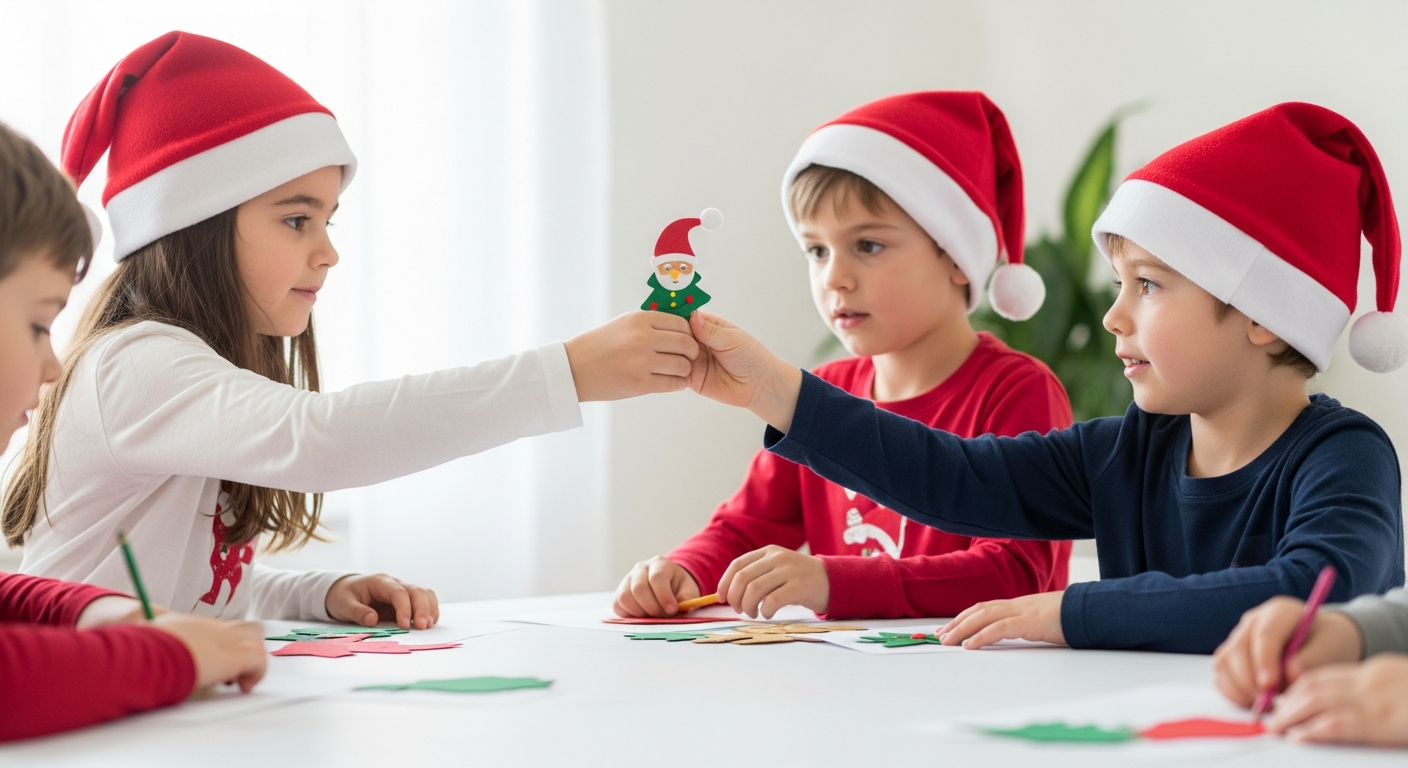
Table of Contents
- Why DIY Crafts are a Christmas Gift for Child Development
- Getting Started: Essentials for Your Christmas Crafting Corner
- Easy Christmas Crafts for Toddlers & Preschoolers (Ages 1-4)
- Festive Crafts for Young School-Aged Children (Ages 5-8)
- Challenging & Creative Crafts for Older Kids (Ages 9-12+)
- Turning Craft Time into Communication Time: Tips & Tricks
- When to Consider Extra Support: A Gentle Nudge
- Elevating Communication at Home with Speech Blubs
- Conclusion
- FAQ: Kids Christmas DIY Crafts
The holiday season often feels like a whirlwind of twinkling lights, festive music, and endless to-do lists. In the midst of the bustling preparations, it's easy for precious family moments to get lost. But what if we told you there's a simple, joyful way to slow down, connect, and even boost your child's developmental skills during this magical time of year? Imagine the delight in your child's eyes as they proudly display a handmade ornament on the tree, or the warmth in your heart as you watch them meticulously decorate a gingerbread house. This isn't just about creating pretty decorations; it's about fostering creativity, building fine motor skills, and, crucially, nurturing language and communication in a playful, engaging way.
This blog post will guide you through a wonderful world of Christmas DIY crafts for kids of all ages. We'll explore why these activities are so beneficial, what supplies you'll need, and provide a wealth of ideas from simple projects for toddlers to more intricate creations for older children. More importantly, we'll show you how to transform every snip, glue, and glitter sprinkle into an opportunity for meaningful communication and shared learning. At Speech Blubs, we believe in empowering children to speak their minds and hearts, and we've seen firsthand how blending scientific principles with play can create truly one-of-a-kind "smart screen time" experiences. We are committed to providing immediate, effective, and joyful solutions for children's speech development, and these crafting adventures perfectly complement our mission by creating rich, screen-free environments for connection and learning.

Why DIY Crafts are a Christmas Gift for Child Development
Beyond the sheer joy and festive spirit they bring, engaging in DIY Christmas crafts offers a treasure trove of developmental benefits for children. It's an activity that naturally touches upon multiple aspects of growth, preparing children for more complex learning and social interactions.
Cultivating Creativity and Imagination
When children craft, they're not just following instructions; they're envisioning, problem-solving, and bringing their unique ideas to life. A simple piece of paper can become a majestic reindeer, a humble pinecone can transform into a glittering mini-tree, and a plain card can become a heartfelt message for a loved one. This process encourages divergent thinking and allows children to express themselves freely, building confidence in their own abilities and imagination.
Boosting Fine Motor Skills and Hand-Eye Coordination
From grasping a paintbrush to snipping with scissors, gluing small pieces, or threading beads, almost every craft activity is a workout for little hands and fingers. These fine motor skills are essential for future tasks like writing, drawing, and even self-care activities like buttoning clothes. Hand-eye coordination also gets a significant boost as children learn to manipulate tools and materials with precision to achieve their desired outcome. For a child who might struggle with holding a pencil, the repetitive motions of tearing paper or squeezing a glue stick can be a fun, low-pressure way to build foundational strength and dexterity.
Enhancing Cognitive Development
Crafting isn't just about physical activity; it's a mental exercise. Children learn to follow multi-step instructions, plan their projects, make decisions about colors and materials, and understand cause and effect (e.g., "If I put too much glue, the paper gets soggy"). They also develop crucial concepts like shapes, colors, textures, and spatial awareness. For instance, creating a symmetrical snowflake requires an understanding of patterns and visual perception.

Fostering Language and Communication Skills
Perhaps one of the most significant, yet often overlooked, benefits of crafting is its profound impact on language development. When you sit down with your child to craft, you create a natural, engaging environment for communication.
- Vocabulary Expansion: You can introduce new words like "glittery," "spindly," "fuzzy," "tacky," "transparent," "overlap," and "assemble."
- Descriptive Language: Encourage your child to describe what they are making, the colors they are using, or how the materials feel. "Tell me about your sparkling star!"
- Following Directions: Craft recipes are perfect for practicing listening comprehension and sequential understanding. "First, we glue the head, then we add the antlers."
- Asking and Answering Questions: This is a prime opportunity for "wh-" questions: "What color should we use next?", "Where does the nose go?", "Why did you choose that design?"
- Narrative Skills: As they create, children can tell stories about their crafts. "This is a reindeer that helps Santa deliver presents!"
- Problem-Solving & Expressing Ideas: When a craft doesn't go exactly as planned, it's a chance to talk through solutions or express frustration in words. "Oh, the paint smeared. What can we do to fix it?"
These communication opportunities are at the core of what we champion at Speech Blubs. We believe that every interaction, from playful crafting to our unique video modeling activities, builds a child's capacity to communicate effectively. Our app provides "smart screen time" experiences where children learn to imitate their peers, reinforcing the sounds and words they need to express themselves. Just as we use play to teach complex communication skills, crafting offers a similar hands-on, joyful avenue for growth.
Getting Started: Essentials for Your Christmas Crafting Corner
Before diving into the festive fun, setting up a well-stocked and safe crafting space is key. You don't need a dedicated art studio; a cleared kitchen table or a corner of the living room can work wonders.
Basic Supplies You'll Need:
- Paper: Construction paper in various Christmas colors (red, green, white, gold, silver), plain printer paper, cardstock, paper plates.
- Adhesives: Child-safe glue sticks, liquid craft glue, tape (masking, clear, double-sided).
- Cutting Tools: Kid-friendly scissors with blunt tips.
- Coloring Tools: Crayons, washable markers, colored pencils, tempera paints (non-toxic and washable).
- Embellishments: Glitter (biodegradable options are great!), pom-poms, pipe cleaners, googly eyes, cotton balls, buttons, felt scraps, yarn.
- Recycled Materials: Toilet paper rolls, paper towel rolls, cardboard scraps, bottle caps.
- Natural Elements: Pinecones, small twigs, leaves (collected from outdoor adventures).
- Protective Gear: Old newspapers, a plastic tablecloth, or a craft mat to protect your surfaces. Smocks or old t-shirts for the kids.
- Cleaning Supplies: Wet wipes, paper towels, a small bowl of water for paintbrushes.
Safety First!
Always supervise young children, especially when using scissors, glue, or small embellishments that could be choking hazards. Ensure all materials are non-toxic and age-appropriate. Establish clear rules, like "glitter stays on the mat" or "we only cut paper," to make the experience enjoyable and stress-free for everyone.
Easy Christmas Crafts for Toddlers & Preschoolers (Ages 1-4)
For our littlest crafters, the focus is on sensory experiences, simple actions, and opportunities for repetition. These crafts are fantastic for developing early vocabulary and fine motor coordination.
1. Handprint and Footprint Ornaments
These are timeless keepsakes! You can use salt dough (flour, salt, water baked until hard) or non-toxic paint on paper.
- Activity: Help your child press their hand or foot into salt dough or paint their hand/foot and press it onto cardstock. Cut out the shape and decorate.
- Language Opportunities: "Squish," "press," "soft," "smooth," "warm," "cold." Point to body parts: "This is your hand," "This is your foot." Talk about colors: "What color paint should we use? Red or green?"
- Relatable Scenario: For a parent whose 2-year-old is just starting to string two words together, guiding them through a handprint ornament offers a natural way to practice "my hand," "red paint," and "all done," while working on tactile exploration.
2. Cotton Ball Snowmen
Simple and soft, perfect for little fingers.
- Activity: Draw a snowman outline on blue or white paper. Have your child glue cotton balls onto the outline to fill it in. Add googly eyes, a small orange paper carrot nose, and twig arms.
- Language Opportunities: "Soft," "white," "round," "stick," "fluffy." Practice counting cotton balls. "How many balls do we need for the snowman's body?" "One, two, three!"
- Speech Blubs Connection: Many of these early sounds and simple words (like "ball," "go," "more") are practiced through our app's fun video modeling activities, where children imitate their peers. Our "Sounds" section, for instance, focuses on these foundational elements, making crafting a perfect screen-free complement to our "smart screen time."
3. Paper Plate Wreaths
A classic that can be adapted for any age.
- Activity: Cut out the center of a paper plate to create a ring. Let your child tear or cut green paper into small pieces and glue them onto the ring. Add pom-poms, buttons, or glitter for "berries."
- Language Opportunities: "Circle," "tear," "glue," "green," "sticky." Practice prepositions: "Put it on the plate," "Put the berry next to the leaf."
4. Pinecone Christmas Trees
A delightful sensory experience connecting nature with craft.
- Activity: Collect pinecones (ensure they are clean and dry). Have your child paint them green, then dab glue on the tips and sprinkle glitter or glue on small pom-poms/beads as ornaments.
- Language Opportunities: "Pointy," "brown," "green," "rough," "sparkly." "Look at the pointy pinecone!" "We're making it sparkly with glitter!"
Festive Crafts for Young School-Aged Children (Ages 5-8)
At this age, children can handle more complex instructions and enjoy activities with a slightly more structured outcome. These crafts encourage sequencing, storytelling, and developing more intricate fine motor control.
1. Popsicle Stick Ornaments
Versatile and easy to customize.
- Activity: Glue popsicle sticks into shapes like snowflakes, stars, or even mini fences. Once dry, paint them and decorate with glitter, buttons, or small pictures. Add a loop of yarn to hang.
- Language Opportunities: "Straight," "diagonal," "triangle," "square," "pattern." "We need six sticks for a snowflake. Let's count them!" Discuss symmetry and design choices.
2. DIY Christmas Cards
A wonderful way to practice writing and expressing thoughts.
- Activity: Fold cardstock, then decorate the front with drawings, collages, or stamped designs. Encourage your child to write a personalized message inside.
- Language Opportunities: Focus on the message. "Who are you writing to?" "What do you want to tell them?" "How do you spell 'Merry'?" This fosters narrative skills and helps children articulate their feelings, directly aligning with our mission at Speech Blubs to empower children to "speak their minds and hearts."
3. Beaded Candy Canes or Garlands
Great for fine motor control and pattern recognition.
- Activity: Thread red and white pony beads onto a pipe cleaner to create a candy cane shape, bending the end to secure. Or, string beads onto yarn for a festive garland.
- Language Opportunities: "String," "bead," "red," "white," "pattern." "Red, white, red, white... what comes next?" Practice sequencing and predicting.
4. Toilet Paper Roll Characters
Transform humble rolls into festive friends.
- Activity: Paint toilet paper rolls brown for reindeer, red for Santa, or green for elves. Add googly eyes, pipe cleaner antlers, cotton ball beards, or felt hats.
- Language Opportunities: "Roll," "cut," "assemble," "attach." Describe the characters: "The reindeer has long, skinny antlers." "Santa has a big, fluffy beard."
Challenging & Creative Crafts for Older Kids (Ages 9-12+)
Older children can handle more detail, longer processes, and can even contribute to planning and problem-solving independently. These crafts build advanced fine motor skills, critical thinking, and allow for significant personal expression.
1. Felt Christmas Stockings
A simple introduction to sewing and design.
- Activity: Provide two pieces of felt cut in the shape of a stocking. Help your child sew the edges together (hand-stitching with a large needle and yarn is great for beginners). Decorate with felt cutouts, embroidery, or fabric paint.
- Language Opportunities: "Thread," "stitch," "fabric," "pattern," "design." Discuss the steps involved in sewing and the different types of stitches. "Which color thread should we use for the outline?"
2. Gingerbread House Decorating
A true holiday tradition that’s also a feast for the senses and conversation.
- Activity: Purchase a gingerbread house kit or bake your own pieces. Provide various candies, icing, and sprinkles for decorating.
- Language Opportunities: This activity is rich with discussion: planning the design, describing the candies ("gummy," "crunchy," "sweet"), negotiating where different elements go, and narrating the building process. "We need to put the roof on first," "Let's put the gumdrops around the door." This encourages complex sentence structures and collaborative communication.
- Relatable Scenario: For an 8-year-old who is a confident talker but sometimes struggles with turn-taking in conversation, decorating a gingerbread house together provides a natural, low-stakes environment to practice negotiating design choices ("I think the candy canes should go here, what do you think?"), waiting their turn to place a decoration, and describing their vision. Our app offers interactive games that reinforce turn-taking and conversational flow, making such real-world practice even more effective.
3. DIY Snow Globes
A magical craft that allows for endless creativity.
- Activity: Use a clean jar, small waterproof figurines (like plastic deer or miniature trees), glitter, and distilled water mixed with a tiny drop of glycerine (to make the glitter fall slower). Glue the figurines to the inside of the jar lid, fill the jar with water mixture, add glitter, and securely screw on the lid.
- Language Opportunities: "Shake," "sparkle," "scene," "imagine," "submerge." Discuss the science behind why the glitter falls slowly. Encourage them to describe the miniature world they've created.
4. Personalized Gift Tags and Wrapping Paper
Adds a special touch to presents and encourages artistic expression.
- Activity: Use plain brown paper or cardstock. Stamp designs, draw festive pictures, or use potato prints to create unique wrapping paper. Design matching gift tags with personalized messages.
- Language Opportunities: "Label," "customize," "recipient," "design." Discuss the person receiving the gift: "What does Grandma like?" "What message do you want to write to your cousin?" This encourages thoughtful communication and empathy.
Turning Craft Time into Communication Time: Tips & Tricks
Making crafts is inherently an interactive activity, but you can maximize its communication benefits with a few intentional strategies. Remember, the goal is always to create a joyful, low-pressure environment where your child feels empowered to communicate.
- Narrate Your Actions: Talk about what you're doing. "I'm cutting the paper," "Now I'm gluing the eyes on the snowman." This provides a language model for your child.
- Ask Open-Ended Questions: Instead of "Do you like this?", ask "What do you like about your reindeer?" or "What should we add next?" This encourages more than a yes/no response.
- Encourage Description: Prompt your child to describe the colors, shapes, textures, and even the smells of their materials. "How does the glitter feel? Is it rough or smooth?"
- Practice Following Directions: Give simple, clear instructions, especially for younger children, and ask them to repeat the steps. For older children, introduce multi-step directions.
- Sing Songs and Rhymes: Integrate Christmas carols or simple action songs related to the craft. Music is a fantastic tool for language development and memory.
- "First/Then" Statements: Help your child understand sequencing. "First, we paint the pinecone, then we add the glitter."
- Embrace the Process, Not Just the Product: Focus on the shared experience and the effort, rather than striving for perfection. This reduces pressure and makes communication more natural.
- Connect to Emotions: Talk about how the craft makes them feel or how the recipient might feel receiving it. "This card will make Grandma so happy!"
Remember, as our founders know from personal experience, supporting a child's speech development is a journey. Our company was born from a desire to create the tool we wished we had growing up with speech problems. We believe in providing solutions that blend scientific principles with play, and these crafting moments are perfect examples of how everyday activities can be profoundly beneficial.
When to Consider Extra Support: A Gentle Nudge
While joyful crafts are a wonderful way to foster communication, it's natural for parents to sometimes wonder if their child is developing speech and language typically. If you have any concerns about your child's communication skills, even subtle ones, trust your instincts. Early intervention can make a significant difference in a child's long-term success.
We encourage parents to be proactive. If you're unsure if your child could benefit from a little extra support, consider taking our quick 3-minute preliminary screener. It involves 9 simple questions and provides an assessment and a personalized next-steps plan. It's a great first step towards understanding your child's unique needs.
Elevating Communication at Home with Speech Blubs
At Speech Blubs, we are dedicated to helping every child find their voice. Our app is designed to provide an immediate, effective, and joyful solution for the 1 in 4 children who need speech support. We believe in offering a screen-free alternative to passive viewing (like cartoons) and a powerful tool for family connection, complementing wonderful activities like the Christmas crafts we've explored.
Our unique approach is rooted in video modeling, where children learn by watching and imitating their peers. This scientifically-backed method activates mirror neurons in the brain, making learning new sounds and words intuitive and engaging. We're proud that our method is backed by science, placing us in the top tier of speech apps worldwide, as detailed on our research page. Parents rave about the progress their children make, often sharing heartwarming stories of newfound words and increased confidence, which you can read on our testimonials page.
Speech Blubs isn't just an app; it's a supportive partner in your child's communication journey. We provide a structured, fun environment where kids can practice over 1,500 words, sounds, and early language concepts through engaging activities, all designed to make learning feel like play. Think of it as a guided playtime that reinforces crucial speech skills, making it the perfect complement to the rich, hands-on learning experienced through Christmas crafting.
Ready to start your child's communication adventure?
We offer two convenient subscription plans to fit your family's needs:
- Monthly Plan: For $14.99 per month, you get access to our core features.
- Yearly Plan: This is our most popular and value-packed option at just $59.99 per year, which breaks down to an incredible $4.99 per month – a savings of 66% compared to the monthly plan!
Choosing the Yearly plan isn't just about saving money; it unlocks a full suite of benefits designed to support your child's continuous growth:
- 7-Day Free Trial: Experience Speech Blubs and all its features risk-free for a full week.
- The Extra Reading Blubs App: Get access to our companion app, Reading Blubs, to further boost literacy skills.
- Early Access to New Updates: Be among the first to explore exciting new features and content.
- 24-Hour Support Response Time: Get priority assistance whenever you need it.
The Monthly plan does not include these exclusive benefits, making the Yearly plan the clear best choice for comprehensive support and value.
Conclusion
This holiday season, let's step away from the screens and immerse ourselves in the simple, profound joy of creating together. Christmas DIY crafts offer a magical blend of festive fun, developmental growth, and invaluable opportunities for family connection. From a toddler's first sticky handprint to an older child's intricately decorated gingerbread house, each project is a step forward in their creative journey and a boost to their communication skills. By narrating, questioning, and engaging meaningfully during craft time, you’re not just making ornaments; you’re building bridges of understanding and confidence.
At Speech Blubs, we celebrate every sound, every word, and every step your child takes toward expressing themselves fully. We believe in the power of playful learning, both through hands-on activities like these crafts and through our scientifically-backed app. Together, we can empower your child to speak their minds and hearts, not just during the holidays, but every day of the year.
Why wait to give your child the gift of confident communication? Begin your journey today. Download Speech Blubs on the App Store or Google Play Store to start your 7-day free trial. Remember to choose the Yearly plan to unlock all the premium features, including the Reading Blubs app and priority support, for the best value! If you prefer to sign up via our website, you can create your account and begin your free trial here. Happy crafting and happy communicating!
FAQ: Kids Christmas DIY Crafts
Q1: What are the best Christmas crafts for very young toddlers (1-2 years old)?
A1: For very young toddlers, focus on simple, sensory-rich crafts that involve lots of touching, tearing, and gluing. Handprint or footprint ornaments using non-toxic paint or salt dough are fantastic. Cotton ball snowmen or simple paper plate wreaths where they can tear paper and stick it on are also great choices, as they boost fine motor skills and allow for basic vocabulary practice.
Q2: How can I make Christmas crafting less messy?
A2: Preparation is key! Lay down old newspapers, a plastic tablecloth, or a craft mat to protect your surfaces. Have wet wipes and paper towels on hand. Use smocks or old t-shirts for your children. For glitter, try using glitter glue sticks or placing the craft inside a shallow box when sprinkling loose glitter to contain the fallout. Establish clear rules before starting, like "glitter stays in the box."
Q3: My child gets frustrated easily with crafts. How can I keep them engaged?
A3: If your child gets frustrated, simplify the craft steps or choose projects that have no "right" or "wrong" outcome. Focus on the process and fun rather than the perfect finished product. Offer choices ("Do you want red paper or green paper?"), work alongside them, and provide plenty of positive encouragement for their effort. Remember, it's about the shared experience and communication, not just the final item.
Q4: How do Christmas crafts help with speech and language development?
A4: Christmas crafts provide a natural, engaging environment for language. They introduce new vocabulary (colors, textures, actions), encourage descriptive language ("sparkly," "sticky," "rough"), require following multi-step directions, and offer opportunities for asking and answering questions. These activities also stimulate imaginative play and storytelling, which are crucial for developing narrative skills. At Speech Blubs, we recognize that every playful interaction, including crafting, is a chance to build a child's communication abilities.
About the author